
A few bites after your morning commute can turn a routine bus ride into weeks of worry. Reported transit incidents have surfaced in news stories and commuter forums across the US and abroad, and riders are asking sharper questions than ever: Can I pick up bed bugs on public transit buses trains, and what can I do to keep them off me?
The direct answer: yes, you can pick up bed bugs on buses and trains, because they are hitchhikers that travel on people and belongings rather than living permanently on vehicles. A few simple habits — a quick seat check, smart bag handling, and a post-ride routine — cut your risk dramatically. This guide covers how bed bugs end up on transit, how to inspect before you sit, and what to do if you suspect an encounter.
How Bed Bugs Get Onto Buses and Trains
Bed bugs do not live on transit the way they infest a mattress, but vehicles share the traits that make hitchhiking easy: high passenger turnover, upholstered seating, dark crevices, and long dwell times.
Bed bugs do not jump or fly. They crawl, moving by clinging to objects — bags, coats, laptop cases, shopping totes. A person whose home has an infestation can carry bugs out the door unknowingly; they drop off into seat cushions, floor cracks, or the gaps between bench seats and wall panels. Once aboard, they seek tight, dark hiding spots near hosts: seams where cushions meet the frame, folds of padded headrests, and fabric flaps behind seat backs.
For the rider, the risky direction is the reverse: a bug hiding in the vehicle crawls onto your coat sleeve or into your backpack during the ride, and you carry it home. The transfer window is minutes, not hours. Bed bugs are apple-seed sized (1–7 mm), flat, and reddish-brown — easy to miss in patterned fabric. Repeated reports of bugs on transit have led agencies to pull vehicles for inspection and heat treatment, and the National Pest Management Association has published a protocol specifically for public transportation operators — a sign the industry treats this as a recurring problem, not a freak event.
The 60-Second Seat Check Before You Sit
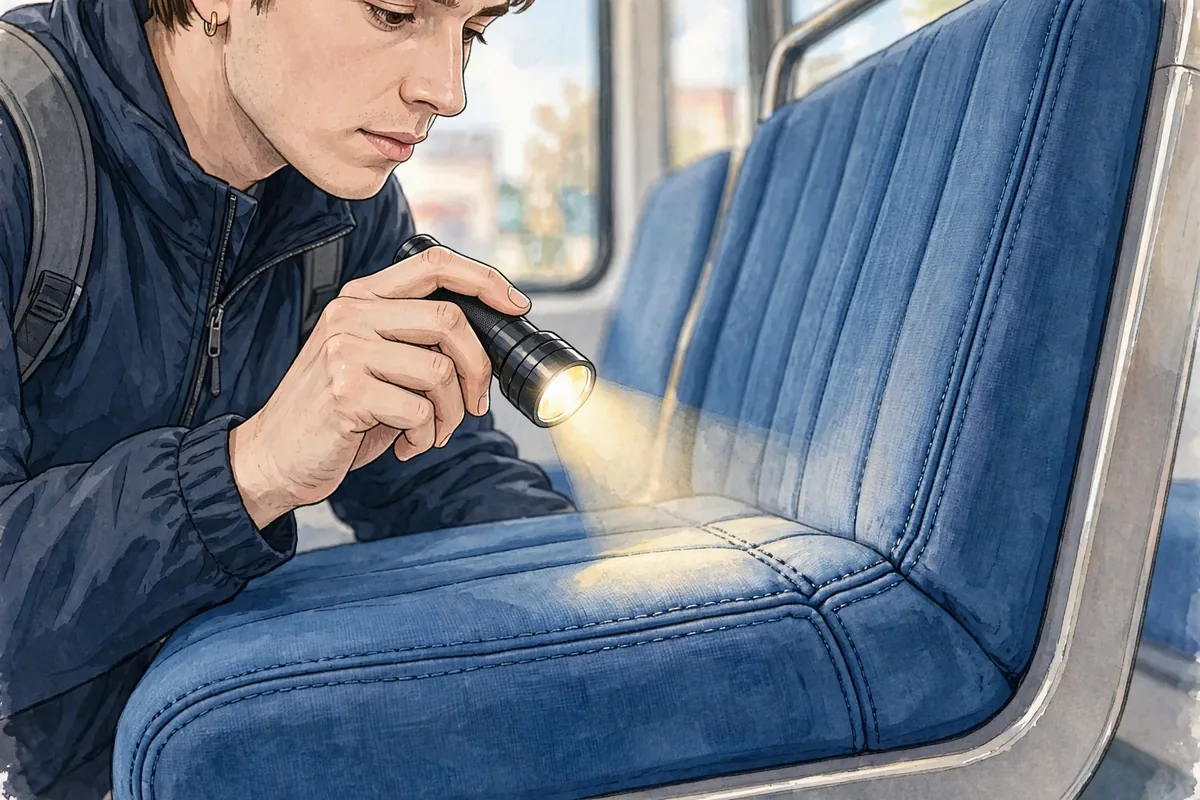
Before you settle in, give your seat a quick once-over — the single highest-value habit on this list. Stand at your seat and scan the cushion seams, the edges where fabric tucks into the frame, and the crease where the backrest meets the seat. Look for live bugs (flat, oval, apple-seed sized), shed skins (translucent, bug-shaped), or clusters of dark ink-like droppings along seams and stitching. A flashlight or your phone’s light makes the check far more effective, especially on dark fabric and evening rides.
Check beyond the cushion too. Glance along the junction where the seat meets the floor, and behind the backrest where bugs shelter out of reach of routine cleaning. On buses, seats over the wheel wells and the rear bench — harder for cleaning crews to reach — deserve extra attention.
If you spot anything suspicious, do not sit there. Move to another seat, ideally hard plastic or metal rather than upholstery, several rows away. Take a photo of what you saw — the timestamp and location help if you report it. Do not crush the bug and carry on; squashing one on your clothing can stain and spread the problem. If every seat looks questionable, stand near the door with your bag off the floor.
Protecting Your Bags, Coats, and Clothes on the Ride
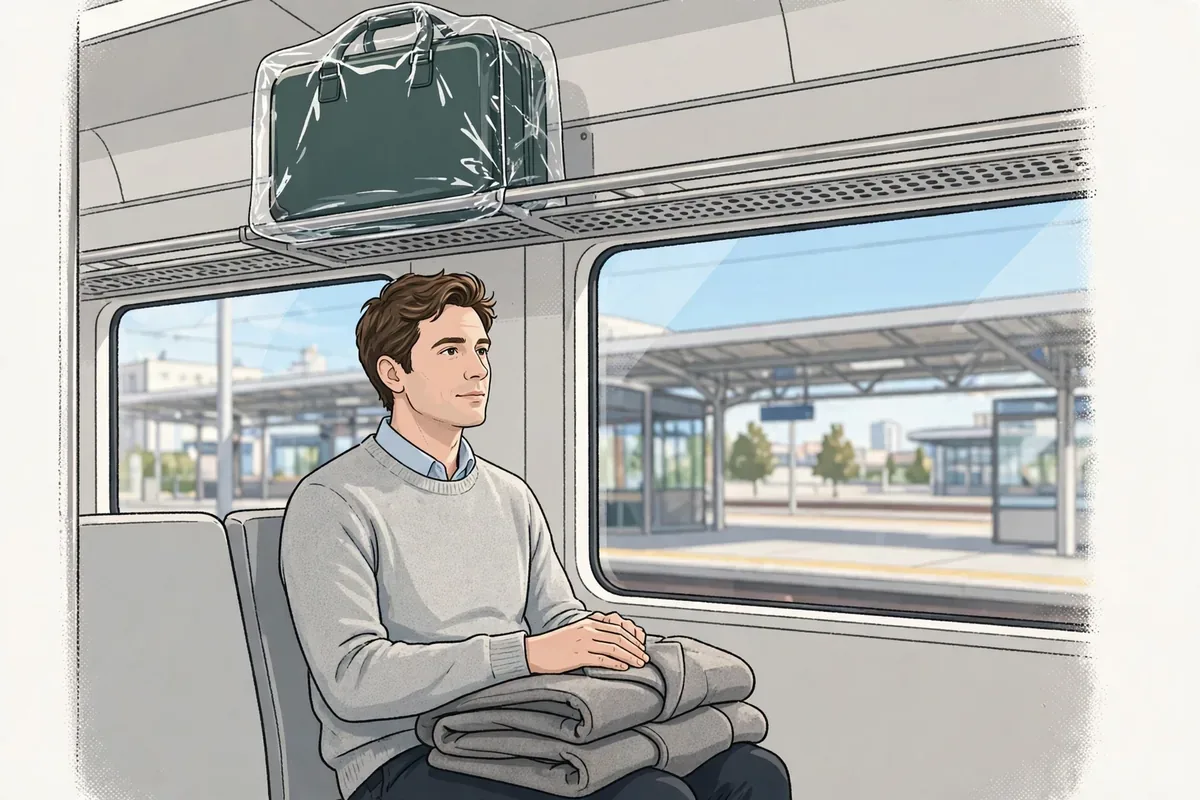
Your bag is the main vehicle bed bugs use to travel from the bus to your bedroom, so treat it as the thing to guard. Keep it off the floor and away from upholstery: hold it on your lap, hang it on a hook, or set it in your lap instead of the seat beside you. On trains, the overhead rack works, but a hard-shell case or a fully zipped bag placed inside a protective cover is better.
Your coat is the second most common carrier. Wear a smooth, tightly woven outer layer when you can, and avoid draping your coat over seat backs — fold it into your lap instead. If you ride with a laptop bag or backpack, adopt a simple rule: it never touches a seat or floor on transit.
Be mindful of what you lean on. Seat backs, fabric partitions, and padded dividers near priority seating are all shared surfaces. Sitting upright with minimal contact reduces the chance that a bug exploring the upholstery finds your sleeve. If you wonder whether clothing itself is a barrier, our explainer on can bed bugs bite through clothes covers it: they target exposed skin but crawl freely over fabric to get there.
After the Ride: Inspect, Change, and Decontaminate
What you do in the first minutes after arriving home matters more than what you do on the bus. Stop at your entryway — not your bedroom — and inspect your bag’s exterior, handles, and seams in good light. Shake out your coat and check cuffs, pockets, and folds. Bed bugs drop off quickly once the host leaves, so catching them at the door keeps them out of your living spaces.
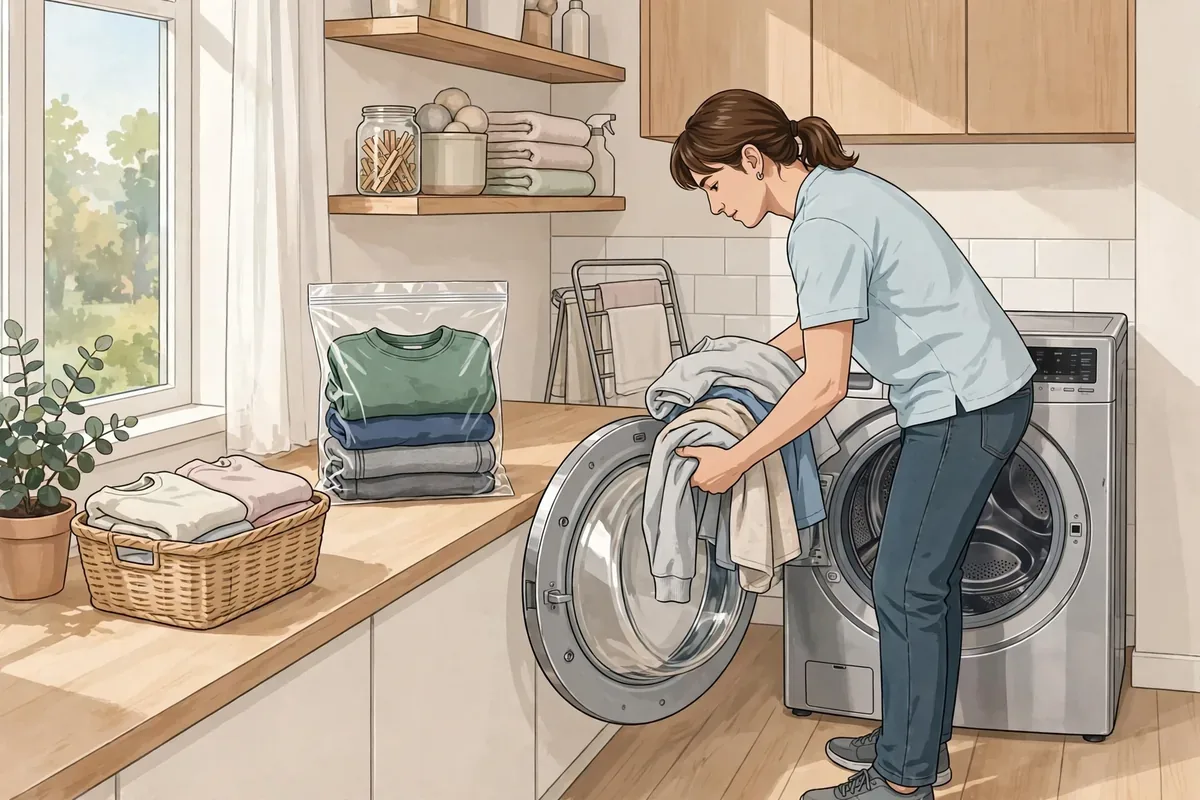
Next, change out of your transit clothes and put them straight into the dryer. Heat is the most reliable tool a household has against bed bugs. Research published in the Journal of Economic Entomology found that tumble-drying clothes on the hot cycle for at least 30 minutes kills all bed bug life stages, including eggs — washing alone at lower temperatures does not do the job. You do not even need to wash first; dry heat is the lethal step.
Seal your bags between trips. Store your commuter bag in a sealed container or tightly tied bag, away from beds and upholstered furniture. If you ever confirm a bug on a bag, bag it immediately and run everything fabric through the hot dryer. For a home-side routine, inspect mattress and furniture seams monthly and keep commuter bags off beds and upholstered furniture.
What Transit Agencies Are Supposed to Do
Riders carry the prevention burden on the vehicle, but agencies have real responsibilities. Most large transit systems run scheduled deep-cleaning programs that include inspecting and treating upholstery, and many have formal bed bug protocols — which vehicles get pulled, how they are inspected, and what treatment is used before a vehicle returns to service. These programs usually pair routine vacuuming with periodic inspection by trained staff. The NPMA’s public transportation protocol exists because agencies need a standard response rather than improvising each time.
The catch is that detection depends on reports. A driver or cleaner who spots a bug can pull a vehicle, but a single bug in a seat seam is easy to miss during a quick turnaround — so agencies rely on riders to flag problems. If you report a sighting, a competent agency should log the vehicle number, route, and time, inspect the vehicle, and treat it if bugs are confirmed, sometimes within the same day.
Agencies cannot guarantee bug-free vehicles on a system carrying thousands of people daily. If your system seems unresponsive, escalate in writing and keep copies — documented complaints carry more weight than phone calls, especially if a pattern develops on one route.
How to Report a Bed Bug Sighting
Report a sighting the same day, while the details are fresh. Most agencies accept reports through a website contact form, customer service hotline, or transit app. Include the route number or line, direction of travel, approximate time, and vehicle number — these details are what turn a vague complaint into an actionable report. Your photo of the bug or droppings is the strongest evidence you can attach.
Be specific about the seat. “Rear bench, driver’s side, bus 4127, 7:40 a.m. Route 22 inbound” gets action; “saw a bug on the bus” gets filed and forgotten. If you developed bites after the ride, note that too — but bite marks alone are not reliable proof of bed bugs, since many skin reactions look alike. Bed bug bites typically appear as small, itchy reddish bumps in clusters — but bite marks alone cannot confirm bed bugs; only finding a live bug or its evidence can.
Also tell your employer if the vehicle was a commuter shuttle or employer-provided transport. If the agency does not respond within a reasonable time, follow up in writing and consider notifying your local health department — health departments track pest complaints and can pressure agencies to act, even though bed bugs themselves do not transmit disease.
The Health Picture: Bites, Disease Risk, and Reactions
Here is the reassuring part: according to the Centers for Disease Control and Prevention, bed bugs are not known to spread diseases to people. They are blood-feeding insects, but unlike body lice or mosquitoes, they are not believed to transmit any human disease. The health impact of an encounter is about the bite reaction itself, not infection.
Most reactions are mild: small, itchy, reddish bumps, often in clusters or a rough line where skin was exposed. Responses vary widely — some people develop no reaction at all, while others develop larger welts. Bites usually appear hours to days after feeding, which is why marks may show up the morning after your commute rather than during the ride. For typical timelines, see our page on how long common insect bites usually last, and the bite sting clue checklist can help you organize what you are seeing.
The main complications are secondary: scratching bites can break the skin and invite bacterial infection, and a small number of people develop stronger allergic responses. Anxiety and lost sleep are documented effects of bed bug worry, especially when an infestation reaches the home — another reason the post-ride routine matters. Treat bites with basic first aid (cool compress, avoid scratching), and check the red-flag list below if anything looks wrong.
When to See a Doctor for a Bug Bite
Most bed bug bites resolve on their own, but certain signs mean you should get medical care promptly:
- Call 911 or seek emergency care for signs of a severe allergic reaction: trouble breathing, swelling of the face, lips, or tongue, dizziness, fainting, or a widespread rash after bites. Any sign of anaphylaxis is an emergency — see anaphylaxis sting warning signs for what to watch for.
- Signs of skin infection: spreading redness, increasing warmth or swelling, red streaks, pus, or fever.
- Bites that keep getting worse after a few days instead of improving.
- Large numbers of bites, or bites that are unusually painful or blistered.
- You are unsure what bit you and symptoms are spreading — a clinician should evaluate the pattern.
Frequently Asked Questions
Can bed bugs really live on a bus or train?
They do not colonize vehicles like they infest bedrooms, but they travel on them — hitchhiking on bags and clothing, dropping into seat seams, and climbing onto the next rider.
How soon after a ride would bites show up?
Bite reactions typically appear hours to days after feeding, not during the ride. But remember that bite marks alone cannot confirm bed bugs — many conditions cause similar marks.
Do bed bugs on transit spread disease?
No. The CDC states that bed bugs are not known to spread diseases to people. The concern is carrying a hitchhiker home and starting a household infestation — which is why the prevention steps in this guide matter.
What if I bring a bed bug home from my commute?
Contain suspect items in sealed bags, run everything fabric through a hot dryer cycle for at least 30 minutes, and inspect your bedroom for signs — live bugs, shed skins, dark spotting along mattress and furniture seams. If the infestation looks established, call a licensed pest management professional.
Medically reviewed by Dr. Sarah Jones, MD.
This article is for informational purposes only and isn’t medical advice. If you’re worried about a bite or sting, talk to a healthcare professional.