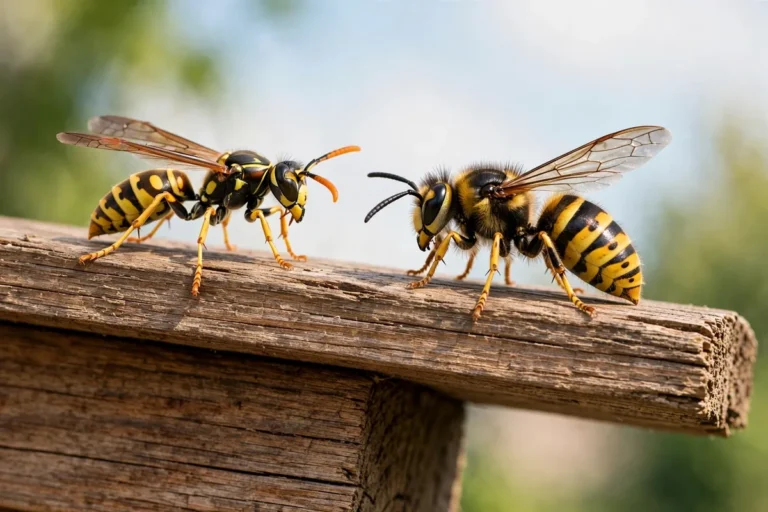
Vinegar shows up in nearly every do-it-yourself bed bug discussion online. It is cheap, it is already in the kitchen, and countless forum posts insist it works. So let us ask plainly: does vinegar kill bed bugs, or is this another household myth that wastes the weeks when an infestation is easiest to stop?
The answer is no. Vinegar does not reliably kill bed bugs, it does not kill their eggs, and it has no lasting effect once it dries. More importantly, the most dramatic claim attached to it, that acetic acid “attacks the bed bug nervous system,” appears to have no source at all. It is a fabricated mechanism: scientific-sounding language with no study behind it. This article traces that claim, reviews what laboratory testing actually shows about household sprays, explains the chemistry honestly, and lays out what works instead.
Where You Keep Seeing This Claim
The vinegar recommendation lives in the same online ecosystem as most bed bug folklore: question-and-answer forums, social media comment threads, and low-effort pest blogs that repeat one another. The typical post runs something like this: spray white vinegar directly on bed bugs and along baseboards, the acetic acid destroys their nervous systems, and the infestation dies out. Some versions add that vinegar dissolves the bugs’ exoskeletons or dries out their eggs.
What makes this claim sticky is its structure. It pairs a real chemical (acetic acid, which vinegar genuinely contains at about 5 percent in household white vinegar) with a plausible-sounding biological target (the nervous system). That pairing feels like an explanation even though it is actually just two true facts glued to an untested conclusion. Household vinegar really is dilute acetic acid. Bed bugs really do have nervous systems. Nothing connects the two in any published research.
The claim also benefits from vinegar’s genuine reputation as a household problem-solver. Vinegar really does dissolve mineral scale, cut grease, and kill some microbes on countertops. People reasonably generalize from those real successes to a new domain where the chemistry does not transfer. An insect with a waxy, water-resistant cuticle is not a limescale deposit, and what works on a showerhead says nothing about what works on a bed bug.
The “Acetic Acid Attacks the Nervous System” Claim Has No Source
This section is the core of the article, so let us be precise. The specific assertion that acetic acid attacks or destroys the bed bug nervous system is repeated across dozens of websites. When you try to trace it to an origin, the trail ends immediately. There is no published entomology study testing vinegar or acetic acid against bed bugs that I could find. There is no university extension publication making this claim. There is no pesticide label, no toxicology report, and no named researcher behind it.
How to Recognize a Fabricated Mechanism
A fabricated mechanism has a recognizable shape. It uses technical vocabulary (nervous system, exoskeleton, pH disruption) without numbers: no concentration tested, no exposure time, no mortality rate, no sample size. Real insecticide science is quantitative because lethality is quantitative. A genuine claim would read like this: “direct spray of X percent acetic acid killed Y percent of adult bed bugs within Z hours in laboratory trials.” The vinegar claim never reads like that because there is no trial behind it.
This matters beyond one myth. Bed bug forums are full of mechanisms invented to sound scientific: baking soda “dehydrates them from the inside,” salt “pulls the moisture out through osmosis,” and various oils “suffocate the nervous system.” When you encounter a mechanism with no numbers and no named study, treat it as marketing copy that escaped into folk wisdom, not as science. If you are trying to identify what is actually biting you before choosing any treatment, start with observable evidence using a structured bite and sting clue checklist rather than acting on a chemical theory from a comment thread.
What Would Evidence Look Like?
For comparison, here is what real evidence looks like. When Rutgers University entomologists tested rubbing alcohol against bed bugs, they published the concentrations (70 and 91 percent isopropyl), the method (direct spray), the observation window (up to four days), and the result (at most about 50 percent of adults killed). They also published what failed: a disinfectant spray that some people believed effective killed zero bed bugs in direct-spray tests. That is evidence, whether the result is positive or negative. The vinegar nervous-system claim has never been subjected to anything resembling this process, by anyone, anywhere that publishes results.
What Vinegar Chemically Does (and Does Not Do)

Fairness requires describing vinegar accurately. Household white vinegar is about 5 percent acetic acid in water, with a pH around 2.5. It is a mild acid, a decent solvent for mineral deposits, and it does have some antimicrobial activity on hard surfaces. None of those properties translate into insecticidal action against bed bugs, for specific reasons.
First, a bed bug’s outer shell is built to resist exactly this kind of assault. The cuticle is covered with a waxy, water-repelling layer that protects against desiccation and chemical penetration. A 5 percent acid solution sprayed onto that surface mostly beads and runs off or evaporates. It does not dissolve the cuticle the way it dissolves calcium carbonate in a kettle, because insect cuticle is a composite of chitin and proteins, not a mineral scale.
Second, vinegar has no residual activity. It evaporates within minutes to hours, leaving nothing behind. Bed bugs spend most of their time hidden and emerge to feed in the dark. A treatment that is gone before the bugs come out cannot intercept them.
Third, and most decisively, there is no evidence that vinegar harms bed bug eggs. Eggs are glued into seams and cracks, protected by a shell, and tucked where spray cannot reach them. Nothing about dilute acetic acid suggests it would penetrate an egg case, and no testing has ever shown that it does.
A Warning About “Stronger” Vinegar
Some sources recommend cleaning vinegar (6 percent) or horticultural vinegar (20 to 30 percent acetic acid) as a stronger option. This is dangerous advice to follow. High-concentration acetic acid is corrosive: it can burn skin, damage eyes, ruin fabrics and finishes, and produce harmful fumes in enclosed spaces. Escalating to a hazardous chemical because the safe version failed is exactly the wrong lesson. If 5 percent vinegar does not work, the answer is not stronger vinegar; it is a different strategy entirely.
What Real Lab Tests Say About Household Sprays
Since no one has published vinegar-specific bed bug data, the honest move is to look at what university researchers found when they tested the household-spray category as a whole. The pattern is consistent and humbling.
Rutgers University’s fact sheet on cost-effective bed bug control (publication FS1251) is the best single reference. Its findings on household liquids: rubbing alcohol at 70 or 91 percent killed at most half of directly sprayed adult bed bugs, and the researchers explicitly advise against using it, noting the serious fire hazard. A disinfectant product that believers considered effective killed every bit of zero bed bugs in direct-spray testing; all of them survived. Most plant-oil and detergent-based “natural” products tested in a separate study achieved little to no effect on eggs.
| Spray | What testing shows | Egg effect | Safety note |
|---|---|---|---|
| Vinegar (5% acetic acid) | No published bed bug mortality data; too weak to rely on | None demonstrated | Safe for cleaning, useless for bugs |
| Rubbing alcohol (91%) | Max ~50% kill in Rutgers direct-spray tests | Unreliable; misses hidden eggs | Severe fire hazard; Rutgers advises against |
| Household disinfectant | 0% kill in Rutgers direct-spray tests | None | Gives false confidence |
| Bleach | Kills only bugs fully drenched | None practical | Damages fabrics, toxic fumes |
| Soapy water | Can drown bugs hit directly | None | Harmless but not control |
| Dry steam (200F+) | Near-instant kill on contact | Yes, penetrates seams | Effective when used correctly |
| EPA-registered bed bug sprays | Tested mortality + residual action | Some products labeled for eggs | Follow label exactly |
The table tells a clear story. Household liquids fail at the population level because they cannot reach harborages, cannot touch eggs, and stop working when they dry. The methods that succeed either deliver lethal heat directly into hiding places or keep working on surfaces for weeks after application. If bites persist and you want to track whether the culprit matches the classic pattern, our guide on how long insect bites usually last helps confirm the diagnosis before you invest in treatment.
Why Spraying Vinegar Can Spread the Infestation

A failed treatment is bad. A treatment that makes the infestation worse is worse. Vinegar carries a real risk of the latter through a behavior pest professionals know well: dispersal.
Bed bugs abandon harborages when those harborages become unpleasant. A strong-smelling liquid repeatedly sprayed into their hiding places does not kill them, but it can irritate them enough to relocate. They move deeper into wall voids, into adjacent rooms, and into furniture that was previously clean. What was a contained problem around one bed becomes a diffuse problem across multiple rooms, each needing professional treatment.
This scatter effect is documented with actual insecticides too: repellent pyrethroid sprays can push bed bugs into new areas when applied incorrectly. Vinegar adds insult to injury because it delivers the disturbance without any lethal dose. The bugs get the eviction notice but not the execution.
There is also the cost measured in time. Every week spent spraying vinegar is a week of uninterrupted breeding. A female bed bug lays several eggs per day and hundreds over her lifetime; eggs hatch in roughly a week under room conditions. A month of faithful vinegar spraying can easily see an infestation double in size while the person spraying believes they are fighting it. The cruelest part of household myths is not that they fail, but that they fail quietly while the problem compounds.
What Actually Works Instead
Effective bed bug control follows the biology instead of fighting it. Because the insects hide in cracks and their eggs are glued out of reach, winning methods either penetrate harborages or outlast the bugs’ hiding.
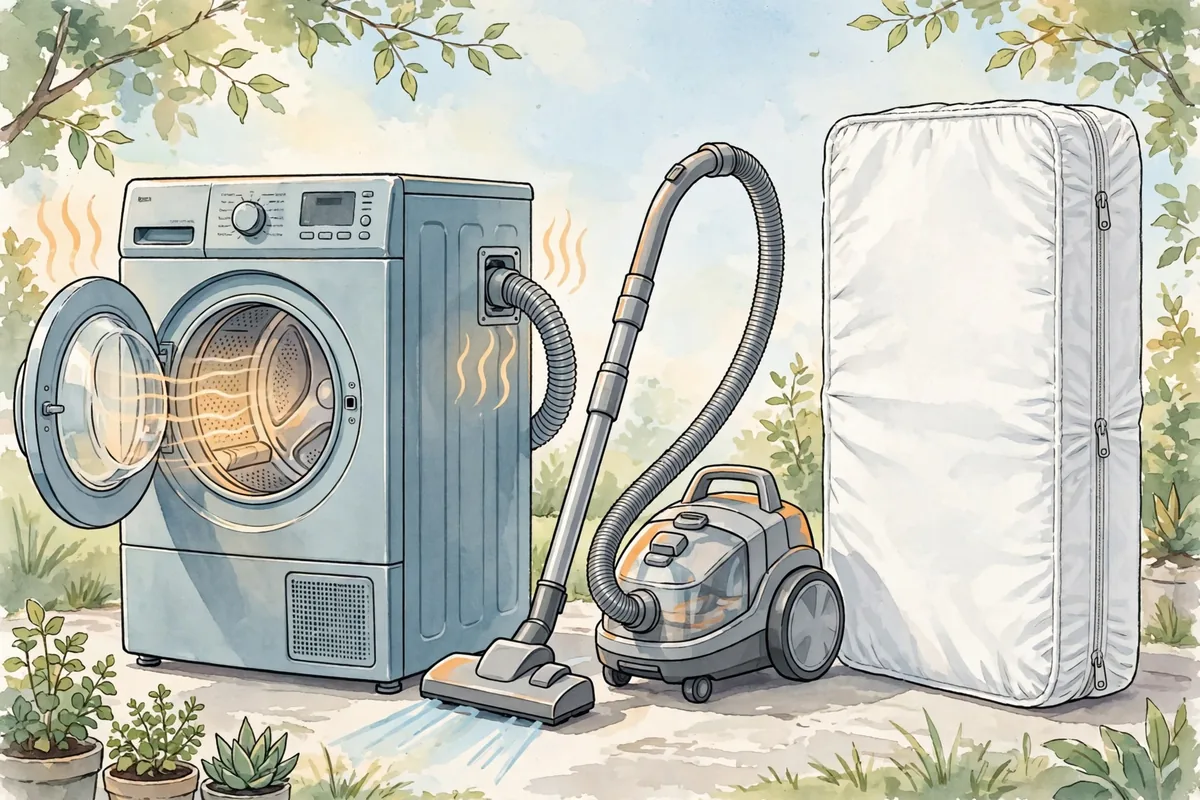
Heat is the most reliable weapon available to non-professionals. A clothes dryer on high for at least 30 minutes kills every life stage, including eggs, in fabrics and bedding. Dry steam above 200 degrees Fahrenheit, moved slowly along mattress seams and furniture joints, kills bugs and eggs on contact and reaches where sprays cannot. Both methods work through physics that bed bugs cannot resist or outwait.
Physical removal and trapping come next. Vacuum mattress seams, bed frame joints, and baseboards with a crevice tool, then seal the vacuum contents in a bag and discard it outside. Encase the mattress and box spring in bed-bug-proof encasements and leave them on for at least a year; this traps bugs inside to starve and seals the seams against newcomers. Place interceptor traps under the bed legs to catch traveling bugs and monitor whether the population is shrinking.
For anything beyond a small, early infestation, bring in a licensed pest management professional. Professionals apply EPA-registered products directly to harborages, products with tested mortality and residual action, and they schedule follow-up visits timed to the egg hatch cycle. Whole-room heat treatment with professional temperature monitoring is the most decisive single intervention. While treatment proceeds, whether bed bugs can bite through clothes is worth knowing so you can dress to minimize bites at night.
When to See a Doctor for a Bug Bite
Bed bugs are not known to transmit disease, but bites can still lead to medical issues, especially when scratching breaks the skin.
Call 911 or get emergency care for signs of severe allergic reaction: trouble breathing, swelling of the face, lips, tongue, or throat, dizziness or fainting, or a rapid heartbeat with widespread hives. Serious reactions to bed bug bites are rare but real.
See a doctor promptly for infection signs: a bite that becomes increasingly red, warm, swollen, or painful after the first day or two, red streaks spreading outward, pus or yellow drainage, or fever. Cellulitis from a scratched bite is the most common medical complication and needs proper treatment.
See a doctor if you have dozens of bites, blistering reactions, bites that are not improving after two weeks of basic care, or sleep loss from itching that is affecting your daily life. Children with widespread bites and people with weakened immune systems should seek care earlier. The full checklist of bite and sting warning signs covers what to watch for day by day.
Frequently Asked Questions
Does vinegar kill bed bugs on contact?
No reliable evidence shows that it does. Household vinegar is 5 percent acetic acid, too weak to penetrate a bed bug’s waxy cuticle, and no published study has demonstrated meaningful mortality. A bug thoroughly drowned in any liquid may die, but that is not pest control.
What about the claim that acetic acid attacks their nervous system?
That claim has no traceable source. No published study, university extension guide, or named researcher supports it. It is a fabricated mechanism: technical-sounding language with no data behind it. Be skeptical of any bed bug remedy whose “science” comes with no numbers and no citation.
Will vinegar kill bed bug eggs?
There is no evidence for this. Eggs are glued into seams and cracks inside a protective shell, and dilute acetic acid has no demonstrated ability to penetrate the egg case. Egg survival is precisely why infestations rebound after contact-only treatments.
Is spraying vinegar around the bed at least harmless?
Not entirely. Repeated spraying can irritate bugs into scattering to new hiding places, spreading the infestation. It also costs time: weeks of ineffective treatment let the population breed unchecked. And “stronger” vinegars at 20 to 30 percent acetic acid are corrosive and hazardous to people, pets, and furnishings.
What should I do instead of DIY sprays?
Start with a hot dryer cycle for all bedding and clothing (30 minutes on high), vacuum seams and crevices thoroughly, encase the mattress and box spring, and set interceptor traps under bed legs. If bites continue after a couple of weeks, hire a licensed pest professional rather than trying stronger household chemicals.
Medically reviewed by Dr. Sarah Jones, MD.
This article is for informational purposes only and isn’t medical advice. If you’re worried about a bite or sting, talk to a healthcare professional.