
Bed Bug Poop vs Flea Dirt: Spot the Difference
You pull back the sheets and notice tiny black specks. Your stomach drops, is it bed bugs, or fleas? Both pests leave behind dark…
You found a tiny bug in the bedroom, and your stomach dropped. The question of bed bug nymph vs carpet beetle larva is one of the highest-stakes identification puzzles in…
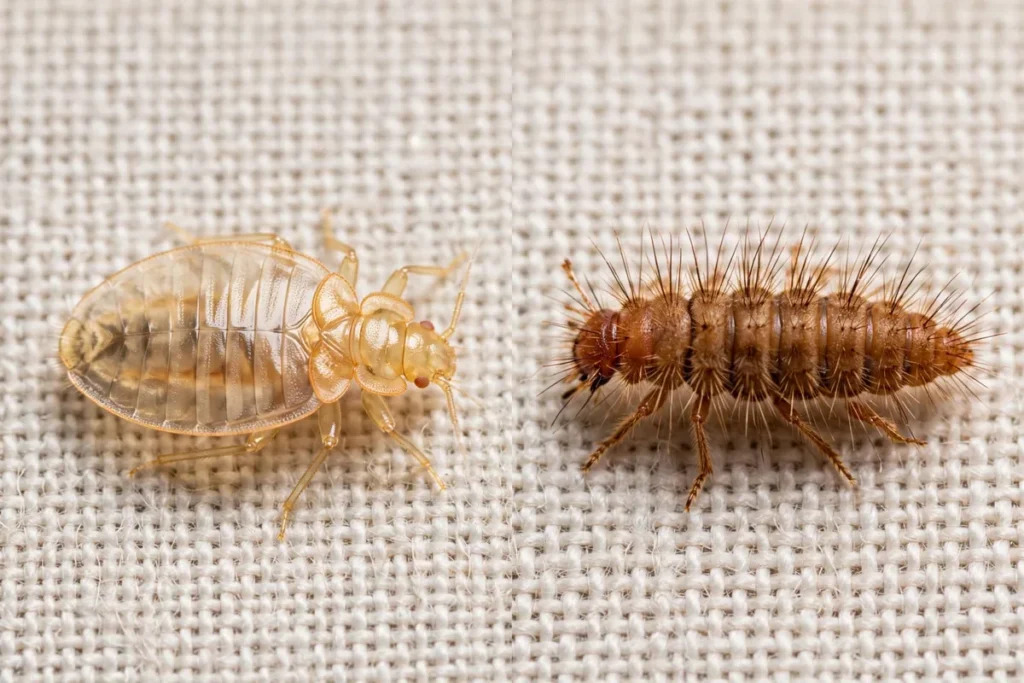
You found a tiny bug in the bedroom, and your stomach dropped. The question of bed bug nymph vs carpet beetle larva is one of the highest-stakes identification puzzles in the home-pest world, because the two creatures demand completely opposite responses. Treat carpet beetle larvae like bed bugs and you will pay for heat treatments that miss the real problem entirely. Dismiss a bed bug nymph as a harmless carpet beetle and the infestation gets months to grow.
Both are small. Both turn up in bedrooms. Both get blamed for mysterious itchy welts. But they look different, live differently, and, critically, only one of them bites you. This guide gives you the macro-level visual differences, explains the single most misunderstood fact in this whole comparison (carpet beetles do not bite), and lays out the divergent treatment paths so you act on the right problem. When in doubt, a pest professional’s identification beats any photo comparison, but knowing what to look for makes you a much better witness.
The confusion is understandable. A bed bug nymph in its early instars is about the size of a poppy seed, pale, and easy to misjudge. A carpet beetle larva is a few millimeters of brown fuzz that people describe as “a tiny caterpillar” or “a bed bug baby.” Both show up where people sleep. And both get linked to itchy red welts, bed bugs because they bite, carpet beetle larvae because their shed hairs irritate skin in a way that looks exactly like bites.
The cost of the error runs in both directions. Homeowners who assume bed bugs spend thousands on professional heat treatments and mattress disposal, only to have the “bites” continue, because the actual culprit was carpet beetle larvae living in the closet, untouched by the bedroom treatment. Homeowners who assume carpet beetles ignore a genuine bed bug nymph sighting, skip the inspection, and discover six months later that the problem has spread to every bedroom. Correct identification is not trivia; it is the fork in the road.
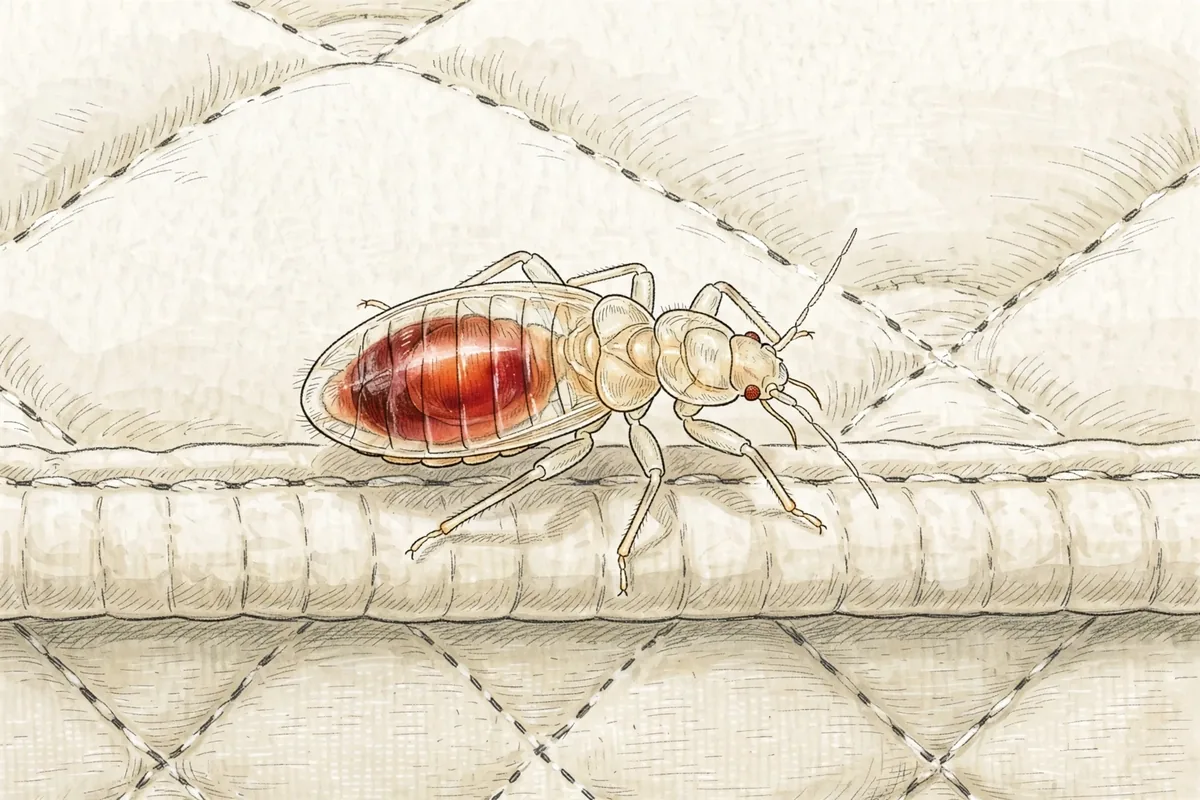
A bed bug nymph is an immature bed bug, the same species as the adults, just younger and smaller. Bed bugs go through five nymphal stages (instars), shedding their skin between each one. A newly hatched first-instar nymph is about 1.5 millimeters long, roughly poppy-seed size, and nearly translucent pale yellow-white. With each blood meal and molt it grows, reaching about 4 to 5 millimeters by the fifth instar, darkening toward the reddish-brown of the adult.
The key visual traits: nymphs are oval, flat, and smooth, no fuzz, no bristles, no bands. They have six legs, short antennae, and a segmented abdomen. After feeding, the abdomen swells and turns bright red, making a fed nymph look like a tiny red balloon with legs; unfed, they are pale and flat. If you crush one that recently fed, it leaves a reddish smear. They move relatively quickly for their size and, when disturbed, scatter toward cracks and seams.
Bed bug nymphs live where the adults live: in mattress seams, tufts, and piping, inside the box spring, along bed frame joints, behind the headboard, and in nearby cracks in baseboards or nightstands. They need blood to molt and grow, so every nymph near your bed is there to feed on you. They are most active at night, guided by your body heat and the carbon dioxide you exhale.
Because nymphs must feed to develop, a nymph sighting means an active, breeding population, nymphs do not wander in from nowhere. Finding one is stronger evidence of an established infestation than finding a single adult, which could theoretically be a hitchhiker. Multiple nymphs of different sizes, plus shed translucent skins and dark fecal spotting, is the full picture of a breeding colony.
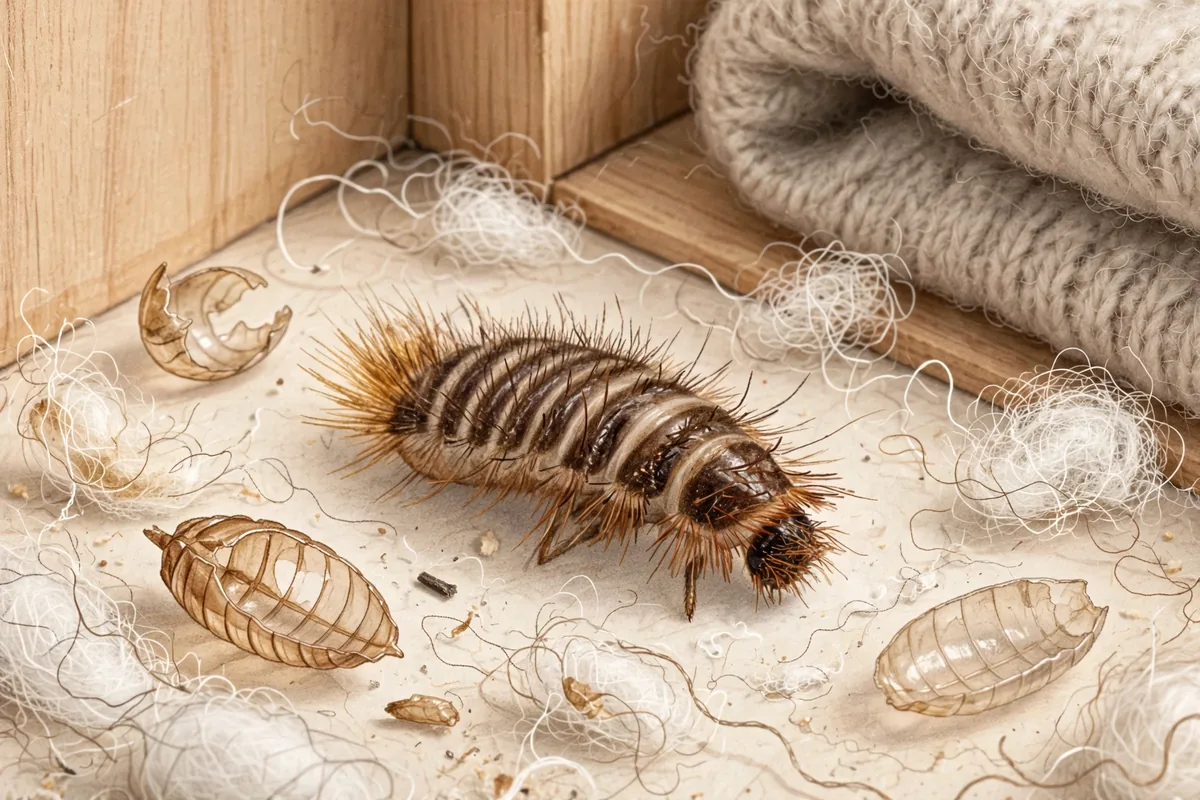
The carpet beetle larva is the immature stage of small oval beetles in the Dermestidae family, varied carpet beetles, furniture carpet beetles, and black carpet beetles being the common US species. Adults are tiny, mottled, pollen-feeding beetles you might notice on windowsills. The larvae are the ones that matter indoors: 3 to 8 millimeters long, carrot- or cigar-shaped, and covered in dense bristly hairs, with bands of light and dark brown. They look like tiny fuzzy caterpillars and move slowly, if at all, when you find them.
The visual contrast with a bed bug nymph could not be sharper: fuzzy versus smooth, banded versus plain, slow versus quick, tapered versus oval-flat. Under a magnifier, the larva’s hairs, including specialized barbed, spear-shaped hairs called hastisetae, are unmistakable. If the tiny creature you found looks like it is wearing a fur coat, it is not a bed bug.
Carpet beetle larvae do not want your blood. They eat keratin and natural fibers: wool, silk, fur, feathers, leather, pet hair, dead insects, and the lint that accumulates in undisturbed places. Their favorite addresses are closets with stored woolens, under furniture, along baseboards, inside air ducts, under rugs, and in boxes of stored blankets or seasonal clothes. They avoid light and disturbance, which is why infestations build up in the guest-room closet or under the bed you never move.
Damage, not bites, is their signature: irregular holes chewed in wool sweaters, bald patches in wool rugs, damaged feathers or furs. Finding that kind of fabric damage near where you found the fuzzy larva is strong corroborating evidence. Bed bugs never chew fabric, if your sweaters have holes, you are not looking at bed bugs.
This is the single most important sentence in this article: carpet beetles do not bite people. They have no piercing mouthparts and no interest in blood. So why do so many people with carpet beetle larvae develop itchy red welts that look exactly like bed bug bites?
The answer is the hairs. The larva’s bristly coat, especially the barbed hastisetae, breaks off and embeds in skin on contact, triggering mechanical irritation and allergic reactions, a condition sometimes called carpet beetle dermatitis. The result is small red itchy bumps or welts, often in clusters where skin pressed against an infested blanket or garment, that are visually near-identical to bite reactions. Pest professionals report this as one of the most common bed bug misdiagnoses: the home gets inspected for bed bugs, the inspection finds nothing, treatments get applied anyway, and the welts continue because the larvae are still in the closet.
The welts from larval hairs and the welts from bed bug feeding share the same final pathway: your skin’s inflammatory response. Redness, swelling, itching, the skin has a limited vocabulary. Without the bug in hand, a cluster of itchy welts cannot tell you which creature caused them. That is why the investigation must shift from the skin to the environment. Welts plus a fuzzy larva in the closet plus chewed wool equals carpet beetles. Welts plus smooth pale nymphs in the mattress seam plus dark fecal spotting equals bed bugs. The skin is the symptom; the room is the diagnosis.
| Feature | Bed Bug Nymph | Carpet Beetle Larva |
|---|---|---|
| Size | 1.5–5 mm depending on instar | 3–8 mm |
| Shape | Oval, flat | Carrot- or cigar-shaped, tapered |
| Surface | Smooth, hairless | Dense bristly fuzz, banded brown |
| Color | Translucent pale; red abdomen after feeding | Bands of light and dark brown |
| Speed | Moves quickly when disturbed | Slow-moving or still |
| Legs/appendages | Six legs, antennae visible | Tiny legs hidden under fuzz; long rear bristles |
| Shed skins | Translucent, smooth, bug-shaped | Fuzzy, bristly, caterpillar-shaped |
| Location | Mattress seams, bed frame, headboard cracks | Closets, under furniture, stored woolens, rugs |
| Feeds on | Human blood (must feed to grow) | Wool, silk, fur, feathers, pet hair, lint |
| Bites people? | Yes, that is its entire job | No, skin reactions come from shed hairs |
| Fabric damage? | Never chews fabric | Irregular holes in wool, silk, fur |
| Droppings | Dark ink-like fecal spots in clusters | Tiny pellets near feeding sites; less obvious |
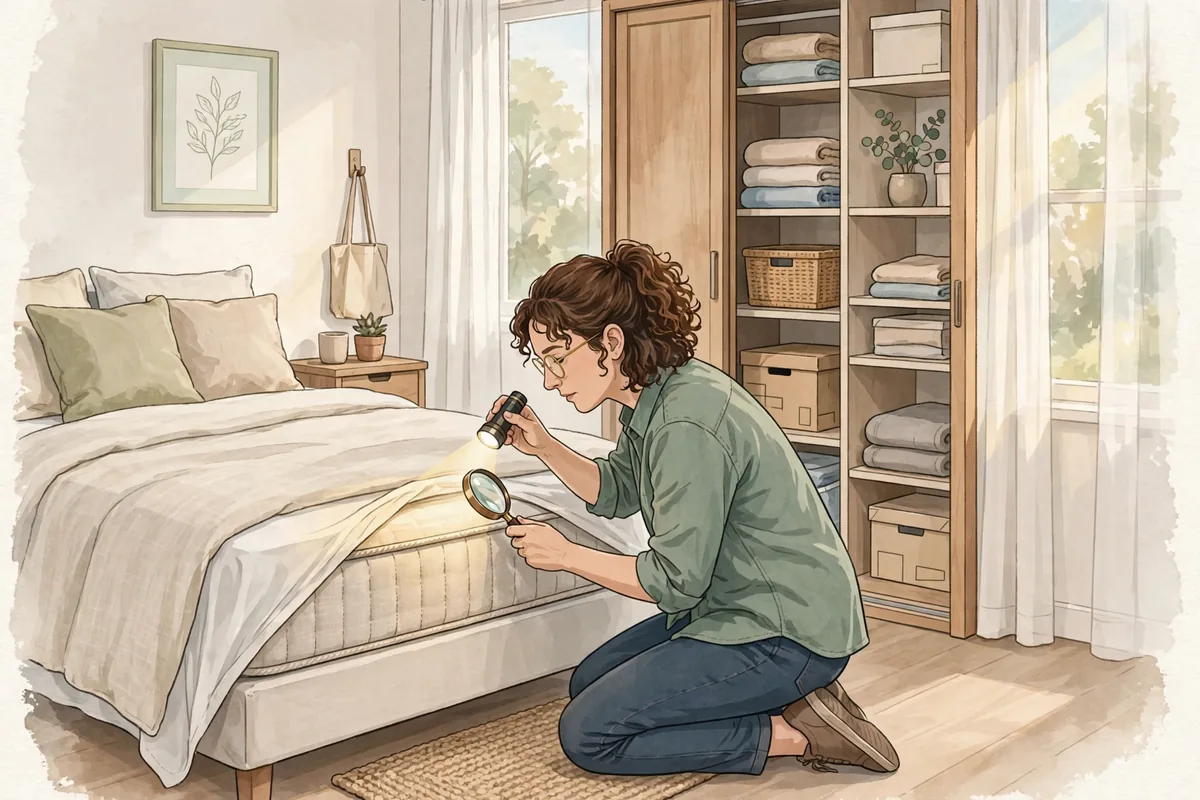
Do this in daylight with a flashlight and, ideally, a magnifying glass or your phone’s macro lens. Work methodically; the goal is evidence, not panic.
Step 1: Strip the bed and check the seams. Run the flashlight along mattress piping, seams, tufts, and tags. Look for live bugs (smooth, oval, fast), translucent shed skins, and clusters of dark spots that smear reddish-brown when touched with a damp tissue, bed bug feces. Check the box spring underside and bed frame joints.
Step 2: Check the headboard and nightstand. Pull the bed away from the wall. Inspect the headboard’s back, screw holes, and joints, plus nightstand seams and drawer undersides. Bed bugs harbor within a few feet of where you sleep.
Step 3: Inspect the closets and stored fabrics. This is the carpet beetle beat. Look for fuzzy, slow-moving larvae, their bristly shed skins, and irregular holes in wool, silk, or fur items. Check under rarely moved furniture, along baseboards, and inside boxes of stored blankets.
Step 4: Photograph anything you find. Clear photos of the creature, the location, and any damage or spotting give a pest professional something concrete to identify. Note the date and exact spot.
Step 5: Do not start spraying yet. DIY insecticides scatter bed bugs deeper into wall voids and furniture, making professional treatment harder and more expensive. For carpet beetles, the first-line response is cleaning, not chemicals: thorough vacuuming with crevice tools, hot-washing or dry-cleaning infested fabrics, and discarding heavily infested items in sealed bags. Identify first, then choose the response that matches. Our what-bit-me guide has more detail on confirming signs, and if travel is involved, the same seam-and-headboard check works in a hotel room before you unpack.
Confirmed bed bugs usually require professional pest control. Effective treatment means targeted application or whole-room heat treatment by a licensed operator, often with follow-up visits, plus mattress encasements, interceptor traps under bed legs, and decluttering to remove harborages. It is a project measured in weeks, and everyone in the household should be checking, not just the person with welts.
Confirmed carpet beetles are primarily a cleaning and exclusion project. Deep-vacuum the infested areas including under and behind furniture, launder or dry-clean woolens and stored fabrics in hot water, discard items too damaged to save, and seal cracks where larvae travel. Store vulnerable natural-fiber items in sealed containers going forward. Professional help is warranted for heavy or recurring infestations, but the day-to-day lever is sanitation, not extermination chemistry.
Unconfirmed, you have welts but found nothing, calls for monitoring, not treatment. Set out bed bug interceptor traps, keep inspecting weekly, and see a dermatologist about the skin while the investigation continues. Treating an unconfirmed problem is how people spend thousands solving the wrong pest. For general help sorting ambiguous bite-like clues, our bite-sting clue checklist is a useful companion.
See a clinician promptly if you notice:
Bring your pest photos to the appointment. Dermatologists see bite-mimic rashes constantly, and knowing whether the household found nymphs, larvae, or nothing at all changes the clinical reasoning. And if bed bugs are confirmed at home, mention it, the clinician may want to check other household members and can advise on managing the skin while the pest professional handles the infestation.
I found a tiny fuzzy bug in my bed. Is it a bed bug nymph?
Almost certainly not. Bed bug nymphs are smooth and hairless at every stage, fuzz rules out bed bugs. A tiny fuzzy creature is far more likely a carpet beetle larva or another fabric pest. That said, location matters: carpet beetle larvae in the bed usually wandered in from nearby stored fabrics or upholstery. Vacuum thoroughly, check closets and under-bed storage for the source, and photograph the creature for identification.
Can carpet beetle larvae infest my mattress like bed bugs?
They can wander through bedding, but they do not colonize mattresses the way bed bugs do, because mattresses offer them no food. Larvae go where keratin and natural fibers accumulate: closets, under furniture, rugs, stored blankets. If your inspection finds fuzzy larvae but no smooth oval bugs, no shed bed-bug skins, and no fecal spotting in the mattress seams, the mattress is probably just a transit route, not headquarters.
Do I need an exterminator for carpet beetles?
Often not. Most carpet beetle problems resolve with thorough cleaning: vacuuming with crevice attachments, hot-laundering or dry-cleaning infested natural-fiber items, and storing vulnerable fabrics sealed. Call a professional if the infestation keeps recurring despite cleaning, if it spans multiple rooms, or if someone in the home has strong allergic reactions to the larval hairs. For bed bugs, professional treatment is the norm rather than the exception.
How can I tell a bed bug nymph from a tick?
Ticks are arachnids with eight legs (after the larval stage) and a fused, unsegmented body; bed bug nymphs are insects with six legs, antennae, and a visibly segmented abdomen. Ticks also attach and stay put to feed for days, while bed bugs feed for minutes and leave. If the creature is embedded in skin, think tick and remove it properly, see our docs on removing an attached tick safely.
My exterminator treated for bed bugs but I still itch. Now what?
Ask for the evidence the treatment was targeting: were live bed bugs, shed skins, or fecal spots actually found? If the diagnosis was based on welts alone, request a re-inspection specifically for carpet beetle larvae in closets, under furniture, and in stored fabrics. Persistent welts after professional bed bug treatment with no bed bug evidence found is the classic carpet-beetle-misdiagnosis story. A second opinion from a different pest professional, plus a dermatologist visit for the skin, covers both fronts.
Medically reviewed by Dr. Sarah Jones, MD.
This article is for informational purposes only and isn’t medical advice. If you’re worried about a bite or sting, talk to a healthcare professional.
Dr. Jones oversees StingHelp’s clinical verification process. Every guide is systematically evaluated against active Centers for Disease Control and Prevention (CDC), Environmental Protection Agency (EPA), and American Academy of Allergy, Asthma & Immunology (AAAAI) medical consensus standards to ensure symptom distinctions and care recommendations are clinically sound.
Explore physician-reviewed first-aid procedures, identification clues, and symptom comparisons for other common outdoor bites and stings.
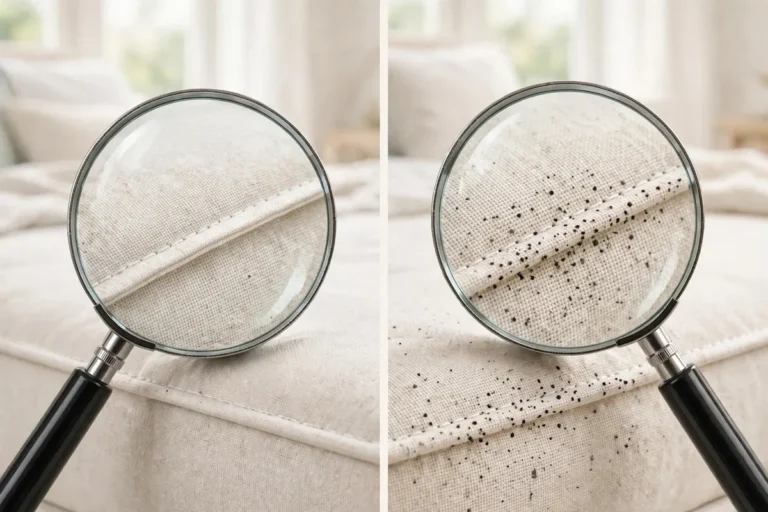
You pull back the sheets and notice tiny black specks. Your stomach drops, is it bed bugs, or fleas? Both pests leave behind dark…

Vinegar shows up in nearly every do-it-yourself bed bug discussion online. It is cheap, it is already in the kitchen, and countless forum posts…
The logic feels airtight. Salt kills slugs in the garden by drawing the moisture out of them, so sprinkling salt around the bed should…