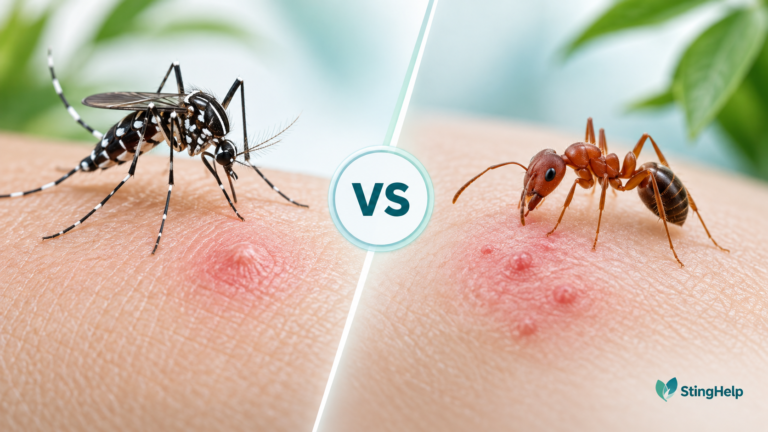
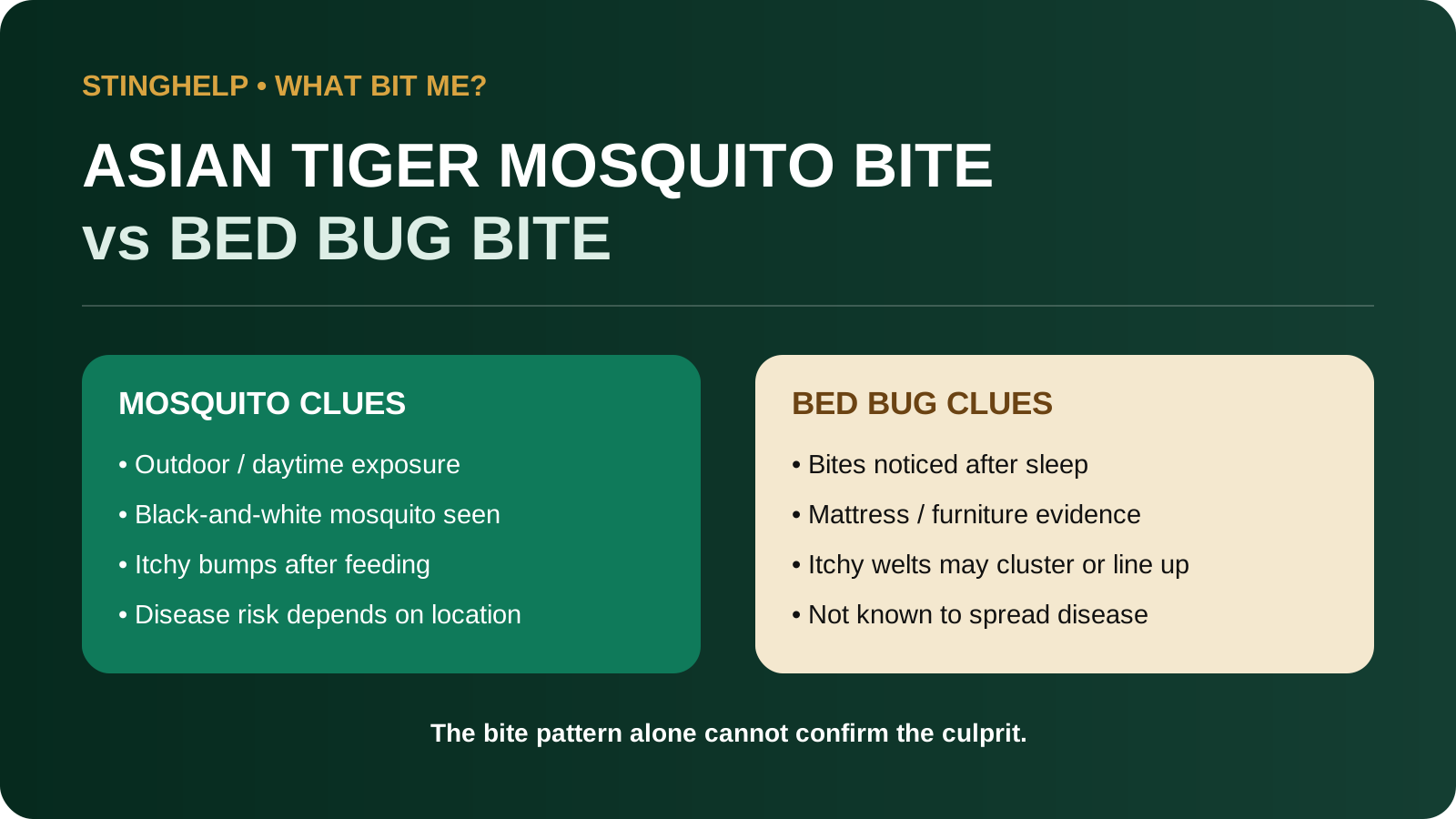
Direct answer: Asian tiger mosquito bites and bed bug bites can both cause itchy red bumps, so the skin mark alone is a weak identifier. A mosquito exposure is more likely after outdoor contact or seeing a black-and-white Aedes albopictus; bed bugs are more likely when bites occur around sleep and you find physical infestation signs near a mattress, headboard, or upholstered furniture.
People searching for asian tiger mosquito bite vs bed bug bite treatment differences usually want a fast way to decide whether the problem is a mosquito exposure or an indoor infestation. The most useful approach is to rank the evidence: first the actual insect, then the exposure setting, then environmental clues, and only then the bite pattern.
This distinction matters because the follow-up is different. A typical mosquito bite is mainly a skin-care problem unless illness develops in a setting where mosquito-borne disease is possible. Bed bug bites are not known to spread disease, but an infestation can continue producing bites until the bugs are found and eliminated. In both cases, scratching can damage the skin and contribute to secondary infection.
Asian tiger mosquito bite vs bed bug bite: quick comparison
| Clue | Asian tiger mosquito bite | Bed bug bite |
|---|---|---|
| Typical culprit | Aedes albopictus, a small black mosquito with white bands and markings. | Cimex species, small flat reddish-brown insects that hide near sleeping areas. |
| Common exposure | Outdoor or near-home mosquito exposure; often daylight, dawn, or dusk activity. | While a person is sleeping or resting near an infested bed, couch, or upholstered area. |
| When the bite is noticed | May be noticed during feeding or later when itching develops. | Usually not felt while feeding; marks may appear later, from hours to several days. |
| Pattern | One or several itchy bumps; clustering can occur. | Welts may be random, clustered, or in a line/zigzag pattern. |
| Strongest extra clue | Seeing a black-and-white mosquito or having clear outdoor exposure. | Live bugs, eggs, shed skins, rusty stains, dark spotting, or bugs in mattress/headboard seams. |
| Disease issue | Infected mosquitoes can transmit dengue, Zika, or chikungunya depending on local or travel exposure. | Bed bugs are not known to spread disease to people. |
| Main next step | Treat itch, prevent more mosquito bites, and monitor for illness when relevant. | Treat itch and confirm/control the infestation rather than relying on the bite pattern alone. |
What does an Asian tiger mosquito look like?
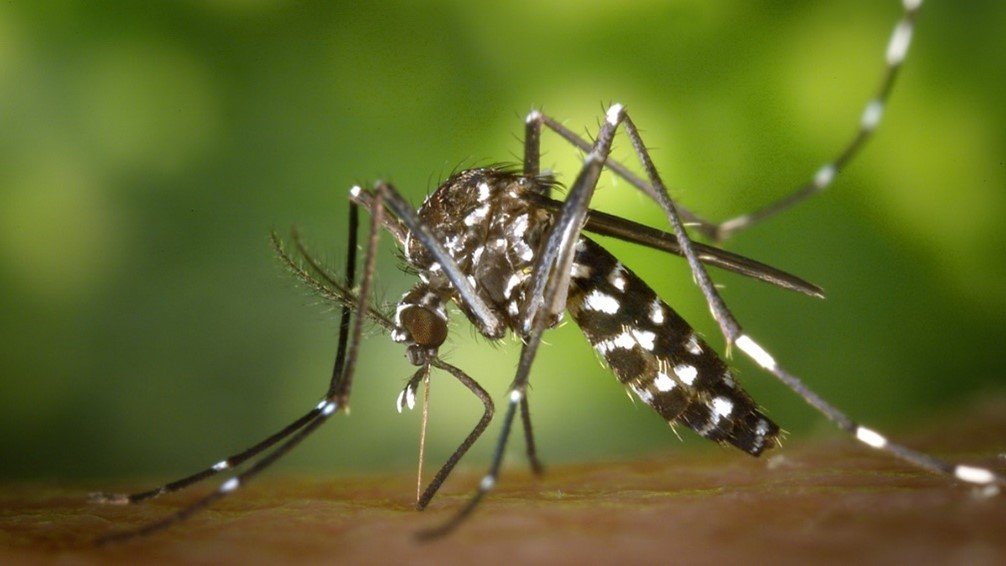
The Asian tiger mosquito is a small Aedes mosquito with a black body, white-banded legs, and white body markings. CDC describes Aedes albopictus as occurring in tropical, subtropical, and some temperate regions, including parts of the United States and southern Europe. It can tolerate cooler conditions than Aedes aegypti.
The species uses water-holding containers for egg laying and is often associated with yards, gardens, vegetation, and areas around homes. Unlike a bed bug, it has wings, long slender legs, and the classic mosquito body shape. If you actually saw the insect feeding, identification becomes much easier than trying to diagnose the source from the resulting welt.
What do Asian tiger mosquito bites usually look and feel like?
A bite may be felt as a small prick, or it may go unnoticed until an itchy bump appears. Reactions vary: one person may develop a tiny red spot while another develops a larger wheal or localized swelling. Multiple bites can occur when several mosquitoes are active or when a mosquito makes more than one feeding attempt.
This is why “several bites together” is not enough to diagnose bed bugs. Mosquito bites can also cluster on exposed skin, especially on the lower legs, ankles, arms, neck, or other uncovered areas.
What do bed bugs look like?
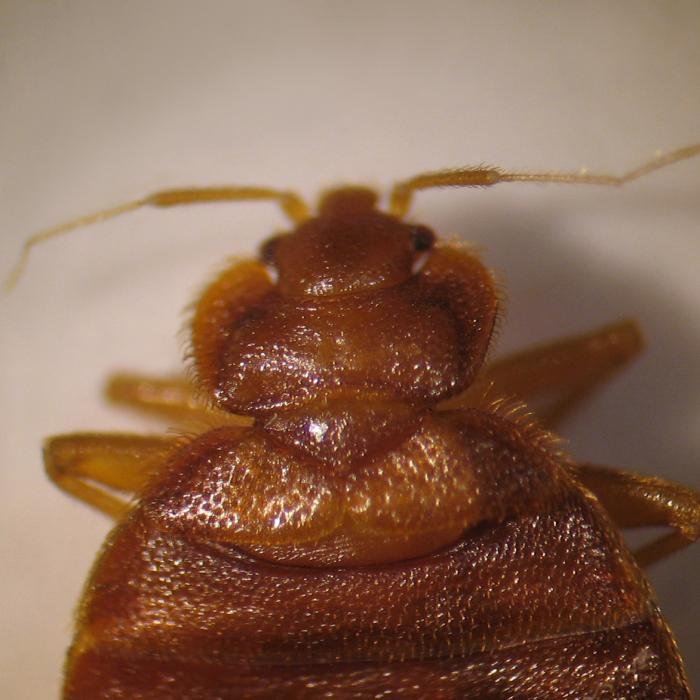
CDC describes bed bugs as small, flat insects that feed on people and animals while they sleep. Adult bed bugs are reddish-brown, wingless, and roughly 1 to 7 millimeters long. They do not live on the human body; they hide in nearby cracks and crevices and come out to feed.
Common hiding sites include mattress piping and seams, box springs, bed frames, headboards, couches, chair seams, and other narrow gaps near places where people rest. They can be present in clean or cluttered environments, inexpensive lodging, luxury hotels, apartments, houses, dormitories, and other settings. Cleanliness alone cannot confirm or rule out an infestation.
What do bed bug bites usually look and feel like?
Bed bug bites often produce itchy red welts, but reactions differ greatly. CDC notes that some people may show no visible signs while others develop small bite marks or, rarely, a serious allergic reaction. People usually do not feel the bite while it is happening because bed bugs inject substances that reduce sensation and keep blood flowing during feeding.
Bites may appear randomly, in clusters, or in a line. Dermatology guidance often describes line or zigzag groupings, but this pattern should be treated as supporting evidence rather than proof. Mosquitoes, fleas, other arthropods, hives, and skin irritation can create overlapping appearances.
The evidence ladder: which clues are most reliable?
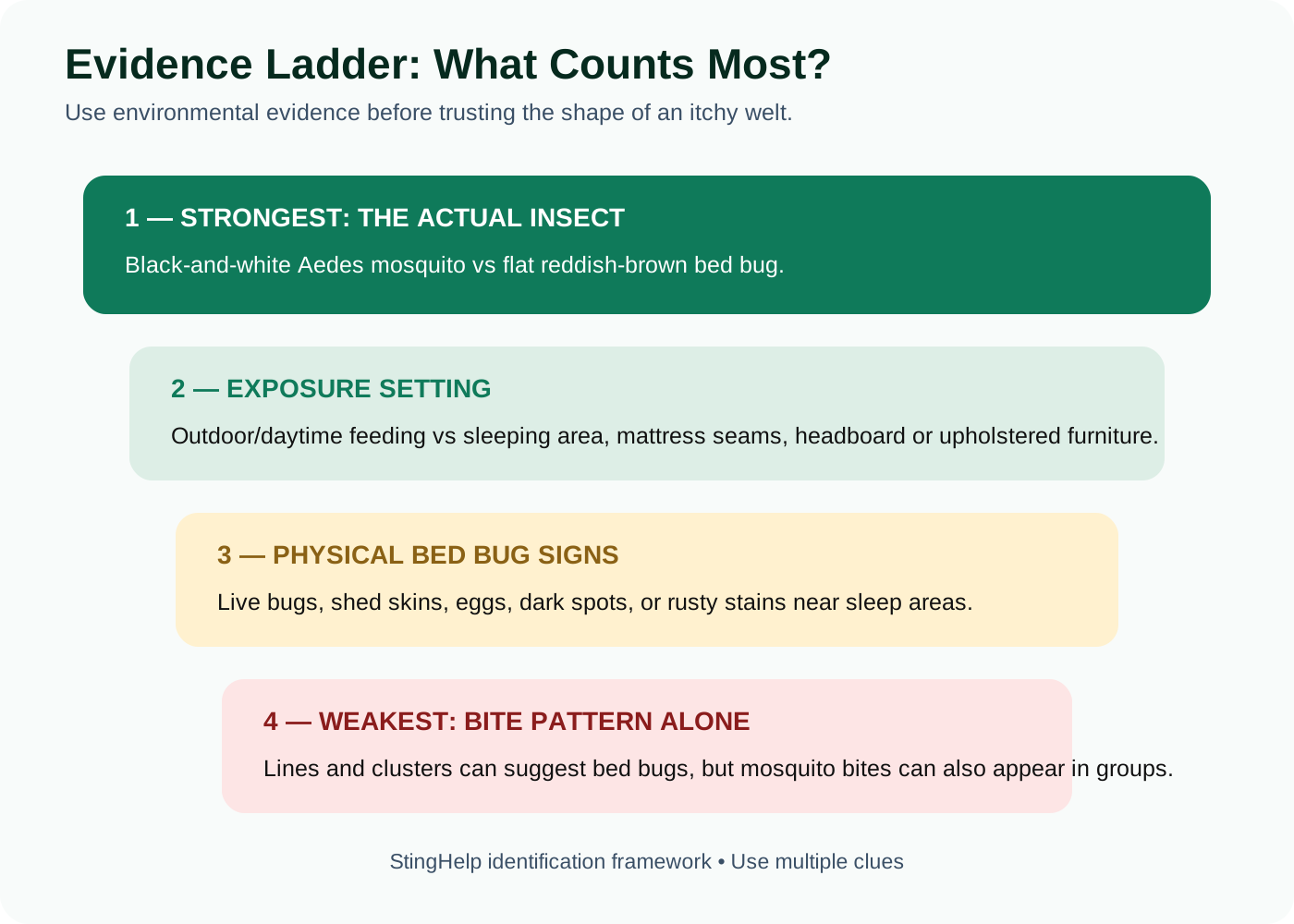
When the bite itself looks nonspecific, use an evidence ladder. The strongest clue is the actual insect. The next strongest clue is the exposure setting. For suspected bed bugs, physical signs around the sleeping area are particularly important. The bite pattern comes last because skin reactions overlap.
Strong clues for Asian tiger mosquito exposure
- You saw a small black-and-white mosquito land or feed.
- Bites followed time outdoors, gardening, walking, sitting on a porch, or another mosquito-prone activity.
- Other people nearby also noticed mosquitoes.
- The bites are on exposed skin and began after the outdoor exposure.
- There is standing water or known Aedes activity around the property.
Strong clues for bed bugs
EPA recommends looking for physical infestation signs rather than relying only on bites. Useful clues include rusty or reddish stains on bedding, dark fecal spots, pale eggs or eggshells, shed nymphal skins, and live bed bugs. Look closely at mattress seams, box springs, headboards, bed frames, upholstered furniture, and nearby cracks.
A new pattern of bites after staying in a hotel, moving into a new apartment, receiving used furniture, or sleeping in another location can strengthen suspicion. But even then, confirm with physical evidence or a qualified pest professional before assuming every itchy mark is caused by bed bugs.
Do bed bug bites always appear in a line?
No. A line or zigzag arrangement is commonly associated with bed bugs, but it is not mandatory. CDC notes that bed bug bite marks may be random or appear in a straight line. Dermatology sources describe clusters and zigzag patterns, but individual skin responses vary.
Likewise, a mosquito can create several nearby itchy bumps. If multiple mosquitoes are active, grouped bites can appear on the same arm, ankle, shoulder, or leg. Pattern alone is therefore best treated as a clue—not a diagnosis.
Why timing after sleep can be useful
Bed bugs normally feed while people sleep. Many people wake up with new itchy marks and never felt the bite. The reaction may not appear immediately; CDC notes that marks can show from one to several days after the initial bite.
Mosquito bites can also be noticed later, but the exposure context is different. Asian tiger mosquitoes commonly bite around people outdoors and can bite during the day and night, with important activity around dawn and dusk. If you spent time outside and saw mosquitoes, that history supports mosquito exposure more than a new indoor infestation.
Asian tiger mosquito bite vs bed bug bite treatment differences
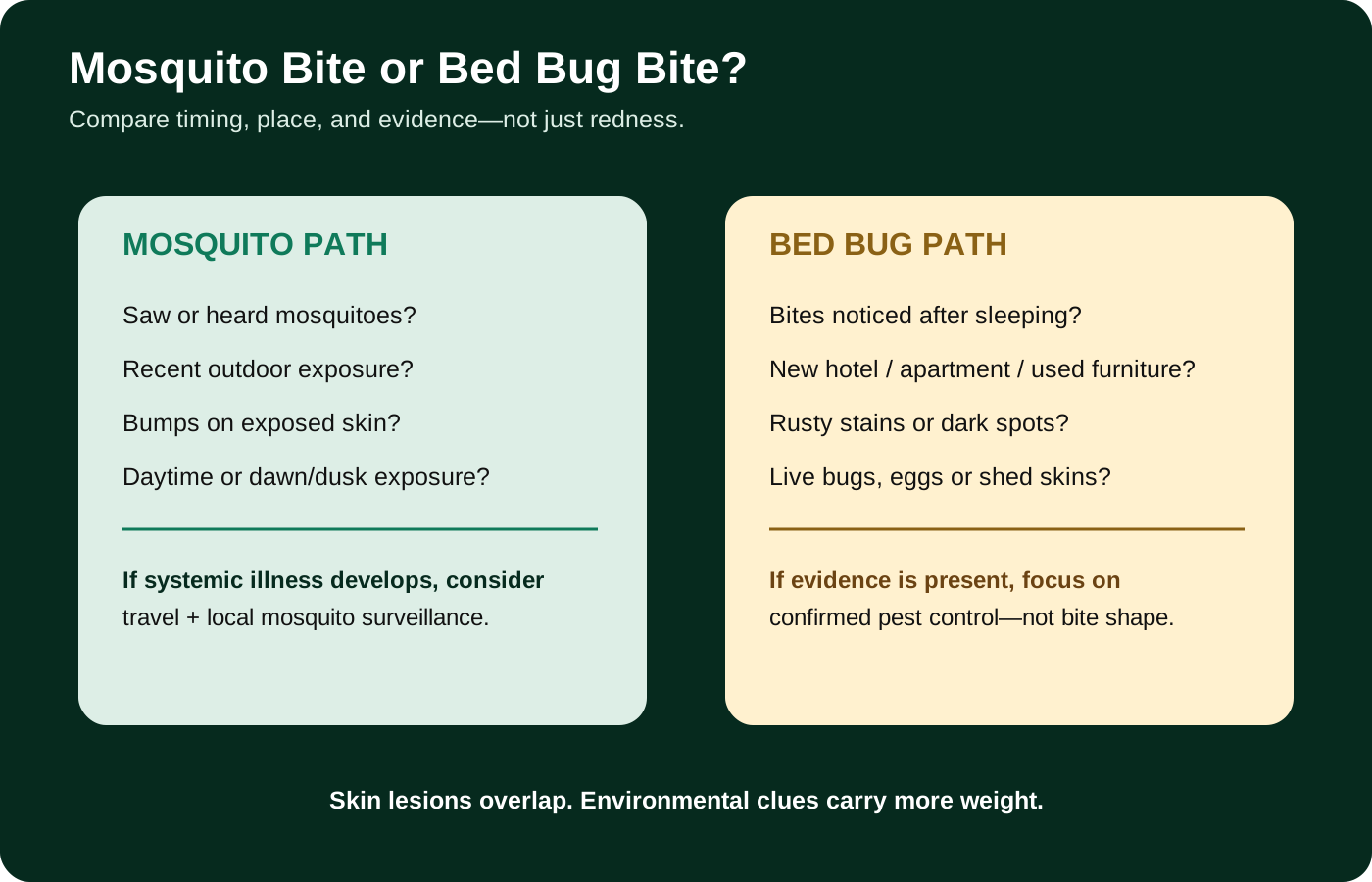
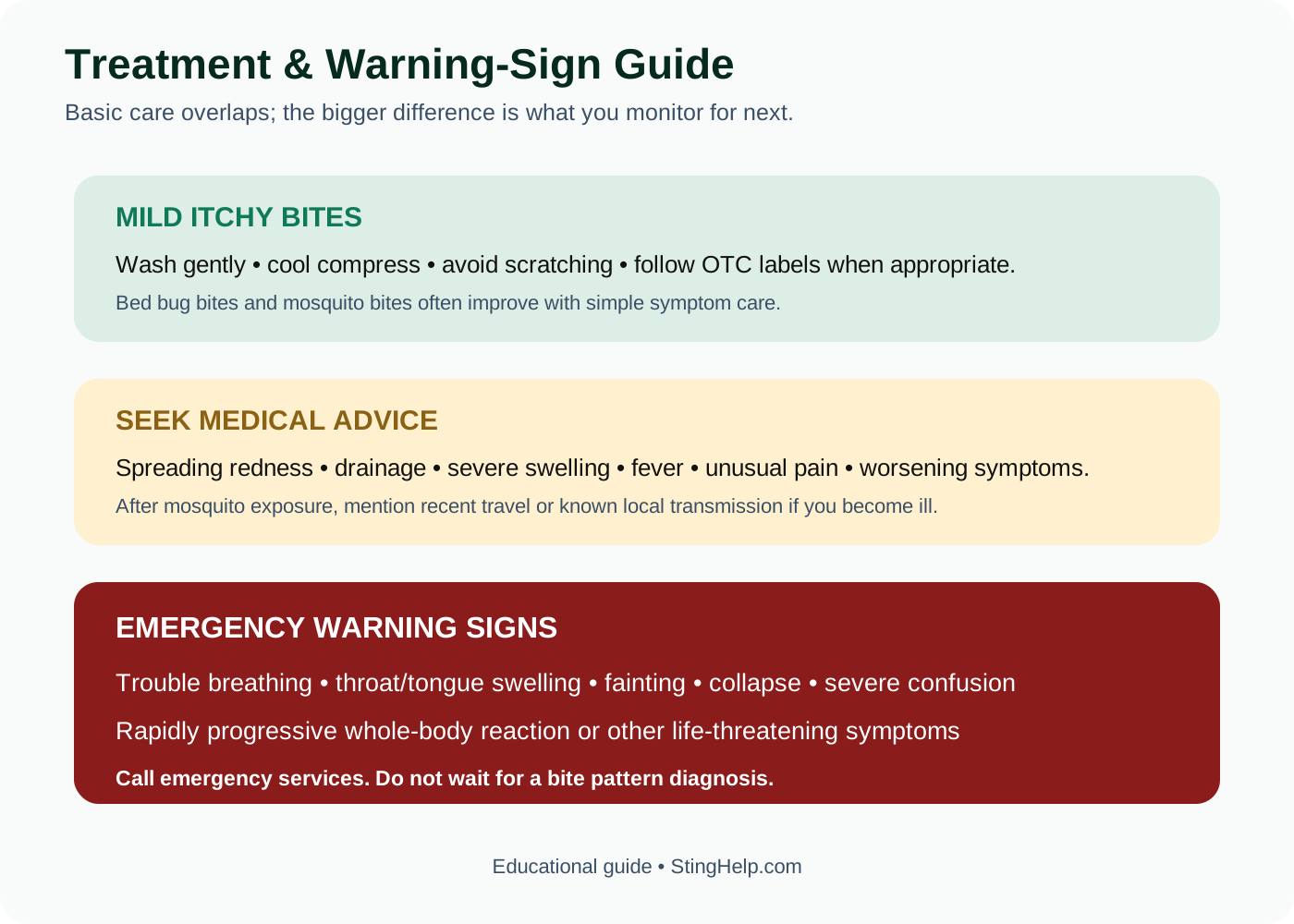
For uncomplicated itchy bites, initial skin care overlaps considerably. Wash gently, use a cool compress, avoid scratching, and follow the directions on any over-the-counter anti-itch treatment that is appropriate for you. The practical difference is what you need to solve after the skin care.
For a typical Asian tiger mosquito bite
- Wash the area gently with soap and water.
- Use a cool compress or wrapped ice pack for swelling and itch.
- Avoid scratching to reduce skin damage and secondary infection risk.
- Use appropriate over-the-counter itch relief only according to the product label and your medical situation.
- Prevent more mosquito bites with repellent, clothing, screens, and standing-water control.
- If systemic illness develops, consider recent travel and current local mosquito-borne disease activity.
For a typical bed bug bite
- Wash the bites with soap and water.
- Use a cool compress and appropriate itch relief when needed.
- Avoid scratching, especially if the skin is already broken.
- Inspect the sleeping area for physical bed bug evidence.
- If bed bugs are confirmed, focus on infestation control; treating the bites alone will not stop new exposures.
- Seek medical care for many bites, blistering, infection, severe swelling, or a significant allergic reaction.
AAD notes that uncomplicated bed bug bites often resolve within a week or two. The larger challenge is environmental control. EPA advises confirming the pest and using an integrated bed bug management approach rather than depending on random sprays or bite appearance.
Disease risk: a major difference between the two exposures
CDC states that bed bugs are not known to spread diseases to people. They can still cause meaningful health problems, including itching, loss of sleep, anxiety, allergic reactions, and secondary skin infection from scratching.
Asian tiger mosquitoes are different because infected Aedes albopictus can transmit dengue, Zika, and chikungunya. The presence of the mosquito does not mean a particular bite transmitted a virus. Risk depends on whether infected mosquitoes are circulating in that location and time period, plus the person’s travel and exposure history.
If fever, rash, marked joint pain, severe headache, unusual bleeding, neurologic symptoms, or significant systemic illness develops after mosquito exposure, seek medical advice and mention travel dates and locations. Those symptoms should not be dismissed as “just a bad bite.”
When does scratching become an infection concern?
Either mosquito or bed bug bites can become irritated from scratching. Warning signs that deserve medical attention include increasing pain, warmth, expanding redness, drainage or pus, fever, or a wound that is not improving. These signs do not tell you which insect caused the original bite; they tell you the skin may need evaluation.
Large blisters or an unusual severe reaction also deserve medical review. AAD specifically recommends evaluation for many bed bug bites, blistering, infection, or an allergic skin reaction.
When is it an emergency?
Call emergency services for trouble breathing, swelling of the tongue or throat, fainting, collapse, severe confusion, or another rapidly progressive life-threatening reaction after any bite or sting. Do not delay emergency care while trying to identify the insect.
How to prevent Asian tiger mosquito bites
CDC recommends EPA-registered insect repellent, loose long-sleeved shirts and pants when practical, intact window and door screens, and removal of standing water where Aedes mosquitoes can lay eggs. Check plant saucers, buckets, toys, gutters, birdbaths, bowls, and other containers that hold water.
Because Aedes mosquitoes can bite during the day as well as other times, protection should not be limited to nighttime. Travelers should check current CDC travel guidance when visiting places with active dengue, Zika, chikungunya, or other mosquito-borne disease concerns.
How to prevent and control bed bugs
Inspect luggage and sleeping areas when traveling, avoid placing suitcases directly on beds, and examine secondhand furniture carefully before bringing it indoors. If you suspect bed bugs, inspect mattress seams, box springs, headboards, frames, couches, and nearby cracks using a flashlight.
If physical signs are found, contact a qualified pest-management professional or follow an evidence-based integrated pest management plan. Bed bug control often requires multiple steps and follow-up. Do not assume that one spray or fogger will solve the problem.
What if you still cannot tell what bit you?
Use the exposure history first. Outdoor time plus visible black-and-white mosquitoes supports an Asian tiger mosquito explanation. New bites after sleep plus live bugs, stains, cast skins, eggs, or other bedroom evidence supports bed bugs. If neither side has strong evidence, keep the diagnosis open.
You can also use the StingHelp What Bit Me? identification guide, review our mosquito bites hub, see the bite and sting first-aid guide, and check emergency warning signs. For preventing repeat exposures, use the prevention hub. More comparisons are available in the StingHelp guide library.
Frequently asked questions
How can you tell an Asian tiger mosquito bite from a bed bug bite?
The best clues are the insect and exposure setting. Asian tiger mosquitoes are black-and-white mosquitoes often encountered outdoors, while bed bugs are flat reddish-brown insects associated with sleeping areas. Bite appearance alone is not reliable enough to confirm the culprit.
Do bed bug bites always appear in a line?
No. Bed bug bites may appear in lines, clusters, or a more random pattern, and some people show little or no skin reaction. A line or cluster can support suspicion but should be combined with physical signs of bed bugs.
Can Asian tiger mosquito bites appear in clusters?
Yes. Several mosquitoes or repeated feeding attempts can produce multiple itchy bumps, so a cluster does not automatically mean bed bugs.
Do bed bugs spread disease?
CDC states that bed bugs are not known to spread diseases to people. Their main health effects include itching, sleep disruption, allergic reactions, and skin infection from scratching.
Can an Asian tiger mosquito transmit disease?
An infected Aedes albopictus mosquito can transmit viruses including dengue, Zika, and chikungunya. Actual risk depends on geography, travel, season, and current local transmission.
When should you seek medical care for an unexplained bite?
Seek medical advice for spreading redness, drainage, severe swelling, fever, worsening pain, blisters, or significant systemic illness. Call emergency services for breathing difficulty, throat or tongue swelling, fainting, collapse, or another rapidly progressive severe reaction.
Authoritative references
- CDC — About Bed Bugs
- U.S. EPA — How to Find Bed Bugs
- CDC — Aedes albopictus / Asian Tiger Mosquito
- American Academy of Dermatology — Bed Bug Diagnosis and Treatment
Bottom line
The most useful asian tiger mosquito bite vs bed bug bite treatment differences are not found in the shape of the welt. Mosquito exposure is better supported by outdoor contact and an identifiable black-and-white mosquito; bed bugs are better supported by sleep-associated exposure plus physical infestation evidence. Treat uncomplicated itch safely, solve the environmental source, and seek medical care for worsening skin symptoms, systemic illness, or emergency warning signs.
Educational information for a U.S.- and Europe-focused audience. This article cannot diagnose an insect, infestation, infection, allergic reaction, or mosquito-borne illness from a photograph and does not replace professional medical care.