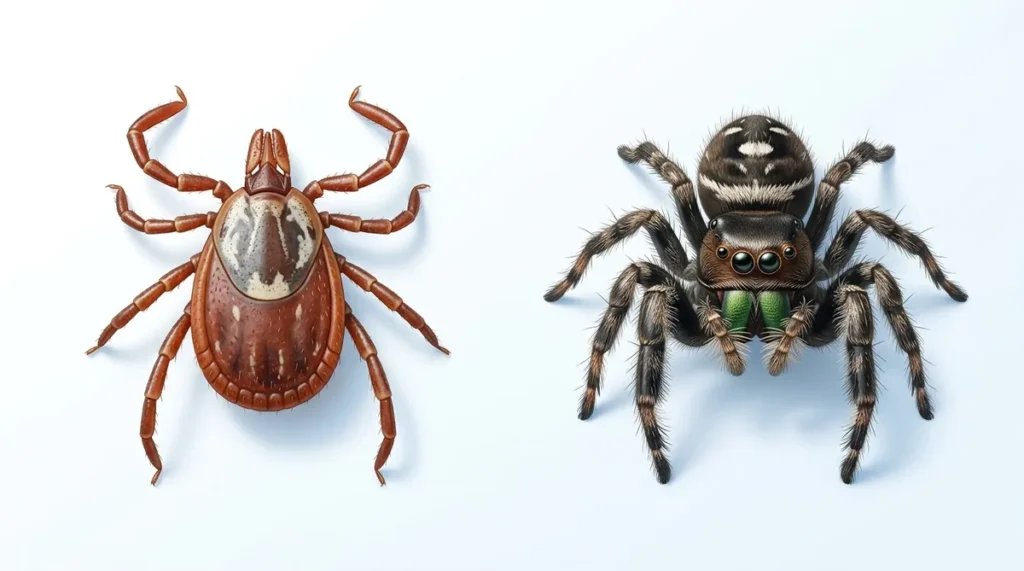
An American dog tick bite vs jumping spider bite is usually easier to distinguish by the creature’s behavior than by the skin mark alone. An American dog tick attaches firmly to the skin and may feed for several days. It can transmit serious infections, including Rocky Mountain spotted fever and tularemia. A jumping spider bite, by contrast, is extremely rare and is generally limited to minor local irritation, if it causes symptoms at all. The single biggest clue is whether an arthropod was found attached to the skin. A feeding tick stays attached; a jumping spider does not.
Skin redness by itself cannot reliably identify what caused a bite. Mosquitoes, mites, minor scratches, folliculitis, allergic reactions, and bacterial skin infections can all create similar-looking spots. If you did not actually see or recover the creature, it is often more accurate to describe the mark as an unexplained skin lesion rather than assume it was a spider bite.
What an American Dog Tick Is
The American dog tick, Dermacentor variabilis, is a hard-bodied tick widely distributed across much of the eastern and central United States, especially east of the Rocky Mountains, with more limited populations in some western areas.
An unfed adult female is approximately 5 millimeters long and typically has a brown to reddish-brown body with pale gray or silvery markings. Once a female begins feeding, her body can expand considerably, which may make identification more difficult.
American dog ticks do not jump or fly. Instead, they commonly use a behavior called questing. A tick climbs grass, weeds, brush, or other low vegetation and waits with its front legs positioned to grab onto a passing person or animal.
After reaching a suitable location on the body, the tick inserts its mouthparts into the skin and begins feeding. An adult female may remain attached for several days if she is not discovered and removed.
That prolonged attachment is one of the most useful differences when comparing an American dog tick bite with a suspected spider bite.
What a Jumping Spider Is
Jumping spiders belong to the family Salticidae, one of the largest families of spiders. More than 300 species occur in the United States and North America.
They are compact spiders known for their unusually good eyesight, prominent forward-facing eyes, quick movements, and ability to jump toward prey or away from danger.
Jumping spiders are primarily active during daylight. Rather than building a traditional sticky web to capture insects, they actively stalk and pounce on prey. They do produce silk for purposes such as retreats, egg protection, and safety lines, but they are not typical web-based ambush predators.
Despite their appearance, jumping spiders are generally considered harmless to people. They normally try to escape rather than bite. A bite may occur if a spider is trapped tightly against the skin, squeezed inside clothing, or deliberately handled, but confirmed bites are uncommon.
Even when a bite occurs, symptoms are usually mild and localized.
Side-by-Side Comparison
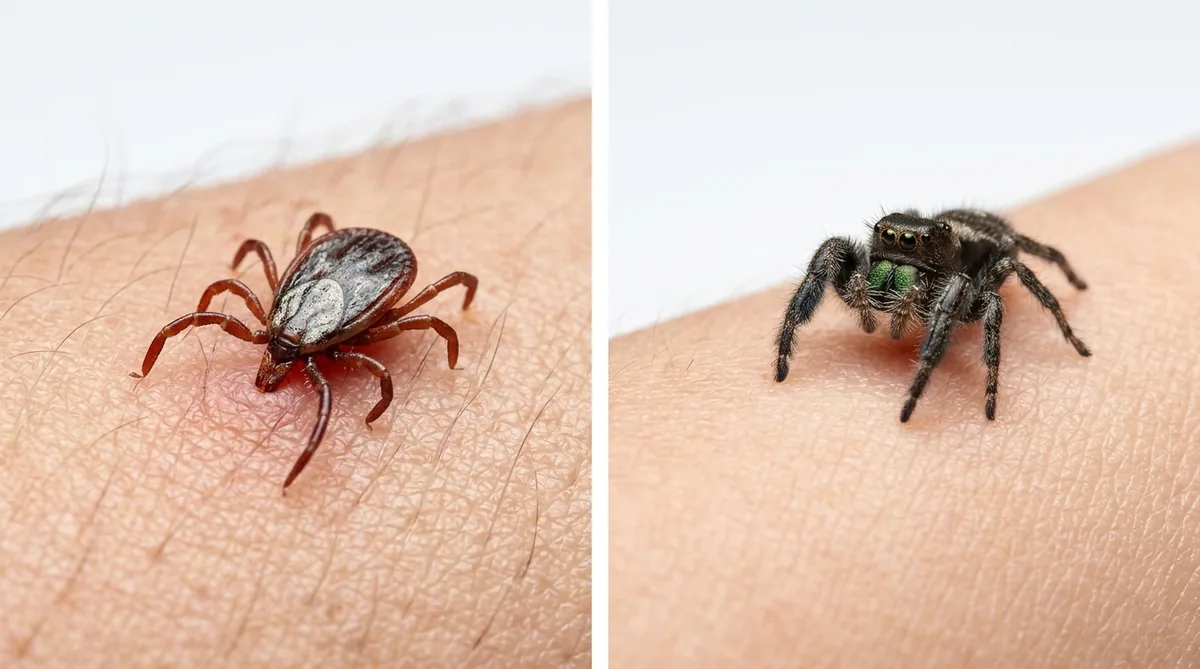
The following features can help when comparing an American dog tick bite vs jumping spider bite.
| Feature | American Dog Tick Bite | Jumping Spider Bite |
|---|---|---|
| Creature stays attached? | Yes. A feeding tick anchors to the skin and may remain for several days. | No. A spider bites defensively and moves away. |
| Bite pain | Often unnoticed when attachment begins. | May cause a brief pinch or minor pain if a true bite occurs. |
| Bite appearance | Small red spot or mild irritation may remain after removal; sometimes little is visible. | Usually no visible reaction or a small area of redness, itching, or swelling. |
| Timing | Tick may be discovered while still attached; illness from infection can develop later. | Local symptoms, when present, generally begin around the time of the bite or soon afterward. |
| Disease risk | Can transmit pathogens responsible for Rocky Mountain spotted fever and tularemia. | Not known to transmit human infectious diseases. |
The skin mark alone is rarely enough to identify the culprit. Finding an attached tick is much stronger evidence than trying to identify an arthropod from redness, swelling, or itching.
American Dog Tick Bite: Symptoms and What It Looks Like
Many people do not feel an American dog tick attach. A tick bite may initially cause little or no pain because the tick is adapted to remain attached while feeding.
The most obvious finding may therefore be the tick itself. It can resemble a small brown or gray bump until closer inspection reveals legs around the body.
After removal, the site may show a tiny red mark, mild swelling, tenderness, itching, or a small irritated area. These local symptoms do not automatically mean that an infection was transmitted.
A small amount of temporary irritation can result from the bite itself or from the body’s inflammatory response around the tick’s mouthparts.
What matters more is what happens afterward. New fever, headache, muscle aches, unusual fatigue, or rash following a recent tick exposure deserves medical attention because some tickborne diseases can become serious.
For a broader review of symptoms worth monitoring, see these tick bite warning signs and emergency symptoms.
Jumping Spider Bite: Symptoms and What It Looks Like
A confirmed jumping spider bite is unusual. Jumping spiders are active hunters that generally use their speed and jumping ability to escape humans rather than defend themselves by biting.
If a bite does occur, it may cause a brief pinching sensation followed by minor redness, itching, tenderness, or localized swelling. Some people may notice almost nothing.
Symptoms from commonly encountered jumping spiders are not generally considered medically significant and usually remain localized.
The larger identification problem is that many skin problems described as “spider bites” were never associated with a witnessed spider. Pimples, inflamed hair follicles, minor bacterial infections, other arthropod bites, and irritated skin can all be mistaken for spider bites.
A worsening painful lesion should therefore not automatically be blamed on a jumping spider. If redness continues expanding, the area becomes increasingly warm or painful, or drainage develops, a healthcare professional should evaluate it. These symptoms can sometimes indicate a skin infection such as cellulitis following a bug bite.
What to Do for a Tick Bite
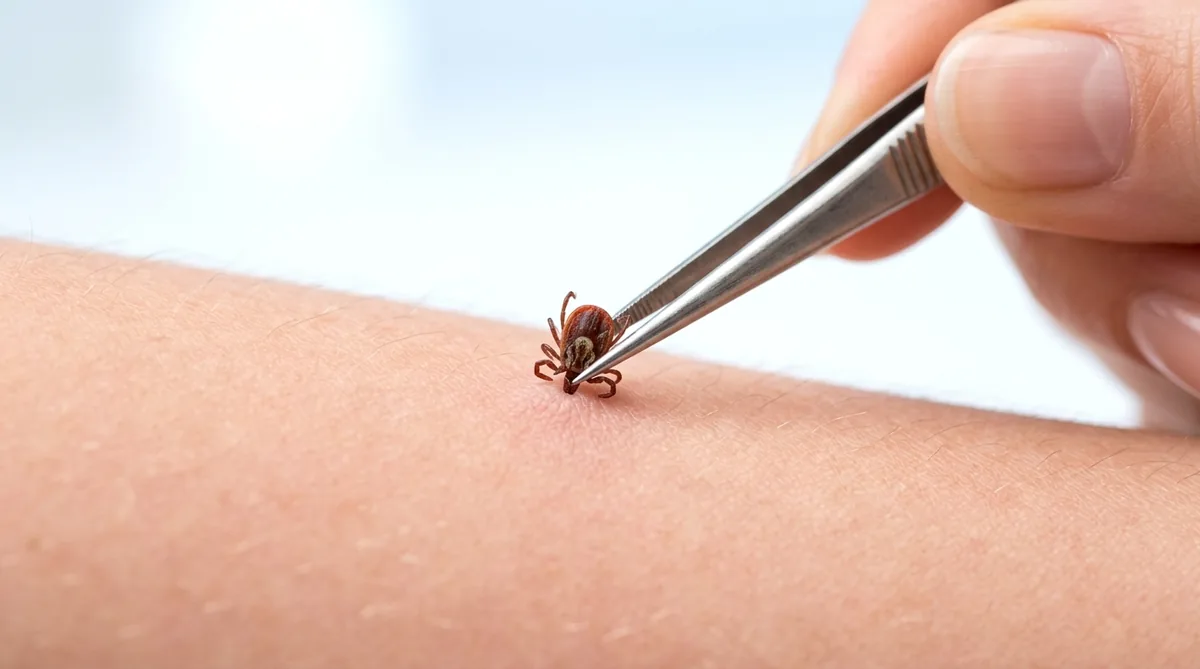
If an American dog tick or another tick is attached, remove it promptly rather than waiting for it to detach naturally.
Use clean, fine-tipped tweezers. Grasp the tick as close as possible to the skin, ideally around the mouthparts rather than squeezing the swollen body. Pull upward using steady, even pressure. Avoid twisting or jerking the tick because this can cause parts of its mouth apparatus to remain in the skin.
After removal, clean the bite site and your hands with soap and water or another appropriate skin-cleaning product.
Do not attempt to force a tick to detach with heat, petroleum jelly, nail polish, or similar home remedies. Mechanical removal with tweezers is preferred.
You can place the removed tick in a sealed bag or container and record the date and location of the exposure. Keeping the tick temporarily may help with species identification if questions arise. Saving a tick for identification is different from assuming commercial testing of the tick can determine whether you will become sick.
Check the rest of your body for additional ticks, especially the scalp, hairline, behind the ears, armpits, waist, groin, behind the knees, and other protected areas.
For approximately the next 30 days, pay attention to new fever, rash, headache, muscle aches, unusual fatigue, or other unexplained illness. Contact a healthcare professional if concerning symptoms develop and mention the tick exposure.
What to Do for a Suspected Jumping Spider Bite
A minor suspected jumping spider bite generally requires only simple skin care.
Wash the area gently with soap and water. A cold compress wrapped in cloth can help reduce temporary discomfort or swelling. Avoid scratching or repeatedly squeezing the area, since damaged skin can increase the chance of secondary infection.
Monitor the site over the following days.
No special treatment is normally required for an uncomplicated jumping spider bite. However, if you did not actually see the spider bite you, remain open to other explanations for the skin lesion, particularly if the area is getting worse rather than better.
A lesion that becomes severely painful, rapidly enlarges, develops significant discoloration, or is accompanied by systemic illness should be professionally assessed rather than assumed to be a harmless spider bite.
Real Risks: Diseases From the American Dog Tick
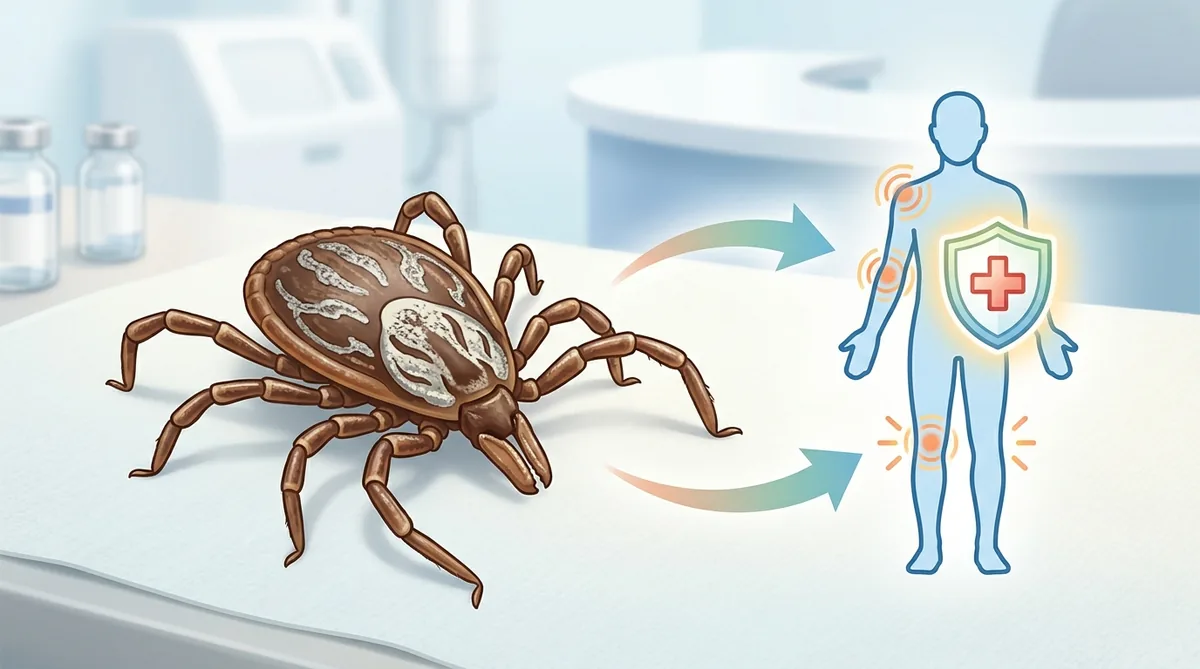
The medical risk in this comparison comes primarily from the American dog tick, not the jumping spider.
American dog ticks can transmit Rocky Mountain spotted fever (RMSF), a bacterial tickborne illness caused by Rickettsia rickettsii. Early symptoms can include fever, severe headache, muscle pain, nausea, and other flu-like symptoms. A rash may develop, but its appearance and timing vary, and some patients may not have a recognizable rash early in the illness.
RMSF can become severe without timely treatment, so illness following a recent tick exposure should not be ignored. Learn more about Rocky Mountain spotted fever symptoms and risks.
American dog ticks can also transmit tularemia, an infection caused by Francisella tularensis. Tick-associated tularemia can cause fever and other systemic symptoms and may produce an ulcer at the exposure site with nearby swollen lymph nodes.
Not every American dog tick carries a disease-causing organism, and being bitten does not mean you will become infected. The key is appropriate removal followed by symptom monitoring.
Jumping spiders, in contrast, are not known to transmit human infectious diseases. Their venom is designed for small arthropod prey and bites from commonly encountered jumping spiders are not considered medically significant for most people.
When to See a Doctor / Red Flags
Seek medical advice after a tick bite if you develop a new fever, significant headache, muscle aches, unusual fatigue, swollen lymph nodes, or a new rash within the following days or weeks. Tell the healthcare professional when the tick was found, where you were exposed, and approximately how long it might have been attached.
A spreading rash should also be evaluated. A classic expanding bull’s-eye-type rash can be associated with certain other tickborne infections and is not the typical defining rash of Rocky Mountain spotted fever, but any unexplained expanding rash after possible tick exposure deserves medical attention.
Have a skin lesion evaluated if redness continues to spread, pain or swelling is increasing, the area becomes increasingly warm, pus or drainage appears, or you develop fever. Those changes may suggest infection rather than a simple bite reaction.
Call 911 or seek emergency medical care for signs of a severe allergic reaction, such as trouble breathing, swelling of the tongue or throat, fainting, severe dizziness, or rapidly developing widespread hives.
If you feel seriously ill following a tick bite, do not wait for a rash to appear before seeking medical care.
Prevention for Both
For tick prevention, reduce direct contact with tall grass, brush, leaf litter, and overgrown vegetation when possible. Wear long pants and closed shoes in tick habitat, and consider an EPA-registered insect repellent used according to its label. Clothing and outdoor gear can also be treated with appropriate tick-control products when label directions allow.
After outdoor activities, perform a thorough tick check on yourself, children, pets, clothing, and gear. Showering and changing clothing can also make it easier to find ticks before they remain attached for long periods.
For jumping spiders, elaborate prevention is usually unnecessary because they are beneficial predators and rarely cause health problems. Avoid squeezing or handling spiders with bare hands. Shake out clothing, shoes, towels, outdoor equipment, or bedding that has been stored in areas where spiders might hide.
If you find a jumping spider indoors, it can generally be captured in a container and released outside without direct handling.
Frequently Asked Questions
Can a jumping spider bite make you sick?
For most people, a true jumping spider bite causes either no noticeable reaction or minor localized pain, redness, itching, or swelling. Jumping spiders are not known to transmit infectious diseases to humans. Seek medical care if significant or worsening symptoms occur, since another condition may be responsible.
How long does an American dog tick stay attached?
An adult female American dog tick can remain attached and feed for several days if it is not discovered. The tick may gradually become larger as it takes a blood meal. Remove an attached tick as soon as you find it rather than trying to estimate exactly how long it has been present.
Should I save the tick after removing it?
Saving the tick temporarily in a sealed bag or container can be useful for identification, particularly if you later develop symptoms. Record the removal date and where the exposure occurred. Routine testing of the tick itself is not generally necessary for determining whether you need medical care.
Can you feel an American dog tick bite?
Often, no. Tick attachment may go unnoticed, which is why checking the body after spending time in grassy, brushy, or wooded areas is important. Many people discover the tick because they see it or feel a small attached bump rather than because the initial bite hurt.
Can a bite mark tell me whether it was a tick or jumping spider?
Usually not with certainty. A small red bump can result from many different causes. The strongest clue for an American dog tick is finding an actual tick firmly attached to the skin. A jumping spider does not remain attached after biting. If no creature was seen, appearance alone may not reliably identify what caused the mark.
For another example of why tick identification and exposure history matter more than the skin mark alone, see this comparison of a blacklegged tick bite vs oak mite bite.
Medical Disclaimer
This article provides general educational information and is not a diagnosis, individualized medical advice, or a substitute for care from a qualified healthcare professional. Bite reactions and tickborne illnesses can vary from person to person, and a skin lesion cannot always identify the responsible creature.
If you are uncertain about a bite, develop fever or other systemic symptoms after tick exposure, have a worsening skin reaction, or are concerned about your health, contact a healthcare professional. Seek emergency medical care for difficulty breathing, severe swelling, fainting, or other signs of a serious allergic reaction.