Rocky Mountain Spotted Fever: Pictures, Identification, Symptoms, Treatment, and FAQs
Direct answer: Rocky Mountain spotted fever (RMSF) is a potentially life-threatening bacterial illness spread by infected ticks. CDC says symptoms usually begin 3–12 days after a bite and often include fever and headache; rash may appear later. Suspected RMSF needs prompt medical evaluation because early doxycycline treatment can prevent severe illness and death.
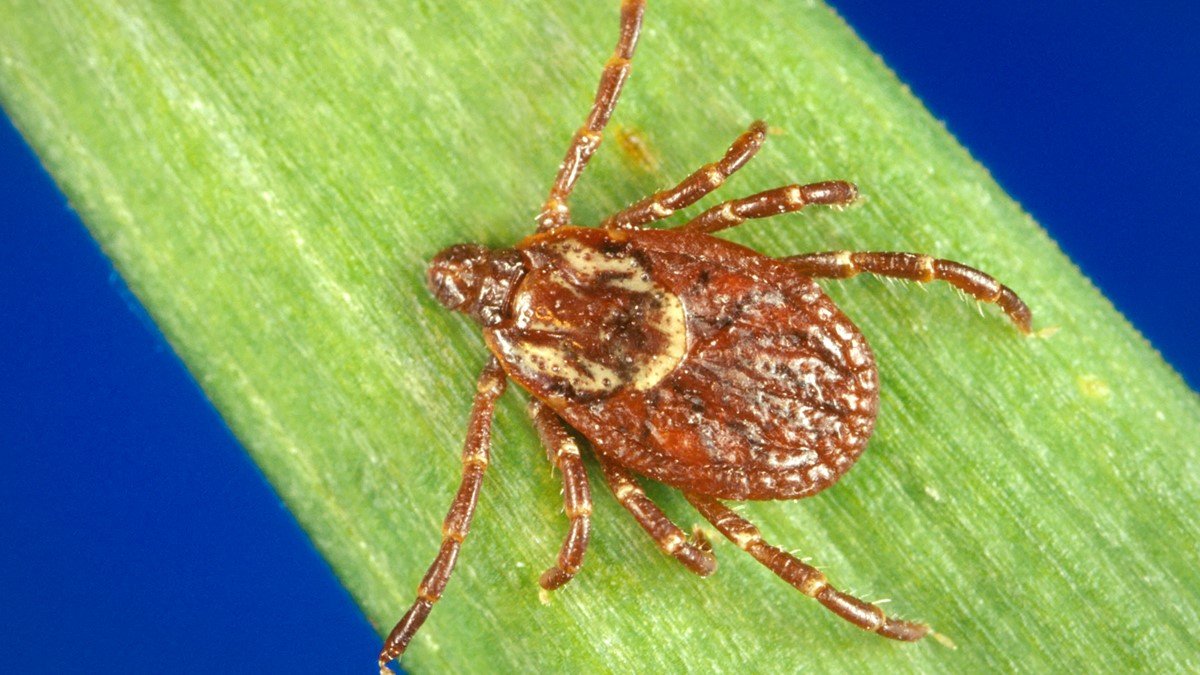
rocky mountain spotted fever after tick bite risk by region is a medical-safety topic, not a condition to diagnose from a rash picture. CDC describes RMSF as the most severe rickettsiosis in the United States and warns that it can progress rapidly. A person may not remember a tick bite, and fewer than half of patients have a rash during the first three days of illness, when many first seek care.
[stinghelp_image filename=”rocky-mountain-spotted-fever-01.webp” alt=”Rocky Mountain spotted fever symptom timeline after tick exposure” caption=”Educational RMSF symptom timeline; rash may be absent early and appearance alone does not confirm diagnosis.”]
What is Rocky Mountain spotted fever?
RMSF is a bacterial tick-borne disease caused by Rickettsia rickettsii. It is transmitted through the bite of an infected tick. CDC identifies the American dog tick, Rocky Mountain wood tick, and brown dog tick in particular geographic settings as important U.S. vectors. Cases occur across the United States, so the disease name should not be interpreted as limiting risk to the Rocky Mountain region.
Tick exposure can occur year-round, although activity is often greater during warmer months. The relevant question is whether the person had plausible tick exposure and then developed a compatible illness—not whether a specific rash photo looks “classic.”
What are the early symptoms of RMSF?
CDC says symptoms generally begin 3–12 days after the bite of an infected tick. Early illness can include fever, headache, nausea, vomiting, loss of appetite, abdominal pain, muscle pain, and swelling around the eyes or on the backs of the hands. The presentation is not specific, which is one reason exposure history matters.
A rash commonly develops two to four days after fever begins, but it may be absent early or atypical. Waiting for a textbook rash before seeking care can be dangerous when the rest of the clinical picture suggests RMSF.
What does the RMSF rash look like, and can pictures confirm it?
A classic early rash may begin as small, flat, pink spots on the wrists, forearms, and ankles and then spread toward the trunk; palms and soles can become involved. Later petechial spots can occur, but CDC notes that petechiae are a sign of severe disease and typically do not appear until day five or six. Treatment should not be delayed while waiting for this finding.
Pictures cannot confirm RMSF. Other infections, drug reactions, viral illnesses, inflammatory conditions, and tick-borne diseases can produce overlapping rashes. A clinician uses the full history, examination, epidemiology, and appropriate testing.
[stinghelp_image filename=”rocky-mountain-spotted-fever-02.webp” alt=”Rocky Mountain spotted fever early versus late warning signs” caption=”Educational decision chart showing why early treatment matters in suspected RMSF.”]
When should someone seek medical care?
Seek prompt medical care for fever, severe headache, rash, gastrointestinal symptoms, unusual fatigue, or other illness after a tick bite or after time in wooded or brushy tick habitat. Tell the clinician where and when the exposure occurred. Do not wait for a rash if the person is becoming ill.
Emergency evaluation is appropriate for severe confusion, breathing difficulty, seizure, collapse, inability to wake, or rapidly worsening illness. Late RMSF can affect the brain, lungs, kidneys, and other organ systems.
How is RMSF treated?
CDC recommends doxycycline as first-line treatment for suspected RMSF in adults and children of all ages. Treatment is most effective at preventing death and severe illness when started early. CDC clinical guidance emphasizes that treatment should not be delayed for confirmatory laboratory results when RMSF is suspected.
This article does not provide an individual antibiotic dose. Dosing, duration, pregnancy considerations, allergies, and alternative diagnoses require clinician judgment.
What does regional risk mean?
| Factor | Why it matters | Practical action |
|---|---|---|
| Geographic exposure | Vector distributions differ by region. | Tell the clinician the state/country and travel history. |
| Season and activity | Tick activity often rises in warmer months, but exposure can occur outside peak periods. | Do not rule out risk solely because of the calendar. |
| Known tick bite | Helpful when present, but many people do not recall a bite. | Report outdoor exposure even without a remembered tick. |
| Symptoms | Fever and headache can precede rash. | Seek care based on illness, not rash timing alone. |
Why can skin appearance alone be misleading?
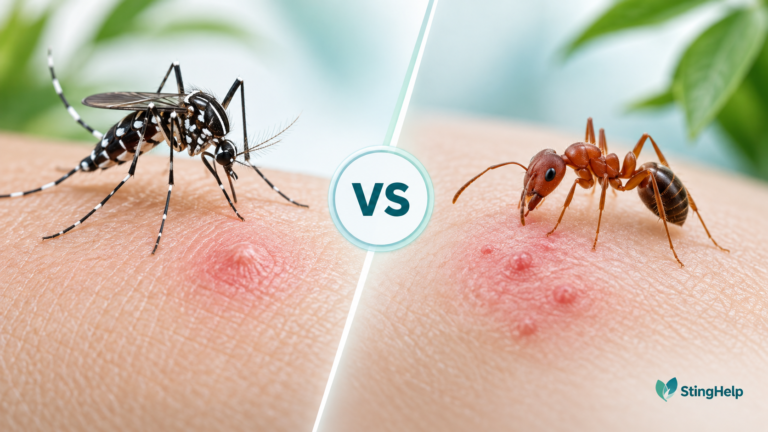
Redness, itching, swelling, tenderness, papules, blisters, and discoloration are shared responses to many bites, stings, allergic reactions, irritants, and skin infections. Lighting, skin tone, scratching, time since exposure, and secondary infection can all change the way a lesion looks. A photograph is useful for documenting change, but it rarely proves which arthropod caused a mark.
Exposure history usually adds more information than a single image. Record where the event happened, whether an arthropod was seen, whether a tick was attached, whether the reaction followed sleep, yard work, hiking, pet contact, travel, or a nest disturbance, and how quickly symptoms appeared. These details help separate plausible causes without creating false certainty.
How should you monitor symptoms safely?
Take a dated photograph in similar lighting if the skin is changing, and note whether pain, itching, redness, or swelling is improving, stable, or worsening. Also record fever, headache, nausea, vomiting, dizziness, unusual fatigue, muscle aches, swollen lymph nodes, breathing symptoms, or a rash elsewhere on the body.
The trend matters more than a rigid timeline. A mild local reaction that gradually becomes less uncomfortable is different from a lesion that becomes hotter, more painful, rapidly larger, drains pus, develops red streaking, or occurs with fever. If systemic symptoms develop after a plausible vector exposure, tell the clinician the date and geographic location of the exposure.
What common mistakes should you avoid?
| Mistake | Why it can cause problems | Safer approach |
|---|---|---|
| Scratching, squeezing, or cutting the site | Can damage the skin barrier and introduce bacteria. | Keep the area clean and reduce friction. |
| Using bleach, acids, gasoline, or caustic remedies | Can cause chemical burns and obscure the original reaction. | Use gentle washing and evidence-based first aid. |
| Applying ice directly to skin | Can cause cold injury. | Wrap a cold pack in cloth and use short intervals. |
| Taking leftover antibiotics | May not treat the cause and can cause adverse effects. | Use antibiotics only when prescribed for a clinical indication. |
| Diagnosing from social-media pictures | Many unrelated conditions look similar. | Combine exposure, symptoms, progression, and professional assessment. |
Which warning signs need prompt medical attention?
Seek prompt medical advice for fever, severe or worsening pain, rapidly spreading swelling, pus, red streaking, a new or expanding rash, significant swollen lymph nodes with illness, persistent vomiting, severe headache, unusual weakness, or neurologic symptoms. Eye involvement, major facial swelling, and reactions close to the mouth or airway also deserve a lower threshold for assessment.
Call emergency services for trouble breathing, swelling of the tongue or throat, collapse, seizure, severe confusion, inability to wake, or a rapidly progressing severe allergic reaction. If a person has a prescribed epinephrine autoinjector and has been instructed to use it for anaphylaxis, use it promptly and still seek emergency care.
What information is most useful to a clinician?
Bring a concise timeline: exposure date and location, recent travel, outdoor activity, body site, when symptoms began, and how they changed. Mention medicines, allergies, pregnancy, immune suppression, and major medical conditions. A clear photograph of the arthropod may help when it can be obtained safely, but do not handle a live animal or delay urgent care to capture it.
Separate local findings from whole-body symptoms. “An itchy two-inch patch” and “fever with dizziness” provide different clinical information. This distinction can help a clinician decide whether the main concern is local inflammation, allergy, secondary infection, venom effects, or vector-borne disease.
How can you reduce future exposure?
Use an EPA-registered repellent or the locally approved equivalent according to the label, wear protective clothing when practical, and inspect skin after outdoor activity. CDC advises EPA-registered repellents and loose-fitting long clothing for mosquito and tick prevention. For ticks, check clothing, gear, pets, and hidden skin areas after potential exposure.
Regional risk changes with season and surveillance. Use current public-health guidance for the place where exposure occurred rather than assuming that the same species and disease risks apply everywhere.
How should you use online health information without delaying care?
Online guidance is most useful for understanding low-risk first aid, documenting an exposure, and recognizing escalation triggers. It is less reliable when it promises to identify a species from one skin photograph or gives a rigid diagnosis based on the number, color, or shape of bumps. Prefer current public-health agencies, national health services, poison centers, and clinician-reviewed specialty organizations.
If the situation is becoming more severe, do not wait for perfect identification. Treat the symptom pattern as the decision point: airway symptoms require emergency action; fever or systemic illness after a vector exposure deserves medical assessment; and worsening warmth, pus, red streaking, or pain can indicate secondary infection or another condition that needs examination.
What does a reassuring recovery trend look like?
For an uncomplicated local reaction, discomfort and swelling should generally become less intrusive over time, even if the mark remains visible for a while. Itching can persist after the most noticeable redness has faded. Recovery does not have to be perfectly linear, but the overall direction should be toward improvement without new systemic symptoms.
A course that becomes progressively more painful, hotter, more swollen, more widespread, or associated with fever is not the pattern to simply watch indefinitely. Reassessment is appropriate when the direction changes from healing to deterioration.
How can RMSF be prevented?
There is no vaccine to prevent RMSF. Prevention focuses on avoiding tick bites: use EPA-registered repellent according to the label, wear protective clothing, treat clothing and gear with appropriate permethrin products when indicated, check the body after outdoor exposure, shower after returning indoors, and check pets and gear. Remove attached ticks promptly.
Frequently asked questions
Can RMSF occur without a rash?
Yes. CDC notes that rash may be absent early or atypical. Do not wait for a rash when compatible illness follows tick exposure.
How soon can symptoms begin?
CDC reports that symptoms generally begin 3–12 days after the bite of an infected tick.
Is RMSF only found in the Rocky Mountains?
No. Cases occur throughout the United States, and relevant tick vectors vary by region.
Can a blood test rule it out immediately?
Testing can support diagnosis, but CDC advises that treatment should not be delayed for test results when RMSF is clinically suspected.
What is the recommended treatment?
Doxycycline is CDC’s recommended first-line treatment for suspected RMSF in adults and children of all ages.
When is it an emergency?
Severe confusion, breathing difficulty, seizure, collapse, inability to wake, or rapidly worsening illness warrants emergency care.
[stinghelp_image filename=”rocky-mountain-spotted-fever-03.webp” alt=”RMSF prevention and tick bite response checklist” caption=”Tick-bite prevention and response checklist for reducing RMSF risk.”]
How can you make a safer decision when the exact cause remains uncertain?
Online guidance is most useful for understanding low-risk first aid, documenting an exposure, and recognizing escalation triggers. It is less reliable when it promises to identify a species from one skin photograph or gives a rigid diagnosis based on the number, color, or shape of bumps. Prefer current public-health agencies, national health services, poison centers, and clinician-reviewed specialty organizations.
If the situation is becoming more severe, do not wait for perfect identification. Treat the symptom pattern as the decision point: airway symptoms require emergency action; fever or systemic illness after a vector exposure deserves medical assessment; and worsening warmth, pus, red streaking, or pain can indicate secondary infection or another condition that needs examination.
What does a reassuring recovery trend look like?
For an uncomplicated local reaction, discomfort and swelling should generally become less intrusive over time, even if the mark remains visible for a while. Itching can persist after the most noticeable redness has faded. Recovery does not have to be perfectly linear, but the overall direction should be toward improvement without new systemic symptoms.
A course that becomes progressively more painful, hotter, more swollen, more widespread, or associated with fever is not the pattern to simply watch indefinitely. Reassessment is appropriate when the direction changes from healing to deterioration.
How can you make a safer decision when the exact cause remains uncertain?
Online guidance is most useful for understanding low-risk first aid, documenting an exposure, and recognizing escalation triggers. It is less reliable when it promises to identify a species from one skin photograph or gives a rigid diagnosis based on the number, color, or shape of bumps. Prefer current public-health agencies, national health services, poison centers, and clinician-reviewed specialty organizations.
If the situation is becoming more severe, do not wait for perfect identification. Treat the symptom pattern as the decision point: airway symptoms require emergency action; fever or systemic illness after a vector exposure deserves medical assessment; and worsening warmth, pus, red streaking, or pain can indicate secondary infection or another condition that needs examination.
What does a reassuring recovery trend look like?
For an uncomplicated local reaction, discomfort and swelling should generally become less intrusive over time, even if the mark remains visible for a while. Itching can persist after the most noticeable redness has faded. Recovery does not have to be perfectly linear, but the overall direction should be toward improvement without new systemic symptoms.
A course that becomes progressively more painful, hotter, more swollen, more widespread, or associated with fever is not the pattern to simply watch indefinitely. Reassessment is appropriate when the direction changes from healing to deterioration.
How can you make a safer decision when the exact cause remains uncertain?
Online guidance is most useful for understanding low-risk first aid, documenting an exposure, and recognizing escalation triggers. It is less reliable when it promises to identify a species from one skin photograph or gives a rigid diagnosis based on the number, color, or shape of bumps. Prefer current public-health agencies, national health services, poison centers, and clinician-reviewed specialty organizations.
If the situation is becoming more severe, do not wait for perfect identification. Treat the symptom pattern as the decision point: airway symptoms require emergency action; fever or systemic illness after a vector exposure deserves medical assessment; and worsening warmth, pus, red streaking, or pain can indicate secondary infection or another condition that needs examination.
What does a reassuring recovery trend look like?
For an uncomplicated local reaction, discomfort and swelling should generally become less intrusive over time, even if the mark remains visible for a while. Itching can persist after the most noticeable redness has faded. Recovery does not have to be perfectly linear, but the overall direction should be toward improvement without new systemic symptoms.
A course that becomes progressively more painful, hotter, more swollen, more widespread, or associated with fever is not the pattern to simply watch indefinitely. Reassessment is appropriate when the direction changes from healing to deterioration.
How can you make a safer decision when the exact cause remains uncertain?
Online guidance is most useful for understanding low-risk first aid, documenting an exposure, and recognizing escalation triggers. It is less reliable when it promises to identify a species from one skin photograph or gives a rigid diagnosis based on the number, color, or shape of bumps. Prefer current public-health agencies, national health services, poison centers, and clinician-reviewed specialty organizations.
If the situation is becoming more severe, do not wait for perfect identification. Treat the symptom pattern as the decision point: airway symptoms require emergency action; fever or systemic illness after a vector exposure deserves medical assessment; and worsening warmth, pus, red streaking, or pain can indicate secondary infection or another condition that needs examination.
What does a reassuring recovery trend look like?
For an uncomplicated local reaction, discomfort and swelling should generally become less intrusive over time, even if the mark remains visible for a while. Itching can persist after the most noticeable redness has faded. Recovery does not have to be perfectly linear, but the overall direction should be toward improvement without new systemic symptoms.
A course that becomes progressively more painful, hotter, more swollen, more widespread, or associated with fever is not the pattern to simply watch indefinitely. Reassessment is appropriate when the direction changes from healing to deterioration.
How can RMSF be prevented?
There is no vaccine to prevent RMSF. Prevention focuses on avoiding tick bites: use EPA-registered repellent according to the label, wear protective clothing, treat clothing and gear with appropriate permethrin products when indicated, check the body after outdoor exposure, shower after returning indoors, and check pets and gear. Remove attached ticks promptly.
Frequently asked questions
Can RMSF occur without a rash?
Yes. CDC notes that rash may be absent early or atypical. Do not wait for a rash when compatible illness follows tick exposure.
How soon can symptoms begin?
CDC reports that symptoms generally begin 3–12 days after the bite of an infected tick.
Is RMSF only found in the Rocky Mountains?
No. Cases occur throughout the United States, and relevant tick vectors vary by region.
Can a blood test rule it out immediately?
Testing can support diagnosis, but CDC advises that treatment should not be delayed for test results when RMSF is clinically suspected.
What is the recommended treatment?
Doxycycline is CDC’s recommended first-line treatment for suspected RMSF in adults and children of all ages.
When is it an emergency?
Severe confusion, breathing difficulty, seizure, collapse, inability to wake, or rapidly worsening illness warrants emergency care.
[stinghelp_image filename=”rocky-mountain-spotted-fever-03.webp” alt=”RMSF prevention and tick bite response checklist” caption=”Tick-bite prevention and response checklist for reducing RMSF risk.”]
How can you make a safer decision when the exact cause remains uncertain?
Online guidance is most useful for understanding low-risk first aid, documenting an exposure, and recognizing escalation triggers. It is less reliable when it promises to identify a species from one skin photograph or gives a rigid diagnosis based on the number, color, or shape of bumps. Prefer current public-health agencies, national health services, poison centers, and clinician-reviewed specialty organizations.
If the situation is becoming more severe, do not wait for perfect identification. Treat the symptom pattern as the decision point: airway symptoms require emergency action; fever or systemic illness after a vector exposure deserves medical assessment; and worsening warmth, pus, red streaking, or pain can indicate secondary infection or another condition that needs examination.
What does a reassuring recovery trend look like?
For an uncomplicated local reaction, discomfort and swelling should generally become less intrusive over time, even if the mark remains visible for a while. Itching can persist after the most noticeable redness has faded. Recovery does not have to be perfectly linear, but the overall direction should be toward improvement without new systemic symptoms.
A course that becomes progressively more painful, hotter, more swollen, more widespread, or associated with fever is not the pattern to simply watch indefinitely. Reassessment is appropriate when the direction changes from healing to deterioration.
How can you make a safer decision when the exact cause remains uncertain?
Online guidance is most useful for understanding low-risk first aid, documenting an exposure, and recognizing escalation triggers. It is less reliable when it promises to identify a species from one skin photograph or gives a rigid diagnosis based on the number, color, or shape of bumps. Prefer current public-health agencies, national health services, poison centers, and clinician-reviewed specialty organizations.
If the situation is becoming more severe, do not wait for perfect identification. Treat the symptom pattern as the decision point: airway symptoms require emergency action; fever or systemic illness after a vector exposure deserves medical assessment; and worsening warmth, pus, red streaking, or pain can indicate secondary infection or another condition that needs examination.
What does a reassuring recovery trend look like?
For an uncomplicated local reaction, discomfort and swelling should generally become less intrusive over time, even if the mark remains visible for a while. Itching can persist after the most noticeable redness has faded. Recovery does not have to be perfectly linear, but the overall direction should be toward improvement without new systemic symptoms.
A course that becomes progressively more painful, hotter, more swollen, more widespread, or associated with fever is not the pattern to simply watch indefinitely. Reassessment is appropriate when the direction changes from healing to deterioration.
How can you make a safer decision when the exact cause remains uncertain?
Online guidance is most useful for understanding low-risk first aid, documenting an exposure, and recognizing escalation triggers. It is less reliable when it promises to identify a species from one skin photograph or gives a rigid diagnosis based on the number, color, or shape of bumps. Prefer current public-health agencies, national health services, poison centers, and clinician-reviewed specialty organizations.
If the situation is becoming more severe, do not wait for perfect identification. Treat the symptom pattern as the decision point: airway symptoms require emergency action; fever or systemic illness after a vector exposure deserves medical assessment; and worsening warmth, pus, red streaking, or pain can indicate secondary infection or another condition that needs examination.
What does a reassuring recovery trend look like?
For an uncomplicated local reaction, discomfort and swelling should generally become less intrusive over time, even if the mark remains visible for a while. Itching can persist after the most noticeable redness has faded. Recovery does not have to be perfectly linear, but the overall direction should be toward improvement without new systemic symptoms.
A course that becomes progressively more painful, hotter, more swollen, more widespread, or associated with fever is not the pattern to simply watch indefinitely. Reassessment is appropriate when the direction changes from healing to deterioration.
How can RMSF be prevented?
There is no vaccine to prevent RMSF. Prevention focuses on avoiding tick bites: use EPA-registered repellent according to the label, wear protective clothing, treat clothing and gear with appropriate permethrin products when indicated, check the body after outdoor exposure, shower after returning indoors, and check pets and gear. Remove attached ticks promptly.
Frequently asked questions
Can RMSF occur without a rash?
Yes. CDC notes that rash may be absent early or atypical. Do not wait for a rash when compatible illness follows tick exposure.
How soon can symptoms begin?
CDC reports that symptoms generally begin 3–12 days after the bite of an infected tick.
Is RMSF only found in the Rocky Mountains?
No. Cases occur throughout the United States, and relevant tick vectors vary by region.
Can a blood test rule it out immediately?
Testing can support diagnosis, but CDC advises that treatment should not be delayed for test results when RMSF is clinically suspected.
What is the recommended treatment?
Doxycycline is CDC’s recommended first-line treatment for suspected RMSF in adults and children of all ages.
When is it an emergency?
Severe confusion, breathing difficulty, seizure, collapse, inability to wake, or rapidly worsening illness warrants emergency care.
[stinghelp_image filename=”rocky-mountain-spotted-fever-03.webp” alt=”RMSF prevention and tick bite response checklist” caption=”Tick-bite prevention and response checklist for reducing RMSF risk.”]
How can you make a safer decision when the exact cause remains uncertain?
Online guidance is most useful for understanding low-risk first aid, documenting an exposure, and recognizing escalation triggers. It is less reliable when it promises to identify a species from one skin photograph or gives a rigid diagnosis based on the number, color, or shape of bumps. Prefer current public-health agencies, national health services, poison centers, and clinician-reviewed specialty organizations.
If the situation is becoming more severe, do not wait for perfect identification. Treat the symptom pattern as the decision point: airway symptoms require emergency action; fever or systemic illness after a vector exposure deserves medical assessment; and worsening warmth, pus, red streaking, or pain can indicate secondary infection or another condition that needs examination.
What does a reassuring recovery trend look like?
For an uncomplicated local reaction, discomfort and swelling should generally become less intrusive over time, even if the mark remains visible for a while. Itching can persist after the most noticeable redness has faded. Recovery does not have to be perfectly linear, but the overall direction should be toward improvement without new systemic symptoms.
A course that becomes progressively more painful, hotter, more swollen, more widespread, or associated with fever is not the pattern to simply watch indefinitely. Reassessment is appropriate when the direction changes from healing to deterioration.
How can you make a safer decision when the exact cause remains uncertain?
Online guidance is most useful for understanding low-risk first aid, documenting an exposure, and recognizing escalation triggers. It is less reliable when it promises to identify a species from one skin photograph or gives a rigid diagnosis based on the number, color, or shape of bumps. Prefer current public-health agencies, national health services, poison centers, and clinician-reviewed specialty organizations.
If the situation is becoming more severe, do not wait for perfect identification. Treat the symptom pattern as the decision point: airway symptoms require emergency action; fever or systemic illness after a vector exposure deserves medical assessment; and worsening warmth, pus, red streaking, or pain can indicate secondary infection or another condition that needs examination.
What does a reassuring recovery trend look like?
For an uncomplicated local reaction, discomfort and swelling should generally become less intrusive over time, even if the mark remains visible for a while. Itching can persist after the most noticeable redness has faded. Recovery does not have to be perfectly linear, but the overall direction should be toward improvement without new systemic symptoms.
A course that becomes progressively more painful, hotter, more swollen, more widespread, or associated with fever is not the pattern to simply watch indefinitely. Reassessment is appropriate when the direction changes from healing to deterioration.
Related StingHelp guides
- Tick Bites & Tick-Borne Risks
- Tick Bite Warning Signs
- What Bit Me? Identification & Comparisons
- Bite & Sting First Aid and Treatment
Authoritative references
- CDC — Rocky Mountain spotted fever
- CDC — RMSF clinical signs and symptoms
- CDC — Tick bite prevention and response
- CDC — What to do after a tick bite
Summary
rocky mountain spotted fever after tick bite risk by region should be treated as a time-sensitive medical question. RMSF can begin with nonspecific fever and headache before a rash appears, and delayed treatment increases the risk of severe illness. Seek prompt medical care after plausible tick exposure when compatible symptoms develop, and tell the clinician the exposure location and timeline.