
# Do Fleas Bite at Night?
Do fleas bite at night? Yes, they do, but the full answer is more useful than a yes or no. Fleas feed at all hours of the day, and a controlled 1992 laboratory study (Kern, Koehler & Patterson, Journal of Medical Entomology) that measured cat flea fecal deposition hour by hour over a full 24-hour cycle found that deposition, and by extension feeding, did not vary significantly between hours. At the same time, the published evidence on daily activity rhythms in unfed fleas is thinner and more mixed: a circadian study summarized in Rust’s 2017 review found adult flea activity peaking during the daytime portion of a laboratory light–dark cycle, and claims of a dusk surge go beyond what the published work supports. What is well established is that unfed fleas are powerfully cue-driven, with light, warmth, carbon dioxide, vibration, and moving shadows all triggering host-seeking, so a sleeping, motionless person is an ideal target at night. In plain terms: do fleas bite at night is best answered as yes, definitely, but not exclusively.
This timing question matters most to people waking up with new itchy bites and trying to identify the culprit. Bed bugs famously feed at night, mosquitoes bite at dusk and dawn, and fleas follow their own pattern, which overlaps with both. If you can sort out which pest is biting you, you can respond correctly, because the next steps for fleas, bed bugs, and mosquitoes are completely different. This article explains when fleas are most active, why nighttime bites feel worse, how to tell night-biting pests apart, where fleas hide in your home, and what you can safely do about exposure. Pet treatment decisions belong to your veterinarian, and this article will not name flea medications or doses.
The Short Answer, and the Nuance
Flea biology does not give them office hours. Here is what the available evidence actually shows, with the honest caveats.
Feeding Happens Around the Clock
The strongest evidence on flea feeding timing comes from laboratory work measuring how much feces cat fleas excrete hour by hour across a full day. Since cat fleas are vessel feeders that pass blood quickly through their digestive systems, feces output is a reasonable proxy for feeding activity. That research found excretion rates relatively constant across the 24-hour cycle, with no dramatic day or night difference. The implication is straightforward: a flea living on a host feeds whenever it needs to, day or night, because once a flea has taken its first blood meal it becomes dependent on frequent feeding to survive and reproduce.
This matches what veterinarians observe clinically. Pets with fleas scratch and bite at their skin at all hours. People with flea infestations report new bites appearing after sitting on an infested couch in the afternoon just as readily as after sleeping in an infested bed. If someone tells you fleas only bite at night, the feeding data does not support that claim.
Unfed Fleas: What the Rhythm Evidence Actually Shows
The evidence on daily activity rhythms in unfed fleas is thinner and more mixed than many pest-control articles suggest, so honest framing matters. The most controlled result comes from a circadian study summarized in Rust’s 2017 review (Insects 8:118): adult Ctenocephalides felis under a laboratory light–dark cycle showed maximum locomotor activity about 9 hours into the light phase, which is during the daytime portion, not at dusk. This was a lab measure of the fleas’ internal rhythm, not a measure of biting rates in homes.
What is well established is that unfed, newly emerged fleas are powerfully responsive to host cues: light, warmth, carbon dioxide, air movement, and the sudden shadow of something passing nearby all stimulate locomotion and trigger jumping toward a target (classic cue-response work by Osbrink & Rust). That is why overnight light traps in infested rooms catch fleas: the trap fishes with exactly the cues questing fleas use, in a still, dark room. Field observations that more fleas are caught at night mostly reflect how traps are deployed, not a proven nighttime surge in feeding drive.
The important caveat stands: these were laboratory studies on unfed fleas, and activity on an actual host has not been studied the same way. A flea already living on your dog is not commuting anywhere; it feeds where it sits. The practical consequence is unchanged, though: a hungry, newly emerged flea is mobile and cue-driven at any hour, and at night it meets the ideal victim, a warm, breathing, motionless human for hours at a stretch. Claims of a proven dusk peak that fades by dawn, however, are an overclaim on the current evidence.
What This Means for Your Bites
Combine the findings and the practical picture emerges. Yes, fleas bite at night, and a host-seeking flea responds to exactly the cues a sleeping person gives off. But fleas also bite during the day, at feeding rates that laboratory work shows are roughly similar around the clock, so daytime bites do not rule fleas out. If you only ever get bitten at night, bed bugs deserve a harder look. If bites appear at all hours, fleas stay on the suspect list.
Why Nighttime Flea Bites Feel Worse

Even if feeding rates are similar around the clock, nighttime bites are the ones people notice, remember, and complain about. Several factors create this perception gap.
You Are Still, Exposed, and Unaware
A sleeping person is the ideal flea target: warm, exhaling carbon dioxide, and motionless for six to eight hours. A flea that lands on an ankle at 2 a.m. can feed undisturbed, while the same flea landing at 2 p.m. would likely be felt, brushed off, or crushed. Sleeping people also wear less clothing and leave more skin exposed, and bedding concentrates body heat in exactly the zone where fleas quest. The result is that nighttime feeding succeeds more often, which means more bites per encounter even if the underlying feeding rate is constant.
Itching Peaks When You Are Trying to Sleep
Itch perception is not constant through the day. Many people notice that bug bites itch more at night, a pattern driven by lower daytime distraction, warmer skin under blankets, and natural daily rhythms in skin inflammation. A flea bite received at noon may not demand attention until evening, when the person finally sits still and notices it. This creates a false memory that the bite happened at night, reinforcing the belief that fleas are strictly nocturnal biters.
Morning Discovery Bias
Bites discovered on waking get attributed to the night, but the timeline is unreliable. A bite acquired while sitting on an infested sofa the previous evening may only become inflamed and itchy overnight, as the immune response builds over hours. Delayed reactions are common with flea bites, and the visible welt in the morning is not proof of a nighttime feeding. When tracking a possible infestation, note when bites first appear rather than when you first notice them.
Flea Bites vs Bed Bug Bites vs Mosquito Bites at Night
The three usual suspects in nighttime biting each leave different clues. This comparison is a starting guide only. It cannot diagnose your bites, and if you are unsure, a pest professional can identify the insect while a clinician can evaluate the skin.
| Feature | Flea bites | Bed bug bites | Mosquito bites |
|---|---|---|---|
| Timing | Any time of day or night; questing fleas follow light, warmth, and movement cues (evidence on a strict day/night rhythm is limited) | Mostly at night, peak hours before dawn | Mostly dusk, night, and dawn, species dependent |
| Typical location | Ankles, lower legs, feet; waistline where clothing is tight | Exposed skin during sleep: arms, neck, shoulders, face | Any exposed skin |
| Pattern | Small, scattered, often random clusters around ankles | Often in lines or zigzag clusters of 3 or more | Usually isolated single welts, random |
| Appearance | Small red bumps with a central puncture point, often with a halo | Red itchy welts, sometimes in the classic line pattern | Raised pale-centered welts that swell quickly |
| Itch onset | Often rapid, intensely itchy | May be delayed; some people do not react at all | Usually within minutes, strongly itchy |
| Main context clue | Pets in the home, carpeted floors, bites after sitting on upholstery | Travel, used furniture, bites only after sleeping in one bed | Open windows, outdoor evening exposure, standing water nearby |
| Key confirmation | Finding fleas or flea dirt on pets or pet bedding | Fecal spots, shed skins, or live bugs at mattress seams | Seeing or hearing mosquitoes; bites after outdoor time |
The Ankle Rule of Thumb
Flea bites have a famous distribution: the ankles and lower legs. Fleas are poor climbers and weak fliers; they jump from the floor, carpet, or pet bedding onto the nearest available skin, which is usually the ankle. If your bites are concentrated from the sock line down, fleas are a strong suspect. Bed bug bites, by contrast, follow exposed skin wherever it was during sleep, and mosquito bites follow wherever skin was uncovered outdoors. This ankle concentration is the single most useful field clue for fleas, though it is not proof on its own.
When the Pattern Points Elsewhere
Bites arranged in straight lines or tight zigzag clusters, appearing only after nights spent in one particular bed, point toward bed bugs rather than fleas. Single large welts appearing after an evening outdoors point toward mosquitoes. Bites that appear at all hours, on ankles and lower legs, in a home with pets or wall-to-wall carpet, point toward fleas. When the clues conflict or the infestation is unclear, professional identification beats guesswork every time.
Where Fleas Hide in Your Home
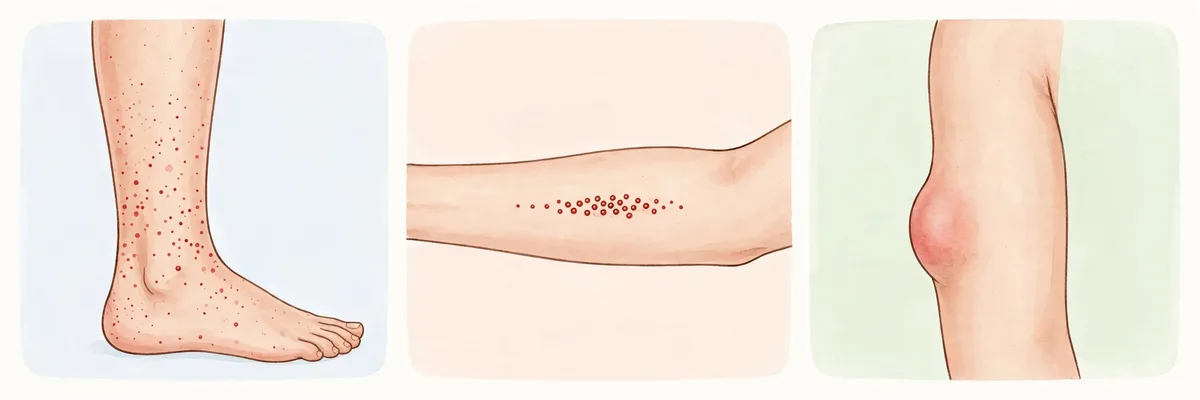
Fleas do not live on beds the way bed bugs do. Understanding their life cycle explains why nighttime bites happen and where the real population lives.
The 95 Percent Rule
Pest professionals often note that the adult fleas you see represent a small fraction of the total population. Flea eggs fall off the host animal into pet bedding, carpets, rugs, floor cracks, and upholstery. Larvae develop in those dark, humid microenvironments, feeding on organic debris and adult flea feces. Pupae spin cocoons that can persist for weeks or months, waiting for vibration, warmth, and carbon dioxide, the signals of a nearby host, before emerging. This is why an empty house can seem flea-free for weeks and then erupt with bites the day people or pets move back in: the pupae were waiting.
Hot Spots to Check
If you suspect fleas, inspect where pets spend time: pet beds, favorite sofa cushions, carpeted areas near doors, and the edges where carpet meets baseboards. Flea dirt, the dark specks of digested blood that adult fleas excrete, is the telltale sign; placed on a damp paper towel, it dissolves into reddish-brown streaks. Comb pets with a fine-toothed flea comb over white paper to check for live fleas or dirt. These checks cost nothing and give you real evidence instead of speculation.
Why the Bedroom Gets Blamed
Bedrooms accumulate bites because people spend a third of their lives there, motionless, in the dark, exactly when questing fleas are most mobile. A pet that sleeps on the bed imports the problem directly. But the breeding population usually lives wherever the pet spends its days. Treating only the bedroom while ignoring the pet’s daytime resting spots is a common reason flea problems persist. If you are trying to understand how long bites take to heal while you sort out the source, track new bites daily so you can tell whether your efforts are working.
Reducing Nighttime Flea Exposure Safely
These are environmental and habit-based steps. Anything involving products applied to pets or broadcast around the home, including flea medications, yard treatments, and insecticide sprays, is outside this article’s scope. For pets, treatment choices belong to your veterinarian, who can match a product to your animal’s species, age, weight, and health. Never use dog flea products on cats, and never guess at doses.
Vacuum Like It Matters, Because It Does
Vacuuming is the single most effective non-chemical flea control step available to a homeowner. It removes adult fleas, eggs, larvae, and the organic debris larvae feed on, and the vibration stimulates pupae to emerge, exposing the next generation to removal. Vacuum carpets, rugs, upholstery, pet bedding areas, and baseboard edges thoroughly and frequently during an active problem, and dispose of the vacuum bag or empty the canister outside immediately afterward.
Launder Bedding and Pet Bedding Hot
Wash sheets, blankets, pet beds, and washable cushion covers frequently during a flea problem, using the hottest water the fabric allows and drying thoroughly. Heat kills all flea life stages. This is routine laundering, not a specialized treatment protocol, and it matters most for items pets sleep on.
Manage Pet Sleeping Arrangements Temporarily
If a pet sleeps in your bed, consider having the animal sleep elsewhere until the flea situation is under control, and discuss a flea plan with your veterinarian in the meantime. This is not about banishing the pet permanently. It is about breaking the nightly import route while you address the population in the pet’s bedding and resting areas. Keep the alternative sleeping spot easy to clean, such as a washable pet bed on a hard floor, so it does not become a new reservoir.
Inspect Before You Assume
Before spending money on any flea product or service, confirm fleas are actually the problem. Misidentification is common: bed bug bites, scabies, and even carpet beetle dermatitis get blamed on fleas, and each requires a different response. Flea dirt on pet bedding, live fleas on a comb, or bites concentrated at the ankles with a pet in the home are solid confirming evidence. When in doubt, a pest management professional can identify specimens, and your veterinarian can confirm whether your pet carries fleas.
When to See a Doctor for Flea Bites

Most flea bites are a nuisance that resolves on its own, but certain situations warrant medical attention. Watch for these red flags:
- Signs of skin infection: increasing pain, spreading redness, warmth, swelling, pus, red streaks extending from a bite, or fever. Scratching intensely itchy flea bites can break the skin and introduce bacteria, leading to cellulitis or impetigo, both of which need medical treatment.
- Signs of a severe allergic reaction: difficulty breathing, swelling of the face, lips, or throat, dizziness, or hives spreading far beyond the bite sites. Call 911 immediately. Our bite and sting warning signs guide covers emergency symptoms in detail.
- Bites that do not heal normally: flea bites typically improve within a week or two. Bites that worsen after several days, develop open sores, or keep appearing without new exposure deserve evaluation, partly because the underlying cause may be something other than fleas.
- Widespread or severe reactions: some people develop large local reactions or extensive rashes from flea saliva. If the reaction covers a large area, interferes with sleep or daily life, or keeps recurring, see a clinician rather than trying to manage it alone.
- Disease concerns: in rare circumstances, fleas have been associated with bacterial infections such as murine typhus and cat scratch disease. This is uncommon in typical US homes and should not cause alarm, but fever, headache, or rash developing after heavy flea exposure is worth mentioning to a doctor.
Frequently Asked Questions
Do fleas bite at night or only during the day?
Both. Research measuring flea feeding across 24 hours found feeding happens at roughly similar rates day and night. Unfed, host-seeking fleas respond to light, warmth, and movement cues at any hour; the published evidence on a true day/night activity rhythm is limited and mixed, so think of nighttime encounters as a matter of opportunity (you, still and warm for hours) rather than proven flea biology. Daytime bites are completely normal and do not rule fleas out.
Why do I only get bitten at night?
Several possibilities. You may be still and exposed in bed while questing fleas are most mobile. Bites from the daytime may only become itchy enough to notice at night. Or the culprit may be bed bugs, which feed almost exclusively at night. If bites appear only after sleeping in one specific bed and form lines or tight clusters, bed bugs deserve investigation alongside fleas.
Are flea bites worse at night?
The bites themselves are the same, but they feel worse at night. With fewer distractions, warmer skin under blankets, and natural daily rhythms in inflammation, itching often peaks in the evening. Knowing this pattern helps you avoid misreading itch timing as proof of when the bite happened.
Can fleas live in my bed?
Adult fleas prefer to live on a host animal, not in bedding, but fleas and their eggs end up in beds when pets sleep there. The breeding population usually lives in pet bedding, carpets, and upholstery rather than in your sheets. If a pet sleeps in your bed, that is the most likely reason you are being bitten there.
How can I tell flea bites from bed bug bites at night?
Location and pattern are the best clues. Flea bites cluster around the ankles and lower legs, are small with a central puncture point, and appear at all hours. Bed bug bites appear on skin that was exposed during sleep, often in lines or zigzag clusters, and appear after nights in a specific bed. Neither pattern is diagnostic on its own, so confirm with physical evidence like flea dirt or bed bug fecal spots.
Should I treat my pet myself for fleas?
Talk to your veterinarian first. Flea products differ by species, age, weight, and health status, and some dog products are dangerous to cats. Your vet can recommend an appropriate plan and rule out skin conditions that mimic flea problems. Meanwhile, the environmental steps in this article, vacuuming, laundering, and inspection, are safe to start right away.
Do fleas die off in winter?
Outdoor flea activity drops in cold weather, but indoor infestations continue year-round because homes stay warm. A heated house with pets provides everything fleas need regardless of the season. Do not assume a flea problem will resolve on its own when temperatures fall.
Medically reviewed by Dr. Sarah Jones, MD.
This article is for informational purposes only and isn’t medical advice. If you’re worried about a bite or sting, talk to a healthcare professional.