Direct answer: A healing bug bite usually becomes less itchy, less tender, and less swollen over time. The center may dry, flatten, or form a small scab if it was scratched. Improvement matters more than the exact color on one day. Expanding redness with increasing pain, warmth, pus, fever, red streaks, breathing trouble, or new illness is not a routine healing pattern and needs appropriate medical care.
There is no universal day-by-day schedule for every bite. Mosquito, flea, bed bug, fly, ant, bee, wasp, and tick exposures affect the skin differently, and people react differently. This guide helps you judge the direction of change without trying to diagnose the insect from a photograph. If the insect or tick was not seen, keep the identification uncertain.
A practical healing checklist
Use the same questions once or twice a day rather than repeatedly checking the spot:
- Is the itchy or painful area smaller, stable, or larger?
- Is discomfort becoming milder, or is pain becoming more intense?
- Is swelling softer and lower, or tighter and more extensive?
- Is the skin intact and dry, or is there new drainage, pus, or blister breakdown?
- Are symptoms limited to the bite area, or are fever, hives, dizziness, breathing symptoms, or other whole-body symptoms appearing?
- Could there be continued exposure, such as new bites after sleep, time outdoors, contact with pets, or an untreated indoor source?
A bite that is slowly shrinking and causing fewer symptoms is generally moving in a reassuring direction. A dramatic-looking mark can still be improving, while a smaller mark with escalating pain and fever can be more concerning.
Day-by-day guide: what improvement can look like
| Time after exposure | Possible uncomplicated pattern | What deserves closer attention |
|---|---|---|
| First minutes to hours | Localized pain, burning, itch, redness, a wheal, or mild swelling | Trouble breathing, throat or tongue swelling, faintness, confusion, or rapidly spreading hives |
| First 24 hours | The area may remain raised or become more noticeable as inflammation develops | Severe or rapidly worsening pain, extensive swelling, repeated vomiting, eye or mouth involvement, or systemic symptoms |
| Days 2–3 | Itch and swelling may still be present but should begin to stabilize; scratched skin may crust | Increasing warmth, tenderness, pus, red streaking, fever, or redness expanding together with worsening illness |
| Days 4–7 | Many simple reactions flatten, fade, and itch less; a small scab may contract | No improvement, continued enlargement, ulceration, worsening pain, or new fever, rash, headache, or body aches |
| After one week | Residual discoloration or a small firm spot can outlast the active inflammation | A lesion that keeps growing, repeatedly drains, breaks down, or is joined by new unexplained lesions |
This is a tracking framework, not a promise that every harmless bite will resolve within seven days. Some local reactions last longer. Bed bug reactions can appear after a delay, and tick-related illness can begin days to weeks after exposure. The American Academy of Dermatology recommends medical attention when serious symptoms such as rash, fever, or body aches occur after a bite.
Why a bite can look worse before it looks better
Inflammation does not always peak immediately. Immune signals can produce more itch, redness, or swelling several hours after the original exposure. Warm bedding, exercise, friction, and scratching can make a reaction temporarily more noticeable. This is why comparing one morning photo with an evening photo can be misleading.
The more useful test is whether symptoms are settling across a longer interval. Marking the edge of redness is sometimes used in clinical settings, but a home mark is not a diagnosis. If you do this, add the date and time, avoid pressing hard, and seek care if the area expands while pain, heat, fever, or illness is increasing.
Normal inflammation versus possible infection
Redness alone does not prove infection. A fresh bite can be red, warm, swollen, and itchy because of inflammation. Scratching can also make it look angrier without bacteria being the cause.
Possible bacterial infection becomes more concerning when several changes occur together: pain is increasing rather than easing, warmth and tenderness spread, pus or cloudy drainage appears, red streaks extend away from the area, lymph nodes become swollen, or fever and general illness develop. MedlinePlus lists insect bites and stings among breaks in the skin that can precede cellulitis. These signs justify prompt clinical assessment, particularly for someone with diabetes, poor circulation, immune suppression, or a history of serious skin infection.
What a small scab means
A scab often forms because scratching, a blister, or the bite itself disrupted the surface. A dry scab that becomes smaller, less tender, and less inflamed usually fits healing. Do not pick it off to “check” underneath. Repeated picking reopens the skin barrier, prolongs inflammation, increases discoloration risk, and can create a route for infection.
Clean the area gently. Avoid harsh antiseptics, repeated peroxide use, squeezing, cutting, or home “venom extraction.” If the scab becomes wet, increasingly painful, foul-smelling, or surrounded by spreading redness, ask a clinician to assess it.
How to track healing accurately
- Take one clear baseline photo. Use ordinary room light or indirect daylight, not a filter.
- Add scale without touching the lesion. Place a clean ruler beside the area rather than directly on broken skin.
- Repeat under similar conditions. Use the same distance, angle, light, and body position.
- Record symptoms separately. Note itch, pain, warmth, swelling, drainage, fever, headache, dizziness, hives, or breathing symptoms.
- Record the exposure. Include travel, yard work, hiking, pets, hotel stays, insect sightings, or an attached tick.
- Stop photographing urgently when care is needed. A photo log must never delay emergency treatment.
See the StingHelp guide on photographing a bite for a clinician for a more detailed tracking method. Photographs show change; they usually cannot identify the exact arthropod or diagnose infection.
Safe home care while the area heals
For a straightforward local reaction, gently wash the skin with soap and water, use a cool compress for short intervals, and avoid scratching. The AAD notes that a cold pack can help itch and swelling; over-the-counter anti-itch products or oral antihistamines may be options for some people. Medication choice depends on age, pregnancy, other conditions, and current medicines, so follow the label and ask a pharmacist or clinician when unsure.
Keep fingernails short. A clean covering can protect an area that is being rubbed by clothing, but it should not trap moisture or adhesive against irritated skin. Do not apply bleach, gasoline, essential oils, caustic chemicals, heat, or unverified suction devices.
For organized safety steps, use the StingHelp bite and sting first-aid hub.
Healing differs by the type of exposure
Mosquitoes, fleas, and mites
These exposures commonly cause itch. The CDC notes that mosquito bites can produce puffy bumps within minutes, firmer itchy bumps a day later, small blisters, or bruise-like dark spots. That range means appearance alone cannot establish infection or identify the mosquito species. Multiple new lesions may indicate continued exposure rather than failure of an old bite to heal.
Flea bites often cluster where fleas can reach the skin, while mite-related exposures vary widely. Treat the environment or animal source when appropriate instead of repeatedly treating only the skin.
Bed bugs
Bed bug reactions may be delayed. The AAD explains that itching can appear days after an initial exposure and, for some people, take as long as two weeks. Therefore, a “new” mark does not always prove a bite occurred the previous night. Conversely, continuing new marks can mean the exposure source remains.
Do not diagnose an infestation from skin marks alone. Look for environmental evidence and use the StingHelp guide on checking hotel rooms for bed bug clues.
Bees, wasps, hornets, and fire ants
Venomous stings are often painful immediately. Local swelling may increase during the first day before improving. A retained honey-bee stinger should be removed promptly; wasps and hornets usually do not leave one behind and can sting repeatedly. Fire ant stings can develop characteristic sterile pustules, which should not be deliberately popped.
A worsening local reaction is different from anaphylaxis. Emergency allergy symptoms can develop quickly and may include throat or tongue swelling, breathing difficulty, wheezing, faintness, confusion, or collapse.
Ticks
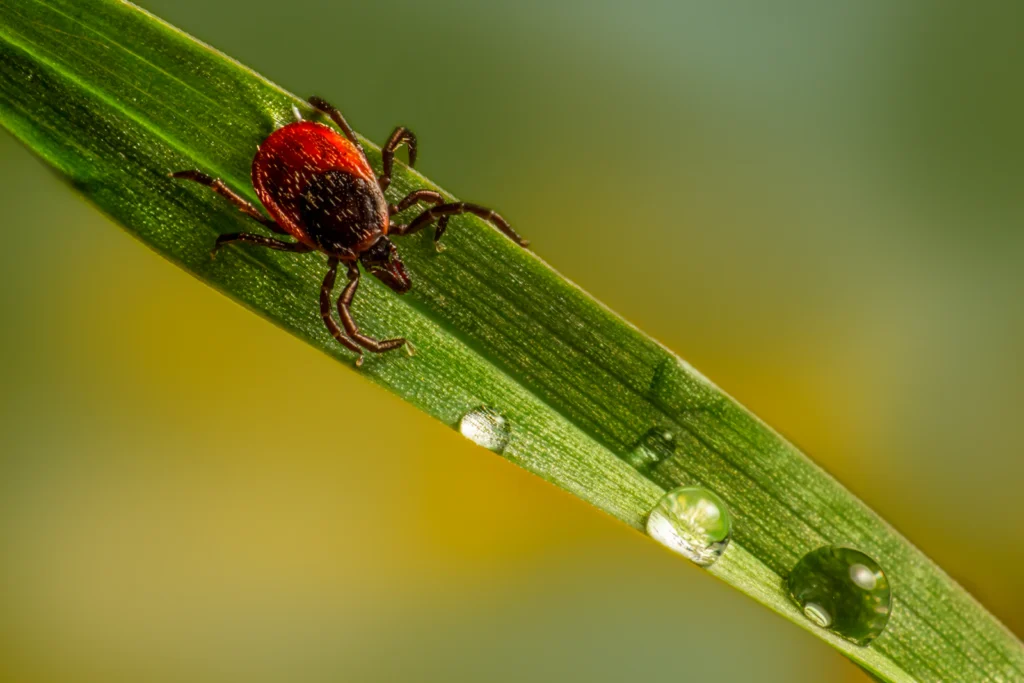
An attached tick changes the plan. The CDC advises grasping it close to the skin with clean fine-tipped tweezers and pulling upward with steady, even pressure. Do not twist, burn, smother, or coat the tick. Clean the area afterward and record the date and likely exposure location.
A small irritated spot can remain after removal. Seek medical advice if fever, an expanding rash, severe headache, unusual fatigue, muscle aches, or other illness develops in the following days or weeks. The CDC’s current after-a-tick-bite guidance emphasizes symptom monitoring rather than trying to diagnose disease from the attachment site.
Color changes during healing
Redness can fade to pink, brown, purple, or gray depending on skin tone, inflammation, bruising, and lighting. On brown or black skin, redness may be less obvious visually, so warmth, swelling, tenderness, texture, and change from the surrounding skin are important.
Post-inflammatory hyperpigmentation can remain after itch and swelling resolve. A flat dark mark that is no longer painful, hot, swollen, or enlarging may represent residual pigment rather than active infection. Sun protection and avoiding further scratching can reduce additional discoloration, but persistent or changing lesions deserve clinical review.
When the cause may not be a bug bite
Many conditions are mistaken for bites, including contact dermatitis, hives, folliculitis, eczema, fungal infection, bacterial infection, shingles, medication reactions, and other skin disorders. A mark that appears without a plausible exposure, repeatedly returns in the same place, keeps enlarging, ulcerates, or fails to improve should not be forced into a “bug bite” explanation.
Use the What Bit Me? identification hub to organize exposure clues, while remembering that online comparison cannot replace an examination.
Emergency, urgent, and routine-care decisions
| Level | Examples | Action |
|---|---|---|
| Emergency | Breathing difficulty, throat or tongue swelling, fainting, collapse, severe confusion, rapidly progressive widespread reaction | Call emergency services now; use prescribed epinephrine according to the person’s emergency plan if applicable |
| Prompt or same-day assessment | Increasing pain and warmth, spreading redness with illness, pus, red streaking, fever, significant eye involvement, severe swelling, repeated vomiting | Contact urgent care or a healthcare professional |
| Routine appointment | Persistent lesion, uncertain diagnosis, recurrent lesions, ongoing exposure, discoloration or lump that is not resolving | Arrange a clinical review |
| Home observation | Small local reaction that is stable or improving without systemic symptoms | Continue gentle care and monitor |
The NHS lists throat or tongue swelling, breathing difficulty, wheezing, confusion, and fainting among warning signs of anaphylaxis. Do not wait for a skin mark to change when those symptoms occur. StingHelp’s emergency-signs guide provides a concise review.
A two-minute daily observation routine
Choose one time each day and record only what would help a clinician or help you make a care decision. First, rate itch and pain from zero to ten. Next, measure the widest visible area without pressing the skin. Then note whether swelling, warmth, drainage, or new lesions are present. Finally, record whole-body symptoms and any new exposure. This short routine is more reliable than repeatedly touching, squeezing, or photographing the area under changing light.
Interpret the record as a pattern. Falling symptom scores, stable or decreasing size, and no new lesions support improvement. A flat dark mark can remain after active inflammation has ended. By contrast, rising pain, increasing warmth, spreading tenderness, drainage, or fever deserves prompt attention even if the photograph does not look dramatic.
What to bring to an appointment
Bring the date and location of the likely exposure, the photo sequence, a medication list, relevant allergies, and any insect or tick photograph. Mention travel, outdoor work, hotel stays, pets, household contacts with similar marks, and whether an attached tick was removed. Do not bring a live arthropod loose into a clinic. If you saved a specimen, keep it securely contained and follow the clinic’s instructions.
This information helps a clinician separate a resolving local reaction from continued exposure, allergic inflammation, bacterial infection, or an unrelated skin condition. It also reduces pressure to identify the cause from the lesion’s shape alone.
Frequently asked questions
Should a healing bite still itch?
Mild itch can persist after swelling begins to settle, especially if the skin is dry or has been scratched. The key is whether itch is gradually becoming less intense. Severe or spreading itch with hives, facial swelling, breathing symptoms, or new lesions requires a different response.
Is it normal for a bite to be hard?
A small firm area can remain as inflammation resolves. It should trend toward smaller and less tender. A growing, hot, very painful, draining, or ulcerating lump needs assessment.
Does an expanding red area always mean infection?
No. Large local inflammatory reactions can expand. Infection is more concerning when expansion occurs with increasing pain, warmth, pus, red streaks, fever, or worsening illness. A clinician may need to examine the area to distinguish them.
How long should I wait before seeing a doctor?
Do not wait when emergency symptoms occur. Seek prompt advice for infection signs, severe pain, eye involvement, significant systemic symptoms, or illness after tick or mosquito exposure. For a mild local reaction, arrange routine review if it is not improving or the diagnosis remains uncertain.
Can a photo confirm that the bite is healing?
A series of consistent photos can document size and color changes, but it cannot assess every important feature or reliably diagnose the cause. Symptoms, exposure history, touch findings, and examination matter.
Bottom line
A healing bug bite is defined by a favorable trend: less itch, pain, warmth, and swelling; a smaller or flatter area; intact or drying skin; and no new systemic symptoms. Track change with consistent photos and a short symptom log, use gentle first aid, and avoid picking or harsh remedies. Escalate care for serious allergy, increasing infection-type signs, illness after a relevant vector exposure, or any lesion that does not behave like a resolving local reaction.
Sources
- American Academy of Dermatology: Tips to prevent and treat bug bites
- MedlinePlus: Insect bites and stings
- NHS: Insect bites and stings
- CDC: About mosquito bites
- CDC: What to do after a tick bite
Editorial note: This article provides general educational information and does not diagnose an individual skin lesion. Medical review is not claimed unless a documented reviewer and review date are displayed on the article.