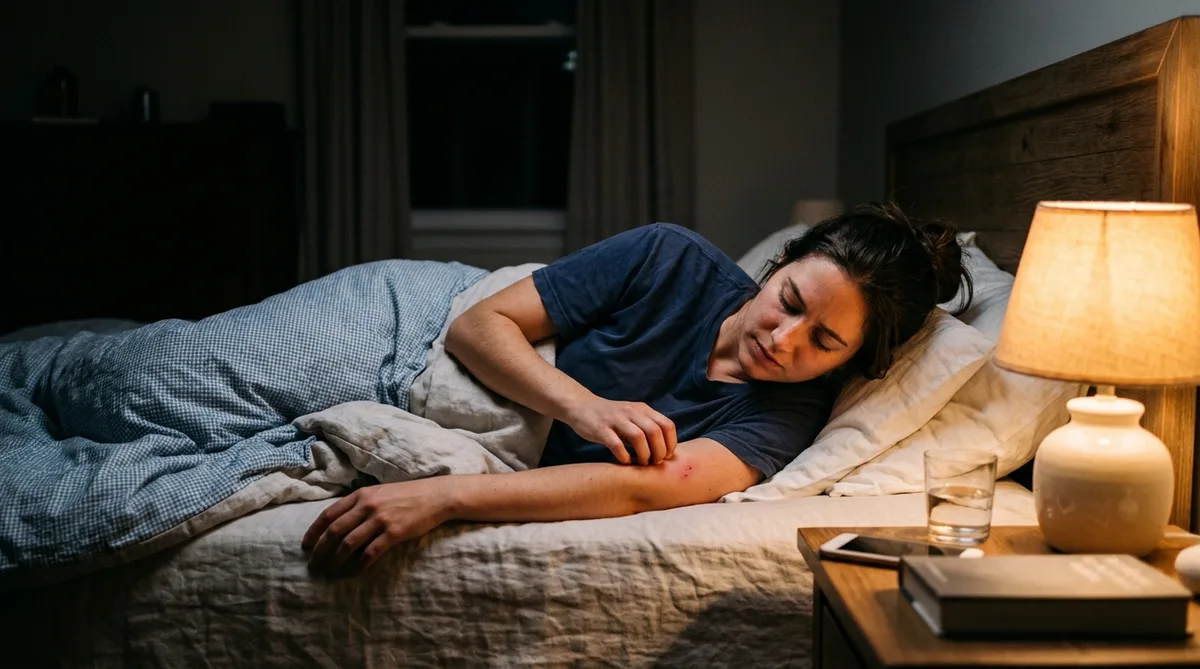
Direct answer: A bug bite may feel itchier at night because quiet makes the sensation more noticeable, warmth and friction under bedding can amplify it, dry or irritated skin has fewer competing sensations, and people may scratch during light sleep. Nighttime itch does not identify the insect. New marks after sleep may indicate ongoing exposure, but they can also come from another itchy skin condition.
The safest response is to reduce heat and scratching, protect the skin barrier, and look for the direction of change. A routine local reaction should gradually demand less attention. Severe generalized itching with hives, breathing trouble, facial or throat swelling, faintness, or rapidly worsening illness needs urgent assessment.
Why itching can feel stronger after bedtime
There are fewer distractions
During the day, movement, conversation, work, and other sensations compete for attention. In a quiet room, a mild itch can move to the foreground. This does not mean the skin suddenly became dangerous at 10 p.m.; perception changes with context. Repeated checking can magnify the sensation further, especially when anxiety about bed bugs or another infestation is already high.
Warmth and friction can intensify irritation
Warm showers, heavy bedding, tight sleepwear, and rubbing against sheets can make an inflamed spot feel more active. Heat does not prove an infection, and feeling itchier under a blanket does not prove the insect is in the bed. Try a comfortably cool room, breathable sleepwear, and bedding that does not press or rub the site.
Skin physiology changes across the day
Research on nocturnal pruritus describes possible roles for daily changes in skin temperature, barrier function, inflammatory signaling, and circadian rhythms. These mechanisms are studied mainly in chronic itchy disorders, not specifically in ordinary bites, so they should be treated as plausible contributors rather than a diagnostic explanation. A recent review indexed by the National Library of Medicine notes that the biology of nighttime itch is complex and not fully understood.
Scratching becomes a self-reinforcing loop
A scratch may briefly override itch with pressure or mild pain. Minutes later, the added skin damage and inflammation can make the site itch again. This itch-scratch cycle can continue unconsciously during light sleep. The CDC warns that intense scratching of bed bug bites can break the skin and contribute to secondary infection. Short nails, a loose clean covering, and cooling before bed can interrupt the loop.
What nighttime itch can and cannot tell you
| Observation | What it suggests | What it does not prove |
|---|---|---|
| One known bite itches more when you lie down | Attention, warmth, friction, or normal inflammatory fluctuation may be amplifying the itch | That a new insect is biting you |
| Fresh marks appear on waking on exposed skin | Ongoing nighttime exposure is possible | Bed bugs specifically |
| Several household members develop new itchy marks | A shared environmental source deserves investigation | Which insect or skin condition is responsible |
| Itch occurs all over without clear lesions | Dry skin, medication effects, allergy, or another medical cause may need consideration | That the symptoms are from bites |
| Increasing pain, pus, fever, or red streaking | Possible infection or another complication | A harmless local reaction |
The CDC states that an inflammatory skin reaction is not specific enough to confirm bed bugs; identifying insects or evidence in the environment is more reliable. Fleas, mosquitoes, biting midges, mites, contact dermatitis, hives, eczema, and scabies can also produce nighttime symptoms. Scabies often causes intense nighttime itch, but diagnosis requires the pattern, contacts, body sites, and sometimes clinical testing—not a single photo.
A practical bedtime plan
One hour before bed
- Wash gently if needed. Use lukewarm water and a mild cleanser. Hot water and vigorous scrubbing can worsen dryness and itch.
- Cool the area. Apply a wrapped cool pack for a short interval. Never place ice directly on skin or leave a cold pack on while asleep.
- Moisturize intact dry skin. Use a plain fragrance-free moisturizer around dry, unbroken skin if that is part of the problem. Do not seal an infected, draining, or heavily blistered area under an occlusive product without advice.
- Choose loose clothing. Soft fabric can reduce friction. Avoid tight elastic directly over the bite.
- Trim and clean nails. This reduces damage if scratching happens during sleep.
At bedtime
Keep the room comfortably cool and use only as much bedding as needed. A loose gauze cover can create a physical reminder not to scratch, but it should not be tight, wet, or adhesive over fragile skin. If the bite is on a hand or foot, remove rings or constricting items before swelling increases.
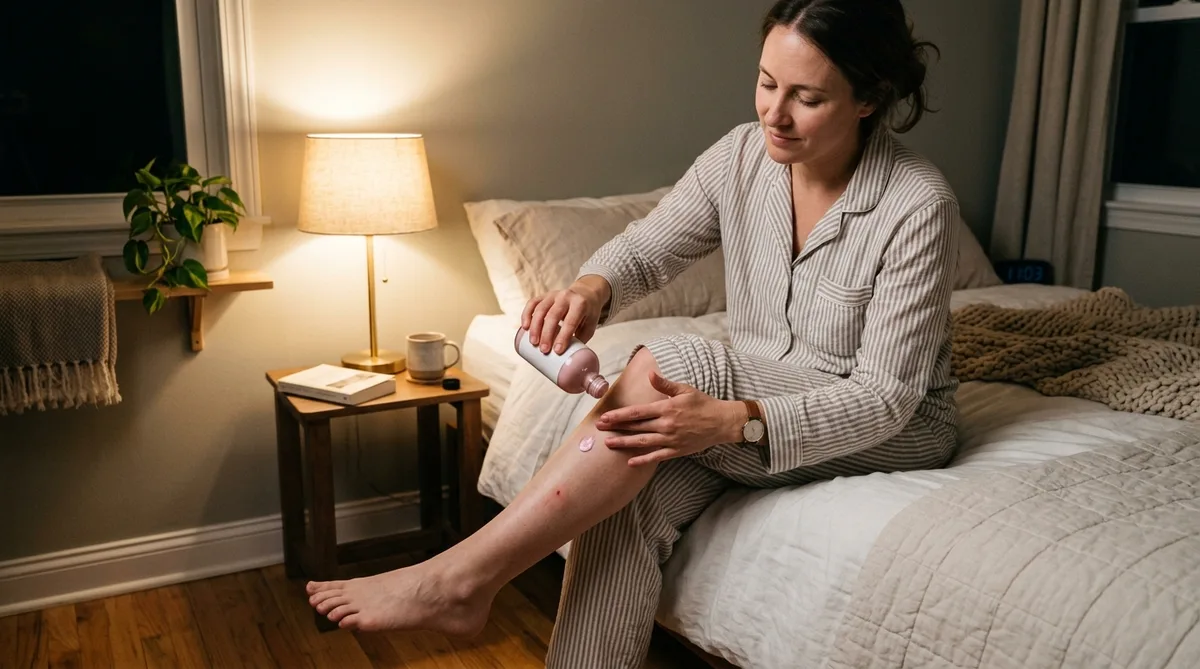
Over-the-counter treatments may help some people. The American Academy of Dermatology lists a wrapped ice pack and over-the-counter anti-itch products such as hydrocortisone for routine bites. The NHS also advises a pharmacist can help with itching and swelling. Follow the product label. Children, pregnant or breastfeeding people, older adults, and people with glaucoma, prostate problems, kidney or liver disease, medication interactions, or fall risk should ask a clinician or pharmacist before using an unfamiliar product.
Some oral antihistamines cause drowsiness, but sedation is not the same as safe sleep. Do not combine a sedating product with alcohol, cannabis, sleep medicines, opioids, or other sedatives unless a qualified clinician says it is safe. Do not drive after a medicine that impairs alertness. A pharmacist can help you avoid duplicate ingredients.
If you wake up scratching
Pause before adding more products. Cool the area, use gentle pressure instead of fingernails, and check whether the skin is broken. Layering several creams can trigger irritant or allergic contact dermatitis and make the original problem harder to recognize. If bleeding occurred, clean gently with soap and water and cover loosely with a clean dressing.
What not to put on an itchy bite
- Do not use bleach, household disinfectant, pesticides, or veterinary flea products on human skin.
- Do not repeatedly scrub with rubbing alcohol or peroxide; these can irritate healing tissue.
- Do not cut, burn, suction, or squeeze the area to remove supposed venom.
- Do not apply undiluted essential oils or several fragranced products to inflamed skin.
- Do not use a prescription cream that belongs to another person.
- Do not keep reapplying medication beyond label directions because the itch returned.
For a broader home-care framework, use StingHelp’s bite and sting first-aid guide.
How to tell old irritation from new bites
Use a simple morning-and-evening log for two or three days. Mark existing spots on a body diagram or take consistent photographs. Record where you slept, what clothing covered the area, whether pets were present, and whether another person developed symptoms. Old bites may look redder after heat or scratching without being truly new.
A genuinely new lesion usually appears in a location that was not documented before. However, delayed reactions complicate the picture. The AAD notes that some people do not develop itchy bed bug welts until days after an initial bite. Therefore, a welt first noticed in the morning does not necessarily mean the bite occurred during the previous night.
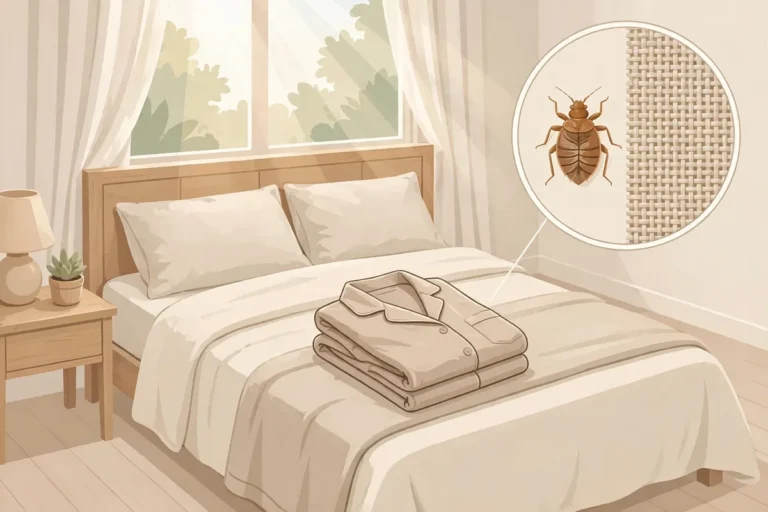
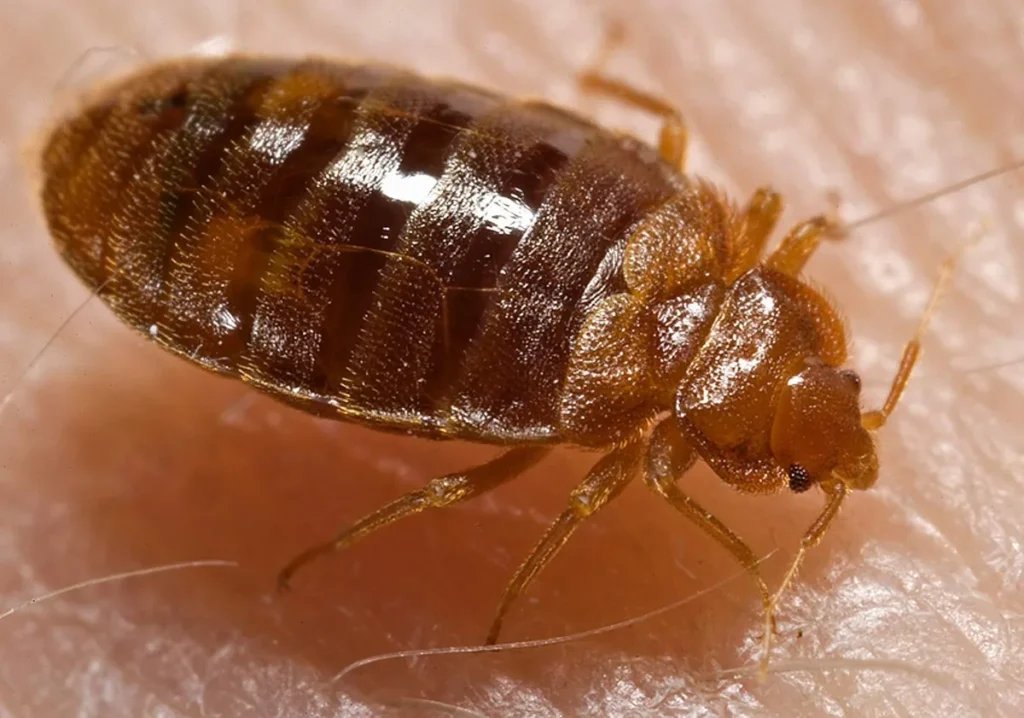
If ongoing exposure is plausible, inspect the environment calmly. For bed bugs, look at mattress seams, the bed frame, headboard, and nearby cracks for live insects, shed skins, eggs, or dark spotting. Do not spray pesticides on bedding or skin. Professional pest identification is more dependable than guessing from bite arrangement. For outdoor exposure, review window screens, standing water, repellents, and protective clothing using the StingHelp prevention hub.
When itch suggests something other than a bite
Seek clinical advice if itching is widespread, persists for weeks, repeatedly disturbs sleep, occurs without visible bites, or affects close contacts. A clinician may consider eczema, hives, scabies, medication effects, kidney or liver problems, thyroid disease, iron deficiency, nerve-related itch, or other causes. MedlinePlus defines itch as a symptom with many possible triggers, including allergic reactions and insect bites; the sensation itself is not a diagnosis.
Also reconsider the label when the lesion is dominated by pain rather than itch, forms a growing ulcer, develops a spreading ring-like rash, or is accompanied by fever, severe headache, weakness, numbness, or other systemic symptoms. Tell the clinician about recent travel, outdoor activity, animal contact, new medicines, and household symptoms.
Infection warning signs after scratching
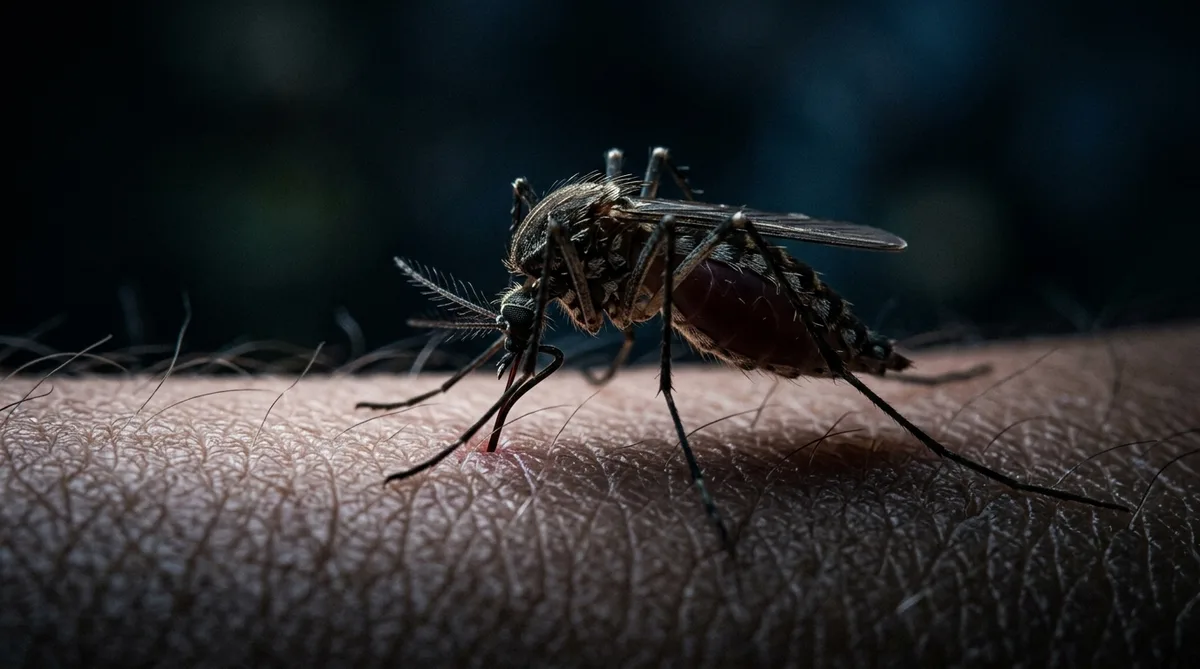
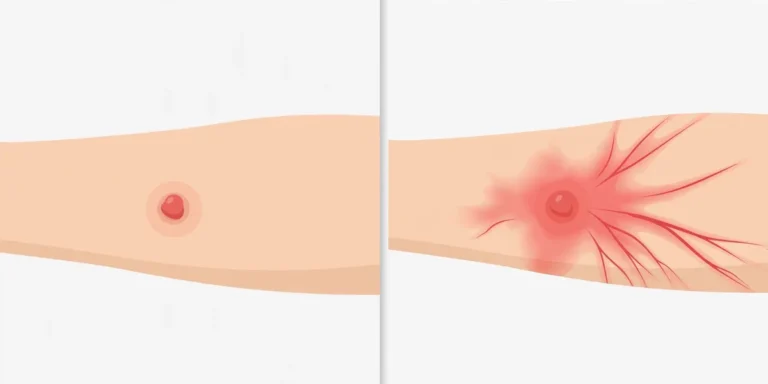
Mild redness and warmth are part of inflammation. Infection becomes more concerning when pain keeps increasing, redness expands together with worsening tenderness, pus or cloudy drainage appears, red streaks move away from the site, fever develops, or the person feels progressively unwell. Broken skin from scratching raises the risk.
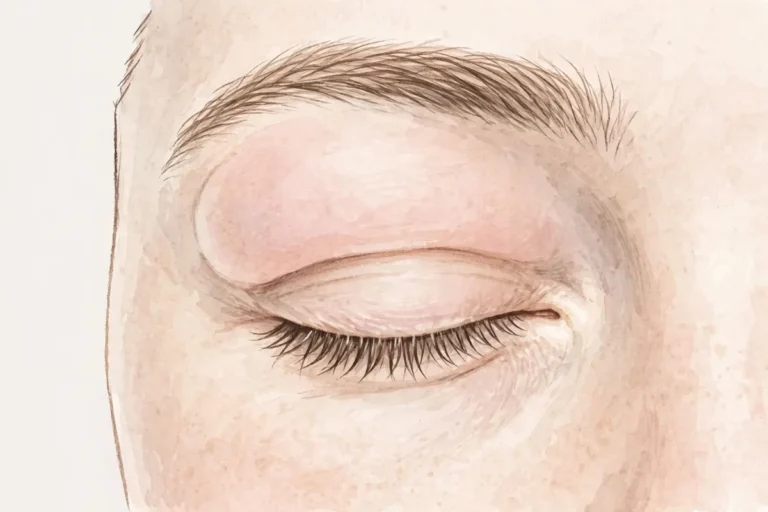
Do not self-start leftover antibiotics. A clinician may need to distinguish cellulitis, an abscess, dermatitis, or a strong local reaction because management differs. Prompt assessment is especially important for people with diabetes, immune suppression, poor circulation, chronic swelling, or a wound near the eye.
Emergency symptoms are about the whole body
Call 911 for trouble breathing, wheezing, throat tightness, swelling of the tongue or throat, fainting, severe weakness, confusion, or widespread hives accompanied by vomiting, dizziness, or breathing symptoms. These can signal anaphylaxis. Use prescribed epinephrine immediately according to the person’s emergency plan and still call for help. Do not wait to see whether an antihistamine fixes airway or circulation symptoms.
See StingHelp’s emergency warning signs for a concise escalation checklist.
Children, pregnancy, and older adults
Children
Children may scratch while asleep and open the skin quickly. Keep nails short, choose loose sleepwear, and use only age- and weight-appropriate products. Seek care if itching prevents sleep for multiple nights, swelling affects an eye or movement, or fever, lethargy, breathing trouble, or poor drinking develops.
Pregnancy and breastfeeding
Cooling, gentle cleansing, and scratch prevention are reasonable first steps for many mild reactions. Check medication questions with a pharmacist or obstetric clinician. Fever or illness after travel should not be dismissed as an ordinary bite.
Older adults and medically vulnerable people
Thin skin can tear more easily, and sedating medicines can increase fall risk. Diabetes, poor circulation, edema, or immune suppression can complicate healing. Use a lower threshold for professional advice when pain, warmth, drainage, or swelling is increasing.
Frequently asked questions
Does itching at night mean bed bugs?
No. Bed bugs are one possible source of new nighttime bites, but nighttime itch alone is nonspecific. Look for physical evidence in the room and consider other insects and skin conditions.
Why does a bite itch again after seeming better?
Heat, dry skin, friction, and renewed scratching can reactivate irritation in healing tissue. A recurring itch does not mean venom remains in the skin. New swelling, pain, pus, fever, or fresh lesions changes the assessment.
Can I cover the bite overnight?
A loose, clean, breathable covering may reduce unconscious scratching. Avoid tight or wet dressings, and do not seal in a draining or infected-looking area without clinical advice.
Will an antihistamine stop the itch?
It may help some allergic itching, but response varies and not every product is suitable for every person. Follow the label and ask a pharmacist about age, pregnancy, medical conditions, interactions, and drowsiness.
How many nights should a bite itch?
There is no exact number. Routine local reactions should trend toward improvement over days. Get advice when itch is severe, prevents sleep, lasts unusually long, or occurs with infection, allergy, or systemic symptoms.
Can a photo tell me what bit me?
Usually not with confidence. Similar immune reactions can produce similar bumps. Exposure history and finding the insect or environmental evidence are more useful. StingHelp’s What Bit Me? hub can help organize clues without treating appearance as proof.
A three-night itch and exposure check
Use this short check only when symptoms are mild and there are no emergency or infection signs. On night one, photograph and map every existing lesion before bed. Note room temperature, sleepwear, products applied, pets in the room, and where each person slept. Keep treatment simple so a new irritant does not confuse the pattern.
On morning one, record genuinely new marks separately from older spots that merely look redder. Inspect bedding and the bed structure without dismantling the room or spraying chemicals. For suspected bed bugs, a flashlight and careful look along mattress seams, the frame, headboard, and nearby crevices is more useful than judging whether bumps form a line. Photograph any physical evidence and preserve a possible insect safely for professional identification.
Repeat the same process for two more nights. A pattern tied to one room, one uncovered body area, pet contact, or an outdoor evening can focus the environmental investigation. A pattern with no new lesions but repeated scratching of the same spots supports ongoing skin irritation more than continuing bites. Widespread itch in multiple people may still require evaluation for scabies or a shared irritant, even when no insect is found.
Stop the experiment and seek care if pain, swelling, fever, drainage, red streaking, facial swelling, breathing symptoms, or general illness develops. Also stop if sleep loss itself becomes significant. Repeatedly searching the room at 2 a.m. can heighten anxiety and attention to normal sensations. A daytime plan—primary care or dermatology for the skin, and a qualified pest professional for the environment—usually produces better evidence.
Keep the skin and environmental questions separate. A clinician can decide whether lesions fit dermatitis, hives, scabies, infection, or another diagnosis; a pest professional can identify insects and infestation evidence. Neither question should be answered from a skin photo alone. This separation reduces unnecessary pesticide exposure and prevents an unrelated medical problem from being overlooked.
Bottom line
Bug bites can seem itchier at night because attention, warmth, friction, skin-barrier changes, and sleep scratching all influence the sensation. The timing does not identify the insect. Cool the area, reduce friction, protect the skin, use labeled medicines cautiously, and document whether lesions are truly new. Seek prompt care for progressive pain, pus, fever, red streaking, eye involvement, or persistent sleep-disrupting itch. Call 911 for breathing, throat, fainting, or multi-system allergy symptoms.
This article is educational and cannot diagnose a bite, infestation, allergy, or infection. It does not replace individualized medical care.
Sources
- American Academy of Dermatology: tips to prevent and treat bug bites
- American Academy of Dermatology: bed bug signs and symptoms
- CDC: about bed bugs
- CDC: caring for patients with bed bug bites
- CDC DPDx: bed bugs and limits of skin-reaction diagnosis
- NHS: insect bites and stings
- MedlinePlus: itching
- National Library of Medicine: review of circadian rhythm and cutaneous pruritus