
Saddleback vs Hickory Tussock Caterpillar: Sting Guide
Your child comes in from the yard clutching a caterpillar they thought looked cool, and now their hand is burning. Or you brush a…
Your child wakes up covered in itchy red spots and the questions start immediately: is this chickenpox vs bug bites, an allergic reaction, or something else entirely? It is one…
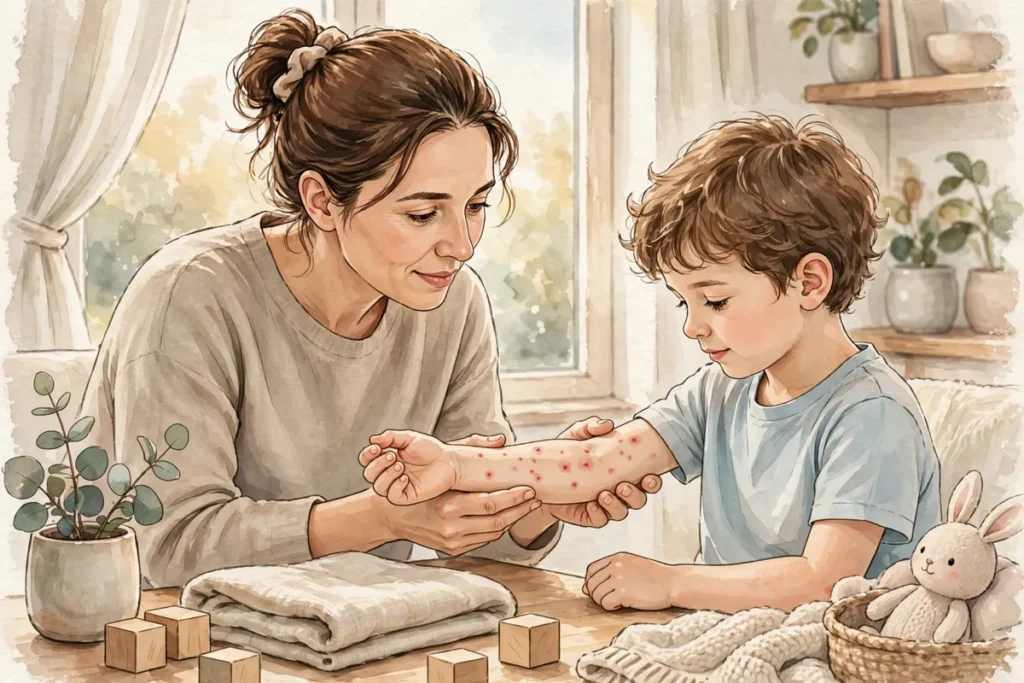
Your child wakes up covered in itchy red spots and the questions start immediately: is this chickenpox vs bug bites, an allergic reaction, or something else entirely? It is one of the most stressful mornings a parent can have, because the answer changes everything about what you do next. Chickenpox is contagious, keeps kids home from school, and needs a pediatrician’s input. Bug bites are usually a home-care situation. And the two can look surprisingly alike in the first day or two.
Here is the honest starting point: no article, photo comparison, or checklist can diagnose your child. Only a healthcare professional who can see the rash, ask about symptoms, and consider your child’s history can do that. What this guide can do is give you the observable differences doctors look for, so you can describe what you are seeing accurately, avoid the most common mix-ups, and know exactly when to call. Think of it as a triage companion, not a verdict. If anything below makes you more worried rather than less, stop reading and call your pediatrician. That instinct is the most reliable tool you have.
Chickenpox is caused by the varicella-zoster virus, and its signature is a rash that evolves in stages. It usually begins as small red spots or bumps, which develop into very small fluid-filled sacs (vesicles) over three to four days, and then form scabs or crusts. The CDC describes the classic sign as an uncomfortable, itchy rash that turns into fluid-filled blisters and eventually becomes scabs. The rash often first appears on the chest, back, and face, then spreads over the entire body, including inside the mouth, on the eyelids, or in the genital area. It usually takes about a week for all blisters to become scabs.
The pattern doctors find most telling is the “crops” pattern. Discrete groupings of new vesicles come out over several days, so a child who has had chickenpox for more than a day will show all stages at once: some fresh red bumps, some fluid-filled blisters, and some already scabbed over, all side by side. This mixed-stage appearance is one of the strongest clues that a rash is chickenpox rather than bites.
Fever and general illness usually come first. According to the CDC, typical symptoms that may appear one to two days before the rash include fever, tiredness, loss of appetite, and headache. MedlinePlus lists the same picture: fever, headache, tiredness, and loss of appetite alongside the classic itchy rash, with the illness usually lasting five to ten days. A child who was feverish and miserable before a single spot appeared fits the chickenpox pattern far better than one who was perfectly fine and woke up with bumps.
Chickenpox is also highly contagious. A child can spread it one to two days before the rash even appears, and remains contagious until all vesicles have scabbed over and no new ones are forming. That contagious window is why schools and childcare programs exclude children with suspected chickenpox until the rash has fully crusted, and why notifying the school matters even before you have a diagnosis.
Bug bites, in contrast, are local injuries, not a systemic illness. The most common culprits in a child’s spotted morning are mosquitoes, bed bugs, fleas, chiggers, and no-see-ums, and they share a family resemblance: small, itchy, raised bumps, often with a tiny central puncture mark where the insect fed. They appear where skin was exposed, not all over the body at once, and they do not come with fever or a general feeling of illness.
The distribution pattern is the first thing that separates bites from chickenpox. Mosquito bites are scattered and random, wherever the insect landed. Bed bug bites often show up in lines or clusters of three or more on skin that was exposed during sleep, such as arms, neck, and shoulders. Flea bites concentrate around the ankles and lower legs, where fleas jump from carpets or pets. Chigger bites cluster tightly around waistbands, sock lines, and other places where clothing presses against skin. No-see-um bites appear as dense clusters of tiny red dots on exposed skin. None of these patterns produces the mixed-stage, crops-like spread of chickenpox, and none of them brings fever with it.
Timing and evolution differ too. A bite usually looks the same from the start: a red bump that itches, maybe with a small center mark, that gradually fades over days. Bites do not turn into fluid-filled blisters that then scab in waves, and they do not march from the torso outward to cover the body. If you are tracking the spots over a day or two and they are staying put, staying the same, and staying confined to exposed areas, the picture points toward bites.
One more practical clue: bites have an exposure story. A sleepover, a camping trip, a new pet, playing in tall grass, or a sibling with the same pattern of ankle bites all point toward an insect source. Chickenpox, in the vaccine era, more often arrives with a known exposure to another sick child or with the fever-first timeline. Neither clue is proof, but both help your pediatrician when you describe what happened.
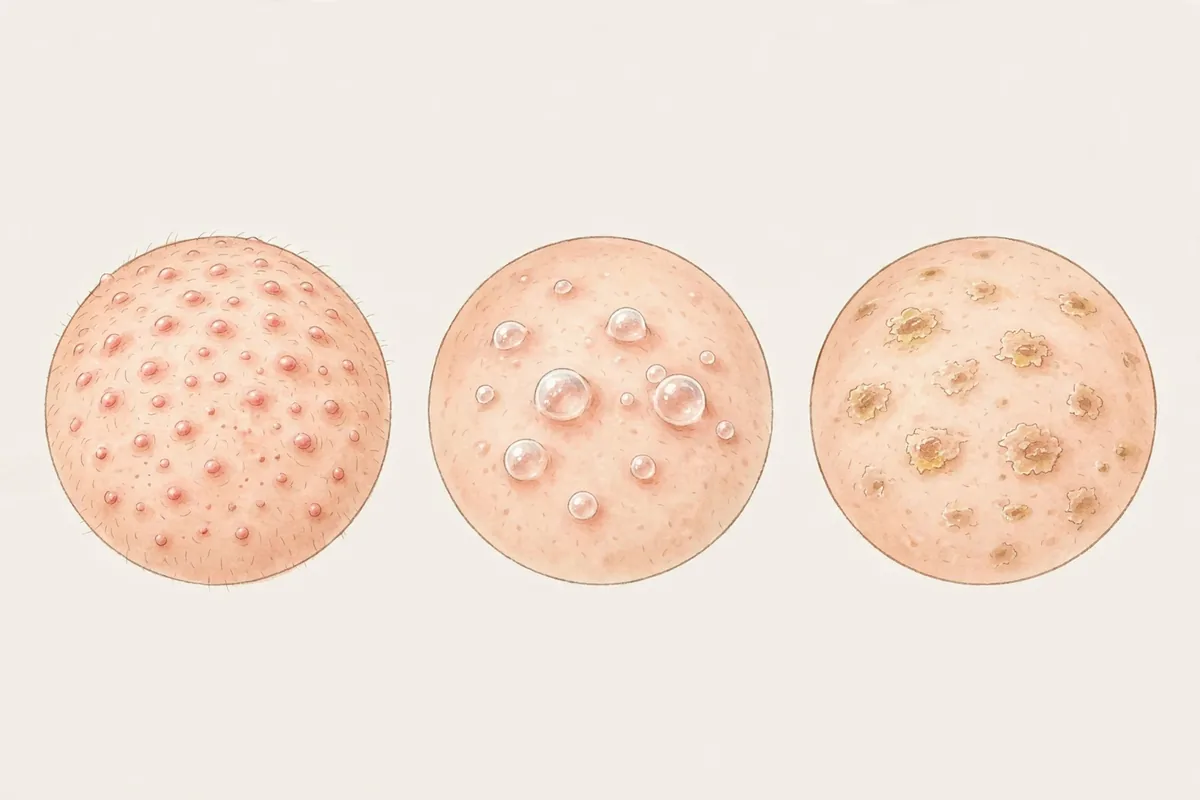
When you are standing over your child trying to decide what you are looking at, work through these five comparisons. They are the same observations a pediatrician will ask about, so noting them now saves time on the call.
Chickenpox almost always announces itself with fever, tiredness, or loss of appetite a day or two before the rash. Bug bites arrive without any of that: the child feels fine except for the itching. A fever-first timeline is the single strongest home clue pointing toward chickenpox.
Look closely at the spots themselves. Chickenpox shows bumps, fluid-filled blisters, and scabs all at once because new crops keep appearing. Bites look uniform: every bump is at roughly the same stage, and none of them are true fluid-filled blisters. If you see clear little sacs of fluid, especially alongside scabbed spots, take that seriously.
Chickenpox typically starts on the trunk and face and spreads outward to cover the body, and it can appear in the mouth, on the scalp, and in the genital area. Bites stay where the insect could reach: exposed skin, ankles, waistbands, arms. Spots inside the mouth or on the scalp are not a bite pattern.
Chickenpox keeps producing new crops for several days. Bites from one night’s exposure do not multiply into new waves days later. If new spots keep appearing on day three and four, that is a chickenpox-shaped timeline.
Chickenpox spreads between children, so a classmate or sibling with similar spots is a meaningful clue. Bites can also affect siblings, especially bed bugs or fleas, but the pattern will be the bite pattern (lines, ankles) rather than the chickenpox pattern.
| Clue | Chickenpox | Bug bites |
|---|---|---|
| Before the rash | Fever, tiredness, poor appetite | Child feels well, no illness |
| Spot stages | Bumps, blisters, and scabs all at once | Uniform bumps at the same stage |
| Fluid-filled blisters | Yes, in waves (“crops”) | No true blisters |
| Where it spreads | Trunk and face first, then whole body, can include mouth and scalp | Exposed skin, ankles, waistbands, bite lines |
| New spots | Keep appearing over several days | From one exposure, then stable |
| Contagious | Yes, before and during the rash | No |
Remember the frame: these clues help you describe the rash, not diagnose it. They are triage observations for your pediatrician’s ears, not a verdict you deliver yourself.
The chickenpox vaccine has made the classic case less common, but it has also made the mild case harder to recognize. The CDC notes that some vaccinated people can still get chickenpox, though they usually have milder symptoms with fewer or no blisters, sometimes just red spots, with mild or no fever, and a shorter illness. This is called breakthrough chickenpox, and it is the scenario where the chickenpox-versus-bites question gets genuinely difficult.
A vaccinated child with breakthrough chickenpox may have only a couple dozen spots instead of hundreds, little or no fever, and blisters that are easy to mistake for insect bites. The crops pattern may be subtle. This is exactly the situation where home triage reaches its limit and a professional needs to see the child. Do not let a mild presentation reassure you into skipping the call. Breakthrough chickenpox is still contagious, including to people for whom chickenpox is dangerous: newborns, pregnant women, and anyone with a weakened immune system.
There is also a reverse trap. Because chickenpox is less common than it used to be, some parents and even some clinicians see it less often, which can delay recognition. Mention your child’s vaccination status when you call, along with the fever timeline and the spot pattern. That context helps the pediatrician calibrate quickly. If chickenpox is confirmed, the usual guidance applies: keep the child home until all lesions have crusted over, notify the school or childcare program, and keep the child away from anyone who is pregnant, newborn, or immunocompromised.

Whether the spots turn out to be chickenpox or bites, the waiting period calls for the same gentle, low-risk care. Keep your child comfortable and keep the skin protected while you arrange professional guidance.
Discourage scratching. Scratched spots, whatever their cause, can develop bacterial skin infections. Keep your child’s nails short and clean. For younger children, cotton mittens or socks over the hands at night reduce unconscious scratching. Distraction works better than scolding: a new activity, a cool drink, or a change of scenery can break the scratch cycle.
Soothe the itch safely. Cool, damp washcloths on the itchiest areas help. Lukewarm oatmeal baths are a traditional comfort measure that MedlinePlus mentions for chickenpox itching, and calamine lotion can soothe individual spots. Use plain, fragrance-free products and skip anything with strong perfumes or alcohol, which sting broken skin. Do not use topical antihistamine creams or home mixtures on large areas of a child’s skin without asking the pediatrician first.
Manage fever carefully. If your child has a fever, the standard guidance is rest, fluids, and fever management as your pediatrician directs. One rule is absolute and well documented: never give a child with chickenpox aspirin or aspirin-containing products, because of the risk of Reye syndrome, a rare but serious condition. The same caution extends to combination cold medicines that may contain salicylates, so check labels or ask the pharmacist.
Separate and notify. Until you know what you are dealing with, treat the rash as potentially contagious. Keep your child home from school and away from other children, and let the school or childcare program know there is an undiagnosed rash. If anyone in your household or close circle is pregnant, a newborn, or immunocompromised, tell them about the situation so they can get their own medical advice promptly. Good handwashing and not sharing towels or bedding are sensible regardless of the cause.
Track what you see. While you wait, note the timeline: when spots first appeared, whether fever came first, whether new spots are appearing, and whether any spots have fluid in them. Photos taken in consistent lighting each day can be genuinely useful to a pediatrician, including during a telehealth visit. This record turns an anxious call into a productive one.
Chickenpox and bug bites are not the only conditions that produce itchy red spots on a child, and the look-alikes are the reason self-diagnosis is genuinely risky rather than merely discouraged. Impetigo, a bacterial skin infection, produces honey-colored crusts that can follow scratched chickenpox lesions or appear on their own. Scabies causes intense itching with burrows and bumps, often worse at night, and it is contagious in a different way that needs different treatment. Hand-foot-and-mouth disease brings mouth sores plus spots on the hands and feet. Eczema flares, contact dermatitis from a new soap or plant, and even some drug reactions can all mimic the early stages of either chickenpox or bites.
Each of these has its own treatment path, and the paths conflict. What helps one can worsen another: steroid creams that calm eczema can complicate an infection, and assuming “just bites” can delay care for something contagious. The stakes are also asymmetric. Mistaking chickenpox for bites risks exposing vulnerable people and missing the window for the pediatrician’s guidance. Mistaking bites for chickenpox causes unnecessary isolation and anxiety but is the safer error. When in doubt, the bias should always run toward getting professional eyes on the rash.
There is one more reason not to go it alone: secondary infection. Any itchy rash that gets scratched can develop a bacterial skin infection, and the warning signs are the same regardless of the original cause. Our guide to bug bite infection and cellulitis explains what spreading redness, warmth, and pus mean and when they need same-day care. Learning to spot normal healing versus infection is useful for every parent dealing with any childhood rash.

Call your pediatrician promptly about any undiagnosed rash with fever, any rash with fluid-filled blisters, or any rash where new spots keep appearing over several days. Do not wait for the situation to declare itself. Early guidance shapes everything from school exclusion to protecting vulnerable contacts.
Seek urgent or same-day care if you notice any of these red flags: spots that develop spreading redness, increasing pain, warmth, swelling, or pus, which suggest a bacterial skin infection; red streaks leading away from spots; a fever that is high, persistent, or returns after improving; unusual drowsiness, difficulty waking, or confusion; difficulty breathing; spots on or very near the eyes; signs of dehydration such as very dry mouth, no tears when crying, or much less urination than usual; or a rash in a newborn, an infant under three months with any fever, or a child with a weakened immune system or on immune-suppressing medication.
Call immediately, day or night, for trouble breathing, a stiff neck with fever, or a child who is difficult to arouse. And one standing rule for any suspected chickenpox case: keep the child away from pregnant women, newborns, and immunocompromised people until a professional has weighed in, and never give aspirin to a child with a viral-type rash illness.
For bite-specific swelling in children, such as a dramatically swollen eyelid or limb from what looks like a mosquito bite, our page on mosquito bite swelling in children covers when that kind of local reaction needs a call too.
Can bug bites cause a fever?
Ordinary bug bites do not cause fever. If your child has a genuine fever alongside the spots, that points away from simple bites and toward an infectious cause such as chickenpox or another viral illness, or toward a secondary bacterial infection of scratched skin. A fever with a rash is always a reason to call the pediatrician rather than manage it at home.
How long does it take for chickenpox spots to scab over?
Individual chickenpox blisters typically scab within several days of appearing, and the CDC notes it usually takes about a week for all blisters to become scabs. Because new crops keep appearing over several days, a child will usually have spots at different stages at the same time. Children are generally considered no longer contagious once every lesion has crusted and no new spots are forming.
My child is vaccinated. Can it still be chickenpox?
Yes. Breakthrough chickenpox happens in some vaccinated children, and it is typically milder: fewer spots, sometimes no real blisters, little or no fever, and a shorter course. Because it can look like bug bites, vaccinated status should never be used to rule chickenpox out at home. It is still contagious, so call your pediatrician for any suspicious rash even in a fully vaccinated child.
Are chickenpox blisters painful or just itchy?
They are usually intensely itchy rather than painful, though scratched or infected lesions can become sore. Mouth sores, when they occur, can make eating and drinking uncomfortable, which is why cool fluids and soft foods help during the illness. Pain that is increasing, throbbing, or out of proportion to the appearance of the spots can signal a secondary bacterial infection and deserves prompt medical attention.
Should siblings stay home too if one child might have chickenpox?
Ask your pediatrician rather than deciding on your own. Siblings who have been exposed may already be contagious before showing symptoms, since chickenpox spreads one to two days before the rash appears. Schools and childcare programs have their own exclusion policies, and your pediatrician can advise based on the siblings’ vaccination status and whether any are in a high-risk group. Notify the school about the suspected case regardless.
Medically reviewed by Dr. Sarah Jones, MD.
This article is for informational purposes only and isn’t medical advice. If you’re worried about a bite or sting, talk to a healthcare professional.
Dr. Jones oversees StingHelp’s clinical verification process. Every guide is systematically evaluated against active Centers for Disease Control and Prevention (CDC), Environmental Protection Agency (EPA), and American Academy of Allergy, Asthma & Immunology (AAAAI) medical consensus standards to ensure symptom distinctions and care recommendations are clinically sound.
Explore physician-reviewed first-aid procedures, identification clues, and symptom comparisons for other common outdoor bites and stings.

Your child comes in from the yard clutching a caterpillar they thought looked cool, and now their hand is burning. Or you brush a…

For weeks, you have woken up with fresh, fiercely itchy bumps — around your waistband, across your abdomen, along your shoulders. You stripped the…
Stable Fly vs. House Fly: How to Tell Apart the Look-Alike That Bites Your Ankles The fast answer: If a "house fly" just bit…