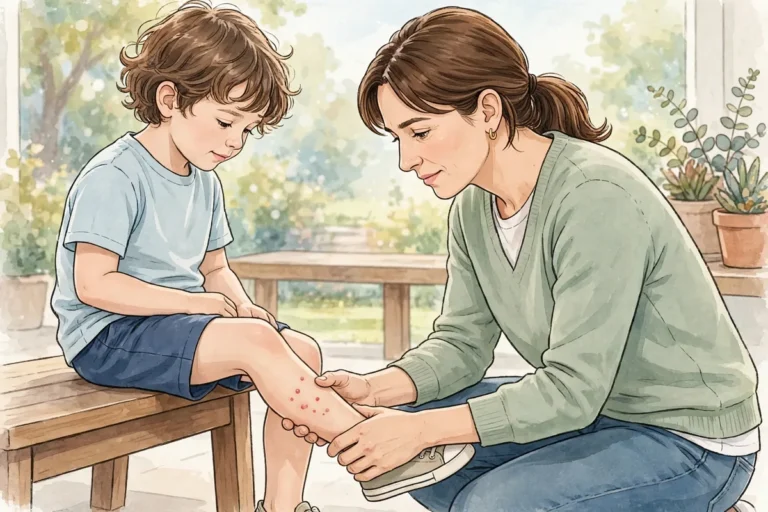
For weeks, you have woken up with fresh, fiercely itchy bumps — around your waistband, across your abdomen, along your shoulders. You stripped the sheets, checked the mattress seams for bed bugs, and found nothing. No new pets, no travel, no obvious culprit. This is the classic mystery-mite pattern, and the two most common invisible biters behind it are the tropical rat mite and the bird mite.
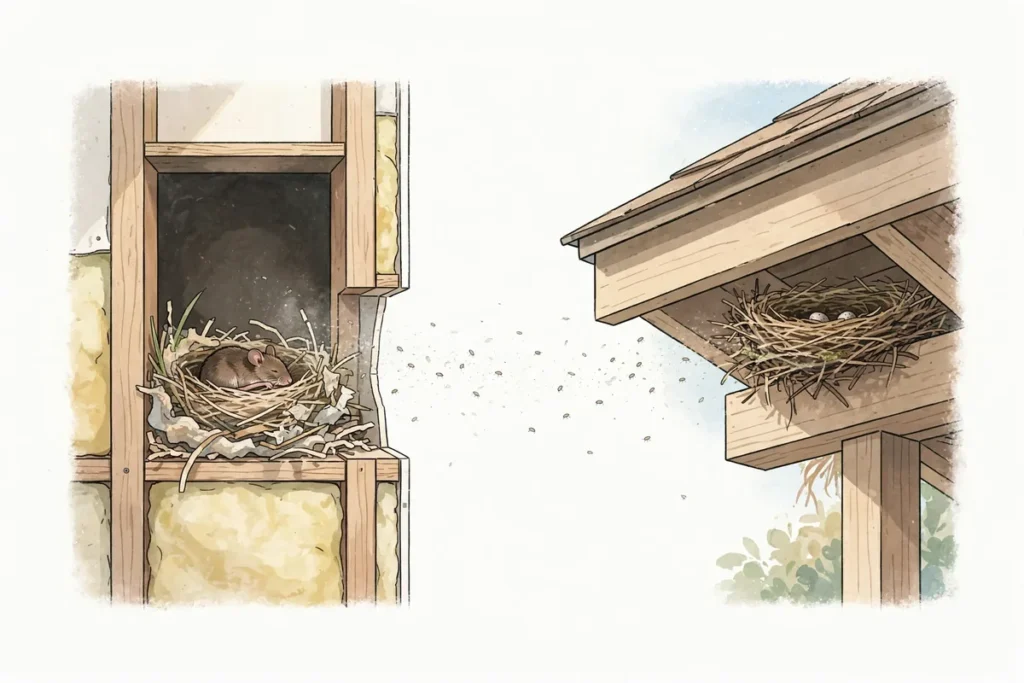
The direct answer: tropical rat mite vs bird mite comes down to the host the mites came from. Rat mites arrive with rodents — mice or rats in your walls, attic, or crawl space — and turn to people when that host dies, is trapped, or is sealed out. Bird mites arrive with birds, usually from nests in eaves, vents, or chimneys, and bite when the nest is abandoned in late summer or fall. Bite marks alone cannot identify the species. But the clues around your home often point the way, and the fix for both is the same: eliminate the host source, then bring in professional pest treatment.
What Tropical Rat Mites Are and How They Reach You
The tropical rat mite, Ornithonyssus bacoti, is a parasitic mite that feeds on rats and mice. It measures about 0.75 to 1.44 millimeters — small enough to go unnoticed on skin and bedding. Unfed mites look greyish; after a blood meal they turn reddish, which is why people who spot them describe moving red specks.
Rat mites do not seek humans by choice. The trouble starts when their host disappears. If the rodents in your wall voids or attic die, are trapped, or are sealed out without the animals inside being addressed, the mites are suddenly hostless and hungry. They migrate through wall voids and along pipes into bedrooms and bite sleeping people. This is why tropical rat mite dermatitis so often appears as a baffling outbreak in a home with “no pets and no bugs” — the source is a hidden rodent problem, not something visible.
Dermatology’s “What’s Eating You?” case series documents tropical rat mite dermatitis being mistaken for bird-mite bites, scabies, or other conditions. One honest caveat: no human disease has been definitively shown to spread naturally to people through this mite. Laboratory work has shown it can carry certain pathogens experimentally, but natural transmission to humans has not been observed. Treat it as an intensely irritating dermatitis problem, not an infectious-disease emergency.
What Bird Mites Are and How They Reach You
Bird mites are tiny parasitic mites associated with birds rather than mammals. The two species behind most human complaints in the United States are the northern fowl mite (Ornithonyssus sylviarum) and the chicken red mite (Dermanyssus gallinae). Like the tropical rat mite, they are barely visible and cause intense itching.
Their route into your home starts outside it. These mites live in and around bird nests built on eaves, in gutters, inside attic or dryer vents, on window air-conditioning units, and around chimneys — starlings, sparrows, and pigeons are frequent hosts. When nesting birds fledge and leave, typically in late summer and fall, the mites lose their food source and crawl through vents, window frames, and wall voids into living spaces, biting people, often at night.
Because bird-mite season lines up with fledging and with the season rodents move indoors, the two problems peak together in fall, which is why they get confused. The biology is parallel: a non-human host leaves or dies, and the mites switch to the nearest warm-blooded alternative. For more on the skin side, see our guide to bird mite bite treatment.
Bite Patterns and Symptom Clues, Side by Side
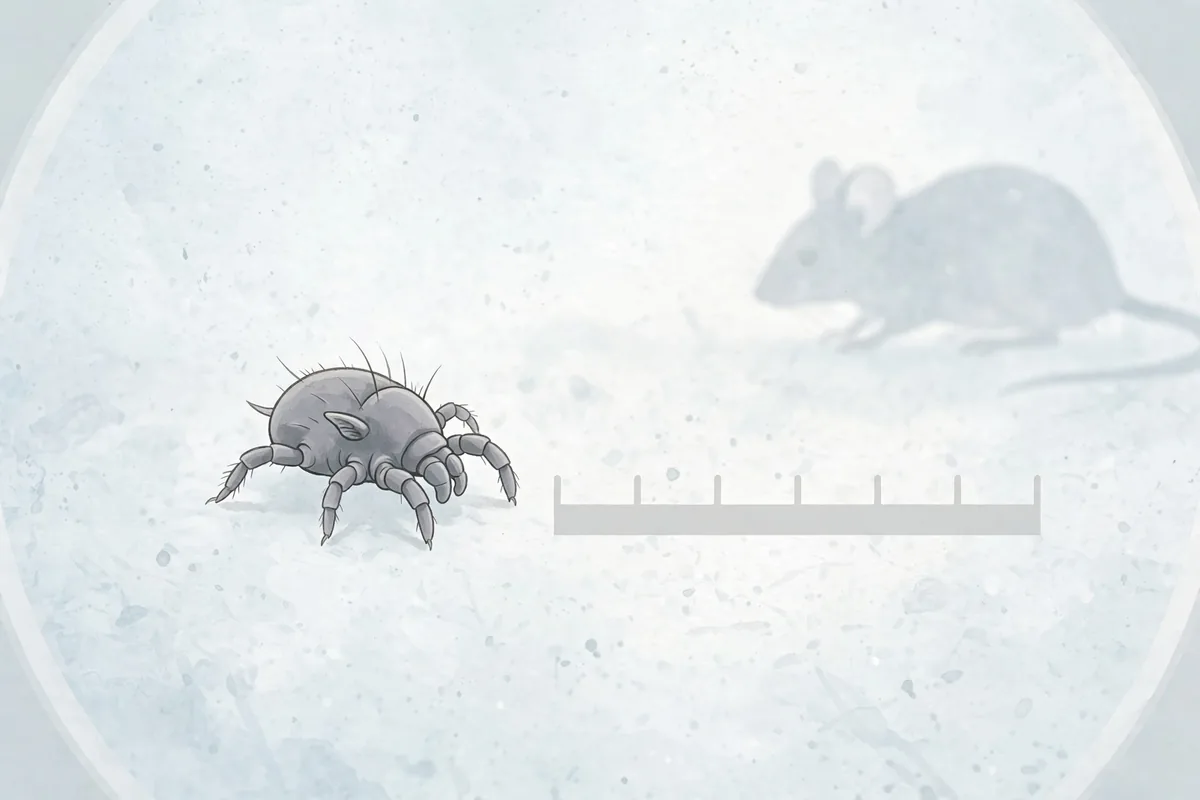
The uncomfortable truth first: the bites themselves do not reliably identify the mite. Both cause intensely itchy raised red papules, sometimes with a tiny blister-like center, that provoke strong scratching, especially at night. A clinician cannot name the species from the lesions; definitive identification needs a specimen under a microscope.
Patterns can still suggest one over the other. Tropical rat mite bites are often described on covered areas exposed during sleep — the waistband line, abdomen, shoulders, and thighs — because the mites reach people in bed after migrating from wall voids. The lesions tend to be randomly scattered rather than arranged in the straight lines or tight clusters associated with bed bug feeding. In some people, individual welts linger for weeks, feeding the “mystery bites for weeks” experience.
Bird-mite complaints follow a similar script of intense itching and scattered bumps, often worse at night. When bites concentrate on the upper body, neck, and shoulders — or flare after sleeping near a particular vent, window, or exterior wall — a bird-nest source becomes more plausible. But there is real overlap, so treat bite patterns as a hint, not a verdict.
Detective Clues: Rodent Signs vs Bird-Nest Signs
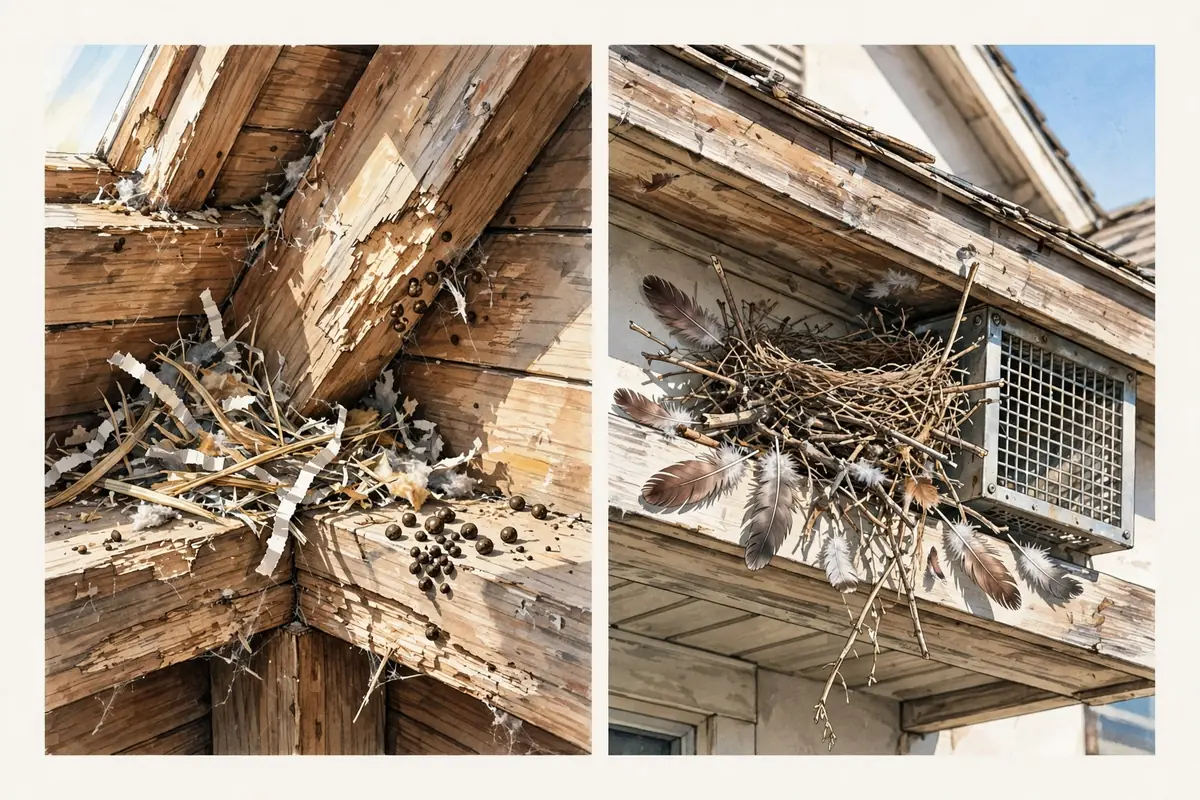
Since bites cannot settle the question, the tiebreaker is the host. Tropical rat mites mean rodents are — or recently were — living inside your structure. Look for small dark droppings along baseboards, in pantries, or in the attic; gnaw marks on wood, wiring, or packaging; shredded nesting material; a musky odor in enclosed spaces; and scratching or scurrying in walls at night. Finding a dead rodent in a wall void, or recently trapping mice, is a strong indicator — the mites bite hardest right after the host is gone.
Bird mites mean a nest on or in the building. Walk the exterior and look up: old or active nests under eaves, in gutters, on outdoor AC units, around chimney caps, and over vents. Check for feathers, droppings on siding below a roosting spot, and chirping near vents in the weeks before the biting started. A nest that was occupied in summer and is now empty is the signature scenario.
Timing helps too. Both surge in fall — rodents move indoors as temperatures drop, and fledglings abandon nests — but a sudden onset right after sealing the house or trapping mice points toward rat mites, while onset after birds stopped visiting a visible nest points toward bird mites. Work through the possibilities with our bite and sting clue checklist before drawing conclusions.
What to Do About the Bites
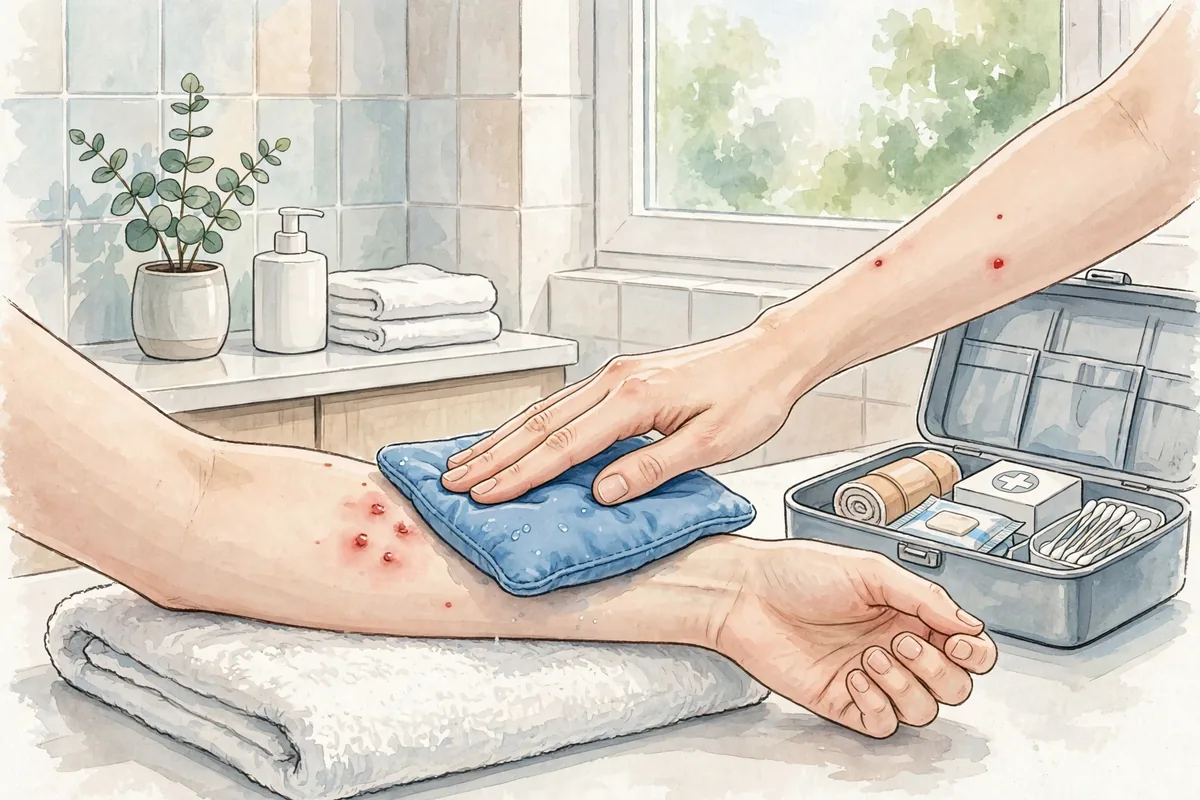
Start with the skin, but keep expectations realistic: symptom relief is temporary while mites keep coming. Apply a clean cold compress for 10 to 15 minutes at a time to calm itching and mild swelling, keep the skin clean, and avoid scratching, which breaks the skin and invites infection. Keep fingernails short and consider covering the itchiest spots at night.
Over-the-counter anti-itch measures such as cooling lotions and oatmeal baths can take the edge off; our guide to ways to reduce bite itching collects the options. Watch how the skin behaves over the following days — compare against our normal healing vs infection guide and get medical advice promptly if infection signs appear.
Do not treat the mites on your body with insecticides made for surfaces or buildings — misuse can cause chemical irritation. If bites are severe, widespread, or not improving, that is a matter for a clinician, not stronger home chemicals. And if itching returns night after night despite everything you do to the skin, take that as confirmation the source is still active: the bite and sting first-aid checklist covers immediate care, but lasting relief requires ending the infestation at its source.
How to End the Infestation and Prevent a Repeat
The single most important fact in this article: killing the mites you can see will not end the problem while the host source remains. Sprays and symptom treatments buy temporary relief at best. The infestation ends only when the rodents or the bird nest are gone and a professional treats the area.
For a suspected rat-mite source, that means professional rodent removal first — trapping and removal, not poison alone inside wall voids, since a dead animal inside the wall is precisely what triggers mite migration. Then seal entry points around pipes, vents, rooflines, and foundations. For a suspected bird-mite source, have the old nest professionally removed, then install vent covers, chimney caps, and bird-exclusion screening. Some birds are legally protected, and high nest sites are unsafe DIY work — a pest professional knows the rules.
Once the host source is gone, bring in a licensed pest management professional to treat the affected areas — wall voids, attics, and rooms where bites occurred. Be wary of anyone who offers to spray without addressing the rodents or the nest: without source removal, you will pay for the same treatment again.
To prevent a repeat, think seasonally. Every fall, inspect the exterior for new gaps and for birds showing interest in vents and eaves. Keep attics dry and uncluttered, store debris away from the foundation, and address any rodent sighting immediately. Evidence on long-term prevention specifics is limited, but the logic is solid: no host, no host-specific mites.
When to See a Doctor for a Bug Bite
Mite dermatitis is miserable but usually not dangerous. Get medical care promptly if you notice any of the following:
- Signs of spreading skin infection (cellulitis): redness expanding outward from the bite, increasing warmth, swelling, pain, pus, or red streaks tracking away from the area.
- Fever developing alongside the bites, which can accompany a skin infection.
- Bites that worsen or show no improvement over several weeks despite the source being addressed — a clinician can evaluate for secondary infection or another skin condition entirely.
- Severe allergic reaction: difficulty breathing, swelling of the lips, tongue, or throat, dizziness, or widespread hives. These are emergency warning signs — review the anaphylaxis and sting warning signs and call emergency services immediately.
- Bites involving the face or eyes, where swelling can threaten vision or breathing.
Persistent “bites” sometimes turn out to be another skin condition — eczema, contact dermatitis, or scabies — so a clinician examining the actual skin matters more than any article. Bring notes about timing, lesion locations, and what you found around the house.
Frequently Asked Questions
Can you actually see tropical rat mites or bird mites?
Barely. At roughly a millimeter long, they sit at the edge of naked-eye visibility — some people notice tiny moving specks, but many never see them. Pest professionals can collect specimens for microscopic identification, the only reliable way to confirm the species.
Do tropical rat mites spread diseases to humans?
No human disease has been definitively shown to spread naturally to people through tropical rat mites. Laboratory experiments have shown the mite can harbor certain pathogens under controlled conditions, but natural transmission to humans has not been observed. Honest summary: a severe nuisance and dermatitis problem, not a documented vector of human disease.
How long do the bites last?
It varies. Some welts fade within days; in others lesions persist for weeks, and new bites keep appearing nightly until the source is removed. Scratching prolongs healing and raises infection risk.
Will the mites go away on their own?
Not reliably. Once the host is gone, hungry mites can survive a period without feeding and keep seeking people. Without source removal and professional treatment, waiting it out usually means more weeks of bites.
Can I handle this with store-bought bug spray?
Surface sprays may knock down some mites temporarily, but they do not reach the wall voids, attics, and nest sites where the population lives, and they do nothing about the host source. For an established infestation, a licensed pest management professional — after rodent removal or nest removal — is the reliable route.
First Aid, Identification Limits, and Warning Signs
Bird mites and tropical rat mites are tiny, and different biting mites can look alike without magnification. Appearance alone cannot diagnose a mite bite or identify the species. A cluster of itchy bumps is not proof that mites are present. If you find a suspected mite, preserve a specimen in a sealed container or on clear tape and ask a qualified extension entomologist or pest professional to identify it before paying for broad pesticide treatment. Do not apply household pesticides, alcohol, or essential oils to your skin.
For a mild itchy reaction, gently wash the skin with soap and water, use a cool compress, and avoid scratching. Ask a clinician or pharmacist before using medication if the affected person is a young child, is pregnant, has a chronic condition, or the diagnosis is unclear. Seek medical advice if pain or swelling increases, redness spreads, pus appears, or fever develops. Trouble breathing, throat tightness, fainting, or swelling of the lips, tongue, or face requires emergency care.
For environmental control, look for a plausible source such as an active or recently abandoned bird nest or rodent activity, but do not disturb an active protected bird nest. Bird mites cannot reproduce on human blood; removing the source host and obtaining reliable identification are more useful than repeatedly treating the skin. A pest professional can help with safe nest or rodent-source management when needed.
Authoritative Sources
- University of Minnesota Extension: Bird Mites — identification limits, host biology, and prevention.
- Cornell Integrated Pest Management: Mystery Bites — why unexplained skin marks should not be used alone to diagnose an infestation.
- University of Missouri Extension: Occasional Biting Pests — bird and rodent mite exposure and source control.
This article is for informational purposes only and isn’t medical advice. If you’re worried about a bite or sting, talk to a healthcare professional.