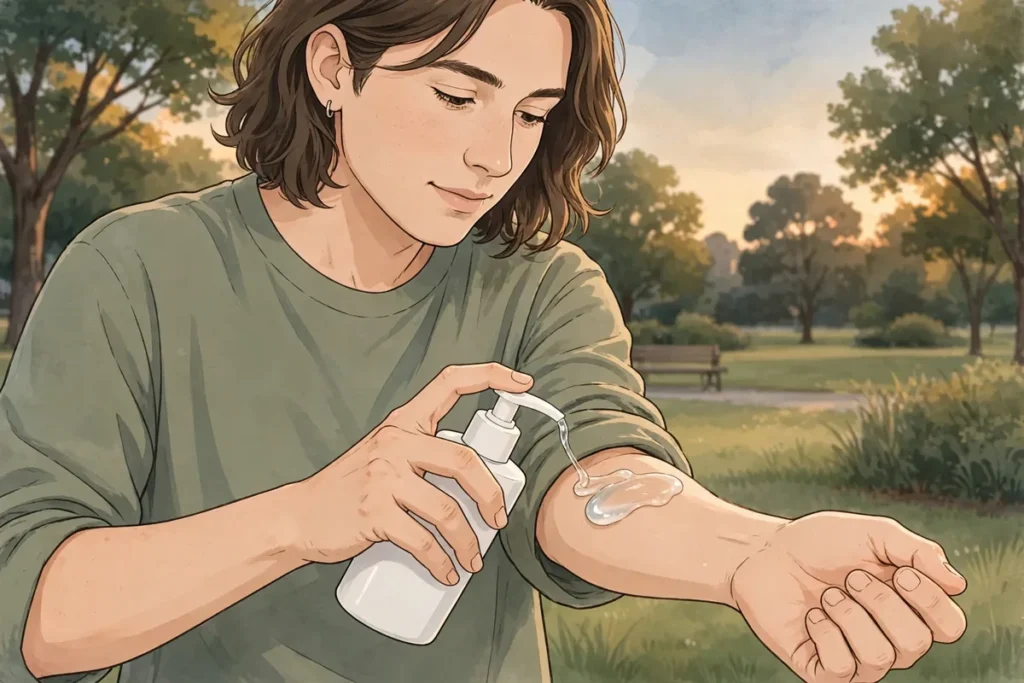
You’ve been there: a mosquito bite flares up at a barbecue, there’s no calamine lotion in sight, and someone hands you a bottle of hand sanitizer. “Rub this on it,” they say. “It works.” It stings for a second, feels cool, and for a moment you wonder if it’s actually doing something.
Does hand sanitizer help mosquito bites? The honest answer is: not really. A dab of alcohol-based hand sanitizer can create a brief cooling sensation as the alcohol evaporates, which may make the itch feel quieter for a minute or two — but it doesn’t address the histamine reaction that causes the itching, it dries out your skin, and it stings badly on any broken skin. Dermatologists and first-aid references don’t list hand sanitizer as a recommended bite treatment. There are better, gentler options that actually work, and this article walks through all of them.
Below, you’ll find exactly why hand sanitizer feels like it helps, what the alcohol is actually doing to your skin, the situations where it can cause real problems (children, broken skin, overuse), and the simple first-aid steps that give genuine relief.
Why It Feels Like It Works — The Cooling Effect
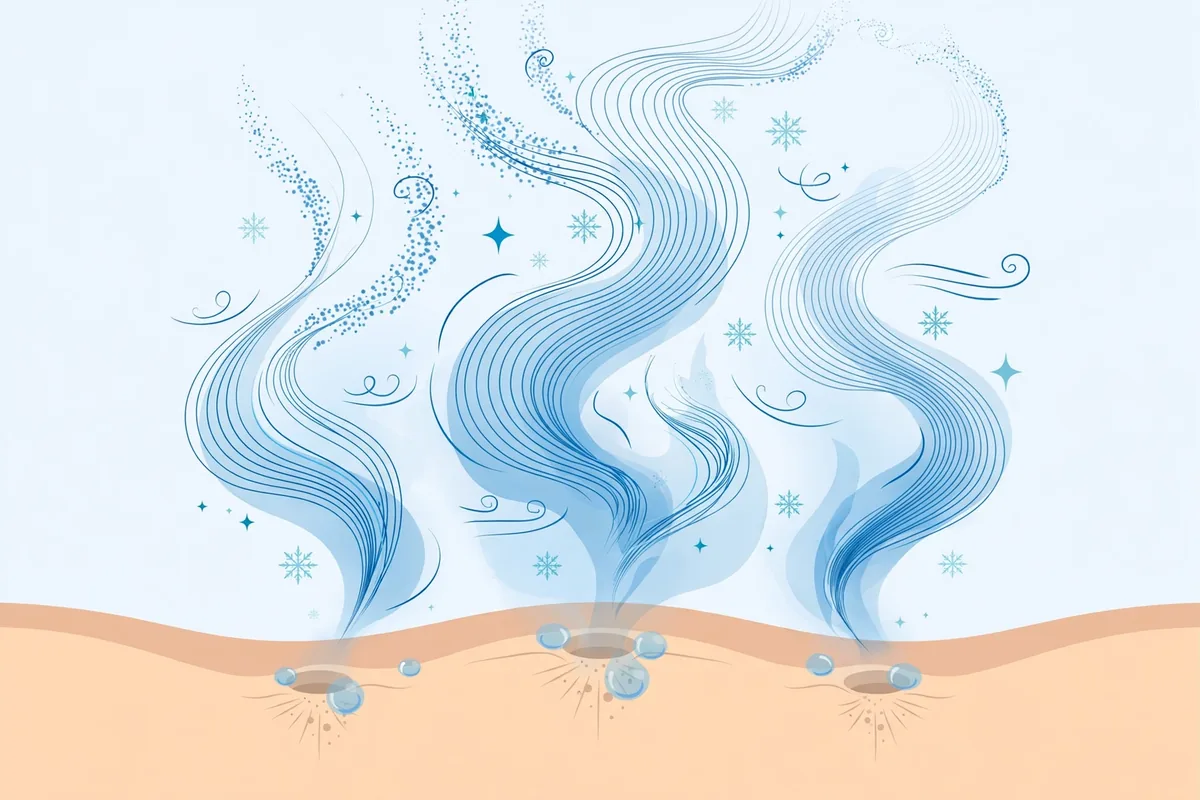
Most hand sanitizers contain 60–70% ethyl or isopropyl alcohol. When you spread that gel over a warm, itchy mosquito bite, the alcohol evaporates very quickly — far faster than water. Evaporation pulls heat away from the skin surface, and that sudden drop in temperature is registered by your skin’s cold receptors.
Cold is a well-known distraction for itch. Your nervous system can only process so much sensation at once, so a strong cooling signal can temporarily crowd out the weaker itch signal coming from the bite. This is the same reason a cold compress or an ice cube wrapped in a cloth can make a bite feel better. For 30 to 60 seconds, hand sanitizer gives you a quick hit of that same mechanism.
But that’s all it is — a sensation, not a treatment. The itch from a mosquito bite comes from your immune system releasing histamine in response to mosquito saliva proteins. Alcohol does nothing to that process. Once the sanitizer dries (usually under a minute), the cooling vanishes and the itch comes right back, because the underlying immune reaction is untouched.
The bottom line: what you’re feeling is evaporation, not medicine. Anything that cools the skin — even plain cold water — produces the same brief effect without the downsides of applying alcohol to irritated skin.
What Alcohol Actually Does to a Mosquito Bite
To understand why hand sanitizer falls short, it helps to know what’s happening under the skin when a mosquito bites you. The mosquito injects a small amount of saliva containing proteins that keep your blood flowing. Your immune system flags those proteins as foreign and releases histamine, which dilates blood vessels and sends more fluid to the area. That’s the raised bump, the redness, and the itch.
Alcohol’s effects on that process are essentially nil:
- It doesn’t neutralize histamine. No published evidence suggests rubbing alcohol or hand sanitizer breaks down mosquito saliva proteins or dampens the histamine response in skin.
- It doesn’t reduce swelling. If anything, alcohol is a skin irritant. Applying it to already inflamed skin can increase redness and irritation rather than calm them.
- It dries the skin. Alcohol strips the skin’s natural oils. On the delicate, swollen skin around a bite, that drying effect can lead to flaking and even more irritation — which, in turn, can make you want to scratch more.
The folk-remedy logic (“alcohol kills germs, so it must help the bite”) confuses two different jobs. Yes, alcohol-based sanitizer kills bacteria on intact skin — that’s what it’s designed for. But a mosquito bite isn’t a bacterial problem; it’s an allergic reaction. Germ-killing doesn’t address itch — but folk remedies like this one keep circulating precisely because people assume any stinging sensation means a remedy is “working.”
The Risks: Broken Skin, Children, and Overuse
Hand sanitizer on a fresh bite may be mostly useless, but in several common situations it can genuinely cause harm.
Broken skin stings — and risks infection. If you’ve already scratched the bite open, applying alcohol-based sanitizer produces a sharp burning pain. More importantly, alcohol kills skin cells indiscriminately, which can delay healing of the tiny wound. A scratched-open bite is a doorway for bacteria; cellulitis from bug bites is a real complication, and anything that slows healing makes that doorway stay open longer. On broken skin, stick to gentle soap and water.
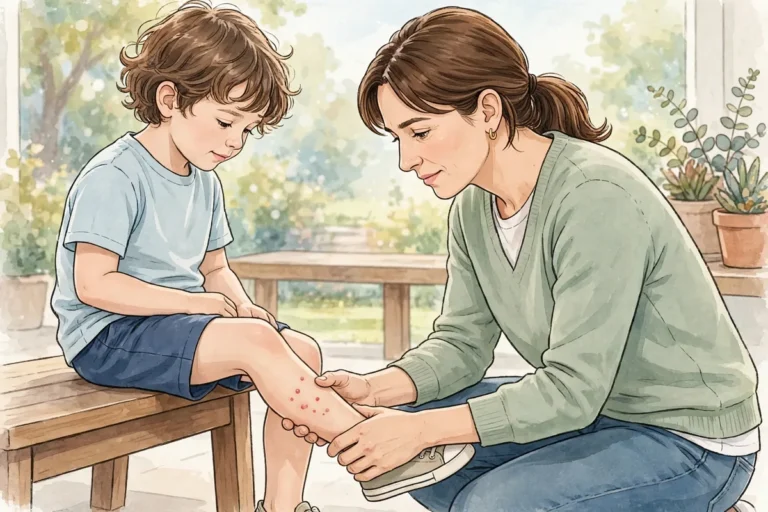
Children are a special concern. Young kids are more likely to rub sanitizer off their bite and then put their hands in their mouths, eyes, or on their faces — alcohol-based products can irritate eyes and mouths badly, and ingesting them is a poisoning risk. Kids’ skin is also thinner and more prone to dryness and irritation. If a child is miserable with itchy bites, reach for kid-appropriate options: a cold, damp cloth, an oatmeal bath, or products specifically labeled for children’s use — and check with your pediatrician about what’s appropriate for your child’s age.
Repeated use dries and cracks skin. Some people reapply sanitizer every time the itch returns, creating a cycle: itch, apply, brief cooling, itch returns, apply again. Hours of this can leave the area dry, red, and flaky — a patch of irritated skin that looks worse than the original bite and itches in its own right. If you find yourself in that loop, the sanitizer isn’t failing you; it was never the right tool.
What Hand Sanitizer Is Good For (Bite-Related)
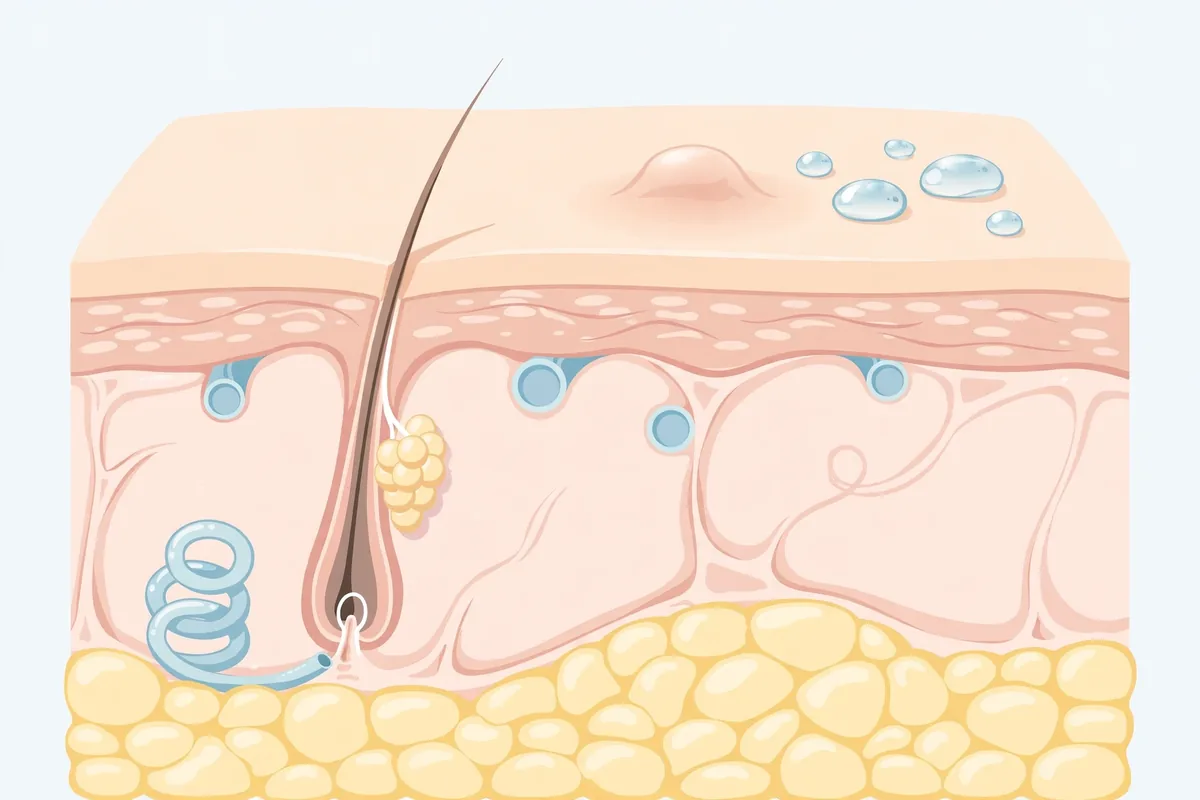
To be fair, there’s one bite-related job hand sanitizer handles perfectly: hand hygiene. Dermatologists consistently advise against scratching bites because fingernails carry bacteria that can turn a simple bite into a skin infection. If you’re about to touch, examine, or apply cream to a bite, cleaning your hands with sanitizer first is genuinely smart first aid — especially when you’re outdoors without access to soap and water.
That’s the right relationship between hand sanitizer and mosquito bites: it belongs on your hands, before you treat the bite — not on the bite itself.
Proven Ways to Stop the Itch Instead
If the sanitizer bottle isn’t the answer, what is? These options are supported by standard first-aid and dermatology guidance:
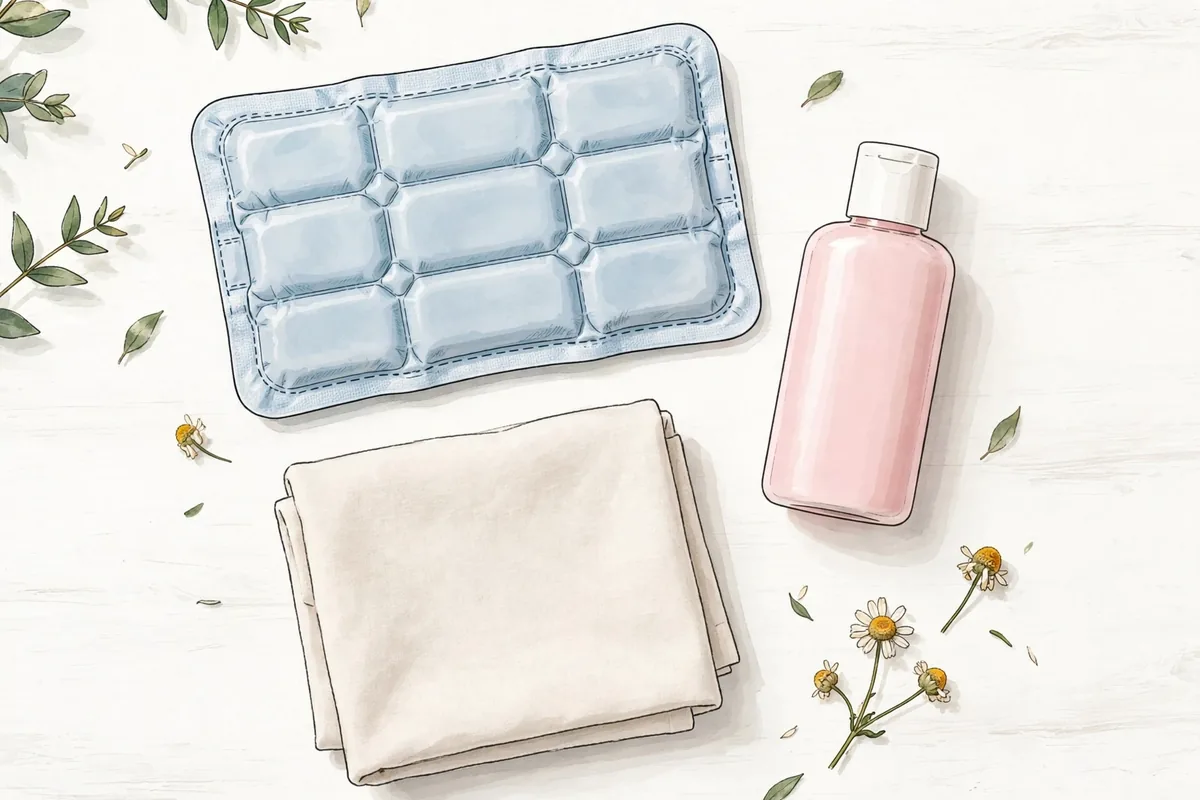
- Cold, first. A cold compress, a bag of frozen peas wrapped in a towel, or a cool damp cloth applied for 10–15 minutes is one of the most effective drug-free ways to calm bite itch. The cooling works exactly like the evaporative cooling from sanitizer — but longer-lasting and gentler.
- Don’t scratch. Scratching damages skin and can introduce infection. If a bite is already scratched open, wash it with soap and water and keep it clean. (See our guide on why scratching doesn’t help.)
- Anti-itch creams. Over-the-counter options like calamine lotion or low-strength hydrocortisone cream, used exactly as directed on the label, are formulated to soothe bite irritation. Avoid applying them to broken skin unless the label says it’s safe.
- Oral antihistamines. For people with multiple bites or strong reactions, oral antihistamines are commonly used to calm the histamine response — but talk to your pharmacist or doctor about which product and strength is appropriate for you or your child, since individual health conditions matter.
- Oatmeal or cool baths. For bites that are widespread (after a hike or a night on the porch), a lukewarm oatmeal bath can soothe many bites at once.
- Track your pattern. If bites seem to itch much more after dark, you’re not imagining it — bug bites often itch worse at night. A cool bedroom and loose clothing can reduce nighttime scratching.
One more tip: mark the bite with a pen circle (loosely) and note the time. If the redness spreads well beyond that line over the next 24–48 hours, that’s useful information for a doctor visit.
When to See a Doctor for a Bug Bite
Most mosquito bites resolve on their own within a few days. Seek medical care promptly if you notice any of the following:
- Signs of a severe allergic reaction (call 911): trouble breathing, swelling of the lips, tongue, or throat, dizziness, fainting, or a rapidly spreading rash. These are signs of possible anaphylaxis, a life-threatening emergency — memorize its warning signs from a trusted medical source such as MedlinePlus or the CDC.
- Signs of infection (cellulitis): increasing redness, warmth, swelling, or tenderness around the bite; red streaks spreading outward; pus; fever or chills. Infected bites need medical treatment — see our guide to bug bite infection and cellulitis signs.
- A bite that keeps getting worse instead of better after 48–72 hours, or a bite that isn’t healing after a week or two.
- Many bites or a very large local reaction — for example, an entire forearm swollen from a few bites — especially in children.
- Fever, body aches, or unusual fatigue in the days after being bitten outdoors, which can occasionally signal a mosquito-borne illness in some regions. When in doubt, mention the bite exposure to your doctor.
Frequently Asked Questions
Will rubbing alcohol work better than hand sanitizer on a bite?
No — rubbing alcohol (isopropyl) has the same mechanism as sanitizer: brief evaporative cooling and no effect on histamine. It dries skin even more aggressively than most sanitizer gels, since sanitizers usually include moisturizers. Neither one treats the itch; cold compresses and proper anti-itch products are better choices.
Why do some people swear hand sanitizer helps their bites?
Two reasons. First, the cooling effect feels real and immediate — the brain genuinely perceives less itch for a minute. Second, confirmation bias: people tend to remember the times a remedy “worked” and forget the times it didn’t. Folk remedies like this one persist because the sensation is convincing, not because the underlying biology supports it.
Can I use hand sanitizer on my kid’s mosquito bites?
It’s best not to. Children’s skin is more sensitive to alcohol’s drying and irritating effects, and there’s a real risk of a child rubbing the sanitizer into their eyes or mouth. Use a cold, damp cloth or a pediatrician-approved anti-itch product instead, and keep hand sanitizer out of young children’s reach.
What should I do if I already put sanitizer on a scratched-open bite?
Rinse the area gently with cool water, pat it dry, and leave it alone. If the burning is severe or the skin around it becomes increasingly red, warm, or painful over the next day or two, see a doctor — those can be early signs of infection.
Is there any study showing hand sanitizer helps bites?
No published clinical research was found evaluating hand sanitizer (or rubbing alcohol) as a treatment for mosquito-bite itch. Its recommendation status in dermatology and first-aid literature is: not a treatment. Evidence-based options — cold therapy, antihistamines, calamine, and hydrocortisone — are the ones with real track records.
Medically reviewed by Dr. Sarah Jones, MD.
This article is for informational purposes only and isn’t medical advice. If you’re worried about a bite or sting, talk to a healthcare professional.