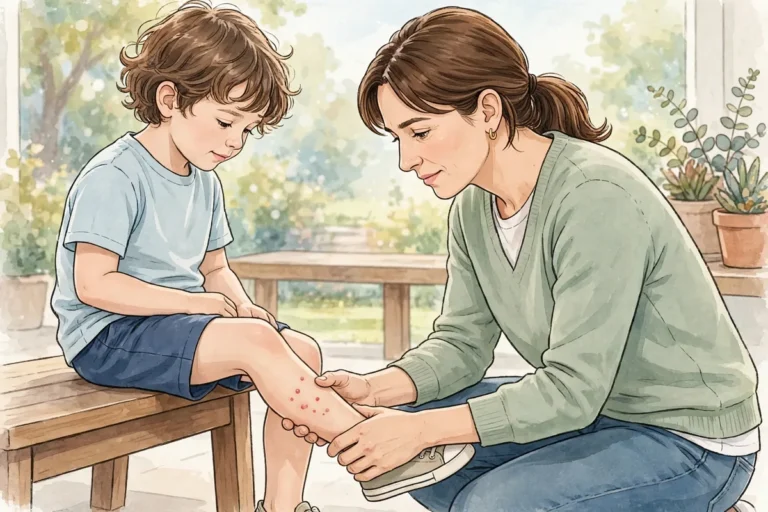
After a hike — redwoods in California, or the Poconos in Pennsylvania — you spot a tiny dark speck clinging to your ankle. One friend says “deer tick.” Another says “western blacklegged tick.” Underneath the confusion sits the real question: does this tick carry Lyme disease, and what should you do about it?
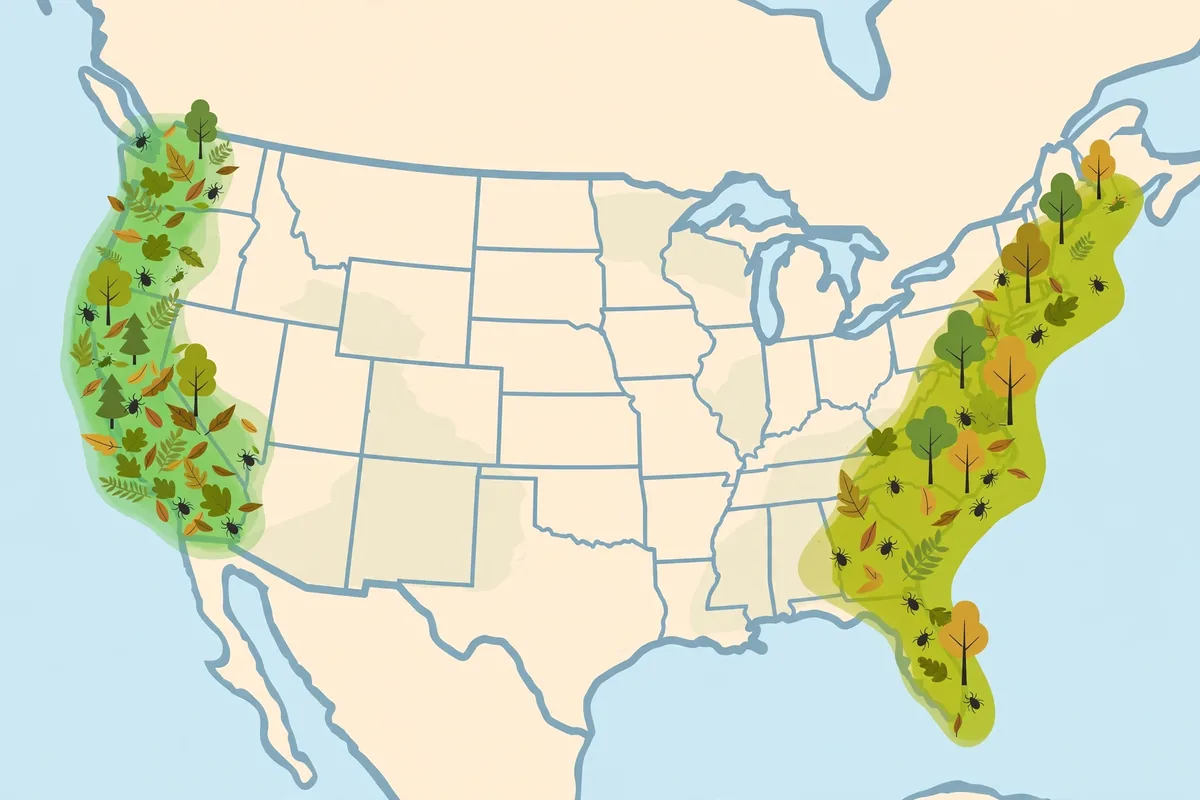
Here is the direct answer to western blacklegged tick vs deer tick: these are not two unrelated pests. They are regional cousins in the same Ixodes genus. The “deer tick” (Ixodes scapularis) rules the eastern United States, while the western blacklegged tick (Ixodes pacificus) is its Pacific Coast counterpart. Both can carry the bacteria behind Lyme disease — but the odds differ sharply by region.
This guide covers how the two species differ, why West Coast Lyme numbers run lower, how to tell the ticks apart, and what to do after a bite — from safe removal to watchful aftercare.
Same Genus, Two Regional Species
The taxonomy in plain English. Both ticks belong to the genus Ixodes, the hard-bodied ticks that transmit Lyme disease. Ixodes scapularis is the eastern species; Ixodes pacificus is the western one. Think of them as siblings raised on opposite coasts — closely related, similar habits, different neighborhoods.
The name game. “Deer tick” is the everyday name most Americans use for Ixodes scapularis, a nod to the white-tailed deer that adult ticks feed on. The approved common name for scapularis is actually “blacklegged tick,” and the western species is the “western blacklegged tick.” In casual conversation, though, plenty of Westerners call pacificus a “deer tick” too. That loose naming is where much of the confusion comes from, and it matters: search results and well-meaning advice often mix the two up.
Similar life cycles. Both pass through the same three life stages — larva, nymph, adult — each needing a blood meal, and both feed on rodents, lizards, birds, deer, pets, and people. Where they truly diverge is geography and how often they carry Lyme bacteria.
Where Each Tick Lives: Range and Habitat
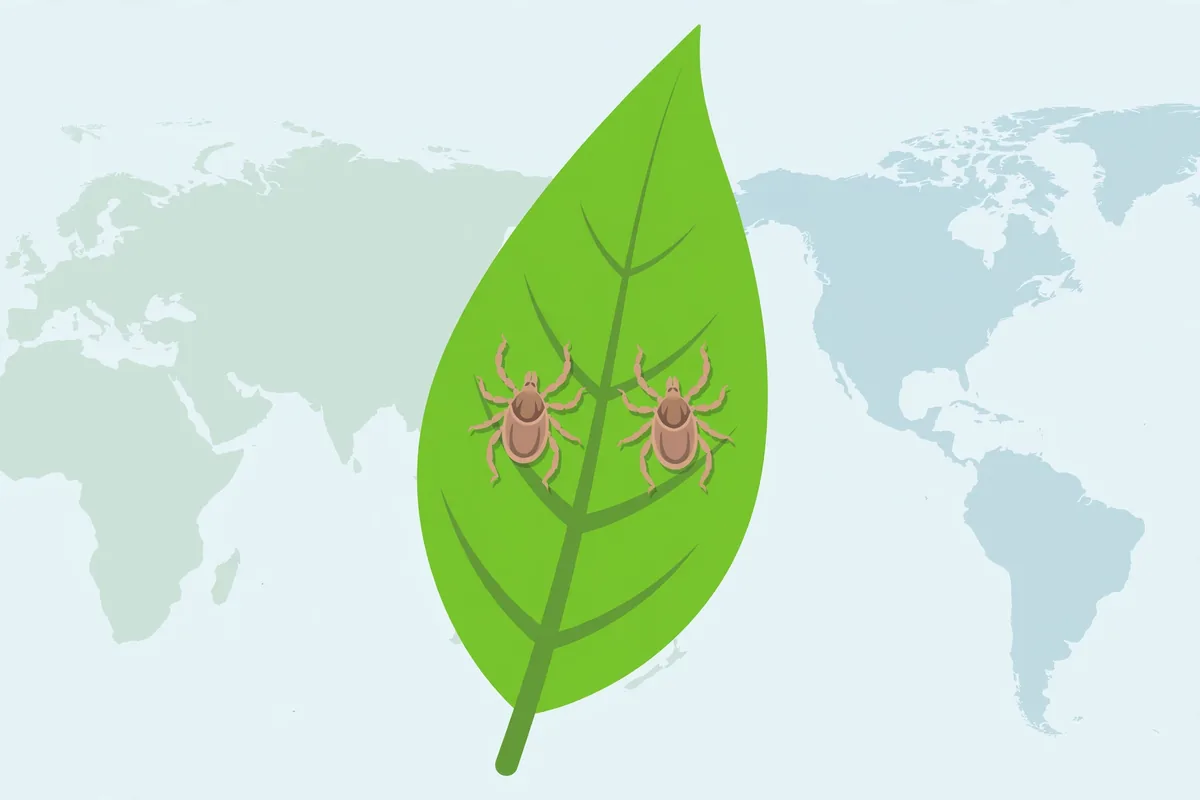
The deer tick’s territory. Ixodes scapularis dominates the eastern United States — the Northeast, the upper Midwest, and the mid-Atlantic, with its range pushing outward over recent decades. A rough dividing line runs near the 100th meridian, through the Great Plains: east of that line is deer tick country. If you hike, camp, or garden in New England, New York, Pennsylvania, Wisconsin, or Minnesota, scapularis is the tick you are most likely to meet.
The western blacklegged tick’s territory. Ixodes pacificus claims the Pacific Coast — California, Oregon, and Washington, concentrated in coastal woodlands and foothills. Its stronghold is the leaf litter of oak woodlands, redwood groves, and mixed forests, though it turns up in grassy and brushy areas too. A tick encounter west of the Cascades and Sierra Nevada most likely involves pacificus.
Shared habitat tastes. Both species love shady leaf litter, woodland edges, tall grass, and overgrown trails. Nymphs are most active in late spring and summer; adults peak in fall and can quest on mild winter days. Neither tick jumps or flies — they wait on vegetation and latch on as you brush past, which is why tick checks after outdoor time help on both coasts.
Ranges shift. Tick ranges move as climates warm and host populations shift, so finding a species slightly outside its “classic” range is no longer surprising — one more reason to save any tick that bites you rather than guessing its identity.
What They Look Like: Spotting the Differences
The honest truth first. To the naked eye, the two species look remarkably alike. Adult females of both are reddish-brown with a dark shield behind the head; males are smaller and darker. An unfed adult female is only about 3 millimeters long — sesame-seed size. The features entomologists use to separate them are subtle mouthpart and body-plate details, not something most people can judge on a moving speck.
Nymphs are the real lookalikes. The nymph stage — the one most likely to bite people unnoticed — is poppy-seed sized in both species. At that scale, species-level ID by eye is not realistic. A nymph-stage tick deserves the same careful handling regardless of coast.
What you can actually observe. A few practical clues help more than species ID:
- Size and stage: A poppy-seed tick is a nymph; a sesame-seed tick with a red abdomen is likely an unfed adult female.
- Engorgement: A tick that has fed a while looks grayish and swollen — a sign it may have been attached longer.
- Where you found it: Location is often your best ID clue. A Connecticut trail tick is overwhelmingly likely scapularis; a Bay Area park tick is overwhelmingly likely pacificus.
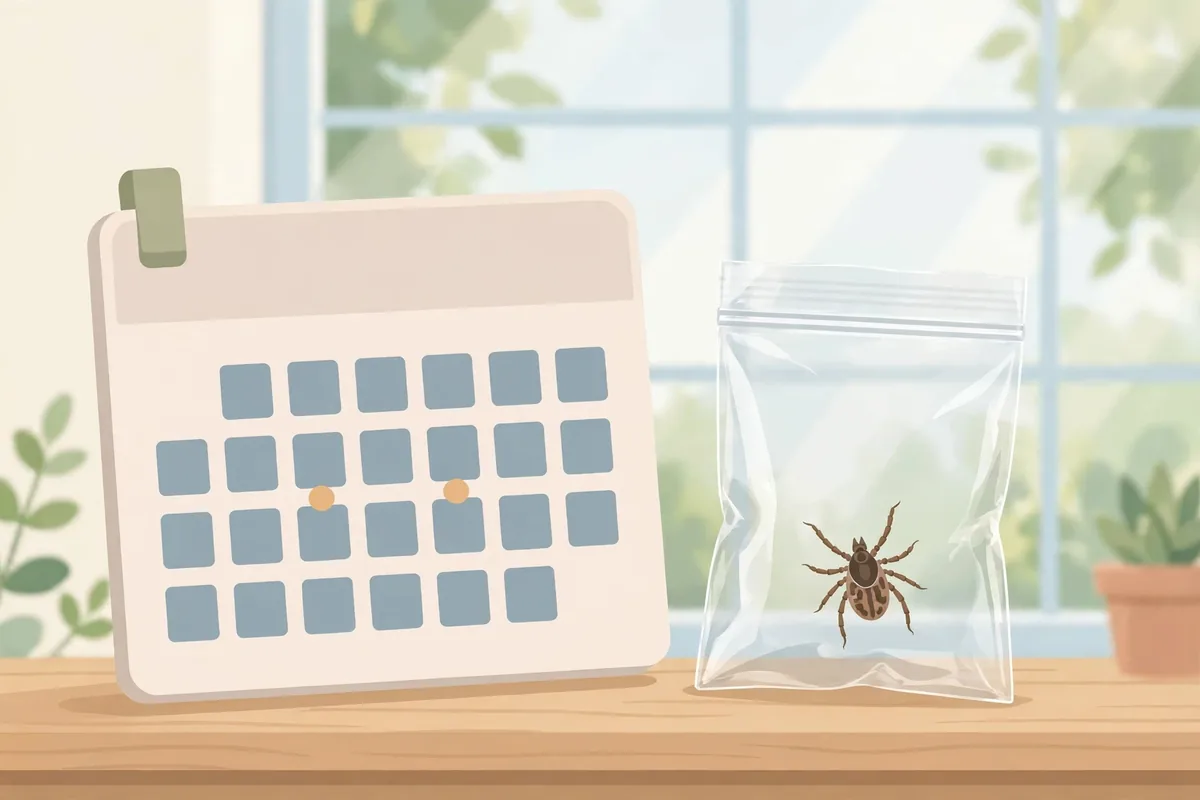
Get a second opinion on ID. Photograph the tick before removal if you safely can, and keep the specimen in a sealed bag. Local health departments, extension offices, and some university labs offer tick identification — far more reliable than guessing.
Lyme Risk: Why West Coast Numbers Run Lower
Both species can carry Lyme bacteria. Borrelia burgdorferi, the bacterium behind Lyme disease, has been found in both Ixodes scapularis and Ixodes pacificus. Neither species is “the safe one.” But surveillance data shows a striking gap: in western studies, infection prevalence in pacificus adults has ranged from roughly 0.6% to 7.3%, and in nymphs from about 1.4% to 9.9% — while eastern scapularis populations have shown nymph infection rates up to around 23% and adult rates up to around 47%. Rates vary by location and year, so read these as illustrations of the gap, not guarantees for any single trail.
The lizard factor. A big part of the gap is the western fence lizard. These common West Coast lizards host many immature pacificus ticks — and their blood has a borreliacidal effect that clears Lyme bacteria from feeding ticks. The East has no equivalent widespread “cleaning” host, so eastern ticks keep the bacteria they pick up from infected mice.
Nymphs are the highest-risk stage for both. Across both coasts, nymphs cause the most human Lyme cases: tiny enough to go unnoticed, feeding in the warm months when people are outdoors, and carrying bacteria often enough to matter. Adults bite people too, but they are bigger and more often found before feeding long.
Low risk is not no risk. Lyme disease occurs in the West — California reports cases every year. Lower prevalence means better odds after any single western bite, not a guarantee. For a deeper look at what Lyme after a bite can involve, see the overview of Lyme disease after a tick bite.
Found a Tick? Safe Removal Step by Step
Act promptly, stay calm. The sooner a tick comes off, the better — risk generally rises with attachment time. You need only a pair of fine-tipped tweezers.
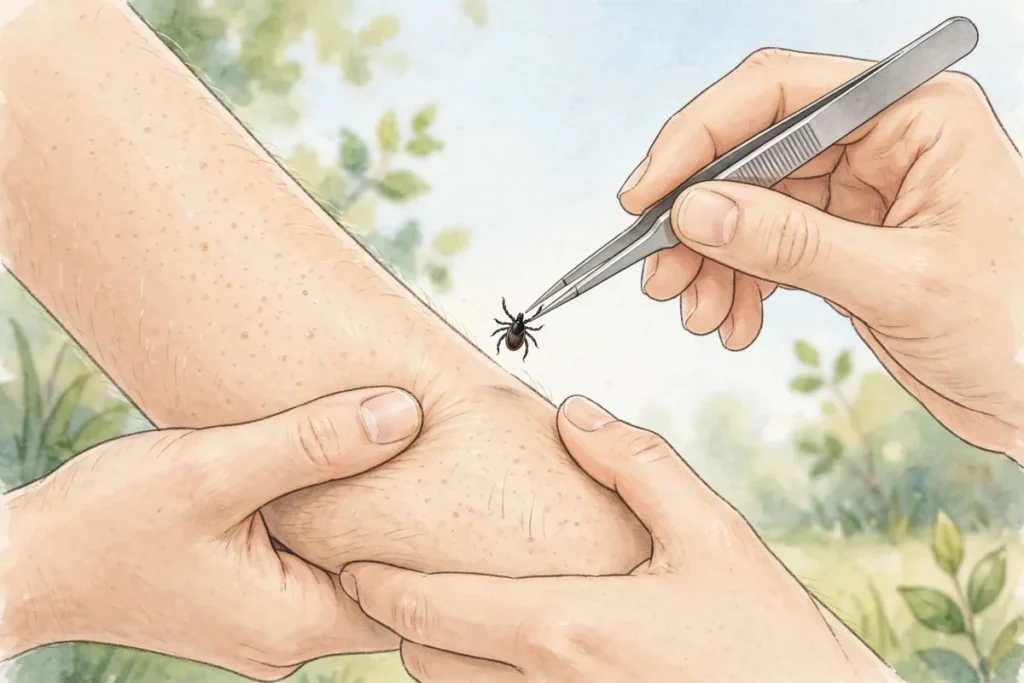
- Grasp close to the skin. Get the tweezers around the tick’s mouthparts, right where it enters the skin. Avoid squeezing the tick’s swollen body.
- Pull straight up, steadily. Use slow, even pressure. Do not twist, jerk, or wiggle — mouthparts can break off.
- Skip the folk remedies. Nail polish, petroleum jelly, and lit matches do not make ticks back out; they waste time.
- Clean everything. Wash the bite area, your hands, and the tweezers with soap and water or an antiseptic.
Save the tick. Drop it into a sealed bag or small container with the date and where the bite happened. A saved tick can be identified later, which helps your doctor assess the situation. For a detailed walkthrough, see the guide to removing an attached tick safely.
Note the details. Jot down the bite location, the date, and how long the tick may have been attached. If mouthparts break off, try once more with tweezers; if they resist, leave them and mention it to your doctor.
After the Bite: Aftercare and Watching for Signs
Keep it clean and simple. Wash the bite site daily, avoid scratching, and leave it uncovered or lightly covered. Most tick bites heal like any small puncture — a little redness and itching for a few days, then fading. A compact routine for the days ahead is laid out in the tick bite aftercare guide for the next few weeks.
Watch for about a month. Lyme-related signs can show up days to weeks after the bite. In the weeks following any tick bite, pay attention to:
- An expanding rash around the bite site — sometimes described as a “bull’s-eye,” though it often looks less tidy in real life.
- Flu-like feelings with no clear cause: fever, chills, fatigue, muscle or joint aches.
Do not wait for symptoms to seek advice. You do not need to feel sick to call your doctor after a tick bite — especially if the tick was engorged or came from a high-risk area. Bring the saved tick and your notes. If you are unsure whether what you are seeing is normal healing, the rundown of tick bite warning signs can help you decide how urgently to call.
When to See a Doctor for a Bug Bite
Tick bites deserve a lower threshold for calling your doctor than most insect bites. Get medical advice promptly if:
- Possible allergic emergency: trouble breathing, swelling of the lips, tongue, or throat, dizziness, fainting, or widespread hives — call 911 immediately.
- Infection signs: spreading redness or warmth after the first day or two, increasing pain or swelling, pus, red streaks, or fever.
- Rash or flu-like illness days to weeks after the bite: an expanding rash, fever, chills, body aches, or unusual fatigue following a tick bite warrants a prompt call.
- The tick was engorged or attached a long time, or you cannot tell how long it fed.
- You are pregnant, immunocompromised, or the bite is on a young child — mention it to your clinician even if everything looks fine.
When in doubt, call. A quick conversation with a clinician beats days of anxious guessing.
Frequently Asked Questions
Are western blacklegged ticks and deer ticks the same species?
No. They are different species in the same genus: the deer tick is Ixodes scapularis (eastern US) and the western blacklegged tick is Ixodes pacificus (Pacific Coast). They look similar, but they are distinct regional species — not two names for one tick.
Which tick is more likely to transmit Lyme disease?
Ixodes scapularis carries Lyme bacteria at much higher rates — eastern nymph infection rates have reached around 23% and adult rates around 47% in some studies, versus roughly 1–10% for western pacificus. But “more likely” is not “only”: western ticks can and do transmit Lyme. Only a clinician can assess your individual risk after a bite.
I found a tick on me in California. Should I assume it is a western blacklegged tick?
It is the most likely Ixodes species on the West Coast, but California has other tick species and ranges shift. Save the tick in a sealed bag with the date and ask your local health department or extension office about identification — a real ID beats a guess.
Does how long the tick was attached matter?
Yes. Risk generally rises the longer a tick feeds, which is why prompt removal matters. An engorged tick has likely been attached longer than a flat one. If the tick was engorged or timing is unclear, save it, note what you observed, and call your doctor.
Can I get Lyme disease more than once?
Yes — a past infection does not make you immune. Each tick bite is its own event, so keep up protective clothing, repellents used as directed, and tick checks even if you have dealt with a bite before.
Medically reviewed by Dr. Sarah Jones, MD.
This article is for informational purposes only and isn’t medical advice. If you’re worried about a bite or sting, talk to a healthcare professional.