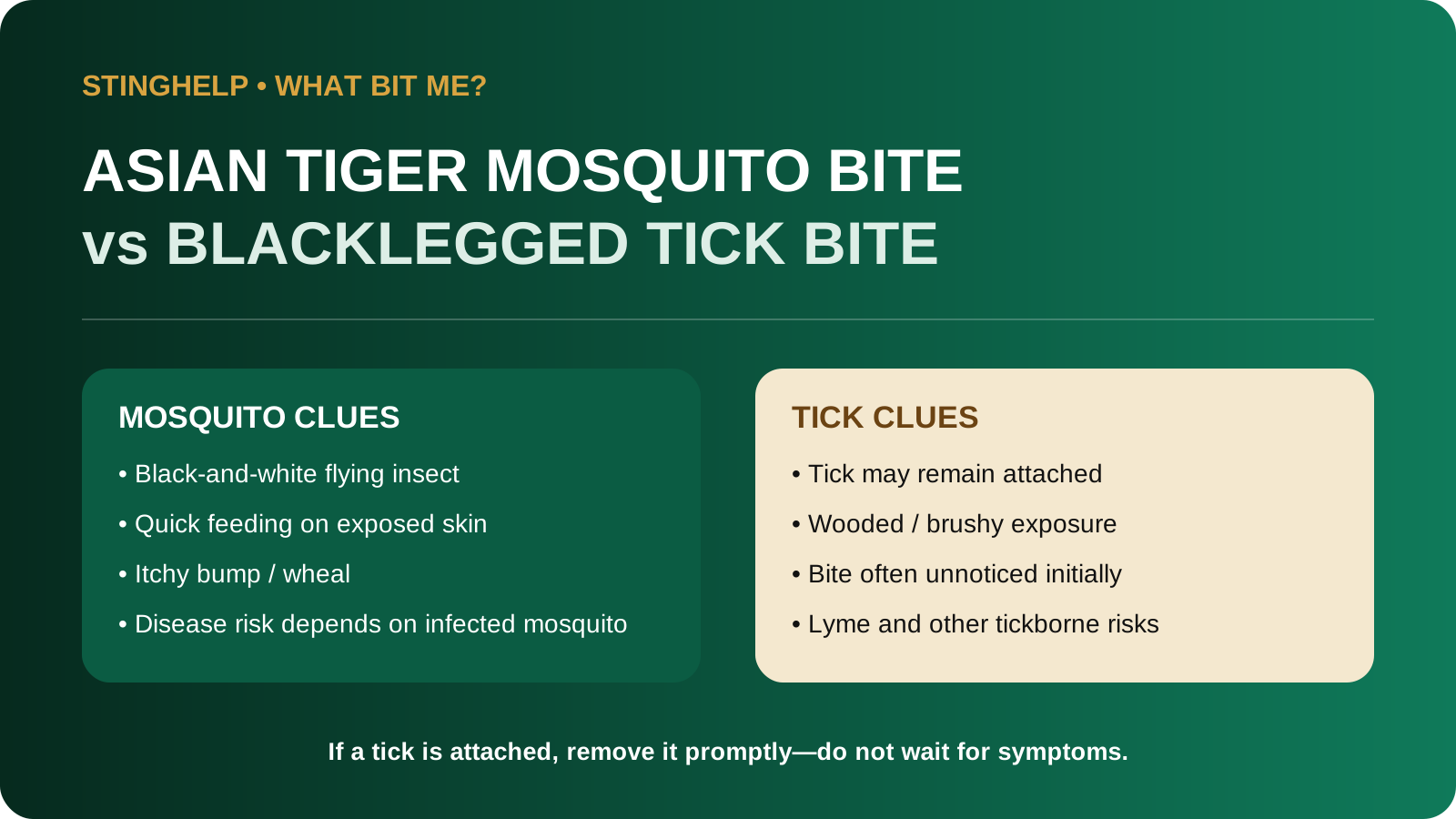
Direct answer: An Asian tiger mosquito bite is usually a quick blood-feeding bite that becomes itchy after the insect leaves, while a blacklegged tick bite often involves a tick that remains attached to the skin and may be unnoticed at first. If a tick is attached, remove it promptly; do not wait for a rash or other symptoms.
People comparing asian tiger mosquito bite vs blacklegged tick bite treatment differences should start with one question: is the arthropod still attached? A mosquito lands, feeds, and flies away. A tick attaches its mouthparts to the skin and can remain there for hours or days. That difference changes both identification and first aid.
The disease risks also differ. Infected Asian tiger mosquitoes can transmit dengue, Zika, and chikungunya. In the United States, blacklegged ticks can transmit Lyme disease and other tickborne infections. For Europe, an important geographic correction is needed: the North American blacklegged tick Ixodes scapularis is not the standard European species. The widespread European hard tick is Ixodes ricinus, so local species and disease guidance matter.
Asian tiger mosquito bite vs blacklegged tick bite: quick comparison
| Clue | Asian tiger mosquito bite | Blacklegged tick bite |
|---|---|---|
| Arthropod | Small black-and-white winged mosquito. | Small eight-legged hard tick; nymphs can be extremely small. |
| Feeding behavior | Lands, feeds briefly, then leaves. | Attaches to skin and may remain for hours or days. |
| Typical exposure | Yards, gardens, vegetation, container-water habitats, outdoor living areas. | Wooded, brushy, grassy areas; ticks can also be carried in on pets, clothing, or gear. |
| Immediate sensation | May feel like a small prick or go unnoticed. | Often unnoticed while attached. |
| Typical skin finding | Itchy red bump or wheal after feeding. | Small bite site after removal; an attached tick itself may be the main clue. |
| Important disease context | Dengue, Zika, and chikungunya when infected mosquitoes are circulating. | Lyme disease and other tickborne diseases depending on species and geography. |
| Critical first step | Basic bite care and prevent additional mosquito bites. | Remove the attached tick as soon as possible using proper technique. |
What does an Asian tiger mosquito look like?
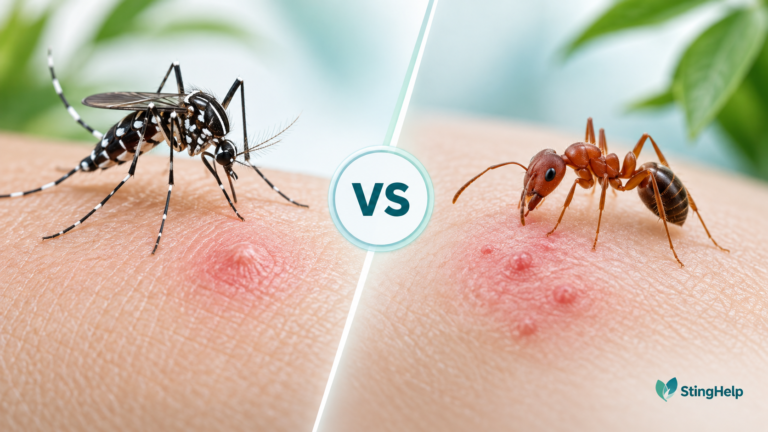
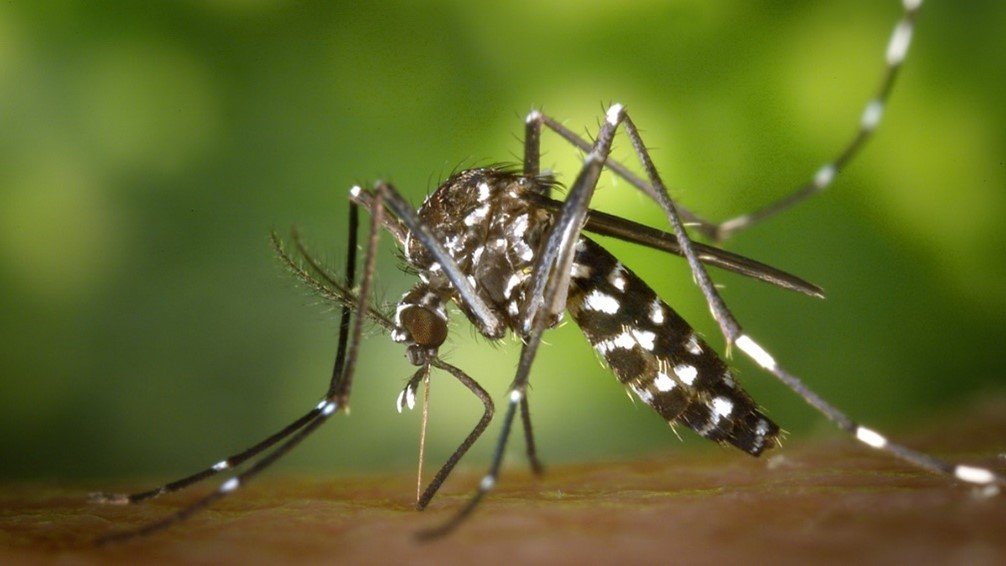
The Asian tiger mosquito, Aedes albopictus, is a small black mosquito with white bands on the legs and white markings on the body. CDC describes it as occurring in tropical, subtropical, and some temperate areas, including parts of the United States and southern Europe.
It commonly breeds in small containers that hold water and is often encountered around homes, yards, gardens, and vegetation. If you actually saw a black-and-white mosquito land and feed, that observation is more useful than trying to classify the resulting bump.
What does an Asian tiger mosquito bite feel like?
The bite can feel like a tiny prick or may be missed completely. Itching often becomes the dominant symptom later. Some people develop a small bump; others develop a larger wheal or localized swelling. Multiple bites can appear on exposed skin when mosquitoes are abundant.
What is a blacklegged tick?
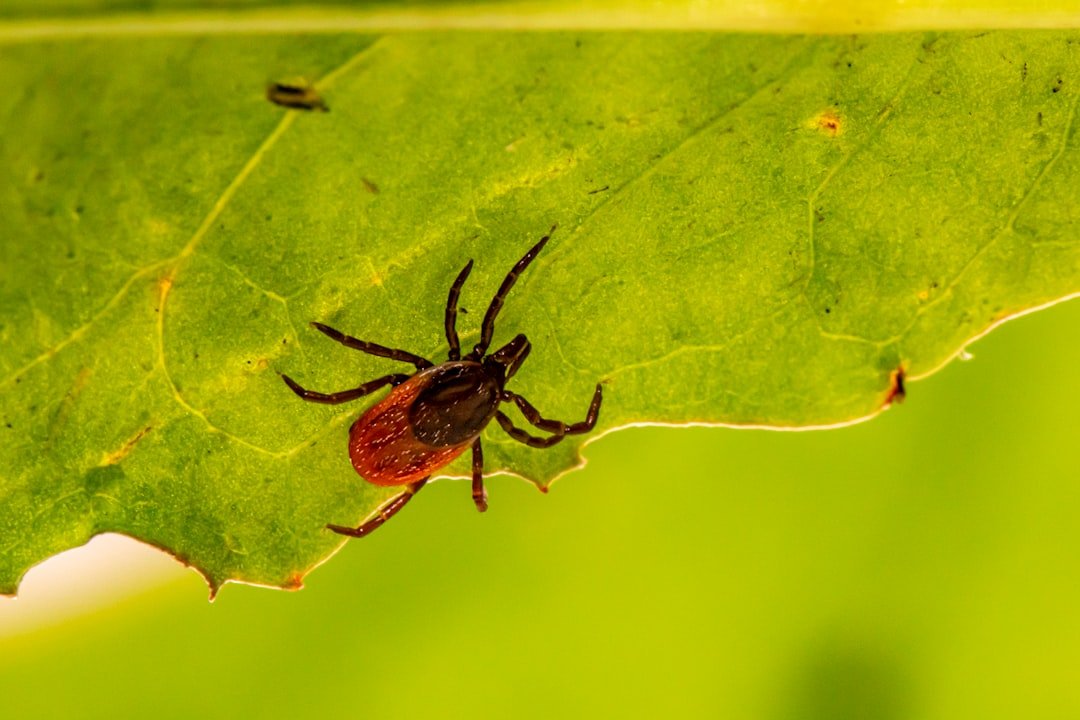
In the eastern and central United States, the blacklegged tick is Ixodes scapularis, also commonly called the deer tick. CDC identifies it as an important vector of Lyme disease bacteria in northeastern, mid-Atlantic, and north-central regions. On the Pacific Coast, the western blacklegged tick, Ixodes pacificus, also transmits Lyme disease bacteria.
Ticks are arachnids, not insects. Nymphal blacklegged ticks can be tiny—CDC compares them to a poppy seed—which is one reason people may never notice the tick before symptoms develop. Adult females are larger but still easy to miss in hair, skin folds, or hidden body areas.
Tick bites are often about attachment, not the skin mark
A mosquito bite usually becomes noticeable because of itching after the mosquito is gone. A tick bite is different because the tick may still be attached when discovered. That visible attached arthropod is a much stronger identification clue than redness or swelling.
After a tick is removed, the site can show a small red area or local irritation. That immediate bite-site redness is not the same thing as the expanding erythema migrans rash associated with Lyme disease. CDC notes that erythema migrans typically begins after a delay of several days and gradually expands.
How to remove an attached tick correctly
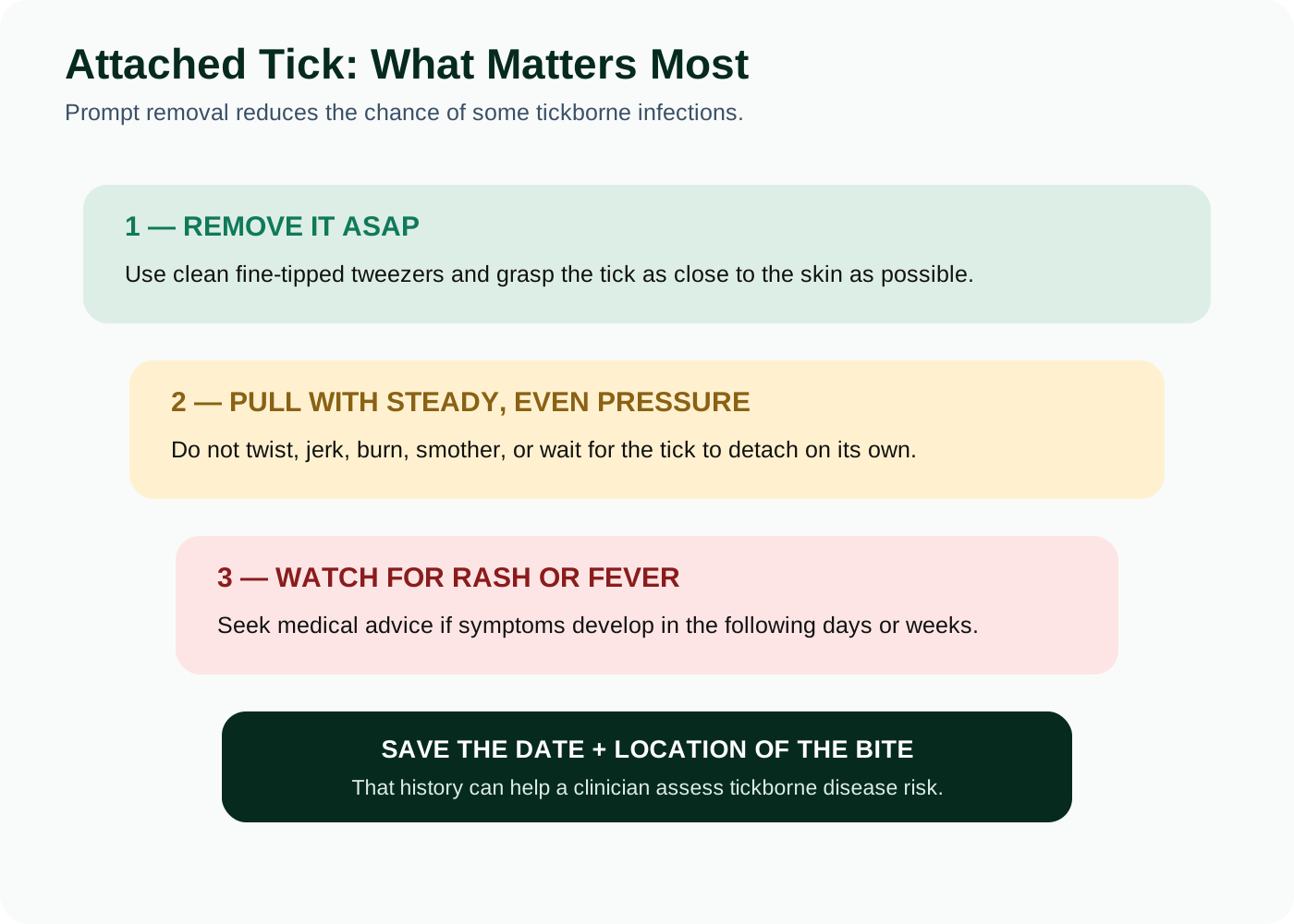
CDC’s current guidance is straightforward: remove attached ticks as soon as possible. Do not wait to visit a healthcare provider just to remove the tick because delaying removal can increase risk of tickborne disease.
- Use clean fine-tipped tweezers if available.
- Grasp the tick as close to the skin surface as possible.
- Pull upward with steady, even pressure.
- Do not twist or jerk the tick.
- After removal, clean the bite area and your hands with soap and water, rubbing alcohol, or hand sanitizer.
- Record the date and location of the exposure in case symptoms develop later.
Do not use petroleum jelly, nail polish, heat, or other substances to force a tick to detach. Mechanical removal is the recommended approach.
Why attachment time matters for Lyme disease
CDC states that infected blacklegged ticks generally must be attached for more than 24 hours before Lyme disease bacteria are transmitted. Prompt tick removal therefore lowers risk. That does not mean every tick attached longer than 24 hours transmits Lyme disease; the tick must also be infected, and geographic risk varies.
If you are in a region where Lyme disease is common and the tick appears to be a blacklegged tick, contact a healthcare professional if you are unsure whether post-exposure antibiotics are appropriate. CDC notes that a single dose of doxycycline may be considered in certain circumstances, but it is not automatically recommended after every tick bite.
How mosquito disease risk is different
An Asian tiger mosquito does not remain attached, so there is no removal step and no attachment-duration calculation. If an infected Aedes albopictus bites a person, it can transmit viruses such as dengue, Zika, or chikungunya during feeding.
The practical risk depends on where and when the bite occurred. A mosquito bite in a place with no active local transmission is different from a bite during an outbreak or after travel to an affected area. If fever, rash, severe headache, marked joint pain, unusual bleeding, neurologic symptoms, or significant illness develops, seek medical advice and provide the travel and exposure history.
Pictures: can the bite itself tell you which one it was?
Usually not. For asian tiger mosquito bite vs blacklegged tick bite pictures, the insect or tick is much more informative than the skin. Mosquito bites can be small, large, clustered, or scattered. Tick-bite sites can be barely visible after removal.
The most useful tick photo is a clear image of the attached or removed tick. The most useful mosquito photo shows the black-and-white body markings. If you only have a red bump and did not see the arthropod, keep other possibilities open.
USA vs Europe: the tick species name matters
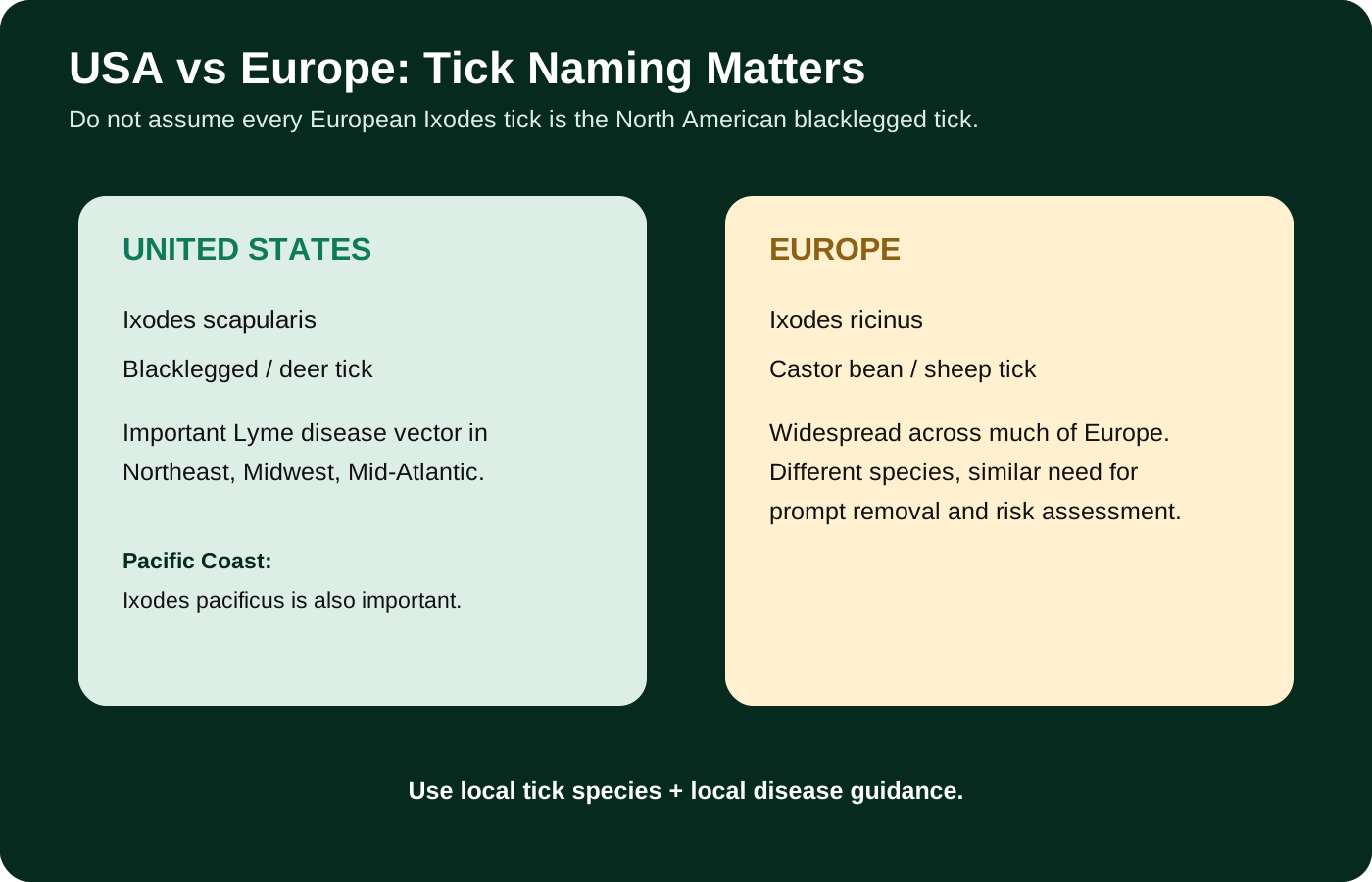
The term “blacklegged tick” usually refers to North American Ixodes scapularis. ECDC reports that Ixodes ricinus is widely distributed across Europe and continues to be documented in new regional areas. It is often called the castor bean tick, sheep tick, or deer tick.
Both are hard ticks and both are medically important, but they are not the same species. European readers should use local public-health guidance for Ixodes ricinus and local tickborne disease risks rather than assuming a North American identification.
Asian tiger mosquito bite vs blacklegged tick bite treatment differences
For a mild mosquito bite, treatment is mainly symptom relief and prevention of further bites. For a tick bite, immediate removal is part of the treatment. After removal, the next step is monitoring for symptoms and assessing whether the tick species, attachment duration, and location create meaningful disease risk.
Basic care for a typical mosquito bite
- Wash gently with soap and water.
- Use a cool compress for itching or swelling.
- Avoid scratching and keep broken skin clean.
- Use appropriate over-the-counter itch relief only when safe for you and according to the label.
- Prevent additional mosquito bites with repellent, clothing, screens, and standing-water control.
Basic care after a tick bite
- Remove the tick immediately using the recommended tweezers technique.
- Clean the bite area and your hands.
- Do not dig aggressively at tiny retained mouthpart fragments; if they cannot be removed easily, the skin can often heal around them.
- Note the date, location, and estimated attachment time if known.
- Watch for rash, fever, or other symptoms over the following days to weeks.
- Contact a healthcare professional if symptoms develop or if you need help assessing Lyme disease prophylaxis eligibility.
What symptoms after a tick bite need medical attention?
CDC advises seeking medical care if rash or fever develops within days to weeks after a tick bite. Other concerning symptoms can include headache, fatigue, muscle and joint aches, swollen lymph nodes, facial weakness, palpitations, or neurologic symptoms depending on the infection involved.
An expanding erythema migrans rash is particularly important. CDC describes it as gradually expanding over days and notes that it is often warm but not usually very itchy or painful. Not every Lyme disease case develops the classic “bull’s-eye” appearance.
What symptoms after a mosquito bite need medical attention?
Most mosquito bites cause only local itching and swelling. Seek medical advice if systemic illness develops, particularly with recent travel or known local mosquito-borne disease activity. Fever, rash, severe headache, marked joint pain, unusual bleeding, or neurologic symptoms deserve evaluation.
For either exposure, spreading redness, drainage, increasing pain, or fever can also suggest secondary skin infection from scratching or another process.
How to prevent blacklegged tick bites
CDC recommends avoiding brushy and wooded areas when practical, using EPA-registered repellents, wearing protective clothing, treating clothing and gear with appropriate permethrin products, checking the body and gear after outdoor exposure, and showering soon after returning indoors.
Check common hidden areas such as the scalp, behind the ears, under the arms, around the waist, behind the knees, and between the legs. Also inspect pets and outdoor gear because unattached ticks can be carried indoors.
How to prevent Asian tiger mosquito bites
Use EPA-registered insect repellent, wear loose long sleeves and pants when practical, repair screens, and remove standing water from containers around homes. Asian tiger mosquitoes can use small amounts of water, so routine property checks are useful.
What if you are unsure whether the arthropod was a tick?
If the arthropod was attached and had eight legs, a tick becomes much more likely. If you removed it, save it in a sealed container or take clear photographs if local identification resources recommend that. Do not delay removal just to preserve the specimen.
For more help, use the What Bit Me? identification guide, the mosquito bites hub, and the bite and sting first-aid guide. You can also review emergency warning signs, visit the prevention hub, and browse more comparisons in the StingHelp guide library.
Frequently asked questions
How can you tell an Asian tiger mosquito bite from a blacklegged tick bite?
The strongest clue is the arthropod itself. A mosquito lands, feeds, and leaves; a tick often remains attached for hours or days. Asian tiger mosquitoes are black with white markings, while blacklegged ticks are small eight-legged arachnids associated with wooded and brushy habitats.
What should you do if a blacklegged tick is still attached?
Remove it as soon as possible. CDC recommends grasping the tick close to the skin with clean fine-tipped tweezers and pulling upward with steady, even pressure, then cleaning the bite area and hands.
Does every blacklegged tick bite cause Lyme disease?
No. Lyme disease requires an infected tick. Risk also depends on geography and attachment duration. CDC notes that prompt removal can reduce risk because infected blacklegged ticks generally must be attached for more than 24 hours to transmit Lyme disease bacteria.
Can Asian tiger mosquitoes transmit disease?
Yes. Infected Aedes albopictus mosquitoes can transmit dengue, Zika, and chikungunya. Actual risk depends on local transmission, season, and travel exposure.
Are blacklegged ticks found in Europe?
Ixodes scapularis, the eastern blacklegged tick, is a North American species. In Europe, Ixodes ricinus is a widespread related hard tick and an important vector. Local European tick guidance should be used rather than applying the U.S. species name automatically.
When should you seek medical care after a tick or mosquito bite?
Seek medical advice if you develop rash, fever, significant systemic illness, expanding redness, drainage, or worsening symptoms. After a tick bite, tell the clinician when and where the tick exposure occurred.
Authoritative references
- CDC — What to Do After a Tick Bite
- CDC — How Lyme Disease Spreads
- CDC — Aedes albopictus / Asian Tiger Mosquito
- ECDC — Ixodes ricinus Factsheet
- American Academy of Dermatology — Bug Bites and Stings
What if a small part of the tick remains in the skin?
Sometimes the tick’s mouthparts can break off during removal. CDC advises that if the mouthparts cannot be removed easily with clean tweezers, the skin can often heal as they work their way out naturally. Avoid aggressive digging, cutting, or repeated squeezing, which can create additional skin injury.
A small amount of local redness or tenderness immediately after removal can occur from the bite and manipulation. That local irritation should not automatically be confused with erythema migrans. The Lyme disease rash generally appears after a delay and expands gradually over several days. If a rash expands, fever develops, or other systemic symptoms appear, contact a healthcare professional and explain the tick exposure.
Should you save the tick after removal?
You do not need to delay removal in order to preserve a perfect specimen. If convenient, a removed tick can be placed in a sealed container, wrapped securely in tape, or photographed clearly. Some local health departments, universities, or clinicians may find identification useful, but testing the tick itself does not replace medical assessment of the person bitten.
Write down where the exposure happened and approximately when the tick was discovered. If the tick was visibly engorged, mention that to a clinician as well. These practical details are often more useful for risk assessment than the appearance of the bite site alone.
Bottom line
The central asian tiger mosquito bite vs blacklegged tick bite treatment differences are simple: mosquito bites mainly need symptom care and prevention, while an attached tick needs prompt mechanical removal plus monitoring for tickborne disease. Use the actual arthropod, attachment behavior, geography, and exposure history—not the red mark alone—to guide the next step.
Educational information for a U.S.- and Europe-focused audience. This article cannot diagnose an arthropod, infection, allergic reaction, Lyme disease, or mosquito-borne illness from a photograph and does not replace professional medical care.