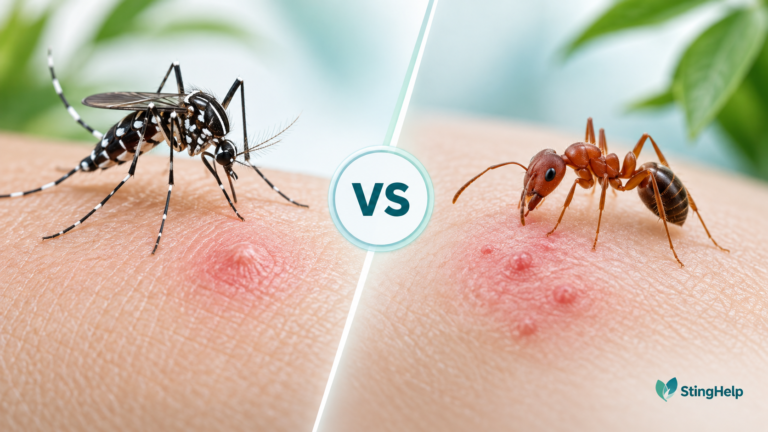
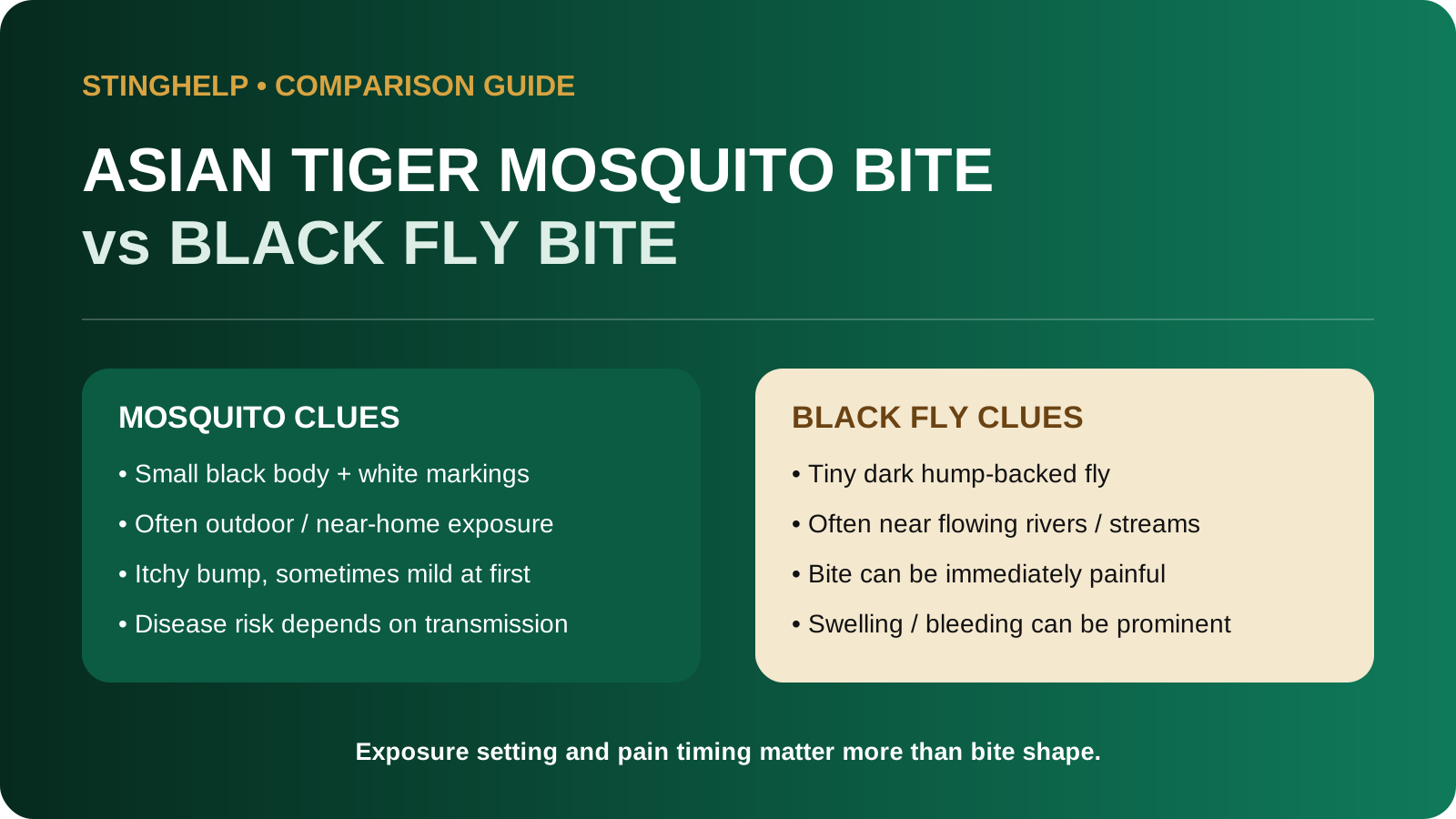
Direct answer: Asian tiger mosquito bites and black fly bites can both become red, itchy, and swollen, but the exposure often differs. Asian tiger mosquitoes are black-and-white mosquitoes common around yards and container water; black flies are tiny dark, hump-backed flies often found near rivers and fast-flowing streams, and their bites are more likely to feel immediately painful or bleed.
People comparing asian tiger mosquito bite vs black fly bite treatment differences should focus first on how the bite happened, not just how it looks later. A mosquito often pierces the skin with little immediate pain, while a female black fly uses blade-like mouthparts to cut the skin and feed on the blood that pools at the surface. That feeding difference helps explain why black fly bites may sting, bleed, or swell more noticeably.
For readers in the United States and Europe, most black fly exposures are nuisance-bite problems rather than a vector-borne disease event. In the United States, public-health guidance states that black flies are not known to transmit disease to humans. However, in certain endemic parts of the world, repeated bites from infected blackflies can transmit the parasite that causes onchocerciasis. Asian tiger mosquitoes have a different disease profile and can transmit dengue, Zika, and chikungunya when infected.
Asian tiger mosquito bite vs black fly bite: quick comparison
| Clue | Asian tiger mosquito bite | Black fly bite |
|---|---|---|
| Typical insect | Small black mosquito with white bands and white body markings. | Tiny dark fly, often described as hump-backed or “buffalo gnat” shaped. |
| Typical habitat | Yards, gardens, vegetation, neighborhoods, and places with water-holding containers. | Often near creeks, rivers, and fast-flowing water where immature stages develop. |
| How it feeds | Pierces skin with a slender proboscis. | Cuts the skin with blade-like mouthparts and laps blood. |
| Immediate sensation | May be mild, prickly, or unnoticed. | More likely to be immediately painful or sharp. |
| Bleeding | Usually minimal or not obvious. | Small visible bleeding may occur because the skin is cut. |
| Local reaction | Itchy red bump or wheal with variable swelling. | Pain, redness, itching, inflammation, and sometimes marked swelling. |
| Disease context | Infected mosquitoes can transmit dengue, Zika, or chikungunya. | No known human disease transmission in the U.S.; some species transmit onchocerciasis in endemic regions elsewhere. |
What does an Asian tiger mosquito look like?
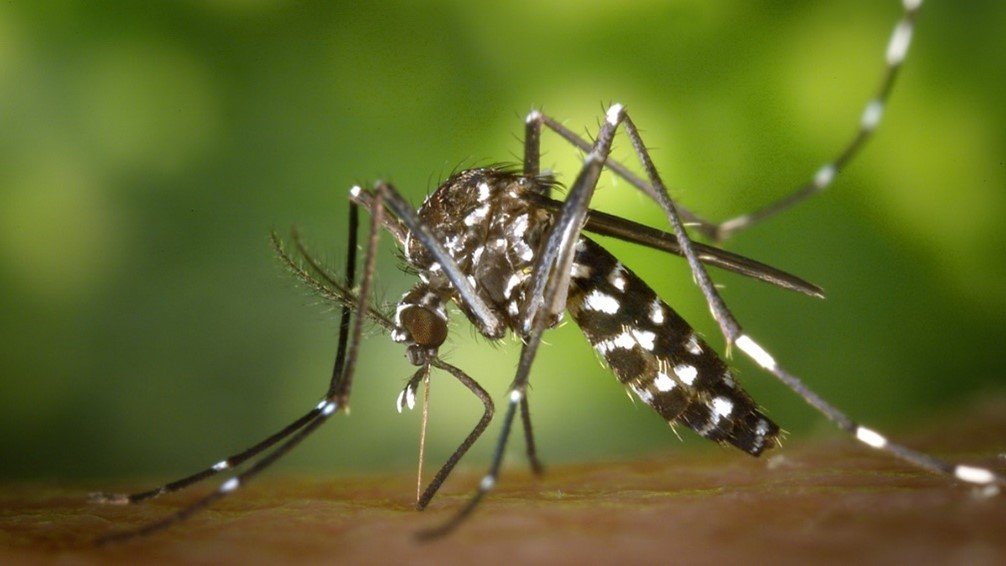
The Asian tiger mosquito, Aedes albopictus, is a small dark mosquito with obvious white bands on its legs and white markings on the body. CDC describes it as occurring in tropical, subtropical, and some temperate regions, including parts of the United States and southern Europe. It can use small water-holding containers for egg laying and is often found around homes, vegetation, gardens, and outdoor living areas.
If you actually saw a black-and-white mosquito land and feed, that observation is far more useful than trying to classify the resulting welt. The mosquito may be active during the day and can also bite around dawn and dusk.
What does an Asian tiger mosquito bite feel like?
The bite may feel like a tiny prick or may go unnoticed. Itching often becomes the dominant symptom later. Reactions range from a small red bump to a larger itchy wheal or localized swelling. Several nearby bumps can occur when multiple mosquitoes are active or when repeated feeding attempts happen.
What are black flies?
Black flies are small flies in the family Simuliidae. They are often called buffalo gnats because of their compact, hump-backed appearance. Illinois public-health guidance describes them as small dark flies that can swarm and bite birds, mammals, domestic animals, and people.
Black fly larvae develop in moving water rather than stagnant containers. This makes geography at the moment of the bite especially useful. Hiking, fishing, camping, gardening, or working near a creek, river, or other flowing-water habitat during a black fly emergence can strongly support the identification.
Only females of the blood-feeding species bite. Males feed on nectar. Black flies may swarm around the head and can crawl near the eyes, ears, nose, or mouth, which can make an encounter feel more aggressive than a typical mosquito exposure.
Why do black fly bites sometimes hurt immediately?
Black flies do not feed the same way mosquitoes do. University of Minnesota Extension explains that black flies use blade-like mouthparts to slash or cut the skin, then feed on blood. Illinois public-health guidance similarly describes scissor-like mouthparts that cut the skin.
This can produce a small bleeding point, immediate pain, and a stronger inflammatory reaction. Salivary proteins help the fly feed and can contribute to later itching, redness, or swelling. Individual sensitivity varies widely.
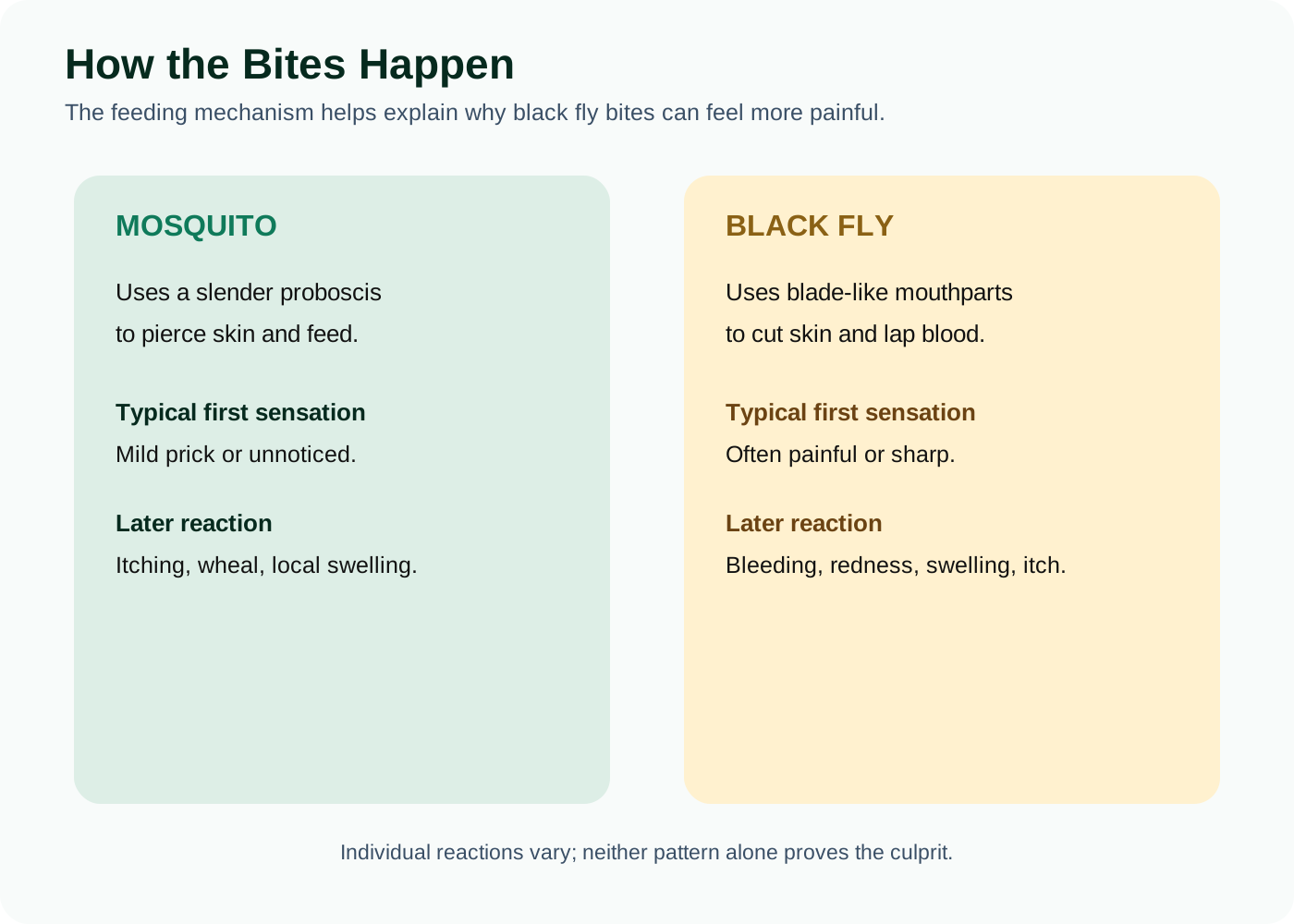
Pictures: why the insect and habitat matter more than the welt
For asian tiger mosquito bite vs black fly bite pictures, skin photos are less reliable than insect photos. Both exposures can eventually create red, swollen, itchy lesions. A person who reacts strongly to mosquitoes can develop a large wheal, while a black fly bite may produce a small mark in someone with little sensitivity.
Look at the culprit. Asian tiger mosquitoes are slender, long-legged, winged mosquitoes with white markings. Black flies are shorter, more compact, and hump-backed. Also look at the setting: yards and container water favor Aedes mosquitoes, while fast-flowing streams and rivers strongly favor black fly exposure.
Which bite is more likely to bleed?
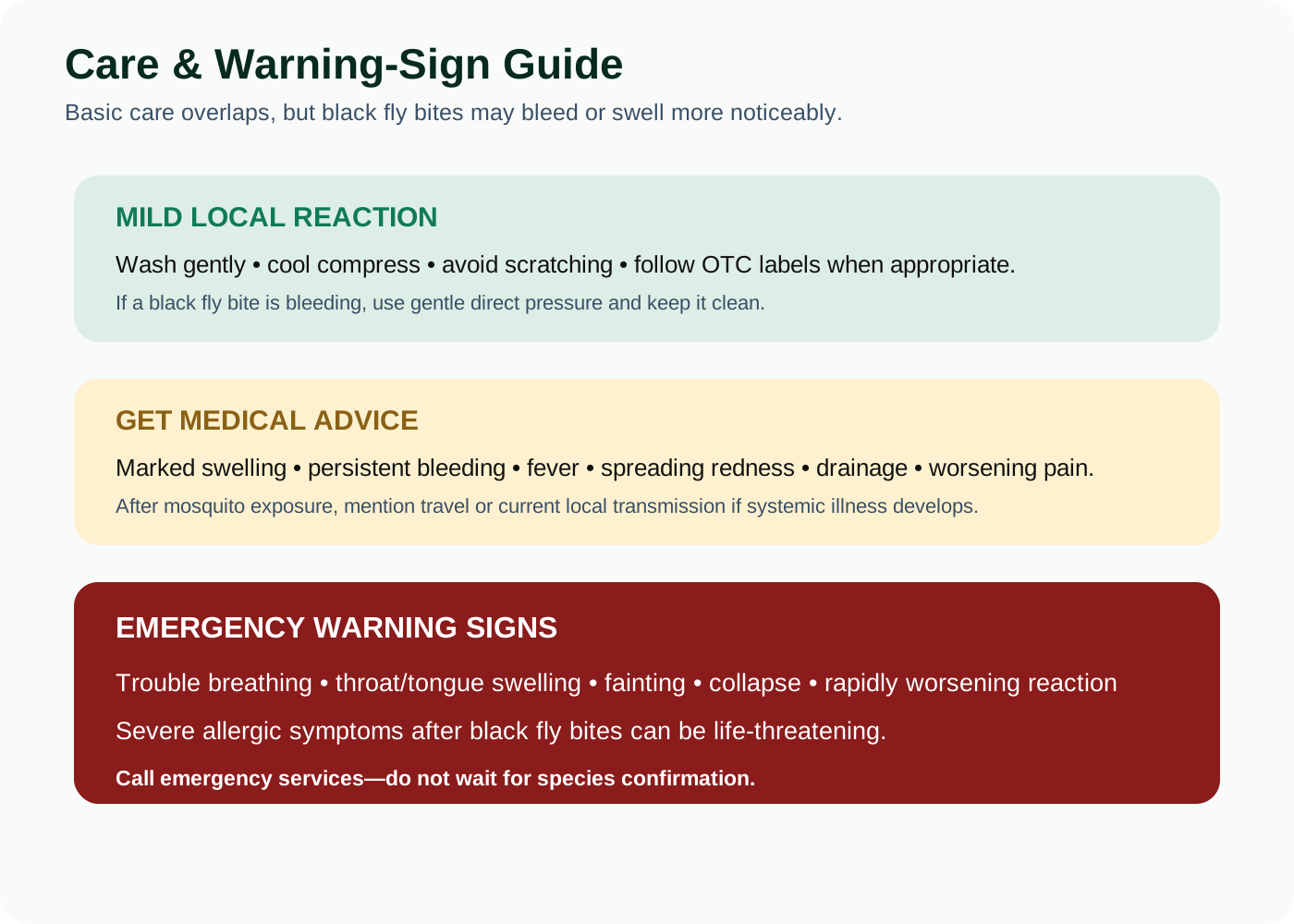
A black fly bite is more likely to produce visible bleeding because the fly cuts the skin surface. The amount is usually small, but the bite can look more dramatic than a mosquito bite. Gentle direct pressure and basic wound cleaning are appropriate if a small bite continues to ooze blood.
Persistent or substantial bleeding is not typical and deserves medical attention, especially in someone taking anticoagulant medication or with a bleeding disorder. Do not assume prolonged bleeding is simply “normal for a black fly bite.”
Which bite is more likely to swell?
Either one can swell. Mosquito bite swelling varies by individual immune response. Black fly bites can also produce substantial inflammation, and extension sources note reactions ranging from small red spots to significant swelling.
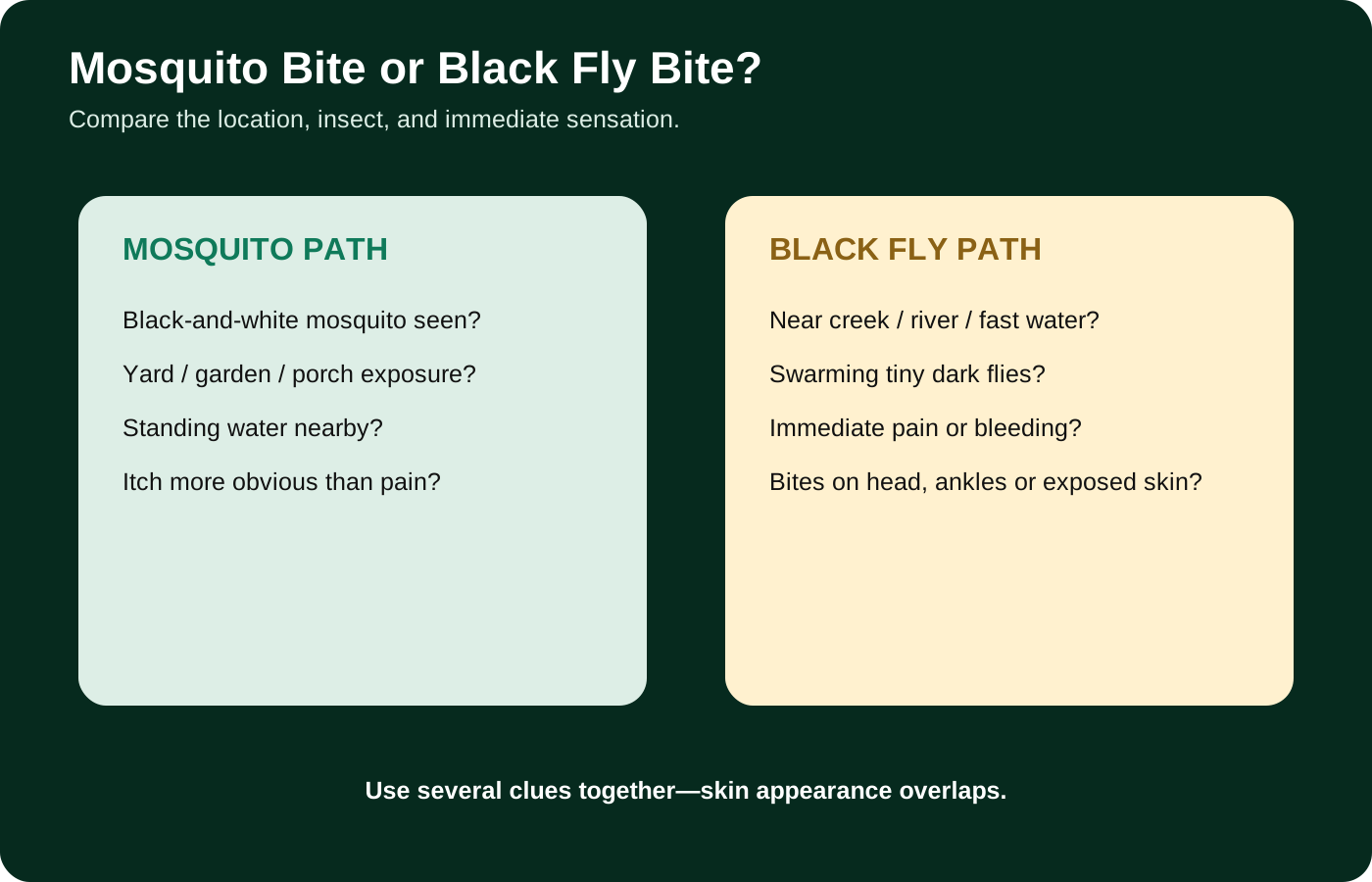
The amount of swelling does not reliably identify the insect. Timing and exposure remain more useful. Immediate pain near a river with swarming tiny dark flies supports black flies; a mild bite followed by itching around a yard with black-and-white mosquitoes supports Asian tiger mosquitoes.
Asian tiger mosquito bite vs black fly bite treatment differences
For a mild local reaction, early care overlaps: move away from the insects, wash the skin, use a cool compress, and avoid scratching. The main difference is that a black fly bite may need simple wound care for a small bleeding point, while mosquito follow-up includes prevention and awareness of mosquito-borne illness when geography or travel makes that relevant.
Basic care for a typical Asian tiger mosquito bite
- Wash the bite gently with soap and water.
- Use a cool compress for itching or swelling.
- Avoid scratching and keep any broken skin clean.
- Use appropriate over-the-counter itch relief only when safe for you and according to the label.
- Prevent more bites with repellent, protective clothing, intact screens, and standing-water control.
- If systemic illness develops, consider recent travel and local mosquito-borne disease activity.
Basic care for a typical black fly bite
- Move away from the swarm or biting area.
- Wash the bite with soap and water.
- If there is minor bleeding, apply gentle direct pressure with clean material until it stops.
- Use a cool compress for pain or swelling.
- Avoid scratching; use appropriate itch relief according to the label if needed.
- Watch for excessive swelling, spreading redness, drainage, fever, or a severe allergic reaction.
Can black fly bites cause a severe allergic reaction?
Yes. Most reactions are local, but black fly bites can produce pronounced swelling and, rarely, serious allergic reactions. Illinois public-health guidance notes that reactions can be severe enough to become life-threatening in susceptible people.
Call emergency services for trouble breathing, swelling of the tongue or throat, fainting, collapse, severe dizziness with other allergy symptoms, or another rapidly worsening whole-body reaction. Do not wait for exact insect identification before seeking emergency care.
What is “black fly fever”?
After numerous black fly bites, some people can develop a more significant systemic reaction sometimes described as black fly fever or simulium toxicosis. Reported symptoms can include fever, malaise, headache, swollen lymph nodes, and marked local inflammation. This is not the same as ordinary mild bite irritation.
If fever or systemic symptoms follow heavy black fly exposure, especially with major swelling or numerous bites, seek medical evaluation. The clinician should be told about the insect exposure and location.
Do black flies transmit disease?
For most U.S. readers, the practical answer is that black flies are nuisance biters rather than known human disease vectors. Illinois public-health guidance states that black flies do not transmit disease to humans in the United States.
Globally, the picture is different. CDC explains that repeated bites from infected blackflies of the genus Simulium can transmit Onchocerca volvulus, the parasite that causes onchocerciasis. The disease is associated with endemic regions rather than routine black fly exposure in the United States or Europe. Travel history therefore matters if a clinician is evaluating symptoms after extensive exposure in an endemic area.
How is Asian tiger mosquito disease risk different?
Asian tiger mosquitoes can transmit dengue, Zika, and chikungunya when infected. This does not mean every bite transmits disease. Risk depends on whether infected mosquitoes are circulating in the region at that time, plus travel history and local public-health surveillance.
If fever, rash, severe headache, marked joint pain, unusual bleeding, neurologic symptoms, or significant systemic illness develops after mosquito exposure, seek medical advice and provide the locations and dates of travel or exposure.
How to prevent black fly bites
Black fly activity can be intense near flowing water. University of Minnesota Extension recommends avoiding high-population areas when possible, covering exposed skin, and using protective clothing or head nets during heavy activity. Black flies can swarm around the head, so a fine-mesh head net can be especially useful for outdoor work or recreation.
Repellents may help but can be less reliable against heavy black fly pressure than they are against some other biting insects. Physical barriers and avoiding peak swarms can therefore be important.
How to prevent Asian tiger mosquito bites
CDC recommends EPA-registered insect repellents, loose long-sleeved clothing, intact door and window screens, and removing standing water where Aedes mosquitoes lay eggs. Check buckets, bowls, plant saucers, toys, gutters, tarps, and other small containers around the property.
Because Asian tiger mosquitoes can bite during daylight hours, protection should not be limited to nighttime.
When should you seek medical care?
Seek medical advice for marked swelling, severe or persistent pain, persistent bleeding, fever, expanding redness, drainage, or symptoms that continue to worsen. Multiple black fly bites can produce a stronger inflammatory response than a single bite.
After a mosquito bite, systemic symptoms should be evaluated in light of travel and current local mosquito-borne disease activity. After black fly exposure, major swelling or systemic symptoms following numerous bites deserves medical review even when no infection is suspected.
What if you are still unsure what bit you?
Reconstruct the exposure. Were you near a creek or river with clouds of small dark flies? Did the bite hurt immediately or leave a small bleeding point? That supports black flies. Did you see a black-and-white mosquito or spend time around yards and container water? That supports Asian tiger mosquitoes.
If the insect was not seen, keep the diagnosis open. The skin reaction alone cannot reliably separate mosquito, black fly, flea, midge, mite, or other arthropod exposures.
For more help, use the What Bit Me? identification guide, the mosquito bites hub, and our bite and sting first-aid guide. You can also review emergency warning signs, visit the prevention hub, and browse additional comparisons in the StingHelp guide library.
Frequently asked questions
How can you tell an Asian tiger mosquito bite from a black fly bite?
Use the insect, habitat, and immediate sensation together. Asian tiger mosquitoes are black-and-white mosquitoes often found around yards and container water. Black flies are tiny dark hump-backed flies often associated with rivers or fast-flowing streams, and their bites can be more immediately painful and may bleed.
Why can black fly bites hurt more than mosquito bites?
Black flies use blade-like mouthparts to cut the skin and lap blood, while mosquitoes use a slender proboscis to pierce the skin. The cutting action can make black fly bites feel more painful and can cause visible bleeding.
Can black fly bites cause major swelling?
Yes. Reactions range from small red spots to pronounced local swelling and irritation. Some people can develop significant allergic reactions, and severe systemic symptoms require urgent medical care.
Do black flies spread disease in the United States?
Public-health guidance states that black flies are not known to transmit disease to humans in the United States. In other parts of the world, certain black flies can transmit Onchocerca volvulus, the parasite that causes onchocerciasis.
Can Asian tiger mosquito bites cause disease?
An infected Aedes albopictus mosquito can transmit viruses including dengue, Zika, and chikungunya. Actual risk depends on geography, travel, season, and current local transmission.
When should you seek medical care after a black fly or mosquito bite?
Seek medical advice for severe swelling, persistent bleeding, spreading redness, drainage, fever, worsening pain, or significant systemic illness. Call emergency services for breathing difficulty, throat or tongue swelling, fainting, collapse, or another rapidly progressive severe reaction.
Authoritative references
- Illinois Department of Public Health — Black Flies
- University of Minnesota Extension — Black Flies
- CDC — Aedes albopictus / Asian Tiger Mosquito
- CDC — Clinical Overview of Onchocerciasis
- American Academy of Dermatology — Bug Bites and Stings
Bottom line
The main asian tiger mosquito bite vs black fly bite treatment differences begin with the feeding event. Asian tiger mosquitoes often produce an itchy bite with limited immediate pain, while black flies cut the skin and can cause sharper pain, a small bleeding point, and pronounced swelling. Treat mild bites safely, use the exposure setting to support identification, and seek medical care for systemic illness, severe swelling, persistent bleeding, or emergency symptoms.
Educational information for a U.S.- and Europe-focused audience. This article cannot diagnose an insect, allergic reaction, infection, or vector-borne illness from a photograph and does not replace professional medical care.