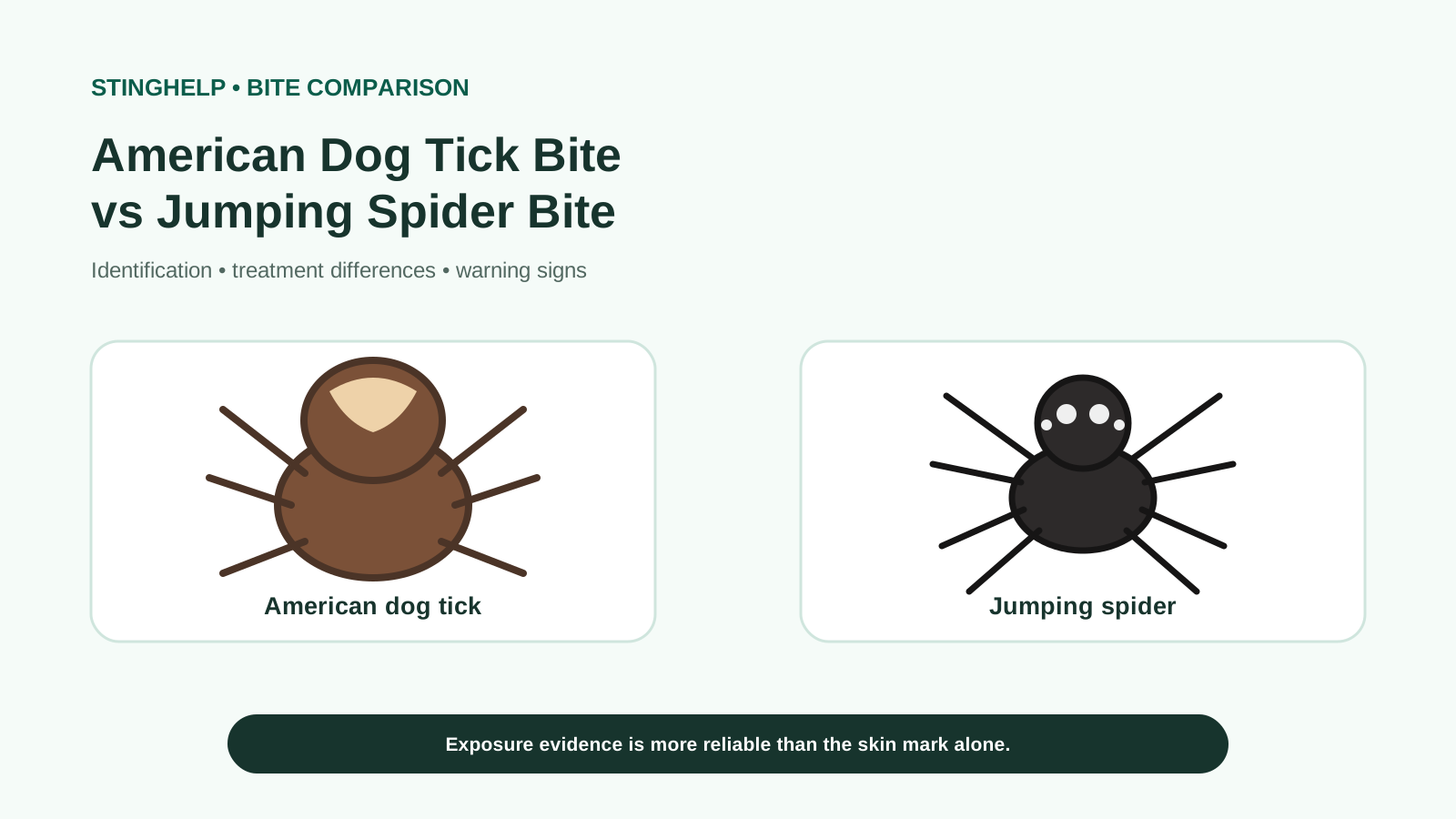
Direct answer: An American dog tick bite and a jumping spider bite can both leave a small red, irritated spot, but the exposure pattern is different. An American dog tick may remain attached and feed for hours or days. Jumping spiders usually avoid people and bite only when trapped or handled, causing short-lived local pain, redness, itching, or swelling.
People comparing american dog tick bite vs jumping spider bite treatment differences should start with what actually happened, not just how the skin looks. If you found an attached tick, that is strong evidence of a tick bite. If a jumping spider was seen biting after being trapped against the skin, that supports a spider bite. When neither culprit was seen, a single red bump is not enough to identify the cause.
This guide compares pictures, symptoms, first-aid differences, disease concerns, warning signs, and prevention for U.S. readers. It also explains why jumping spider bites are usually minor while American dog tick bites deserve monitoring for possible tick-borne illness.
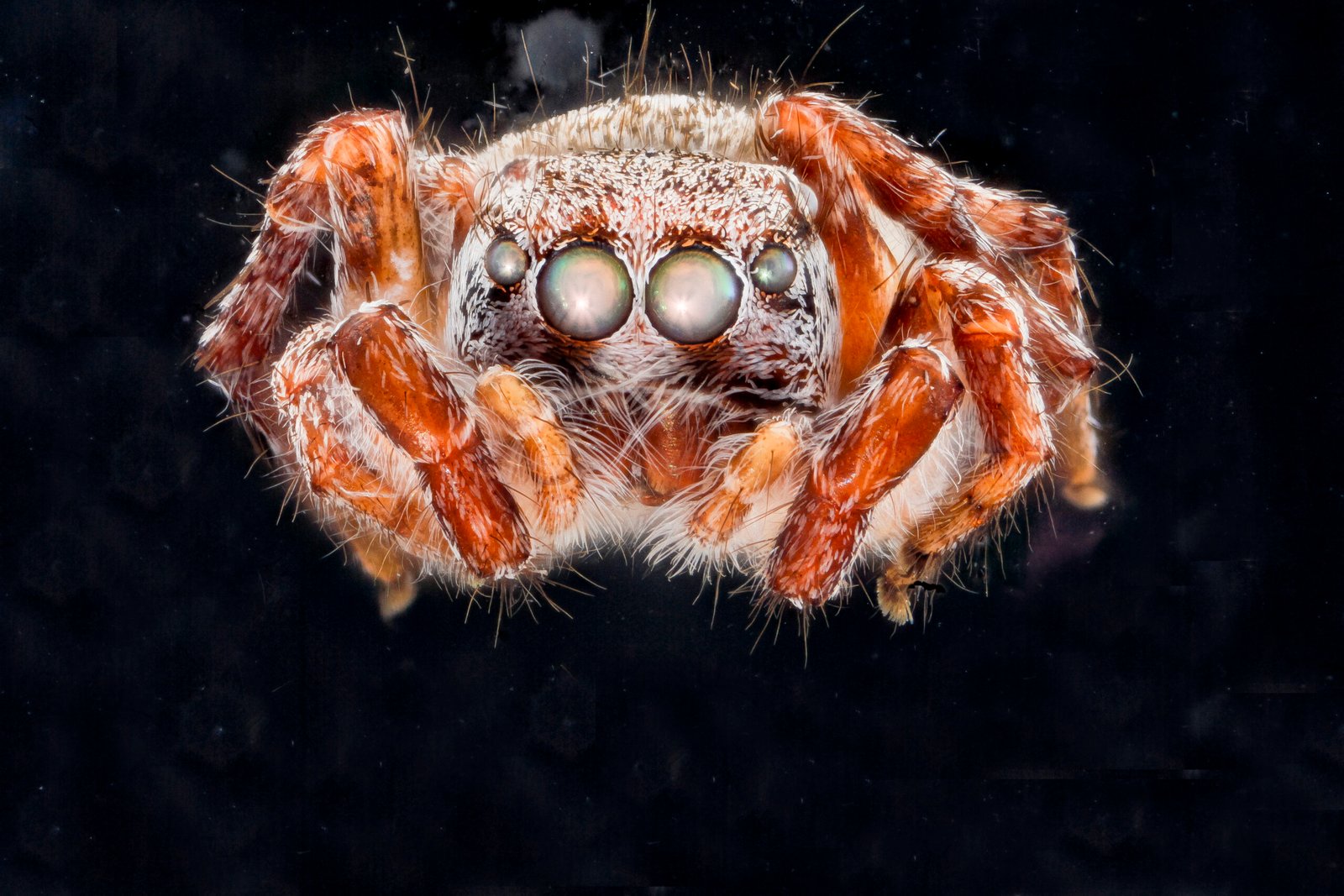
American dog tick bite vs jumping spider bite treatment differences: quick comparison
| Clue | American dog tick bite | Jumping spider bite |
|---|---|---|
| Typical exposure | Tick attaches to skin and feeds, often after outdoor vegetation or animal exposure. | Spider usually bites defensively only if trapped, pressed, or handled. |
| Was the animal still present? | Often yes; the tick may remain attached. | Usually no unless the spider was seen at the moment. |
| Pain at first | May be mild or unnoticed. | Can cause an immediate mild pinch or brief pain. |
| Typical local reaction | Small red bump, mild irritation, or little visible reaction. | Minor pain, itching, redness, or swelling that often improves within a day or two. |
| Main medical concern | Possible RMSF or tularemia transmission. | Most jumping spider bites are not medically significant; severe symptoms should prompt reconsideration of the diagnosis or medical evaluation. |
| First priority | Remove the attached tick correctly. | Wash the area and use simple local care if symptoms are mild. |
| When to seek care | Fever, severe headache, rash, neurologic symptoms, worsening systemic illness. | Severe pain, major swelling, breathing problems, progressive tissue injury, infection signs, or systemic illness. |
What an American dog tick bite usually looks and feels like
An American dog tick can attach without causing a dramatic sensation. People often discover the tick by feeling a small bump while bathing, changing clothes, checking after outdoor activity, or grooming a pet. The tick may enlarge as it feeds.
After removal, a small red bump or mild irritation can remain. The site may itch or feel tender, especially if the tick was attached for a while or the skin was repeatedly manipulated during removal. That local reaction does not tell you whether a pathogen was transmitted.
CDC surveillance updated July 2, 2026 describes the American dog tick (Dermacentor variabilis) as widely distributed east of the Rocky Mountains, with limited established areas west of the Rockies. Adult female ticks are most likely to bite people, and human-biting risk is often highest in spring and summer.
The main health concern is not the red bump
The American dog tick can transmit Rickettsia rickettsii, which causes Rocky Mountain spotted fever (RMSF), and Francisella tularensis, which causes tularemia. Most bites do not automatically result in disease, but a later fever, severe headache, rash, marked fatigue, muscle aches, or worsening systemic illness deserves attention.
RMSF can become serious quickly, and a rash may be absent early. Do not use the appearance of the bite site to rule out illness. The overall symptom pattern and exposure history matter more.
What a jumping spider bite usually looks and feels like
Jumping spiders belong to the family Salticidae. They are compact active hunters with excellent vision and are often seen on windowsills, walls, deck railings, tree trunks, fences, garden structures, and sunny surfaces. They move in quick jumps rather than relying on a web to capture prey.
Penn State Extension describes bold jumping spiders as shy spiders that generally retreat from people and do not usually bite when handled. When bites occur, minor pain, itching, swelling, and redness may persist for one to two days. Other jumping spider species are similarly not considered medically important.
A jumping spider bite is therefore more likely to produce a brief, localized reaction than a serious systemic syndrome. If symptoms are severe, progressive, or unusual, do not assume a jumping spider caused them just because a spider was seen nearby.
Why people overdiagnose spider bites
MedlinePlus notes that spiders rarely bite people unless threatened and that most spider bites are harmless. Many skin infections, follicle problems, dermatitis, bites from other arthropods, and minor wounds can be mislabeled as “spider bites.” Seeing a spider in the room after noticing a bump does not prove that the spider caused the lesion.
For a jumping spider diagnosis, the strongest evidence is seeing the spider bite or finding it trapped against the skin at the moment symptoms begin. Otherwise, uncertainty should be stated clearly.
Pictures: what can actually help you tell them apart?
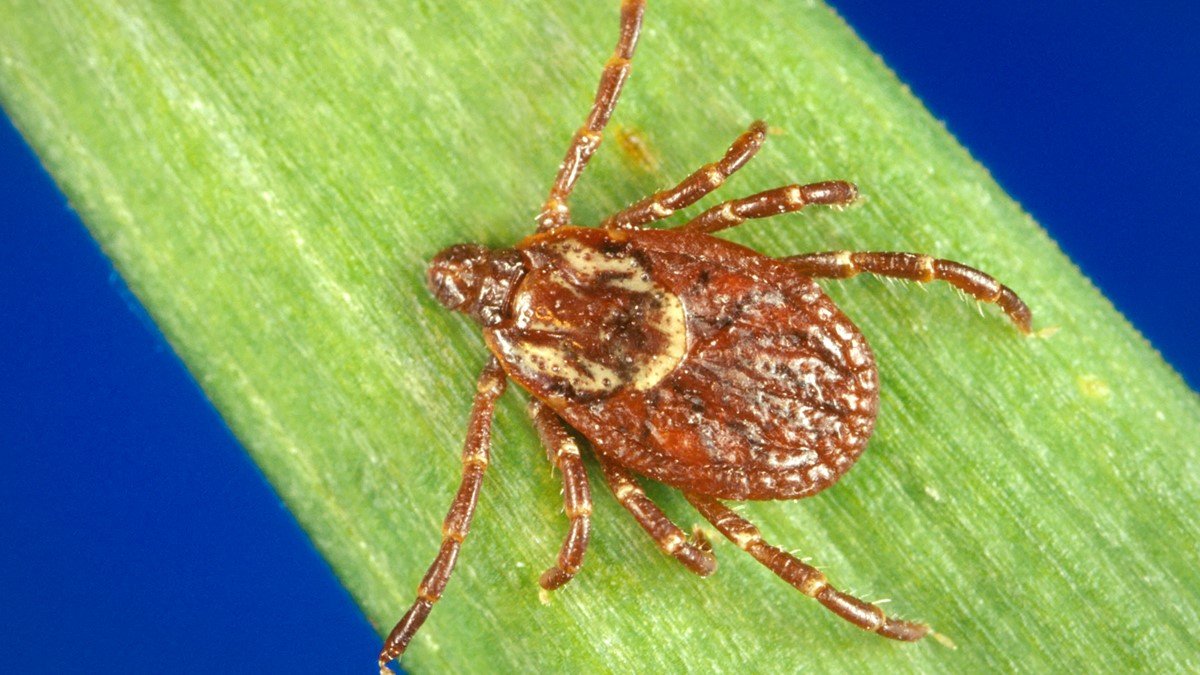
The best picture for a tick exposure is a photo of the actual tick. American dog ticks have ornate pale markings and a body shape that differs from a jumping spider. If the tick is still attached, remove it promptly rather than delaying removal for photography.
Jumping spiders have a very different body plan: eight legs, a distinct cephalothorax and abdomen, and large forward-facing eyes. Common bold jumping spiders can be dark with white or orange markings and sometimes iridescent green mouthparts. Those features are useful for identifying the animal, not the skin mark.
American dog tick bite vs jumping spider bite pictures of the skin can overlap. Both may show redness, mild swelling, tenderness, itching, or a central puncture area. A skin image should therefore be treated as supporting context, not proof.
The main treatment difference: remove the tick vs care for a mild spider bite
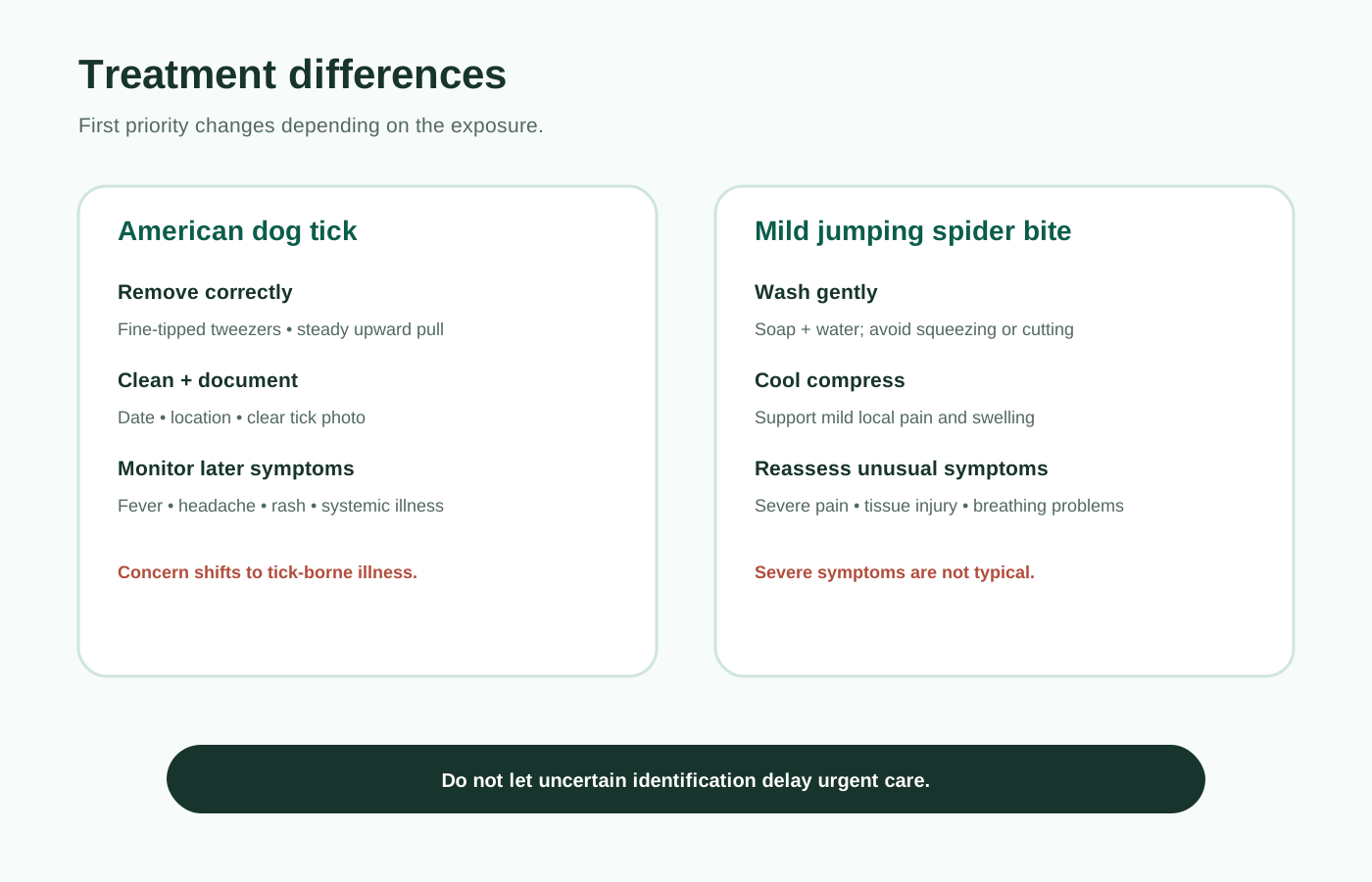
The practical american dog tick bite vs jumping spider bite treatment differences begin with whether an arthropod is still attached.
How to handle an attached American dog tick
- Use clean fine-tipped tweezers.
- Grasp the tick as close to the skin as possible.
- Pull upward with steady, even pressure.
- Avoid twisting, jerking, burning, crushing, or coating the tick with petroleum jelly, nail polish, gasoline, or essential oils.
- Clean the bite site and your hands afterward.
- Record the date and likely exposure location.
- Take a clear tick photo if identification may be useful.
If a small mouthpart fragment remains and cannot be removed easily, avoid repeatedly digging into the skin. Keep the area clean and monitor it.
How to handle a mild suspected jumping spider bite
- Wash the skin gently with soap and water.
- Apply a wrapped cold pack or cool compress for short intervals.
- Elevate the area if swelling is bothersome and elevation is practical.
- Use appropriate over-the-counter symptom relief only when safe for the person and according to the label.
- Avoid cutting, squeezing, suction, or aggressive home remedies.
- Monitor the site and the person for worsening symptoms.
MedlinePlus recommends washing a spider bite, using an ice pack or wet compress, and seeking medical treatment for severe symptoms. Most mild spider bites improve with time and simple local care.
What symptoms after a tick bite should change the plan?
After an American dog tick exposure, contact a healthcare professional when fever, severe or persistent headache, new rash, marked fatigue, muscle aches, neurologic symptoms, significant vomiting, or other worsening systemic illness develops.
Tell the clinician when and where the exposure happened. If the tick was photographed or saved, share that information. A small improving red bump does not eliminate the possibility of later tick-borne illness, and a dramatic-looking local reaction does not prove infection either.
Signs of local infection
Seek evaluation when increasing warmth, tenderness, swelling, pus, drainage, red streaking, fever, or pain that becomes worse instead of better develops at the bite site. These signs can reflect secondary skin infection and need assessment independent of the original culprit.
What symptoms after a suspected jumping spider bite deserve more attention?
Most confirmed jumping spider bites are mild. Severe symptoms such as significant muscle cramping, severe headache, breathing difficulty, collapse, rapidly progressive tissue injury, major blistering, or systemic illness are not typical of a simple jumping spider bite.
Those symptoms should prompt medical evaluation and reconsideration of the diagnosis. The culprit may have been another spider, another arthropod, an allergic reaction, or a non-bite skin condition.
Also seek care if the site develops worsening warmth, pus, red streaking, progressive pain, or fever. Bacterial skin infections can be mistaken for spider bites, especially when no spider was actually seen biting.
Why misidentification is common — and what to document instead
Many people notice a red bump hours after the original exposure and then search for pictures that look similar. That approach is understandable, but it creates a major identification problem: mild reactions from ticks, spiders, mosquitoes, fleas, mites, irritated follicles, contact dermatitis, and scratched skin can overlap. A photograph taken after the site has been rubbed, treated, or scratched may be even less specific.
For a possible American dog tick bite, document whether a tick was physically attached, how it was removed, the date, the likely exposure location, and whether the tick appeared flat or engorged. If a clear photograph of the actual tick exists, keep it. Those details can help establish a plausible exposure window if symptoms develop later.
For a suspected jumping spider bite, document whether a jumping spider was actually seen at the moment of contact. Jumping spiders are conspicuous animals with large forward-facing eyes and quick, jerky movement. Simply finding one on a wall or windowsill near a skin lesion does not prove it caused the mark. A confirmed bite is more plausible when the spider was trapped against the skin, handled, or observed biting.
When to reconsider the label “jumping spider bite”
Reconsider the diagnosis when the lesion is rapidly expanding, intensely painful, producing major tissue damage, associated with severe muscle cramping, or accompanied by fever or significant systemic illness. Those features do not fit the usual minor jumping spider bite described by extension and medical references. They can signal another spider species, bacterial skin infection, another arthropod exposure, or an unrelated skin condition.
The same caution applies to tick bites. A dramatic local mark does not prove tick-borne disease, while a nearly invisible bite site does not rule one out. For both exposures, symptom progression and exposure evidence are more useful than repeatedly comparing the skin to online photos.
Original decision guide: which clues are most useful?
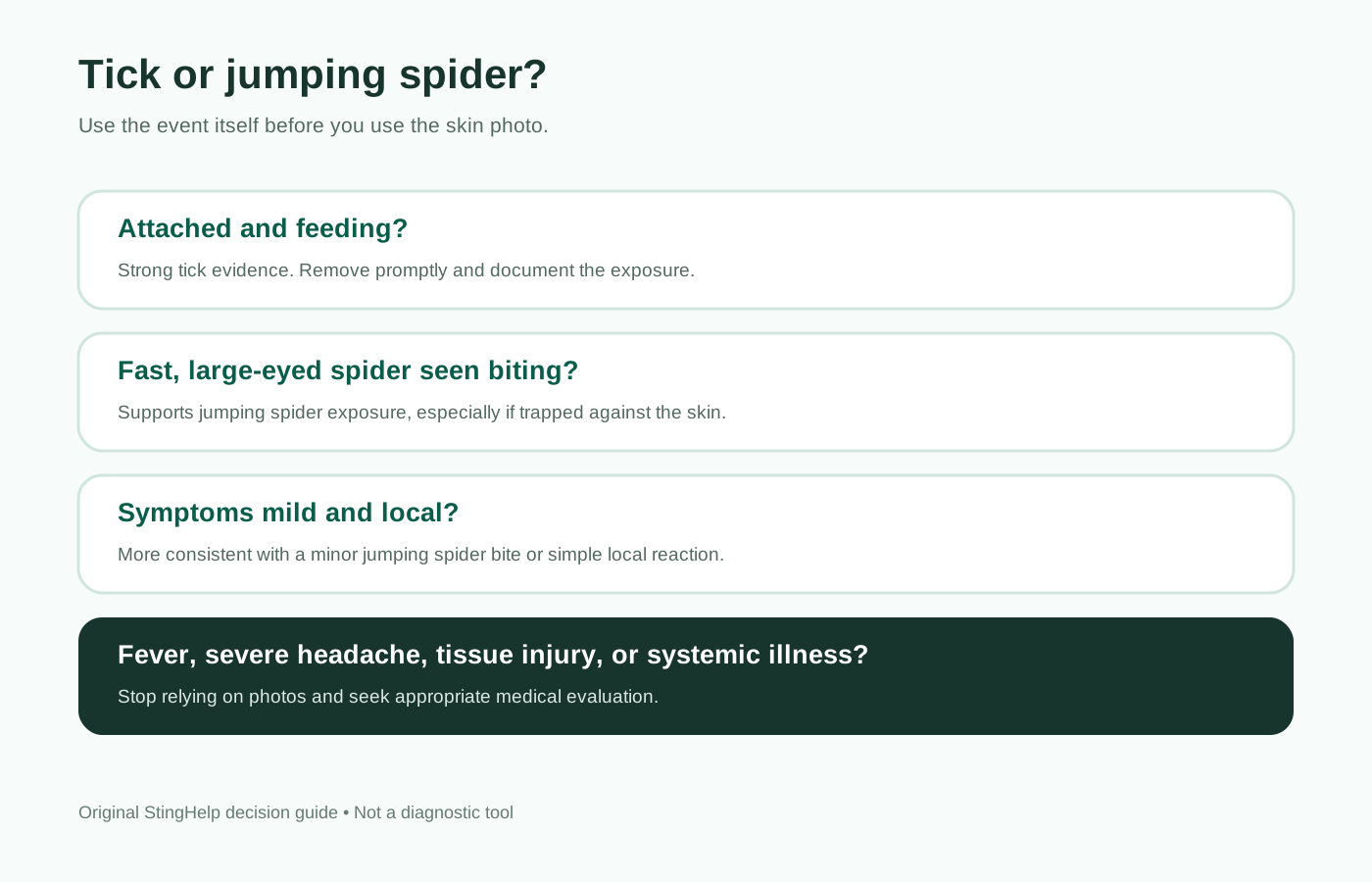
| Question | American dog tick clues | Jumping spider clues |
|---|---|---|
| Was an animal attached and feeding? | Strong evidence of a tick bite. | Not typical. |
| Was a fast, large-eyed spider actually seen biting? | No. | Supports jumping spider exposure. |
| Was the mark found after brush, grass, hunting, hiking, or pet exposure? | Supports tick exposure. | Possible but less specific. |
| Was a spider trapped inside clothing, gloves, bedding, or handled? | Less typical. | Supports a defensive spider-bite scenario. |
| Did fever/headache/rash develop later? | Raises concern for tick-borne illness. | Not typical of a mild jumping spider bite. |
| Is the only evidence a small red bump? | Insufficient. | Insufficient. |
When should someone seek medical care?
The American Academy of Dermatology notes that most bug bites and stings are harmless, but some can be dangerous because of disease transmission, allergic reaction, or other complications. Seek medical care when symptoms are significant, worsening, or do not fit a mild local reaction.
After a tick exposure, fever with headache, body aches, rash, or other systemic illness deserves prompt evaluation. After a suspected spider bite, severe pain, progressive tissue injury, significant swelling, breathing difficulty, or systemic symptoms also deserve evaluation.
Call emergency services for trouble breathing, swelling of the tongue or throat, collapse, seizure, severe confusion, inability to stay awake, or another rapidly progressive life-threatening symptom.
How to prevent American dog tick bites and jumping spider bites
For ticks, use EPA-registered repellents according to the label, wear protective clothing in tick habitat, consider permethrin-treated clothing or gear when appropriate, and perform full-body tick checks after outdoor activity. Check pets, clothing, backpacks, and outdoor equipment too.
Jumping spiders are generally beneficial predators and do not need to be treated as aggressive pests. To reduce accidental bites, avoid handling spiders with bare hands, shake out gloves and shoes, wear gloves when moving stored materials, and avoid trapping spiders against the skin.
If a jumping spider is indoors, it can often be moved outside using a container rather than handled directly.
Frequently asked questions
Can a jumping spider bite look like a tick bite?
Yes. Both can leave a small red, irritated area. The skin mark alone cannot reliably identify the cause.
Are jumping spider bites dangerous?
Most jumping spider bites are not medically significant. Penn State Extension reports that confirmed bold jumping spider bites generally cause minor pain, itching, swelling, and redness lasting one to two days.
Can jumping spiders transmit RMSF?
No. RMSF is a tick-borne disease. American dog ticks are among the U.S. ticks that can transmit the bacterium that causes RMSF.
Should I capture the spider?
Do not risk another bite. A clear photograph taken safely can be useful, but medical care should not be delayed to capture an animal.
Should I squeeze a spider bite or tick bite?
No. Avoid squeezing, cutting, or suction. Remove an attached tick correctly and use gentle local care for a mild suspected spider bite.
When should a tick bite be checked by a doctor?
Seek care when fever, severe headache, rash, neurologic symptoms, or worsening systemic illness develops after a relevant tick exposure, or if the local site develops concerning infection signs.
Related StingHelp guides
- Jumping Spider Bite Treatment
- Tick Bites: Removal, Symptoms & Warning Signs
- Tick Bite Warning Signs
- What Bit Me? Identification Guide
- First Aid for Bites & Stings
- Emergency & Warning Signs
Authoritative references
- CDC — American Dog Tick Surveillance
- American Academy of Dermatology — Bug Bites and Stings
- MedlinePlus — Spider Bites
- Penn State Extension — Bold Jumper Spider
Bottom line
The most useful american dog tick bite vs jumping spider bite treatment differences are based on the exposure itself. Remove an attached tick promptly and monitor for later tick-borne illness. A mild confirmed jumping spider bite usually needs gentle cleaning, a cool compress, and observation. In both cases, severe or worsening symptoms matter more than matching a skin photo online.
Educational information for a U.S.-focused audience. This article does not diagnose a bite, spider species, tick-borne illness, infection, or other condition from a photograph and does not replace professional medical care.