Direct answer: An American dog tick bite and an Asian longhorned tick bite usually cannot be distinguished from the skin mark alone. The safer clues are the actual tick, where exposure happened, the season, and whether symptoms such as fever, rash, severe headache, or worsening illness develop. Remove any attached tick promptly and monitor symptoms.
American dog ticks (Dermacentor variabilis) are native and widely established across much of the United States, especially east of the Rocky Mountains. Asian longhorned ticks (Haemaphysalis longicornis) are an invasive species first reported in the United States in 2017 and are now established in parts of the eastern half of the country. Both can attach to people, but their U.S. public-health significance is different.
This guide compares american dog tick bite vs asian longhorned tick bite pictures using evidence that is more useful than a bite photo: tick appearance, geography, host preference, disease context, and symptom timing. It is educational information for U.S. readers and does not diagnose a tick-borne illness.
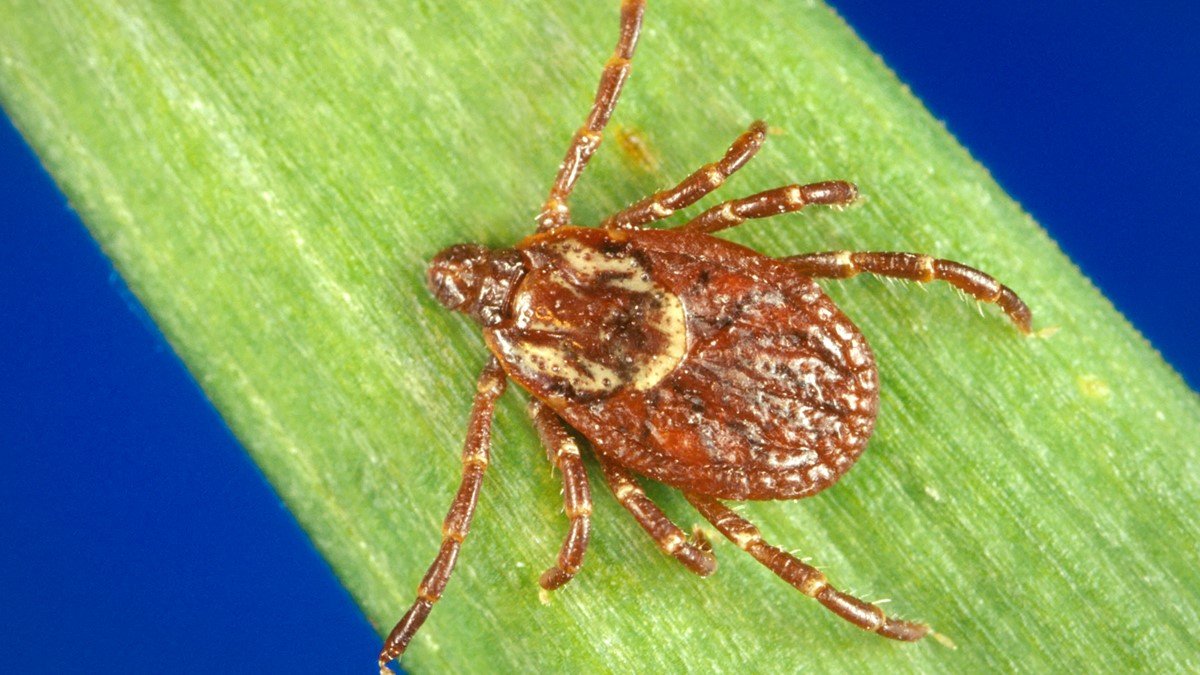
American dog tick vs Asian longhorned tick: quick comparison
| Clue | American dog tick | Asian longhorned tick |
|---|---|---|
| Scientific name | Dermacentor variabilis | Haemaphysalis longicornis |
| U.S. status | Native, widely distributed; especially established east of the Rocky Mountains with more limited western populations. | Invasive; first reported in the U.S. in 2017 and now established in multiple eastern and central states. |
| Human biting | Adult females are among the stages most likely to bite people. | Can bite people, but CDC notes it appears less attracted to humans than several common native U.S. ticks. |
| Seasonal clue | Human-biting risk is often highest in spring and summer. | Activity varies by life stage, climate, and local establishment. |
| Important U.S. disease context | Can transmit Rocky Mountain spotted fever and tularemia. | Human disease transmission in the U.S. remains an area of research; it is not currently treated as a common Lyme disease vector. |
| Population behavior | Reproduces conventionally with males and females. | Females can reproduce without mating, allowing very large local populations. |
| Best identification evidence | Clear photo or specimen of the tick plus geography and exposure context. | Clear photo or specimen plus local surveillance/geography; skin lesion alone is not reliable. |
Why bite pictures usually cannot tell these ticks apart
The skin response to a tick bite is highly variable. Some people notice a small red bump where the tick was attached. Others have little visible reaction. Redness can also be caused by irritation from the tick’s mouthparts, scratching, adhesive bandages, topical products, or another skin condition. That makes a photo of the bite site a weak way to identify the tick species.
For american dog tick bite vs asian longhorned tick bite pictures, the most informative “picture” is often the tick itself. If it can be removed safely, take clear close-up photos from above and below against a plain background. Include something for scale without crushing the specimen. A local health department, extension service, veterinarian, or tick-identification program may be able to help.
Do not delay removal in order to take a perfect photo. The priority is to remove an attached tick promptly and correctly. Identification can happen afterward if the tick or a useful photograph is available.
What features can experts use?
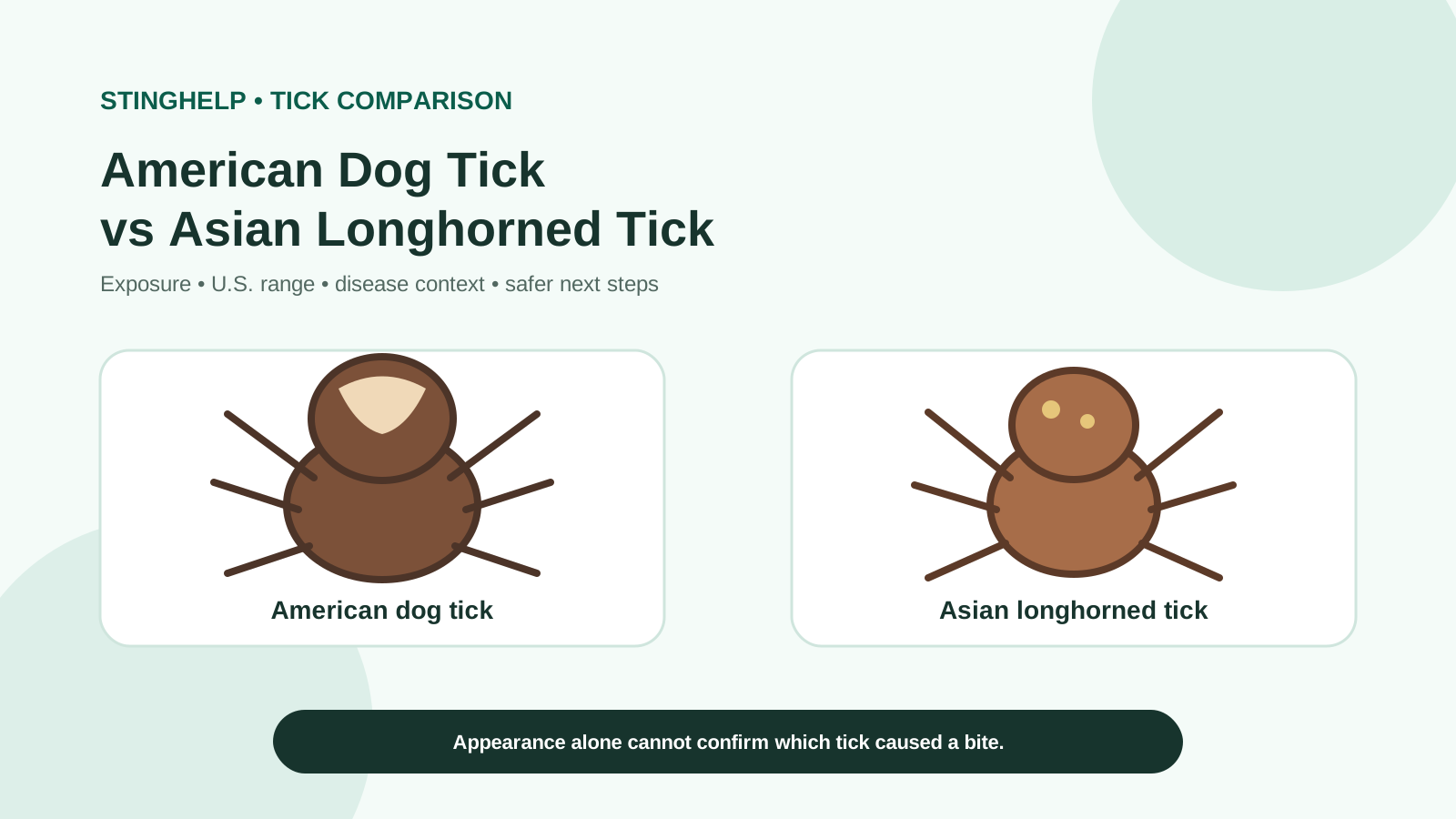
American dog ticks belong to the genus Dermacentor and adults have patterned ornamentation on the upper body. Asian longhorned ticks are generally smaller and less ornate, but reliable species identification can require details that are difficult to see without magnification. Engorgement also changes a tick’s shape and color, making internet-picture matching even less dependable.
Because multiple U.S. tick species overlap in size and color, do not use “brown tick,” “small tick,” or “white spot” as a diagnosis. A single visible feature can be misleading.
Where each tick is found in the United States
CDC surveillance describes the American dog tick as widely distributed east of the Rocky Mountains, with more limited established populations in parts of the West. It is a familiar human-biting tick in many U.S. states. Risk is influenced by season, vegetation, animal hosts, and local tick activity rather than by state boundaries alone.
The Asian longhorned tick is newer to the United States. CDC and USDA surveillance have documented established populations in multiple states, primarily in the eastern half of the country. Because it is invasive, its known range can change as surveillance finds new populations. Readers should use current CDC, USDA, state agriculture, or state health department maps rather than relying on an old static list.
Geography is therefore useful but not definitive. If a person is bitten in a county where Asian longhorned ticks have not been documented, that species becomes less likely, but surveillance is imperfect. Conversely, being in an established county does not prove that a small brown tick is Asian longhorned.
Exposure setting can help
American dog ticks are often encountered in grassy or brushy environments and around areas used by animal hosts. Asian longhorned ticks can occur in pastures, lawns, wooded edges, and environments used by livestock, wildlife, pets, and people. Heavy infestations may involve many ticks because Asian longhorned females can reproduce without mating.
If dozens or hundreds of similar ticks are found on livestock, pets, vegetation, or around a property, that pattern deserves attention from a veterinarian, extension service, or agriculture authority.
Disease risks: what is established and what is still uncertain
The disease context is one of the most important differences between these two ticks in the United States.
American dog tick
The American dog tick is a recognized U.S. vector of Rickettsia rickettsii, the bacterium that causes Rocky Mountain spotted fever (RMSF). It can also transmit Francisella tularensis, which causes tularemia. A bite does not mean infection occurred, but fever, severe headache, rash, or other systemic illness after relevant tick exposure deserves medical attention.
RMSF can become serious quickly. CDC emphasizes prompt medical evaluation when symptoms are compatible with a tick-borne rickettsial illness. A person should not wait for a rash to appear before seeking care if significant fever and illness develop after a plausible exposure.
Asian longhorned tick
Asian longhorned ticks can carry important pathogens in other parts of the world, but their role in transmitting human disease in the United States is still being studied. Current CDC and USDA information does not support treating every Asian longhorned tick bite as equivalent to an American dog tick bite for RMSF or to a blacklegged tick bite for Lyme disease.
Laboratory studies have examined whether Asian longhorned ticks can acquire or transmit several pathogens, but laboratory competence is not the same as proven routine transmission to people in nature. USDA also highlights the tick’s major animal-health importance because it can transmit Theileria orientalis Ikeda genotype in cattle.
This uncertainty is a reason to avoid exaggerated online claims. The safe approach is to document the exposure, remove the tick, monitor symptoms, and discuss concerning illness with a healthcare professional.
How to remove an attached tick safely
Regardless of species, remove an attached tick as soon as possible. Use clean fine-tipped tweezers to grasp the tick as close to the skin surface as you can. Pull upward with steady, even pressure. Avoid twisting, jerking, crushing the body, or squeezing the tick with bare fingers.
- Grasp the tick close to the skin with fine-tipped tweezers.
- Pull upward with steady, even pressure.
- If small mouthparts remain and cannot be removed easily, allow the skin to heal rather than repeatedly digging into it.
- Clean the bite area and your hands with soap and water or another appropriate antiseptic method.
- Record the date and likely exposure location.
- Take clear photos or save the tick in a secure container if local guidance recommends identification.
Avoid petroleum jelly, nail polish, essential oils, heat, flame, gasoline, or other methods intended to make the tick “back out.” These approaches can delay removal and may injure the skin.
What symptoms should you monitor after a tick bite?
Most tick bites do not automatically lead to disease. Monitoring is still important because symptoms of tick-borne illnesses can develop after the bite mark has faded.
Contact a healthcare professional if fever, an expanding or unusual rash, severe headache, marked fatigue, muscle aches, neurologic symptoms, facial weakness, unexplained vomiting, or other significant illness develops after a recent tick exposure. Tell the clinician when and where the bite happened and, if known, what the tick looked like.
Also seek care for local signs that suggest a skin complication: increasing warmth, progressively worsening pain, pus, red streaking, or spreading redness accompanied by fever. A small area of irritation immediately after removal can be different from a lesion that becomes progressively more inflamed.
When is emergency care appropriate?
Call emergency services for trouble breathing, collapse, severe confusion, inability to stay awake, seizure, or another rapidly progressive life-threatening symptom. These are not typical simple bite-site reactions and should not be managed by continuing to compare tick photos online.
Decision guide: which clues should you trust most?
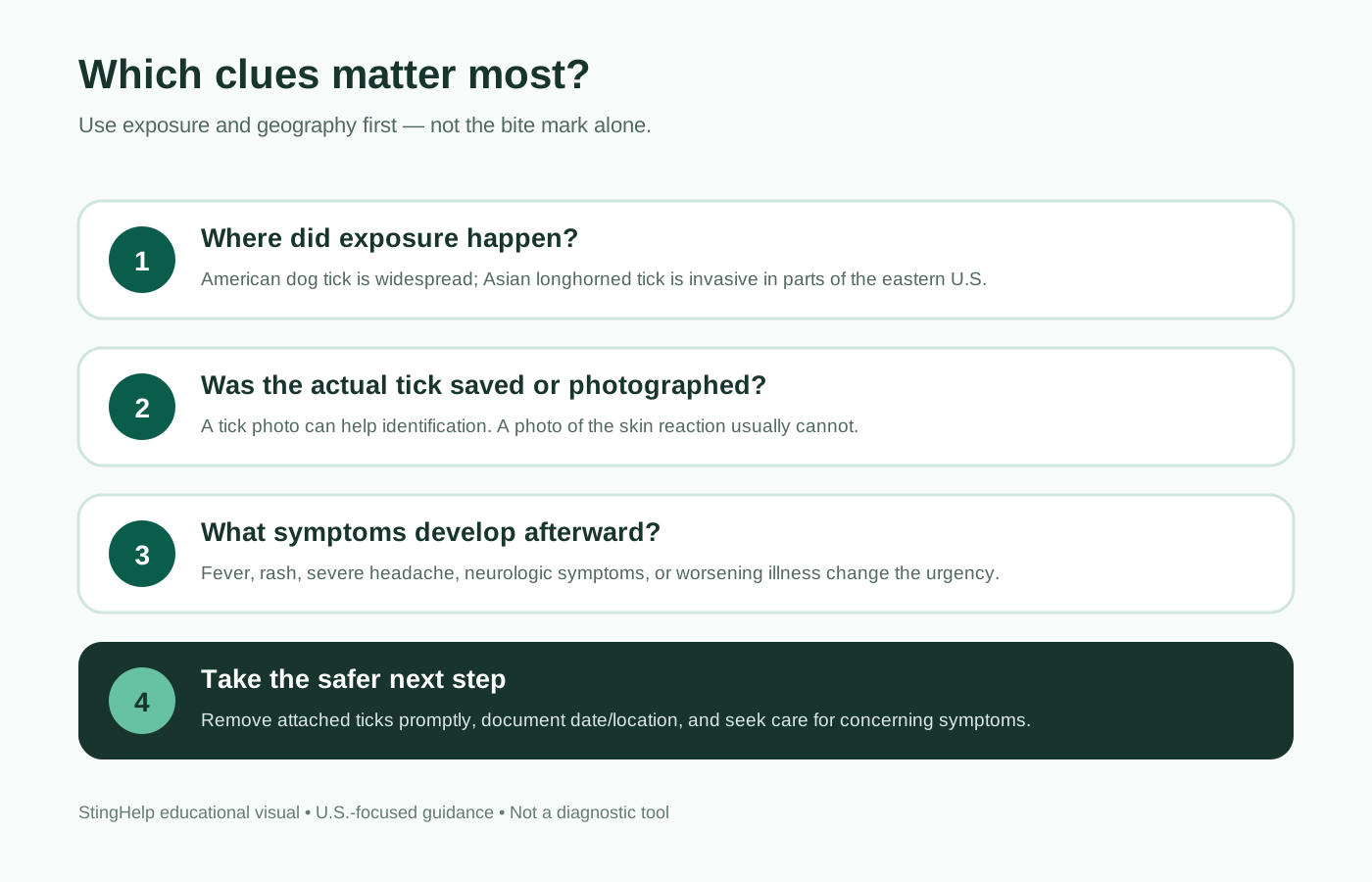
| Question | Why it matters | Best next step |
|---|---|---|
| Was the actual tick photographed or saved? | Tick morphology is more informative than the skin mark. | Use a reputable identification program if available. |
| Where did the exposure happen? | Known geographic range changes the probability of each species. | Check current CDC/USDA/state surveillance. |
| Was the tick attached? | Attachment confirms tick exposure even when species is uncertain. | Remove promptly and document the date. |
| Did fever, rash, severe headache, or systemic illness develop? | Symptoms determine medical urgency more than perfect species identification. | Contact a healthcare professional promptly. |
| Are many ticks infesting animals or a property? | Large numbers can be a clue to an invasive population and an animal-health issue. | Contact veterinary, extension, agriculture, or pest-management resources. |
The central rule is simple: do not let uncertainty about the tick species delay correct removal or appropriate medical care.
How to reduce future exposure
Use a layered approach to tick prevention. When practical, avoid brushing against tall grass and dense vegetation. Wear long pants and closed shoes in higher-risk habitat. Use EPA-registered repellents according to the label, and consider permethrin-treated clothing or gear when appropriate.
After outdoor exposure, check the body carefully, including the scalp, behind the ears, under the arms, around the waist, behind the knees, between the legs, and around the groin. Check pets, clothing, backpacks, and outdoor gear as well.
For yards and properties, reduce brush and leaf litter in frequently used areas, maintain paths, and manage vegetation where people and pets spend time. If unusual numbers of ticks are found on livestock or property, local extension and agriculture agencies can provide region-specific guidance.
Frequently asked questions
Can you tell an American dog tick bite from an Asian longhorned tick bite by the rash?
Usually no. The skin reaction is not species-specific. Identification is more reliable when the actual tick, geography, and exposure context are available.
Which tick is more likely to bite people in the United States?
American dog ticks are well-established human-biting ticks in many parts of the United States. CDC notes that Asian longhorned ticks can bite people but appear less attracted to humans than several common native species.
Does an Asian longhorned tick transmit Lyme disease?
Current U.S. evidence does not support treating the Asian longhorned tick as an important Lyme disease vector. Laboratory and field research continues, so use current CDC and USDA guidance.
Can American dog ticks transmit Rocky Mountain spotted fever?
Yes. The American dog tick is a recognized U.S. vector of the bacterium that causes RMSF. A bite does not automatically mean infection, but compatible illness after exposure needs medical attention.
Why can Asian longhorned ticks become so numerous?
Females can reproduce without mating, a process called parthenogenesis. This allows a single female to establish a population and can contribute to heavy infestations.
Should I send a removed tick for testing?
Policies differ by state and program. Some agencies offer identification while others discourage relying on commercial pathogen testing to make medical decisions. A healthcare professional should interpret symptoms and exposure history rather than waiting for a tick-test result.
Related StingHelp guides
- Tick Bites: Removal, Symptoms & Warning Signs
- Tick Bite Warning Signs
- What Bit Me? Identification Guide
- First Aid for Bites & Stings
- Emergency & Warning Signs
- Bite & Sting Prevention
Authoritative references
- CDC — Where Ticks Live
- CDC — American Dog Tick Surveillance
- CDC — Rocky Mountain Spotted Fever
- CDC — Tularemia
- USDA APHIS — Asian Longhorned Tick
Bottom line
When comparing american dog tick bite vs asian longhorned tick bite pictures, do not rely on the appearance of the skin lesion. Use the actual tick, location, season, and exposure setting when available. American dog ticks have established U.S. links to RMSF and tularemia; the human-disease role of the Asian longhorned tick in the United States remains more uncertain. Remove attached ticks promptly, document the exposure, and seek care for concerning symptoms.
Educational information for a U.S. audience. This article does not diagnose a tick species or tick-borne disease from a photograph and does not replace medical evaluation.