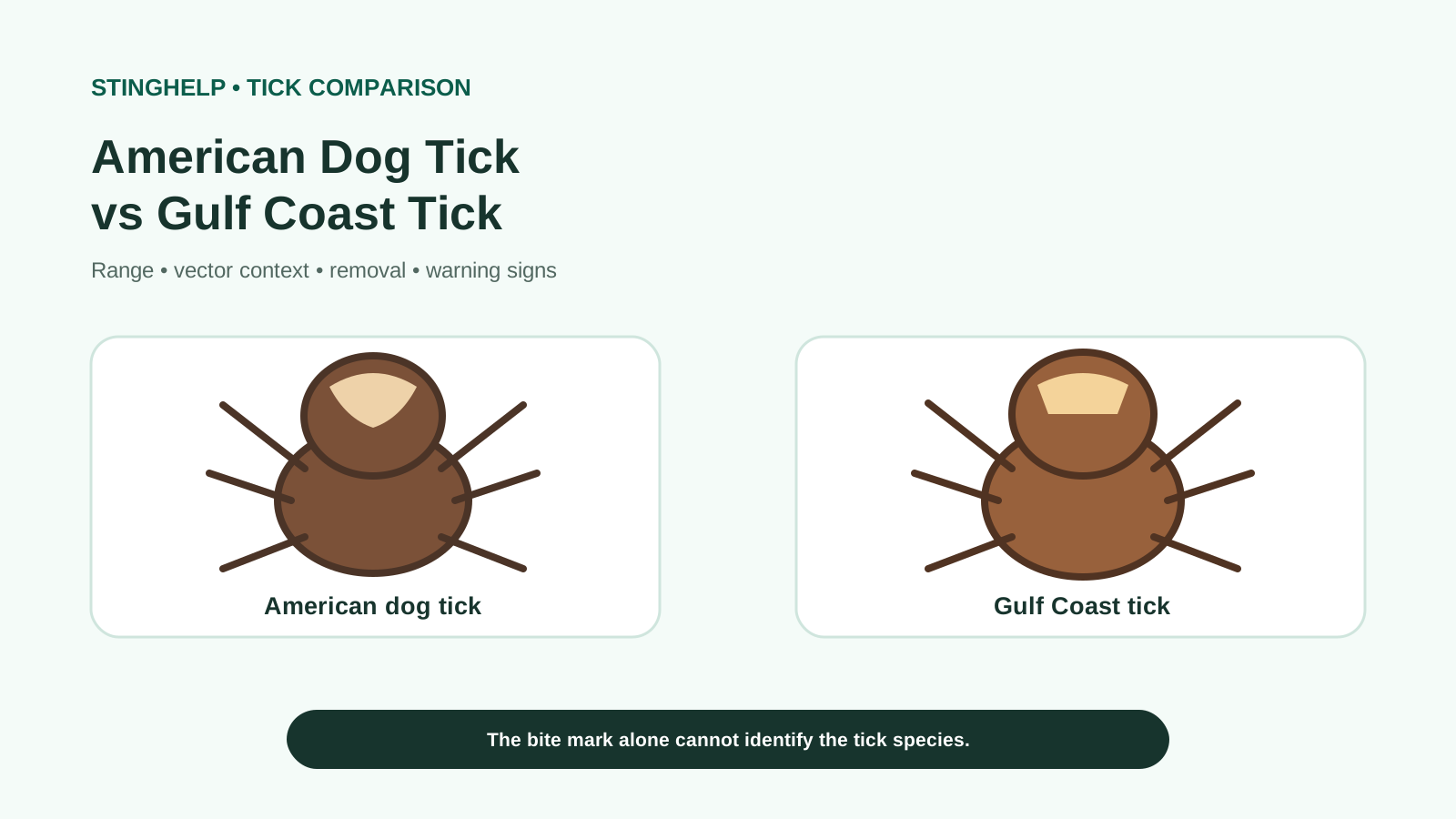
Direct answer: An American dog tick bite and a Gulf Coast tick bite cannot usually be identified from the skin mark alone. The actual tick, exposure location, habitat, and later symptoms are more useful. American dog ticks are established vectors of RMSF and tularemia; Gulf Coast ticks transmit Rickettsia parkeri rickettsiosis.
The American dog tick (Dermacentor variabilis) and Gulf Coast tick (Amblyomma maculatum) are both human-biting hard ticks found in the United States, but they differ in range, appearance, habitat, and disease associations. Their geographic distributions overlap in parts of the Southeast and other regions, so a person may reasonably wonder which species was attached.
This guide compares american dog tick bite vs gulf coast tick bite pictures without pretending that the bite mark itself is diagnostic. The safest comparison uses the tick’s body features, where the exposure happened, current CDC range information, disease context, and symptom progression after removal.
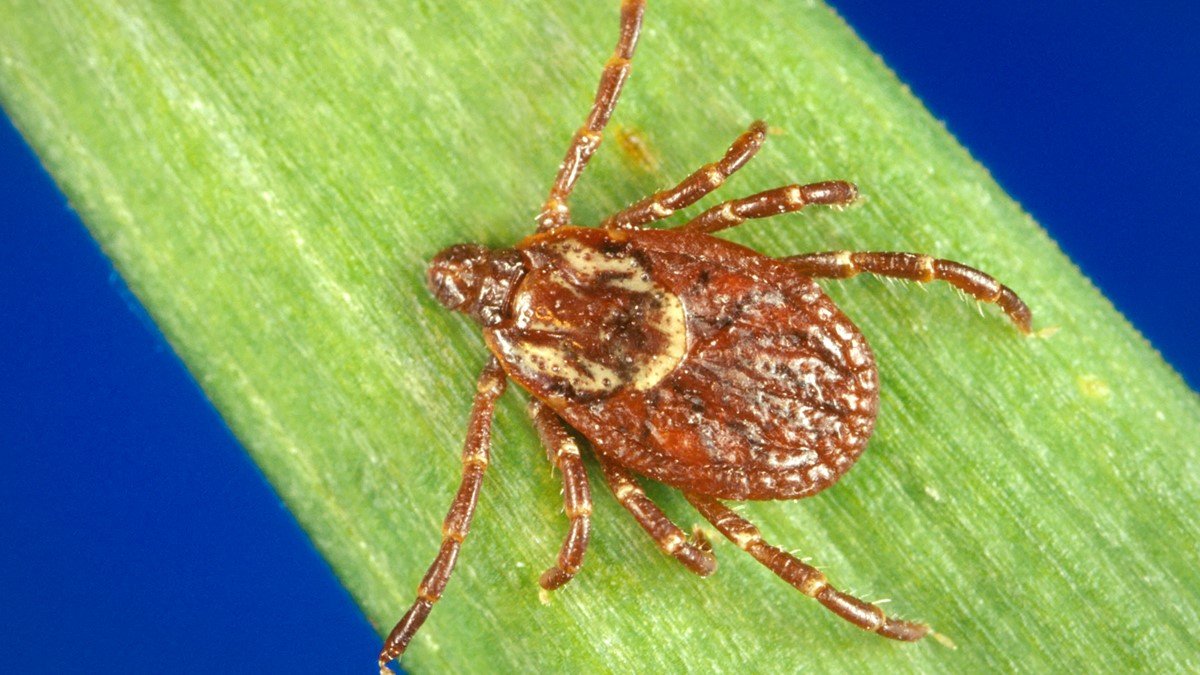
American dog tick vs Gulf Coast tick: quick comparison
| Clue | American dog tick | Gulf Coast tick |
|---|---|---|
| Scientific name | Dermacentor variabilis | Amblyomma maculatum |
| U.S. range | Widely distributed east of the Rocky Mountains, with limited established areas farther west. | Primarily southeastern U.S., with focal populations in northeastern, midwestern, and southwestern areas. |
| Human-biting stage | Adult females are especially likely to bite people. | Adults bite people and have been associated with human R. parkeri transmission. |
| Important disease context | Rocky Mountain spotted fever and tularemia. | Rickettsia parkeri rickettsiosis, a spotted fever group illness. |
| Typical habitat clues | Grassy, brushy, edge habitats and areas used by animal hosts. | Historically coastal/southern grasslands and upland habitat; now also documented farther inland and north. |
| Bite mark | Not species-specific. | Not species-specific. |
| Best evidence | Actual tick + geography + exposure + symptoms. | Actual tick + geography + exposure + symptoms. |
Why bite pictures cannot reliably separate the species
A small red bump after tick removal does not tell you whether the tick was Dermacentor variabilis or Amblyomma maculatum. Local redness can result from the tick’s mouthparts, saliva, scratching, adhesive bandages, topical products, or a separate skin irritation. Some people show almost no reaction at all.
That is why searches for american dog tick bite vs gulf coast tick bite pictures should be approached cautiously. A photograph of the tick is much more useful than a photograph of the skin lesion. If you can remove the tick safely, take clear pictures from above and below before disposal. Do not delay removal while trying to get the perfect image.
Both species can be patterned enough that people confuse them at a glance. Magnification, sex, life stage, engorgement, and image quality all affect identification. A tick-identification service, local extension office, public-health program, or qualified entomologist may be more reliable than internet image matching.
Do not use a “bull’s-eye” as a species test
An expanding rash is medically important, but it is not a reliable way to identify which tick species bit you. Different tick-borne illnesses can produce different rash patterns, and many non-tick skin conditions can also expand or form rings. If a new or enlarging rash develops after a recent tick exposure, document it and contact a healthcare professional instead of using the rash shape to name the tick.
Where American dog ticks live in 2026
CDC surveillance updated in July 2026 describes the American dog tick as widely distributed east of the Rocky Mountains, with more limited established populations west of the Rockies. Adult female ticks are the stage most likely to bite people, and human-biting risk is often highest in spring and summer.
CDC also notes that western populations once grouped with D. variabilis have been affected by taxonomic changes involving the closely related Dermacentor similis. This is another reason to use current surveillance rather than relying on an old map or an older identification guide.
A county without an “established” label on a surveillance map does not prove that the species is absent. Surveillance records can lag behind actual local presence, and established status has specific collection criteria. Geography should change probability, not create false certainty.
Where Gulf Coast ticks live — and why their range is changing
CDC describes the Gulf Coast tick as occurring primarily in the southeastern United States, with focal populations documented in northeastern, midwestern, and southwestern regions. The tick was historically associated with coastal and southern areas, but surveillance has shown expansion well beyond the Gulf Coast.
A September 2026 CDC Emerging Infectious Diseases report documented established Gulf Coast tick populations and Rickettsia parkeri in Ohio, based on surveillance collections from 2020–2021. That finding reinforces an important practical rule: a common name such as “Gulf Coast tick” should not be interpreted as meaning the species occurs only near the Gulf of Mexico.
Travel history matters. A person may live in one state and acquire a tick during a trip, outdoor job, hunting trip, field work, camping, or a visit to another region. Tell a clinician where the exposure occurred, not just where you live.
Habitat can add context
Gulf Coast ticks are associated with grassland and open habitats in many parts of their range. American dog ticks also use grassy and edge habitats. Because both can occur in environments used by people, pets, wildlife, and livestock, habitat alone rarely gives a definitive answer.
For property-level questions, local extension or vector-control information is more useful than a national generalization. Tick abundance can vary sharply within the same state.
Disease risks: the most important practical difference
American dog tick: RMSF and tularemia
CDC lists the American dog tick as a vector of Rocky Mountain spotted fever (RMSF) and tularemia. RMSF is caused by Rickettsia rickettsii and can become serious quickly. Tularemia is caused by Francisella tularensis and can be acquired through tick bites, deer fly bites, animal exposure, and other routes.
A tick bite does not mean that transmission occurred. Most bites do not automatically result in disease. However, fever, severe headache, rash, marked fatigue, or systemic illness after relevant exposure should be taken seriously.
Gulf Coast tick: Rickettsia parkeri rickettsiosis
CDC identifies the Gulf Coast tick as the vector of Rickettsia parkeri rickettsiosis, another spotted fever group rickettsiosis. The illness can include fever, headache, muscle aches, and a characteristic dark scab or eschar at the bite site in many reported cases, sometimes with a rash.
The presence of an eschar does not by itself prove the tick species or pathogen. Other infections and skin injuries can produce ulcerated or crusted lesions. The combination of a compatible illness, exposure history, and clinical evaluation is what matters.
When comparing these two ticks, do not treat “RMSF versus R. parkeri” as a do-it-yourself diagnosis. Treatment decisions for suspected tick-borne rickettsial disease are clinical decisions, and delays can matter.
How to remove either tick safely
The correct removal technique does not depend on knowing the species first. Remove an attached tick promptly with clean fine-tipped tweezers.
- Grasp the tick as close to the skin surface as possible.
- Pull upward with steady, even pressure.
- Do not twist, jerk, burn, crush, or coat the tick with petroleum jelly or nail polish.
- Clean the bite site and your hands after removal.
- Record the date and likely exposure location.
- Take a clear photo or save the tick securely if local guidance recommends identification.
If a small part of the mouthparts remains in the skin and cannot be removed easily, avoid repeatedly digging into the skin. The body can often expel superficial fragments during healing. Contact a clinician if the area becomes increasingly painful, hot, swollen, infected-looking, or otherwise concerning.
What symptoms should you monitor afterward?
Monitoring matters because the original bite mark may fade before a tick-borne illness becomes obvious. After a known tick exposure, watch for fever, chills, severe or persistent headache, unusual fatigue, muscle aches, new rash, neurologic symptoms, or worsening general illness.
For Gulf Coast tick exposure, a new eschar-like lesion plus fever or systemic symptoms deserves medical evaluation. For American dog tick exposure, fever with headache or rash can raise concern for RMSF, while a skin ulcer with swollen lymph nodes after exposure can be compatible with tularemia. These are examples, not home-diagnostic rules.
Also watch the local site for signs of secondary skin infection: increasing warmth, spreading redness, pus, drainage, red streaking, or pain that becomes worse rather than better.
When should you seek emergency care?
Call emergency services for difficulty breathing, collapse, severe confusion, inability to stay awake, seizure, or another rapidly worsening life-threatening symptom. These symptoms should not be managed by continuing to compare tick photos online.
Original decision guide: which clues deserve the most weight?
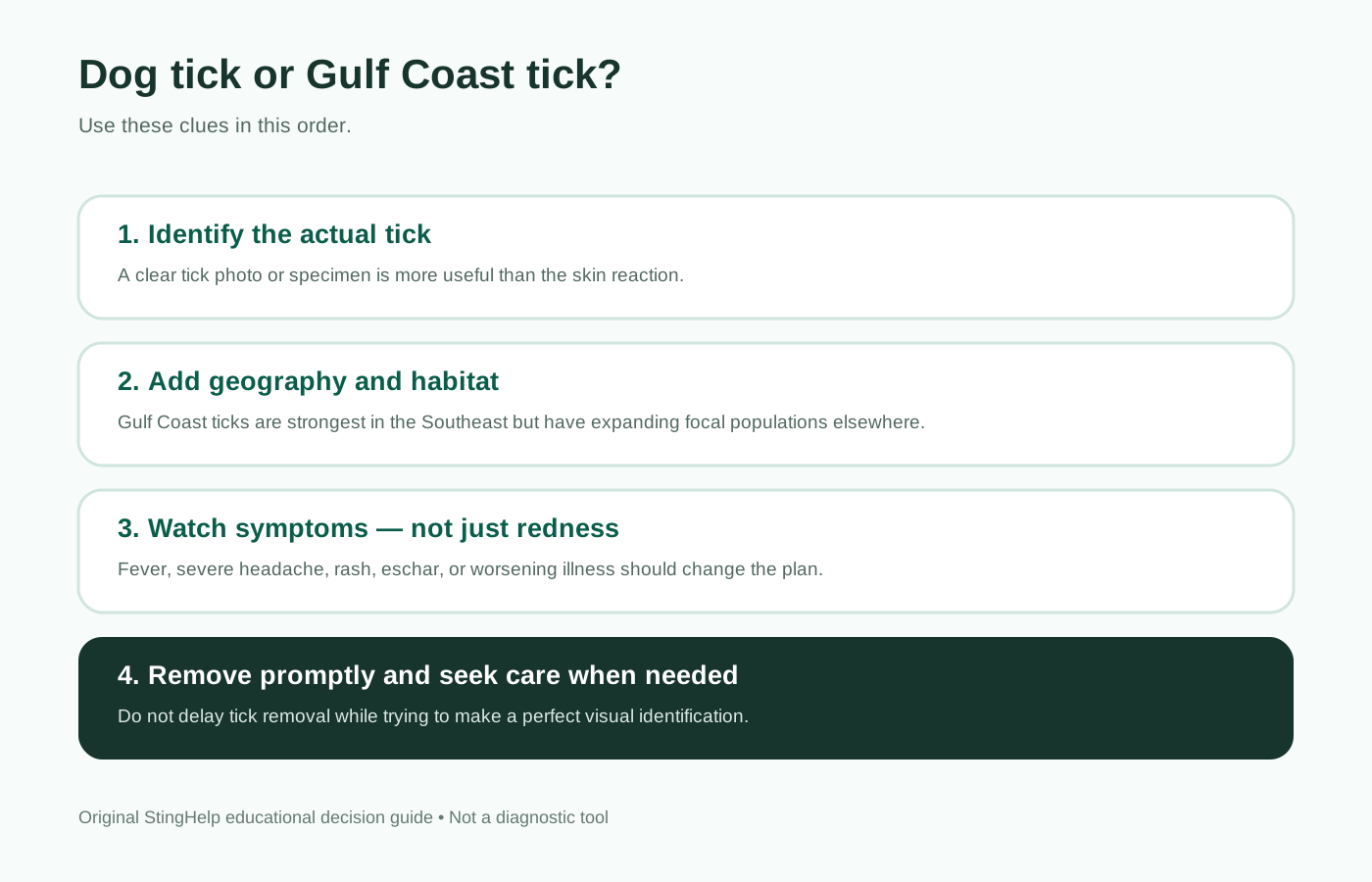
| Question | What it tells you | Safer action |
|---|---|---|
| Was the actual tick saved or photographed? | Morphology is more useful than the skin mark. | Use a reputable identification resource. |
| Where did the exposure occur? | Known range changes the probability of each species. | Check current CDC/state surveillance. |
| Was the setting coastal/southern grassland, Midwest, Northeast, or another area? | Can support or weaken a Gulf Coast tick hypothesis, but does not prove it. | Use geography as context, not diagnosis. |
| Did fever, rash, eschar, severe headache, or systemic illness develop? | Symptoms change medical urgency. | Contact a healthcare professional promptly. |
| Is the main problem only mild local irritation after removal? | May be a local bite-site reaction. | Keep clean, monitor, and seek care if it worsens. |
The best next step does not require perfect species identification. Correct removal, documentation, prevention, and symptom-based medical decisions are more important than naming the tick from the bite mark.
How to reduce future tick exposure
Use multiple prevention layers. Avoid brushing through tall grass and dense vegetation when practical. Use EPA-registered repellents as directed. Consider permethrin-treated clothing or gear where appropriate. Wear protective clothing in tick habitat and perform full-body tick checks after outdoor activity.
Check common hidden areas such as the scalp, behind the ears, under the arms, around the waist, behind the knees, and around the groin. Check pets, backpacks, clothing, hunting gear, and outdoor equipment too.
At home, reduce brush and leaf litter in heavily used areas, keep grass maintained, and separate play or seating areas from dense vegetation where practical. Local extension agencies can provide recommendations tailored to regional tick species.
Frequently asked questions
Can you tell an American dog tick bite from a Gulf Coast tick bite by the skin mark?
Usually no. The skin reaction is not species-specific. The actual tick, geographic exposure, and later symptoms are more informative.
Which tick transmits Rocky Mountain spotted fever?
The American dog tick is a recognized U.S. vector of the bacterium that causes RMSF. Other tick species can also be involved in spotted fever transmission in different regions.
What disease is most associated with the Gulf Coast tick?
The Gulf Coast tick is the recognized vector of Rickettsia parkeri rickettsiosis, a spotted fever group illness.
Are Gulf Coast ticks found only on the Gulf Coast?
No. CDC describes focal populations in northeastern, midwestern, and southwestern regions in addition to the Southeast, and recent surveillance has documented established populations farther north.
Should I wait for symptoms before removing a tick?
No. Remove an attached tick promptly. Identification and symptom monitoring can happen after safe removal.
Should I test the tick for pathogens?
Programs vary by state. Tick identification may be useful, but a commercial pathogen result should not replace medical evaluation or be the sole basis for treatment decisions.
Related StingHelp guides
- Tick Bites: Removal, Symptoms & Warning Signs
- Tick Bite Warning Signs
- American Dog Tick vs Asian Longhorned Tick
- What Bit Me? Identification Guide
- First Aid for Bites & Stings
- Bite & Sting Prevention
Authoritative references
- CDC — Where Ticks Live
- CDC — American Dog Tick Surveillance
- CDC — Other Spotted Fever Rickettsioses
- CDC — How Tularemia Spreads
- CDC Emerging Infectious Diseases — Gulf Coast Ticks and R. parkeri in Ohio, 2026
Bottom line
For american dog tick bite vs gulf coast tick bite pictures, use the actual tick and exposure geography rather than the bite mark. American dog ticks have established links to RMSF and tularemia, while Gulf Coast ticks transmit Rickettsia parkeri rickettsiosis. Remove attached ticks promptly and seek medical care for fever, rash, severe headache, eschar-like lesions, or worsening systemic illness.
Educational information for a U.S. audience. This article does not diagnose a tick species or tick-borne disease from a photograph and does not replace professional medical evaluation.