Late-Night Phone Use Is Costing Teens Sleep: What the JAMA Pediatrics Study Found
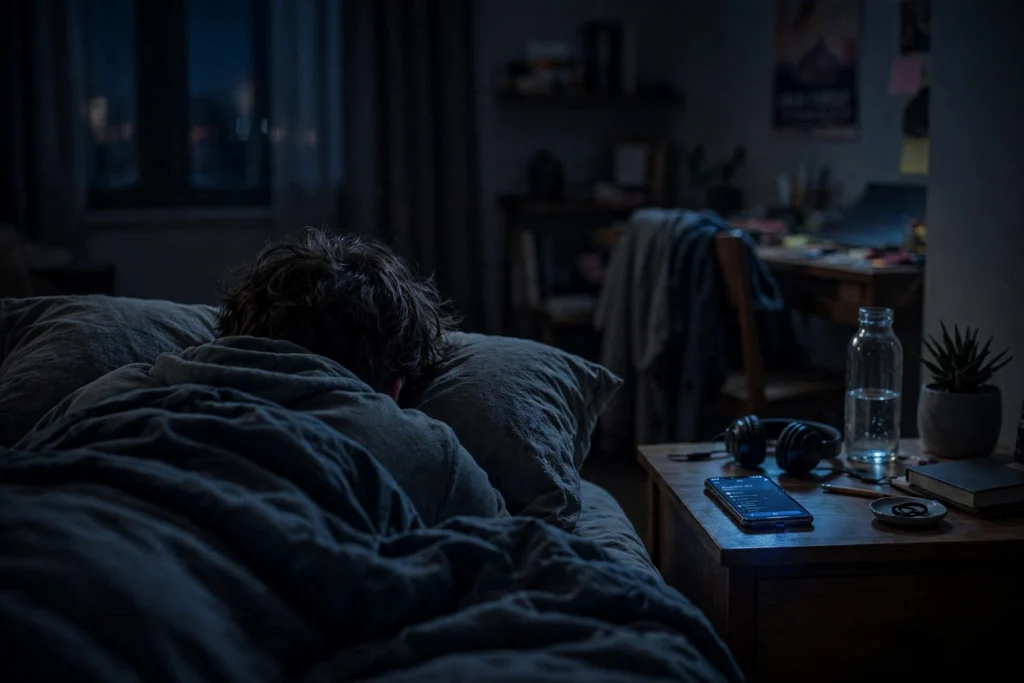
Teenagers who use their phones late into the evening are paying for it in sleep, according to a new study published in JAMA Pediatrics. Teens who used their phones longer than their own personal average after 10 p.m. slept an average of 20 minutes less per night and fell asleep more than an hour later — 64 minutes later, on average — than on nights when they used their phones less. They were also more likely to wake up again within half an hour of falling asleep, leaving their sleep more restless and broken.
The study, reported on October 21, 2026, is notable for its scale and its method. Researchers analyzed data from 425 teenagers with an average age of nearly 15, covering nearly 7,600 nights of sleep. Rather than comparing heavy phone users with light phone users — a comparison that can be distorted by all the other differences between those groups — the study compared each teenager with themselves: nights when a given teen used their phone more than usual after 10 p.m., against nights when that same teen used it less. That within-person design makes the findings harder to dismiss as a quirk of who the participants were.
The message the researchers draw is practical, not alarmist. “These findings suggest that reducing evening smartphone use, particularly after 10 p.m. and immediately before bedtime, may help improve sleep health in adolescents,” concluded the team led by Dr. Dimitri Christakis, a professor of general pediatrics at Seattle Children’s Research Institute. The study does not claim that phones are the only cause of poor teen sleep, nor that removing a phone guarantees good sleep. It shows something more specific and more useful: on the nights teens use their phones more after 10 p.m., their sleep gets measurably worse — and the more extra minutes, the worse it gets.
What the Study Measured
Understanding the study means understanding what it counted. The researchers drew on an ongoing study of adolescent brain development, tracking 425 participants over many nights. For each night, they recorded how long each teen used their phone after 10 p.m., and they measured sleep onset (how long it took to fall asleep), total sleep time, and whether the teen woke again shortly after falling asleep.
| Measure | Finding on higher-than-usual phone-use nights |
|---|---|
| Total sleep time | 20 minutes less, on average |
| Time to fall asleep | 64 minutes later, on average |
| Waking shortly after falling asleep | More likely within 30 minutes of sleep onset |
| Dose effect | Every extra minute past 10 p.m. above personal average added to later onset and shorter sleep |
| Participants | 425 teens, average age nearly 15 |
| Nights analyzed | Nearly 7,600 |
| Published | JAMA Pediatrics, October 19, 2026 |
Two features of the results deserve emphasis. The first is the size of the sleep-onset delay: 64 minutes is not a marginal difference. An hour of lying awake is, for a teenager who must wake for school, effectively an hour of sleep lost before the night has even begun — and it compounds with the 20 minutes of shorter total sleep. The second is the dose effect: the relationship was graded, not all-or-nothing. Each additional minute of phone use past 10 p.m., above a teen’s own average, was associated with later sleep onset and shorter sleep. That graded pattern strengthens the case that the phone use itself, rather than some unrelated factor, is driving the effect.
Why Late-Night Phone Use Disrupts Sleep
The study itself establishes the association; the explanations for it come from sleep science and from the clinicians who reviewed the findings. Dr. Daniel Bigman, a child and adolescent psychiatrist and sleep medicine physician at Northwell Health in New York City, who reviewed the findings, summarized the mechanism plainly: “In short, the study did show that it kind of pushes bedtime later, and it makes it harder to transition into a stable sleep.”
Several mechanisms likely work together. The simplest is displacement: any activity before bedtime takes time, and a phone gives a teenager a reason to stay up later than they otherwise would. “For one, any kind of activity before sleep time will displace your sleep. Teens can simply stay up later when they use their phones,” Bigman said. A second mechanism is arousal: social media, messaging, videos, and games are designed to hold attention and provoke emotional responses, which is the opposite of the wind-down the brain needs to transition into sleep. A third is light exposure, particularly in a dark bedroom, which can interfere with the body’s sleep signalling — though the study’s design cannot separate light from content and displacement, and all three probably contribute.
The waking finding adds another layer. Teens on high-use nights were more likely to wake within half an hour of falling asleep. That suggests the disruption is not only about falling asleep later, but about sleep that is less stable once it begins — the brain struggling to settle into the deeper, more restorative stages of sleep after a stimulating evening.
Why the 10 p.m. Cutoff Matters
The study’s focus on use after 10 p.m. is not arbitrary. For most teenagers, 10 p.m. marks the beginning of the wind-down window before a school-night bedtime. Phone use earlier in the evening, while not necessarily harmless, does not compete as directly with sleep onset. The researchers’ conclusion singles out use “particularly after 10 p.m. and immediately before bedtime” for exactly that reason: it is the timing, not just the total amount of phone use, that does the damage. A teenager who uses a phone heavily at 4 p.m. and puts it away by 9 p.m. is in a different position from one who uses it moderately all day but intensively from 10 p.m. until midnight.
How This Compares With Other Sleep Research
The JAMA Pediatrics findings sit alongside a growing body of research on sleep in the digital age — and the comparison is instructive, because not all screen findings point the same way.
| Study / finding | Population | Key result |
|---|---|---|
| Late-night phone use (JAMA Pediatrics, Oct 2026) | 425 teens, ~7,600 nights | After-10 p.m. use above personal average: 20 min less sleep, 64 min later onset |
| Personalized short-sleep framework (NUS, Oct 2026) | 462 working adults, Oura Ring data up to 1 year | Comparing sleep with a person’s own long-term pattern reveals shortfall that fixed cutoffs miss |
| Europe sleep-health threats (Journal of Sleep Research, Oct 2026) | Population-level review | Noise, light, heat, and working patterns are growing, interconnected pressures on sleep |
| Diet and sleep (Nature Health, 2026) | 3,598 adults, 4,793 person-nights | Higher fiber density associated with slightly more deep and REM sleep; association, not proof of treatment |
What the comparison shows is that teen phone use is one thread in a larger fabric. Adult research emphasizes personalized baselines — the NUS study found that judging sleep against a person’s own long-term pattern, rather than a universal cutoff, reveals shortfalls that fixed thresholds miss. The European review emphasizes environmental pressures: noise, artificial light, heat, and modern working patterns. Teen phone use after 10 p.m. is, in that light, the adolescent version of a general principle: sleep is sensitive to what happens in the hours before bed, whether that is a glowing screen, a hot bedroom, or a late shift.
It also shows what this study is not. It is not a claim that diet, exercise, or bedroom environment do not matter — they do, and the diet-sleep research above shows measurable associations of its own. It is a claim about one specific, modifiable behaviour with a specific time window. That specificity is what makes it actionable: families cannot easily change the climate or the school start time, but they can change where a phone charges at night.
Practical Steps: What Families Can Actually Do
The researchers’ conclusion points to a single, concrete change: reduce evening smartphone use, particularly after 10 p.m. and immediately before bedtime. Turning that into a household routine takes more than a rule; it takes a replacement for the habit. The steps below are general sleep-hygiene practices consistent with the study’s findings. They are not a substitute for professional advice, and persistent sleep problems — difficulty falling asleep most nights, loud snoring, daytime sleepiness that interferes with school — are worth discussing with a clinician.
1. Set a phone curfew, not just a bedtime
A bedtime without a phone curfew leaves the crucial window — the hour before sleep — unprotected. A 10 p.m. phone cutoff, aligned with the study’s threshold, gives the brain time to wind down before sleep is attempted. The cutoff works best when it applies to the whole household’s evening routine, not as a punishment aimed at one teenager.
2. Charge the phone outside the bedroom
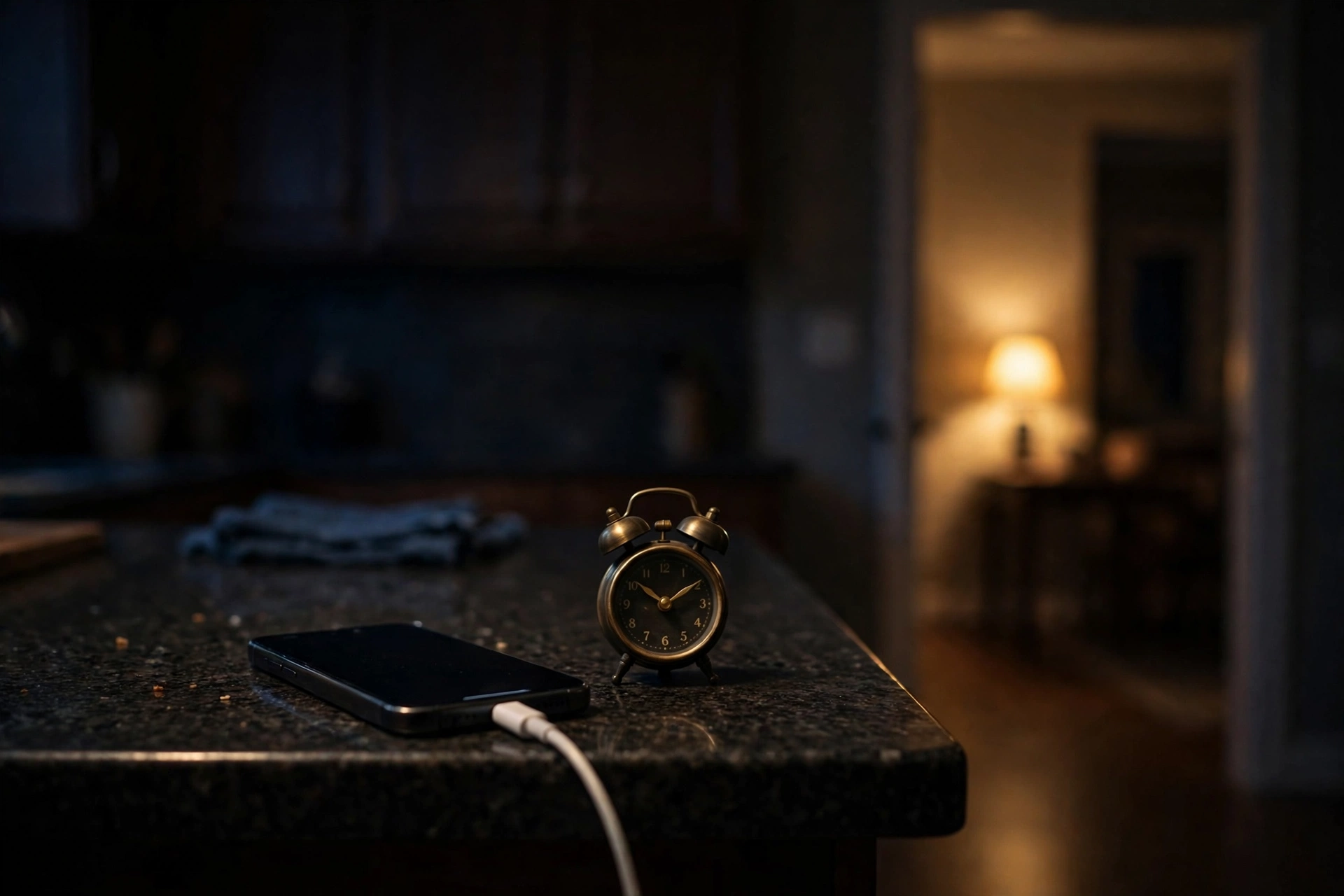
A phone charging on a nightstand is a phone within reach at 11 p.m., at midnight, and at 2 a.m. Charging it in a kitchen, hallway, or living room removes the decision from the moment of temptation. An inexpensive alarm clock replaces the phone’s most common bedroom function. This single change enforces the curfew without requiring willpower at the exact moment willpower is weakest.
3. Replace the scroll with a wind-down
Telling a teenager to “just stop” leaves a gap that boredom will fill with the phone again. Reading, stretching, listening to music or a podcast (with the screen off), or simply talking through the next day are wind-down activities that do not demand the same attention as a feed. The goal is not silence; it is a lower gear.
4. Use built-in tools — as a backstop, not a solution
Most phones offer bedtime modes, app timers, and grayscale or wind-down settings that dim and quiet the device after a set hour. These help, but they are easily overridden, and the study’s dose effect suggests that even a few extra minutes matter. Treat the tools as a reminder and a friction layer, not as a substitute for the phone being in another room.
5. Watch for the pattern, not a single bad night
One late night is normal. The study’s insight is about patterns: nights when phone use runs above a teen’s own average are the nights sleep suffers. If a teenager’s sleep is consistently short, or if they regularly take an hour to fall asleep, the pattern — not any one night — is the signal to act on, and to raise with a clinician if it persists.
What the Study Does Not Show
Honest reporting requires stating the limits. First, the study measures association within individuals over time, which is stronger than a simple comparison between groups, but it cannot prove that phone use alone caused every minute of lost sleep — other evening factors may travel with phone use. Second, the participants were teenagers in an ongoing brain-development study, with an average age of nearly 15; the exact numbers may not transfer precisely to younger children, older adolescents, or adults. Third, the study does not test interventions: it shows that less late-night use is associated with better sleep, but it does not test whether a specific curfew, app, or parental-control strategy produces that reduction in practice. Families should treat the 10 p.m. guidance as a well-supported starting point, not a guaranteed prescription.
None of those limits undermines the central finding. Across 7,600 nights, the pattern held: more phone after 10 p.m. than usual, worse sleep that night. For a behaviour that is entirely within a family’s control, that is a strong enough signal to act on.
Frequently Asked Questions
How much sleep do teens lose from late-night phone use?
In the JAMA Pediatrics study, teens slept an average of 20 minutes less on nights when they used their phones longer than their personal average after 10 p.m., and they fell asleep 64 minutes later on average.
Does any phone use before bed disrupt sleep, or only late use?
The study specifically measured use after 10 p.m., and its conclusion singles out use after 10 p.m. and immediately before bedtime. Earlier-evening use does not compete as directly with sleep onset, though total screen time and content still matter.
Is it the light, the content, or just staying up later?
Probably all three. Displacement (staying up later), arousal from stimulating content, and light exposure in a dark bedroom likely combine. The study’s design shows the overall effect of late-night use; it does not separate the individual mechanisms.
What is a realistic phone curfew for a teenager?
The study supports a cutoff around 10 p.m., with the phone charging outside the bedroom. The exact time should fit the teen’s school schedule and bedtime — the principle is a wind-down gap between last phone use and sleep, enforced by distance rather than willpower alone.
When should a family seek professional help for teen sleep problems?
If difficulty falling asleep, frequent night waking, loud snoring, or daytime sleepiness persists most nights despite consistent sleep habits, or interferes with school or mood, discuss it with a clinician. This article describes general sleep-hygiene information, not medical advice for any individual.
Study details in this article are from HealthDay reporting (October 21, 2026) on research published October 19, 2026 in JAMA Pediatrics, led by Dr. Dimitri Christakis of Seattle Children’s Research Institute, with review commentary from Dr. Daniel Bigman of Northwell Health. This article is general health information, not medical advice.