Every fall, millions of kids take the field for soccer, football, and baseball across the southern US — and many of those fields sit squarely in fire ant country. Imported fire ants infest more than 300 million acres across the Southeast and beyond, and the open, sunny, patchy turf of a sports field is ideal mound habitat. Fire ants on youth sports fields aren’t just a nuisance that ruins practice; for a small number of children, they’re a genuine medical emergency.
This guide is for parents and coaches: recognizing the risk, the tragedy that changed school policy, spotting mounds before play, sideline first-aid essentials, and what leagues owe players.
Why Sports Fields Attract Fire Ants
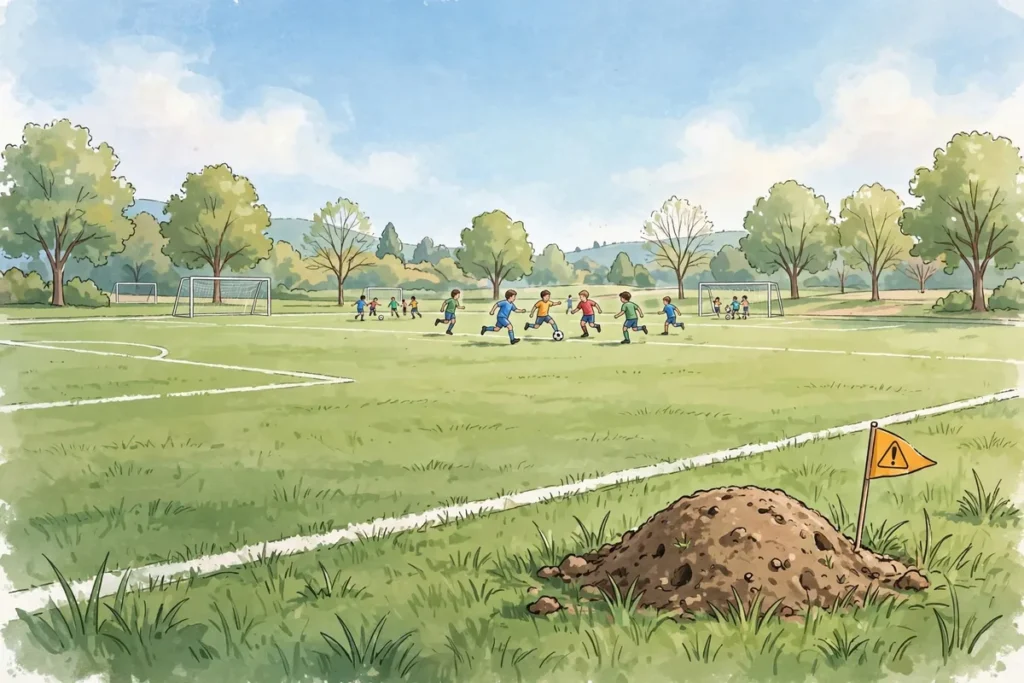
Fire ants (Solenopsis invicta) thrive in disturbed, sunny, open ground — a description fitting a youth sports field almost perfectly. Mounds favor sparse grass: the worn patch in front of the soccer goal, the infield edge, thin turf along sidelines and under bleachers. Irrigation keeps soil workable, and long grass at field edges provides cover. To a colony, a sports complex is prime real estate.
Mounds are the visible part of a far larger underground colony. A fresh mound looks like a loose soil pile, often a foot across, with no obvious entrance hole. After rain, mounds rebuild quickly and show clearly; in dry spells they flatten and hide — a field that looked clear in August can conceal active colonies in September.
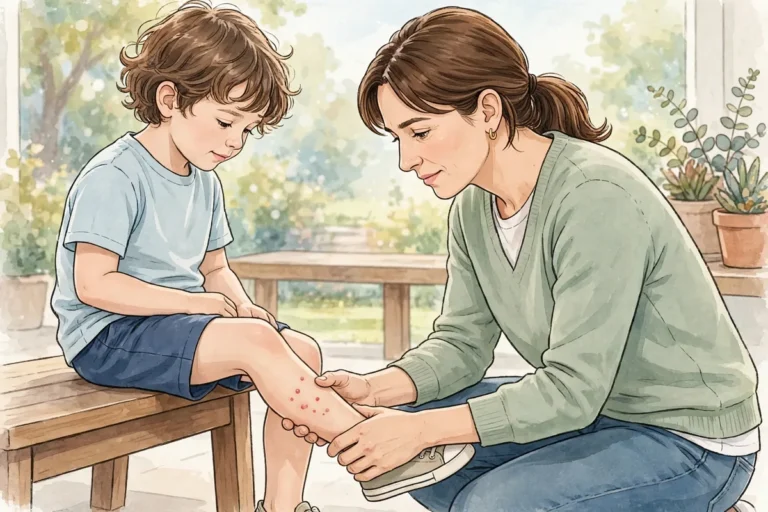
Fire ants are aggressive defenders. Disturb a mound and workers swarm within seconds, each ant gripping skin with its jaws and stinging repeatedly — the characteristic burning followed by white pustules. A child stepping on a mound can take dozens of stings before getting clear. Never pop those blisters — our fire ant pustule guide explains why.
Keep risk in proportion: most encounters produce painful but self-limited local reactions. The field danger comes from combining large sting numbers with the small fraction of children with venom allergy — demanding planning, not avoiding outdoor sports.
The Texas Tragedy That Changed School Policy
In September 2013, Cameron Espinosa, a 12-year-old eighth-grader at Paul R. Haas Middle School in Corpus Christi, Texas, was warming up at halftime of a middle school football game when he stepped into fire ants on the field. He suffered anaphylaxis — a severe allergic reaction — to the stings. Despite on-field efforts including a defibrillator, he lost consciousness, was hospitalized in critical condition, and died on September 16. He had no known allergy history, and the school had no allergy record for him.
What emerged explains why this case changed policy far beyond one district: the middle school field itself was later described as covered with ants, middle school games had no assigned medics (unlike Texas varsity games), and his mother said publicly that a sideline epinephrine auto-injector might have saved his life.
The response was significant: the district moved middle school games to better-maintained fields, added emergency procedures, and committed to stocking epinephrine auto-injectors. Federally, Cameron’s death helped propel the School Access to Emergency Epinephrine Act (signed late 2013), encouraging US schools to stock undesignated epinephrine and train staff — because a child can suffer a life-threatening first reaction with no prior warning.
Every recommendation below — mound checks, the sideline kit, the emergency plan — traces to lessons from that afternoon in Texas.
Teaching Kids to Spot Mounds Before Play
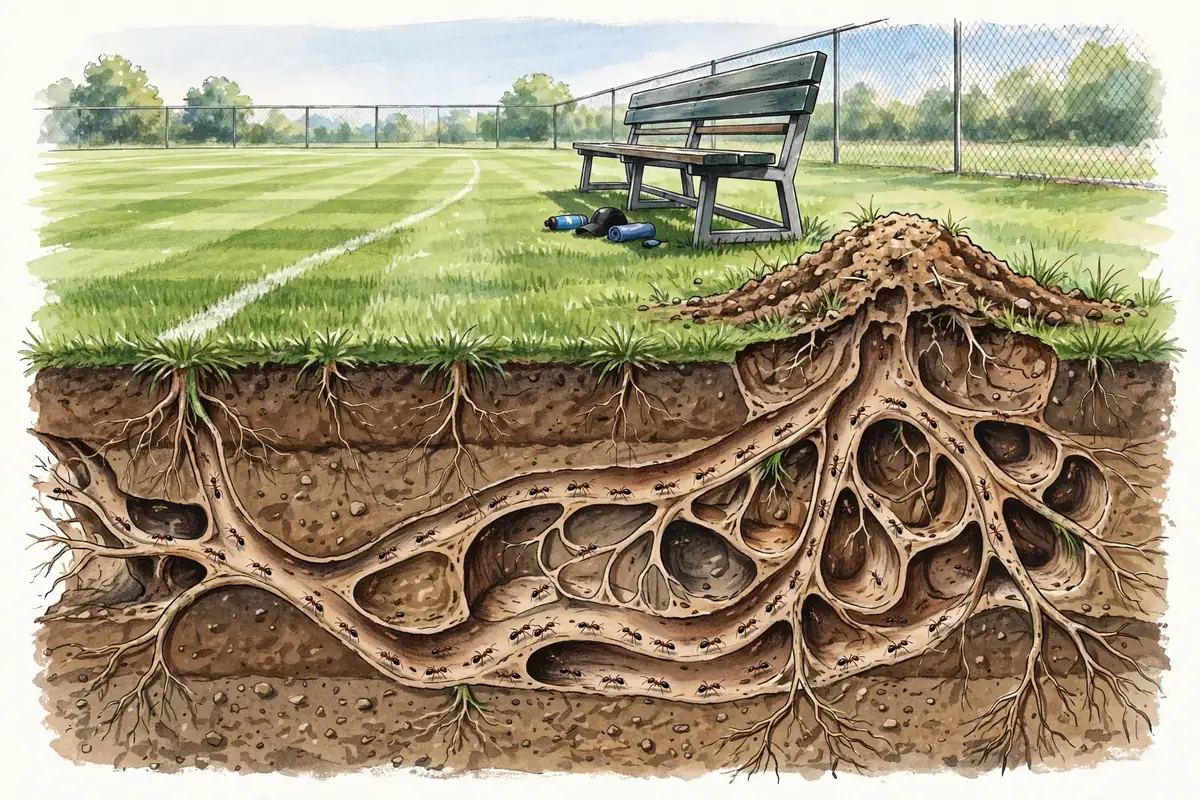
Make mound awareness part of the pre-game routine. Before practices and games, walk the surface and sidelines looking for mounds — and invite kids to help. A five-minute “mound hunt” teaches what to look for: loose, grainy soil piles without grass, often near field edges, goal mouths, and worn patches.
Teach three rules. First: mounds aren’t for kicking — even poking one can trigger a swarm; look, don’t touch, tell a coach. Second: if ants are on you, brush, don’t slap — brisk rubbing flings off jaw-gripping ants fastest, then move away quickly. Third: report any sting immediately — a stung child needs watching, and one mound means others nearby.
Shake out cleats before putting them on — ants wander into gear bags left on grass — and avoid planting cleats beside suspicious mounds during huddles. Keep gear bags on benches or tarps, not directly on grass.
For under-8 players who sit in grass and investigate everything, sideline supervision matters most: keep seating areas mound-free with a quick sideline sweep at every practice.
What Coaches Should Have on the Sideline
Cameron’s story made one point painfully clear: the sideline must be ready for an allergic emergency, not just sprains. Every youth team in fire ant territory should carry a sting-response kit and an emergency plan, and every coach should know both.
Kit basics: cold pack or zip-top bag for ice, age-appropriate oral antihistamine (confirm with parents preseason), hydrocortisone cream, bandages, tweezers, clean towels, bottled water, and a printed card with each player’s allergy info and parent emergency contacts. Same bag every game so it’s never forgotten.
The critical question is epinephrine. Children with known venom allergies must have their prescribed auto-injector at every practice and game — no exceptions. But Cameron’s case exposed the gap: a child with no known allergy can still suffer anaphylaxis. That’s why undesignated (stock) epinephrine matters, and federal law encourages it. Ask your school or league: do we have stock epinephrine at games, who is trained, and what’s our emergency plan? If not, that’s the offseason project — training takes an hour.
Write and share the emergency plan: who calls 911, who grabs the kit, who meets the ambulance, where the nearest hospital is. Rehearse once at season’s start. Keep a charged phone handy — rural fields have dead zones, so identify the nearest reliable signal point beforehand.
First Aid After a Fire Ant Attack on the Field

When a child is stung, speed and calm matter more than perfection. Move the child away from the mound area first — staying near the colony invites more stings. Remove the ants by brisk rubbing with a hand, towel, or shirt; because fire ants latch on with their jaws, flicking individuals is too slow when dozens are attached. Check shoes, socks, and waistbands, where ants hide and keep stinging.
Rinse stung skin with clean water, then apply a cold pack wrapped in cloth for ten minutes at a time. An age-appropriate antihistamine can help itching (per preseason parent forms); hydrocortisone cream soothes sites over following days.
Within about 24 hours, stings typically develop into small white pustules — the classic fire ant signature, and normal. Don’t pop or squeeze them; broken pustules invite infection and scarring. They dry up and resolve on their own within about a week. Our detailed pustule care guide covers the full aftercare timeline.
Throughout, watch for signs turning a painful incident into an emergency: difficulty breathing, throat tightness, lip or face swelling, dizziness, vomiting, or widespread hives. These can appear within minutes or be delayed. If any appear, call 911 immediately and use epinephrine if available — auto-injector first, then the call. Even after symptoms improve, the child needs emergency department evaluation, because anaphylaxis can rebound hours later.
Document the incident: estimated sting count, body locations, time, what was given, and the child’s response. Give the record to parents and keep a league copy. After any systemic allergic symptoms, parents should follow up with their pediatrician about venom allergy testing and an emergency action plan — a first reaction often warns that the next could be worse.
What Leagues and Schools Should Do About Mounds
Individual vigilance matters, but the structural fix is field management — squarely the league’s and school’s responsibility. A field with twenty visible mounds, as in the Texas case, is a facility failure, not bad luck.
Start with scheduled inspections: walk fields before the season, monthly during it, and after heavy rains. Cover playing surfaces, sidelines, bleachers, dugouts, and gear-bag areas. Log findings and treat them — an inspection nobody acts on is theater.
Use integrated pest management with a licensed professional: broadcast fire ant baits across grounds in spring and fall (many programs apply baits twice yearly), plus individual mound treatments for breakthroughs. Baits need lead time before the season — not a panicked application the week games begin. Tell families what’s being applied around their children.
Field maintenance helps too: dense, healthy turf leaves less bare soil for colonization, and prompt repair of worn patches removes the exact spots mounds favor. Give deliberate attention to edge areas, fence lines, and ground under bleachers — the zones nobody mows carefully.
Put emergency infrastructure in writing: a league-wide stock-epinephrine policy, coach training requirements, and incident reporting so a sting event at one field triggers inspections at all fields. Parents have every right to ask about these policies — and after Texas, “we never thought about it” is no longer acceptable.
When to See a Doctor for a Sting

Fire ant stings range from routine to life-threatening; these are the thresholds.
- Call 911 immediately for anaphylaxis signs: trouble breathing, throat tightness or swelling, dizziness, fainting, vomiting, or widespread hives after stings. Give epinephrine first if available. Learn the anaphylaxis warning signs before the season.
- Seek emergency care for a child stung many times (dozens of stings), even without allergy symptoms — large venom loads can cause systemic effects.
- See a clinician promptly for infection signs: expanding redness, increasing pain after 24 hours, pus beyond the normal sterile pustules, red streaks, or fever.
- Follow up with a pediatrician or allergist after any systemic allergic symptoms, even mild — venom allergy testing and an emergency action plan with a prescribed auto-injector are the standard next steps.
Frequently Asked Questions
What do fire ant stings look like on kids?
Initially small red bumps with intense burning or itching. Within about a day, they typically become white, pus-filled pustules — the hallmark of fire ant stings. The pustules are usually sterile and resolve on their own in about a week if left alone. Don’t pop them.
Can a child be allergic to fire ants without knowing it?
Yes. As the Texas tragedy showed, a life-threatening first reaction can occur with no prior allergy history. Any systemic symptoms after stings — breathing difficulty, throat tightness, dizziness, widespread hives — should be treated as an emergency, with allergist follow-up afterward.
Should our league cancel games if we find fire ant mounds?
Not necessarily — but play shouldn’t continue on an infested field. Mark and avoid the area for that day’s activities, treat the mounds, and resume full use once treatment has taken effect. A field with widespread mounds needs professional treatment and should sit out until safe.
Do fire ant mounds go away in winter?
Colonies retreat deeper in cold weather and mounds may flatten, but the ants remain. In southern states, colonies survive winters readily and rebuild mounds quickly in spring. Offseason is actually ideal for broadcast bait treatments.
What should I tell my child’s coach about sting allergies?
Before the season, provide written documentation of any known allergy, supply a current epinephrine auto-injector with usage instructions, confirm the coach knows where it’s kept during games, and file emergency contacts. Also ask about the league’s stock epinephrine policy and coach first-aid training.
Medically reviewed by Dr. Sarah Jones, MD.
This article is for informational purposes only and isn’t medical advice. If you’re worried about a bite or sting, talk to a healthcare professional.