
Tawny Crazy Ant vs Fire Ant: Sting and ID Guide
If you live along the Gulf Coast, your yard may be hosting a quiet turf war. Fire ants built the mounds you have dodged…
# What Is Biting Me in Bed If Not Bed Bugs? A 48-Hour Detective Guide You have checked the mattress seams, looked behind the headboard, and found no bed bugs,…

# What Is Biting Me in Bed If Not Bed Bugs? A 48-Hour Detective Guide
You have checked the mattress seams, looked behind the headboard, and found no bed bugs, yet you are still waking up with itchy marks. That frustrating gap between “no bed bugs found” and “something is still biting me” is exactly where this guide works. The direct answer is this: several other culprits can leave marks in bed, and several skin conditions can look like bites even when no insect is involved. The fastest way to tell them apart is not another round of frantic searching at midnight. It is a calm, 48-hour detective routine that tracks where the marks appear, when they show up, who else is affected, and what has recently changed in your home.
This guide is written for the reader who has already ruled bed bugs out as best they can. If you have not yet done a careful bed bug check, start there, because bed bugs remain one of the most common causes of nighttime bites. A careful check includes mattress seams, the joints of the bed frame, behind the headboard, and nearby furniture. If you want a refresher on timing, our guide on how long bed bug bites take to appear explains why marks sometimes show up hours after the bite itself. Once you have checked and found nothing convincing, use the checklist below before you buy sprays, throw out furniture, or assume the worst.
A note on language matters here. This article talks about possibilities, not diagnoses. Bite marks alone rarely prove a culprit. Many insects leave similar marks, and many skin conditions mimic bites. The goal of the next 48 hours is to gather clues good enough to narrow the list, decide what to do tonight, and know when a clinician, a pest professional, or both should take over.
It is tempting to jump from one itchy mark to a single explanation. Resist that jump for two days. A single mark tells you very little. A pattern across two nights tells you much more. That is why this guide is built around 48 hours rather than a single morning. Two nights of notes can reveal whether marks appear only after you sleep in one room, only on exposed skin, only on one person, or only after a specific event such as letting a pet sleep on the bed.
Keep your notes simple. You do not need a spreadsheet or a special app. A phone note with the date, the time you noticed each mark, where it is on your body, and anything unusual about the previous day will do. Take a photo of any new marks in daylight, if you are comfortable doing so, so you can compare them over time rather than relying on memory. Memory tends to exaggerate itching at night and forget details by morning.
During these 48 hours, change only one variable at a time where you can. If you wash all the bedding, move rooms, apply a new cream, and start a new laundry detergent on the same night, you will never know which change helped. Change bedding first, because that is easy and often informative. Then watch what happens on the next night before you change something else.
Work through this checklist in order. Each step narrows the list of suspects. By the end of day two, you should have a short list, often just one or two likely culprits, plus a clear next step.
Location is one of the strongest clues you have. Before you look for insects, look at your own skin, and be specific.
Fleas often favor the ankles and lower legs, because they jump from the floor or from low furniture onto the nearest skin. If your marks cluster around the ankles, the tops of the feet, and the lower legs, and you have a pet or have recently visited a home with pets, fleas move to the top of the list. Marks higher on the body, such as the waistline, the neck, or the arms, point elsewhere.
Mosquitoes and no-see-ums tend to bite exposed skin: arms, legs, the face, and the neck. If you sleep with an arm outside the covers, or near a window, and the marks sit on skin that was uncovered, a flying insect slipping through a screen or an open door becomes more likely. No-see-ums are tiny enough to pass through some standard window screens, which is why a room can feel sealed and still produce bites.
Bird mites and rodent mites often cause intense itching and can appear almost anywhere on the body, including areas that were covered by bedding. Their pattern is less about one body part and more about timing and recent events, which the next steps cover. Carpet beetle larvae do not bite at all, but their shed hairs can irritate skin that has been in contact with infested bedding, carpets, or stored clothing, so marks may appear where fabric pressed against the skin for hours.
Write down the location of each mark in plain words: left ankle, right forearm, waistband line, back of the neck. After two nights, read the list back. A repeated location is a clue. A scattered, changing pattern is also a clue, and it often points away from a single insect and toward irritation or a skin condition.
Timing separates insects from irritation more reliably than appearance alone. Ask yourself three timing questions.
First, do new marks appear overnight, or do they show up during the day as well? Marks that appear only after a night in bed point toward something in or near the bed. Marks that also appear while you are awake, dressed, and away from the bedroom point toward something broader, such as a skin condition, an irritant in clothing, or an insect you encounter elsewhere.
Second, do marks appear quickly or with a delay? Some people react within hours, while others notice marks a day or more after exposure. That delay is one reason a single morning check can mislead you. A mark you notice on Tuesday morning may relate to Monday night, or to something earlier. Tracking across 48 hours smooths out that uncertainty.
Third, does the itching follow a rhythm? Fleas often bite repeatedly in one area, and people notice new marks after sitting or lying in the same spot. Bird mite problems often begin suddenly after a specific event, such as a nest being abandoned or removed, and then continue nightly until the source is addressed. Mosquito activity often tracks with warm evenings, open windows, and time spent near standing water. If your notes show a sudden start tied to one event, that event deserves more attention than any single mark.
This step is often skipped, and it is one of the most informative. Ask everyone who shares the bed or the bedroom whether they have marks too, and ask housemates in other rooms as well.
If only one person is affected, several explanations remain open. People react differently to the same insect: one person may develop visible, itchy marks while another shows nothing at all. A skin condition or an irritant that touches only one person’s bedding, clothing, or skin care products can also explain a one-person pattern. Do not rule out an insect just because your partner has no marks.
If several people in the same room are affected, an environmental cause in that room becomes more likely. That could be an insect, or it could be shared bedding, a shared laundry product, or dust and fibers in the room. If people in different rooms are affected, look for a cause that moves through the house, such as a pet carrying fleas from room to room, or a shared laundry routine.
Pets deserve a note here too. If a dog or cat is scratching more than usual, has visible irritation, or has recently spent time outdoors or around other animals, that supports a flea lead. You do not need to examine your pet in detail yourself; a veterinarian can check and advise on safe treatment. Never use a product meant for one species on another, and never apply a household insecticide to a pet.
Most mystery bite cases have a trigger event hiding in the last week or two. Walk through this list slowly.
Has a pet joined the household, visited, or started sleeping on the bed? Has anyone in the home visited a place with animals, such as a shelter, a farm, or a friend’s home with pets? Have you brought home secondhand furniture, a used mattress, or stored clothing or bedding? Has a bird nest been removed from a vent, an eave, or a chimney, or have birds stopped visiting a nest near the house? Have you heard scratching in the walls or ceiling, or found signs of rodents? Has anyone in the home started a new laundry detergent, fabric softener, body lotion, or sleepwear fabric? Have you changed bedding, moved to a different room, or returned from travel?
Each “yes” points somewhere. A new pet points toward fleas. A removed or abandoned bird nest points toward bird mites. Signs of rodents, or rodents dying in wall voids, point toward rodent mites. A new detergent points toward irritation rather than bites. A recent trip points toward insects picked up elsewhere, including bed bugs from travel, which is why a careful recheck after travel still matters even if your first check found nothing.
Write down every recent change, even ones that seem unrelated. The trigger is often the detail you almost skip.
After two nights of notes, do one focused inspection rather than repeated midnight searches. Check mattress seams and the bed frame joints with a flashlight. Look behind the headboard and under the bed. Check pet bedding and any rugs near the bed. Look at window screens for gaps or tears, and check whether windows close fully. If you suspect bird mites, look for old nests near vents, eaves, and chimneys, but do not disturb a nest or enter a roof space yourself if you are unsure; a pest professional can inspect safely.
What you find matters, but what you do not find also matters. Finding tiny jumping insects near a pet’s bedding supports a flea lead. Finding nothing at all after a careful check, combined with marks that appear during the day as well as at night, supports a non-insect lead. Either result moves you forward. An inspection that finds nothing is not a failure; it is a clue.

Use this table after you have completed the checklist. Find the row that best matches your notes, and treat it as a lead to test, not a final answer.
| Suspect | Where marks often appear | Timing and trigger clues | What to look for |
|---|---|---|---|
| Fleas | Ankles, lower legs, feet, sometimes waistline | Worse after time on rugs or with pets; new pet or pet visiting other animals | Pet scratching, tiny dark specks in pet bedding or on rugs |
| Bird mites | Anywhere, often intense itching, including covered skin | Sudden start after a bird nest is abandoned or removed near the home | Old nest near a vent, eave, or chimney; marks continuing nightly |
| Rodent mites | Anywhere, often intense itching | Follows rodent activity, or rodents dying in wall voids | Scratching sounds in walls, signs of rodents, recent rodent control |
| Mosquitoes | Exposed skin: arms, legs, face, neck | Warm evenings, open windows, time outdoors or near standing water | Gaps or tears in window screens, standing water nearby |
| No-see-ums | Exposed skin, often in clusters | Evenings near screens, doors, or outdoor areas; can pass through some standard screens | Tiny insects near screens at dusk, marks after time near a doorway or window |
| Carpet beetle larvae | Skin that pressed against bedding, carpets, or stored clothing | Gradual onset, often tied to stored items or seldom cleaned areas | Shed skins or larvae in stored wool, carpets, or under furniture; irritation rather than distinct bites |
| Not a bite at all | Varies, often where skin is dry, irritated, or in contact with a product | Follows a new product, fabric, or skin flare; marks appear day and night | No insect found, pattern tied to a product or skin condition, marks that do not behave like bites |
If two rows fit, that is normal. Keep both leads open and use the “what to do tonight” and “what to do this week” sections below to test them one at a time.
Fleas are a strong lead when marks cluster on the ankles and lower legs and a pet is part of the picture. Adult fleas live on animals and lay eggs that fall into carpets, rugs, and pet bedding. From there, new fleas jump onto the nearest warm body, which is often a person’s lower legs as they walk across a room or lie near the edge of a bed.
If fleas are your lead, the pet is part of the solution, not an afterthought. A veterinarian can recommend safe flea treatment for the animal and advise on washing pet bedding and vacuuming rugs and floors. Wash bedding on a hot cycle where the fabric allows, vacuum thoroughly including under the bed and along baseboards, and empty the vacuum promptly. Avoid foggers and heavy indoor sprays as a first step; they often miss the places fleas actually live and can create more problems than they solve. If the problem persists, a pest professional can advise on targeted treatment.
To tell fleas from bed bugs, look at the pattern and the context. Bed bug marks often appear on skin exposed during sleep, such as the arms, neck, and face, and are tied to the bed itself. Flea marks favor the lower legs and are tied to floors, rugs, and pets. If you want a side-by-side comparison, our guide on bed bug bites versus flea bites walks through the differences in plain language.
Bird mites and rodent mites are easy to miss because the trigger is often something you cannot see. Bird mites normally feed on birds. When young birds leave a nest, or a nest is removed, mites left behind may wander indoors looking for a new host and bite people instead. Rodent mites behave in a similar way: when rodents die in wall voids, or rodent activity changes, mites may move into living spaces.
The hallmark clue is timing. A sudden, intensely itchy problem that begins shortly after a nest is abandoned, a nest is removed, or rodent activity changes deserves serious attention as a mite lead. The itching can feel out of proportion to what you can see, and the marks may not look like classic bites at all.
Do not try to solve a mite problem by spraying bedrooms repeatedly. The source is usually the nest site or the rodent harborage, not the mattress. A pest professional can locate and remove the source safely, including old nesting material, and advise on sealing entry points such as vents and gaps around eaves. Until the source is addressed, nightly marks often continue even if bedding is washed daily. That persistence is itself a clue: if clean bedding changes nothing, the source is probably not the bedding.
Mosquitoes are the most familiar nighttime biter, and they are easy to underestimate indoors. A single mosquito in a bedroom can bite repeatedly over several nights. Check for gaps around window frames, tears in screens, and doors left ajar on warm evenings. Standing water near the home, such as in trays, gutters, or containers, supports mosquito activity nearby, and reducing it helps over time.
No-see-ums deserve their own mention because they defeat the usual “but the windows were closed” defense. These tiny biting midges can pass through some standard window screens, especially in coastal or marshy areas and during warm, humid evenings. If your marks appear on exposed skin after evenings near a screen, a doorway, or a porch, and your screens look intact, no-see-ums are a reasonable lead. Finer mesh screens, keeping windows closed during peak evening hours, and using a fan can help, because these small insects are weak fliers. For care after bites, our guide on no-see-um bite treatment covers soothing steps and warning signs.
Carpet beetle larvae deserve a special warning because they break the “bite” assumption entirely. The larvae do not bite people. Their shed hairs, however, can irritate skin, especially skin that has been in prolonged contact with infested bedding, carpets, rugs, or stored clothing. The result can look like a rash or a scattering of itchy bumps, often where fabric pressed against the skin.
The clue is often the item, not the insect. Marks that follow use of a particular blanket, a stored sweater, or a seldom cleaned rug, and that improve when the item is removed, point toward irritation from fibers or shed hairs. Laundering the item on a hot cycle where the fabric allows, vacuuming carpets and under furniture, and cleaning stored items before use often help. If you find shed skins or small larvae in stored natural fibers such as wool, that supports the lead. A pest professional can advise if the problem is widespread.
Not every case fits the main table. Chiggers bite outdoors, often around the waistband, sock lines, and other tight clothing edges, and marks may appear after time in grass or brush rather than in bed. If your marks followed outdoor activity and sit along clothing lines, consider whether the bites happened outside and were only noticed in bed, and describe that timeline to a clinician or pest professional if you seek advice. Spiders bite rarely, and a single painful mark is a different pattern from nightly clusters. If a mark is severely painful, rapidly swelling, or shows spreading redness, skip the detective work and seek care promptly, as described below.
This branch is the one people resist most, and it is often the most helpful. Several common conditions look like bites, feel like bites, and appear in bed, yet involve no insect at all. Considering them is not dismissing your symptoms. It is widening the search so you do not spend weeks chasing an insect that is not there.
Hives can appear as raised, itchy welts that come and go within hours, sometimes in response to a food, a medication, heat, pressure from bedding, or an unknown trigger. Folliculitis, an irritation or infection of hair follicles, can look like a scattering of small red bumps, sometimes where clothing rubs or after shaving. Eczema can flare as itchy, rough, or cracked patches, often worse at night when skin is dry and warm under covers. Contact irritation from a new laundry detergent, fabric softener, scented lotion, or a new fabric can produce itching exactly where the product touched the skin. Dry skin alone, especially in heated or air-conditioned rooms, can itch intensely enough to feel like bites, and scratching then creates marks that look like bites.
A simple test helps here. If marks appear during the day as well as at night, if they follow a new product, if they sit where a waistband or a new fabric presses, or if no insect has been found after a careful check, try removing the most recent product change for several days. Switch back to a fragrance-free detergent you have used before, pause a new lotion, or set aside a new blanket. If the pattern improves, you have learned something valuable even if you never identify a single cause. Keep a note of what you changed, so a clinician can see the timeline if you seek care.
Skin conditions also change over time. A flare that comes and goes, moves location, or responds to moisturizer and gentle skin care behaves differently from nightly insect bites. That difference matters, and it is worth describing to a clinician in those terms: when it started, what makes it worse, what makes it better, and what you have already tried.
Tonight is about comfort and one clean test. This week is about fixing the source. Keep the two apart so tonight’s relief does not hide this week’s clue.
Wash your bedding on a hot cycle where the fabric allows, and put on clean sleepwear. Vacuum the bedroom floor, under the bed, and along baseboards. Check window screens for obvious gaps and close windows during peak evening hours if mosquitoes or no-see-ums are a lead. Keep pets off the bed for tonight if fleas are a lead, and wash pet bedding if you can. Avoid scratching as much as you can, because scratching breaks the skin and can lead to infection; keep nails short and cover very itchy areas with clean clothing if that helps. A cool compress, a fragrance-free moisturizer, or an over-the-counter product you have used safely before may soothe itching, but avoid new creams tonight if irritation is on your list of leads. Note anything you change, so tomorrow’s notes stay meaningful.
Work through your short list one lead at a time. If fleas lead, arrange veterinary advice for the pet and a thorough vacuum and laundry routine. If mites lead, arrange a professional inspection for nests or rodent harborage, and do not disturb nests or roof spaces yourself. If mosquitoes or no-see-ums lead, repair screens, consider finer mesh, reduce standing water near the home, and use a fan in the bedroom. If carpet beetle irritation leads, launder suspect items, vacuum stored areas, and clean under furniture. If irritation or a skin condition leads, remove the newest product, use gentle fragrance-free skin care, and track whether the pattern improves over several days.
Avoid the common traps this week. Do not throw out a mattress or furniture before you have a lead that points to it. Do not spray bedrooms repeatedly with household insecticides, especially if no insect has been identified; sprays can irritate skin and lungs and rarely solve a mite or irritation problem. Do not use a product meant for pets on people, or a product meant for outdoor use indoors, without reading the label and, when in doubt, asking a professional. Do not start a new medication, cream, or supplement for itching without checking with a clinician or pharmacist, especially if you take other medications.
Once you have a lead, prevention becomes straightforward. This table summarizes the highest value step for each culprit, so you can act on your lead without overhauling your whole home.
| Culprit | Best prevention step |
|---|---|
| Fleas | Regular veterinary flea prevention for pets, plus routine vacuuming and washing of pet bedding |
| Bird mites | Professional removal of old nests and sealing of vents and gaps where birds enter |
| Rodent mites | Rodent exclusion and professional removal of harborage, rather than bedroom sprays |
| Mosquitoes | Intact screens, closed windows on warm evenings, and no standing water near the home |
| No-see-ums | Finer mesh screens, closed windows during peak evening hours, and a fan in the bedroom |
| Carpet beetle larvae | Regular vacuuming, laundering of stored items before use, and cleaning under furniture |
| Irritation or skin condition | Fragrance-free laundry and skin care, gentle moisturizing, and pausing new products one at a time |
Prevention works best when it matches the culprit. A screen repair will not help a mite problem, and a new detergent will not help a flea problem. That is why the 48-hour checklist comes first: it tells you which prevention step is worth your time.

Most bite-like marks settle with time, gentle skin care, and removal of the cause. Some situations need prompt medical care, and a few need emergency care. Do not wait out the warning signs below.
Call 911 or seek emergency care right away if you have trouble breathing, swelling of the lips, tongue, or face, throat tightness, wheezing, dizziness, fainting, or a feeling that something is seriously wrong after a bite or a new skin reaction. These can be signs of a severe allergic reaction, and emergency treatment cannot wait for a morning appointment. If you have an epinephrine auto-injector and have been trained to use it, use it as directed and still seek emergency care, because symptoms can return.
Seek same-day or urgent care if a mark becomes rapidly more painful, shows spreading redness, feels hot, develops pus, or is accompanied by fever, or if red streaks spread from the area. These can be signs of infection, and scratched skin is a common entry point. Also seek care promptly if marks blister widely, bleed persistently, or do not improve at all after the suspected cause has been removed, or if you have a weakened immune system, diabetes, poor circulation, or another condition that makes skin infection more likely.
Book a routine clinician visit if marks keep appearing for more than a week or two without a clear cause, if itching is disturbing your sleep night after night, or if you suspect a skin condition such as eczema, hives, or folliculitis. Bring your 48-hour notes, photos if you have them, and a list of products you have started or stopped. That timeline helps a clinician far more than a description of a single mark. A clinician may examine the skin, ask about exposures, consider a skin condition, or refer you to a dermatologist or an allergist when needed. If you are unsure whether a mark is healing normally, our guide on how to tell if a bug bite is healing explains the signs to watch for.
Yes, it can. No-see-ums are tiny enough to be hard to spot, and mites are smaller still. Fleas are visible but move quickly and spend much of their time in carpets and pet bedding rather than on the bed. Not seeing an insect does not rule one out, but it does mean you should rely on patterns, timing, and triggers rather than on a single sighting. A careful inspection plus two nights of notes is more reliable than repeated searching alone.
People react differently to the same exposure. One person may develop visible, itchy marks while another shows little or nothing. Differences in skin sensitivity, immune response, body heat, and which skin was exposed all play a role. A one-person pattern does not prove there is no insect, and it does not prove a skin condition either. Track both people’s notes for two nights before drawing a conclusion.
If you have a clear lead, such as a pet with fleas or a nest site near the home, calling sooner is reasonable, because the source often needs professional handling. If you have no lead after 48 hours of careful notes and one proper inspection, that is also a good time to seek advice, either from a pest professional, a clinician, or both, depending on what your notes suggest. Waiting weeks while marks continue nightly rarely helps, and early advice can prevent a small problem from becoming a large one.
Yes, it can. Fragrance, dyes, and other ingredients in detergents, softeners, and scented products can irritate skin, especially skin that stays in contact with freshly laundered bedding all night. The result can be itchy bumps or a rash that looks like bites. If the pattern began after a product change, try returning to a fragrance-free product you have used before for several nights and see whether the pattern improves. Keep a note of the change so you can describe it to a clinician if needed.
That outcome is more common than people expect, and it does not mean you imagined anything. Some culprits leave no clear trace, some skin reactions have no single trigger, and some problems resolve on their own as seasons, products, or exposures change. Keep your notes, keep removing one likely cause at a time, and if no source is ever found, talk to your doctor, because some skin and nerve conditions can feel like bites and deserve a clinician’s assessment. You deserve an answer, and a clinician can examine what notes alone cannot show.
Usually not. Throwing out a mattress is costly, disruptive, and rarely solves a problem whose lead points elsewhere, such as fleas, mites, screens, or irritation. A careful inspection that finds no bed bug evidence, combined with a pattern that points to another culprit, argues against discarding the mattress. If you remain concerned about bed bugs, a professional inspection is a better step than disposal, because a professional can check places that are hard to reach and advise on whether treatment is needed.
You started this guide frustrated, and that frustration makes sense. Waking up itchy, night after night, without an explanation wears down sleep and patience alike. The detective approach does not promise an instant answer, but it does promise a better one: two nights of careful notes, one proper inspection, and a short list of leads you can test one at a time. That is how many mystery bite cases are narrowed down, not by a single dramatic discovery, but by a pattern that finally becomes clear.
Start tonight with clean bedding, a short note about where the marks are and when they appeared, and one change only. Tomorrow night, do the same. By the second morning, you will know more than you do now, and you will have something concrete to show a pest professional or a clinician if you need one. That is real progress, even if the culprit has not yet shown itself.
This content is medically reviewed by Dr. Sarah Jones, MD.
Medical disclaimer: This article is for general information only and is not medical advice. It does not diagnose, treat, or replace professional care. Bite-like marks can have many causes, and only a clinician who examines you can assess your situation. If you have severe symptoms, a rapidly worsening mark, signs of infection, or trouble breathing or swelling after a bite, seek emergency or urgent care right away. If symptoms persist, worsen, or remain unexplained, talk to your doctor or another qualified health professional.
Dr. Jones oversees StingHelp’s clinical verification process. Every guide is systematically evaluated against active Centers for Disease Control and Prevention (CDC), Environmental Protection Agency (EPA), and American Academy of Allergy, Asthma & Immunology (AAAAI) medical consensus standards to ensure symptom distinctions and care recommendations are clinically sound.
Explore physician-reviewed first-aid procedures, identification clues, and symptom comparisons for other common outdoor bites and stings.

If you live along the Gulf Coast, your yard may be hosting a quiet turf war. Fire ants built the mounds you have dodged…
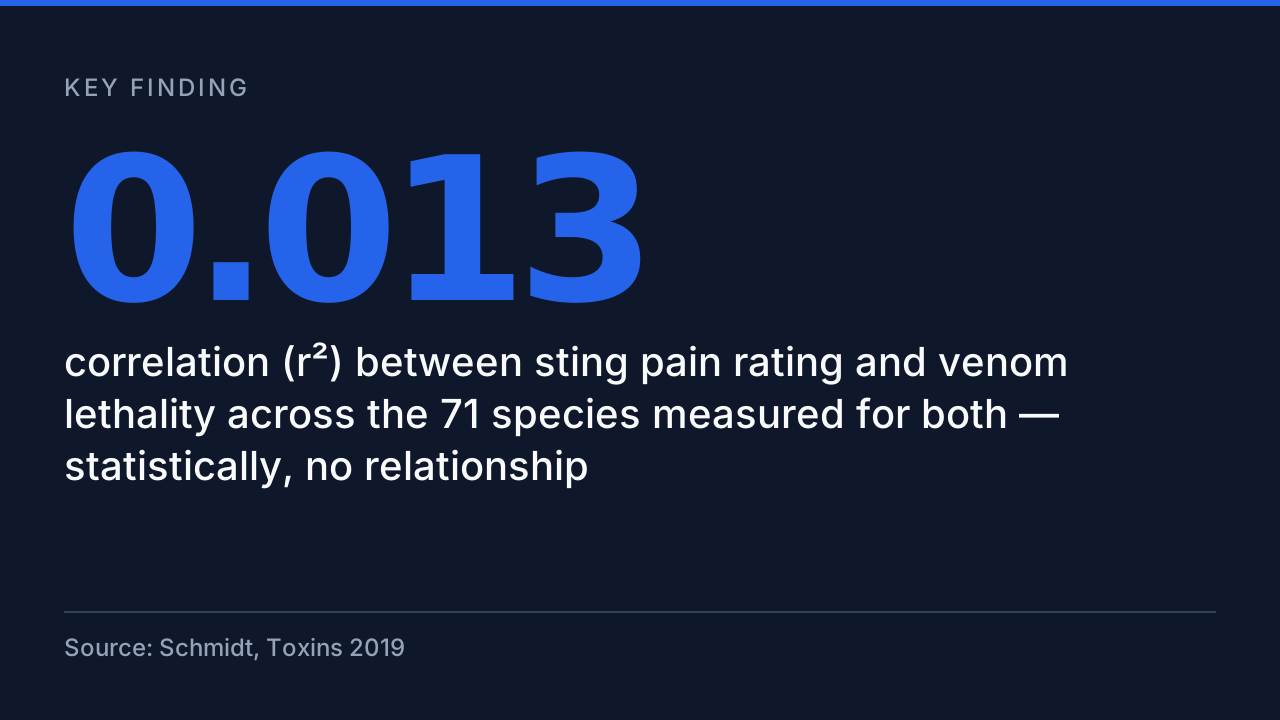
Schmidt rated sting pain for 96 species and venom lethality for 90. Joined, the two rankings are effectively unrelated — the most painful sting carries one of the weakest venoms measured, and the most toxic venoms barely hurt.

# Kissing Bug vs Look-Alikes: Is This a Kissing Bug? If you found a dark bug in your bedroom at night and you are…