
Tick Bites and Trail Running: Prevention Guide
Trail runners accept a lot of discomfort — blisters, bonking, the occasional face-first meeting with a root. But there's one trail hazard that keeps…
Cutting your own Christmas tree is one of the season's best traditions — families pile into the car, wander fragrant evergreen rows, and debate which tree has the perfect shape.…

Cutting your own Christmas tree is one of the season’s best traditions — families pile into the car, wander fragrant evergreen rows, and debate which tree has the perfect shape. Ticks are probably the last thing on your mind when the air smells like pine and the temperature is near freezing.
Here’s the honest answer: ticks christmas tree farms are worth thinking about, but the risk isn’t what most people imagine. Adult blacklegged ticks — the species most associated with Lyme disease — don’t hibernate. They stay active through fall and winter whenever temperatures climb above freezing, and the grassy rows between the trees are exactly where they wait for a host. The tree you bring home isn’t the problem — ticks don’t live in Christmas trees. The exposure happens during your walk out to the tree and back.
This guide covers which ticks are active in tree-cutting season, how to tell real ticks from harmless aphids that ride home on branches, and a practical routine that keeps the outing fun.
Choose-and-cut farms are working land, and the rows are ringed by grass, brushy edges, and sometimes woodland borders where deer pass through — prime tick habitat. Hiking out to the back forty, you brush past vegetation where questing ticks wait with front legs extended, ready to grab anything warm that passes.
The walk matters more than the tree. Ticks don’t drop from branches or live inside the needles. They climb onto you from low vegetation, leaf litter, and grass along the paths, so a leisurely family tree hunt carries more exposure than a quick trip to a pre-cut lot.
Well-mowed rows are safer, and many growers keep paths trimmed for customer comfort. Still, don’t assume a tidy farm means zero ticks — brushy fence lines, woodland edges, and patches of tall grass can harbor active ticks on mild winter days. Think of the outing as a winter hike, not a quick errand, and you’ll take the right precautions naturally. People who work outdoors follow outdoor worker insect bite prevention routines daily; families can borrow the same ideas for one Saturday visit.
The tick most likely active during tree-cutting season is the adult blacklegged tick, also called the deer tick (Ixodes scapularis). Unlike many insects, blacklegged ticks don’t truly hibernate. Rutgers entomologist Dina Fonseca puts it plainly: as long as temperatures stay above freezing, these ticks remain active and looking for blood — field studies have caught host-seeking adults on winter days with temperatures just above freezing, so a mild December afternoon is fair game.
That matters because plenty of tree-cutting happens on mild afternoons. A sunny December day in the forties is plenty warm for adult ticks, especially females, which are out seeking the blood meal they need to produce thousands of eggs. The first hard frost doesn’t end the season either — ticks shelter under leaf litter and resume activity when it warms.
One bit of good news: adults are easier to spot than the nymphs active in spring and summer. An unfed adult female is about sesame-seed sized, with a reddish-brown body and black legs and head. Adults also tend to carry higher infection rates than nymphs, having had two chances to pick up pathogens — once as larvae, once as nymphs — but their size means people usually find and remove them before the roughly 36-hour mark when transmission typically becomes more likely.

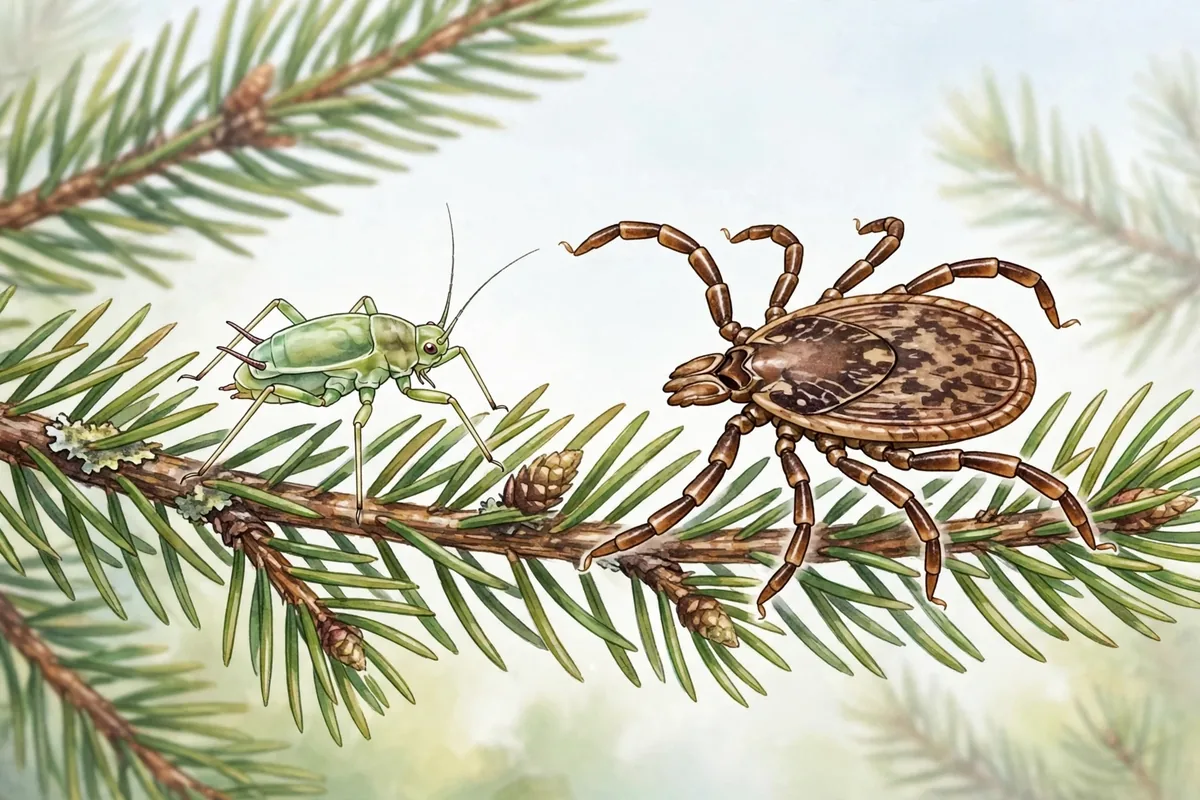
Every December, tree farms field the same worried calls: someone found bugs on their Christmas tree and fears it brought ticks indoors. The culprit is nearly always a Cinara aphid — a large, dark, pear-shaped insect that feeds only on conifer sap. These aphids can reach a quarter inch long, and because they’re unusually big for aphids, people mistake them for engorged ticks.
Settle it in seconds: count the legs — aphids are insects with six legs and antennae; ticks are arachnids with eight legs and no antennae. Cinara aphids don’t bite or sting people, don’t infest houseplants, and die quickly away from a live conifer — NC State Extension notes they’re completely harmless to humans and pets. When a warm house wakes them and they wander off the branches, just vacuum them up or carry them outside.
There’s no need to spray insecticide on a fresh-cut tree. Experts specifically advise against it — aerosol products are flammable around a dry tree, and there’s almost no benefit. A good shake of the tree outside before you bring it in knocks loose needles and hitchhiking insects, which is all the “pest control” a Christmas tree needs.
Dressing for a tree farm like a winter hike is the most effective single thing you can do. Ticks can’t bite through fabric, so covered skin is protected skin. Wear long pants tucked into socks or boots and a long-sleeved top, and pick light-colored clothing when you can — ticks show up much better against light fabric, which speeds up the post-visit check.
Footwear matters more than people think. Ankle-covering boots beat sneakers, since ticks typically latch on low and crawl upward, and tucked pant legs close the gap where they most often slip under.
For repellent, use an EPA-registered product labeled for ticks, applied exactly as the label directs. Parents should check the label’s age guidance before applying anything to young children — our insect repellent safety guide for children walks through those considerations. For stronger protection, treat your own clothing with 0.5% permethrin spray before the trip: it’s a clothing treatment, never a skin product, and EPA-registered clothing formulations stay effective through roughly six washings. Apply it outdoors, let the clothing dry completely, and it keeps killing and repelling ticks on contact for weeks. Keep wet permethrin away from cats and waterways, and never pour leftovers down a drain.
At the farm, small habits make a real difference. Stick to the mowed centers of the rows rather than ducking through brushy edges or shortcutting across tall grass. When inspecting a candidate tree, avoid sitting on the ground or leaning against brushy vegetation — crouch, check, and keep moving.
If the dog comes along, keep them leashed and out of the brush — a dog running through tall grass between rows is basically a tick magnet. Check them by hand when you return to the car, running your fingers against the fur around the ears, neck, and legs.
The post-outing tick check turns a day of precautions into real protection. Ticks often wander before attaching, so a full-body check at home catches most of them before they bite. Do it in good light and don’t rush — adult ticks are sesame-seed sized, and some nymphs are as small as a poppy seed.
Work through the warm, hidden spots ticks prefer: in and around the ears, through the scalp and along the hairline, under the arms, around the waistband, behind the knees, between the toes, and in the groin area. Have a partner check your back and scalp, and check the kids’ whole bodies. A shower within a couple of hours helps too, since it washes off ticks that haven’t attached yet.
Check gear too: backpacks, hats, scarves, and the dog all deserve a once-over. Toss worn farm clothes directly into the dryer on high heat for 10–15 minutes — heat kills ticks that survive a cold wash.

If the check turns up an attached tick, remove it promptly — don’t wait for a more convenient moment. Use clean, fine-tipped tweezers to grasp it as close to the skin’s surface as possible, then pull straight upward with steady, even pressure. Don’t twist or jerk, and skip folk remedies like nail polish, petroleum jelly, or a hot match — the CDC warns those can irritate the tick and may push infected fluid into the skin. Clean the bite area and your hands afterward.
Save the tick: drop it in a small sealed container or zip-top bag with rubbing alcohol, labeled with the date and where you were. Species, stage, and likely feeding time all help inform medical decisions. Dispose of unattached ticks by wrapping them in tape, flushing them, or putting them in alcohol — never crush one with bare fingers.
Then watch the bite site for several weeks and note the date. A small red bump fading within a few days is common, but an expanding rash, fever, or flu-like symptoms afterward are reasons to call your doctor and mention the bite. Our bite-and-sting first-aid checklist covers the general after-bite routine.
Most tick bites never cause illness, but certain signs mean you should get medical advice promptly:
For severe reactions to any sting, review the anaphylaxis warning signs so you can act fast.
Can ticks come home on my Christmas tree and infest my house?
No. Ticks don’t live in Christmas trees — entomologists are clear on this. The bugs people find on cut trees are almost always Cinara aphids, which don’t bite people, don’t infest homes, and die quickly away from a live conifer. Tick exposure happens during the walk through the farm’s rows, not from the tree in your living room.
Are ticks really active in December?
Adult blacklegged (deer) ticks can be active any time temperatures rise above freezing, including through fall and winter. A mild December afternoon in the forties is warm enough for them to quest — the “tick season is over” assumption is the riskiest part of winter outings.
Should I spray my Christmas tree with bug spray?
No. Experts advise against spraying insecticides on fresh-cut trees — aerosol products are flammable, and there’s almost no benefit since tree insects are harmless hitchhikers. Shake the tree outside first, and vacuum up any wandering aphids.
What’s the best repellent for a tree farm visit?
An EPA-registered repellent labeled for ticks, used exactly per the label — plus permethrin-treated clothing (0.5%, clothing only, never skin) for the strongest protection. Check age guidance for young children, and let treated clothing dry fully before wearing.
How long after a tick bite should I watch for symptoms?
Watch the bite site and your general health for several weeks — an expanding rash or flu-like illness can appear from a few days to about a month after a bite. Note the date so you can give your doctor an accurate timeline.
Medically reviewed by Dr. Sarah Jones, MD.
This article is for informational purposes only and isn’t medical advice. If you’re worried about a bite or sting, talk to a healthcare professional.
Dr. Jones oversees StingHelp’s clinical verification process. Every guide is systematically evaluated against active Centers for Disease Control and Prevention (CDC), Environmental Protection Agency (EPA), and American Academy of Allergy, Asthma & Immunology (AAAAI) medical consensus standards to ensure symptom distinctions and care recommendations are clinically sound.
Explore physician-reviewed first-aid procedures, identification clues, and symptom comparisons for other common outdoor bites and stings.

Trail runners accept a lot of discomfort — blisters, bonking, the occasional face-first meeting with a root. But there's one trail hazard that keeps…
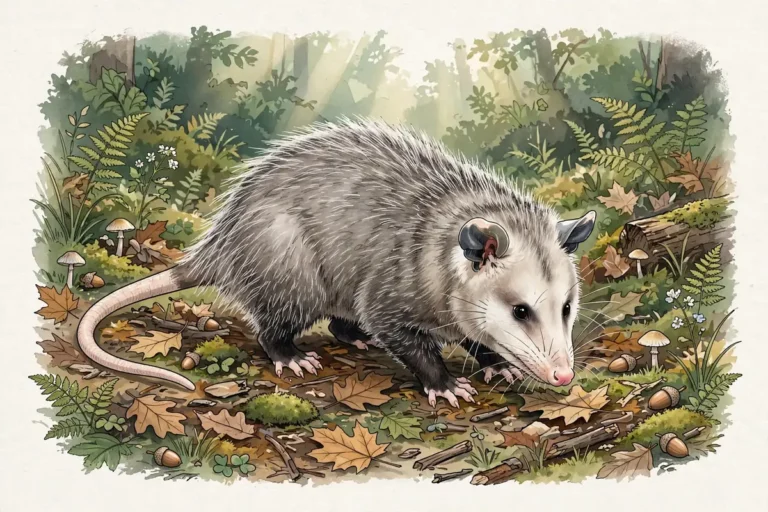
You have seen the meme: a photo of a cute opossum, captioned with the claim that a single opossum eats 5,000 ticks per season…

How many people test positive for alpha-gal, state by state: laboratory suspected cases, blood-donor seroprevalence, state-reported positives and health-record diagnoses — each figure labelled with the counting system that produced it.