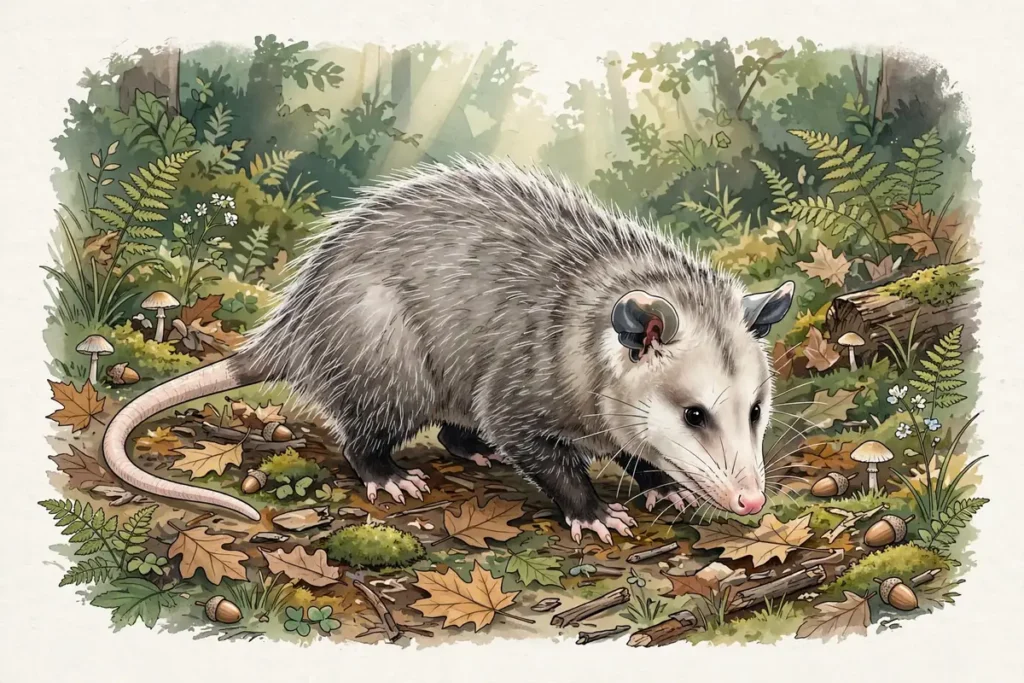
You have seen the meme: a photo of a cute opossum, captioned with the claim that a single opossum eats 5,000 ticks per season — nature's own pest control, no…
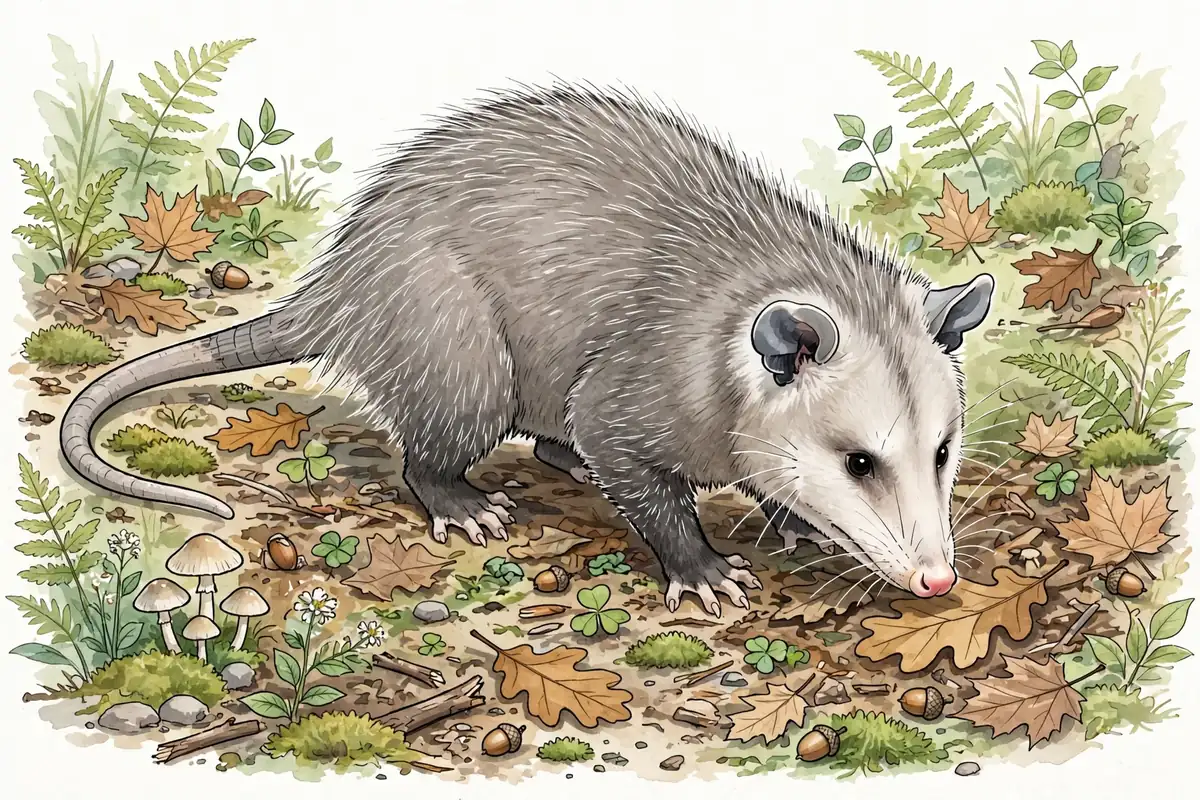
You have seen the meme: a photo of a cute opossum, captioned with the claim that a single opossum eats 5,000 ticks per season — nature’s own pest control, no spray required. It is one of the most shared wildlife claims on the internet. So do opossums eat ticks, and can you count on the opossum in your backyard to protect your family from tick bites?
The honest answer: probably a few, but nowhere near the viral number — and the science says opossums are not the tick vacuums the internet believes they are. The famous figure traces to a laboratory extrapolation from captive animals, while studies of wild opossums’ actual stomach contents found zero ticks. Relying on opossums for tick control is a gamble with your health, because every week you skip real prevention is a week of unprotected tick exposure.
Where the 5,000-Tick Number Came From
The claim originates with research presented around 2009 from the Cary Institute of Ecosystem Studies. In captive trials, researchers placed larval ticks on opossums and other mammals, then measured how many the animals groomed off and destroyed. Opossums were enthusiastic groomers: they killed the vast majority of the ticks placed on their fur. From there, the researchers extrapolated — if an opossum encounters that many ticks in the wild and grooms at the same rate, it could destroy thousands of ticks per season. The “5,000 ticks” figure was born.
There are two problems with that leap. First, captive animals behave differently from wild ones: a caged opossum with ticks deliberately placed on it grooms intensely, but that tells us little about how many ticks a free-ranging opossum actually encounters or eats. Second, the extrapolation assumed a tick-encounter rate that was never measured in the wild. It was a mathematical projection, not an observation — and it hardened into “fact” through repetition on social media, where the number drifted between thousands per week and thousands per season depending on the meme.
This is how wildlife myths work: a real behavior (grooming off ticks) gets stretched by arithmetic into a superpower (devouring thousands), and the caveats fall off in every retelling.
What Wild Opossums Actually Eat
The reality check arrived in 2021, when researchers Cecilia Hennessy and Kaitlyn Hild published a peer-reviewed study in the journal Ticks and Tick-borne Diseases with a direct title: “Are Virginia opossums really ecological traps for ticks? Groundtruthing laboratory observations.”
Their method was straightforward. They examined the stomach contents of 32 wild Virginia opossums from central Illinois, searching exhaustively under a dissecting microscope for ticks or tick body parts. They found none — not a single tick or tick fragment in any of the 32 stomachs. They then reviewed the published literature: 23 manuscripts describing diet analyses of Virginia opossums (covering more than a thousand animals across stomach, digestive tract, and scat studies). None of those studies identified ticks as a diet item either.
The authors’ conclusion was careful but firm: ticks are not a preferred diet item for Virginia opossums, and laboratory observations of wildlife behavior should be verified against wild conditions before they become public guidance. Wildlife Illinois and Outdoor News both covered the findings, with the latter running the blunt headline: “Myth dispelled: Opossums don’t eat ticks.”
None of this means opossums never eat a tick. An opossum grooming ticks off its own fur certainly swallows some, and opossums are opportunistic omnivores that eat insects, grubs, snails, rodents, carrion, and fallen fruit. But “occasionally ingests a tick while grooming” and “eats 5,000 ticks a season as pest control” are different universes — and only the first is supported by evidence.
Why the Myth Matters for Your Health
This would be a harmless piece of internet folklore if it did not change behavior. But it does. Homeowners who believe opossums handle the tick problem are less likely to do the things that actually prevent tick bites: treating clothing, doing tick checks, keeping grass short, and talking to a doctor promptly after a bite.
That delay has consequences. Tick-borne diseases — Lyme disease, ehrlichiosis, Rocky Mountain spotted fever, alpha-gal syndrome — are diagnosed and treated based on exposure history and symptoms, and early treatment matters enormously. A family that skips evening tick checks because “the opossum has it covered” is trading proven prevention for a meme. The opossum is not checking your children for nymphal ticks the size of poppy seeds. You have to do that yourself.
There is also a secondary risk in actively encouraging opossums as “tick control.” Opossums are wild animals: they can carry leptospirosis and salmonella in their droppings, they raid pet food and garbage, and they can den under porches and sheds. Welcoming them as pest-control contractors invites exactly the wildlife conflicts that create other problems. Appreciate opossums for what they are — fascinating, ecologically useful marsupials — not for a job they do not actually do.
Opossums Are Still Worth Having Around
Debunking the tick claim is not an attack on opossums. They genuinely contribute: they eat slugs, snails, cockroaches, fallen fruit, carrion, and rodents, and their fastidious grooming does remove ticks from their own bodies (which at least keeps those particular ticks from feeding and reproducing). They are also famously resistant to rabies — cases are extraordinarily rare, partly because their lower body temperature is inhospitable to the virus — and their “playing dead” defense makes them low-risk neighbors compared to raccoons or skunks.
The right relationship with a backyard opossum is peaceful coexistence: secure your trash, bring pet food in at night, and let it pass through on its nightly rounds. Just do not outsource your tick prevention to it.
What Actually Reduces Tick Bites
If opossums are not the answer, here is what evidence supports:
Treat your clothing, not your yard wildlife. Permethrin applied to clothing and gear (never to skin) kills ticks on contact and survives multiple washes. For exposed skin, use an EPA-registered repellent with DEET, picaridin, or oil of lemon eucalyptus, following label directions. Note that permethrin is highly toxic to cats — keep treated clothing away from them until dry.
Do tick checks every time. After hiking, gardening, or playing in grass or woods, check the whole body: behind ears, along the hairline, under arms, around the waistband, behind knees, and between toes. Shower within a couple of hours of coming inside — it washes off unattached ticks and is a good prompt for the check.
Manage the landscape. Keep grass mowed, clear leaf litter from play areas and paths, and create a barrier of wood chips or gravel between lawn and woods. These steps reduce tick habitat where your family actually spends time.
Handle attached ticks correctly. Use fine-tipped tweezers, grasp the tick as close to the skin as possible, and pull straight up with steady pressure. Save the tick in a bag with the date — identification helps your doctor assess risk. Our guide to removing an attached tick safely covers the technique step by step, and what to do in the first 24 hours after a tick bite explains monitoring and when to call your doctor.
Know when to call the doctor. A tick attached for more than 24-36 hours, a spreading rash, fever, or flu-like symptoms in the weeks after a bite all warrant a prompt call. Do not wait to see if it gets better on its own — and if you removed the tick, tell the clinician what kind it was if you know. Our page on whether to save a tick after a bite explains why keeping the specimen is worth the small effort.
When to See a Doctor After a Tick Bite
Tick bites deserve a lower threshold for medical care than most insect bites, because the diseases they can transmit are serious and time-sensitive:
A tick that was attached for an extended time, or you are unsure how long it was attached
A spreading circular rash, especially one that expands over days (possible erythema migrans)
Fever, chills, headache, fatigue, muscle or joint aches within a month of a bite
A bite that becomes increasingly red, swollen, or painful after 48 hours rather than calming down
Any tick bite on a young child, or a bite you cannot fully remove (a retained head or mouthparts)
Call 911 for trouble breathing, facial swelling, or faintness after any bite or sting — those are anaphylaxis signs, not typical tick-bite reactions.
Frequently Asked Questions
Do opossums eat ticks at all?
Probably occasionally — an opossum grooming ticks off its own fur will swallow some. But peer-reviewed studies of wild opossum stomach contents found zero ticks across 32 animals, and a review of 23 diet-analysis papers found no ticks in any. They are not meaningful tick predators in the wild.
Where did the 5,000-tick claim come from?
From captive grooming trials around 2009, where opossums destroyed most of the ticks placed on them in a lab. Researchers extrapolated that grooming rate to a wild season, producing the thousands-per-season figure. It was a projection, not a measurement — and wild diet studies have not supported it.
Should I attract opossums to my yard for tick control?
No. Even setting the science aside, encouraging wildlife as pest control creates other problems (raided trash, pet-food theft, droppings, denning under structures). Use proven tick prevention — treated clothing, repellents, tick checks, and yard management — instead.
Are opossums dangerous to have around?
Generally no. They are non-aggressive, rarely carry rabies, and prefer to avoid confrontation. The main concerns are indirect: droppings can carry bacteria like leptospirosis and salmonella, so do not feed them and do not leave pet food out overnight.
What is the single most effective tick prevention step?
If you must pick one: treat your shoes, socks, and pants with permethrin (clothing only, never skin) and do a full-body tick check after outdoor time. Those two habits prevent more bites than any wildlife, device, or folk remedy.
This article is for informational purposes only and isn’t medical advice. If you’re worried about a bite or sting, talk to a healthcare professional.
SJ
Dr. Sarah Jones, MD
MD — Medical Reviewer · Board-Certified Emergency Medicine Physician
Dr. Jones oversees StingHelp’s clinical verification process. Every guide is systematically evaluated against active Centers for Disease Control and Prevention (CDC), Environmental Protection Agency (EPA), and American Academy of Allergy, Asthma & Immunology (AAAAI) medical consensus standards to ensure symptom distinctions and care recommendations are clinically sound.
How this guide was prepared: Researched and structured by the StingHelp Editorial Team; verified against peer-reviewed dermatology literature; clinically reviewed November 2026.
RELATED CLINICAL GUIDES
More StingHelp guides
Explore physician-reviewed first-aid procedures, identification clues, and symptom comparisons for other common outdoor bites and stings.
How many people test positive for alpha-gal, state by state: laboratory suspected cases, blood-donor seroprevalence, state-reported positives and health-record diagnoses — each figure labelled with the counting system that produced it.