Does Baby Oil Repel Mosquitoes? Truth + Risks
Every summer, a new "hack" makes the rounds: skip the bug spray, just slick on baby oil. This year's version blew up on TikTok,…
A practical CDC/NIOSH-aligned prevention guide for outdoor workers exposed to mosquitoes, ticks, bees, wasps, hornets, and fire ants.
Direct answer: Outdoor workers have more opportunities to encounter mosquitoes, ticks, bees, wasps, hornets, fire ants, and other biting or stinging arthropods. CDC/NIOSH recommends a layered prevention plan: employer training, worksite hazard reduction, protective clothing, EPA-registered repellents, tick checks, safe nest avoidance, and a clear response plan for bites, stings, and severe allergic reactions.
The best prevention plan is job-specific. A landscaper working in tall grass has a different risk profile from a roofer working near wasp nests or a utility worker standing around drainage water. The common principle is to reduce exposure before a worker is bitten or stung and to make sure everyone knows what to do when an incident occurs.
CDC identifies outdoor workers as a group at increased risk for mosquito- and tick-borne disease. Examples include landscaping crews, surveyors, park and wildlife staff, utility workers, railroad workers, oil-field workers, construction crews, groundskeepers, forestry workers, agricultural workers, delivery workers, road crews, and others who spend substantial time outside.
Indoor workers can also have exposure when job duties take them outdoors, into vegetation, crawl spaces, loading areas, dumpsters, roofs, storage yards, or buildings with insect nests.
Before relying on personal repellent alone, look at the work environment. Useful questions include:
CDC/NIOSH recommends reducing standing water because many mosquitoes lay eggs in or near water. Worksites can accumulate water in tires, buckets, barrels, ditches, tarps, equipment, bottles, drainage structures, and wheel ruts. Removing, turning over, covering, draining, or storing these items reduces breeding opportunities.
Workers should use EPA-registered insect repellents according to label directions and wear long sleeves and pants when practical. Screened or enclosed break areas can also reduce exposure during mosquito-heavy periods.
Tick exposure increases around woods, bushes, tall grass, and leaf litter. CDC/NIOSH recommends light-colored long-sleeved shirts, pants, socks, and hats when feasible because light clothing makes crawling ticks easier to see. EPA-registered repellents can add protection.
Permethrin can be used on clothing and gear when the product is labeled for that purpose, but it should not be applied directly to skin. Treated boots, pants, socks, and work gear can be useful for employees who repeatedly enter tick habitat.
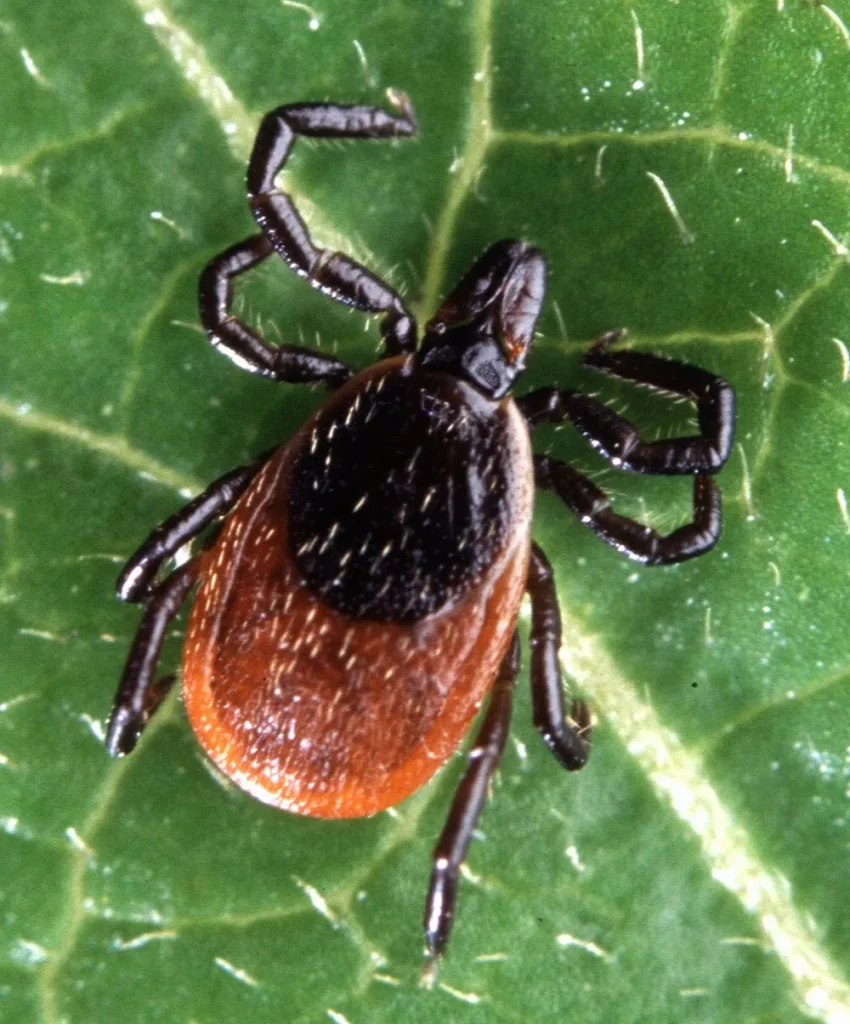
A tick check works best when it is routine rather than something workers remember only after seeing a tick. Before leaving the worksite or immediately after returning home, check clothing and exposed areas. Showering soon after potential exposure can help find unattached ticks and creates a natural time for a full-body check.
Common places to inspect include the scalp and hairline, behind the ears, under the arms, around the waist, groin, behind the knees, and other skin folds. Work gear and pets that accompany workers outdoors can also transport ticks.
Remove it promptly with clean fine-tipped tweezers. Grasp the tick close to the skin and pull upward with steady, even pressure. Clean the area and hands afterward. Record the date and likely work location, especially if the employee later develops fever, rash, severe headache, muscle aches, neurologic symptoms, or another significant illness.
Do not burn, twist, smother, or coat the tick with chemicals. See StingHelp’s tick-removal guide for a step-by-step checklist.
CDC/NIOSH notes that nests may occur in trees, under roof eaves, or on equipment such as ladders. Workers doing roofing, tree trimming, utility work, construction, inspection, pest control, or grounds maintenance should look before grabbing, climbing, cutting, or moving equipment in areas where a nest could be present.
Do not deliberately disturb an active social-wasp nest without the training, equipment, and job assignment to manage it. When a nest is near a doorway, ladder route, work platform, or high-traffic area, isolate the hazard and use qualified pest management rather than asking an unprotected worker to “knock it down.”

NIOSH advises remaining calm when a single stinging insect is flying nearby and avoiding swatting. If several insects attack, get away from the area quickly and seek shelter. Do not jump into water to escape because some stinging insects may remain nearby.
Once clear of the area, assess for stings and allergic symptoms before returning to work.
Fire-ant exposure is particularly relevant in parts of the southern United States. Crews should watch for mounds before kneeling, setting equipment down, or starting excavation. Closed shoes, gloves, and long pants can reduce skin exposure but do not eliminate risk.
If ants begin stinging, move away from the mound and brush ants off promptly. Fire ants can sting repeatedly, so staying in the area increases the number of stings.
CDC/NIOSH lists EPA-registered repellents containing ingredients such as DEET, picaridin, IR3535, OLE/PMD, and 2-undecanone. Employers should provide or recommend products appropriate for the local pest and expected duration of exposure.
The label controls how the product is used. More is not automatically better. Workers should avoid eyes, mouth, cuts, and irritated skin and should not spray aerosol products in enclosed spaces.
Long sleeves and pants reduce exposed skin, but outdoor work in hot weather also creates heat-stress risk. Employers should integrate insect protection into the broader heat plan rather than treating the hazards separately. Lightweight, breathable, work-appropriate clothing can help balance coverage with heat control.
Workers still need hydration, shade or cooling, acclimatization, rest breaks, and heat-illness training as required by the job and environment.
Workers with a history of severe allergic reactions should follow their clinician’s emergency plan and carry prescribed epinephrine when advised. Coworkers and supervisors should know how to summon emergency help and where first-aid supplies are located.
Call 911 for trouble breathing, throat or tongue swelling, fainting, collapse, severe dizziness, or a rapidly progressive generalized allergic reaction. Do not send a worker to drive themselves to care during a severe reaction.
A disturbed bee, wasp, or hornet colony can result in multiple stings. AAD recommends medical attention when someone is stung multiple times, particularly a child. At work, a large sting burden, systemic symptoms, or a known venom allergy should trigger prompt medical evaluation.
When a bite or sting occurs, record the worksite location, task being performed, visible insect or nest, time, number of bites or stings, immediate symptoms, first aid, and whether medical care was required. Patterns can reveal preventable hazards: repeated wasp encounters near one loading dock, tick exposure on a specific route, or mosquito breeding in one drainage area.
Use the information to change the worksite rather than treating every incident as unavoidable.

Seek prompt medical assessment for significant fever, severe headache, neurologic symptoms, rapidly worsening pain, suspected infection, repeated vomiting, many stings, eye or mouth involvement, or symptoms that are worsening instead of stabilizing. Call emergency services for airway symptoms, collapse, severe allergic reaction, or other life-threatening signs.
Outdoor-worker bite and sting prevention is a worksite system, not just a bottle of repellent. Reduce standing water and nest hazards, match clothing and repellent to the job, build tick checks into the shift, train crews to recognize severe allergic reactions, and document incidents so repeat hazards can be fixed.
This article is educational workplace-health information for a U.S. audience and does not replace employer-specific safety requirements, occupational-health advice, or emergency care.
Insect pressure changes through the year. Tick activity often rises in spring, summer, and fall, while some regions with mild winters can have activity much longer. Mosquito risk varies with temperature, rainfall, standing water, time of day, and local species. Social wasp colonies typically become more noticeable as the warm season progresses. A company with recurring outdoor work should review its prevention plan seasonally rather than using one static checklist year-round.

Work trucks, trailers, ladders, utility boxes, stored materials, tarps, and rarely used equipment can provide sheltered areas for nests or can collect water. Add insect-hazard checks to routine equipment inspections. Workers should not reach blindly into cavities, move a nest-bearing item without a plan, or stand directly under an active nest while deciding what to do.
Some mosquito species bite more aggressively during particular parts of the day. When a local public-health agency reports high mosquito activity or disease transmission, employers may be able to reduce exposure by adjusting certain tasks, moving breaks indoors or into screened areas, increasing protective clothing, or reinforcing repellent use. Operational needs vary, but awareness of local alerts is part of a serious prevention program.
A worker who develops fever, rash, severe headache, unusual fatigue, muscle aches, neurologic symptoms, or another significant illness after a documented tick or mosquito exposure should tell the healthcare professional about the work location and date. The bite mark itself may be gone by the time illness develops. This is why incident documentation is useful even when the original bite seemed minor.
After emergency care, review the event without blaming the worker. Identify whether the nest or exposure source can be removed or isolated, whether the crew knew how to call for help, whether the affected worker’s emergency plan was accessible, and whether jobsite training needs improvement. A near miss or medical emergency should lead to a prevention change when a controllable hazard is identified.
Short-term workers may be less familiar with the site and its nests, tick habitat, or standing-water problems. Include insect hazards in onboarding and pre-task briefings. A worker who does not know that a ground nest is beside a trench or that a particular field has heavy tick activity cannot take informed precautions.
Gloves, boots, long clothing, and repellents reduce exposure but cannot eliminate it. A worker with a known severe venom allergy still needs the emergency plan provided by their clinician. Employers should follow applicable workplace policies and emergency procedures and should not assume that protective clothing makes a sting-allergy plan unnecessary.
Most bites and stings are minor, but severe allergy, infection, tickborne disease, mosquito-borne illness, or repeated exposures can lead to urgent care, emergency treatment, or days away from work. Prevention reduces both health risk and operational disruption. The strongest program combines environmental control, worker behavior, protective equipment, training, and rapid response rather than relying on one measure alone.
Dr. Jones oversees StingHelp’s clinical verification process. Every guide is systematically evaluated against active Centers for Disease Control and Prevention (CDC), Environmental Protection Agency (EPA), and American Academy of Allergy, Asthma & Immunology (AAAAI) medical consensus standards to ensure symptom distinctions and care recommendations are clinically sound.
Explore physician-reviewed first-aid procedures, identification clues, and symptom comparisons for other common outdoor bites and stings.

Every summer, a new "hack" makes the rounds: skip the bug spray, just slick on baby oil. This year's version blew up on TikTok,…

It is the most common summer layering question in America: sunscreen or bug spray first? Get the order wrong and you either dilute your…

If you spend warm evenings dodging mosquitoes on your patio, the promise sounds irresistible: hang a wooden box on a pole, bats move in,…