
Do Opossums Eat Ticks? The Myth, Debunked
You have seen the meme: a photo of a cute opossum, captioned with the claim that a single opossum eats 5,000 ticks per season…
Trail runners accept a lot of discomfort — blisters, bonking, the occasional face-first meeting with a root. But there's one trail hazard that keeps working long after the run ends:…

Trail runners accept a lot of discomfort — blisters, bonking, the occasional face-first meeting with a root. But there’s one trail hazard that keeps working long after the run ends: ticks. Running shorts, grassy singletrack, and the habit of brushing through vegetation put runners squarely in questing habitat, often for hours.
This is your complete guide to tick bites and trail running prevention: why runners are such prime targets, how to armor up without overheating, the clothing treatment that does the heavy lifting, and the post-run routine that catches the ticks you missed.
Ticks don’t jump, fly, or drop from trees — they quest. A tick climbs to the tip of a grass blade or leaf, extends its front legs, and waits for a warm body to brush past. Trail runners deliver exactly that, repeatedly, at speed.
The runner’s uniform works against them. Shorts expose the legs — and ticks quest most commonly at ankle to knee height, the exact zone shorts leave bare. Arms swinging through overgrown singletrack brush against vegetation at every stride. A hiker in long pants tucked into socks presents far less grab-able surface; a runner in split shorts is essentially offering a buffet.
Behavior multiplies the exposure. Runners duck under branches, bushwhack around mud, and stretch in grassy trailhead fields. Each contact is a transfer opportunity. And unlike hikers, runners cover far more ground per outing — more miles means more vegetation contacts.
The calendar matters too. Nymphal ticks (poppy-seed sized and easy to miss) peak in late spring and early summer, while adult ticks surge again in fall — right through prime racing season. If you run trails in tick country, prevention is basic gear selection, not paranoia.
You don’t have to race in a hazmat suit. Smart clothing choices cut tick access dramatically without cooking you:
Light colors help you spot ticks. A dark tick shows up clearly on pale shorts, socks, or a light shirt — giving you a chance to flick it off before it attaches. This alone is worth the wardrobe tweak.
Cover the highest-risk zones. Ankle socks or compression sleeves protect the prime questing zone. For grassy or overgrown routes, knee-high socks beat ankle socks; save the short socks for wide, clear fire roads.
Tuck strategically. Tucking a shirt into shorts closes the waistband gap where ticks love to crawl in. For tick-heavy routes, function beats fashion.
Gaiters for brushy trails. Lightweight trail gaiters seal the shoe-sock junction — a favorite tick entry point — and many ultrarunners already wear them for debris.
Clothing alone won’t stop every tick, but it shrinks the exposed target and buys time for your chemical defenses to work. Think of it as the first of three layers: clothing, treated fabric, and skin repellent.
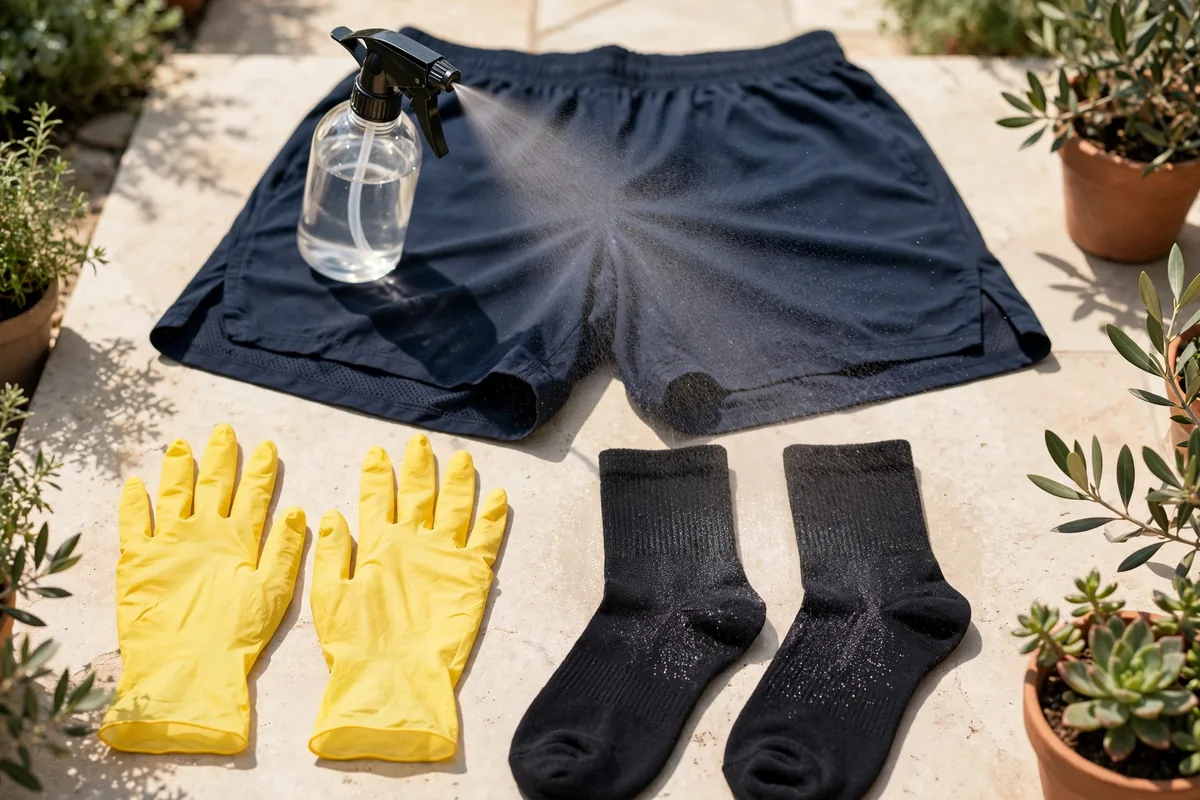
If trail runners have one secret weapon against ticks, this is it: permethrin-treated clothing. Permethrin is an insecticide that binds to fabric fibers, killing or repelling ticks on contact — and it is remarkably effective.
The rules are simple and non-negotiable:
Treat clothing, never skin. Permethrin is for fabric only. Spray it on shorts, socks, shirts, and gaiters — never apply it directly to your body. Once dry on fabric, it’s considered safe for wear, but the wet spray should never touch skin.
Treat outdoors and let dry completely. Hang garments outside, spray evenly, and let them dry for at least two to four hours before wearing. Treat the night before a run, not at the trailhead.
One treatment lasts through multiple washes. A proper application survives roughly six washings. Mark your calendar and retreat on schedule — faded protection you assume is working is worse than no protection honestly acknowledged.
Buy pre-treated gear if DIY isn’t your thing. Several outdoor brands sell factory-treated shirts, socks, and pants. It’s the zero-effort option.
A common runner’s question: does treating shorts really help when so much leg is bare? Yes — ticks crawl upward from ground contact, and treated socks, shoes, and shorts intercept them during that climb. Combined with repellent on exposed skin, it’s the closest thing to a complete shield the sport has.
For the skin your clothes don’t cover, EPA-registered repellents are the evidence-backed choice. Picaridin and DEET both perform well against ticks; oil of lemon eucalyptus offers shorter but real protection. Apply to exposed skin before the run — ankles, lower legs, arms, neck.
Runners have specific repellent challenges: sweat dilutes product, and long runs outlast standard protection windows. Choose a formulation suited to activity — lotions and pump sprays tend to stay put better than aerosols — and carry a small bottle for reapplication on runs over a couple of hours.
One caution for parents: kids who run or hike with you need repellent chosen for their age. Our guide to insect repellent safety for children and pregnancy covers age-appropriate options and application rules.
Skip the unproven shortcuts. Ultrasonic “tick repeller” gadgets, essential-oil bracelets, and dietary tricks have no meaningful evidence behind them. The layered approach — treated clothing plus registered repellent — is also the backbone of outdoor worker insect bite prevention, where all-day exposure makes half-measures costly.
Where you run matters as much as what you wear. Ticks concentrate where hosts travel — along game trails, at trail edges where lawn meets woods, and in the leaf litter and tall grass flanking narrow singletrack.
Run the center of the trail. The middle of a well-worn path has the least questing vegetation. Every step off-trail to pass someone, dodge a puddle, or take a shortcut multiplies your brush contacts.
Know your trail’s tick zones. Low, grassy, brushy sections — especially where the trail narrows through meadow or skirts a woodland edge — are the highest-risk miles. Wide fire roads and rocky ridgelines are the lowest. Plan accordingly, and save the overgrown adventures for treated-clothing days.
Don’t sit on logs or lean on trees. Rest breaks on downed logs put you in sustained contact with bark-dwelling ticks. Stand, or sit on a rock in the open.
Time it when you can. Ticks quest most actively in humid conditions and are less active in hot, dry midday sun. A dewy dawn run through bottomland is higher-risk than an exposed ridge run at noon.
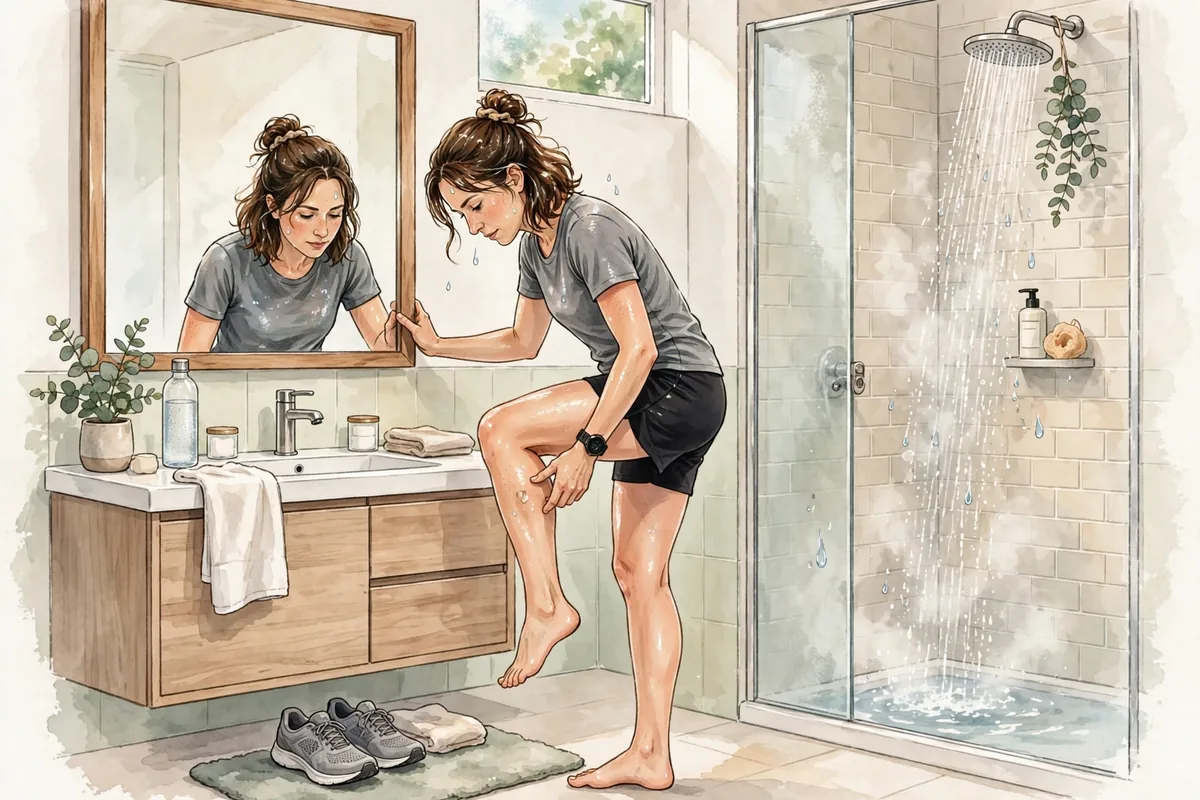
Even perfect prevention misses some ticks. The post-run check is your safety net, and it works — showering within two hours of coming indoors has been shown to reduce tick-borne disease risk, largely because it washes off unattached ticks and forces a full-body inspection.
Make it a ritual, as automatic as foam rolling:
Shower promptly. Don’t let trail clothes pile on the bedroom floor — toss them straight in the laundry or a hot dryer cycle.
Check the hotspots. Ticks favor warm, hidden spots: behind the knees, the groin, armpits, the waistband line, behind the ears, the hairline and scalp, the belly button, and between the toes. Use a mirror or a partner for hard-to-see areas.
Check twice for nymphs. Spring and early-summer nymphs are the size of a poppy seed. Run fingers slowly over skin feeling for tiny new “moles” that weren’t there before the run.
Don’t forget the dog. Trail dogs pick up ticks at even higher rates than their humans. Check ears, between toes, under the collar, and around the tail base after every outing.
Finding an attached tick is unnerving, but the protocol is straightforward:
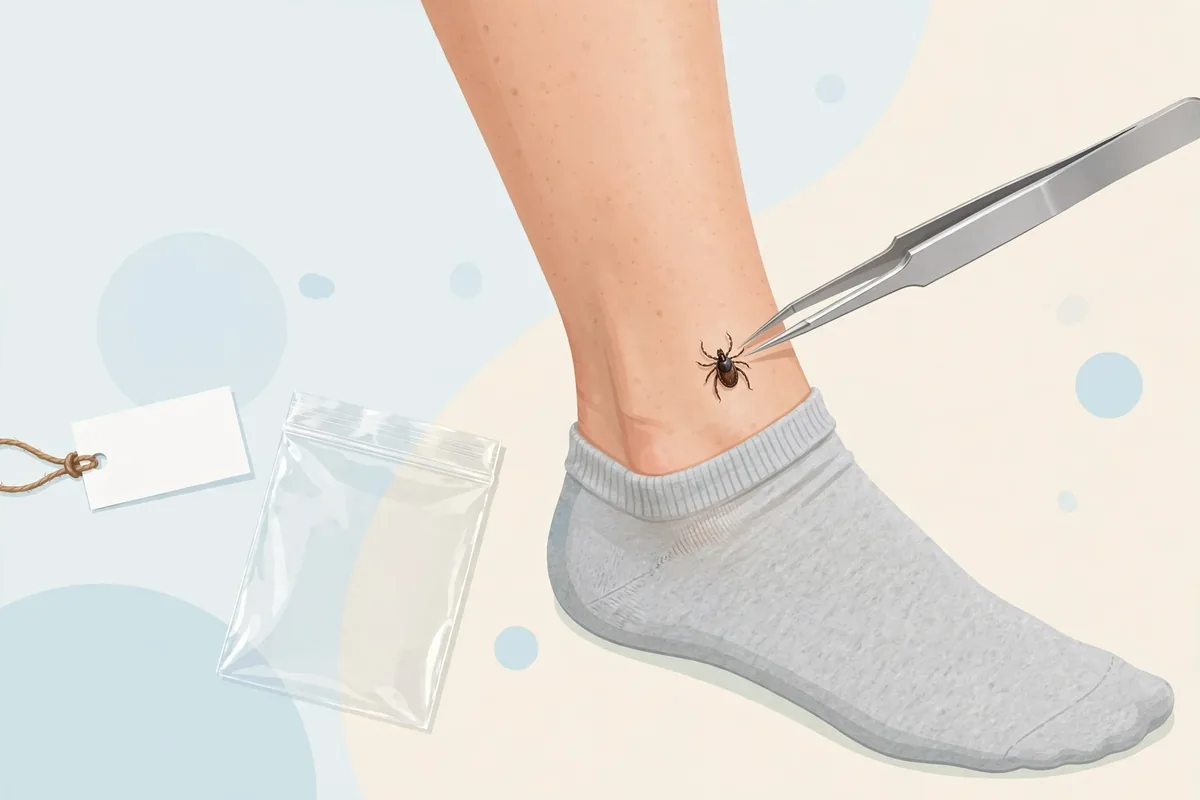
Remove it properly. Use fine-tipped tweezers, grasp the tick as close to the skin as possible, and pull upward with steady, even pressure. Don’t twist, jerk, or squeeze the body.
Skip the folk remedies. Don’t burn the tick, smother it in nail polish or petroleum jelly, or try to make it “back out.” These methods can irritate the tick and are slower and less reliable than tweezers.
Save the tick. Drop it in a sealed bag or small container with the date and where you think you picked it up. If symptoms develop later, having the tick helps your doctor assess the situation — identification of the species and local disease patterns informs medical decisions.
See a doctor promptly — don’t try to diagnose yourself. Note when the bite happened and how long the tick may have been attached, then talk to a healthcare professional. Whether preventive treatment is appropriate depends on the tick species, local disease risk, and timing — that’s a medical call, not a DIY decision.
Ticks don’t only ride on your body. Hydration vests, drop bags, and jackets tossed on grassy ground at aid stations collect questing ticks, which then crawl onto you — or into your car — later. Keep bags off the ground, shake out jackets before packing them, and keep trail shoes in the garage or mudroom, not the bedroom. After especially ticky terrain, toss dry trail clothes in the dryer on high for 10 minutes before washing.
Tick bites deserve a lower threshold for medical attention than most insect bites, because tick-borne illnesses are treatable but time-sensitive. See a doctor promptly if:
Can ticks bite through running tights or compression socks?
Ticks can’t bite through intact fabric, but they crawl until they find skin — up a leg or under a waistband. Treated fabric kills or repels them during that crawl, which is why permethrin-treated clothing outperforms untreated coverage.
How long does a tick need to be attached to transmit disease?
It varies by disease and tick species — some pathogens transmit relatively quickly, others require a day or more of attachment. Because the timelines differ and you rarely know exactly when attachment began, the safe move is prompt removal, saving the tick, and talking to a doctor rather than calculating risk yourself.
Should I take antibiotics after every tick bite?
No — that’s a decision for a healthcare professional based on the tick species, how long it was attached, local disease prevalence, and timing. Never start preventive antibiotics on your own; inappropriate use carries its own risks.
Do tick checks really work if nymphs are so tiny?
Yes, with technique. Slow fingertip sweeps over the hotspot areas catch most nymphs, and the prompt post-run shower washes off unattached ones. No method is perfect, which is why tick checks are one layer among several — not the whole plan.
Is trail running in tick season just too risky?
Not with proper prevention. Treated clothing, repellent, smart routes, and the post-run check reduce risk dramatically — the runners who get into trouble are typically the ones using none of these.
If you remove an attached tick, make a brief note of the date, trail or park, approximate time outdoors, and where on your body it was attached. If you can do so without delaying removal, take a clear photo of the tick and the bite area; a clinician or local public-health service may find that context useful. Do not wait for an identification before removing an attached tick.
Use fine-tipped tweezers to grasp the tick close to the skin and pull upward with steady, even pressure. Clean the bite area and your hands afterward. Avoid folk methods such as burning the tick or coating it with nail polish or petroleum jelly. If you develop fever, a new rash, headache, unusual fatigue, or muscle or joint aches in the days or weeks after a run, contact a healthcare professional and mention the outdoor exposure and location. A bump, a photo, or the tick’s appearance alone cannot confirm or rule out a tick-borne infection.
Editorial note: This guide summarizes public-health prevention information. It cannot identify a tick species or diagnose infection from a bite’s appearance.
This article is for informational purposes only and isn’t medical advice. If you’re worried about a bite or sting, talk to a healthcare professional.
Dr. Jones oversees StingHelp’s clinical verification process. Every guide is systematically evaluated against active Centers for Disease Control and Prevention (CDC), Environmental Protection Agency (EPA), and American Academy of Allergy, Asthma & Immunology (AAAAI) medical consensus standards to ensure symptom distinctions and care recommendations are clinically sound.
Explore physician-reviewed first-aid procedures, identification clues, and symptom comparisons for other common outdoor bites and stings.

You have seen the meme: a photo of a cute opossum, captioned with the claim that a single opossum eats 5,000 ticks per season…

How many people test positive for alpha-gal, state by state: laboratory suspected cases, blood-donor seroprevalence, state-reported positives and health-record diagnoses — each figure labelled with the counting system that produced it.

Introduction: The Direct Answer Yes, ticks can survive inside a house, but most tick species do not live indoors the way fleas or bed…