
Greenhead Fly Season at the Jersey Shore: When They’re Worst, and How to Plan Around Them
Greenhead Fly Season at the Jersey Shore: When They're Worst, and How to Plan Around Them The fast answer: Greenhead flies — the big,…
Nothing ruins a perfect beach day faster than an invisible enemy chewing on your ankles. One minute you are stretched out on your towel, the next you are swatting sharp…

Nothing ruins a perfect beach day faster than an invisible enemy chewing on your ankles. One minute you are stretched out on your towel, the next you are swatting sharp pinches around your feet and lower legs. Most people blame house flies, but the real culprit is a blood-feeding cousin with a meaner bite. Stable flies biting at the beach are a well-documented late-summer and fall phenomenon along coastlines from the Great Lakes to the Gulf of Mexico, and beachgoers rarely see it coming.
This guide explains why stable flies swarm beaches, when the problem peaks, and — honestly — what works and what does not. If you have ever wondered why your bug spray seems useless against them, you are not imagining it. Read on for practical, evidence-grounded strategies to keep your beach days comfortable.
Stable flies (Stomoxys calcitrans) look a lot like ordinary house flies, which is why most beachgoers misidentify them. Up close, though, they are easy to tell apart: they have a protruding, bayonet-like mouthpart they use to pierce skin and drink blood. Both males and females bite, and both need blood meals — this is not a female-only habit like mosquitoes. A single feeding session can take a couple of minutes, and the bite feels like a sharp pinch or needle prick rather than the itchy welt of a mosquito.
The name comes from their association with stables and barns, where they torment livestock — but they bite people readily too, especially around the ankles and lower legs, earning the nickname “ankle-biters.” At the beach they zero in on bare feet and legs, and heavy biting can drive families off the sand entirely. Learn more about stable fly bite treatment options for a closer look at the bites themselves.
Unlike mosquitoes, stable flies are not considered major disease vectors for humans in the United States. That is genuinely good news. Their bites are a pain and comfort problem, not a serious disease problem. Still, repeated biting can cause significant welts in sensitive people, and scratching broken skin open always invites infection — so taking the problem seriously is justified even without disease risk.
Stable fly pressure at the beach is intensely seasonal and weather-dependent. Along the Gulf Coast, the classic “dog fly” season runs roughly from August through November, with September and October often the worst months. On the Great Lakes, late summer and early fall bring similar outbreaks — Chicago-area beaches have made local news with ankle-biting invasions in recent Septembers. The pattern is consistent: warm weather lingers, seaweed and organic debris pile up along the shoreline, and stable fly populations explode in the decaying material.
Wind direction matters enormously — arguably more than any repellent you could buy. Onshore winds push biting flies toward the beach; offshore breezes push them away. Mid-Atlantic anglers have long known this pattern, and regional “fly meter” apps rate current fly levels at Delaware, New Jersey, and Maryland beaches. Checking the wind forecast before you go is one of the smartest things you can do.
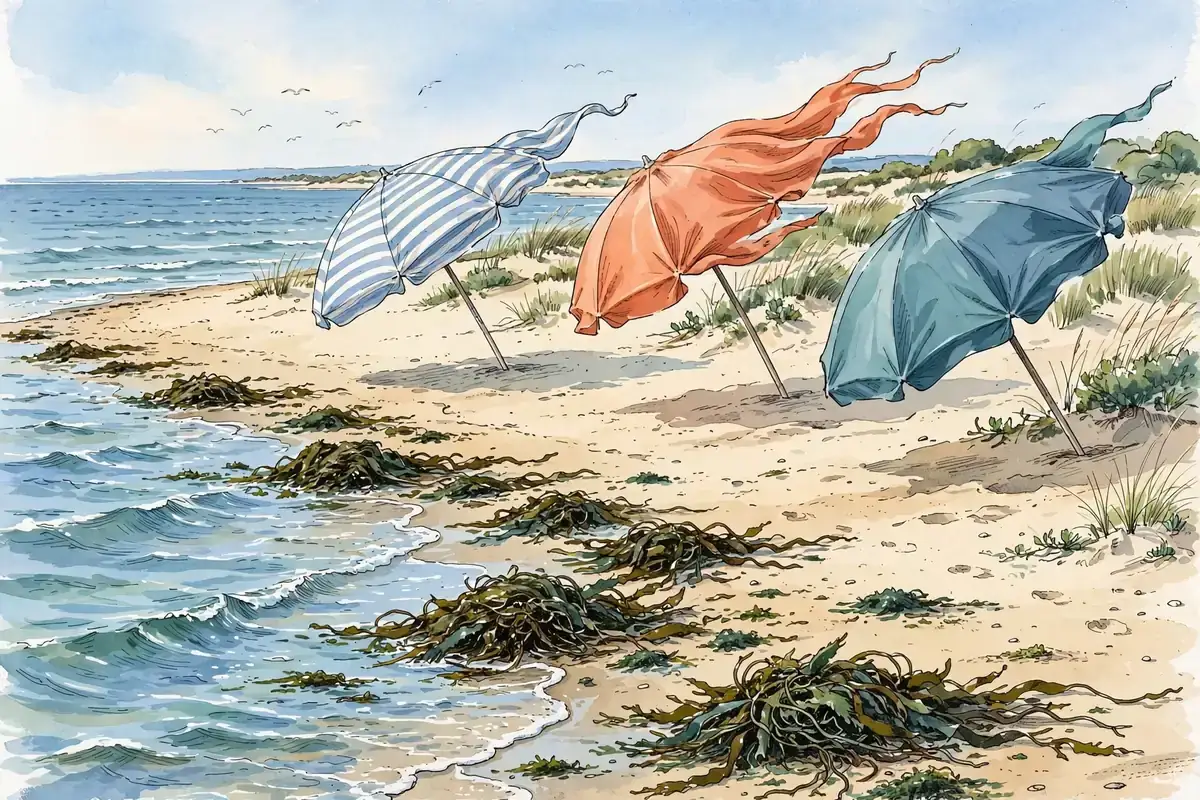
Calm, warm, sunny days are the worst — the same conditions that make for a lovely beach trip. Stable flies are daytime biters that prefer still air, so the flat-calm morning that looks perfect for sunbathing can also be prime fly time. Strong breeze is your friend, even if it tangles your hair and flaps your umbrella. Decaying seaweed piles (wrack lines) along the high-tide mark serve as breeding sites, so stretches of beach with heavy seaweed buildup tend to have worse fly pressure than freshly raked sections.
Here is the honest truth that the repellent industry does not advertise: standard insect repellents are much less effective against biting flies than against mosquitoes. Entomologists have noted for decades that DEET, while excellent against mosquitoes, is noticeably weaker against stable flies and other biting flies like deer flies and horse flies (stable flies are in the family Muscidae, not the tabanids, but share the same visual-hunter behavior). Some outdoor writers with years of field experience describe picaridin as “what DEET is to mosquitoes” for biting flies — a meaningful step up — but even picaridin offers only partial, shorter-lived relief against a determined stable fly attack.
The reason is partly behavioral: stable flies are persistent visual hunters that orient toward large dark shapes and are less discouraged by chemical repellents than mosquitoes, which rely more on odor cues. Repellents also degrade fast at the beach — swimming, sweating, and sunscreen all reduce coverage.
That does not mean repellent is worthless. A picaridin-based repellent on exposed skin is still a reasonable layer of defense and will reduce some bites. Just do not expect the same dramatic relief it gives against mosquitoes. Thinking of repellent as one partial layer rather than your main weapon will save you disappointment — and help you focus on the measures below that genuinely move the needle.
Because chemicals are weak against stable flies, physical barriers are your real defense. Covering the skin flies target most — ankles, feet, and lower legs — makes a bigger difference than any spray bottle. Lightweight, light-colored long pants or a beach cover-up worn over your swimsuit when you are sitting or walking the shoreline blocks most bites. Socks with water shoes or sandals look unfashionable, but for a fly-bad day they are genuinely effective, since stable flies rarely bother going after skin above the knee.
Color matters: stable flies are strongly attracted to dark colors, so light-colored clothing and towels reduce your visual profile. Sitting under an umbrella helps too — biting flies prefer sun and are less aggressive in shade. Drying off promptly after swimming also helps, since flies favor wet skin.
If you are already at the beach and the flies are swarming, keep moving rather than standing still in one spot — stable flies home in on stationary targets. Walking the waterline where the breeze is stronger is usually more comfortable than sitting in a calm hollow between dunes. Some beachgoers swear by portable fans, and there is a real basis for it: flies struggle to land in moving air, so a small battery fan aimed at your legs at your beach setup can meaningfully reduce bites in your immediate bubble.
The nuclear option is simply picking your day. An offshore breeze (blowing from land toward water) keeps flies off the beach. Fall cold fronts that bring brisk wind are some of the most pleasant — and most fly-free — beach days of the year. Checking the forecast and being willing to shift your beach trip by a day can eliminate the problem entirely.

Even with good prevention, some bites are almost inevitable on a bad fly day. Stable fly bites typically appear as small, red, raised welts — often clustered around the ankles — that itch intensely for a few hours and then fade over a day or two. Most need nothing more than basic first-aid for insect bites, but a calm, methodical routine keeps things from getting worse.
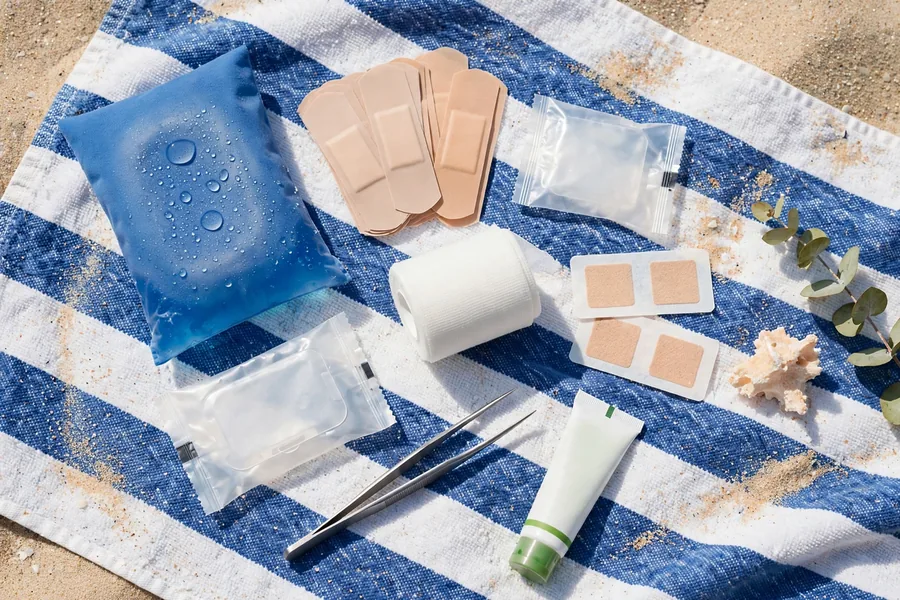
Start by washing the bites with soap and water — this removes saliva proteins and reduces infection risk after sand and seawater contact. A cold compress (a wrapped ice pack or cold wet cloth) eases pain and itching within minutes; use fifteen minutes on, then a break, repeated as needed.
For itching, an over-the-counter oral antihistamine or a topical anti-itch preparation can help. The key rule is don’t scratch or squeeze the bites — broken skin is an invitation for bacteria, and cellulitis from a scratched bite will ruin far more than one beach day. Trim your nails if you tend to scratch in your sleep, and keep the bites covered with a clean bandage if they are in a spot that rubs against shoes or sandals.
A little seasonal awareness goes a long way. In Gulf Coast states — Florida, Alabama, Mississippi, Louisiana, Texas — plan for potential fly pressure from August through November, with September and October the peak annoyance window. If you are booking a fall beach vacation, know that the trade-off for warm water and thinner crowds can be stable fly days; building flexibility into your itinerary (museum days, pool days, offshore-breeze days) takes the sting out of the season, literally.
Along the Atlantic and Great Lakes coasts, watch local news and fishing forums in late summer — outbreaks get reported, and regulars know which stretches of beach are hit hardest. State and county parks sometimes post advisories when biting flies are severe. If you are a repeat visitor to the same beach, ask lifeguards or longtime locals; they usually know the pattern intimately, including which wind directions spell trouble.
Winter travelers to the Caribbean or Mexico should note that biting midges (“no-see-ums”) are the bigger concern there — a different insect covered in our no-see-um bite guide.
Stable fly bites are usually a minor nuisance, but certain signs mean it is time to get medical care:
When in doubt, call your doctor’s office or an urgent care clinic and describe what you are seeing. Early treatment of an infected bite is simple; late treatment is not.
Why are stable flies only biting my ankles?
Stable flies fly low and target the lowest exposed skin — usually ankles and feet. They home in on dark colors and stationary shapes, so still legs on a towel are an ideal target. Socks or light pants remove their favorite landing zone.
Do stable flies bite at night?
No — stable flies are daytime biters, most active in warm, calm daylight hours. If something is biting you at the beach house at night, it is more likely mosquitoes or no-see-ums, which have completely different habits and treatments.
Are stable fly bites dangerous?
For most people, no. They are painful and itchy but not known to transmit diseases to humans in the US the way mosquitoes and ticks do. The real risks are allergic reactions in sensitive individuals and skin infections from scratching — both uncommon but worth watching for.
Why doesn’t my bug spray work on them?
DEET was optimized against mosquitoes and is measurably weaker against biting flies, which hunt more by sight than smell. Picaridin performs somewhat better, but physical barriers — clothing, shade, wind — outperform any spray against this insect.
How long does stable fly season last at the beach?
It varies by region. Along the Gulf Coast, expect August through November, peaking in September and October. Farther north, the season is shorter — typically late August through early October, ending with the first hard frosts. Offshore winds can make any day in season perfectly comfortable.
This article is for informational purposes only and isn’t medical advice. If you’re worried about a bite or sting, talk to a healthcare professional.
Dr. Jones oversees StingHelp’s clinical verification process. Every guide is systematically evaluated against active Centers for Disease Control and Prevention (CDC), Environmental Protection Agency (EPA), and American Academy of Allergy, Asthma & Immunology (AAAAI) medical consensus standards to ensure symptom distinctions and care recommendations are clinically sound.
Explore physician-reviewed first-aid procedures, identification clues, and symptom comparisons for other common outdoor bites and stings.
Greenhead Fly Season at the Jersey Shore: When They're Worst, and How to Plan Around Them The fast answer: Greenhead flies — the big,…

Red Rings on Your Dog's Belly? It's Probably Black Fly Bites — Not Ringworm, Not Lyme The fast answer: Every spring and early summer,…
Horse Fly Bite Swelling: How Long It Lasts, Day by Day (and When It's Infected) The fast answer: A horse fly bite swells far…