Direct answer: Stable fly bites are often sharply painful, especially on the lower legs and ankles. Wash the bite, use a cool compress, and protect it from scratching. Move away from the fly source and use labeled repellents plus clothing barriers. Seek care for worsening pain, infection signs, severe swelling, or any systemic allergic symptoms.
Stable flies, Stomoxys calcitrans, resemble house flies but are blood-feeding flies with piercing mouthparts. They are strongly associated with livestock areas, animal facilities, decaying plant material mixed with manure, and some beaches or outdoor recreation settings. Unlike a mosquito bite that may go unnoticed at first, a stable-fly bite is often immediately painful.
What makes this exposure distinctive?
Repeated painful bites around ankles or lower legs in areas with livestock, barns, kennels, farms, or abundant biting flies fit stable-fly exposure. The flies land briefly, feed, and leave; they do not remain attached like ticks. Their ecology and behavior are more informative than the lesion shape.
What the skin reaction can and cannot tell you
A stable-fly bite can produce a small red papule, tenderness, a puncture-like center, swelling, and later itching. The same appearance can occur after other biting flies or mechanical skin irritation, so do not identify the species solely from a central dot.
First 15 minutes: practical first aid
- Leave the active fly area or cover exposed lower legs to stop repeated biting.
- Wash the area gently with soap and clean water.
- If the skin is superficially broken, pat it dry after washing and cover only if friction or contamination is likely.
- Use a cool compress wrapped in cloth for 10–15 minutes at a time if it improves discomfort.
- Avoid scratching, squeezing, cutting, burning, or applying bleach, ammonia, gasoline, essential oils, or other caustic home remedies.
Relief over the next several hours
A cool compress can reduce soreness. Elevating a swollen lower leg may improve comfort. Pharmacist-guided itch or pain relief may be appropriate. Avoid repeatedly applying alcohol, peroxide, or strong antiseptics, which can irritate tissue.
Over-the-counter medicines are not appropriate for everyone. Age, pregnancy, kidney or liver disease, glaucoma, prostate problems, medication interactions, and allergy history can change what is safe. Follow the product label and ask a pharmacist or clinician when there is uncertainty.
What a normal local reaction may do
Pain should ease, while a small amount of redness or itch can persist for several days. Multiple bites can make the lower legs look more inflamed than a single bite would.
Signs the reaction is no longer routine
Medical assessment is appropriate for increasing pain, spreading redness with fever, pus, red streaking, major swelling around a joint, or symptoms that fail to improve. Call emergency services for breathing difficulty, collapse, or rapidly developing facial/tongue swelling.
When to call 911
Call emergency services for trouble breathing, throat tightness, wheezing, fainting, severe weakness, confusion, rapidly developing swelling of the tongue or face, or widespread hives accompanied by vomiting, dizziness, or breathing symptoms. If the person has prescribed epinephrine and an established emergency plan, follow that plan and still seek emergency care.
When infection becomes a concern
Redness, warmth, and swelling can be inflammatory rather than infectious. Infection is more concerning when pain is progressively increasing, redness keeps expanding while the person feels ill, pus or drainage develops, red streaking appears, or fever occurs. Scratching can damage the skin barrier and increase secondary infection risk.
How to document the reaction
Note whether bites cluster around ankles, whether cattle or horses were nearby, and whether the flies repeatedly returned after being brushed away. This exposure description is more useful than magnified photos.
Who should get advice sooner?
People with diabetes, poor circulation, chronic leg swelling, immune compromise, or skin ulcers should seek advice sooner if a lower-leg bite becomes inflamed because healing complications can be more consequential.
Common mistakes to avoid
- Do not confuse stable flies with nonbiting house flies based only on a quick glance.
- Do not apply livestock pesticides to human skin.
- Do not assume every warm red bite is infected on day one.
- Do not continue exposing bare ankles when flies are actively feeding.
Prevention after the immediate problem
Wear socks, long pants, and footwear that limits access to the lower legs. Use EPA-registered skin repellents according to label directions. Around animal facilities, sanitation and management of moist decaying organic material are central to reducing breeding.
How clinicians think about this problem
For most people treatment is supportive. Clinicians look for secondary infection, unusual allergic response, or an alternative diagnosis. Stable flies are important veterinary pests, but a human skin lesion alone does not establish pathogen transmission.
Questions to ask if symptoms are changing
- Was the arthropod actually seen, and was the exposure witnessed?
- Did pain start immediately, or did itching become prominent later?
- Are symptoms confined to one area or appearing elsewhere on the body?
- Is the reaction improving, stable, or worsening from hour to hour?
- Are fever, dizziness, vomiting, breathing symptoms, weakness, or confusion present?
- Has the person had a severe reaction to a similar exposure before?
Frequently asked questions
Can a picture confirm stable fly bite?
No. Immediate pain and livestock-associated exposure are useful clues, but several biting flies can create a similar mark.
How long should mild symptoms last?
A simple bite should improve over a few days. Multiple bites or sensitive skin can prolong itch and swelling.
Should I use antibiotics “just in case”?
No. Antibiotics do not treat an ordinary inflammatory or allergic reaction and should not be used without a clinical indication. Seek medical assessment if infection signs develop.
Is a large swollen area automatically an emergency?
Not automatically. Severe local swelling should be assessed if it affects function or continues to worsen, while systemic allergy symptoms require emergency care.
What if the cause was never seen?
Keep the diagnosis open. Focus on safe first aid, the exposure setting, symptom trajectory, and warning signs. Skin appearance overlaps widely among bites, stings, dermatitis, and infection.
What information is most useful at a medical visit?
Mention farm or livestock exposure, body distribution, number of bites, onset of pain, and whether there is fever, drainage, or progressive redness.
Related StingHelp guidance
- What Bit Me? identification hub
- Bite and sting first-aid hub
- Emergency and warning signs
- Bite and sting prevention
Authoritative references
- American Academy of Dermatology: bug bites and stings
- NHS: insect bites and stings
- US EPA: insect repellents
Why stable flies target the lower legs
Stable flies frequently attack the ankles and lower legs of people and animals. Their feeding behavior helps explain why someone may report repeated sharply painful bites around socks or trouser cuffs while the upper body is largely unaffected. This distribution is a useful exposure clue, although it is not exclusive to stable flies.
When lower-leg bites are recurring at a barn, kennel, farm, beach, or animal facility, prevention should focus both on personal barriers and the environmental breeding source. Treating each bite without reducing fly pressure will not stop the problem.
Stable flies versus house flies
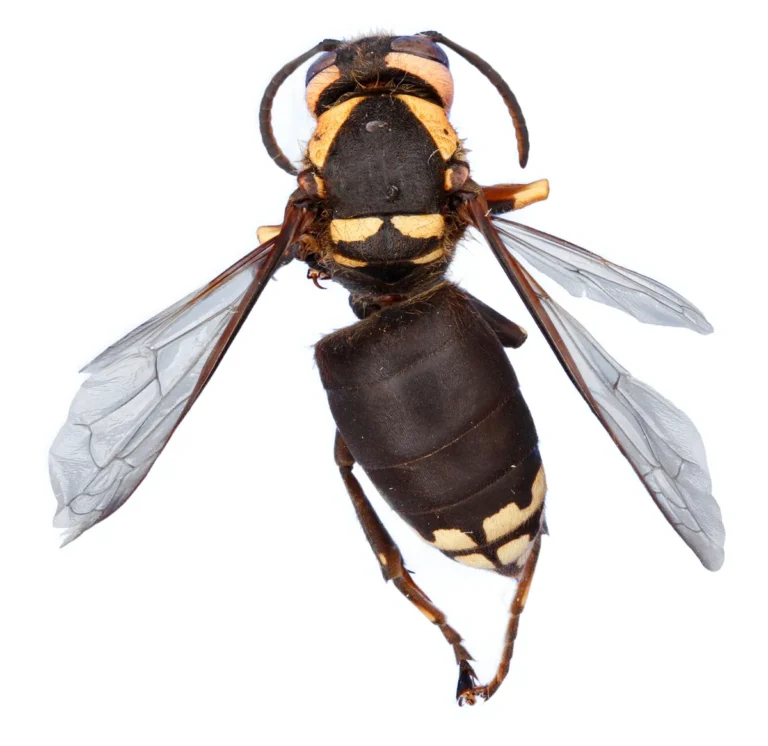
Stable flies can resemble house flies at a glance, but stable flies have piercing mouthparts and take blood meals. Ordinary house flies do not bite people. A repeatedly biting “house fly” around livestock or organic waste may therefore have been misidentified. Photographing the actual insect can help an entomologist or pest professional distinguish them.
The distinction matters mainly for source control, not for emergency first aid. A painful bite is treated according to the wound and symptoms regardless of whether the fly has been identified with certainty.
Breeding sites that keep stable-fly populations high
Stable-fly larvae develop in moist, fermenting organic material. Common sources can include wet straw, spoiled hay or feed, grass clippings, manure mixed with bedding, and other decomposing vegetation. Removing or drying this material interrupts breeding more effectively than repeatedly spraying adult flies.
At animal facilities, manure and bedding management should be routine and coordinated with veterinary or agricultural pest-control recommendations. In residential areas, compost piles or piles of wet plant material can sometimes contribute. Follow local pesticide and waste-management rules rather than applying agricultural chemicals casually.
Bites in people with diabetes or poor circulation
A small lower-leg wound deserves extra attention when a person has diabetes, peripheral arterial disease, neuropathy, chronic edema, or a history of difficult wound healing. Reduced sensation may make worsening pain less obvious, and poor circulation can slow healing. Inspect the area daily and seek professional advice earlier if redness, drainage, swelling, or skin breakdown is increasing.
Do not apply occlusive home mixtures to compromised skin. A clean, simple approach plus appropriate medical review is safer than experimenting with multiple topical products.
Stable-fly bites on children
Children may react strongly to the sudden pain and can accumulate multiple ankle bites during outdoor play. Wash the areas, cool them, and reduce scratching. Medication choices must follow pediatric labeling; do not give a child an adult antihistamine or pain-reliever dose.
If a child has numerous bites and becomes unusually sleepy, weak, feverish, short of breath, or develops swelling of the lips or tongue, seek medical assessment rather than assuming all symptoms are due to ordinary local reactions.
When footwear makes bites worse
A bite near the ankle can become more irritated when tight shoes or socks rub against swollen skin. Switch to clean, less restrictive footwear when practical and keep the area dry. If a blister forms, avoid deliberately popping it unless a clinician has advised a specific wound-care plan.
People whose work requires boots should inspect the skin after a shift and change damp socks. Friction, sweat, and repeated scratching can compound irritation and increase the chance of secondary infection.
Why insecticide on livestock is not human medicine
Products approved for cattle, horses, kennels, or agricultural premises can contain active ingredients or concentrations that are not intended for human skin. Never transfer these products into unlabeled bottles or use them as improvised human repellents. Human repellents should be EPA-registered for skin use and applied according to their own labels.
Likewise, do not use veterinary wound sprays on a person. If human skin is significantly damaged or contaminated, use standard wound care and seek clinical advice when needed.
Stable fly or another painful biting fly?
Horseflies, deer flies, black flies, and stable flies can all cause painful bites. Stable-fly exposure is strengthened by repeated lower-leg bites and livestock-associated environments. Horseflies and deer flies are generally larger and can create more obvious cutting injuries. Black flies are smaller and often linked to flowing-water habitats.
Exact identification can guide prevention but does not change the emergency signs: breathing difficulty, fainting, tongue or throat swelling, severe systemic illness, or a rapidly worsening infected wound require appropriate medical care.
Managing repeated bites during work
Workers in barns, farms, kennels, stables, or landscaping may be unable to leave the environment completely. Prevention should therefore be layered: clean work clothing, covered ankles, socks and trousers that limit access, correctly labeled repellent, and environmental sanitation. Report unusually heavy fly activity so breeding material can be identified and removed rather than relying only on personal sprays.
When to reconsider the diagnosis
If bites occur mainly at night indoors, continue appearing after stable-fly exposure has ended, or are associated with burrows, widespread rash, or household clustering, another diagnosis becomes more likely. Reassess the environment and seek medical or pest-identification help rather than assuming every new lesion is a stable-fly bite.
Practical source-control checklist for homes and small animal facilities
Remove wet grass piles, spoiled feed, saturated straw, manure-contaminated bedding, and other moist fermenting material on a regular schedule. Improve drainage where water keeps organic debris wet. Keep feed-storage areas clean and rotate waste so material does not remain damp long enough to support repeated fly generations.
If fly pressure remains high despite sanitation, consult a pest-management or agricultural extension professional about monitoring and targeted controls appropriate to the setting. Environmental control should be planned around people, pets, livestock, food areas, and local pesticide rules rather than improvised chemical use.
One more safety point: avoid treating the environment while people are exposed
If insecticides are needed around an animal facility, follow the product label for re-entry times, ventilation, protective equipment, food and water protection, and animal restrictions. Keep children and unprotected workers away during treatment. Source reduction and sanitation should remain the foundation because chemical treatment alone rarely fixes persistent breeding material.
Bottom line
Stable-fly treatment is straightforward for mild bites: clean, cool, protect the skin, and stop repeat exposure. The most useful prevention is combining clothing barriers, labeled repellent, and environmental source control around animal facilities.
StingHelp provides educational information and does not diagnose bites, stings, allergy, infection, or vector-borne disease. Seek professional care for severe, unusual, or worsening symptoms.
Why timing matters
The bite is often felt immediately, which separates it from many mosquito or flea exposures. Later itch reflects inflammation rather than the fly remaining in the skin.
Environment and source control
Stable flies breed in moist organic matter such as spoiled feed, straw, grass clippings, or manure-contaminated material. Reducing these breeding sites matters more than treating individual bites repeatedly.
What to watch over the next 24–48 hours
Check whether pain is settling, whether redness is stable rather than expanding, and whether new bites stop after leaving the area. Watch closely for lower-leg infection signs in people with poor circulation.
Medication and comfort-care cautions
Do not exceed label doses or combine products that contain the same active ingredient. Sedating antihistamines can impair driving and increase fall risk. Topical products should not be placed in the eye, mouth, or on large areas of broken skin unless a clinician specifically recommends it. For children, pregnancy, breastfeeding, or complex medical histories, individualized pharmacist or clinician advice is safer than copying an adult regimen from the internet.
Why exact species identification is often secondary
A clear photograph of the actual fly can help, but treatment decisions are driven by symptoms. Do not delay care for a worsening wound while trying to identify the species.
A practical home-monitoring checklist
Write down the exposure time, body location, pain level, itch level, and any treatment used. Take one photograph now and another only if there is meaningful change. Measure swelling in the same way each time. Note whether the person can eat, drink, walk, sleep, and breathe normally. If function is deteriorating, the threshold for professional evaluation should be lower.