
Portuguese Man O’ War vs Jellyfish: How to Tell Them Apart
Introduction The direct answer is simple, and it matters for safety: a Portuguese man o' war is not a jellyfish, even though it is…
Introduction The direct answer is that it depends on the species, the person stung, and the circumstances. For most healthy adults in the United States, a typical bee sting and…
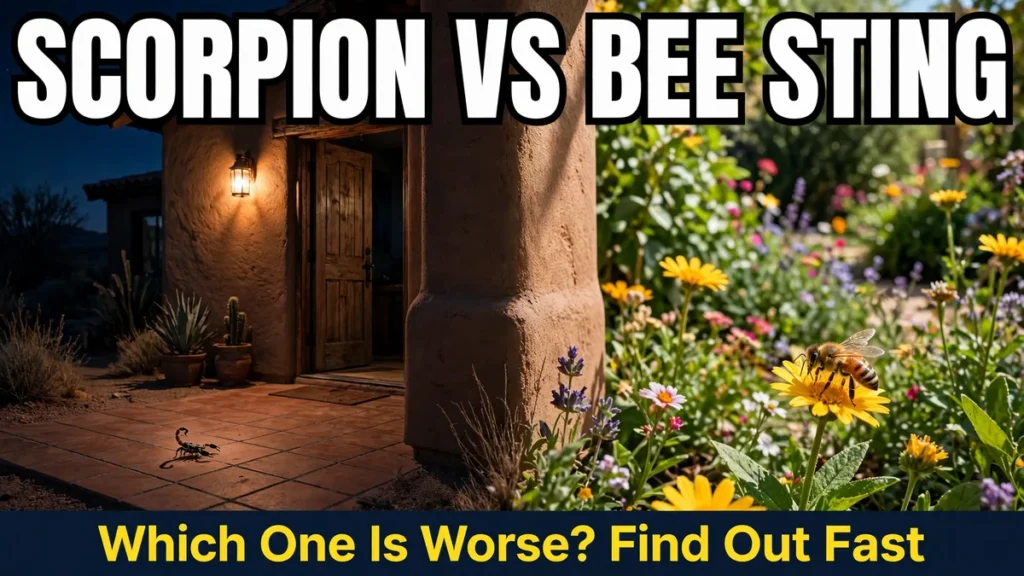
The direct answer is that it depends on the species, the person stung, and the circumstances. For most healthy adults in the United States, a typical bee sting and a sting from most common US scorpions both cause painful local symptoms that improve over hours to a few days. A sting from the Arizona bark scorpion is a different matter, especially for a small child, because it can cause symptoms beyond the sting site that need urgent medical care. A bee sting is also more dangerous than usual for a person with a known insect venom allergy, because an allergic reaction can affect breathing and circulation even when the sting itself looks small.
That distinction matters because people often ask which sting is worse as if the answer were fixed. It is not. Pain alone does not tell the whole story. A bee sting can hurt sharply at first and then settle into soreness and swelling in one spot. A scorpion sting can start with pain and then develop tingling, burning, or numbness that spreads farther from the sting site. The setting also tends to be different. Scorpion stings in the US Southwest often happen indoors at night, frequently to a bare foot. Bee stings usually happen outdoors in daylight, often when a person brushes against a bee, steps near a hive, or disturbs a bee while gardening, eating outdoors, or walking through flowers.
This article compares the two stings side by side in plain language. It covers how each sting usually happens, what the pain feels like and how long it tends to last, how the venoms differ in a general sense, what first aid is reasonable for each, who faces higher risk, and how to lower the chance of being stung again. It does not diagnose any individual case. If symptoms are severe, spreading in a worrying way, or not improving, prompt medical care is the safer choice, and the red flag section below explains exactly when to call 911.
The table below gives a quick comparison. The details that follow explain the exceptions, because the most important exceptions involve small children, people with allergies, and the Arizona bark scorpion.
| Feature | Scorpion sting | Bee sting |
|---|---|---|
| Most common setting in the US | Indoors at night, often in the Southwest, frequently to a bare foot | Outdoors in daylight, near flowers, gardens, food, or a hive |
| What is left behind | No stinger is left in the skin | A honeybee usually leaves a barbed stinger in the skin |
| Typical pain at first | Pain that may build and spread, often with tingling, burning, or numbness | Sharp, immediate pain in one spot |
| Usual pattern afterward | Local pain plus possible tingling or numbness beyond the sting site | Soreness, redness, and swelling that stay mostly local |
| Most important exception | Arizona bark scorpion, which can cause severe symptoms, especially in small children | Known venom allergy, which can cause a whole body allergic reaction |
| First aid focus | Stay calm, clean the area, apply a cool compress, and watch closely for spreading or whole body symptoms | Remove the stinger promptly if present, clean the area, apply a cool compress, and watch for allergy symptoms |
| Prevention focus | Shoes indoors at night, shaking out shoes and clothing, and sealing gaps in the home | Calm movement around bees, covered food and drinks outdoors, and care near hives and flowering plants |
This comparison is a general guide, not a rule for every sting. Scorpions vary by species, bees vary by situation, and individual reactions vary a great deal. A sting that looks mild at first still deserves observation, especially in a child, an older adult, a pregnant person, or anyone with a known allergy or a serious health condition.
Scorpions are nocturnal, which means they are most active at night. In desert and semi desert areas of the US Southwest, they may enter homes through small gaps around doors, windows, pipes, and foundations. Once inside, they often hide in dark, quiet places during the day and move around at night. That pattern explains why so many stings happen indoors after dark.
A bare foot is a common target because a person may step on a scorpion in a dark hallway, bathroom, bedroom, or garage without seeing it. Hands are also at risk when a person reaches into a closet, a box, a pile of clothing, firewood, or a storage area without looking first. Children may be stung while playing on the floor or while getting up at night. The sting is usually defensive. The scorpion is not hunting people. It stings when it is pressed, trapped, or startled.
Season and home layout can influence risk, but the practical point stays the same. If you live in or visit scorpion country, nighttime habits matter more than daytime habits. Shoes, a quick look before stepping onto a dark floor, and a habit of shaking out shoes and clothing can reduce risk a great deal. Sealing gaps and reducing clutter near the home also help, because fewer hiding places mean fewer chances of an accidental encounter.
Bee stings usually happen outdoors in daylight because that is when bees are active, feeding, and moving between flowers. A honeybee may sting when it is accidentally pressed against skin, caught in clothing or hair, stepped on, or swatted at. A person may also be stung near a hive or a nest, or while mowing, gardening, trimming plants, or reaching into flowering shrubs.
Food and sweet drinks attract bees in warm weather. An open soda can, a plate of fruit, or a picnic table can draw bees close to hands and faces. Bright floral patterns, strong scents, and fast movements do not guarantee a sting, but calm, slow movement around bees is generally safer than swatting. Bees are not usually aggressive when they are simply feeding on flowers. Most stings happen during an accidental encounter or when a bee feels trapped.
The key difference from scorpions is visibility. A bee sting often happens in a place where the person can see flowers, hear buzzing, or notice bees nearby. A scorpion sting often happens in the dark, without warning, and the person may not see the scorpion at all. That difference affects first aid too, because a bee sting victim can often say what happened and whether a stinger is present, while a scorpion sting victim may be unsure what stung them until symptoms or a later sighting clarify it.

Scorpion sting pain often starts quickly and may feel intense at the sting site. What sets many scorpion stings apart is what happens next. Pain may build rather than fade right away, and tingling, burning, or numbness may spread beyond the immediate spot. Some people describe a strange, electric, or pins and needles feeling. Others notice that the area feels numb or unusually sensitive to touch.
For most common US scorpions outside the Arizona bark scorpion group, symptoms tend to stay local and improve over hours, though soreness and sensitivity can linger for a day or longer. The experience can still be frightening, especially at night, because the spreading tingling feeling is unfamiliar and hard to interpret. That uncertainty is a good reason to watch the person closely and to seek care if symptoms spread, worsen, or involve areas beyond the sting site.
With the Arizona bark scorpion, symptoms can go further. Pain and tingling may be followed by restlessness, unusual eye movements, muscle twitching, or difficulty with coordinated movement, especially in children. These are signs that need urgent medical attention, not home observation. The difference between a local sting and a bark scorpion sting cannot always be judged from pain alone in the first minutes, which is why the species, the location, and the age of the person all matter when deciding how urgently to seek care.
Bee sting pain is usually sharp and immediate. Many people describe a sudden burning or stinging sensation at one spot, followed by soreness. Redness and swelling often develop over the next hour or two. Itching may follow as the initial pain eases. For a typical honeybee sting in a person without an allergy, the worst pain is often early, and the area then remains tender, swollen, and itchy for a day to a few days.
One useful detail is the stinger. A honeybee leaves a barbed stinger in the skin, and the sting may continue to irritate the area until the stinger is removed. Removing it promptly is part of basic first aid. Other bees and wasps do not all leave stingers in the same way, and this article focuses on honeybees because the comparison question usually involves a honeybee encounter in a garden or yard. If you are unsure whether the insect was a bee, a wasp, or another stinging insect, the safest approach is to treat the symptoms in front of you and watch for allergy signs, rather than trying to identify the insect from pain alone.
Swelling that increases over the first day or two does not automatically mean an allergy. Local swelling can be impressive, especially on the face, hands, or feet, and it can still be a local reaction. The features that point toward an emergency are different. They involve breathing, throat swelling, widespread hives, dizziness, fainting, or other whole body symptoms. Those signs are covered in detail in the When to See a Doctor section, and they should never be watched at home to see if they pass.
| Time frame | Scorpion sting, typical local case | Bee sting, typical local case |
|---|---|---|
| First minutes | Pain begins, may build, tingling or burning may start | Sharp pain, redness begins, stinger may be visible if a honeybee stung |
| First hour | Pain and tingling may spread a short distance from the site | Pain eases somewhat, swelling and soreness increase locally |
| First day | Local pain and sensitivity, tingling or numbness may persist | Soreness, swelling, redness, and itching at the site |
| Days after | Gradual improvement, some sensitivity may linger | Swelling and itching fade, skin returns toward normal |
Timelines vary widely. A sting on a foot may feel worse when walking. A sting on a hand may interfere with grip. A sting near the face or eye deserves extra caution because swelling in that area can affect vision or comfort, and any eye involvement should be checked promptly. Children may have a harder time describing tingling or numbness, so adults should watch behavior as well as words. Restlessness, unusual crying, drooling, trouble swallowing, or unusual movements after a scorpion sting in a child should prompt urgent care.
Venom is a complex mixture, and the details differ by species. In plain language, bee venom is best known for causing local pain, swelling, and inflammation, plus allergic reactions in people who are sensitized to it. Scorpion venom is best known for affecting nerves, which helps explain the tingling, burning, and numbness that many people report. That nerve related pattern is also why some scorpion stings can cause symptoms beyond the sting site, even when the skin itself does not look very dramatic.
This does not mean every scorpion venom is stronger than every bee venom. Most US scorpions cause local symptoms only, and most bee stings also cause local symptoms only. The risk comes from specific combinations. A bark scorpion sting in a small child combines a potent venom with a small body size, so whole body symptoms are more likely. A bee sting in a person with a venom allergy combines an otherwise ordinary sting with an immune system response that can affect the whole body. In both cases, the sting itself is only part of the story. The person and the species complete it.
Another plain language difference is the delivery. A honeybee sting involves a barbed stinger that stays in the skin. A scorpion sting involves a stinger at the tip of the tail, but the scorpion does not leave a stinger behind in the skin. That means scorpion first aid does not involve removing a stinger, while bee first aid does. It also means that finding a stinger can help confirm a honeybee sting, while not finding one does not rule out a scorpion sting.
People sometimes assume that a more painful sting is automatically more dangerous. That is not a safe assumption. Pain is subjective and varies with sting location, depth, and individual sensitivity. A mildly painful sting that triggers an allergic reaction is far more dangerous than a very painful local sting that stays local. Likewise, a scorpion sting that causes numbness spreading up a leg deserves more urgent attention than a bee sting that causes a large but local swelling, even if the bee sting looks worse on the surface. When in doubt, describe the symptoms to a medical professional or poison control rather than ranking pain alone.
Stay calm and move away from the area so you are not stung again. If the scorpion is still visible, do not try to catch it with bare hands. A photo from a safe distance can help identification later, but identification should never delay care when symptoms are severe.
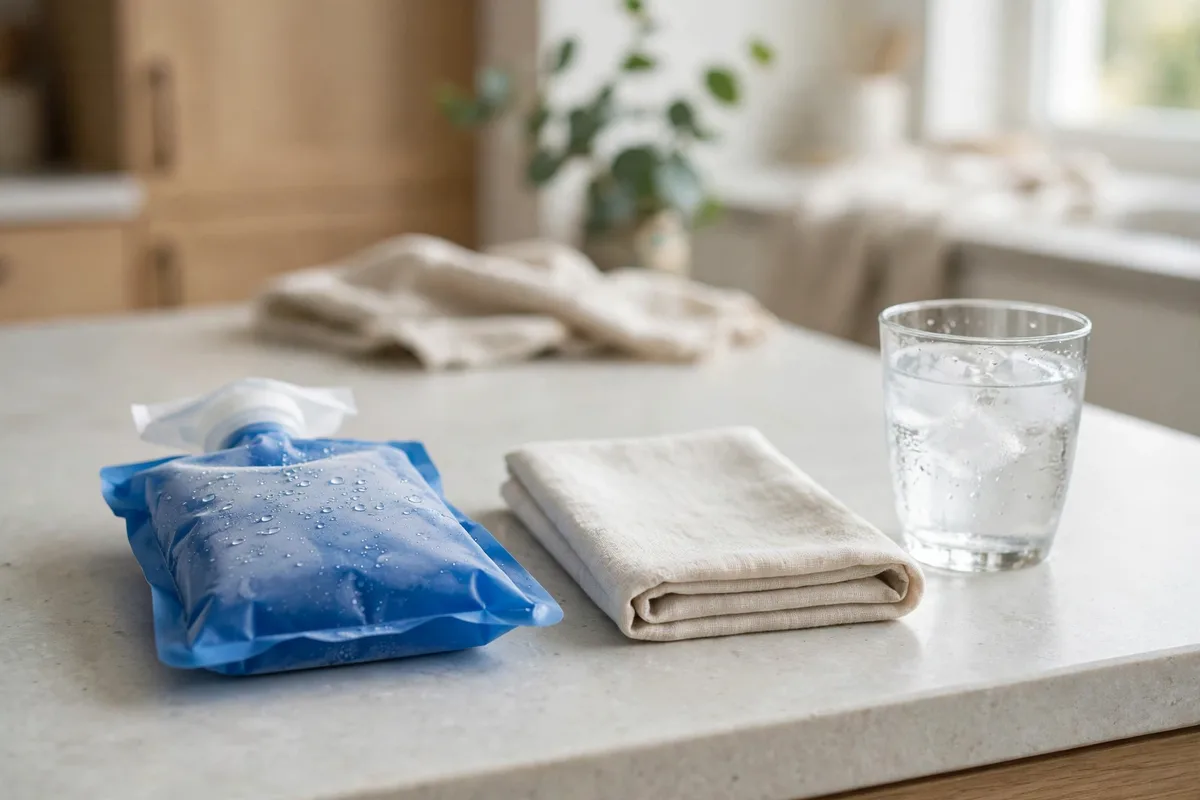
Clean the sting site gently with soap and water. Apply a cool compress or a cloth wrapped ice pack for short periods to ease pain. Avoid tight bandages or tourniquets, and avoid cutting the skin or trying to suck out venom. Those older folk remedies do not help and can cause harm. Keep the stung limb still and at a comfortable level, and avoid unnecessary movement that increases pain.
Watch the person closely for at least a few hours, longer for a child or for any sting in the Southwest where a bark scorpion is possible. Note whether pain spreads, whether tingling or numbness increases, and whether any new symptoms appear, such as restlessness, muscle twitching, unusual eye movements, trouble swallowing, or difficulty breathing. Write down the time of the sting and the symptoms as they change, because that timeline helps medical professionals assess the case.
Over the counter pain relief may be reasonable for an adult who can safely take it, following the label directions, but pain relief does not replace observation. If pain is severe, symptoms spread, or the person is a small child, seek medical care promptly rather than waiting for pain medicine to work. When in doubt, calling poison control or a local emergency number for guidance is a reasonable step. Poison control can help assess scorpion stings based on species, location, age, and symptoms, and can advise whether emergency care is needed.
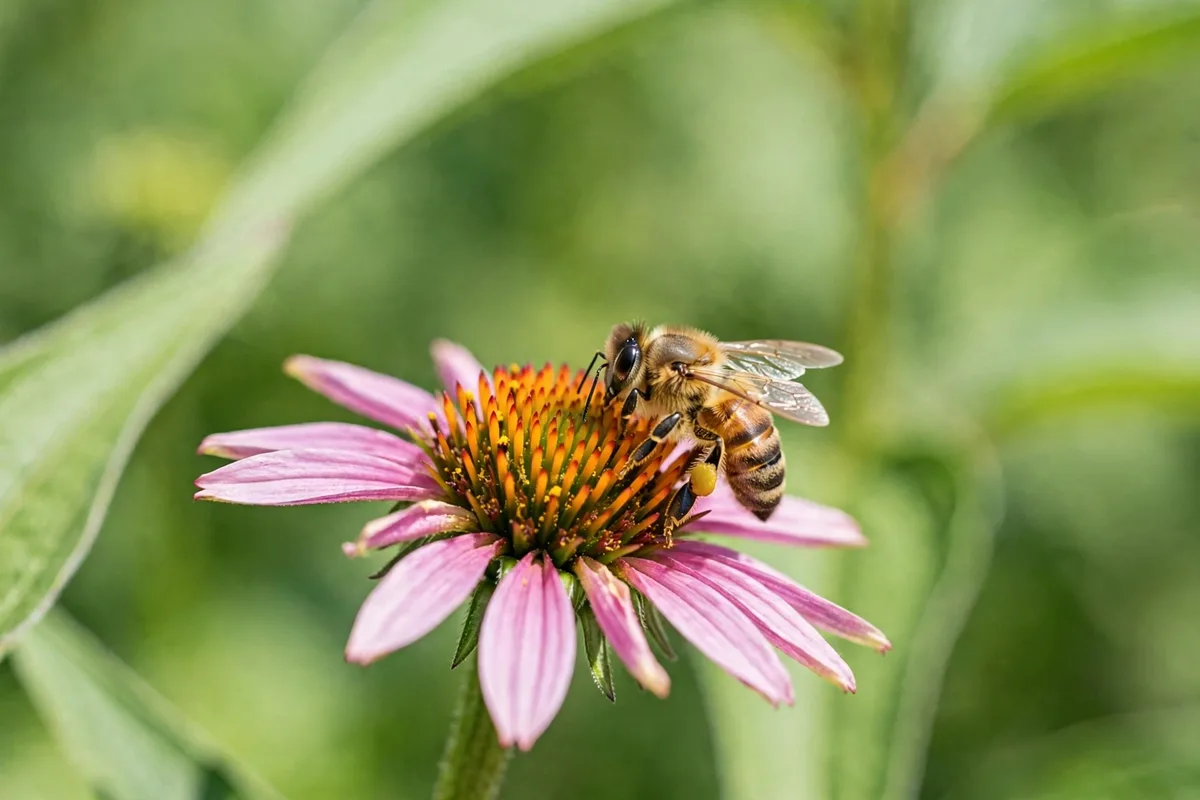
If a honeybee stung the person, remove the stinger promptly. Scrape it off gently with a fingernail, a credit card edge, or another flat object, or pull it out carefully. The goal is to get it out quickly without squeezing the area more than necessary. After the stinger is out, clean the area with soap and water.
Apply a cool compress or a cloth wrapped ice pack for short periods to reduce pain and swelling. Keep the area clean and avoid scratching, which can break the skin and increase irritation. If the sting is on a hand, foot, or another area that swells, remove rings, watches, or tight clothing nearby before swelling increases.
Watch for allergy symptoms for at least an hour, and stay aware for several hours afterward. Allergy symptoms can include widespread hives, itching beyond the sting site, swelling of the lips, tongue, or throat, trouble breathing, wheezing, dizziness, nausea, or fainting. If any of those appear, call 911 right away. If the person has an epinephrine auto injector prescribed for insect sting allergy, use it as directed and still call 911, because emergency care is needed even after epinephrine.
For a typical local bee sting, pain and swelling usually improve over a few days. A detailed guide to honey bee sting treatment can help you compare normal healing with signs that need a second look. If swelling keeps increasing after two to three days, redness spreads, warmth increases, or the area becomes increasingly painful, seek medical care to check for infection or another complication. A sting that is still swollen after several days is not automatically an emergency, but it does deserve attention, especially if fever or spreading redness appears. A related guide on a bee sting still swollen after 3 days explains how to tell a slow local reaction from a problem that needs care.
Small children face higher risk from scorpion stings, particularly from the Arizona bark scorpion, because a given amount of venom has a larger effect on a smaller body. Children also may not describe symptoms clearly. Adults should watch for restlessness, crying that is hard to soothe, drooling, trouble swallowing, unusual eye movements, muscle twitching, or jerky movements. Any of those signs after a possible scorpion sting in a child should prompt urgent care.
Children also face higher risk from bee stings if they have an allergy, and they may be stung while playing outdoors without noticing bees nearby. Teaching children to stay calm around bees, to avoid swatting, and to tell an adult right away after any sting helps adults act quickly.
A person with a known allergy to bee venom faces the highest risk from a bee sting, regardless of how painful the sting feels at first. Allergic reactions can develop quickly and can affect breathing and blood pressure. People in this group should carry prescribed emergency medicine when outdoors, wear medical identification if advised by their clinician, and have a plan for getting emergency help fast.
Scorpion venom allergy is less commonly discussed than bee venom allergy, but any person who has had a severe reaction to any sting in the past should treat a new sting with extra caution and seek medical advice early. Past reactions do not guarantee a future reaction, and a lack of past reactions does not guarantee safety, but a history of severe reaction is an important warning sign.
Older adults, pregnant people, and people with heart, lung, or immune conditions may tolerate stings less well and may need earlier medical review. Stings on the face, neck, mouth, or eye also deserve earlier review because swelling in those areas can affect breathing, swallowing, or vision. Multiple stings at once deserve earlier review for anyone, because the total venom load is higher and whole body symptoms are more likely.
People who live in the Southwest face more scorpion exposure, especially at night and in homes near desert terrain. People who work outdoors, garden, hike, camp, or handle firewood face more bee exposure during the day and more scorpion exposure when moving stored materials. For both groups, prevention habits and a simple sting plan make a real difference. Knowing where the nearest urgent care is, keeping a phone charged, and knowing whether anyone in the household has a sting allergy are practical steps, not overreactions.
Call 911 right away for breathing difficulty, throat swelling, muscle twitching or uncontrolled movements (especially in children), fainting, or other signs of a severe reaction. Also call 911 for widespread hives with breathing trouble, swelling of the lips or tongue, wheezing, chest tightness, severe dizziness, confusion, or a feeling that something is seriously wrong. Do not wait to see if these symptoms improve on their own. If epinephrine has been prescribed for sting allergy, use it as directed and still call 911.
Seek prompt medical care, the same day if possible, for spreading pain, numbness that worsens, tingling that spreads well beyond the sting site, symptoms that do not improve, or any scorpion sting in a small child in an area where bark scorpions live. Also seek prompt care for a sting on the face, eye, mouth, or neck, for multiple stings, for increasing redness, warmth, or fever, for a sting in a person with a known allergy even if symptoms seem mild at first, and for any sting that causes unusual symptoms such as trouble swallowing, slurred speech, or weakness.
It is reasonable to call poison control or a clinician for guidance after any scorpion sting when you are unsure about the species or the symptoms. Poison control can help judge urgency based on location, age, and symptoms. For bee stings, a clinician can advise whether a local reaction needs an in person check or whether home care with observation is reasonable. When the choice is between waiting and calling, calling is usually the safer option, especially for children and for stings that involve the Southwest bark scorpion.
The table below summarizes the decision in simple terms, but it does not replace medical advice for a specific case.
| Situation | Action |
|---|---|
| Breathing difficulty, throat swelling, fainting, muscle twitching, or uncontrolled movements | Call 911 immediately |
| Widespread hives, lip or tongue swelling, wheezing, chest tightness, severe dizziness | Call 911 immediately |
| Spreading pain, worsening numbness, symptoms not improving, small child stung by a possible bark scorpion | Seek prompt medical care the same day |
| Sting on face, eye, mouth, or neck, multiple stings, fever, or spreading redness and warmth | Seek prompt medical care |
| Typical local pain and swelling that slowly improves, no allergy signs | Home care with close observation, seek care if the pattern changes |
Shoes are the simplest prevention step at night in scorpion country. Wear shoes or slippers when walking indoors after dark, especially in hallways, bathrooms, garages, and other dim areas. Shake out shoes, clothing, towels, and bedding before use, and check closets, boxes, and storage areas before reaching inside. Keep beds slightly away from walls if that is practical, and avoid leaving clothing or bedding on the floor overnight.
Seal gaps around doors, windows, pipes, and utility entries where scorpions may enter. Repair torn screens and door sweeps. Reduce clutter in garages, closets, and storage rooms, and keep firewood outside and away from the house wall. Remove piles of rocks, lumber, and debris near the home where scorpions hide during the day. These steps do not guarantee a scorpion free home, but they reduce the number of hiding places and entry points.
Outdoor lighting and yard care can also help. Keep grass trimmed, remove standing clutter near entry doors, and be cautious when moving rocks, wood, or stored items at night. Wear gloves and closed shoes for yard work in scorpion areas, and use a flashlight when walking outdoors after dark.
Move calmly around bees and avoid swatting. If a bee lands on you, stay still or move away slowly rather than flapping your arms. Cover food and sweet drinks outdoors, and clean up spills promptly. Avoid drinking from open cans outdoors where a bee may have crawled inside, and check cups before drinking.
Be careful around flowering plants, clover lawns, fruit trees, and garden beds where bees feed. Wear closed shoes outdoors, especially on lawns with clover, and avoid walking barefoot where bees may be on the ground. When gardening, mowing, or trimming, check the area first and work calmly. If you find a hive or a large number of bees in one place, leave the area calmly and do not disturb the hive. Professional removal is safer than a do it yourself attempt.
People with a known bee allergy should take extra precautions. Carry prescribed emergency medicine, tell companions about the allergy, and avoid areas with heavy bee activity when possible. A simple plan, such as who will call 911 and where the medicine is kept, can save critical minutes if a sting occurs.
It depends on the species and the person. Most common US scorpion stings and most bee stings cause local pain that improves over hours to days. An Arizona bark scorpion sting, especially in a small child, can be worse because it can cause symptoms beyond the sting site. A bee sting in a person with a venom allergy can also be worse because an allergic reaction can affect breathing and circulation. Pain alone does not decide which is worse.
Scorpion venom can affect nerves, which helps explain tingling, burning, or numbness that spreads beyond the sting site. Bee venom more often causes local pain, swelling, and inflammation at the sting site. Tingling that spreads, worsens, or is joined by other whole body symptoms should prompt prompt medical care, especially in a child or in an area where bark scorpions live.
No. Scorpions do not leave a stinger in the skin, so there is nothing to remove. Clean the area, apply a cool compress, and watch for spreading or whole body symptoms. For a honeybee sting, remove the stinger promptly, then clean the area and apply a cool compress. The difference in first aid reflects the difference in how the sting is delivered.
Bee sting pain is often sharpest at first and then settles into soreness, swelling, and itching that may last a few days. Scorpion sting pain may build and linger, with tingling or sensitivity lasting hours to a day or longer in a typical local case. Timelines vary by sting location, species, and individual reaction. Pain that worsens instead of improving, or symptoms that spread, deserve medical review rather than continued home observation.
Most scorpion stings in adults cause local symptoms only, but the Arizona bark scorpion can cause more serious symptoms in adults as well, and any sting that causes whole body symptoms deserves urgent care. Adults with serious health conditions, people stung multiple times, and people stung on the face or neck should also seek care earlier. Adults should not assume that a scorpion sting is safe to ignore simply because they are not a child.
Stay calm, clean the area, apply a cool compress, and watch the child closely. Note the time and any new symptoms. If the child shows restlessness, muscle twitching, unusual eye movements, trouble swallowing, breathing difficulty, or any sign of a severe reaction, call 911 right away. In the Southwest, where bark scorpions live, seek medical guidance promptly even if symptoms seem mild at first, because symptoms in children can develop further.
Allergy to bee venom is well recognized and can cause serious whole body reactions. Scorpion stings can also cause severe reactions, particularly from bark scorpions, though the mechanism and pattern differ. Anyone who has had a severe reaction to any sting should discuss future sting risk and an emergency plan with a clinician, and should seek care early after any new sting rather than waiting to see how it develops. A guide to multiple stings and venom allergy explains why multiple stings and allergy history both raise the urgency.
Context often helps more than pain alone. A nighttime indoor sting to a bare foot in the Southwest points more toward a scorpion. A daytime outdoor sting near flowers, with a visible stinger left in the skin, points more toward a honeybee. Tingling or numbness spreading beyond the site also points more toward a scorpion. When the cause is unclear and symptoms are severe, spreading, or not improving, seek care and describe the setting, timing, and symptoms rather than trying to force a diagnosis at home.
The Arizona bark scorpion is the species most often associated with severe symptoms in the US, especially in small children. Most other US scorpions cause local pain only. That distinction is important, but it does not mean every other scorpion sting can be ignored. Species identification can be difficult, especially at night, and any sting with spreading or whole body symptoms deserves prompt medical attention regardless of the presumed species. If you live in bark scorpion territory, learning to recognize that species and its habitat can help, but it should not delay care when symptoms are concerning. A comparison of Arizona bark scorpion vs striped bark scorpion can help you understand why species identification matters so much in the Southwest.
A scorpion sting and a bee sting are not interchangeable experiences, even though both hurt and both usually improve with basic care. The setting gives the first clue. Scorpion stings tend to happen indoors at night in the Southwest, often to a bare foot, while bee stings tend to happen outdoors in daylight near flowers, food, or a hive. The pain gives the second clue. Scorpion pain often builds and spreads with tingling, burning, or numbness, while bee pain is usually sharp and local, with a stinger left behind when a honeybee is involved.
Species and personal risk give the most important clues of all. The Arizona bark scorpion can cause severe symptoms, especially in small children, while most other US scorpions cause local pain only. A bee sting can become an emergency for a person with a venom allergy, even when the sting itself looks ordinary. First aid for both starts with the same basics, staying calm, cleaning the area, applying a cool compress, and watching closely, but bee first aid adds prompt stinger removal, and scorpion first aid adds extra vigilance for spreading nerve related symptoms.
Prevention is also different because the settings are different. Shoes and nighttime habits protect against scorpions indoors. Calm movement, covered food, and care around hives and flowering plants protect against bees outdoors. Together, those habits lower the chance of either sting, and a clear plan for when to call 911 lowers the risk further if a sting does happen.
If you remember only one idea from this comparison, let it be this. Do not judge a sting by pain alone. Judge it by the species if known, the person stung, the pattern of symptoms, and whether anything is spreading or affecting the whole body. When breathing, swallowing, movement, or consciousness is affected, or when a small child shows unusual symptoms after a scorpion sting, call 911 without delay. For other stings, close observation and prompt care when symptoms spread, worsen, or fail to improve are the safest path.
Medical disclaimer: This article is for general information only and is not medical advice. It does not diagnose or treat any condition. If you have concerning symptoms, a known insect venom allergy, or symptoms that worsen, seek professional medical care promptly. This content is medically reviewed by Dr. Sarah Jones, MD, for general educational accuracy.
Dr. Jones oversees StingHelp’s clinical verification process. Every guide is systematically evaluated against active Centers for Disease Control and Prevention (CDC), Environmental Protection Agency (EPA), and American Academy of Allergy, Asthma & Immunology (AAAAI) medical consensus standards to ensure symptom distinctions and care recommendations are clinically sound.
Explore physician-reviewed first-aid procedures, identification clues, and symptom comparisons for other common outdoor bites and stings.

Introduction The direct answer is simple, and it matters for safety: a Portuguese man o' war is not a jellyfish, even though it is…
Introduction Yes, spiders can bite in winter, but winter spider bites are uncommon, and most of the spiders you see indoors during the cold…
Introduction: The Direct Answer A jellyfish sting and sea lice irritation are different problems with different causes, even though both can leave you itchy…