A bee sting swollen after 3 days is one of the most common post-sting worries — and one of the most misunderstood. Day three is right around the peak of the normal inflammatory response, which means the sting often looks worse than it did on day one. That’s expected, not alarming. But day three is also when a genuine infection would start declaring itself, so the question “is this normal or infected?” deserves a careful, specific answer. This guide covers the normal swelling timeline (which can run up to a week), what large local reactions look like, the infection clues that mean something different is happening, what to do while you watch and wait, and when to get medical care.
The Normal Swelling Timeline (Up to 7 Days)
Most people expect a bee sting to hurt for an hour and then fade. The reality is a longer, staged process — and knowing the stages prevents most of the day-three anxiety.
Minutes 0–60: Sharp pain at the sting moment, rapidly easing. The area reddens and begins to swell. This is the venom’s direct effect plus the first wave of inflammation.
Hours 2–24: Swelling builds. A red, tender, warm bump develops — typically 1–2 inches across for a normal local reaction. Itching often begins as the pain fades. This is the histamine and immune response ramping up.
Days 2–3: The peak. Swelling, redness, and itching are usually at their maximum around 48–72 hours. The area may feel firm, hot, and throb. Many people are alarmed because it’s visibly worse than day one — but this crest is the standard script. The immune response takes time to fully mobilize, and day three is when it’s fully deployed.
Days 4–5: The turn. Swelling begins to recede, redness fades from the edges inward, itching often intensifies temporarily (healing skin itches), then eases.
Days 6–7: Most normal reactions have largely resolved — perhaps a small firm nodule or faint pink mark remains. Full resolution, including any residual firmness under the skin, can take up to two weeks.
So: swollen at day three, with the swelling stable or only slightly worse than day two, redness contained around the sting, and you feeling otherwise well — that’s normal. The timeline that matters is trajectory: normal swelling plateaus at day 2–3 and then improves. Keep that plateau-and-improve pattern in mind; it’s the reference against which everything else is judged.
Large Local Reactions Explained
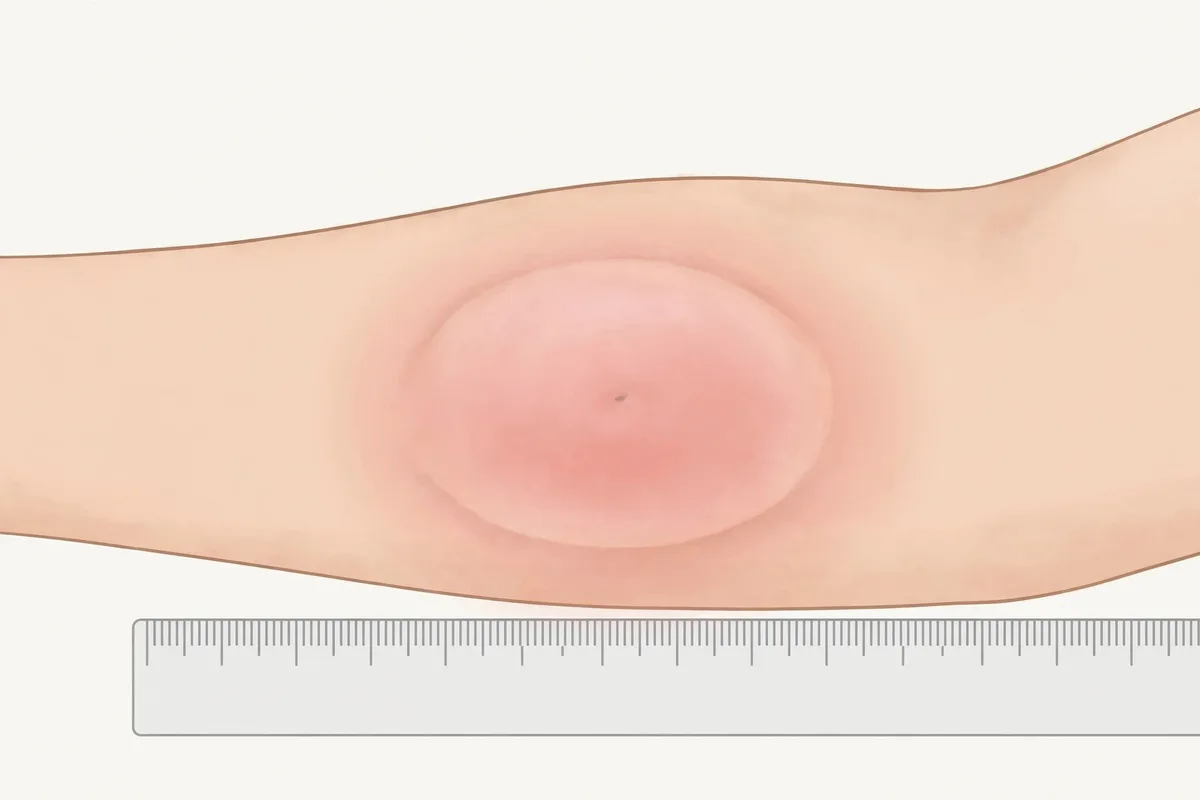
Some bee stings produce swelling far beyond the typical 1–2 inch bump — an area 4+ inches across, sometimes engulfing much of a forearm, hand, or foot, peaking at 48–72 hours and taking 5–10 days to resolve. This is called a large local reaction, and while it looks dramatic, it’s an exaggerated immune response, not an infection and not anaphylaxis.
Large local reactions are more common in certain situations: stings on the hand, foot, or face (where tissue is tight and swelling shows more), in people who’ve been stung before (the immune system is primed), and with certain bee species. They’re uncomfortable — the swelling can limit joint movement, throb, and itch intensely — but they’re generally not dangerous.
How to recognize one: the swelling is large but the redness is contiguous and uniform (not streaky), the pain/itch is significant but stable or slowly improving after day 3, there’s no fever, and the swelling, while big, isn’t rapidly expanding hour by hour. Large local reactions respond to the same home measures as normal stings — cold, elevation, antihistamines — just more persistently. Some clinicians recommend a short course of oral steroids for very large reactions, but that’s a medical decision, not a home remedy.
The key distinction from infection: a large local reaction is big but behaving — plateauing and then slowly improving, without systemic symptoms. An infection is misbehaving — expanding, increasingly painful, hot, possibly with fever. Size alone doesn’t diagnose infection; trajectory and accompanying signs do.
People who’ve had a large local reaction often ask about future risk. Having had one doesn’t mean you’ll have anaphylaxis next time — large local reactions and systemic allergic reactions are different immune pathways. But it’s worth mentioning to your doctor, and if stings are a recurring exposure (beekeeping, outdoor work), an allergist visit is sensible. For the broader picture of allergy-related concerns, see the bee sting warning signs guide.
Delayed Worsening: The Infection Clue
Here’s the critical distinction for the “swollen after 3 days” question. Normal swelling peaks at day 2–3 and then improves. Infection announces itself differently:
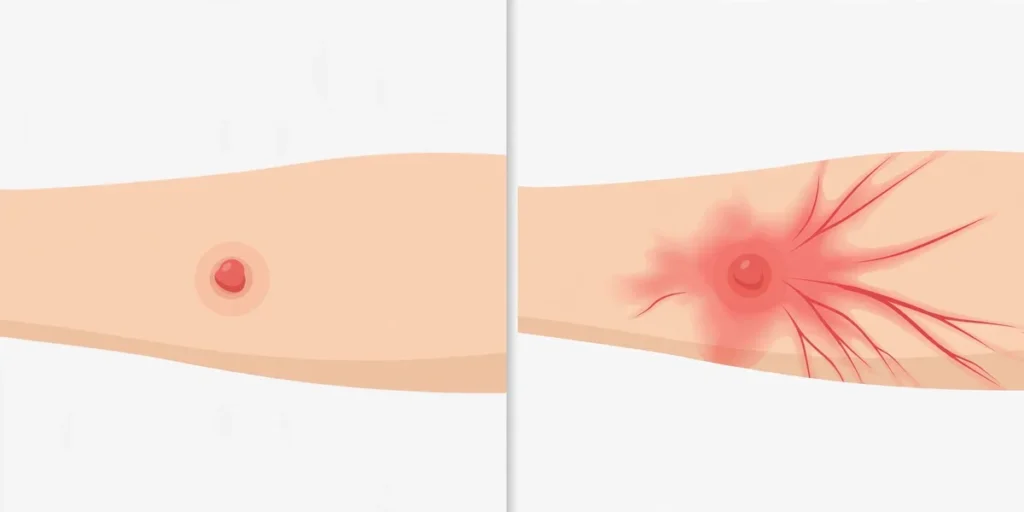
The delayed-worsening pattern: The sting seemed to be following the normal course — or was even improving — and then, around day 3–5 (sometimes later), it gets worse again. More pain (not just itch), more swelling, more redness, new warmth. This “better then worse” trajectory is the classic signature of secondary bacterial infection, and it’s the single most reliable clue.
Why the delay? The sting itself is sterile — bee venom isn’t carrying bacteria. Infection happens when skin bacteria (usually staph or strep) enter through the sting puncture, most often because the site was scratched. It takes a few days for the bacterial colony to grow large enough to cause visible worsening, which is why infection declares itself on days 3–7 rather than day 1.
The never-improved pattern: Less common but also suspicious — swelling and pain that just keep intensifying from day 1 without ever plateauing. Normal inflammation always plateaus. Continuous escalation is abnormal at any stage.
The pen-mark test: If you’re unsure, mark the outer edge of the redness with a pen and note the time. Recheck in 12 hours. Normal day-three redness stays put or shrinks; expanding redness is objective evidence of a problem you can report to a clinician. Take a dated photo too — “it looked like this yesterday morning” is useful information.
Red Streaks, Pus, and Fever as Warning Signs
Beyond trajectory, specific signs point to infection rather than normal inflammation:
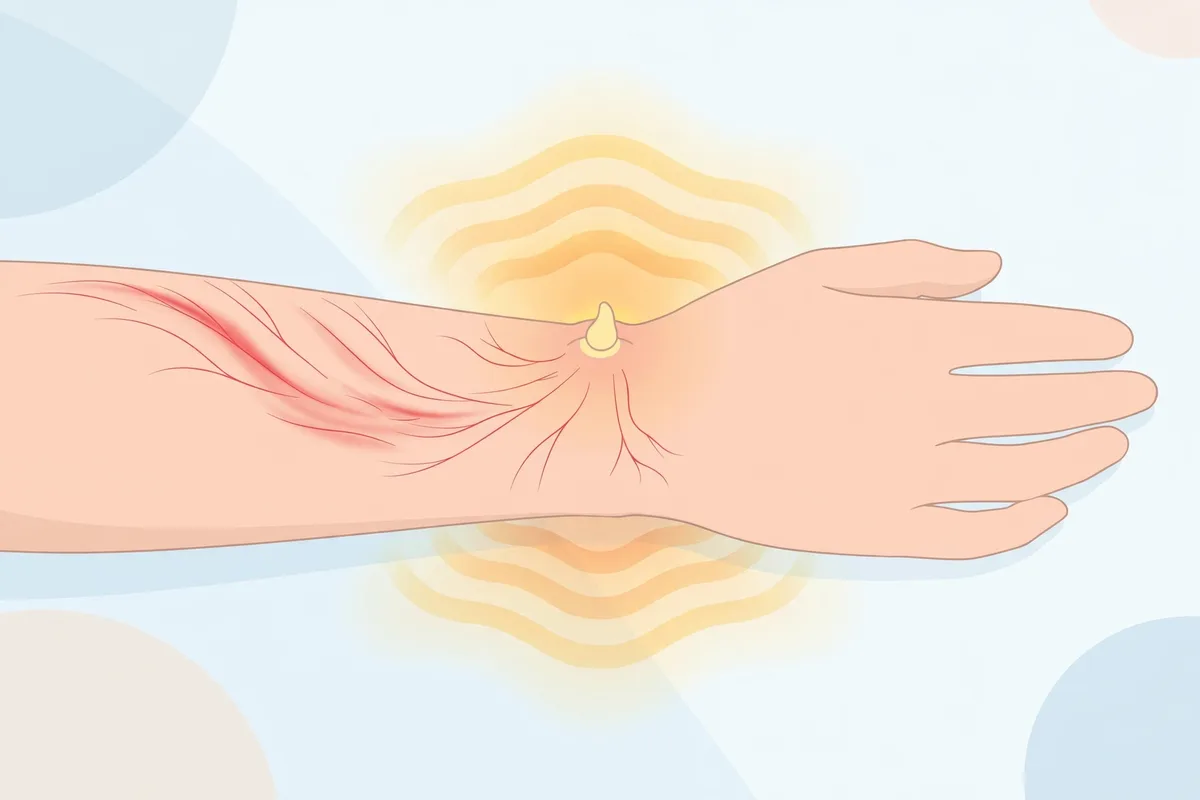
Red streaks (lymphangitis): Thin red lines extending outward from the sting site along the lymphatic vessels — up the arm toward the armpit, or up the leg toward the groin. This means the infection is traveling and warrants same-day medical evaluation. Red streaks are never part of normal bee sting healing.
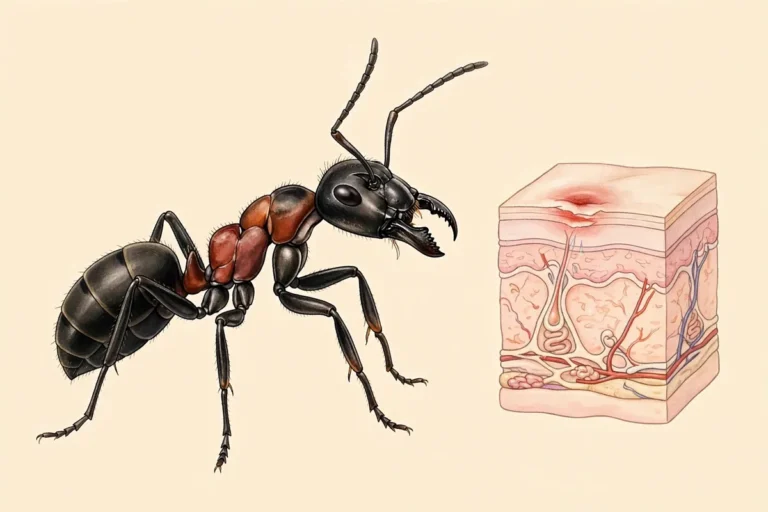
Pus: Normal bee sting swelling doesn’t produce pus. If the sting site develops yellow-green, cloudy, or foul-smelling drainage — distinct from clear fluid or a little dried crust — that’s infection until proven otherwise. (Note: this differs from fire ant stings, where white pustules are normal; bee stings don’t do that.)
Fever: A temperature of 100.4°F (38°C) or higher developing days after the sting, especially with a worsening local site, signals systemic involvement. Don’t try to ride out post-sting fever at home.
Increasing warmth and pain: The sting site feeling distinctly hot (compare with the other limb) and pain that’s getting worse rather than transitioning to itch — particularly pain that’s throbbing or tender to light touch at day 4+.
Swollen lymph nodes: Tender lumps in the armpit (for arm/hand stings) or groin (for leg stings) suggest the lymphatic system is fighting infection.
Any one of the streak/fever/pus trio is enough to seek care promptly. The combination of a worsening local site plus any systemic symptom is the clearest “go now” signal.
What to Do While You Watch and Wait
For a day-three sting that looks like normal peak inflammation — contained redness, stable swelling, no systemic symptoms — watchful waiting with good home care is the right approach:
Keep it clean. Wash the site gently with soap and water once or twice daily. If the skin is intact (no open puncture), this is simple hygiene. If there’s a visible puncture or the skin broke from scratching, treat it as a minor wound: clean, thin layer of plain petroleum jelly, cover with a bandage.
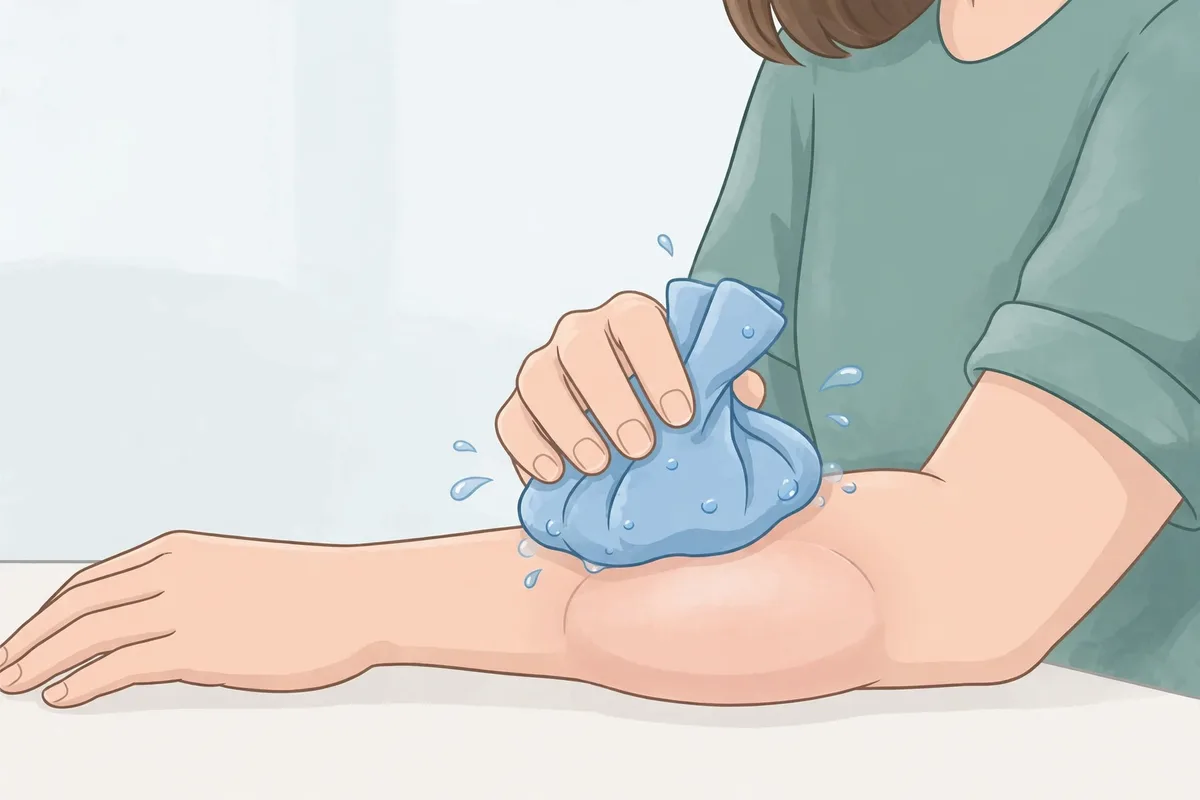
Cold and elevation. Cold compresses for 10–15 minutes, several times a day, still help at day three — they reduce swelling and numb the itch. If the sting is on a hand, foot, or limb, elevation above heart level reduces throbbing and swelling.
Antihistamines. Oral antihistamines (cetirizine or loratadine during the day; diphenhydramine at night if itching disrupts sleep) remain useful through the itchy phase. 1% hydrocortisone cream on the surrounding intact skin can calm redness and itch — thin layer, a few days.
Don’t scratch. The day 3–5 itch is intense, and scratching is the main route to the secondary infection you’re trying to rule out. Keep nails short, use cold for itch flares, and cover the site with a bandage as a physical barrier if needed.
Track it. The pen-mark trick, a daily photo in the same lighting, and a brief note (“Day 3: swelling same as yesterday, itch worse, no fever”) turn vague worry into concrete data — for your own reassurance and for any clinician you might see.
What not to do: don’t start antibiotics you have left over (inappropriate and resistance-breeding), don’t apply heat (increases swelling), don’t lance or squeeze the swelling (there’s nothing to drain in a normal sting), and don’t use topical antihistamine creams over large areas.
Home Care That Supports Healing
Beyond the watch-and-wait measures, a few things support the healing process through the rest of the week:
- Moisturize the surrounding skin once the acute swelling passes — plain, fragrance-free moisturizer supports the skin barrier as it recovers.
- Protect from sun if the sting is in an exposed area — inflamed skin can develop post-inflammatory dark marks, and UV slows fading.
- Stay hydrated and rest if you had multiple stings or a large local reaction — the immune response is real work, and general self-care supports it.
- Avoid re-injury — tight shoes on a foot sting, gloves that rub a hand sting. Give the tissue a few days of low friction.
- Know the residual timeline — a small firm nodule under the skin can persist for 1–2 weeks after the redness fades. That’s scar-tissue remodeling, not ongoing inflammation, and it resolves on its own.
If you were stung by multiple bees rather than one, the overall picture changes — more venom means a bigger systemic load. See what to do when stung by multiple bees for that scenario.
When to See a Doctor
Get medical care promptly for a bee sting that’s swollen after 3 days if you notice:
- Redness visibly expanding over hours (confirm with the pen-mark test)
- Red streaks radiating from the site — same-day evaluation
- Pain increasing after day 3 rather than easing or transitioning to itch
- Pus — yellow-green, cloudy, or foul-smelling drainage
- Fever, chills, or flu-like symptoms
- Swollen, tender lymph nodes near the site
- Swelling that keeps growing past day 4–5 without plateauing
- No improvement after 7–10 days, or a site that’s still significantly swollen and tender at two weeks
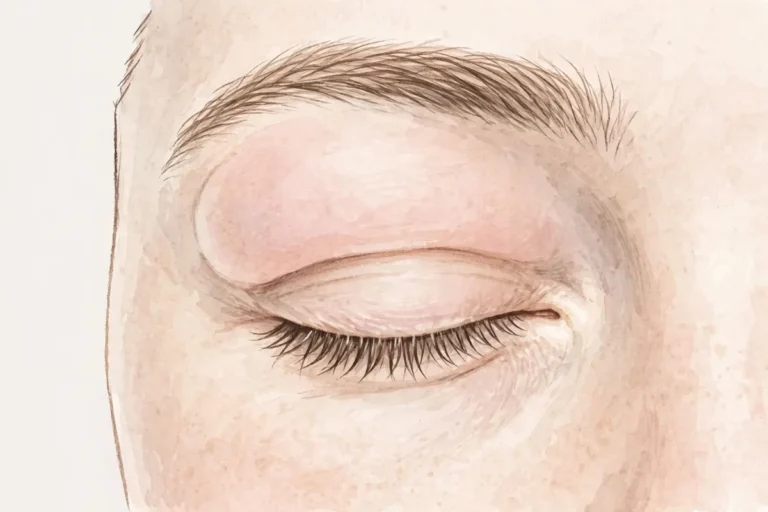
- Stings near the eye — eyelid stings have their own considerations and lower threshold for evaluation
- Any allergy signs (hives elsewhere, facial swelling, breathing difficulty, dizziness) — emergency care, call 911, at any stage
What the clinician will do: assess whether it’s cellulitis (spreading bacterial infection — usually oral antibiotics), abscess (may need drainage), large local reaction (antihistamines, possibly steroids), or normal prolonged healing (reassurance). Most post-day-three concerns resolve into one of these clear categories with a straightforward plan.
Frequently Asked Questions
Is it normal for a bee sting to still be swollen after 3 days?
Yes — days 2–3 are typically the peak of normal swelling. What’s normal: swelling that’s stable or slightly improved from day 2, redness contained around the sting, itching prominent, and you feeling otherwise well. What’s not: swelling still expanding, increasing pain, red streaks, or fever.
How long does bee sting swelling last?
For a normal local reaction, visible swelling usually resolves over 5–7 days, with a small firm nodule sometimes lingering up to two weeks. Large local reactions can take 7–10 days for the swelling to fully subside. Swelling that’s still significant and tender at two weeks deserves evaluation.
Should I worry if the swelling moved or spread?
It depends on the pattern. Swelling that shifts slightly with gravity (e.g., a hand sting causing forearm puffiness) can be normal fluid redistribution. Actively expanding redness with increasing pain, especially with red streaks, is the concerning pattern — mark the edge and watch for 12 hours, or seek care promptly if it’s clearly spreading.
Can I exercise with a swollen bee sting?
Light activity is fine, but avoid anything that pounds the swollen area or dramatically increases blood flow to it in the first few days — vigorous exercise can temporarily worsen swelling. Elevate the limb afterward if it throbs.
Does swelling after 3 days mean I’m allergic to bees?
Not necessarily. Prolonged local swelling is an exaggerated local immune response, which is different from systemic allergy (anaphylaxis). True bee allergy involves symptoms away from the sting site — hives elsewhere, breathing difficulty, dizziness. That said, mention significant local reactions to your doctor, especially if you’re regularly exposed to bees.
This article is for informational purposes only and isn’t medical advice. If you’re worried about a bite or sting, talk to a healthcare professional.