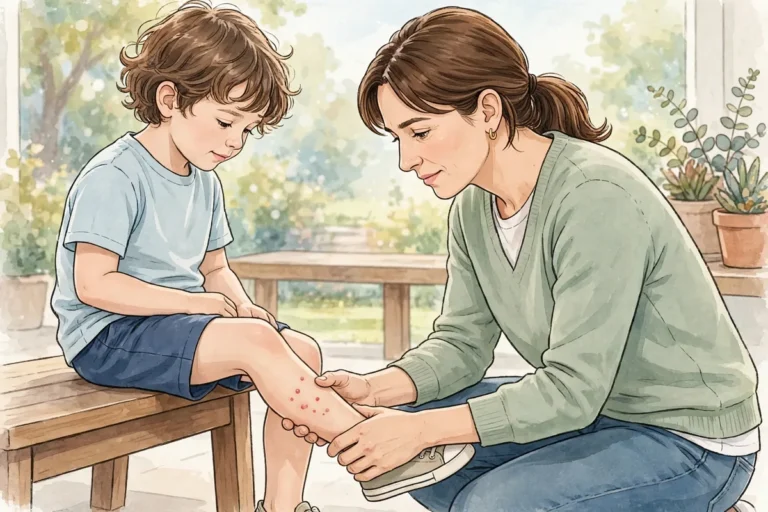
You booked the trip, packed the sunscreen, and picked the resort with the best sunset views. Then, on day two, your ankles and feet erupt in clusters of fiercely itchy red bumps — and you cannot figure out what bit you. Welcome to the least-advertised part of a Caribbean vacation: sand fly bites.
Sand fly bites Caribbean vacation protection starts with knowing what you are up against. The “sand flies” on Caribbean beaches are not fleas and not the disease-carrying sand flies of the Old World tropics. They are biting midges — pinhead-sized insects most travelers never see — and a few deliberate habits keep most of their bites off your skin.
What Caribbean Sand Flies Really Are
The tiny insects biting vacationers on Caribbean beaches are biting midges of the family Ceratopogonidae, most often Culicoides species — known in the United States as no-see-ums, punkies, or biting gnats. Adults are only about 1 to 2 millimeters long — small enough to slip through ordinary window screens.
Only the females bite: they need a blood meal to develop their eggs, and they feed by slicing the skin and drinking from the tiny pool of blood that forms — a method that explains why such a tiny insect itches so much. Males feed on nectar and never bite. More on the bite mechanics: biting midge bite treatment.
Two naming traps: Caribbean beach “sand flies” are not sand fleas (harmless burrowing crustaceans that do not bite humans), and the same common name refers to entirely different insects — Phlebotomus and Lutzomyia flies, associated with leishmaniasis in parts of the Middle East, Africa, and mainland Latin America. Those are not the insects swarming beach dunes in Aruba or Varadero.
One calm note: the Pan American Health Organization reports that Culicoides paraensis, a biting midge species, vectors Oropouche virus — a dengue-like febrile illness — with outbreaks since late 2023 in parts of South America and the Caribbean, including Cuba. Most cases are mild, though Brazil reported the first known deaths in 2024. Documented risk to typical resort tourists remains low, and the practical advice is unchanged: prevent the bites, and mention your recent travel if unusual symptoms appear after your trip.
Where and When Bites Happen on Caribbean Beaches
Biting midges feed most aggressively around dawn and dusk — exactly when travelers take golden-hour beach walks, sunrise runs, and sunset strolls. During the midday heat they retreat into vegetation, which is why a beach that is bite-free at noon can be brutal at 6 p.m.
Wind is the single biggest natural control. Midges are weak fliers, so the worst conditions are calm, humid, still days — the postcard-perfect weather that draws people to the beach. If the air is dead still, assume the midges are out in force.
Location matters too. Bites concentrate near dune vegetation, beach grasses, mangrove edges, estuaries, and lagoons — a beachfront backing directly onto mangroves is a far higher-risk zone than a windy point with cleared sight lines.
A classic confusion: many travelers blame the hotel bed. Sand fly bites often cluster around ankles, feet, and lower legs — the parts exposed while sitting or walking at sunset — and because people first notice them in the morning, they suspect bed bugs. Travelers in Jamaica and across the Caribbean frequently mistake sand fly bites for bed bugs; bed bug bites usually show up in lines or clusters on skin that was exposed during sleep, while sand fly bites concentrate on the lower legs after evening hours near the beach or dune vegetation. If your bites match the second pattern, midges are the more likely culprit.
What Sand Fly Bites Look and Feel Like
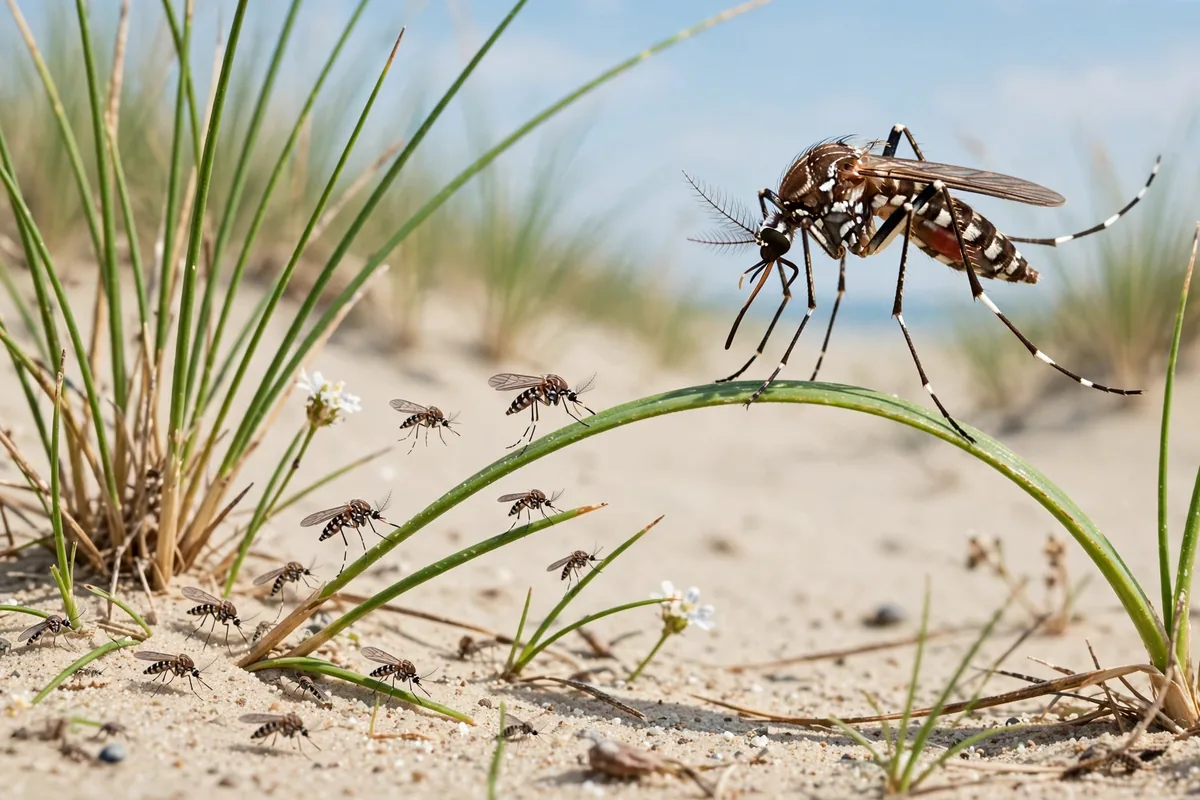
Midge bites arrive as small red bumps or welts, often in clusters on exposed skin — especially the ankles, feet, and lower legs. Many people report a sharp burning or prickling sensation during the bite itself, followed by intense itching that can flare for several days.
The cruel twist: travelers from temperate climates often have no prior exposure to midge saliva proteins, so reactions can be delayed and dramatic. You may not notice the bites until the next morning, with the itch peaking 24 to 48 hours after feeding. Locals and repeat visitors often react less severely.
The intense itch tempts people to scratch hard, and that is where a simple bite becomes a real problem. Scratching breaks the skin and invites bacterial infection — and itching tends to feel worse at night, when fewer distractions compete for your attention (explained in our piece on why bug bites itch at night).
Most midge bites resolve within a few days to a week if left alone. The minority that become hot, increasingly painful, or start streaking red need prompt medical attention — our severe reaction and infection warning signs page helps you recognize that shift early.
How to Protect Yourself During Your Vacation
Effective protection is layered: no single trick defeats biting midges, but several simple measures stacked together make you a hard target.
Use an EPA-registered insect repellent. The CDC’s travel guidance is clear: use an Environmental Protection Agency–registered insect repellent (DEET, picaridin, oil of lemon eucalyptus, para-menthane-diol, or 2-undecanone), applied to exposed skin as directed before heading out at dawn or dusk, reapplied after swimming or sweating. Traveling with kids or while pregnant? Read our guide to insect repellent safety for children and pregnancy first.
Dress to deny access. At dawn and dusk, wear long sleeves and long pants in light, tight-weave fabric — midges can bite through loose knits. Socks and closed shoes on the beach look unfashionable; being chewed up feels worse. Tuck pant legs into socks near vegetation.
Time and place your beach hours. Treat sunrise and sunset walks as high-risk: schedule them for windier stretches, shorten them, and choose breezy open beach over sheltered coves backed by dunes and mangroves.
Let wind do the work. Midges cannot fly against even a light breeze, so sit where air moves — near the water line on a windy day, under a patio ceiling fan, or with a portable fan on a balcony table.
Make your room a fortress. Choose lodging with air conditioning or tight screens on windows and doors, and keep doors closed — midges slip through coarse or damaged screening. Check screens for tears on arrival. If your room opens directly onto vegetation, keep the patio door closed during peak midge hours.
Shake out your beach setup. Shake towels and beach chairs before use, and avoid leaving gear sitting in dune grass where midges rest during the day.
First Aid for Sand Fly Bites on Vacation

When bites happen anyway, calm and simple first aid keeps a nuisance from becoming an infection.
Wash the bites gently with soap and cool water, then pat dry. Skip alcohol or hydrogen peroxide on open scratches — they irritate without helping.
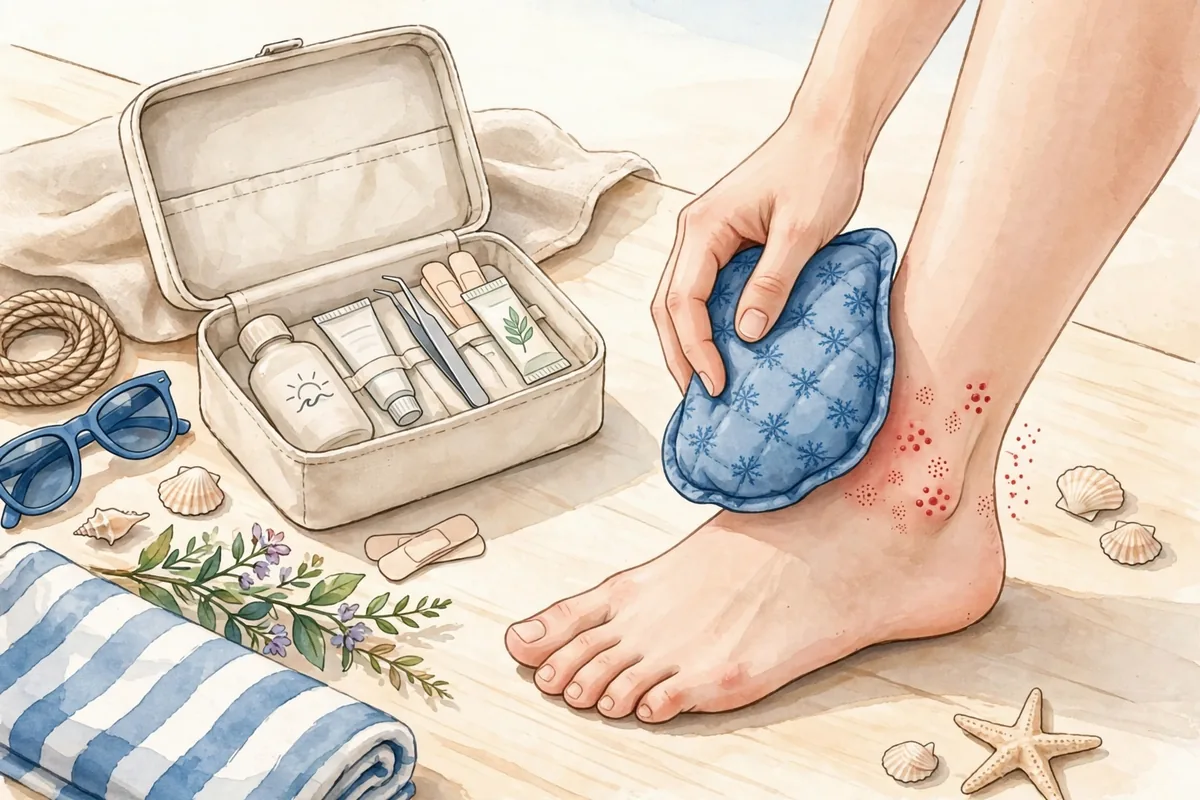
Apply a cold compress 10 to 15 minutes at a time, several times a day — it constricts blood vessels, numbs the itch, and slows inflammation. Technique and timing: using a cold compress on bites and stings.
Do not scratch: scratching worsens inflammation, prolongs itching, opens pathways for infection, and increases the odds of scarring. Read why you should not scratch or squeeze a bite — then keep your nails short as backup.
A baking soda paste is a reasonable travel remedy: mix a little baking soda with water into a paste, dab it on intact bites, and rinse after about 10 minutes.
What to avoid: thick occlusive ointments over weepy or broken bites, rough towels or loofahs on irritated skin, and aggressive heat — hot showers feel good momentarily but often rebound into worse itching. If you reach for an over-the-counter anti-itch product, read the label and ask the resort pharmacy about interactions with anything you already take.
After the Trip: What to Watch For
Most midge bites fade within a week or two of coming home — but watch any sore or bump that does not follow the normal healing arc. A bite that keeps getting bigger, stays hard or raised for weeks, oozes, crusts and re-opens, or simply refuses to heal is a reason to see a doctor and mention your travel history. When you go, bring the details: where you traveled, when the bites appeared, what you were doing outdoors, and photos of the progression if you took any.
Delayed allergic flare-ups can also appear days after the bites themselves, as the immune response catches up. New clusters of itchy bumps a day or two after flying home are usually still the vacation bites announcing themselves late — annoying, but generally not alarming. What changes the calculus is pain out of proportion, spreading redness, warmth, swelling, fever, or any sore that will not close.
When to See a Doctor for a Bug Bite
Most sand fly bites are a miserable but self-limited nuisance. These red flags mean a bite needs medical attention:
- Anaphylaxis — call 911: difficulty breathing, swelling of the lips, tongue, or throat, widespread hives, dizziness or fainting, rapid heartbeat. Severe reactions are rare but emergencies. Know the full list of anaphylaxis warning signs before you travel.
- Infection (cellulitis): expanding redness or red streaks, increasing warmth and swelling, throbbing pain, pus or cloudy drainage, swollen lymph nodes, or fever and chills. Skin infections in tropical climates can escalate fast — do not wait to see if it improves.
- Non-healing sores: any sore, ulcer, or raised bump still open, growing, or changing weeks after your trip. Bring your travel dates and locations.
- Broken timelines: swelling that keeps expanding after 48 hours instead of improving, pain that intensifies rather than fades, or a sudden fever days after the bites.
- High-risk situations: bites in or near the eyes, a large number of bites in a young child, or any bite in someone with a weakened immune system or diabetes.
When in doubt, urgent care or your primary-care doctor can tell a simple bite reaction from something that needs treatment. A photo timeline helps them help you.
Frequently Asked Questions
Are Caribbean sand flies the same as the sand flies that cause leishmaniasis?
No. Caribbean beach “sand flies” are biting midges (Ceratopogonidae, usually Culicoides) — nuisance biters. The sand flies associated with leishmaniasis are different insects entirely (Phlebotomus in the Old World, Lutzomyia in mainland Latin America) found in different habitats.
Why do sand fly bites itch so much worse than mosquito bites?
Female midges slice the skin and feed on pooled blood rather than tapping a capillary like a mosquito, causing more tissue trauma per bite. Travelers with no prior exposure to midge saliva proteins can also mount a strong delayed reaction, so the itch peaks a day or two after the bite.
Do sand fly bites go away on their own?
Usually, yes. Unscratched bites typically calm down over several days to a week, with the itch peaking around 24 to 48 hours and then fading. They do not heal if you keep scratching them open — leaving them alone is the fastest path to recovery.
Can I still go to the beach at sunset if sand flies are bad?
Yes, with adjustments: long sleeves and pants in tight-weave fabric, EPA-registered repellent on exposed skin, the windiest open stretch of beach, and a shorter walk. Many sensitive travelers shift beach time to the windy midday hours and enjoy sunsets from a screened patio or under a ceiling fan.
I came home with bites that will not heal — what should I do?
See a doctor and mention your trip. A sore, bump, or ulcer still open, growing, or changing weeks after tropical travel needs professional evaluation — bring your travel dates, destinations, and any photos of how the lesion has changed.
Medically reviewed by Dr. Sarah Jones, MD.
This article is for informational purposes only and isn’t medical advice. If you’re worried about a bite or sting, talk to a healthcare professional.