
Crab Lice vs Head Lice: How to Tell Them Apart
Introduction: The Short Answer Crab lice and head lice are two different types of lice that live on different parts of the body, and…
# No-See-Um Bites vs Flea Bites: Key Differences If your ankles and lower legs are covered in clusters of intensely itchy red welts and you never saw a thing bite…
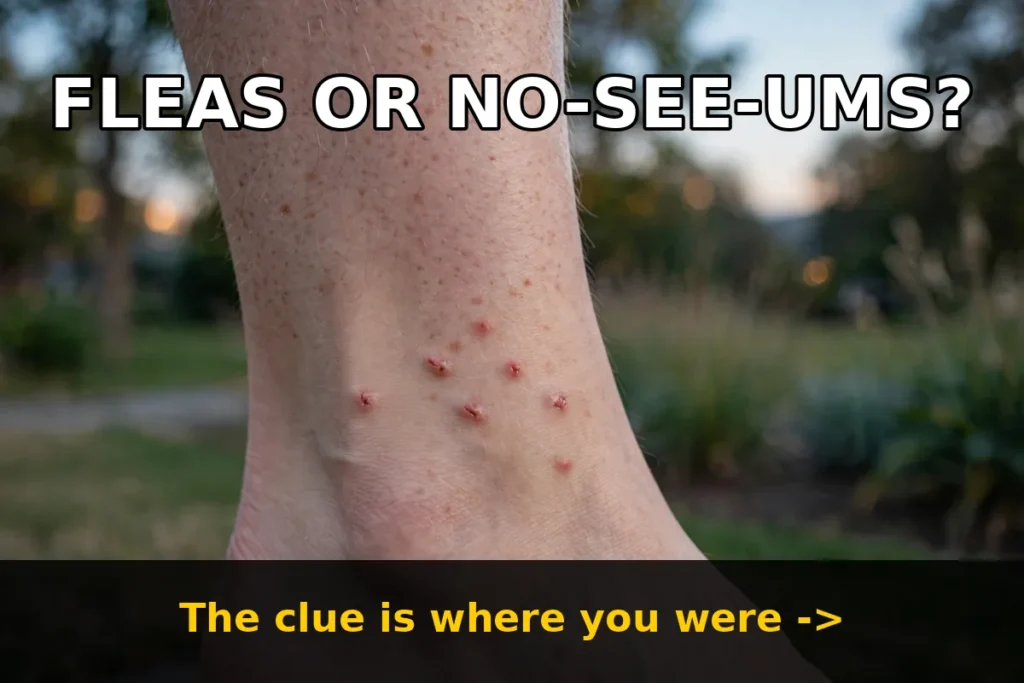
# No-See-Um Bites vs Flea Bites: Key Differences
If your ankles and lower legs are covered in clusters of intensely itchy red welts and you never saw a thing bite you, two culprits top the suspect list: no-see-ums and fleas. Both produce small red bite marks that itch far more than their size suggests, both favor the lower legs, and both leave you scratching at what looks like the same rash. But the response to each is completely different, which is why telling them apart matters.
The short answer: no-see-ums are outdoor biting midges that swarm at dawn and dusk near water, bite exposed skin, and cause welts whose worst itching often arrives 12 to 24 hours later. Fleas are indoor, pet-associated jumpers that live in carpets and pet bedding, bite in tight clusters around the ankles and feet, and strike while you are standing or walking through the house. The single most useful clue is context: were you outside near water at sunset, or are you getting bitten indoors where a pet sleeps? This guide compares the bites side by side, explains the biology of each insect, lays out the setting clues that give away the culprit, covers healing timelines and safe first aid, and tells you when a bite deserves a doctor’s attention. Nothing here is a diagnosis; if you are unsure what bit you or a bite is getting worse, see a healthcare professional.
No-see-ums (biting midges in the genus Culicoides, family Ceratopogonidae) and fleas (most often the cat flea, Ctenocephalides felis, in homes) are entirely different insects with different lifestyles, and that difference shows up in the bite story even when the marks look alike.
No-see-ums are outdoor flies, barely 1 to 3 millimeters long, that feed in swarms during calm, humid weather, most aggressively around sunrise and sunset. You feel a sharp little sting or nothing at all, and the real misery, intensely itchy red welts or papules, often builds up half a day later. Because they bite whatever skin is exposed, the welts show up on ankles, lower legs, arms, and sometimes the neck or face.
Fleas are wingless jumping insects that live where pets rest: carpets, rugs, pet bedding, and upholstery. They wait in the environment and jump onto a passing host, usually biting the first skin they reach, which means ankles, feet, and lower legs, often below the knee line. Their bites appear as small red bumps, sometimes with a darker red center, in tight clusters or short rows, and the itching starts fast.
Here is the comparison at a glance:
| Feature | No-See-Um Bites | Flea Bites |
|---|---|---|
| Culprit | Tiny biting midge (outdoor fly) | Wingless jumping insect, usually cat flea |
| Typical setting | Outdoors, near water, at dawn or dusk | Indoors, where pets sleep and rest |
| Bite appearance | Small red welts or papules, sometimes larger swollen welts in sensitive people | Small red bumps, often with a darker central spot, in clusters or rows |
| Favorite location | Exposed skin: ankles, lower legs, arms, neck | Ankles, feet, lower legs, usually below the knee |
| Onset of itching | Often delayed 12 to 24 hours | Usually quick, within minutes to hours |
| How long it lasts | Days to up to two weeks in sensitive people | Several days, often a week or less |
| Key clue | You were outside at sunset near water | A pet scratches, or bites happen indoors |
Use this table as a first pass, not a final diagnosis. The strongest evidence is always what else you can find nearby: a scratching dog points to fleas, and an evening spent on a marsh-side patio points to midges.
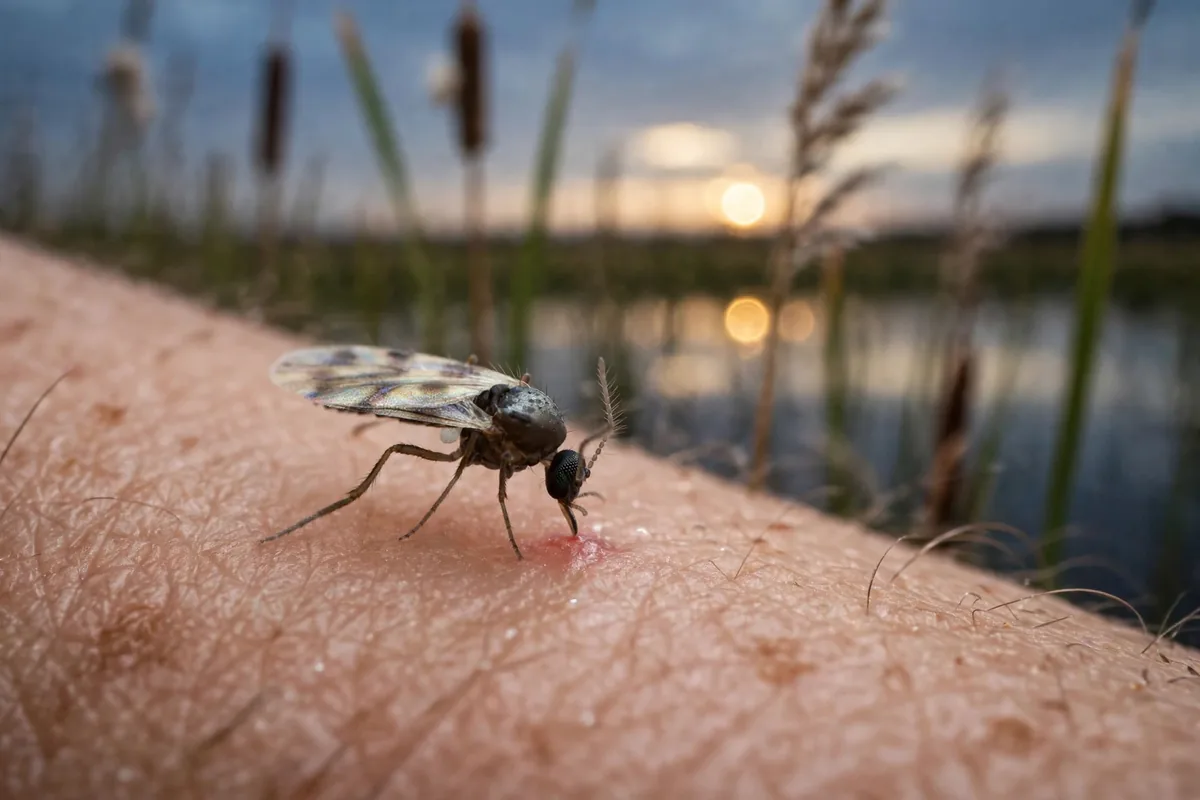
No-see-ums go by many regional names: biting midges, punkies, sand flies (though true sand flies are a different group), and in some coastal areas, sand gnats. Whatever you call them, the biters are the females of tiny flies in the genus Culicoides. At 1 to 3 millimeters, they are small enough to pass through ordinary window screens, which is why their name is so literal: people feel the bites without ever seeing the insect.
No-see-ums breed in moist environments: marshes, pond and lake edges, mangroves, damp soil, and even wet mulch or clogged gutters. They are weak fliers, so they stay close to their breeding sites and are most troublesome on calm, humid days with little wind. Their feeding peaks around sunrise and sunset, the same golden-hour windows when people like to be outside. On a still, humid evening near water, midge densities can be high enough to drive people indoors. They bite any exposed skin, with ankles and lower legs getting heavy attention simply because those areas are closest to the ground where the insects concentrate, but arms, neck, and face are fair game too.
The female midge slices the skin with scissor-like mouthparts and feeds on the blood that pools. Her saliva contains anticoagulants and other proteins that keep blood flowing while she feeds. Your immune system recognizes these foreign proteins and responds with inflammation: mast cells release histamine, blood vessels dilate, and the result is the redness, swelling, and itch. For some people this is a minor annoyance; for others with stronger hypersensitivity, individual welts can swell dramatically. The reaction is to the saliva, not to anything the insect leaves behind, and scratching only amplifies the inflammatory response and extends healing time.
The flea biting people in most US homes is the cat flea, Ctenocephalides felis, which feeds on cats, dogs, and, opportunistically, humans. Adult fleas are wingless, laterally flattened, and famously good jumpers, able to leap many times their body length to reach a passing host. Only the adults bite; the eggs, larvae, and pupae live off-host in the environment.
A home flea problem is really an environment problem. Adult fleas spend much of their time on the pet, but the eggs roll off into carpets, rugs, pet bedding, and upholstered furniture, where larvae develop in the fibers. Pupae can sit dormant for weeks or months, then emerge in a burst when they sense vibration, warmth, and carbon dioxide, which is why people often report sudden ankle bites after returning from vacation or moving into a new place. The newly emerged adults jump toward the disturbance, land low on the body, and bite the first skin they find. That is why flea bites cluster on the ankles, feet, and lower legs and so often appear below the knee line. Tell-tale environmental signs include a pet that scratches or chews at its skin, tiny dark specks of flea dirt in pet bedding, and bites that appear while you are indoors, especially in carpeted rooms where the pet rests.
When you line up the actual bite characteristics, the two start to separate. No single feature is decisive on its own, but the pattern of several features together is usually clear.
No-see-um bites typically appear as small, red welts or firm papules. In sensitive individuals they can swell into larger, angrier welts that look disproportionate to the insect’s size, and some people describe them as feeling hard or grainy under the fingertip. Because midges feed in swarms, you often get many bites at once, scattered across whatever skin was exposed with no particular order.
Flea bites are usually described as small red bumps, often with a distinct darker red center where the mouthparts entered, surrounded by a reddish halo. They tend to be smaller and more uniform than midge welts and frequently appear in tight groups or short rows, the result of one flea probing, feeding, and moving a short distance before biting again.
Both love the ankles and lower legs, which is exactly why they get confused. The difference is in the boundaries. Flea bites overwhelmingly stay on the lower legs and feet, commonly below the knee, because the flea bites the first skin it reaches after jumping. Bites on the arms, neck, or face point away from fleas. No-see-ums bite exposed skin wherever it is: ankles and calves if you wore shorts, but also forearms, the back of the neck, and the face if you were sitting out at sunset in a T-shirt. Widespread bites above the waist after an evening outdoors favor midges; bites confined to the sock line and ankles after time indoors favor fleas.
This is one of the sharpest dividers. Flea bite itching usually begins quickly, within minutes to a few hours of the bite, because you were bitten while standing or walking through the house and the reaction follows promptly. No-see-um reactions are frequently delayed: you may feel a sharp sting during the evening swarm, but the significant welts and intense itching often develop 12 to 24 hours later. That delay is why so many people wake up the morning after a sunset cookout covered in welts and cannot connect them to anything. If the itch showed up the next day after an evening outdoors, think midges. If it started while you were in the living room, think fleas.
Both itch intensely; honest comparison is hard because individual sensitivity varies so much. No-see-um bites are widely reported as disproportionately itchy for their size, and in sensitive people the reaction can persist for days to two weeks, sometimes with the itch flaring back after seeming to settle. Flea bite reactions in most people peak within a day or two and fade over several days to about a week, provided there is no repeated exposure. One practical difference: flea bites often keep coming in waves as long as the environmental infestation persists, so “new bites every morning indoors” is a flea pattern, while “one bad episode after one evening outside” is a midge pattern. For guidance on how long different bites typically take to resolve, see our overview of how long insect bites last.
Dermatologists and entomologists agree that the setting is often more informative than the bump. Run through these questions:
Where were you when it started? Bites that appear after time on a patio, at a lakeside, on a beach, or near a marsh at dusk point to no-see-ums. Bites that appear while you are home, especially in carpeted rooms, point to fleas. No-see-ums rarely establish themselves indoors; the occasional one slips through a screen, but an indoor biting pattern night after night is not their style.
Is there a pet in the picture? A dog or cat that scratches, chews, or has visible flea dirt makes fleas the leading suspect. No-see-ums do not live on pets or in pet bedding, so pet symptoms specifically implicate fleas. Even indoor-only cats can carry fleas picked up from a balcony, a visiting animal, or a previous infestation.
What was the weather and season? No-see-ums are warm-weather insects, worst in humid summer months and near water. Fleas thrive indoors year-round in heated homes, so midwinter ankle bites in a carpeted house with a dog are far more likely to be fleas.
Who else is bitten? Midge swarms bite everyone who was outside, so fellow patio guests with the same welts support no-see-ums. Fleas are more selective in practice: they bite the people who spend time where the infestation is worst, and some household members react while others do not, which can make fleas look mysterious.
Did you travel? New bites starting a day or two after staying somewhere with a pet, or after moving into a furnished rental, fit fleas emerging from dormant pupae. Bites starting the morning after a coastal or lakeside evening fit midges.
If you are still unsure, our no-see-um bite treatment guide covers the midge side in more depth, and the dog flea bite comparison article shows what flea-related bite patterns look like next to another common biter.
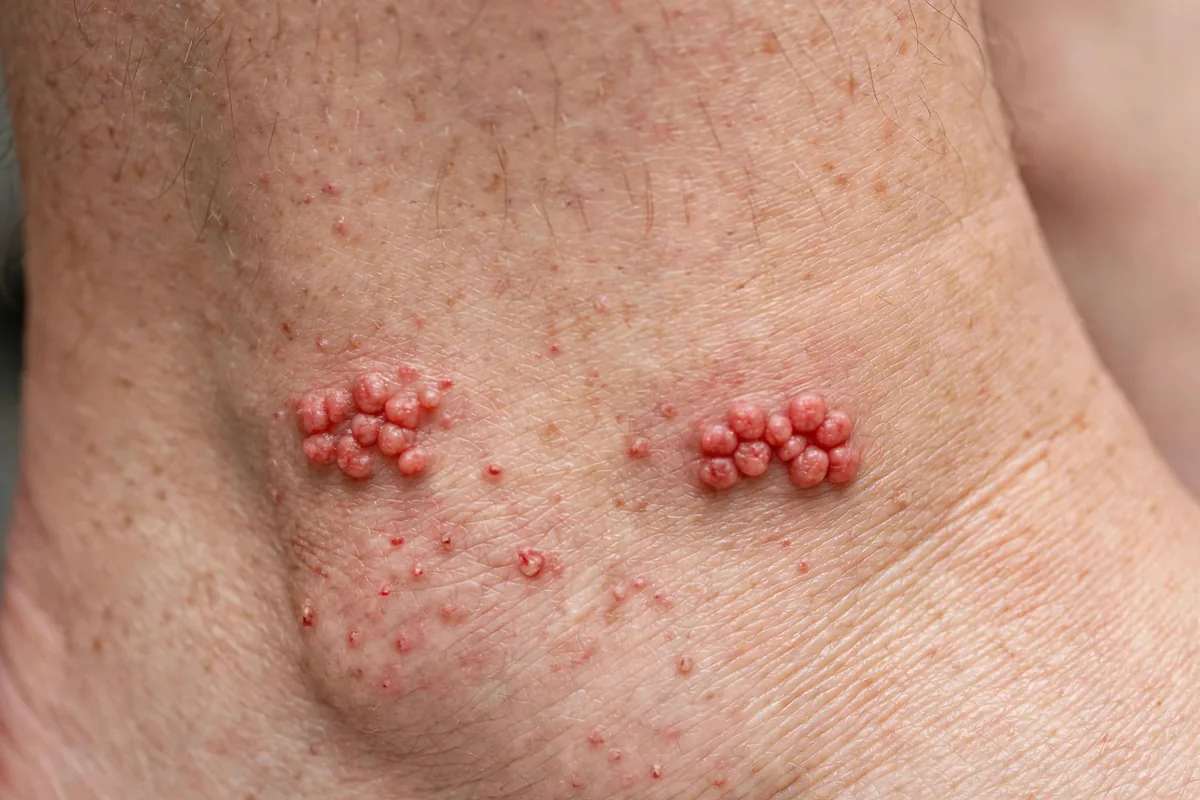
Normal healing for both follows the same arc: redness and itching peak, then fade as the immune response winds down. No-see-um welts in an average reactor settle within a few days to a week; in sensitive individuals, firm itchy papules can linger for up to two weeks, and scratching can restart the cycle. Flea bite bumps typically fade within several days to a week once exposure stops, though repeated nightly exposure makes them seem endless.
Watch the trajectory, not just the appearance. A bite that steadily improves, even slowly, is healing. A bite that gets redder, more painful, or more swollen after the first 24 to 48 hours, develops expanding red streaks, feels warm, oozes, or is joined by fever deserves medical attention rather than a self-diagnosis. Our guide on normal healing vs infection walks through the visual differences in detail. Do not try to diagnose infection from a description or a photo alone; when in doubt, have a clinician look.
First aid for the bites themselves is similar for both: wash the area gently with soap and water, apply a cold compress to calm itching and swelling, avoid scratching, and consider over-the-counter options such as calamine lotion, hydrocortisone cream, or an oral antihistamine if you can take them safely and you follow the package directions. Keep nails short and the area clean to reduce the chance of a secondary skin infection from scratching. For more itch-relief strategies, see how to reduce bite itching. No home remedy eliminates the reaction; these measures manage symptoms while your body resolves the inflammation.
Where the two diverge completely is in stopping the next round.
If it is no-see-ums: the fix is exposure control, because you cannot eliminate midges from a marsh. Avoid being outdoors near breeding sites at dawn and dusk during peak season, wear long sleeves and pants in midge country, use an EPA-registered insect repellent according to its label, and make sure window screens are fine-meshed and intact, since no-see-ums can pass through standard screening. Fans on patios help, because these weak fliers struggle in moving air.
If it is fleas: the fix is breaking the life cycle in the home, and the pet is step one. Talk to your veterinarian about safe, current flea control for your specific animal; never use dog flea products on cats, as some are toxic to them. Wash pet bedding in hot water, vacuum carpets, rugs, and upholstery thoroughly and often (vacuuming removes eggs and stimulates pupae to emerge), and empty the vacuum outside. Severe or persistent infestations may need a licensed pest professional. Treating only the bites while the environment still holds eggs and pupae guarantees the cycle continues.

Most no-see-um and flea bites resolve with basic care, but get medical attention if you develop signs of a spreading skin infection: increasing pain, expanding redness or red streaks, warmth, swelling that worsens after 48 hours, pus, or fever. Seek urgent care for any signs of a severe allergic reaction, such as trouble breathing, swelling of the face, lips, or tongue, widespread hives, dizziness, or vomiting. See a clinician promptly if bites are extremely numerous, if swelling is severe enough to limit movement, if the person bitten is an infant or has a weakened immune system, or if you are unsure what caused the bites and they are not improving. A professional can identify the cause far more reliably than any online description.
The key biology behind this comparison is well documented by pest and extension sources: biting midges (Ceratopogonidae) measure just 1 to 3 millimeters and, because of their tiny size, are able to pass through typical window screens; and the delayed no-see-um reaction, a more significant response developing 12 to 24 hours after the bite with small, intensely itchy red welts or papules, is the reason so many people cannot connect the morning-after welts to the previous evening’s swarm.
How can you tell no-see-um bites from flea bites?
Look at the setting first. No-see-um bites follow outdoor exposure near water at dawn or dusk, appear on any exposed skin including arms and neck, and the worst itching often arrives 12 to 24 hours later. Flea bites happen indoors, cluster on the ankles and lower legs below the knee, itch quickly, and are linked to pets or infested carpets. The bite marks can look similar, so context is the deciding clue.
Do no-see-um bites look like flea bites?
They can, which is why the two are confused so often. Both produce small, red, intensely itchy bumps in clusters on the lower legs. Differences: flea bites often show a darker red center with a halo and sit in tight groups or short rows below the knee, while no-see-um welts are more scattered across exposed skin, can feel firmer, and in sensitive people swell larger.
Can no-see-ums bite you indoors?
Occasionally, but it is unusual. No-see-ums are outdoor insects that breed in moist environments, and they do not infest homes, beds, or pet bedding the way fleas do. A stray midge can slip through a window screen, especially fine-mesh failures, but repeated indoor biting night after night points to fleas, bed bugs, or another indoor pest, not no-see-ums.
Why do flea bites itch more at certain times?
Flea exposure is highest where the infestation is: the rooms and rugs where pets rest. Many people notice bites after sitting on the floor, walking barefoot on carpet, or settling onto infested upholstery in the evening. The pattern reflects when you enter the fleas’ territory, not a daily rhythm of the insect itself.
How long do no-see-um bites last compared to flea bites?
No-see-um reactions often last longer in sensitive people, from several days up to two weeks, with itching that can flare back after seeming to settle. Flea bite bumps typically fade within several days to about a week once you are no longer being exposed. Ongoing new bites indoors usually mean the flea source is still active.
Do I need to treat my pet if I have flea bites?
Yes, the pet is almost always part of the cycle. Adult fleas feed on the animal while eggs and larvae develop in the environment, so addressing bites without addressing the pet rarely works. Ask your veterinarian about appropriate flea control for your specific pet, wash pet bedding in hot water, and vacuum thoroughly and repeatedly. Never apply dog flea products to cats.
Can no-see-ums and fleas bite at the same time of year?
Yes, in warm months both can be active, which is when confusion peaks. A household near water with both a dog and a marsh-side patio could plausibly deal with both in the same week. Work through the setting clues separately for each episode of bites: the sunset cookout welts and the indoor ankle clusters may have two different culprits.
Medically reviewed by Dr. Sarah Jones, MD.
This article is for informational purposes only and isn’t medical advice. If you’re worried about a bite or sting, talk to a healthcare professional.
Dr. Jones oversees StingHelp’s clinical verification process. Every guide is systematically evaluated against active Centers for Disease Control and Prevention (CDC), Environmental Protection Agency (EPA), and American Academy of Allergy, Asthma & Immunology (AAAAI) medical consensus standards to ensure symptom distinctions and care recommendations are clinically sound.
Explore physician-reviewed first-aid procedures, identification clues, and symptom comparisons for other common outdoor bites and stings.

Introduction: The Short Answer Crab lice and head lice are two different types of lice that live on different parts of the body, and…

A big brown spider darts across the lawn, or freezes on your hallway floor, and the question hits instantly: grass spider vs wolf spider,…

# Pavement Ant vs Fire Ant: Sting Risk Compared You spot small ants trailing along your sidewalk and a little mound of soil in…