Direct answer: A lone star tick bite and an American dog tick bite usually cannot be distinguished by the skin mark. The actual tick, geographic exposure, and later symptoms are more useful. Lone star ticks are linked to ehrlichiosis, Heartland virus, Bourbon virus, tularemia, and alpha-gal syndrome; American dog ticks transmit RMSF and tularemia.
The lone star tick (Amblyomma americanum) and American dog tick (Dermacentor variabilis) are two important human-biting ticks in the United States. Their ranges overlap across large parts of the East, South, and Midwest, and both can attach to people in grassy, brushy, wooded-edge, or wildlife-associated environments.
This guide compares lone star tick bite vs american dog tick bite pictures using evidence that is actually useful: the appearance of the tick itself, U.S. distribution, life stage, exposure pattern, disease associations, and symptom timing. The bite mark alone is not a reliable species test.
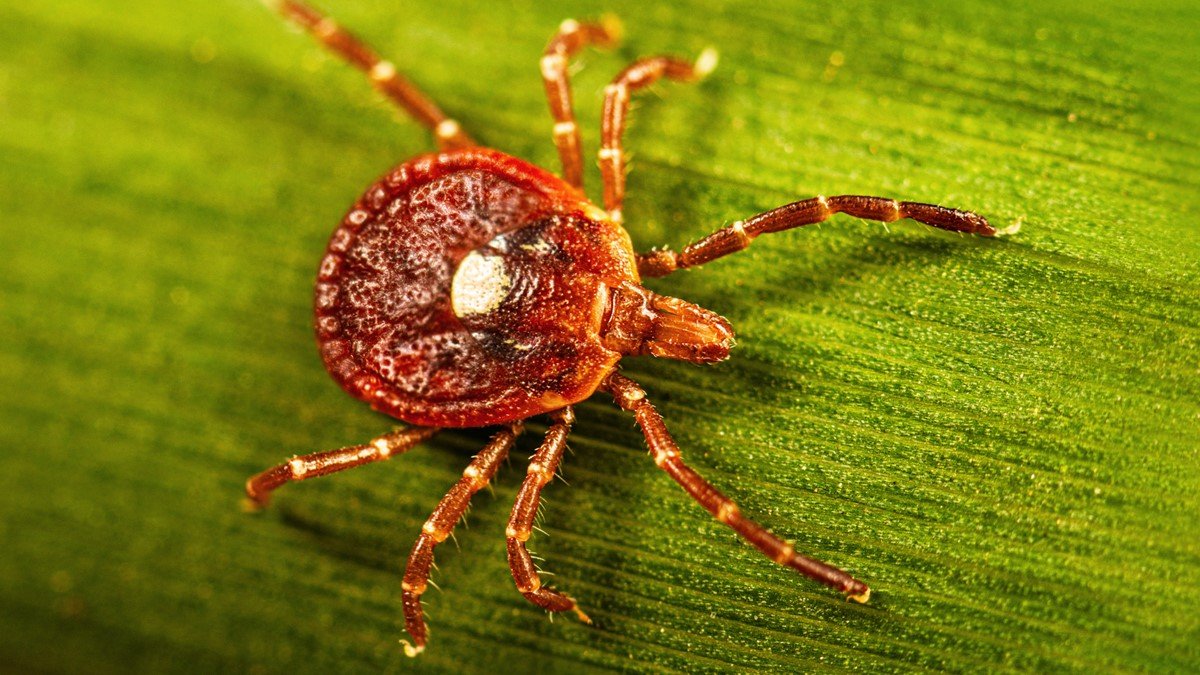
Lone star tick vs American dog tick: quick comparison
| Clue | Lone star tick | American dog tick |
|---|---|---|
| Scientific name | Amblyomma americanum | Dermacentor variabilis |
| U.S. range | Widely distributed in the Northeast, South, and Midwest. | Widely distributed east of the Rocky Mountains; limited established areas farther west. |
| Human-biting behavior | Very aggressive human-biter; nymphs and adult females frequently bite people. | Adult females are especially likely to bite people; risk often peaks in spring and summer. |
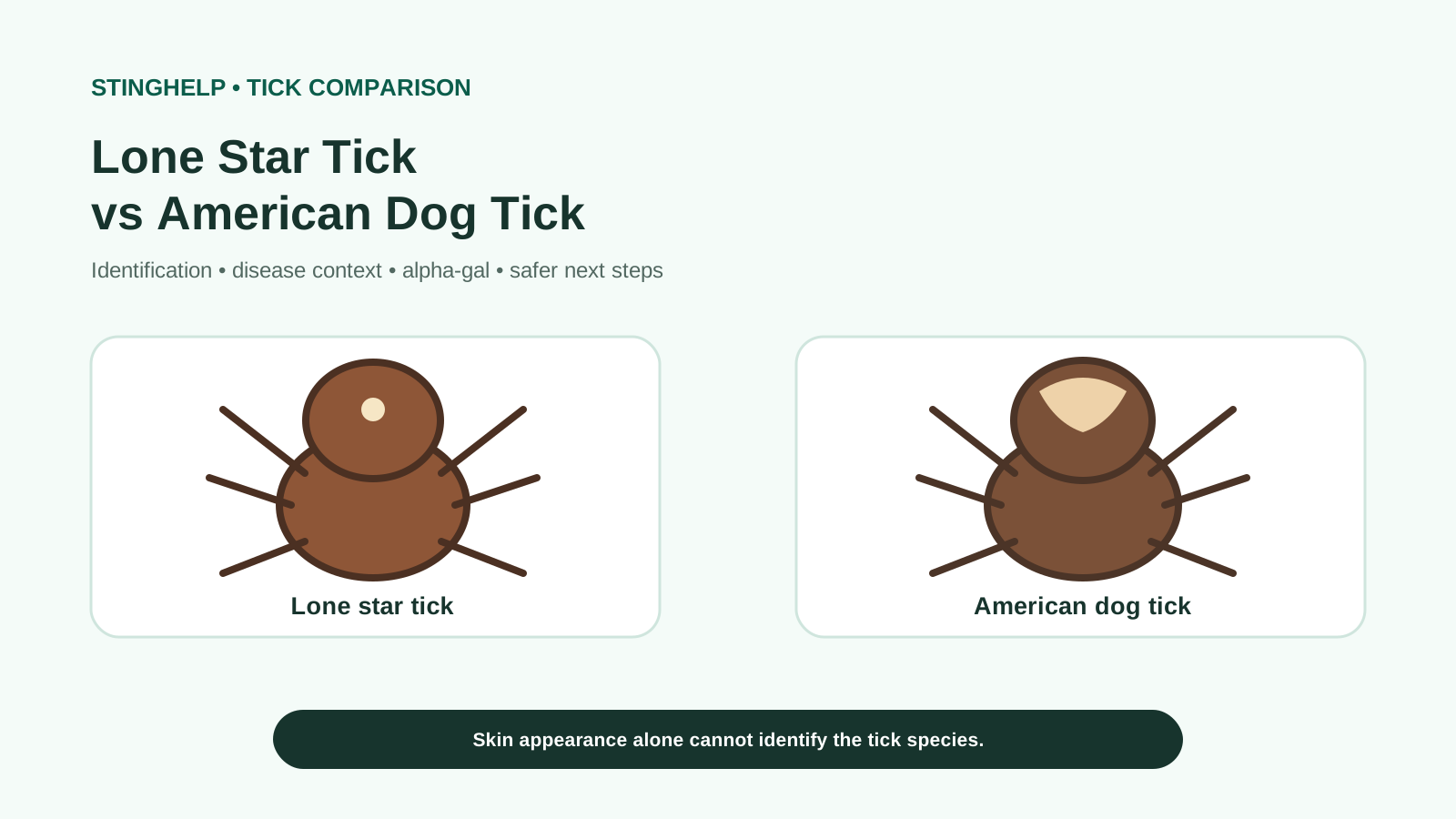
| Easy visual clue | Adult female often has one white “lone star” spot. | Adult ticks have ornate pale markings rather than a single central white dot. |
| Important disease context | Ehrlichiosis, Heartland virus, Bourbon virus, tularemia; strongly associated with alpha-gal syndrome. | Rocky Mountain spotted fever and tularemia. |
| Skin reaction | Saliva can cause redness and irritation without infection. | Local irritation can occur and is not diagnostic of infection. |
| Best identification evidence | Actual tick + life stage + geography + exposure. | Actual tick + life stage + geography + exposure. |
Why the bite mark cannot reliably identify the tick
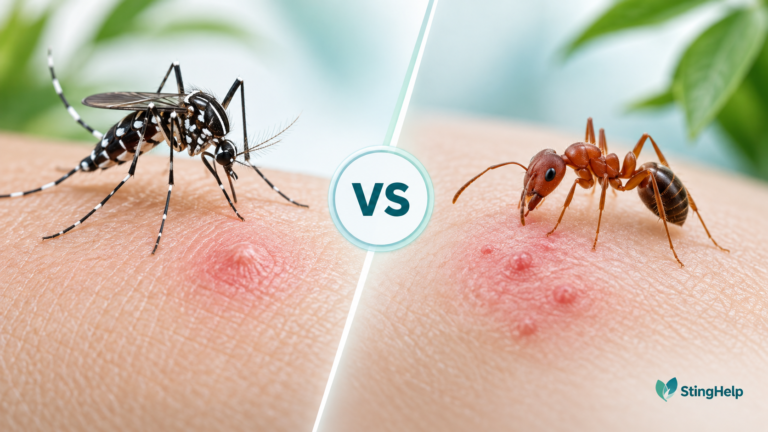
A red bump where a tick was attached is common and nonspecific. The reaction may reflect local irritation from tick saliva, the mouthparts, scratching, or skin sensitivity. CDC specifically notes that lone star tick saliva can be irritating and that redness and discomfort at the bite site do not necessarily mean infection.
That makes lone star tick bite vs american dog tick bite pictures a potentially misleading search if the comparison focuses only on skin. The actual tick is far more useful. If you can remove it safely, take clear close-up photos from above and below against a plain background before disposal or identification.
Do not postpone removal to take photographs. Prompt removal comes first. If the tick is already gone, record where and when the exposure happened and focus on how symptoms evolve.
Why the white dot is useful—but not enough
An adult female lone star tick is famous for the single pale or white spot on the upper surface of the body. That can be a helpful clue. However, males and immature stages do not look exactly like the classic adult female, so the absence of a white dot does not automatically rule out a lone star tick.
American dog ticks have ornate pale markings across portions of the upper body rather than one isolated central dot. Engorgement, image quality, lighting, sex, and life stage can make visual matching harder than online comparison photos suggest.
Where lone star ticks are found in 2026
CDC surveillance updated in May 2026 describes the lone star tick as widely distributed in the Northeast, South, and Midwest. It is considered a very aggressive human-biting tick. Nymphs and adult females are the stages that most frequently bite people and transmit pathogens.
Established-county maps are valuable, but a county without an established record does not mean the tick is definitely absent. Surveillance can miss small or recently expanding populations. Travel history also matters because people can acquire ticks away from home during camping, hunting, field work, vacations, or outdoor recreation.
Lone star ticks thrive in many wooded, brushy, and edge environments used by deer and other wildlife. They can actively move toward hosts, contributing to the reputation as aggressive biters.
Where American dog ticks are found in 2026
CDC surveillance updated in July 2026 describes the American dog tick as widely distributed east of the Rocky Mountains, with limited established populations farther west. Human-biting risk is often highest during spring and summer, and adult females are the stage most likely to bite people.
CDC also recognizes a closely related western species, Dermacentor similis, that has changed how some older western records are interpreted. Current maps and identification resources are therefore better than older “American dog tick everywhere” maps.
American dog ticks often occur in grassy, brushy, or edge habitats where mammals move through vegetation. Pets can also bring ticks into human environments, although finding a tick on a dog does not by itself prove which species it is.
Disease risks: how the two ticks differ
Lone star tick disease context
CDC lists the lone star tick as a vector of Ehrlichia chaffeensis and Ehrlichia ewingii, which cause human ehrlichiosis. The species is also associated with transmission of Heartland virus, Bourbon virus, and tularemia.
Ehrlichiosis commonly causes fever, headache, malaise, and muscle aches. A rash can occur, but the absence of a rash does not rule it out. Heartland and Bourbon virus diseases are rare but can cause fever, fatigue, headache, body aches, nausea, and other systemic symptoms. There are no vaccines to prevent these viral illnesses, so tick-bite prevention is important.
A bite does not mean any pathogen was transmitted. These associations describe what infected ticks can transmit, not what will happen after every bite.
American dog tick disease context
The American dog tick is a recognized U.S. vector of Rickettsia rickettsii, the bacterium that causes Rocky Mountain spotted fever (RMSF), and Francisella tularensis, which causes tularemia. RMSF can become severe quickly, so compatible fever, severe headache, rash, or systemic illness after tick exposure deserves prompt medical attention.
Tularemia can cause fever, swollen lymph nodes, and in tick-associated ulceroglandular disease, an ulcer near the inoculation site. Those features are not unique enough for home diagnosis, but they are important reasons to tell a clinician about a recent tick exposure.
Alpha-gal syndrome: a major lone star tick distinction
One of the most important differences in this comparison is alpha-gal syndrome (AGS). CDC describes AGS as a potentially serious allergy that can develop after certain tick bites. In the United States, the lone star tick is most often associated with AGS.
Alpha-gal is a sugar molecule present in most mammals. A person with AGS can develop reactions after consuming red meat or being exposed to other products containing alpha-gal. Reactions may include hives, stomach pain, nausea, diarrhea, swelling, breathing problems, dizziness, or anaphylaxis.
AGS is unusual because symptoms after food exposure can be delayed for hours. A person may not immediately connect a nighttime allergic reaction with a meal eaten earlier. Not everyone bitten by a lone star tick develops AGS, and a positive blood test alone does not establish the diagnosis without a compatible clinical history.
If new delayed reactions to mammalian meat or products develop after tick exposure, discuss them with an allergist or other healthcare professional. Severe allergic reactions require emergency care.
How to remove either tick safely
Removal technique is the same whether the tick is a lone star tick, American dog tick, or another hard tick. Use clean fine-tipped tweezers and remove it promptly.
- Grasp the tick as close to the skin as possible.
- Pull upward with steady, even pressure.
- Do not twist, jerk, burn, crush, or coat the tick with petroleum jelly or nail polish.
- Clean the bite area and your hands afterward.
- Record the date and likely exposure location.
- Take clear photos or save the tick securely if identification resources are available.
If small mouthpart fragments remain and cannot be removed easily, do not repeatedly dig into the skin. Keep the area clean and monitor it. Seek medical advice for increasing warmth, worsening pain, pus, red streaking, spreading redness with fever, or another concerning local change.
What symptoms should change the plan?
Most tick bites do not lead to illness, but symptom monitoring matters. Contact a healthcare professional if fever, severe headache, marked fatigue, muscle aches, rash, neurologic symptoms, persistent vomiting, or other significant systemic illness develops after a recent tick exposure.
For lone star exposure, ehrlichiosis and other associated illnesses may not produce a dramatic bite-site lesion. For American dog tick exposure, RMSF also cannot be ruled in or out by the appearance of the bite site. The presence or absence of a tiny red bump is therefore much less important than the person’s overall condition.
Also note delayed allergic patterns. If repeated hives, gastrointestinal symptoms, swelling, or breathing problems occur several hours after eating mammalian meat following tick exposure, discuss alpha-gal syndrome with a healthcare professional.
When is emergency care appropriate?
Call emergency services for trouble breathing, swelling of the tongue or throat, collapse, seizure, severe confusion, inability to stay awake, or another rapidly progressing life-threatening symptom. If a person with known or suspected anaphylaxis uses prescribed epinephrine, emergency medical evaluation is still needed.
Decision guide: which clues matter most?
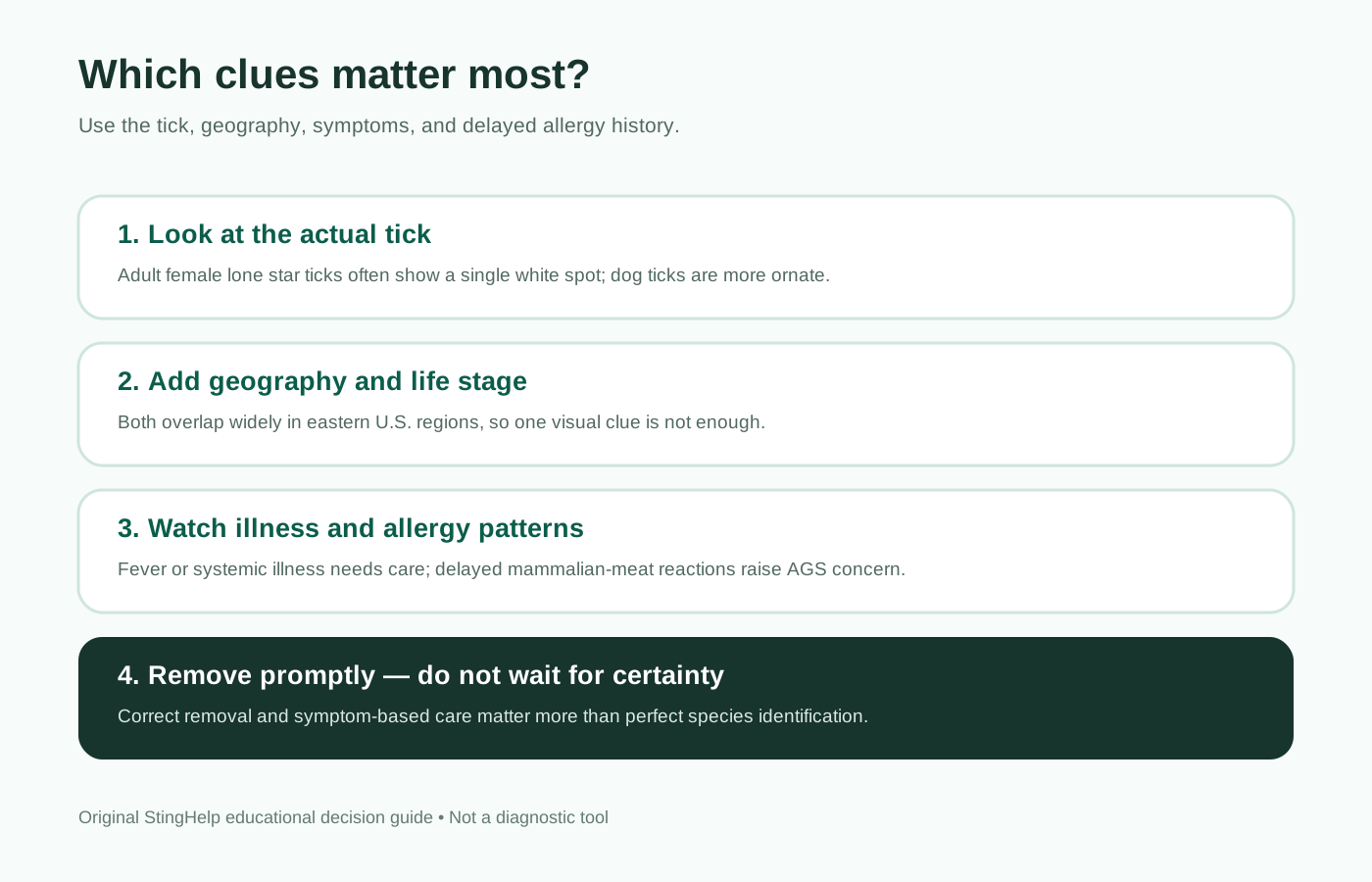
| Question | Why it matters | Safer next step |
|---|---|---|
| Was the actual tick photographed or saved? | Tick morphology is more useful than the bite mark. | Use a reputable tick-identification resource. |
| Was there a white dot on an adult female? | Supports a lone star tick identification. | Use as one clue, not the only clue. |
| Where did exposure occur? | Both species overlap broadly, but local surveillance can shift probability. | Check current CDC/state maps. |
| Did fever, headache, rash, or systemic illness develop? | Changes medical urgency regardless of exact species. | Contact a healthcare professional promptly. |
| Did delayed reactions to mammalian meat appear later? | Raises the possibility of alpha-gal syndrome. | Discuss with an allergist or clinician. |
The safest decision does not depend on perfect identification. Remove the tick, document the exposure, monitor symptoms, and seek appropriate care when the person becomes ill.
How to prevent future tick bites
Use EPA-registered repellents according to the label. Wear protective clothing in tick habitat, consider permethrin-treated clothing or gear when appropriate, and avoid brushing through dense vegetation when practical.
After outdoor activity, perform a full-body tick check. Common hidden areas include the scalp, behind the ears, under the arms, around the waist, behind the knees, between the legs, and around the groin. Check pets, clothing, backpacks, and outdoor equipment too.
Reducing brush and leaf litter in high-use areas, maintaining paths, and creating separation between frequently used spaces and dense vegetation can reduce exposure around a property. Local extension resources can provide region-specific recommendations.
Frequently asked questions
Can you identify a lone star tick bite by a bull’s-eye rash?
No. A rash shape does not reliably identify the tick species. Lone star tick bites can be followed by STARI in some cases, but other rashes and illnesses can look similar.
Does the white dot always mean lone star tick?
A single white dot is a classic feature of the adult female lone star tick, but males and immature stages differ. Use the entire tick and expert resources when possible.
Which tick can trigger alpha-gal syndrome?
In the United States, CDC says the lone star tick is most often associated with alpha-gal syndrome, although a few cases have followed bites from other tick species.
Which tick spreads Rocky Mountain spotted fever?
The American dog tick is a recognized U.S. vector of the bacterium that causes RMSF. A bite does not automatically mean infection.
Can both ticks transmit tularemia?
CDC lists both the lone star tick and American dog tick among U.S. ticks that can transmit Francisella tularensis, the bacterium that causes tularemia.
Should I wait to identify the tick before removing it?
No. Remove an attached tick promptly. Take photos or save the tick after removal if identification is useful.
Related StingHelp guides
- Tick Bites: Removal, Symptoms & Warning Signs
- Tick Bite Warning Signs
- American Dog Tick vs Asian Longhorned Tick
- American Dog Tick vs Gulf Coast Tick
- What Bit Me? Identification Guide
- Bite & Sting Prevention
Authoritative references
- CDC — Lone Star Tick Surveillance
- CDC — American Dog Tick Surveillance
- CDC — Where Ticks Live
- CDC — About Alpha-gal Syndrome
- CDC — Ehrlichiosis: Causes and Spread
Bottom line
For lone star tick bite vs american dog tick bite pictures, the skin mark is not the deciding clue. The actual tick, geographic exposure, life stage, and symptom pattern are more useful. Lone star ticks have a broader set of U.S. disease and allergy associations, including alpha-gal syndrome, while American dog ticks are established vectors of RMSF and tularemia. Remove attached ticks promptly and seek care for concerning symptoms.
Educational information for a U.S. audience. This article does not diagnose a tick species or tick-borne disease from a photograph and does not replace professional medical care.