
Do Flea Collars Work? Vets’ Honest Answer
Walk down the pet-care aisle and you'll see two very different products sharing one shelf: the $60-plus Seresto collar with its eight-month protection claim,…
Somewhere between the third vacuum session and the second flea bath, most pet owners start googling the pantry. Salt is cheap, it's already in the kitchen, and the internet is…

Somewhere between the third vacuum session and the second flea bath, most pet owners start googling the pantry. Salt is cheap, it’s already in the kitchen, and the internet is full of tutorials promising that a good sprinkle across the carpet will dehydrate a flea infestation out of existence. When you’re desperate and the exterminator’s quote made your eyes water, it sounds almost reasonable.
Does salt kill fleas? Not in any way you can count on. Salt is a desiccant, so it may dehydrate some flea larvae it directly contacts in dry carpet — but there are no published studies demonstrating that salt controls flea infestations, and the toughest life stage, the cocooned pupa, is essentially immune to it. At best, salt is a weak assist to vacuuming; at worst, it’s days of false confidence while the infestation keeps breeding.
This article explains the theory behind the salt trick, what flea biology says about why it falls short, how to use salt safely if you try it anyway, and — more importantly — what actually clears fleas out of carpets for good.
Let’s be direct: no peer-reviewed research has tested salt as a flea treatment, and no entomologist or veterinary authority recommends it as one. The entire case for salt rests on a plausible-sounding mechanism (it’s a desiccant, fleas need moisture) stretched far beyond what the biology supports. Plausible is not proven, and with fleas, the gap between the two is where infestations survive.
What salt might do is kill some larvae. Flea larvae are soft-bodied, moisture-dependent maggot-like creatures living deep in carpet fibers, and a desiccant in prolonged direct contact can dehydrate them. “Might” and “some” are doing heavy lifting in that sentence — the salt has to reach the larvae, stay dry, and sit undisturbed long enough to work, all while your household lives its normal life around it.
What salt will not do is kill adult fleas reliably (their waxy cuticle resists dehydration far better than larvae), kill eggs (protected by their shells), or touch pupae at all (armored in silk cocoons). Since the visible adult fleas on your pet are only a small fraction of the total population — the rest is eggs, larvae, and pupae hidden in the environment — a method that only sometimes affects one life stage cannot end an infestation. That’s the whole verdict in one paragraph.
The theory isn’t crazy, which is why it persists. Salt is hygroscopic — it pulls moisture from its surroundings. Flea larvae are genuinely vulnerable to drying out; entomologists have long noted that low humidity suppresses larval survival, and desiccant dusts are a legitimate category of flea control. Diatomaceous earth, the best-known desiccant powder for fleas, works on exactly this principle: microscopic sharp particles damage the insect’s waxy coating and let moisture escape.
Salt tutorials borrow that legitimacy by analogy. Sprinkle fine salt into the carpet, work it deep with a broom, leave it for a day or two, vacuum thoroughly, repeat — the instructions mirror real desiccant-dust protocols. Some versions add baking soda to the mix. The anecdotes feel convincing because people usually do the salt treatment alongside furious vacuuming, and then credit the salt for what the vacuum accomplished.
There’s also a selection bias in the testimonials. The people posting success stories are the ones with light infestations that might have resolved with vacuuming alone. Nobody posts the follow-up where the fleas came back two weeks later — which is exactly what flea biology predicts, because the pupae were sitting out the whole salt treatment in their cocoons, waiting.
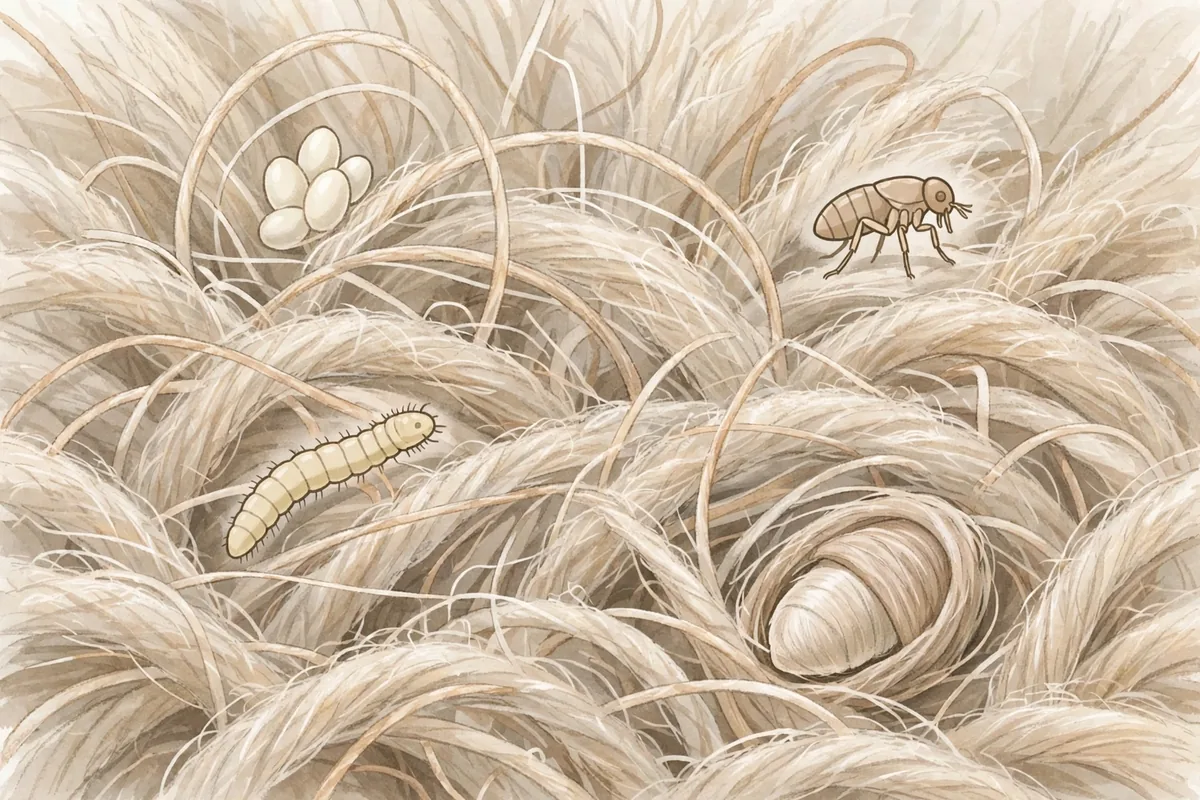
Here’s the evidence landscape, stated plainly: I found no published studies testing salt against fleas — not for adults, larvae, or eggs. Flea-science resources that address the question directly classify salt as unproven, noting that the desiccant argument fails on flea biology: adult fleas are mobile and won’t sit in salt long enough, eggs are protected, and pupae are effectively armored.
What the biology does support is narrower. Flea larvae, which feed on organic debris (mostly adult flea feces) deep in carpet and upholstery, are the one stage plausibly affected by a desiccant they contact. But “plausibly affected” is a long way from “controlled.” Larvae deep in carpet padding may never contact the salt at all, and any larvae that survive keep the pipeline to the pupal stage — the stage that defeats nearly everything.
The pupal problem deserves emphasis because it’s the reason so many DIY flea treatments fail. Cocooned pupae are the hardiest flea life stage: they resist desiccation, shrug off many insecticides, and can remain dormant for weeks or months, emerging as hungry adults when they detect vibration, warmth, and carbon dioxide — in other words, when you walk across the room. No powder you sprinkle on a carpet, salt included, reliably kills them. Vacuuming’s vibration actually stimulates them to emerge, which is why vacuuming works best as part of a sustained campaign rather than a one-time event.
If you’ve read all of that and still want to try salt as a minor supplement to a real flea campaign, here’s how to do it without creating new problems. Treat this as harm reduction, not an endorsement.
One more caution: salt can damage some flooring and finishes, and in humid climates it absorbs moisture from the air and cakes into carpet — the opposite of the dry desiccant effect you’re hoping for. If your home runs humid, skip it entirely.
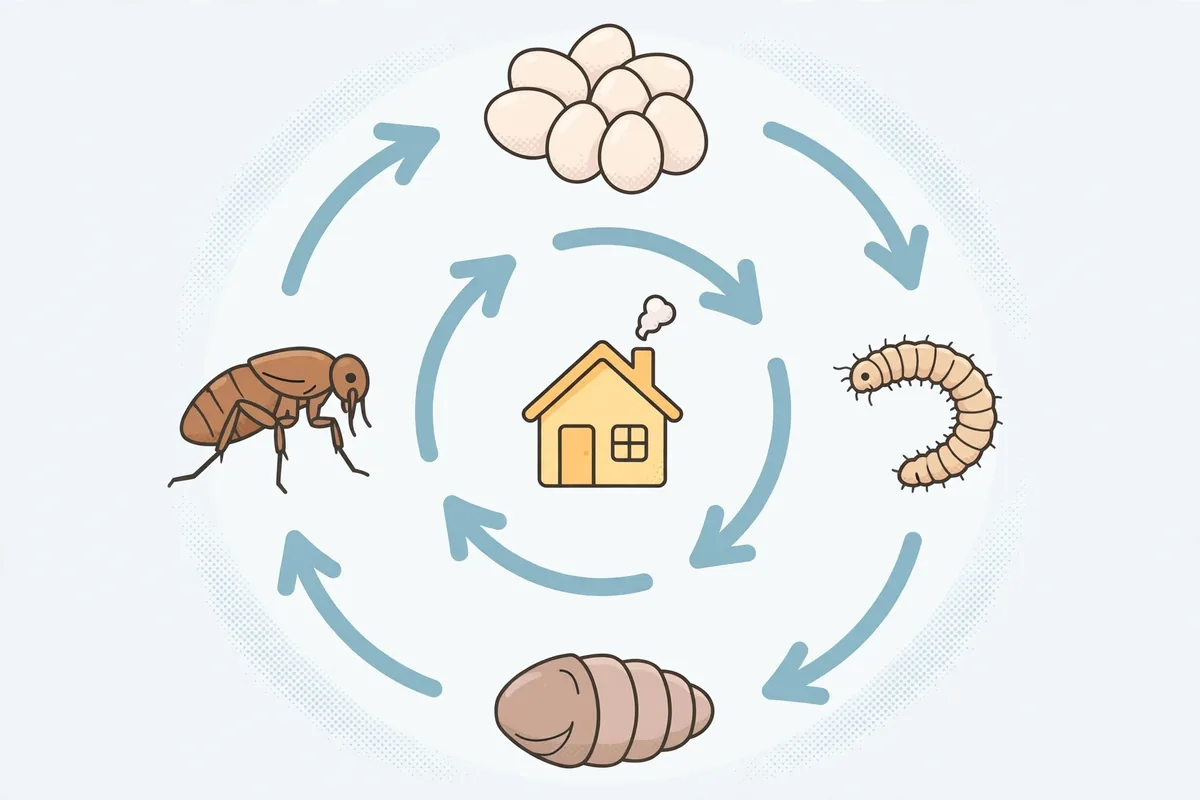
Flea control fails when it targets only one life stage, and that’s salt’s fundamental flaw. A real infestation is a pipeline: adult females on your pet lay dozens of eggs daily, eggs fall into carpet and bedding, larvae hatch and feed for a week or two, pupae cocoon and wait, and new adults emerge to restart the cycle. Breaking the pipeline requires sustained pressure on multiple stages at once, for longer than the pupal dormancy period — typically several weeks minimum.
Salt, even granted its best case, pressures only larvae, only partially, only where it reaches. Meanwhile the pupae sit out the treatment, eggs keep hatching, and adults keep feeding and laying. This is why the classic salt-tutorial timeline — sprinkle, wait, vacuum, declare victory — so often ends with a “the fleas came back!” post two weeks later. They didn’t come back. They never left; the pupae were just waiting out your pantry remedy.
There’s an opportunity cost too. Every week spent on salt is a week the infestation breeds unopposed — and a week your pet keeps getting bitten. For animals with flea allergy dermatitis, where a single bite triggers miserable itching and skin damage, delay has a real welfare cost: fast, effective control matters most for sensitive pets.
The unglamorous truth: the most effective carpet treatment is the vacuum cleaner you already own, used aggressively and repeatedly. Vacuuming removes eggs, larvae, and the flea feces larvae feed on; the vibration stimulates pupae to emerge into a hostile, regularly vacuumed environment; and disposing of the bag or emptying the canister outside prevents re-infestation. Vacuum every few days for several weeks — including under furniture, along baseboards, and under cushions — and you’re attacking every life stage at once.
Layer these on top:
Salt isn’t dangerous in the scheme of home remedies, and as a one-time experiment alongside real methods it won’t hurt. Just don’t let it be the plan. The fleas are counting on exactly that.
Flea bites on people usually resolve on their own, but seek medical care if:
Does salt kill flea eggs?
No. Flea eggs are protected by their shells and aren’t meaningfully affected by salt. They hatch in a few days under normal indoor conditions, which is why any treatment targeting only hatched stages has to be repeated.
How long should I leave salt on the carpet for fleas?
Tutorials typically say 24 to 48 hours, but there’s no research behind any specific duration. Whatever you choose, the thorough vacuuming afterward matters far more than the salt itself — and keep pets and kids off the carpet until it’s fully vacuumed.
Is salt safe for pets?
In small incidental amounts, yes, but salted carpets can irritate paws and already-damaged skin, act as a respiratory irritant when kicked up, and make pets sick if they lick up large quantities. Don’t apply it to pet bedding, and vacuum completely before letting animals back on the area.
Why do fleas keep coming back after I treated the carpet?
Because cocooned pupae survive almost everything — salt, many sprays, even time. They emerge as new adults over days to weeks. Effective control means sustained vacuuming plus treating the pet, maintained for several weeks to outlast the pupal reservoir.
What kills fleas in carpet better than salt?
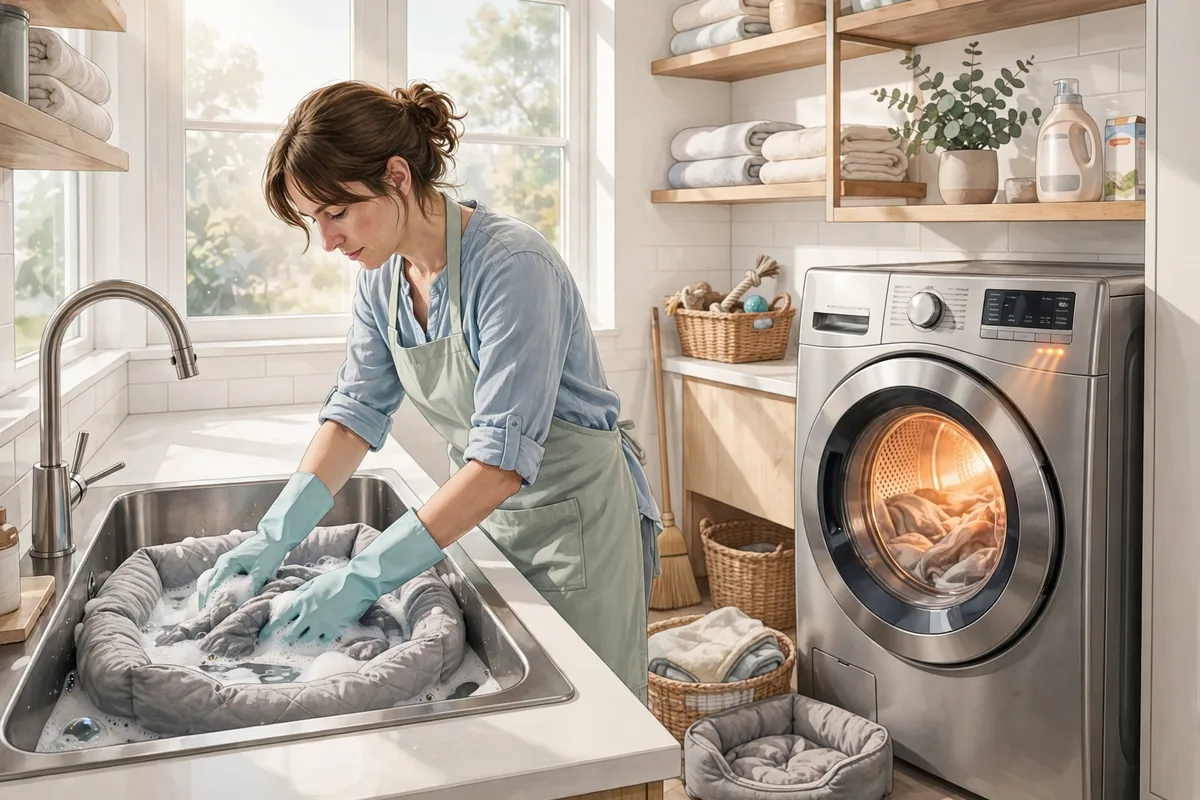
Frequent thorough vacuuming, hot-washing and hot-drying bedding, a vet-recommended flea preventive on the pet, and — for severe cases — professional treatment with insect growth regulators. Food-grade diatomaceous earth is the desiccant dust with actual evidence behind it.
Medically reviewed by Dr. Sarah Jones, MD.
This article is for informational purposes only and isn’t medical advice. If you’re worried about a bite or sting, talk to a healthcare professional.
Dr. Jones oversees StingHelp’s clinical verification process. Every guide is systematically evaluated against active Centers for Disease Control and Prevention (CDC), Environmental Protection Agency (EPA), and American Academy of Allergy, Asthma & Immunology (AAAAI) medical consensus standards to ensure symptom distinctions and care recommendations are clinically sound.
Explore physician-reviewed first-aid procedures, identification clues, and symptom comparisons for other common outdoor bites and stings.

Walk down the pet-care aisle and you'll see two very different products sharing one shelf: the $60-plus Seresto collar with its eight-month protection claim,…
# Can You Get Fleas Without Pets? It is one of the most bewildering household mysteries: you have no dog, no cat, no pets…
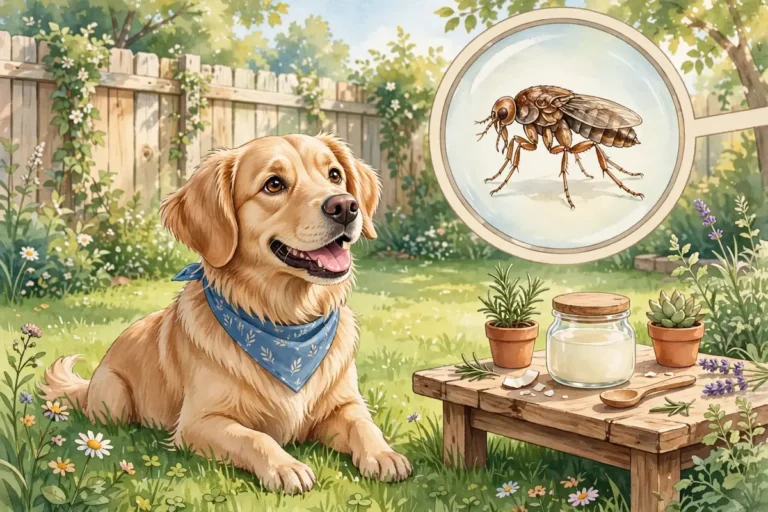
Scroll any natural-pet-care forum and you will find the claim: rub coconut oil on your dog and the fleas stay away. The question does…