
Do Flea Collars Work? Vets’ Honest Answer
Walk down the pet-care aisle and you'll see two very different products sharing one shelf: the $60-plus Seresto collar with its eight-month protection claim,…
# Can You Get Fleas Without Pets? It is one of the most bewildering household mysteries: you have no dog, no cat, no pets of any kind, yet your ankles…
# Can You Get Fleas Without Pets?
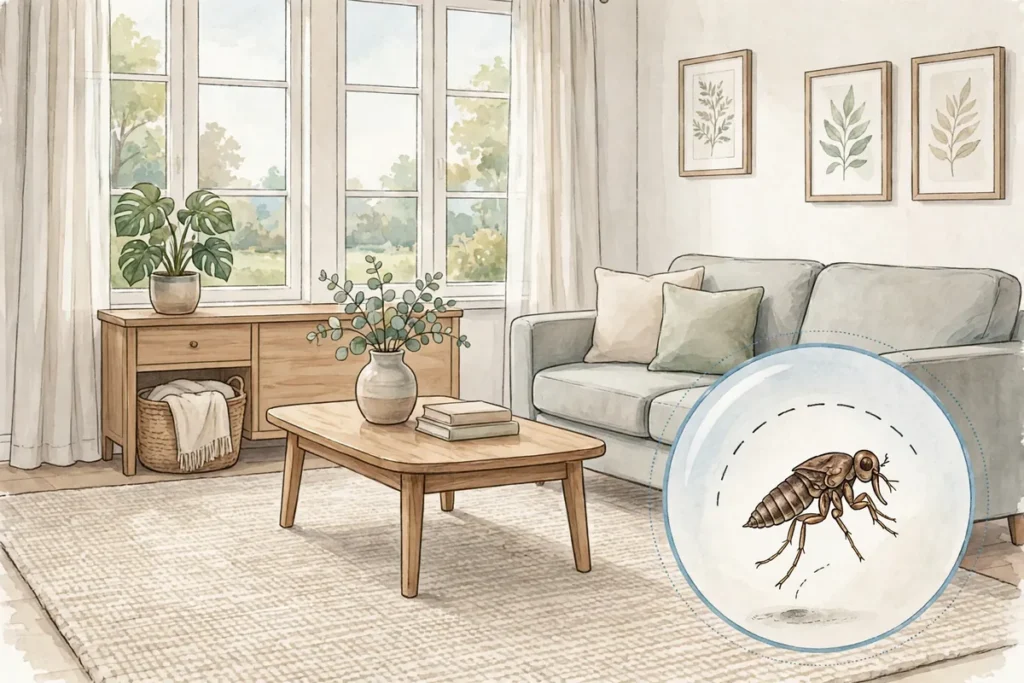
It is one of the most bewildering household mysteries: you have no dog, no cat, no pets of any kind, yet your ankles are covered in itchy red bumps and you have spotted tiny dark insects jumping in the carpet. So, can you get fleas without pets? Yes, absolutely. Fleas do not need a pet living in your home right now. Their pupae can lie dormant in carpets and floorboards for months, waiting for the vibration, warmth, and carbon dioxide of a passing human to trigger emergence, and wildlife passing through your yard can seed a new population without any pet involved at all.
This is not a rare fluke. It happens to new renters moving into carpeted apartments, to homeowners after a vacant period, and to families whose yards host raccoons, opossums, or feral cats they never see. Understanding how fleas reach a pet-free home changes everything about the response, because treating the bites on your skin does nothing about the cocoons in your carpet. This guide explains the flea life cycle that makes pet-free infestations possible, the six most common sources, how to confirm you are dealing with fleas, what you can safely do yourself, and when to bring in your landlord or a professional.
Most people picture fleas as a pet problem because pets are the most visible hosts. A dog scratches, a cat gets treated, and the connection is obvious. But adult fleas on an animal are only a small fraction of the total flea population. Pest researchers commonly describe the visible adults as roughly five percent of the problem, with about ninety-five percent hidden in the environment as eggs, larvae, and pupae. That hidden majority does not care whether the host that laid the eggs still lives there.
The cat flea, Ctenocephalides felis, is the species behind the vast majority of home infestations in the United States, and despite its name it is not picky. University entomology sources list its hosts as including dogs, cats, raccoons, opossums, squirrels, rats, mice, rabbits, and dozens of other warm-blooded animals. Any of these can deposit eggs in or around your home. And once eggs are in the environment, the pupal stage can wait out a pet-free period that lasts months. So the absence of a pet in your home today says nothing about whether fleas are developing in your floors right now.
To understand pet-free fleas, you need to understand the pupal stage, because it is the reason infestations seem to appear out of nowhere.
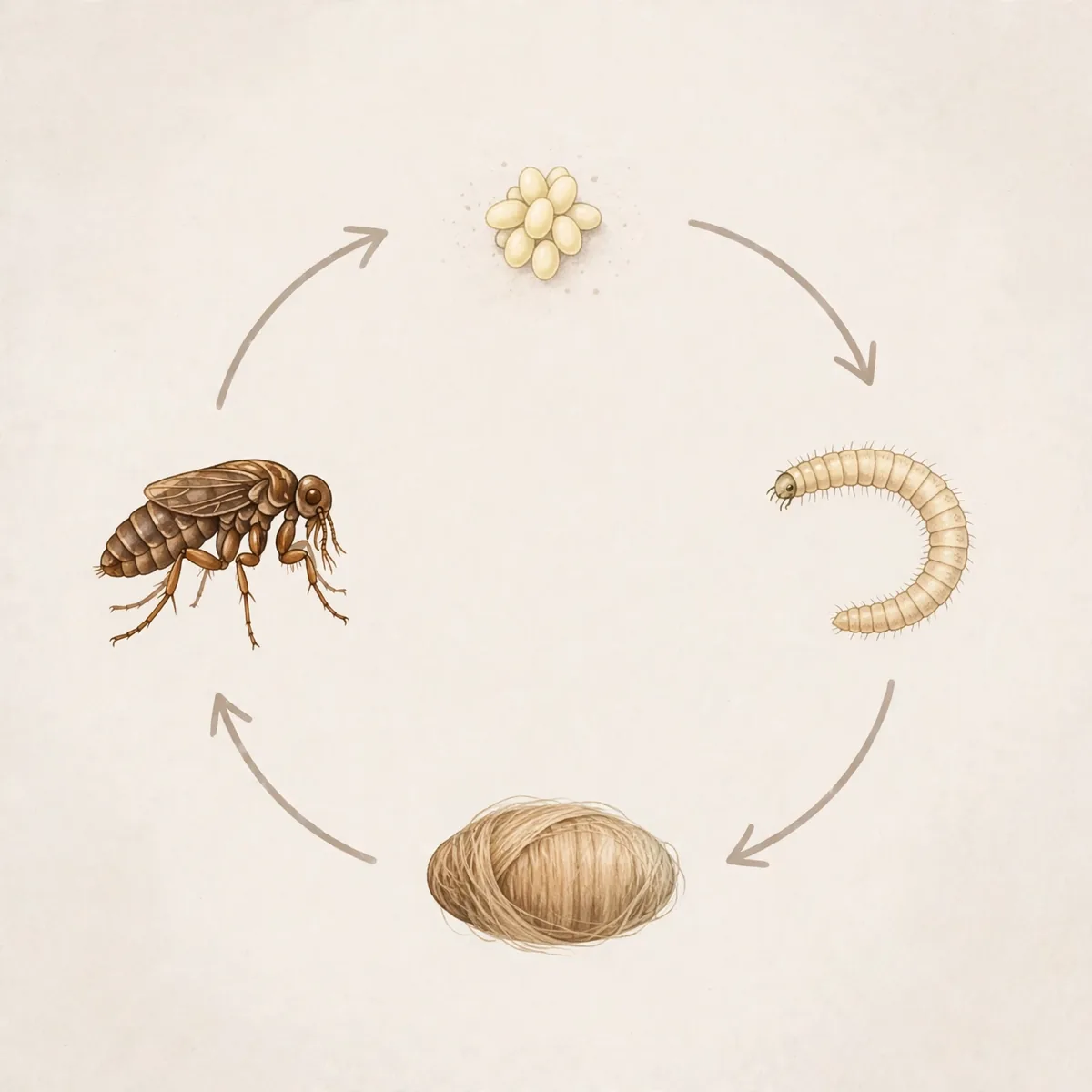
A female flea lays tiny white eggs loosely on her host, and the eggs are non-sticky, so they fall off into carpets, bedding, floor cracks, and yard debris. Eggs hatch in days under warm, humid conditions, though university extension sources note they can take far longer when conditions are poor. The worm-like larvae that emerge avoid light, feed mainly on adult flea droppings (the dark specks called flea dirt, which are largely digested blood), and develop for one to three weeks. Then each larva spins a sticky, silk-like cocoon and becomes a pupa.
The pupa is the survival champion of the flea world. Inside its camouflaged cocoon, which collects floor debris and blends invisibly into carpet fibers, the developing flea is shielded from drying out and from many surface treatments. University of Minnesota Extension notes that pupae can take twelve months or longer to develop into adults when temperatures and humidity are unfavorable. The pupa waits for the signals of a nearby host: warmth, carbon dioxide from breath, and above all vibration, such as footsteps or a vacuum cleaner. When those cues arrive, the adult emerges ready to feed within hours.
This biology explains the classic scenarios. A family moves into an apartment that sat vacant for two months and gets bitten within days: the previous tenant’s pet left pupae behind, and the new tenants’ footsteps triggered a mass emergence. Someone returns from a long vacation to a house suddenly full of fleas: same mechanism. The pupae were there all along, quiet and invisible, waiting for exactly this moment.
Once you accept that the pupal stage can outwait a pet-free period, the sources practically list themselves. Work through them like a checklist.
This is the most common source for renters. Eggs fall continuously from an infested animal into its surroundings, larvae develop in protected spots, and cocoons accumulate along baseboards, under furniture, and deep in carpet. CDC guidance notes that adult fleas can remain inside the cocoon until movement or body heat signals a host, so a new occupant can trigger a noticeable wave of emergence weeks or months after the pet is gone. If your bites started within days of moving into a carpeted rental, this is the first suspect.
Rats, mice, raccoons, opossums, squirrels, skunks, rabbits, and feral cats all carry fleas, and they do not need to come inside to cause trouble. An animal denning under a deck, nesting in a crawl space, or sheltering above a ceiling sustains the flea life cycle right against your home, and eggs dropped in the yard develop in shaded, humid spots. Even animals that only pass through, like a raccoon crossing the lawn at night, leave eggs behind in the grass. Look for droppings, nesting material, damaged vents, and access openings as signs of wildlife activity.
In apartment buildings, fleas travel. They move through shared hallways, wall voids, and under doors from an infested unit to adjacent ones, and a neighbor’s untreated pet can become your problem. If you live in multi-unit housing and your own unit has no plausible source, ask neighbors whether they have noticed bites; a building-wide pattern points to a shared source that needs coordinated treatment.
Used rugs, upholstered furniture, curtains, and even clothing can harbor eggs, larvae, or pupae, especially items stored in garages or basements. A beautiful secondhand armchair can carry a starter population into a spotless home. This source is easy to overlook because the item looks clean; flea immature stages are essentially invisible to the naked eye.
Fleas are hitchhikers. A guest whose home has fleas can unknowingly carry adults or eggs on clothing, bags, or pet carriers into your home, where eggs drop into carpets and wait. This is an occasional spark rather than a sustained source, but it happens, and it is worth considering if bites appeared shortly after hosting visitors.
You do not need a pet to pick up fleas outdoors. Shaded, humid areas of lawn, leaf litter, and spots where wildlife rests can harbor developing fleas, and walking through them in sandals or bare feet is enough to collect bites or carry fleas indoors on socks and pant legs. Keeping up with home and yard bite prevention reduces this route.
Before you act, confirm the diagnosis, because several other problems mimic flea bites and the treatments differ completely.
The bite pattern. Flea bites are small red bumps, often with a tiny darker center and a reddish halo, clustered in groups of three or four or in short lines, concentrated around the ankles and lower legs. New bites appearing daily in the same household, especially after a move or a vacant period, strengthen the suspicion.
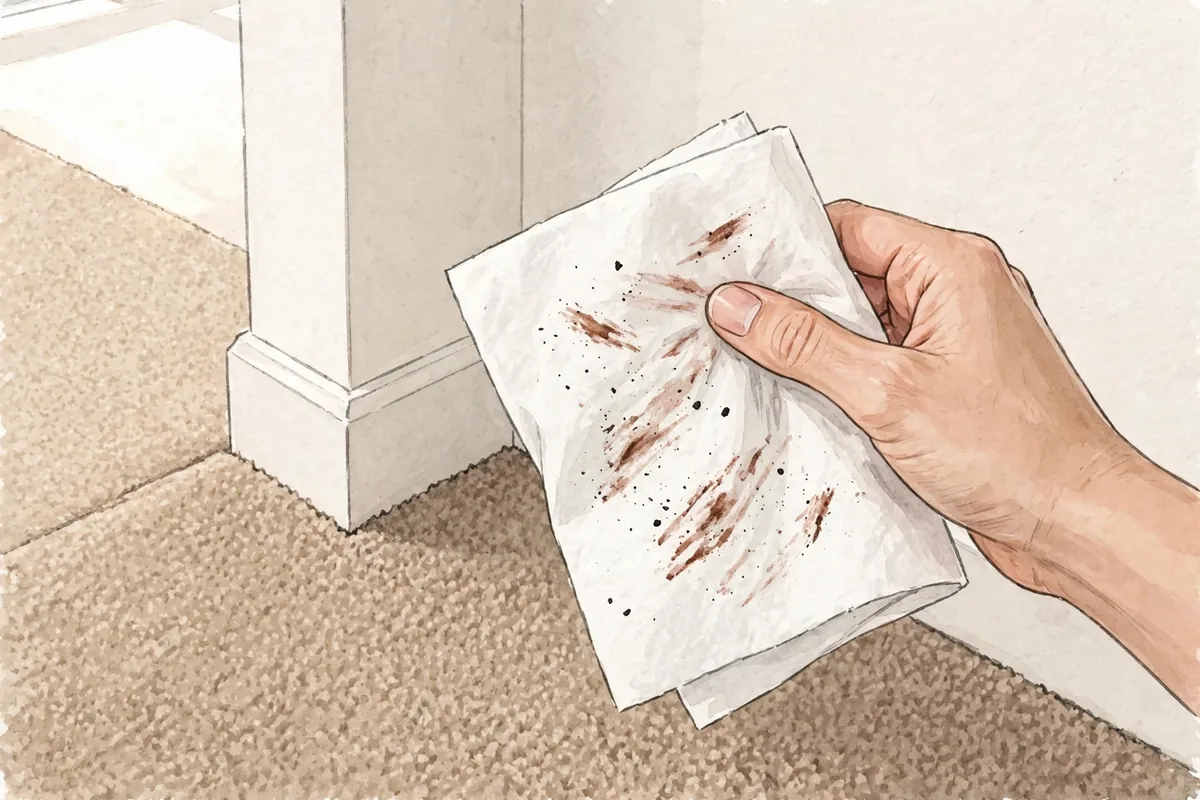
The flea dirt test. Look for tiny dark specks, like coarse black pepper, on light-colored socks, pet-free bedding edges, windowsills, or near baseboards. Place the specks on a damp white paper towel: flea dirt, which is digested blood, smears reddish-brown. Ordinary household dirt does not. This simple test is one of the most reliable home confirmations available.
Seeing the insect. Adult fleas are about one-sixteenth to one-eighth of an inch long, reddish-brown, wingless, and flattened side to side, with a hard polished body and powerful jumping hind legs. They move fast and jump when disturbed. If you are unsure what you are seeing, capture one on clear tape and show it to a pest professional or your local extension office; carpet beetles, springtails, and bed bugs are all commonly mistaken for fleas.
What else it could be. Bed bug bites also cluster and itch, but bed bugs hide in mattress seams and furniture rather than carpets and yards, and they do not jump. Chigger bites concentrate where clothing is tight and itch ferociously but come from outdoor vegetation, not indoor carpets. Scabies causes burrows and intense nighttime itching and needs a clinician’s diagnosis. If the bite pattern does not fit fleas, or if anyone develops a widespread rash, see a clinician or dermatologist rather than treating for fleas on a hunch. Our guide on how to tell if a bug bite is healing can help you track whether individual bumps are following a normal course.
There is meaningful mechanical work you can do without any chemicals, and it targets exactly the hidden stages that make fleas so persistent.
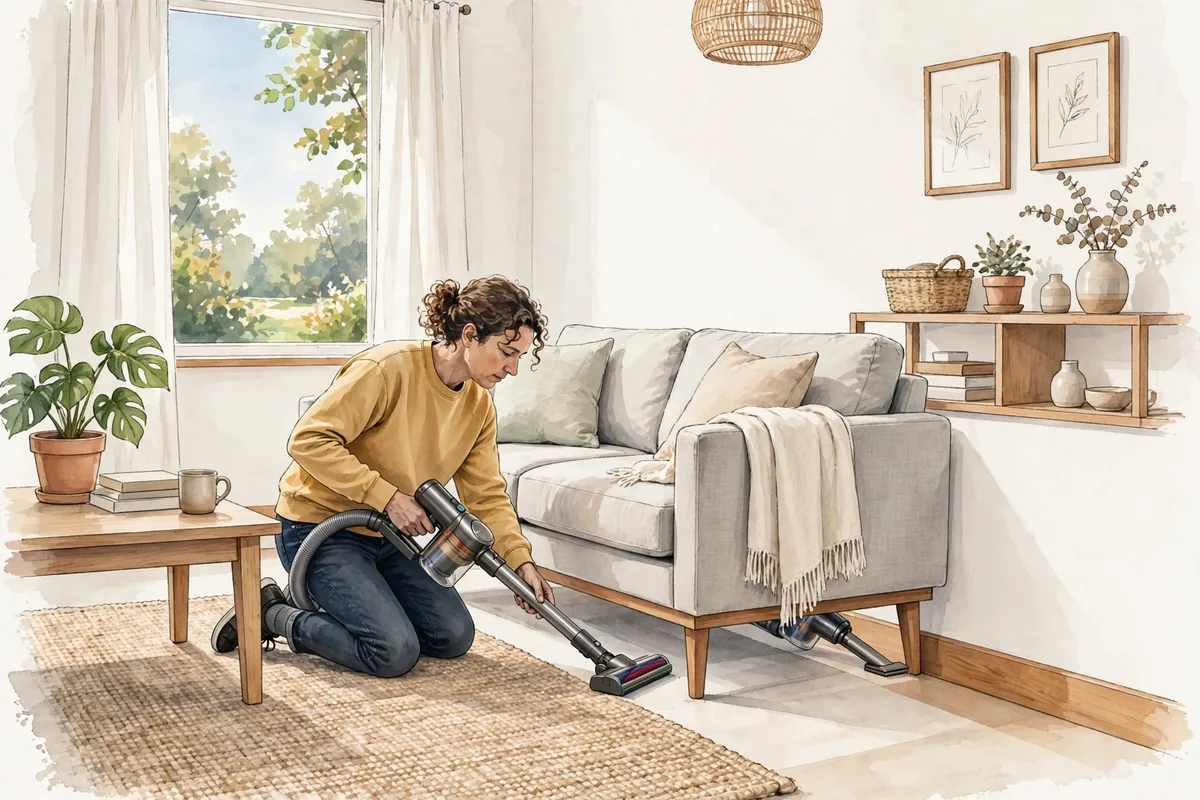
Vacuum thoroughly and repeatedly. Vacuuming is the single most effective do-it-yourself measure. It physically removes eggs, larvae, and some pupae, and the vibration and warmth of the machine stimulate pupae to emerge, exposing the new adults where subsequent vacuuming can capture them. Vacuum all carpets and rugs slowly, move furniture, and pay special attention to baseboards, under furniture, closet floors, and upholstery seams. Immediately empty the vacuum into a sealed bag and take it outside to the trash so captured fleas do not escape back indoors. Repeat every few days for several weeks; a single session is never enough because pupae emerge on their own schedule.
Wash bedding and textiles hot. Wash sheets, blankets, pet-free bedding, curtains, and clothing that may have been exposed in hot water and dry on high heat where fabrics allow. Heat kills all flea life stages in washable items.
Reduce the habitat. Declutter floors and closets so there are fewer protected spots for larvae. Outdoors, trim overgrown vegetation, rake leaf litter, and let sunlight reach shaded damp areas where larvae develop, since open dry ground is far less hospitable to young fleas. Remove food sources that attract wildlife, such as open garbage, spilled birdseed, and pet food left outside, and seal gaps that let animals den under porches or in crawl spaces.
Do not improvise with chemicals. This is the boundary the research is clear about: leave insecticide selection and application to licensed professionals. Over-the-counter foggers are widely regarded as ineffective against the protected pupal stage and can scatter fleas deeper into hiding. If vacuuming and washing are not gaining ground after a couple of weeks of consistent effort, that is your signal to escalate rather than to experiment.
Pet-free flea problems often involve parties beyond yourself, and knowing when to hand off saves time and money.
Renters: tell your landlord early. In multi-unit housing, fleas frequently come from a neighboring unit or from a previous tenant, which makes the infestation a building issue rather than a personal one. Many leases and local housing codes assign pest responsibility for pre-existing or structural infestations to the landlord, and coordinated treatment of adjacent units is often necessary for lasting results. Document your bites with dated photos, note when they started relative to your move-in date, and put the request in writing.
Call a licensed pest professional when: bites continue despite two to three weeks of thorough vacuuming and washing; you find evidence of wildlife access that needs exclusion work; the infestation spans multiple rooms or units; or anyone in the home is having a strong reaction to the bites. A professional can identify the source, treat across the life cycle with properly timed follow-ups, and advise on wildlife exclusion. Be wary of anyone who promises that a single treatment will eliminate the problem; the pupal stage makes one-and-done treatment biologically implausible, and reputable operators plan for it.
If animals are involved, loop in the right expert. Stray or feral animals on the property may need animal control or a wildlife removal service rather than a pest company. If a neighbor’s pet is the source, a polite conversation, or a landlord-mediated one, comes before any treatment plan.
For general prevention habits that keep yards and homes less inviting to biting pests overall, see our outdoor bite prevention checklist.
Flea bites themselves are usually a nuisance rather than a medical emergency, but see a clinician promptly if you notice:
Can you really get fleas if you have never owned a pet?
Yes. The most common route is dormant pupae left behind by a previous occupant’s pet, which can wait months in carpets and emerge when your footsteps signal a host. Wildlife such as raccoons, opossums, squirrels, and feral cats can also seed fleas in your yard or crawl space, and fleas can migrate from neighboring apartments. No current pet is required at any point in this chain.
How long can flea pupae survive without a host?
University extension sources report that pupae can remain dormant for many months when conditions are unfavorable, with some sources citing up to twelve months or longer. They wait inside protective cocoons for the warmth, carbon dioxide, and vibration that signal a host is near. This long dormancy is why a vacant apartment can seem flea-free for months and then erupt with fleas days after someone moves in.
Why are the bites mostly on my ankles?
Fleas jump rather than fly, and their jumps are short, so the lower legs are the first landing zone when you walk across an infested carpet or yard. The classic pattern is small itchy bumps clustered around the sock line and ankles. Bites concentrated there, especially new ones appearing daily, are one of the strongest clues pointing to fleas rather than bed bugs or mosquitoes.
Will fleas eventually go away on their own if there is no pet?
Not reliably. Adult fleas need blood meals and will bite humans in the absence of pets, and while they reproduce less successfully on people than on cats or dogs, the environmental stages keep the cycle limping along, especially if wildlife continues to visit. Vacuuming, washing, and removing the source are what break the cycle; waiting it out usually just extends the biting.
Should I use a bug fogger in my pet-free home?
No, not on your own. Total-release foggers are widely considered ineffective against fleas because the mist does not penetrate carpet fibers and baseboards where eggs, larvae, and pupae actually live, and fogging can drive fleas deeper into hiding. Chemical treatment, when needed, should be planned and applied by a licensed pest professional who times follow-up visits around the flea life cycle.
Dr. Jones oversees StingHelp’s clinical verification process. Every guide is systematically evaluated against active Centers for Disease Control and Prevention (CDC), Environmental Protection Agency (EPA), and American Academy of Allergy, Asthma & Immunology (AAAAI) medical consensus standards to ensure symptom distinctions and care recommendations are clinically sound.
Explore physician-reviewed first-aid procedures, identification clues, and symptom comparisons for other common outdoor bites and stings.

Walk down the pet-care aisle and you'll see two very different products sharing one shelf: the $60-plus Seresto collar with its eight-month protection claim,…
Scroll any natural-pet-care forum and you will find the claim: rub coconut oil on your dog and the fleas stay away. The question does…

The Short Answer Technically yes, but you should never use it that way. When you ask does tea tree oil kill fleas, the honest…