
Does Tea Tree Oil Kill Fleas? Vet Warning
The Short Answer Technically yes, but you should never use it that way. When you ask does tea tree oil kill fleas, the honest…
Scroll any natural-pet-care forum and you will find the claim: rub coconut oil on your dog and the fleas stay away. The question does coconut oil repel fleas deserves a…
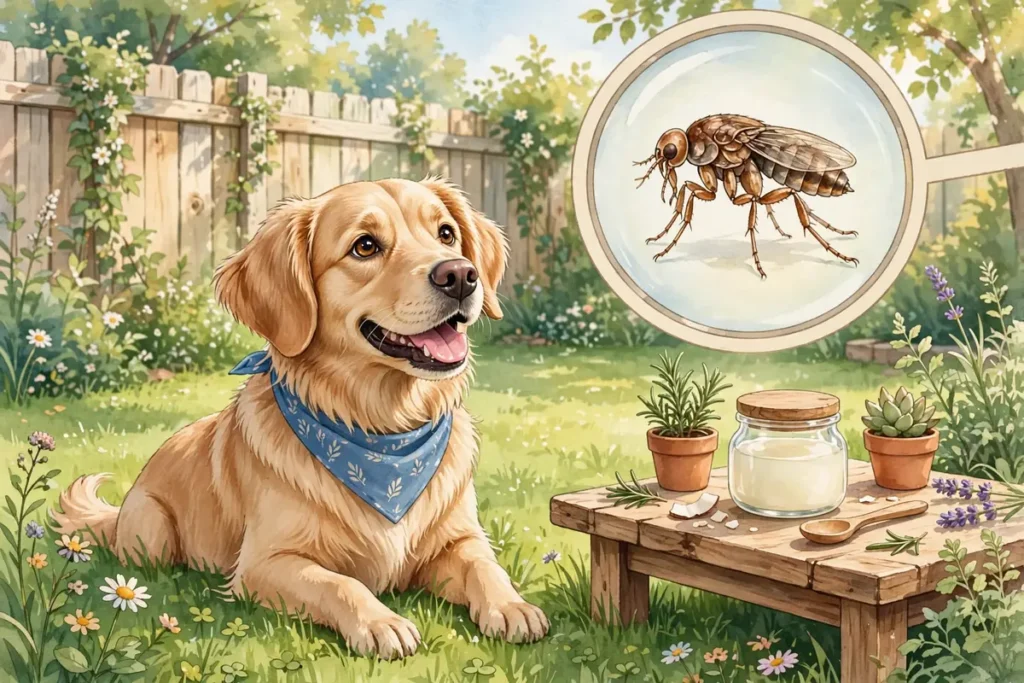
Scroll any natural-pet-care forum and you will find the claim: rub coconut oil on your dog and the fleas stay away. The question does coconut oil repel fleas deserves a careful answer, because it sits at the intersection of a real scientific study, a misunderstood ingredient, and a pest that genuinely torments dogs. The honest verdict leans debunk: a USDA study did find that compounds derived from coconut oil repel insects impressively, but kitchen coconut oil, rubbed on a dog, is not a proven or reliable flea solution, and treating it as one leaves the real infestation growing.
This article explains what the famous study actually tested, why the jar in your pantry is not the same thing, what fleas do to dogs, and what veterinarians actually recommend for flea control. The framing throughout is pet safety first: no home oil treatment should substitute for veterinary guidance, and anything you put on your dog’s skin or in their food deserves a vet’s input.
In 2018, a team led by entomologist Junwei Zhu at the USDA’s Agricultural Research Service published a study in Scientific Reports titled “Better than DEET Repellent Compounds Derived from Coconut Oil” (DOI: 10.1038/s41598-018-32373-7). The findings were genuinely striking: a mixture of free fatty acids derived from coconut oil, lauric acid, capric acid, and caprylic acid, plus their corresponding methyl esters, showed strong, long-lasting repellency against mosquitoes, ticks, biting flies, and bed bugs. Against mosquitoes including Aedes aegypti, the compounds delivered over 90 percent repellency at higher concentrations; against stable flies on cattle, a starch-encapsulated formula protected for up to four days, outperforming DEET in the same trials.
Here is the sentence the lead researcher emphasized and the internet keeps dropping: coconut oil itself is not a repellent. The repellency came only after hydrolysis, a process that frees the fatty acids from the triglyceride chains in the oil. Untreated, off-the-shelf coconut oil showed no repellency in the tests. The study’s hero was a refined chemical fraction, not the jar from the grocery aisle.
First, the study did not test fleas on dogs. Its subjects were mosquitoes, ticks, biting flies, and bed bugs, mostly in laboratory or cattle-field settings. Extrapolating from a lab mosquito assay to flea protection on a living dog is a leap the data does not support. Flea biology, host-seeking behavior, and the dog-coat environment are all different variables the study never measured.
Second, the effective material was a concentrated, processed fraction, not something you can replicate by rubbing grocery-store oil into fur. The dose, formulation, and delivery all mattered, and none of them translate to a spoonful massaged into a Labrador.
Third, even where the compounds worked, the researchers positioned them as a promising basis for future repellent products, not as a home remedy ready for use. No veterinary body has taken this study and turned it into a coconut-oil flea protocol, and that absence is itself informative. When the evidence for a natural remedy is real but preliminary, responsible guidance says so plainly, which is what this article is doing.
Set the study aside and consider what actually happens when coconut oil meets a real flea infestation on a real dog. The problems stack up quickly.
It does nothing to the flea life cycle. An adult flea problem is the visible tip of an iceberg: for every adult flea on the dog, there are typically dozens of eggs, larvae, and pupae in the bedding, carpets, and yard. Coconut oil has no demonstrated effect on flea eggs or larvae. Even in the most generous interpretation, a repellent only addresses the adults currently on the animal, and the evidence does not show it does even that reliably. Meanwhile the environmental stages keep hatching on schedule.
It does not last. Oil on fur picks up dirt, gets licked off, rubs onto furniture, and goes rancid. Any hypothetical repellent effect would demand constant reapplication, several times a day, which is not a practical or pleasant regimen for the dog. Veterinary preventatives exist precisely because month-long, set-and-forget protection beats a greasy daily ritual.
A greasy coat is not a healthy coat. Heavy oil application can mat fur, trap heat against the skin, and in some dogs trigger or worsen skin irritation, the opposite of what an itchy, flea-bitten dog needs. Dogs with existing flea allergy dermatitis have compromised skin barriers; coating that skin in oil is not a neutral act.
Licking changes the equation. Dogs groom. Anything applied to the coat gets ingested in quantity, and while small amounts of coconut oil in food are generally tolerated, the amounts a dog can lick off a full-body application can cause gastrointestinal upset, vomiting, diarrhea, greasy stools, and add a meaningful calorie load. Coconut oil is roughly 120 calories per tablespoon; a medium dog licking off a generous application can ingest a substantial fraction of its daily calories in pure saturated fat. For dogs with pancreatitis risk or weight issues, that is a genuine concern, not a footnote.
Coconut oil benefits from a health halo: it is natural, edible, and sitting in millions of kitchens. But “natural” is not a safety category. Many natural substances are toxic to pets, and even benign ones become problematic at the wrong dose or in the wrong use. The safety question for any flea remedy is not “is it natural” but “is it effective at a dose the animal tolerates, tested in the species being treated.” Coconut oil as a flea repellent fails the first half of that test, efficacy, which makes the safety discussion about large ingested quantities the more relevant one.

Understanding the enemy clarifies why half-measures fail. The cat flea (Ctenocephalides felis), which despite the name is the main flea of US dogs, is a small, wingless, laterally flattened insect built for navigating fur. Adults feed on blood, and a heavy infestation can cause anemia, particularly dangerous in puppies and small dogs. Flea saliva triggers flea allergy dermatitis in sensitive dogs: intense itching, hair loss, and inflamed skin concentrated at the tail base, belly, and inner thighs. Fleas also transmit tapeworms (dogs ingest infected fleas while grooming) and can carry other pathogens.
Fleas bite people too, typically around the ankles and lower legs, itchy red bumps that are hard to distinguish from other insect bites. A dog’s flea problem is therefore a household problem, and our bite-sting first-aid checklist covers the people side while you handle the pet side. The point is scale: you are not repelling a few adventurous insects; you are confronting a reproducing population with a protected environmental reservoir. That demands a population-level strategy, which brings us to what actually works.
Veterinarians have effective, well-tested tools for flea control, and the evidence hierarchy is not close. If your dog has fleas, the responsible move is a vet visit, not a pantry experiment.
Veterinary preventatives are the foundation. Modern flea preventatives, topical spot-ons, oral chewables, and collars from established manufacturers, go through safety and efficacy testing in the target species before they reach the market. Your vet matches the product to your dog’s age, weight, health status, and lifestyle, which matters because not every product suits every dog. Puppies, pregnant dogs, and dogs on other medications need individualized choices. This is the single highest-impact step, and nothing in the natural-remedy aisle replicates it.
Environmental control breaks the life cycle. Because most of the flea population lives off the animal, treating only the dog fails. Wash the dog’s bedding weekly in hot water and dry on high heat. Vacuum carpets, rugs, upholstery, and car interiors thoroughly and frequently, the vibration stimulates pupae to emerge, and the vacuum physically removes eggs and larvae; dispose of the bag or empty the canister outside. For yards, focus on the shaded, humid spots where pets rest; keep grass short and remove leaf litter. Our what-bit-me guide walks through the full inspection.
| Approach | What it does | Effect on eggs/larvae | Evidence for flea control | Vet stance |
|---|---|---|---|---|
| Veterinary preventative (topical/oral) | Kills adult fleas on the dog for weeks | Indirect, by stopping egg-laying | Strong, species-tested | First-line recommendation |
| Environmental control (vacuum, hot laundry) | Removes eggs, larvae, pupae from home | Direct physical removal | Strong practical evidence | Essential companion measure |
| Flea combing | Catches adults and flea dirt for monitoring | None | Good for detection, weak for control | Recommended for monitoring |
| Kitchen coconut oil on coat | No proven mechanism | None demonstrated | No flea-specific evidence | Not recommended as flea control |
| Essential-oil blends | Unproven repellency claims | None demonstrated | Thin to none, plus toxicity risk | Use only with explicit vet direction |
The flea comb is your monitoring tool. A fine-toothed flea comb, used regularly over the tail base and belly, catches adult fleas and the telltale “flea dirt”, flea feces that look like black pepper. It will not control an infestation alone, but it tells you whether your program is working.
None of this means coconut oil is villainous. Small amounts as an occasional dietary addition are a question for your vet, who knows your dog’s weight, pancreas history, and calorie needs. As a coat conditioner in tiny amounts for dry skin, again, vet-guided, it is a cosmetic choice, not pest control. The honest placement is: a kitchen staple with legitimate culinary uses, unproven and unreliable as flea protection, and potentially problematic when applied heavily enough to matter. Keep it in the kitchen unless your vet says otherwise.

A quick note on a common mix-up, since our site covers both: the registry of published work includes a separate question about coconut oil and mosquitoes, and the two are different inquiries. Mosquito repellency involves a flying insect approaching exposed human skin; flea control involves a jumping, fur-dwelling parasite with a protected off-host life cycle on a grooming animal. Evidence about one does not transfer to the other. Judge the flea question on flea evidence, and on flea evidence, kitchen coconut oil comes up empty.
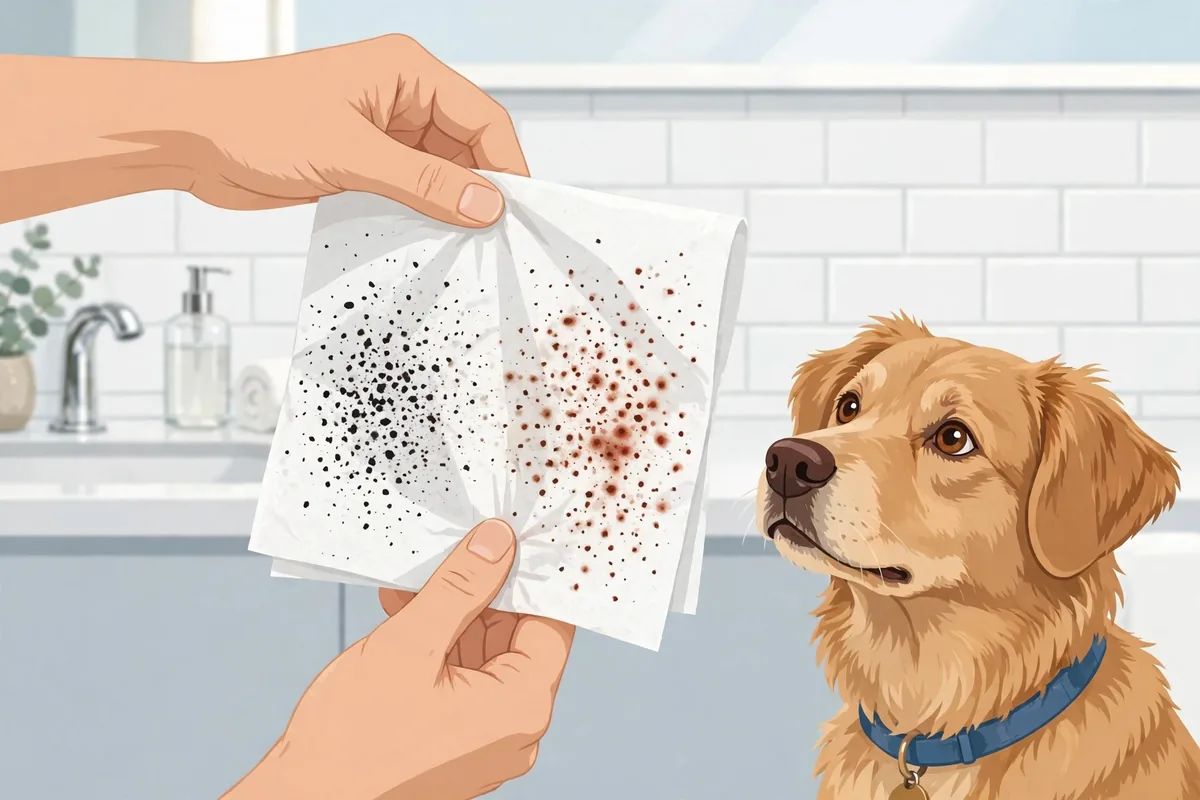
Before spending money on any treatment, natural or veterinary, confirm you are actually dealing with fleas. Collect the black specks from your flea comb onto a damp white paper towel. Flea dirt is digested blood, so it dissolves into reddish-brown smears; ordinary dirt stays black or gray. That color change is the classic home confirmation. Also check: is the itching concentrated at the tail base and belly? Are there small red bumps on your own ankles? Flea dirt plus that distribution pattern is a strong case. Then call the vet with evidence in hand rather than a vague “maybe fleas,” because precise information gets you a precise plan faster. If you are sorting flea bites from mosquito bites on your own skin in the meantime, our Asian tiger mosquito vs dog flea bite comparison can help.
Flea infestations affect the whole household, including the humans. See a clinician promptly if you notice:
And see your veterinarian promptly, not eventually, if your dog shows hair loss, raw inflamed skin, restlessness from itching, pale gums (a possible anemia sign in heavy infestations), or tapeworm segments near the tail. Flea allergy dermatitis and heavy infestations are medical issues for the animal, and they respond to veterinary treatment far faster than to home experiments. For the human side of bite first aid while you sort the infestation, the cold compress technique remains the simplest effective step.
Will coconut oil kill fleas on contact?
There is no reliable evidence that kitchen coconut oil kills fleas on contact or repels them meaningfully. The often-cited USDA research tested processed coconut-oil fatty acid fractions against mosquitoes, ticks, and bed bugs, not fleas on dogs, and explicitly found that untreated coconut oil itself was not a repellent. Smothering claims you see online (that oil suffocates fleas) are anecdotal and untested, and the practical problems, licking, rancidity, no effect on eggs and larvae, remain regardless.
Is coconut oil safe to put on my dog’s skin?
Small amounts are generally tolerated, but heavy application brings real downsides: dogs lick it off, which can cause vomiting, diarrhea, and excess calorie intake; it can mat fur and irritate already-inflamed skin; and it is not a substitute for flea treatment. If your dog has skin issues, see the vet for the cause rather than coating the symptom. Always check with your veterinarian before starting any regular skin or dietary regimen.
What about coconut oil mixed with essential oils for fleas?
This combination raises the risk substantially. Many essential oils are toxic to dogs, and some, like tea tree oil, are dangerous to cats at very low doses. “Natural flea repellent” blends sold online or in forums have caused poisoning cases in pets. Never apply essential-oil mixtures to your animals without explicit veterinary direction, and be especially cautious in multi-pet households where a dog-safe product may harm the cat.
My dog hates the vet’s flea chews. Are there natural alternatives that work?
Frequent vacuuming, hot-washing bedding, and yard sanitation meaningfully reduce flea numbers and are genuinely useful as companions to veterinary preventatives, but as standalone replacements for an active infestation, the evidence is thin. If your dog refuses one product format, ask your vet about alternatives: topicals, collars, and different chewable formulations exist precisely because animals vary. “Natural” options like diatomaceous earth and essential oils carry their own efficacy and safety questions, so run any alternative past your vet first.
How long does it take to get rid of fleas once I start proper treatment?
Expect weeks to a few months, not days. Veterinary preventatives kill the adults on the dog, but the pupae in your carpets and yard are protected in cocoons that resist treatment, they emerge over several weeks, which is why you keep seeing new fleas after starting. Consistent monthly prevention plus diligent vacuuming and laundry breaks the cycle as each new wave emerges into a treated environment. Stopping early, when the visible fleas fade, is the classic reason infestations rebound.
Medically reviewed by Dr. Sarah Jones, MD.
This article is for informational purposes only and isn’t medical advice. If you’re worried about a bite or sting, talk to a healthcare professional.
Dr. Jones oversees StingHelp’s clinical verification process. Every guide is systematically evaluated against active Centers for Disease Control and Prevention (CDC), Environmental Protection Agency (EPA), and American Academy of Allergy, Asthma & Immunology (AAAAI) medical consensus standards to ensure symptom distinctions and care recommendations are clinically sound.
Explore physician-reviewed first-aid procedures, identification clues, and symptom comparisons for other common outdoor bites and stings.

The Short Answer Technically yes, but you should never use it that way. When you ask does tea tree oil kill fleas, the honest…

The Short Answer No, and this one matters more than most flea myths. When you ask does garlic repel fleas, the veterinary answer is…
The Short Answer No. When you ask does brewer's yeast repel fleas, the honest veterinary answer is that brewer's yeast is a safe, nutritious…