
Do Dark Colors Attract Mosquitoes? What Studies Say
Picture a backyard barbecue on a warm July evening. Two friends stand in the same yard, the same distance from the grill, for the…
You are two beers into a backyard barbecue when the mosquitoes find you — and only you. Coincidence, or is the beer actually calling them in? The direct answer to…

You are two beers into a backyard barbecue when the mosquitoes find you — and only you. Coincidence, or is the beer actually calling them in? The direct answer to does drinking beer attract mosquitoes is yes, according to the best evidence we have. Two separate studies, fifteen years apart — a controlled 2010 trial in Burkina Faso and a 2025 “Mosquito Magnet Trial” at a Dutch music festival — both found that people who had been drinking beer were measurably more attractive to mosquitoes than those who had not.
That said, the effect is real but modest, and the research leaves important questions unanswered. This article walks through what each study actually did, how big the effect really is, what might explain it, and how to protect yourself the next time drinks are served outdoors. No moralizing, no hype — just the evidence.
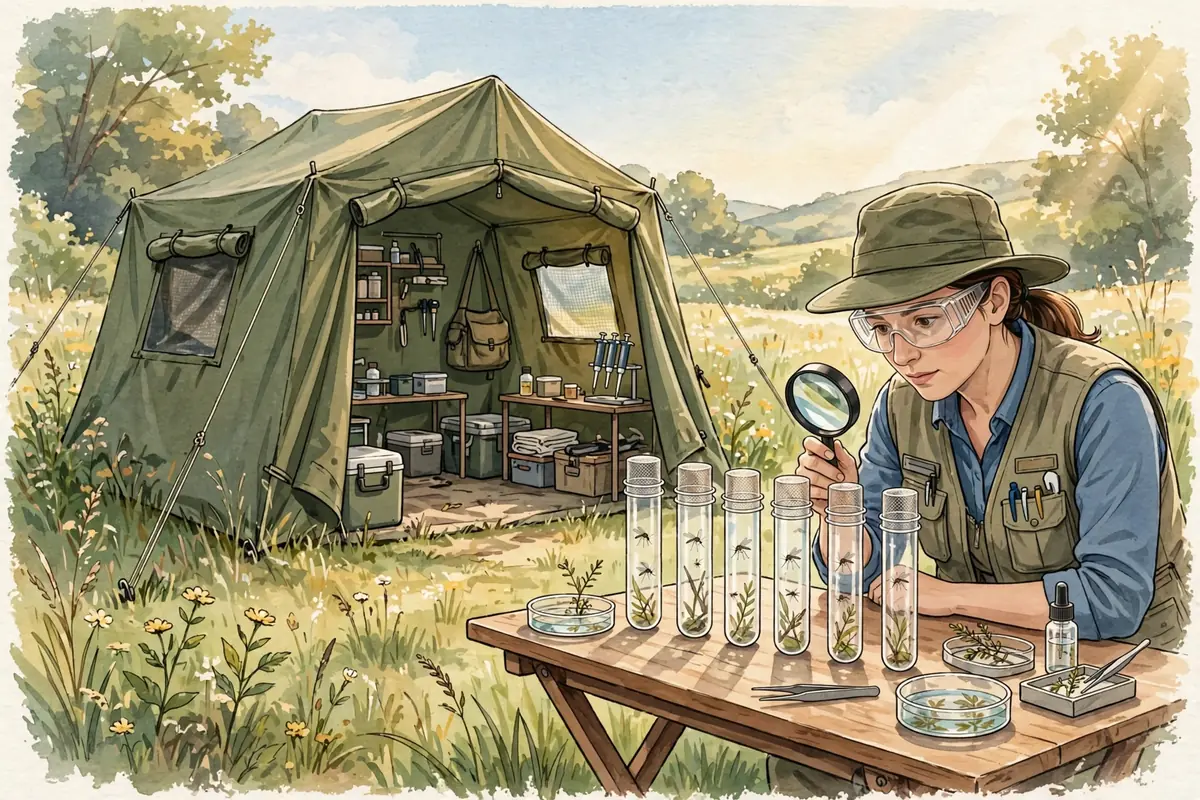
The original study was published in 2010 in the journal PLoS ONE by Thierry Lefèvre and colleagues, and it remains the most carefully controlled experiment on this question. Working in semi-field conditions in Burkina Faso, the team recruited 43 men and split them into two groups: 25 drank a liter of dolo, a local beer of about 3% alcohol, while 18 drank a liter of water as the control.
Fifteen minutes after drinking, each volunteer sat in a sealed outdoor tent while a fan pumped the tent’s air — body odor, breath, and all — into one fork of a Y-shaped tube. The other fork received air from an empty tent. At the far end waited a cup of Anopheles gambiae mosquitoes, the primary African malaria vector — 2,500 mosquitoes tested against the beer group, 1,800 against the water group. The insects flew upwind and chose a fork, getting trapped in gauze before they could bite anyone.
The result was unambiguous. The body odor of beer drinkers increased both mosquito activation (the proportion taking off and flying upwind) and orientation (the proportion flying toward the volunteer’s odor), with about 65% of mosquitoes choosing the beer-scented fork. Water drinkers showed no such effect, and neither did the smell of the tent before anyone drank. Intriguingly, the researchers measured exhaled carbon dioxide and body temperature and found neither explained the difference — ruling out the two most obvious mechanisms. What exactly in a beer drinker’s odor changed remains unanswered, a gap the authors openly acknowledged.
Fifteen years later, a team led by biologist Felix Hol at Radboud University in the Netherlands ran the largest real-world test of the question to date — and got the same answer. For three days in 2023, the researchers set up a pop-up laboratory inside connected shipping containers at Lowlands, an annual music festival east of Amsterdam. Around 500 festivalgoers volunteered.
Each participant filled out a detailed questionnaire about their hygiene, diet, and behavior at the festival, then placed a bare forearm into a transparent cage filled with female Anopheles stephensi mosquitoes. The cage had tiny holes: large enough for the mosquitoes to smell the arm, too small to bite through. On the opposite side of the cage sat a sugar feeder, giving the insects a choice between human scent and a neutral alternative. A camera recorded how many mosquitoes landed on each volunteer’s arm versus the feeder.
Beer drinkers were about 1.35 times more attractive to mosquitoes than non-drinkers — roughly 44% more attractive, depending on how the finding was reported. The trial also surfaced other patterns: people who had shared a bed the night before were similarly more attractive, while recent showering and sunscreen use made people less attractive. The researchers dubbed it the “Mosquito Magnet Trial” and uploaded the paper as a preprint to bioRxiv in 2025.
Two caveats keep this result honest. First, a preprint has not completed peer review, so treat the numbers as preliminary. Second, the authors themselves flagged the “loosely controlled setting” and a selection bias toward science-loving festivalgoers, noting that more investigation is needed before drawing firm conclusions. Still, two independent studies with different designs, different mosquito species, and different continents pointing the same way is meaningful.
Here is where hype usually outruns the data, so let us be precise. “1.35 times more attractive” sounds dramatic, but it means a beer drinker draws about a third more mosquito attention than a comparable non-drinker — not that mosquitoes ignore everyone else and swarm the person with a pint. In the 2010 study, 65% of mosquitoes chose the beer odor over clean air; that is a clear preference, not a total one. A third of the insects still went the other way.
Context matters too. Beer drinking at an outdoor gathering correlates with other mosquito-friendly factors: staying out later into dusk (peak biting hours — see our guide on the best time of day mosquitoes bite), standing near groups of people exhaling carbon dioxide, wearing shorts and short sleeves, and skipping repellent. The studies isolated beer itself as a factor, but in real life the effect stacks on top of everything else you are doing at the barbecue.
None of this means the finding is trivial. For malaria-endemic regions, the 2010 authors concluded that beer consumption could be a genuine risk factor worth integrating into public-health planning — a striking claim for something as ordinary as a drink. For the rest of us, it means the person nursing a beer at dusk is, all else equal, the slightly more appealing target at the table.
Short version: nobody knows yet, and the honest studies say so. The 2010 team explicitly tested the two leading hypotheses — increased carbon dioxide output and higher body temperature after drinking — and found neither explained the change in attractiveness. That leaves the chemistry of skin and breath odor, which alcohol is known to alter, but the specific compounds involved have not been pinned down.
What we do know about mosquito host-seeking in general offers plausible pieces. Mosquitoes track a combination of carbon dioxide, body heat, skin odor (including lactic acid and other sweat volatiles), and visual cues. Alcohol changes skin blood flow, sweat composition, and breath chemistry, so a shift in the odor blend is plausible — but “plausible” is not “proven,” and no study has yet identified the exact chemical signature that makes a beer drinker’s odor more enticing.
Be skeptical of confident explanations you see online. Claims that “beer raises your body temperature” or “alcohol thins your blood, making you easier to bite” sound scientific but are not what the research found — the 2010 study measured body temperature directly and it did not account for the effect. When the mechanism is unknown, the responsible answer is “unknown,” and future research may fill it in.
Practical takeaways, without the lecture. If you are drinking outdoors in mosquito season — especially around dusk — assume you are a slightly more attractive target than the non-drinkers at the table, and plan accordingly. That does not mean skipping the beer; it means pairing it with the same bite-prevention habits that work for everyone.
Timing is the biggest lever. Mosquitoes bite most aggressively around dusk and dawn, which is exactly when backyard gatherings peak. If the party runs into the evening, that is when protection matters most. Clothing is the next: long sleeves and pants beat shorts when the mosquitoes come out, and light-colored clothing makes it easier to spot landing insects. Our backyard barbecue insect prevention guide covers the full setup — from fan placement to food covers.
Do not rely on the beer finding as an excuse to skip repellent, and do not treat “I wasn’t drinking” as protection. The effect is modest, and mosquitoes will happily bite the sober person standing closest. Everyone outdoors at dusk in mosquito season should be using the same defenses.
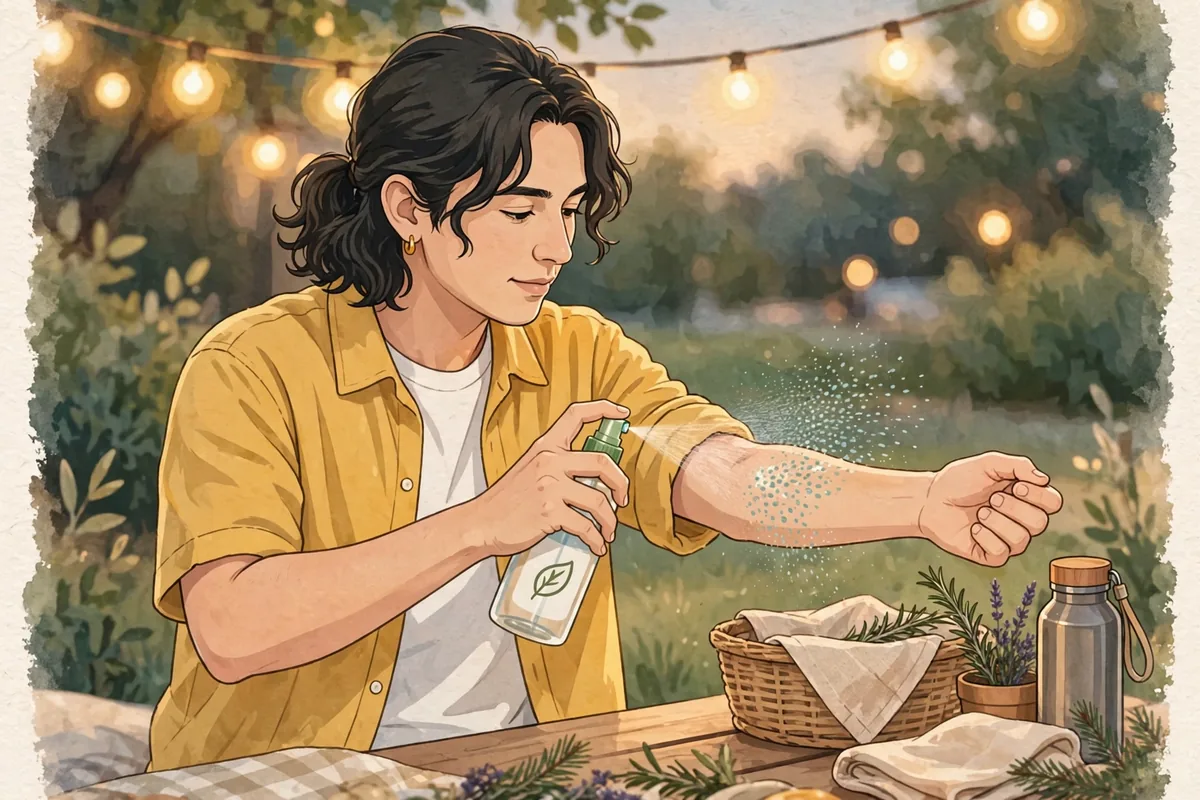
Use an EPA-registered repellent. DEET, picaridin, and oil of lemon eucalyptus are the options with the strongest evidence. Apply according to the label — more is not better, and reapply as directed. For more on choosing between the synthetics, see our comparison of repellent options.
Dress for dusk. Long sleeves, long pants, and socks when the gathering stretches into the evening. Loose-fitting clothing is harder for mosquitoes to bite through than tight fabrics.
Add airflow. Mosquitoes are weak fliers. A portable fan on the patio disrupts their flight and disperses the carbon dioxide plume they follow — one of the simplest, most underrated defenses for outdoor entertaining.
Manage the yard. Dump standing water in saucers, buckets, and toys where mosquitoes breed. For a full routine, our guide on keeping mosquitoes out of your yard walks through the highest-impact steps.
Time it right. If you have flexibility, hold the outdoor portion earlier in the afternoon rather than deep into dusk. And if you are in an area with mosquito-borne disease risk, take every bite seriously — repellent plus clothing plus timing, not any single measure alone.
Mosquito bites are usually just itchy. Seek care when:
Does the type of alcohol matter, or just beer?
Only beer has been studied directly. The 2010 trial used a local 3% beer and the 2025 festival study asked about beer specifically. Whether wine, spirits, or cocktails have the same effect is unknown — no published study has tested them. Do not assume the finding extends to all alcohol.
How long after drinking does the effect last?
Unknown. The 2010 study measured attractiveness 15 minutes after volunteers finished a liter of beer. Neither study tracked how long the effect persisted as the alcohol wore off. Until someone tests it, assume the window is at least the duration of a typical outdoor gathering.
Does drinking beer increase my risk of mosquito-borne disease?
In theory, more attractiveness means more bites, and more bites mean more exposure — which is why the 2010 authors raised the question for malaria-endemic regions. But no study has measured actual disease outcomes in beer drinkers versus non-drinkers. In areas with West Nile, dengue, or other mosquito-borne diseases, treat every bite as worth preventing regardless of what you are drinking.
Will wearing repellent cancel out the beer effect?
Repellent remains the strongest single protection regardless of drinking. The studies measured attractiveness without repellent in play; there is no evidence that beer somehow overpowers DEET or picaridin. If you are drinking outdoors at dusk, repellent plus covering clothing is the combination the evidence supports.
I got eaten alive at a party and I was not drinking. Why?
Because beer is one small factor among many. Your baseline attractiveness — determined by genetics, skin chemistry, carbon dioxide output, and even blood type — matters far more than one drink. Add dusk timing, dark clothing, no repellent, and standing downwind of the group, and any non-drinker can be the night’s main course.
Medically reviewed by Dr. Sarah Jones, MD.
This article is for informational purposes only and isn’t medical advice. If you’re worried about a bite or sting, talk to a healthcare professional.
Dr. Jones oversees StingHelp’s clinical verification process. Every guide is systematically evaluated against active Centers for Disease Control and Prevention (CDC), Environmental Protection Agency (EPA), and American Academy of Allergy, Asthma & Immunology (AAAAI) medical consensus standards to ensure symptom distinctions and care recommendations are clinically sound.
Explore physician-reviewed first-aid procedures, identification clues, and symptom comparisons for other common outdoor bites and stings.
Picture a backyard barbecue on a warm July evening. Two friends stand in the same yard, the same distance from the grill, for the…
Learn how to reduce mosquito exposure while camping in a tent, protect children overnight, care for bites safely, and recognize symptoms that need medical attention.
On a warm evening by a pond, dragonflies stitch the air in looping patrols, and it is easy to believe they are out there…