
Does Bug Spray Expire? Shelf Life Explained
Every spring, someone opens the garage cabinet, finds last summer's half-used bug spray, and asks the obvious question: does bug spray expire? The bottle…
On a warm evening by a pond, dragonflies stitch the air in looping patrols, and it is easy to believe they are out there hunting mosquitoes on your behalf. Plenty…
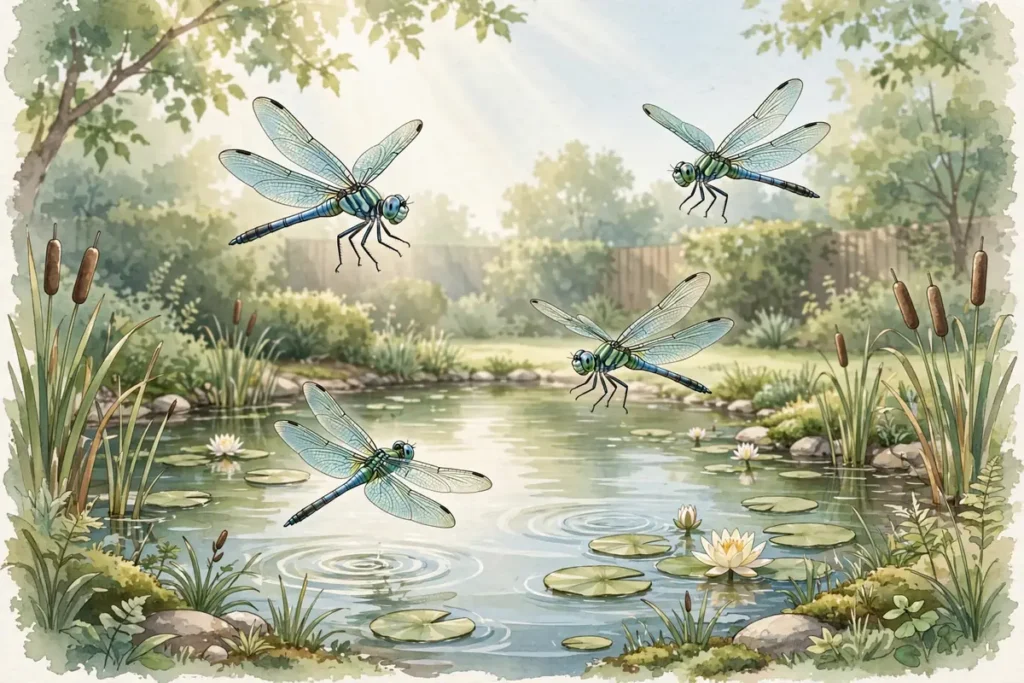
On a warm evening by a pond, dragonflies stitch the air in looping patrols, and it is easy to believe they are out there hunting mosquitoes on your behalf. Plenty of garden blogs encourage that belief: add a pond, welcome the dragonflies, and say goodbye to bites. It is a comforting idea, and it is only half true.
So do dragonflies control mosquitoes in a way that actually protects your family from bites? The honest answer is no. Dragonflies and their underwater nymphs do eat mosquitoes, sometimes in impressive numbers under laboratory conditions. But field evidence shows they do not meaningfully reduce mosquito biting pressure around homes, and no mosquito-control authority recommends relying on them. This article walks through what the research actually found, where the popular claims fall apart, and what genuinely lowers the number of bites you get.
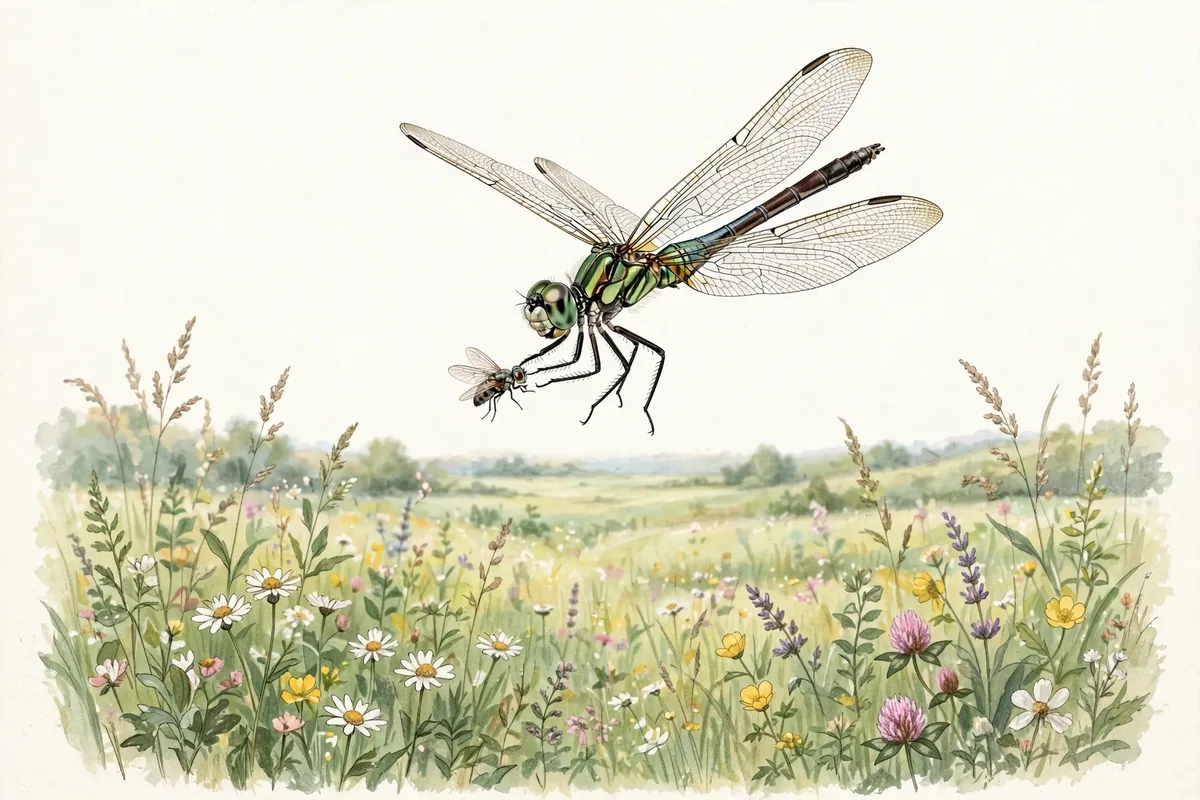
Dragonflies are among the most skilled aerial predators in the insect world. Adults catch flying insects midair with a capture success rate researchers have measured in the range of 90 to 95 percent for the prey they pursue. Their aquatic young, called nymphs, are ambush predators that eat mosquito larvae along with other small water creatures. Nobody disputes any of this.
The problem is the jump from “dragonflies eat mosquitoes” to “dragonflies control mosquitoes.” Control means fewer bites on people, and on that measure the evidence disappoints. Adult dragonflies are generalists that eat whatever flying insects are abundant and catchable: midges, gnats, flies, moths, mayflies, even other dragonflies. Mosquitoes are only a fraction of the menu. Underwater, nymphs do kill mosquito larvae in experimental containers, but real ponds add competitors, refuges, and other predators that blunt the effect. And the hours do not line up well: dragonflies hunt mostly by day at altitude, while the mosquitoes that bite you most fly low around dawn, dusk, and night.
None of this makes dragonflies worthless. They are a sign of a healthy yard and a useful part of a backyard food web. But if your goal is fewer bites, dragonflies are a supporting character, not the strategy.
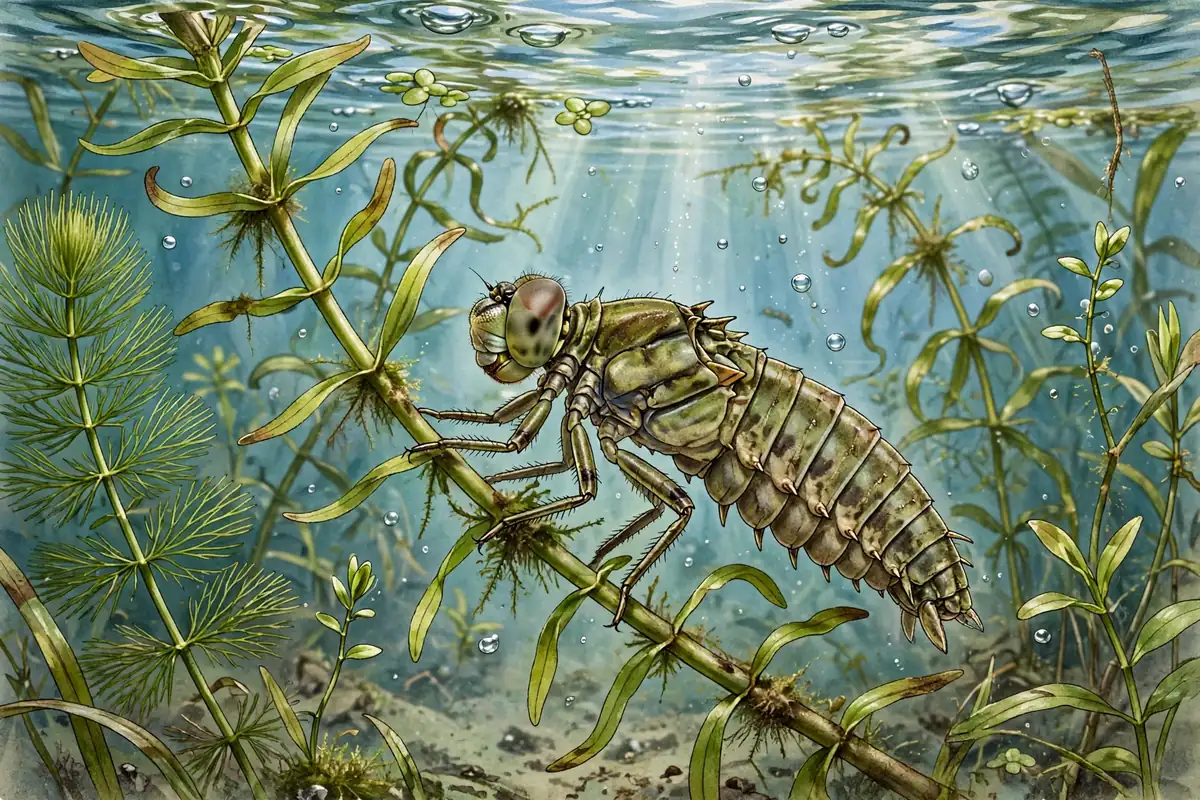
The strongest evidence for dragonflies as mosquito predators comes from the water, not the air. A 2023 meta-analysis published in the Journal of Animal Ecology pooled 31 experimental studies from 14 countries and found that an individual dragonfly or damselfly nymph ate an average of about 40 mosquito larvae per day, reducing larval numbers in the test containers by roughly 45 percent per day. Those are real, peer-reviewed numbers, and they explain why the claim feels so plausible.
The catch is in the phrase “experimental containers.” Lab tanks are simple environments: a known number of larvae, a hungry nymph, nowhere to hide. Real ponds are messier. Mosquito larvae cling to edges, surface film, and debris where nymphs hunt less efficiently. Vegetation gives them cover. Other aquatic predators compete for the same prey, and some of those predators eat the dragonfly nymphs too.
There is a subtler twist. Dragonfly nymphs are indiscriminate hunters, and they also eat the tadpoles and small fish that themselves prey on mosquito larvae. One line of research found that when invasive crayfish entered the picture in Southern California streams, the crayfish disrupted the nymphs’ hunting behavior so badly that mosquito larvae survived at the same levels as if the nymphs were not there at all. Predator ecology rarely hands you a clean win, and mosquito larvae have survived millions of years of dragonfly predation. If nymphs could suppress them on their own, mosquitoes would not be thriving in every dragonfly-rich wetland on earth.
Popular claims often say a single dragonfly eats 100 mosquitoes a day. Treat that number with skepticism. It appears in casual content without a cited field study behind it, and the actual diet research tells a different story. Diet studies consistently find that mosquitoes make up only a small fraction of what adult dragonflies and damselflies actually eat in the wild. Dragonflies eat what is available and catchable, and across most habitats that means midges, gnats, flies, and moths far more often than mosquitoes.
Timing and altitude work against the control fantasy too. Adult dragonflies are visual daytime hunters that patrol at heights of several feet or more. The mosquitoes that bite people, including the Asian tiger mosquito and common evening biters, fly low, close to the ground, and are most active around dawn, dusk, and through the night, exactly when dragonflies are roosting. The two barely overlap in the same airspace at the same time.
This is why extension entomologists caution against treating dragonflies as mosquito specialists. Natural predators are a welcome part of the landscape, but they are no substitute for source reduction and proven repellents when it comes to bite protection and mosquito-borne disease. The biology is genuinely interesting, and dragonflies genuinely eat mosquitoes. But “eat mosquitoes” and “protect your backyard” are different claims, and only the first is well supported.
Here is the irony that sinks the dragonfly-pond strategy: the pond you build to attract dragonflies can also breed the mosquitoes you are trying to escape. Any still water, a garden pond, a rain barrel, an unmaintained birdbath, can host mosquito larvae within days in warm weather. A pond with hungry nymphs may offset some of that, but a pond without established predators, or one with fish that eat nymphs, can easily produce more mosquitoes than it destroys.
That does not mean you should fill in the pond. If you enjoy watching dragonflies, plant native vegetation, give them perching sticks, and keep the water moving with a small pump, which discourages egg-laying. But judge the pond as landscaping and wildlife habitat, not as bite protection. If you keep a pond, the proven larvicide move is a Bti dunk, a bacterial product that targets mosquito larvae specifically and leaves dragonflies, fish, and other wildlife alone. Pair the wildlife pond with the Bti, and you get the dragonflies and fewer mosquitoes, without pretending one causes the other.
One more caution: do not introduce dragonfly nymphs bought online as “mosquito control.” Purchased nymphs often fail to establish, may not be native to your area, and can disturb local aquatic life. The evidence says they would not solve the problem even if they settled in.
If you want fewer bites, work from the measures with real evidence behind them. Start with source reduction, because a mosquito that never hatches never bites. Walk your yard once a week and dump anything holding still water: saucers under pots, clogged gutters, tarps, toys, old tires, the drip tray under the grill. Mosquitoes can breed in a bottle cap of water, and most of the mosquitoes biting you hatched within a few hundred feet of where you sit.
For water you cannot drain, Bti dunks or granules are the proven, low-impact answer. For your own skin, use an EPA-registered repellent: DEET, picaridin, IR3535, or oil of lemon eucalyptus. These are the products with actual efficacy testing behind them, and they are the reason public-health agencies name them by name. A battery-powered fan on the patio disrupts the weak fliers surprisingly well. Repair window and door screens, and wear long sleeves at dusk when the biters peak. Source reduction and proven repellents do the heavy lifting; predators, traps, and folk remedies are supporting acts at best.
Think of dragonflies the way you think of a nice breeze: pleasant, real, and not a plan. Enjoy them. Then dump the saucers.

Most mosquito bites heal on their own, but a few situations deserve medical attention rather than a wait-and-see approach:
Can I attract more dragonflies to reduce mosquitoes in my yard?
You can attract dragonflies with a pond, native plants, and perching spots, and you will likely see more of them hunting. But there is no evidence this translates into fewer bites on people. Dragonflies are generalist daytime hunters, and the mosquitoes that bite you are mostly active at other hours and altitudes. Treat the pond as wildlife habitat, not bite protection.
Do dragonfly nymphs really eat mosquito larvae?
Yes. The 2023 meta-analysis of 31 studies found nymphs ate about 40 mosquito larvae per day in experimental containers and cut larval counts by roughly 45 percent per day. The results are real, but they come from controlled tanks, not backyard ponds, where hiding places, competitors, and other predators reduce the effect substantially.
Do dragonflies bite people?
Large dragonflies can deliver a pinch if handled, but they do not bite people in any meaningful sense. They have no interest in human blood and cannot sting. If one lands on you, it is just resting.
What about “mosquito hawks”? Do they eat mosquitoes?
“Mosquito hawk” usually means the crane fly, a gangly, harmless insect that does not eat mosquitoes at any life stage. Adult crane flies barely eat at all. The nickname is a myth, and crane flies deserve no credit for mosquito control.
If not dragonflies, what is the single best thing I can do?
Dump standing water weekly. Most biting mosquitoes hatch close to home, and eliminating breeding sites does more than any predator, trap, or folk remedy. Pair that with an EPA-registered repellent on your skin, and you have covered the two measures with the strongest evidence.
This article is for informational purposes only and isn’t medical advice. If you’re worried about a bite or sting, talk to a healthcare professional.
Dr. Jones oversees StingHelp’s clinical verification process. Every guide is systematically evaluated against active Centers for Disease Control and Prevention (CDC), Environmental Protection Agency (EPA), and American Academy of Allergy, Asthma & Immunology (AAAAI) medical consensus standards to ensure symptom distinctions and care recommendations are clinically sound.
Explore physician-reviewed first-aid procedures, identification clues, and symptom comparisons for other common outdoor bites and stings.

Every spring, someone opens the garage cabinet, finds last summer's half-used bug spray, and asks the obvious question: does bug spray expire? The bottle…

Every October, as the first frost silvers the lawn, the same hopeful question circulates: does cold weather kill mosquitoes? If you are still getting…

It is one of the oldest debates at any campsite: as the sun drops and the mosquitoes rise, someone gestures at the campfire and…