
Mosquito Bites Camping in a Tent: Night Protection Guide
Learn how to reduce mosquito exposure while camping in a tent, protect children overnight, care for bites safely, and recognize symptoms that need medical attention.
Picture a backyard barbecue on a warm July evening. Two friends stand in the same yard, the same distance from the grill, for the same half hour. One of them…
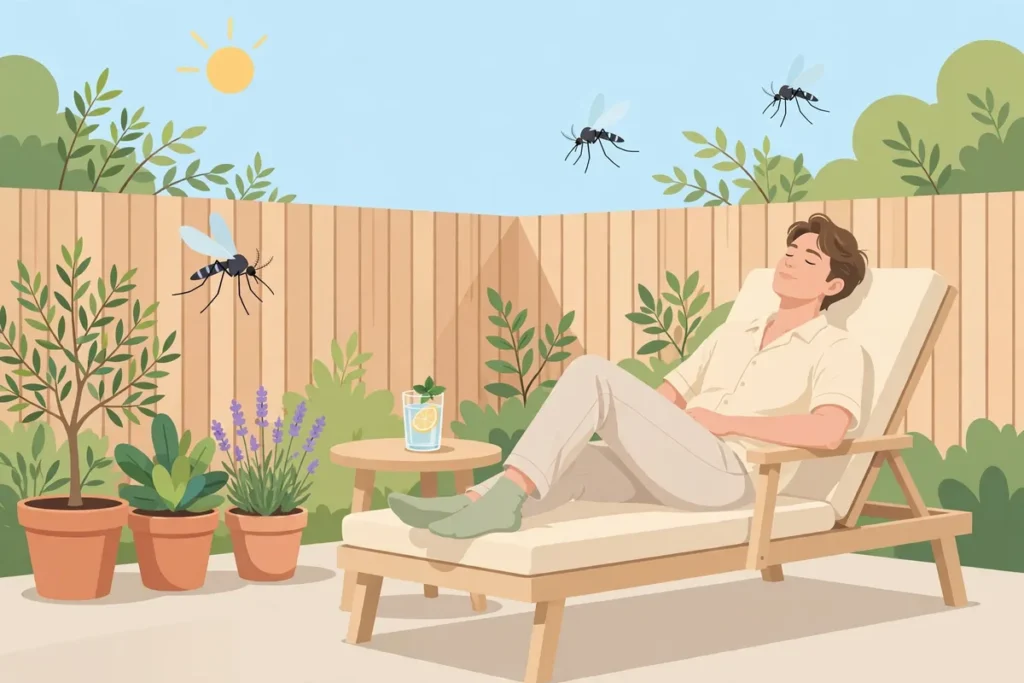
Picture a backyard barbecue on a warm July evening. Two friends stand in the same yard, the same distance from the grill, for the same half hour. One of them — in a black T-shirt — spends the whole time swatting at his arms. The other, in a white shirt, barely notices a bite. You’ve probably heard someone say the black shirt was the problem. Is that true?
The short answer to do dark colors attract mosquitoes is that laboratory research shows mosquitoes do respond to certain colors — red, orange, black, and navy among them — but only after they’ve already detected you through the carbon dioxide in your breath. Color is a supporting player in how mosquitoes find you, not the star. Your breath, body heat, and skin odor do the heavy lifting.
In this article, we’ll walk through what the University of Washington study actually found, how mosquito vision works, which clothing colors make a difference (and how much), and — most usefully — what protects you far better than any wardrobe change.
The most-cited study on this question comes from the University of Washington and was published in Nature Communications in 2022. The researchers worked with Aedes aegypti mosquitoes — the day-biting species behind yellow fever, dengue, and Zika transmission — inside a controlled test chamber. First, the mosquitoes were exposed to a puff of carbon dioxide, mimicking a human breath. Then colored dots were presented. The result: once the mosquitoes had “smelled” CO2, they flew toward long-wavelength colors — red, orange, black, and cyan — while ignoring green, purple, blue, and white dots.
Here is the part most headlines skip: without that CO2 puff first, the mosquitoes ignored every colored dot entirely. The carbon dioxide effectively switched the mosquitoes’ visual system on. Color only mattered in the presence of breath cues.
This finding lines up with older work published in the Journal of Medical Entomology and the Journal of Insect Science, where mosquitoes released in test rooms landed most often on black, red, and navy targets. Put together, the evidence supports a real but conditional claim: at close range, after tracking your breath, mosquitoes show visual interest in certain dark and long-wavelength colors.
What the evidence does not support is any specific bite-reduction percentage for changing your shirt color. That number simply doesn’t exist in the research, and you should be skeptical of any source that offers one.
Mosquitoes hunt with a layered system, and vision sits near the bottom of it. Their eyesight is poor over long distances — a mosquito can’t pick you out visually from across a yard. Instead, the hunt works in stages.
Breath first. Carbon dioxide in your exhaled breath drifts downwind, and mosquitoes can follow those plumes from considerable distances. This is the long-range beacon, and nothing you wear changes it.
Heat and odor next. As a mosquito gets closer, it detects the heat radiating from your body and the odor compounds rising from your skin, such as lactic acid and other volatile chemicals. These mid-range cues narrow the search further.
Eyes last. Only at close range does color enter the picture, helping the mosquito visually zero in on a landing target after breath, heat, and odor have already done the finding.
There is one more twist worth knowing: human skin itself gives off a long-wavelength, red-orange signature that mosquitoes can detect. In other words, your bare skin already “looks red” to a mosquito’s eyes, regardless of what your shirt looks like. Clothing color can add to — or slightly subtract from — that visual signal, but it can never remove it entirely, because you are wearing skin underneath.
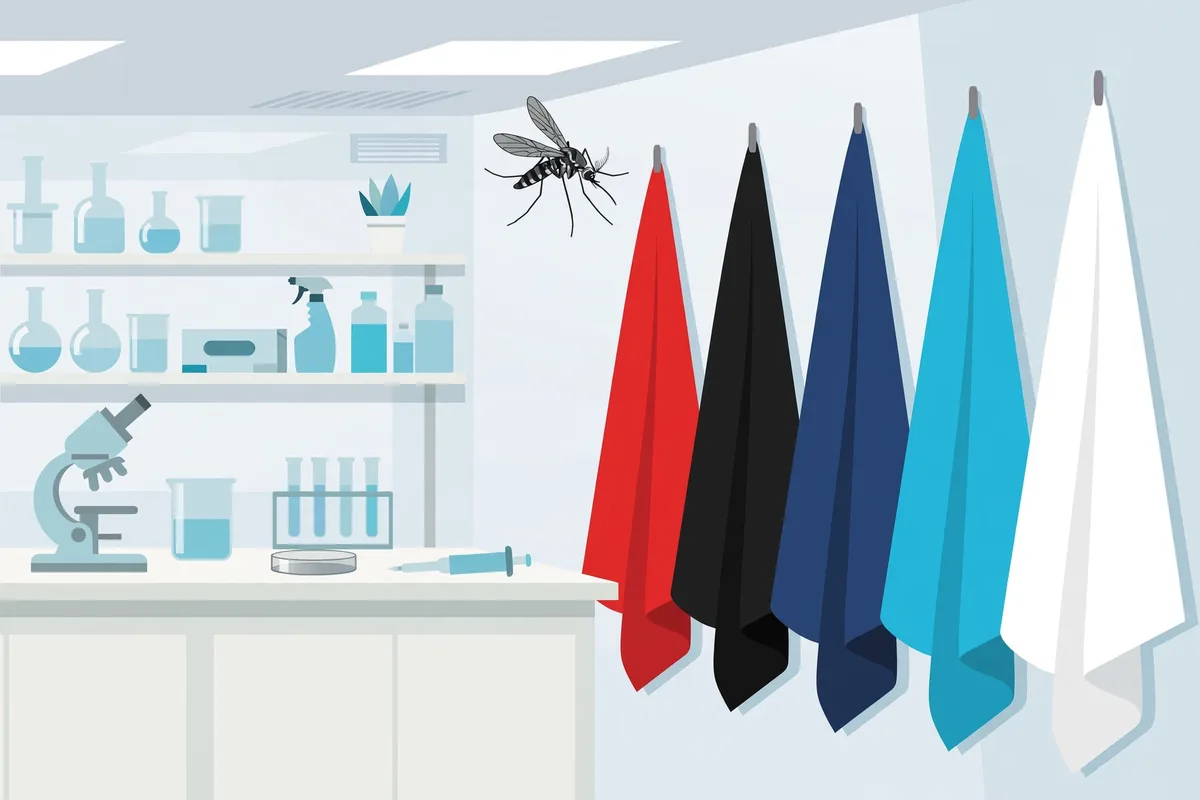
Once you understand the hunting sequence, it becomes clear why clothing color can’t carry much weight on its own. Carbon dioxide plumes from your breath can carry many feet downwind; a red shirt can’t be seen from that distance. Body heat registers within inches; skin odor draws mosquitoes in close before their eyes ever get involved. By the time color matters, the mosquito has practically arrived.
This also explains why some people seem like “mosquito magnets” regardless of what they wear. Differences in breath output, body heat, skin chemistry, and even the bacteria living on your skin appear to influence attractiveness far more than wardrobe. Treat specific claims about blood type or particular chemicals with caution, though — evidence there is still limited.
Laboratory conditions add another reason for modesty about color. The University of Washington experiments used chambered mosquitoes and simple colored dots — a clean, controlled setup designed to isolate one variable. Real backyards have wind, competing odors, multiple people, pets, and moving targets. A real-world effect size for shirt color, if one could be measured cleanly, would almost certainly be smaller and noisier than the lab results suggest.
None of this means clothing color is meaningless — just that it deserves honest expectations. If you want to minimize every cue you can, light-colored clothing is the reasonable choice. White, beige, khaki, and light pastels don’t trigger the long-wavelength visual response that red, orange, black, and navy do. Dark colors may make you a slightly more interesting landing target at close range.
Two practical points matter more than the exact shade, though. Coverage beats color. Long sleeves and pants in a dark color will protect you better than a white tank top and shorts, because mosquitoes respond most strongly to exposed skin — which, remember, already carries that red-orange signature. Light colors have a bonus use: they make it easier to spot ticks after a hike or an evening in the yard, which is a separate and arguably bigger health win.
Choose loose, light-colored, long-coverage clothing when mosquitoes are likely, but treat it as one small layer of defense rather than a strategy on its own.

If you actually want fewer bites, color sits near the bottom of the priority list. The tools with real evidence behind them are:
As for citronella candles — they can make a patio smell pleasant, but published research shows they provide only limited protection that fades quickly outdoors. A light shirt plus a real repellent will always outperform a dark shirt with nothing.
A few persistent claims deserve straight answers.
Myth: Wearing white makes you invisible to mosquitoes. Not quite — white removes one visual cue, but your breath, heat, odor, and skin’s own red-orange signature all remain. Expect fewer close-range landings at best, not invisibility.
Myth: Your shirt color is the main reason mosquitoes prefer you over your friend. Differences in CO2 output, body heat, and skin chemistry explain far more of that gap. Color is a finishing touch, not the cause.
Myth: This only matters during the day. Many biting mosquitoes are most active at dawn and dusk, when there’s still enough light for visual cues to play a role — though in true darkness, CO2 and heat take over completely.
Fact: the science is honest but limited. The University of Washington study was well designed for what it tested, and it genuinely advanced our understanding of mosquito vision. What it didn’t do — and what no study has done — is prove that switching your wardrobe produces a measurable drop in real-world bites. Treat color as a tiebreaker between otherwise identical outfits, not as protection.

Most mosquito bites heal on their own within a few days, but some situations need prompt medical attention:
Do mosquitoes prefer black clothes specifically?
In laboratory tests, mosquitoes landed more often on black targets than on light ones — but those were controlled experiments measuring landings on fabric, not real-world bite counts on people. Black is one of several dark or long-wavelength colors that attract visual interest; red and navy behaved similarly. There is no reliable percentage for how many bites a black shirt “adds.”
Will wearing white stop mosquito bites?
No. White and other light colors reduce one visual cue at close range, but your breath, body heat, odor, and skin itself still signal your presence clearly. Think of light clothing as removing a small advantage, not as protection. Pair it with an EPA-registered repellent for real results.
Does this research apply to all mosquito species?
Not necessarily. The 2022 University of Washington work studied Aedes aegypti, a day-biting species. Older studies showing preferences for black, red, and navy used other species. Mosquito behavior varies across the thousands of species in existence, so treat the color findings as strongest for the species actually tested.
Can mosquitoes see colors in the dark?
Poorly. Mosquito vision needs light to work, and many species bite hardest at dawn, dusk, or night. In low light, carbon dioxide and body heat dominate the hunt entirely. Clothing color matters most during daylight hours and bright dusk — exactly when Aedes aegypti, the best-studied species here, is active.
What should I wear to minimize bites at an outdoor event?
Loose, light-colored clothing with long sleeves and pants is the sensible baseline — and it helps you spot ticks afterward. But the decisive steps are applying an EPA-registered repellent to exposed skin and choosing seating away from standing water and dense vegetation.
Medically reviewed by Dr. Sarah Jones, MD.
This article is for informational purposes only and isn’t medical advice. If you’re worried about a bite or sting, talk to a healthcare professional.
Dr. Jones oversees StingHelp’s clinical verification process. Every guide is systematically evaluated against active Centers for Disease Control and Prevention (CDC), Environmental Protection Agency (EPA), and American Academy of Allergy, Asthma & Immunology (AAAAI) medical consensus standards to ensure symptom distinctions and care recommendations are clinically sound.
Explore physician-reviewed first-aid procedures, identification clues, and symptom comparisons for other common outdoor bites and stings.

Learn how to reduce mosquito exposure while camping in a tent, protect children overnight, care for bites safely, and recognize symptoms that need medical attention.

You are two beers into a backyard barbecue when the mosquitoes find you — and only you. Coincidence, or is the beer actually calling…

On a warm evening by a pond, dragonflies stitch the air in looping patrols, and it is easy to believe they are out there…