You flip the basement light on and there it is — a brownish spider with impossibly long legs hanging in a ragged corner web. Your stomach drops: is it a brown recluse? The cellar spider vs brown recluse question panics thousands of homeowners every year, and the honest answer is reassuring: the two look similar at a glance but differ dramatically in anatomy, habitat, and actual risk.
The short version: cellar spiders (family Pholcidae) are harmless indoor spiders with tiny bodies and extraordinarily long, thin legs, hanging in loose, messy ceiling-corner and basement cobwebs — the “world’s most venomous spider” legend is simply false. Brown recluses (Loxosceles reclusa) are real and their venom can damage skin, but they’re far less common, less aggressive, and far more misidentified than people realize.
Meet the Cellar Spider (Pholcidae)
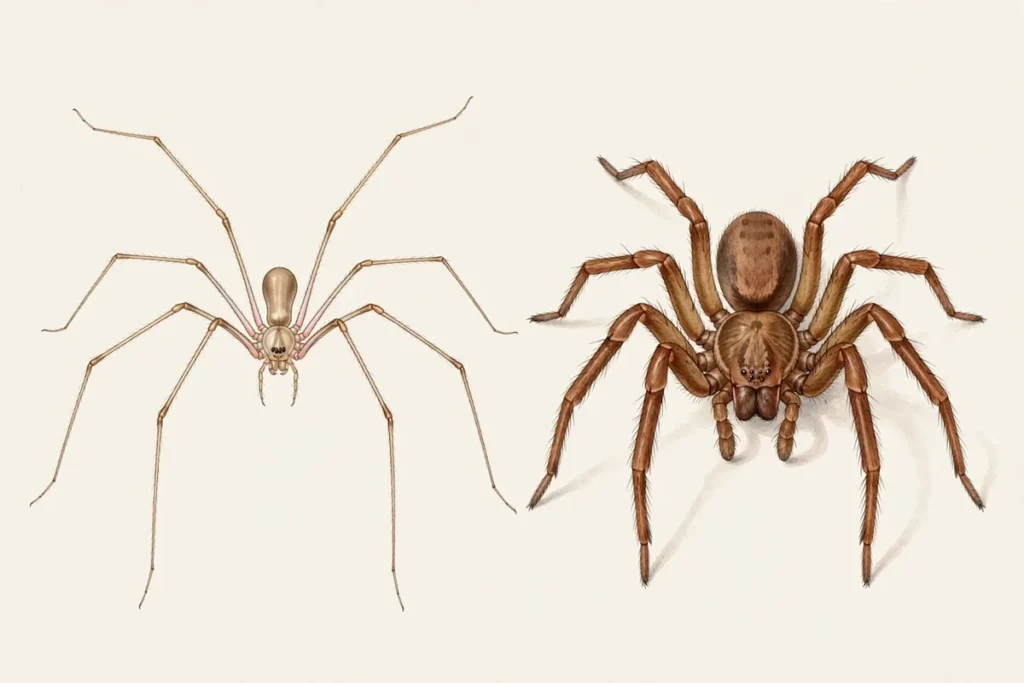
The cellar spider is one of the most common indoor spiders in North America. Its signature is proportion: a tiny 7–10 millimeter body with legs stretching 5 to 6 centimeters, making it look far bigger than it is. The pale tan, grayish, or light-brown body sometimes has faint markings on the cephalothorax — exactly why homeowners mistake it for a brown recluse.
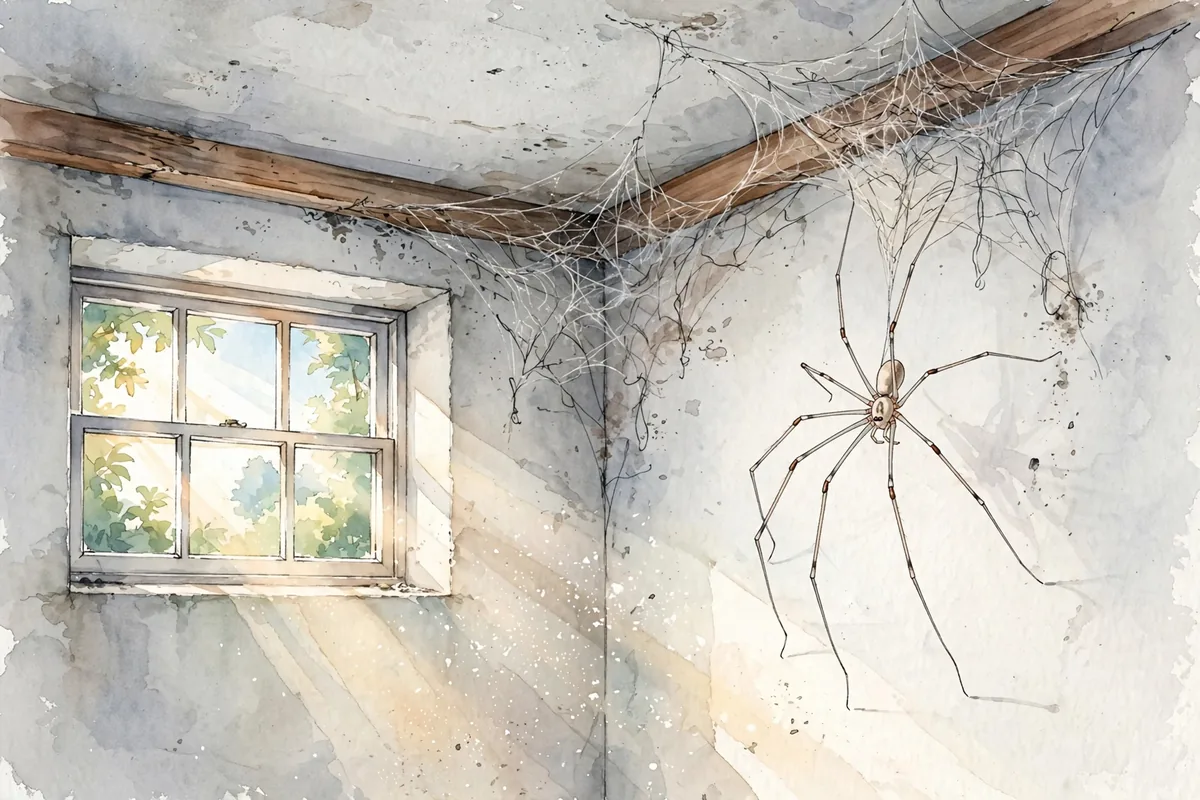
Cellar spiders are true spiders with two body segments and eight eyes. They hang upside down in loose, irregular cobwebs in ceiling corners, crawl spaces, and basements. When disturbed, many vibrate their webs rapidly — the “vibrating spider” display — and drop legs readily to escape.
They’re useful housemates, preying on flies, mosquitoes, gnats, ants, and even other spiders.
The “world’s most venomous spider” legend about cellar spiders is false twice over. UC Riverside entomologist Rick Vetter has debunked it for years — the story mixes up three unrelated “daddy longlegs” animals: cellar spiders, harvestmen (no venom at all), and crane flies (insects). Their venom is weak, and no human has ever had a serious reaction.
Meet the Brown Recluse (Loxosceles reclusa)
Adults are roughly 7–12 millimeters long (about a quarter to a half inch) with a leg span of about an inch, colored cream or tan to dark brown. Three features together make the identification:
- The violin marking. A darker, violin-shaped mark on the dorsal cephalothorax, “neck” pointing backward. The feature everyone looks for — but the most overused, since many harmless spiders carry similar markings and it can be faint in young specimens.
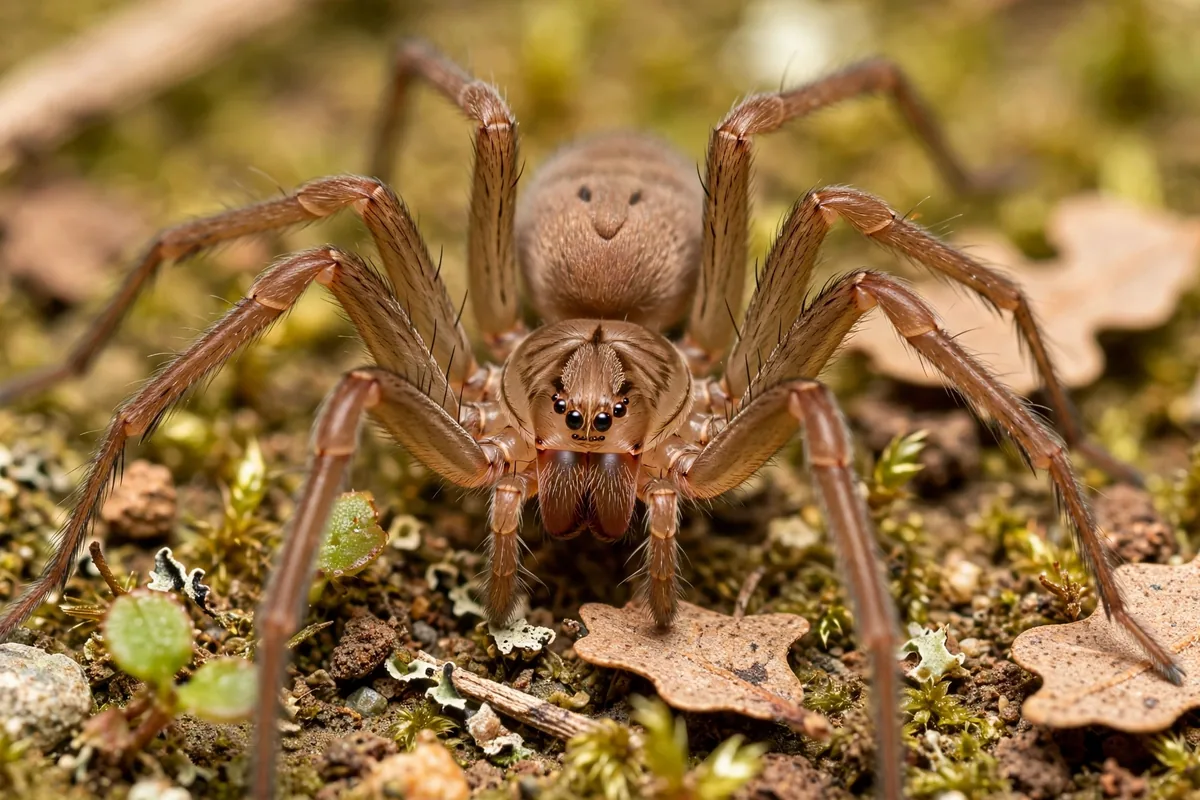
- Six eyes in three pairs. The most reliable feature. Most spiders have eight eyes; recluses have six in three dyad pairs — one median pair in front, one on each side, forming a U-shaped row. Confirm with magnification or a zoomed-in photo.
- Plain, unbanded legs. No stripes, bands, spines, or patterns on legs or abdomen — just fine hairs, giving the abdomen a velvety look.
Behavior and habitat matter just as much. Brown recluses are nocturnal, shy, and genuinely reclusive — by day they press into dark, undisturbed retreats: under logs and rocks outdoors, and inside cardboard boxes, clothing piles, shoes, wall voids, attics, and storage areas indoors. Cardboard is a favorite, likely because it mimics rotting tree bark. Unlike cellar spiders, they don’t use webs to catch prey — they’re hunters. A web in a ceiling corner is not a recluse sign.
Brown Recluse Range: Where It Actually Lives
Geography is one of the strongest ID tools you have, and it clears up most panic cases on its own. The brown recluse is established in the south-central and Midwestern US — sixteen states with confirmed breeding populations: Texas, Oklahoma, Arkansas, Louisiana, Missouri, Kansas, Nebraska, Iowa, Illinois, Indiana, Ohio, Kentucky, Tennessee, Mississippi, Alabama, and Georgia. It’s most abundant in the core south-central states: Oklahoma, Texas, Arkansas, Kansas, and Missouri.
Where it is not established matters just as much: not California, the Northeast, the Pacific Northwest, or the upper Mountain West. Hitchhikers arrive in boxes or freight, but isolated introductions don’t equal a population. Vetter has documented misidentifications even among physicians and pest control professionals — suspected “recluse” specimens sent for expert ID have belonged to dozens of other spider families.
The takeaway: outside the established range — New York, Washington, California — the long-legged brownish spider in your basement is almost certainly not a brown recluse. Check the map before you check the spider.
Cellar Spider vs Brown Recluse: Side-by-Side Comparison
Run through these field features with the spider in view or a photo. The combination tells the story — no single trait does.
| Feature | Cellar spider (Pholcidae) | Brown recluse (Loxosceles reclusa) |
|---|---|---|
| Body size | Tiny body, long legs — looks all legs | Body ~1/4–1/2 in; leg span ~1 inch — stockier |
| Legs | Extremely long, thread-thin | Shorter, sturdier, plain brown, no bands or spines |
| Eyes | Eight | Six in three pairs (dyads) — the key diagnostic |
| Markings | Pale tan/gray; some faint “violin-like” marks | Darker violin mark; abdomen plain |
| Web | Loose, messy cobweb in ceiling corners; hangs upside down | No prey-catching web |
| Behavior | Vibrates web when disturbed; flees or drops legs | Freezes or runs; hides by day |
| Where found | All North America — ceilings, basements, garages | South-central/Midwestern US — boxes, closets, shoes, wall voids |
| Medical significance | None | Venom can damage skin; bites rare and defensive |
Most differences are about structure and habit, not color. A brownish spider hanging in a ceiling-corner web with thread-like legs is behaving like a cellar spider — never a recluse. The eight-versus-six eye check, with a zoomed-in photo, is the most decisive step. See our bite-sting clue checklist for the same systematic approach.
Bite-Risk Reality: What the Evidence Actually Shows
Both spiders come wrapped in mythology, so calm honesty matters here.
Cellar spiders don’t bite people in any meaningful sense. Their weak venom is for subduing tiny prey; induced bites on human skin produced only a faint sting lasting seconds, with no mark. Extension services classify them as harmless.
Brown recluse bites are real but far rarer than their reputation. The spiders don’t hunt people; bites happen when one is pressed against skin — trapped in clothing, a shoe, or bedding — and responds defensively. In one documented case, a Kansas homeowner collected 2,055 brown recluses from her house over six months — with no bites during the collection period. Most documented bites look like a small pimple or blister and heal on their own; reports on Vetter’s research note only about 10 percent need medical attention, and severe necrosis is uncommon.
That doesn’t mean recluse venom is harmless — it can destroy blood vessel walls near the bite, and severe cases produce large, slow-healing ulcers. The danger is genuine but the probability is low, and most wounds blamed on recluses were never spider bites.
Most “recluse bites” are something else. Vetter and two dermatologists published the NOT RECLUSE mnemonic in JAMA Dermatology because bacterial skin infections — MRSA and staph — are the most common cause of lesions mistaken for recluse bites. Pus is a tell: recluse bites don’t typically exude it; infections do. Wounds outside its range, multiple simultaneous wounds, or winter wounds all point away from a spider. See our severe reaction and infection warning signs guide.
What to Do If You Find a Spider Indoors
Finding a spider is not an emergency, even if it looks like the scary one. A steady process beats a shoe:
- Don’t squash it. An intact specimen is your best path to a real ID.
- Capture it calmly. Cup it, slide a card underneath, and flip.
- Take clear photos. Shoot from above and the side, as close and steady as you can. Zoom in on the eyes — good photos often let an entomologist rule a recluse in or out.
- Get an expert ID before worrying. Your state/county extension office or university entomology department can identify specimens, often from photos, usually free. This is the gold standard.
- Relocate harmless spiders. Cellar spiders can be released outside or left alone — they eat household insects. Sweep webs down and seal insect entry points to cut the spiders’ food supply.
- Consider a professional only for confirmed recluses. If an expert confirms a brown recluse — especially multiple sightings within the established range — call a licensed pest management professional. Reduce clutter, shake out stored clothing and shoes, and move beds away from walls.
After skin contact: wash with soap and water, apply a cold compress if sore, and don’t scratch. Our first 10 minutes after a sting guide covers the same calm first steps.
When to See a Doctor for a Bug Bite

This article can’t diagnose your wound — but these signs mean you should get medical care promptly:
- Signs of anaphylaxis — call 911 immediately: trouble breathing, swelling of the lips, tongue, or throat, dizziness or fainting, or hives spreading far beyond the bite. Our anaphylaxis sting warning signs page explains what to watch for while help is on the way.
- Infection or cellulitis signs: spreading redness or streaks, increasing warmth, swelling that keeps growing after day one or two, pus or drainage, fever, or worsening pain. See our warning-signs guide.
- A necrotic or spreading lesion: a dark, sinking center, black or gray tissue, or an ulcer enlarging over days. Bring a spider photo if you have one.
- Timeline violations: a wound from winter (outside recluse season), multiple wounds at once, a wound larger than about 10 centimeters, or no improvement after several weeks — these point away from a spider bite.
- Special situations: bites in babies and young children, anyone immunocompromised, or any wound where you feel something is wrong. Trust that instinct and get checked.
If you’re ever unsure whether a reaction is an emergency, urgent care or poison control can triage by phone — anaphylaxis signs always warrant 911.
Frequently Asked Questions
Can a cellar spider bite you?
In practical terms, no. Cellar spiders have tiny fangs and weak venom, with no medical record of a serious human reaction — induced bites produced only a faint, momentary sting. A painful or spreading wound did not come from a cellar spider; get it evaluated on its own merits.
How can I tell a brown recluse from a cellar spider at a glance?
Check the legs and the web. Cellar spiders have extremely long, thread-thin legs and hang upside down in loose, messy ceiling-corner cobwebs — recluses never do that. Recluses are stockier, with plain unbanded legs, hide in undisturbed places, and build no webs. For a confident ID, check the eyes (six in three pairs = recluse; eight = almost anything else) and geography.
Is the violin marking enough to identify a brown recluse?
No. It’s the most famous feature but one of the least reliable alone — many harmless spiders share it, and it can be faint in genuine recluses. Eye arrangement (six eyes in three dyads), plain unmarked legs and abdomen, and location within the established range together make the ID. When in doubt, ask your extension office.
Do I need pest control if I find cellar spiders?
Almost never for safety — they’re harmless and eat other household insects. If webbing bothers you, remove the food source: seal insect entry points, fix basement moisture, and sweep webs down. A sudden surge usually means indoor insects increased — address that first.
What should I do if I think a brown recluse bit me?
Wash with soap and water, apply a cold compress, and don’t scratch or squeeze. Photograph the spider if available — ID is the most useful thing you can give a clinician. Then watch the wound and seek care for spreading redness, increasing pain, pus, fever, or a darkening center. Don’t try home remedies, and don’t assume every bad wound is a spider bite — many are bacterial infections needing different treatment.
Medically reviewed by Dr. Sarah Jones, MD.
This article is for informational purposes only and isn’t medical advice. If you’re worried about a bite or sting, talk to a healthcare professional.