
On a warm October afternoon, a pinprick sting lands on your forearm — sharp, hot, and wildly out of proportion to the 2-millimeter speck you spot crawling on your skin. That is the signature sensation behind minute pirate bug bites treatment, which starts with simple first aid: wash the bite with soap and water, press on a cold compress, avoid scratching, and use an anti-itch product per label directions if the itch or burn lingers.
What Minute Pirate Bug Bites Feel Like #
Minute pirate bugs (Orius species) are tiny predatory insects, just 2 to 3 millimeters long. They are black insects with distinctive white markings on their wings, and they are genuinely useful in gardens — they hunt and eat plant pests like thrips, aphids, mites, and insect eggs. They do not feed on blood, and they have no interest in you as food.
The trouble starts in fall. As temperatures cool and their normal prey becomes scarce, these little hunters start probing anything warm and moving — including your skin. Their bite is a probe, not a feeding bite. That is why it feels so disproportionate: they stab with piercing mouthparts the same way they would pierce an aphid, and the result is a sudden sharp sting or burning sensation that can stop you mid-sentence.
What you see afterward is usually a small red bump, sometimes with a pale center or a tiny red dot in the middle. On exposed skin — forearms, neck, ankles, behind the knees — you may collect several of these after an afternoon outdoors. They do not leave a line or a neat cluster the way some other biting insects do; the pattern is scattered and random, matching wherever a bug happened to land and probe.
One important truth: minute pirate bugs are not known to transmit disease to people. They do not feed on blood, so they are not moving pathogens between hosts the way mosquitoes or ticks can. Medical and extension sources describe them as a painful nuisance, not a disease vector. That does not make the bite pleasant — but it does mean your treatment goal is simple comfort care, not worry about infection with a tropical illness.
Reactions vary from person to person. Some people barely notice a probe. Others develop a swollen, itchy welt that lasts a day or two. If you tend to react strongly to insect bites in general, expect a stronger reaction here too — the mechanism is the same kind of local skin response you get from any irritating insect bite.
First-Aid Steps: Treating a Minute Pirate Bug Bite #
Start treatment as soon as you notice the bite. The routine is the same reliable first aid you would use for any minor irritating insect bite, and it takes about five minutes.
Step 1: Wash the area #
Rinse the bite with soap and lukewarm water as soon as you can. Washing removes any residue from the bug and lowers the chance of a surface infection if the skin is broken. Pat the area dry with a clean towel rather than rubbing it, which can aggravate the itch.
If you were bitten several times outdoors, a cool shower covers all the bites at once and washes off any bugs still crawling on your skin or clothes.
Step 2: Apply a cold compress #
Hold a cold compress or a bag of ice wrapped in a thin cloth against the bite for 10 to 15 minutes. Cold does three useful things at once: it numbs the sharp stinging sensation, it calms the itch, and it helps keep swelling down. Repeat every few hours during the first day if the bite is still uncomfortable.
Do not put ice directly on skin for extended periods — the cloth barrier prevents ice irritation while the cold does its work.
Step 3: Leave it alone #
Resist scratching, rubbing, or picking at the bite. Scratching feels satisfying for a second, but it damages the skin barrier, makes the itch rebound stronger, and opens a path for bacteria that can turn a trivial bite into an infected sore. If the itch is intense at night, keeping fingernails trimmed short helps limit damage from sleep-scratching, and a light bandage over the worst bite can serve as a reminder to leave it alone.
Step 4: Treat the symptoms, not the bug #
If washing and cold are not enough, move on to symptom relief. An oral antihistamine can help with itching, and a topical anti-itch product — such as calamine lotion or a low-strength hydrocortisone cream — can calm a localized red bump. Always use these products exactly per the label directions, and talk to your doctor or pharmacist before using them, especially if you are pregnant, nursing, giving them to a child, or taking other medications.
Step 5: Watch it for a few days #
Most minute pirate bug bites fade within a day or two, sometimes up to a week for people who react strongly. A bite that slowly shrinks and itches less each day is healing normally. What you are watching for is the opposite — a bite that gets worse instead of better. The warning signs section below tells you exactly when to escalate.
A note on the outdoors: if you came inside with bites and the bugs are still on your clothing, change your clothes and shake them out outside before tossing them in the laundry. These insects are not a clothing infestation — they were simply riding along on you.
Calming the Itch and Pain: What Actually Helps #
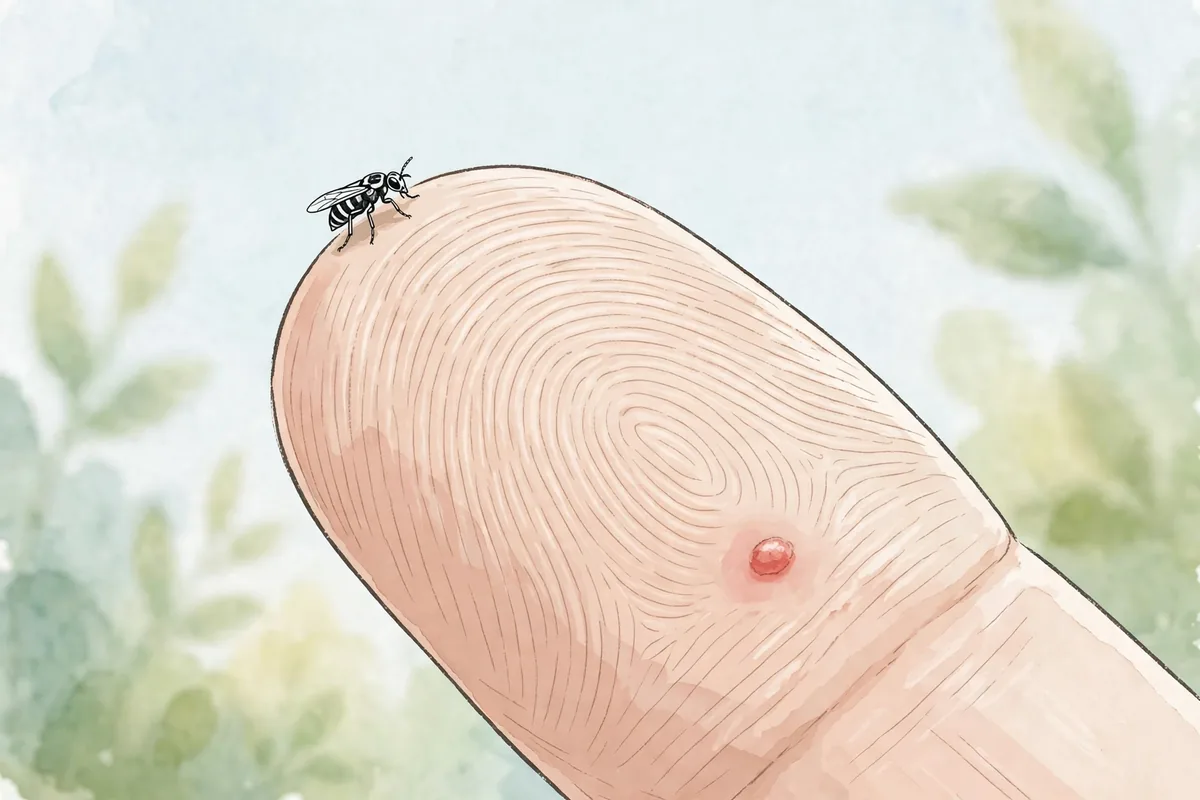
The burning sting of a minute pirate bug bite usually fades within minutes to an hour, but the itchy bump can linger for days. Here is how to handle each phase without making things worse.
For the first hour — the burn. Cold is your best tool. A cold compress, a cool damp cloth, or even holding a cold drink can against the spot takes the edge off the burning sensation. Some people find that running cool water over the bite for a few minutes works just as well. Avoid hot water, which can increase itching and swelling in freshly bitten skin.
For the itch over the next few days. Oral antihistamines can reduce itching, and topical anti-itch products can soothe a specific red bump — always per label directions and after checking with your doctor or pharmacist about what is appropriate for you. Calamine lotion provides a cooling, drying effect that many people find helpful on small bumps. An oatmeal bath or oatmeal-based lotion can calm widespread itchiness if you collected many bites.
Home approaches with modest support. A paste of baking soda and water applied briefly to the bite is a traditional home remedy some people find soothing. Aloe vera gel can feel cooling. These are comfort measures, not cures — use them if they feel good, and stop if they irritate the skin.
What to skip. Avoid heavy home remedies that can irritate broken skin: bleach, ammonia, strong essential oils applied undiluted, or heat-based “bite zappers” used aggressively. Do not take prescription-only medications or combine products without talking to a pharmacist. And never apply topical products to deeply broken or oozing skin unless a clinician advises it.
Track your reaction honestly. If this is your first encounter with minute pirate bugs, make a mental note of how strongly you react. People who swell dramatically from these bites can plan ahead next fall — long sleeves, repellent, and anti-itch supplies ready before the bite-wave season arrives.
What They Are NOT (and Why That Changes Treatment) #
Minute pirate bugs cause panic when people misidentify them, and misidentification leads to the wrong response. Getting the identity right protects your wallet and your health.
They are not bed bugs. This is the most common mix-up, and the most consequential. Bed bugs are larger (apple-seed sized), reddish-brown, live indoors in mattresses and furniture, and feed on blood at night. Minute pirate bugs are a fraction of that size, live outdoors on plants, bite during the day, and do not feed on blood. If you find tiny black-and-white specks on your arms after gardening in October, that is a seasonal outdoor encounter — not a bedroom infestation.
They are not a home infestation. Minute pirate bugs do not breed in houses, mattresses, carpets, or furniture. They may wander indoors on warm fall days through open doors and windows, attracted by light, but they do not set up colonies inside your home. Do not fumigate your house for them. Indoor pesticide spraying for a bug that lives in your garden is wasted money and unnecessary chemical exposure — and it will not stop next fall’s outdoor bites anyway.
They are not a disease risk. Unlike mosquitoes and ticks, minute pirate bugs are not known to transmit disease to people. You do not need antibiotics “just in case,” you do not need blood tests, and you do not need to worry about a pathogen incubating. The only medical concern is the same as with any skin break: keep it clean and watch for signs of bacterial infection.
They are not a reason to kill your garden helpers. Because they eat real plant pests, minute pirate bugs are considered beneficial insects by gardeners and growers. Reaching for a broad-spectrum insecticide to wipe them out would also wipe out the predators protecting your plants — and the bites will return next season regardless. Prevention aimed at your own skin is the smarter strategy.
The bottom line: treat the skin, not the house. Wash, cool, soothe, and watch. Everything beyond that is overkill for a nuisance bite from a beneficial insect.
Minute Pirate Bug Bites vs Lookalikes: Comparison Table #

Fall produces several biters and irritants at once, and they are easy to confuse. Use this comparison to sort out what bit you — the right identification steers the right response.
| Feature | Minute Pirate Bug Bites | No-See-Um Bites | Thrips Irritation | Chigger Bites | Bed Bug Bites | |—|—|—|—|—|—| | Bite feel | Sudden sharp sting or burn, out of proportion to the tiny insect | Pinprick sting, then intense itching; often very painful for their size | Mild itching or crawling sensation; some people feel almost nothing | Delayed intense itching that starts hours later | Usually painless at the time; itch develops later | | Pattern on skin | Scattered random bumps wherever bugs landed | Clusters on exposed skin, especially ankles and legs | Scattered mild redness, often where thrips crawled | Clusters around tight clothing lines — waistband, socks, ankles | Lines or zigzag clusters of 3 or more, often on arms, neck, torso | | Season | Peak in fall, especially warm days | Warm months; worst at dawn and dusk | Warm months outdoors | Late spring through fall | Year-round indoors | | Where it happens | Outdoors — gardens, parks, patios; sometimes near open windows | Outdoors near water, marshes, damp soil; also through window screens | Outdoors on plants, flowers, crops; they crawl on skin | Grassy, weedy, wooded areas; sitting on grass or soil | Indoors in beds and furniture; bites appear overnight or after sleeping | | The insect | 2–3 mm, black with white wing markings, visible if you look | Tiny flying midges, barely visible | Slender, 1–2 mm, yellowish or dark, crawl rather than bite | Larval mites, nearly invisible to the eye | Apple-seed sized, reddish-brown, flat oval |
Two of these lookalikes deserve special mention because the confusion is so common. No-see-ums are fellow fall biters — tiny flying midges that can come through window screens and leave intensely itchy welts. If you want the full first-aid walkthrough for those, see our guide to no-see-um bites treatment for step-by-step relief. Thrips are even smaller plant-feeders that crawl on skin and cause mild irritation rather than true bites; some of the specks people blame on minute pirate bugs are actually thrips, and you can compare symptoms in our article on thrips bites on skin.
If your bites appear overnight in lines or zigzags and you find apple-seed-sized bugs in your mattress seams, that points to bed bugs — a completely different problem that does need a pest-management response. If your itching started hours after sitting in tall grass and clusters around your waistband and socks, think chiggers.
Prevention: Keeping Them Off Your Skin This Fall #
You cannot eliminate minute pirate bugs from the outdoors — and given how useful they are in gardens, you should not try. What you can do is make yourself a less convenient target during their peak weeks.
Know the timing #
Minute pirate bug bites cluster on warm fall days. When autumn afternoons climb back into the 70s, the bugs are active and probing; a cold snap quiets them down. Late morning through afternoon is typically the worst window, when they are out hunting and landing on anything warm. If you garden, hike, or sit on a patio during a warm spell in September or October, that is when to take precautions.
Cover up #
Long sleeves and long pants are the single most effective defense. These insects probe exposed skin — the more skin you cover, the fewer landing spots they find. Lightweight long sleeves still work on warm days. Tucking pant legs into socks and choosing closed shoes over sandals protects ankles, a favorite target. A hat helps if you have been getting bites on your neck and scalp.
About light-colored clothing #
Here is the honest nuance: minute pirate bugs are attracted to light-colored and white clothing, so wearing white does not repel them — it may draw more landings. But light colors also make the tiny dark insects easy to spot and brush off before they bite. Either way, coverage matters more than color. If you wear light colors, check your sleeves and brush bugs off early. If you wear darker colors, you will attract fewer of them but spot them less easily.
Repellents and barriers #
An EPA-registered insect repellent applied per label directions may reduce bites, as these products are designed to deter a range of biting insects. Apply to exposed skin and, where the label allows, to clothing. Reapply according to the label, especially if you are sweating outdoors. No repellent guarantees complete protection against a probing insect that is not really feeding — so pair repellent with covering up rather than relying on it alone.
Around the house and patio #
Keep window screens in good repair so bugs wandering toward indoor light cannot slip through. On peak days, consider keeping doors closed during the warm afternoon hours rather than all day. Outdoor fans on a patio can help — small insects struggle to land in moving air. After coming inside, do a quick check of your clothes and brush off any hitchhikers before they probe.
What does NOT work #
Bug zappers do little against insects that are not strongly drawn to ultraviolet light in a targeted way. Citronella candles have limited range and will not protect a whole yard. And as noted above, indoor fumigation is pointless — these insects live outside, and they do not care about your baseboards.
The realistic goal is fewer bites, not zero bugs. A few simple habits — sleeves, repellent, screens, and brushing off landings — can turn a miserable October afternoon into a normal one.
Warning signs: when to seek care #

Call 911 immediately if you or someone near you develops trouble breathing or swallowing, swelling of the face, lips, tongue, or throat, widespread hives, dizziness or fainting, or a racing heartbeat after any insect bite. These can be signs of a severe allergic reaction (anaphylaxis). If you carry an epinephrine auto-injector and a clinician has prescribed it for you, use it as directed and still call 911 — one dose may not be enough, and you need emergency monitoring.
Severe allergic reactions to minute pirate bug bites are uncommon, but any insect bite can trigger anaphylaxis in a sensitive person. Do not wait to see if symptoms improve on their own.
See a doctor or urgent care promptly if you notice any of the following:
- Spreading redness or red streaks moving outward from a bite
- Increasing pain, warmth, or swelling after the first day instead of improvement
- Pus or yellow crusting on or around the bite
- Fever, chills, or generally feeling ill alongside the bites
- A bite that is not improving after several days, or keeps getting larger
- Bites near the eyes with significant swelling that affects vision, or bites inside the mouth
These are signs of a possible skin infection (cellulitis) or another complication — not a normal bite reaction. A clinician can evaluate whether you need antibiotics or other treatment. When you go, mention that you were bitten by minute pirate bugs outdoors in the fall; it helps the clinician rule out other causes quickly.
If you have a known allergy to insect stings or bites, carry your prescribed emergency medication when outdoors in fall, and make sure someone with you knows where it is and how to use it.
Frequently asked questions #
Can minute pirate bugs infest my house? #
No. Minute pirate bugs do not breed or establish colonies indoors. They live outdoors on plants, where they hunt small plant pests. They may wander inside through open doors, windows, or torn screens on warm fall days — especially since they are drawn toward light — but they will not infest your mattress, carpets, or furniture. If you are finding them inside, check your window screens and keep doors closed during warm afternoons. There is no reason to spray or fumigate your home for them.
Do minute pirate bugs transmit disease to humans? #
They are not known to transmit disease to people. Minute pirate bugs do not feed on blood; they probe skin the same way they probe plant pests, which means they are not moving pathogens between hosts the way mosquitoes or ticks can. Extension and entomology sources describe them as a painful nuisance rather than a disease vector. Treat the bites for comfort, and seek care only if you see signs of a secondary skin infection.
How long do minute pirate bug bites last? #
For most people, the sharp stinging sensation fades within minutes to an hour, and the red bump and itch resolve within one to three days. People who react strongly to insect bites may have itchy welts that last up to a week. A bite that steadily improves day by day is healing normally. If a bite is getting worse after several days — more pain, spreading redness, pus, or red streaks — have it checked by a clinician rather than waiting it out.
Why does such a tiny bug cause so much pain? #
The pain is out of proportion because of how they bite. Minute pirate bugs have piercing-sucking mouthparts designed to stab through the bodies of insects like aphids and thrips. When one probes your skin, it uses the same stabbing motion — on skin that is far more sensitive than an aphid. The result feels like a sharp pinprick or burn from an insect you can barely see. It is a mechanical irritation from the probe, not venom and not an allergic reaction in most cases.
Should I kill minute pirate bugs in my garden? #
It is better not to. These insects are genuinely beneficial predators that eat thrips, aphids, spider mites, and insect eggs — pests that damage plants. Wiping them out with a broad-spectrum insecticide would remove free pest control from your garden and could harm pollinators and other helpful insects too. The bites are seasonal and temporary, peaking on warm fall days. Protect your own skin with sleeves and repellent, and let the bugs keep working in your garden.
Medical and editorial note #
This guide is general information about minute pirate bug bites and their treatment, written for quick reference — it is not medical advice and does not replace evaluation by a qualified clinician. Insect bite reactions vary from person to person, and product recommendations should always be checked against current label directions and discussed with your doctor or pharmacist, especially for children, pregnancy, or existing medical conditions. If a bite looks infected or you experience any warning signs described above, seek professional care promptly.


