
You felt the bites before you ever saw the bug — that is the whole story of no-see-ums. No see um bites treatment starts with soap and water, then a cold compress, then hydrocortisone cream or calamine lotion on the skin and an oral antihistamine per label directions for the itch. The bites are maddeningly itchy but rarely dangerous; the real battle is not scratching them into infected sores. Everything you need is below.
What no-see-ums are and why the bites itch so much #
No-see-ums are biting midges, tiny flies in the family Ceratopogonidae — barely 1–3 millimeters long, small enough to pass through ordinary window screens. The name says it all: you almost never see the insect, only the aftermath. They are also called sand flies, punkies, or (in some regions) sand gnats, and they are close relatives of the black fly family.
Why the bites are so disproportionately miserable:
- They slice, not pierce. Like their larger cousins the horse flies and deer flies, biting midges cut the skin with blade-like mouthparts and feed on the blood that wells up. The cut plus saliva produces a stronger inflammatory reaction than a mosquito’s needle puncture.
- You get many at once. No-see-ums feed in swarms. One outing can mean dozens of bites — and dozens of simultaneous itch signals are far worse than one.
- The reaction is delayed. Bites often do not show up for hours. You feel fine at the beach bonfire and wake up at 2 a.m. covered in itchy red welts — which makes the cause hard to pin down and the scratching hard to resist.
- They target exposed skin. Ankles, feet, legs, arms, neck — wherever skin is bare. Bites often appear in clusters or rash-like patches of tiny red papules.
- Some people react strongly. Reactions range from small red dots to large, extremely itchy welts. Sensitivity varies enormously — one person at the cookout is covered in welts while another barely notices.
Where and when. No-see-ums thrive in warm, humid, coastal environments — beaches, marshes, mangroves, lake shores, and anywhere with damp soil or decaying organic matter where larvae develop. They are most active at dawn and dusk, on calm, humid evenings. Wind is their enemy: they are weak fliers, and even a light breeze grounds them.
No-see-um vs. look-alikes. Flea bites cluster around ankles and lower legs too, but fleas are visible and jump. Chigger bites concentrate where clothing is tight (waistbands, sock lines) and itch for days. Mosquito bites are larger, raised, and itch sooner. No-see-um bites are smaller, often appear in rash-like clusters, and show up hours after exposure — if you cannot identify the culprit, the bite and sting clue checklist walks through the evidence.
Treatment and relief: step by step #

- Wash the area. As soon as you realize you have been bitten, wash with soap and water. This removes saliva residue and reduces infection risk across dozens of tiny wounds.
- Apply cold. A cold compress or ice wrapped in cloth for 10–15 minutes calms the itch and limits swelling. Repeat as needed — cold is your best friend against midge-bite itch.
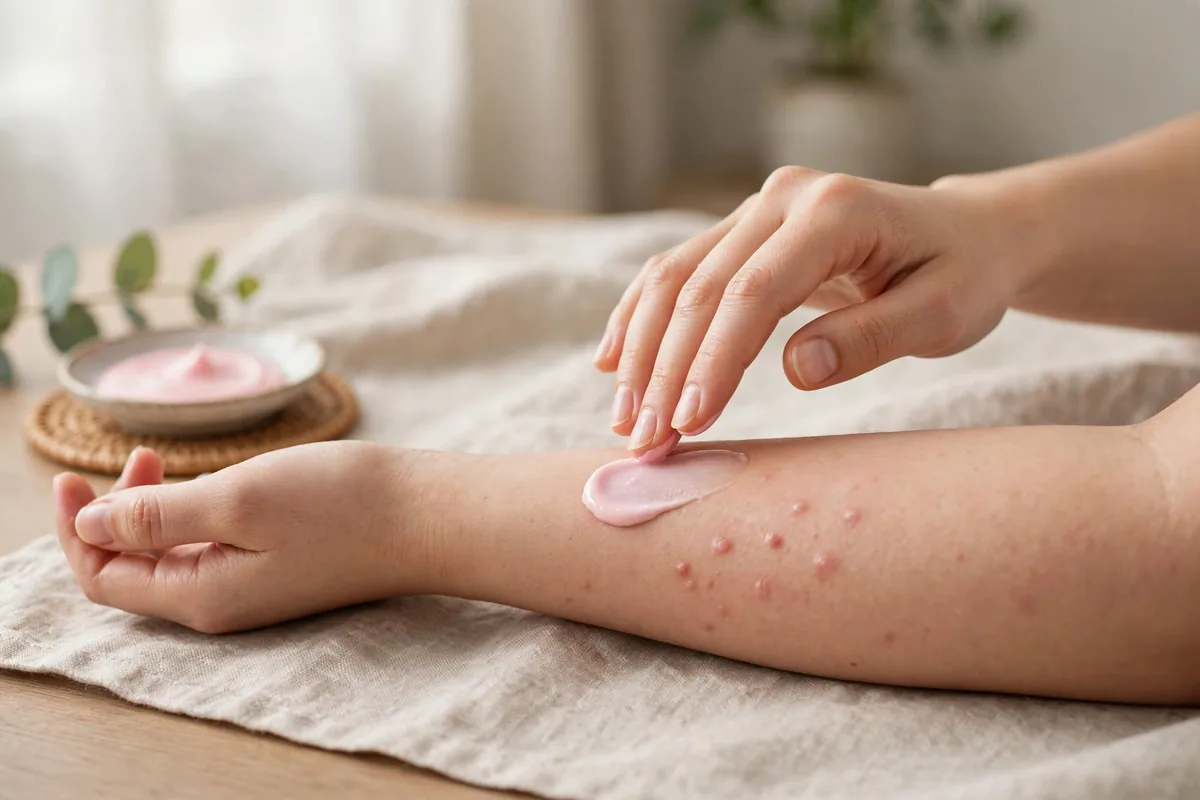
- Soothe the skin. Hydrocortisone cream or calamine lotion on the bites reduces itching and inflammation. For widespread bites, a cool oatmeal bath or a baking-soda paste can cover more area.
- Calm it from the inside. An oral antihistamine per label directions helps with itching and swelling, especially at night when the itch peaks. It also helps you sleep instead of scratch.
- Protect the skin. Do not scratch — across dozens of bites, one broken wound can become infected, and infected midge bites are the main complication. Keep nails short, wear loose clothing over the area, and consider light cotton gloves at night if you scratch in your sleep. The reasoning is laid out in why you should not scratch or squeeze a bite.
- Watch for infection. With many bites, monitor for the signs: increasing redness, warmth, pus, or fever. See the warning signs section below.
- Reduce bite itching over the coming days with the same routine — the itch often peaks on day two or three before fading. The reduce bite itching reference covers longer-term itch control.
Healing timeline. Most no-see-um bites resolve within a few days to a week. Sensitive people can itch for up to two weeks, and large local reactions take longer. If individual bites are getting worse after the first day — more pain, spreading redness, pus — that is infection, not a normal bite reaction.
Do no-see-ums spread disease? #
For most people in the US, no — no-see-ums are a nuisance, not a disease vector. Unlike mosquitoes (West Nile, Zika) or deer flies (tularemia), biting midges in the United States are not established transmitters of human disease. They can transmit livestock and wildlife diseases (such as bluetongue virus in ruminants), which is why ranchers take them seriously — but for beachgoers and backyard gatherings, the concern is itch, not infection.
The honest caveats:
- In some tropical regions, certain biting midge species are implicated in transmitting pathogens (such as Oropouche virus in parts of South America). If you are traveling to the tropics and develop fever after heavy midge exposure, mention it to a clinician.
- The real medical risk in the US is secondary bacterial infection from scratching — cellulitis from dozens of broken, itchy bites. That is preventable with the treatment steps above.
Prevention: beating the invisible biters #
Because you cannot see them coming, prevention is about timing, barriers, and air movement.
Timing and location:
- Avoid dusk and dawn exposure in midge country. The hour around sunset on a calm, humid evening is peak biting time. Plan beach walks for midday or breezy times instead.
- Know the habitat. Damp soil, marshes, mangroves, lake shores, overwatered mulch, and clogged gutters are breeding grounds. Fix drainage and reduce standing moisture near patios.
- Check the wind. Even a light breeze suppresses them. The stillest, most humid evenings are the worst.
Barriers:
- Fine-mesh screens. Standard window screens have gaps big enough for no-see-ums. “No-see-um” or 20×20 mesh screening on porches, windows, and patio enclosures keeps them out.
- Cover up at dusk. Long sleeves, long pants, and socks during peak hours. They bite exposed skin — covered skin is safe skin.
- Head protection for evening yard work in bad areas.
Air and repellents:
- Fans are the secret weapon. No-see-ums are weak fliers — a strong oscillating fan on the patio or porch literally blows them away. For outdoor gatherings, this beats every other method.
- EPA-registered repellent (DEET, picaridin, or oil of lemon eucalyptus) per label directions on exposed skin. Reapply per the label, especially in humid conditions.
- Citronella candles and torches provide modest local help for a small gathering area — useful as a supplement, not a solution.
For the general habits that work across biting species, the outdoor bite prevention checklist is worth a read before your next trip.
Warning signs: when to seek care #
Call 911 immediately if you develop trouble breathing or swallowing, swelling of the face, lips, tongue, or throat, widespread hives, dizziness or fainting, or a racing heartbeat after bites. If you have been prescribed an epinephrine auto-injector, use it first, then call 911 — epinephrine buys time but does not replace emergency care.
See a doctor or urgent care if bites show signs of infection — spreading redness, red streaks, pus, increasing pain after the first day, warmth, or fever; if swelling is severe (face, eyes, or widespread); if bites do not improve after 10–14 days; or if you develop fever after heavy midge exposure while traveling in the tropics. Standard bite and sting warning signs cover the local wound — with dozens of bites, watch the worst ones, not the average ones.
Frequently asked questions #

How long do no-see-um bites last? #
Typically a few days to a week. The itch often peaks on day two or three. Sensitive people can itch for up to two weeks, and large local reactions take longer to settle. Bites that worsen after the first day — more pain, spreading redness, pus — signal infection, not normal healing.
Why do no-see-um bites itch more than mosquito bites? #
Two reasons: the feeding method and the numbers. Biting midges slice the skin rather than piercing it, which provokes a stronger inflammatory response, and they feed in swarms — so you are dealing with dozens of simultaneous bites instead of one or two. The delayed reaction (hours later) also means you start scratching before you know what happened.
Can no-see-ums bite through clothing? #
They bite exposed skin; most clothing stops them. But they are tiny enough to get under loose cuffs and collars, and they will bite through very thin, tight fabrics. Long sleeves and pants in fine weave, tucked in at dusk, are effective. They cannot bite through ordinary clothing the way they slip through standard window screens — screens are a mesh-size problem, not a bite-through problem.
What is the fastest way to stop no-see-um itching? #
Layer fast-acting steps: wash the area, apply a cold compress for 10–15 minutes, then hydrocortisone cream or calamine lotion on the skin plus an oral antihistamine per label directions. Cold plus antihistamine together usually breaks the itch cycle. Avoid scratching — it feels good for three seconds and makes everything worse for three days.
Medical and editorial note #
This guide is general information about no-see-um (biting midge) bites and is not medical advice. Reactions vary widely between individuals, and infected bites require professional evaluation. If you are unsure about a reaction, develop spreading redness, pus, or fever, or feel unwell, contact a healthcare professional promptly.


