
If you have ever watched one family member welt up from a single mosquito bite while another barely notices, you have probably wondered whether the second person has simply built up immunity to mosquito bites over the years. It is a fair question, and the short answer is: partly, yes. Dermatologists and immunologists have documented a process called natural desensitization, in which repeated exposure to mosquito saliva over years can make bite reactions smaller, shorter, and less itchy. Reactions follow a recognized progression of stages, from strong delayed reactions in childhood toward milder or even absent reactions in adulthood.
But the full story comes with important limits. The tolerance is partial and highly individual, it is specific to the mosquito species you have been bitten by, and it offers zero protection against the diseases mosquitoes carry. You also cannot safely or reliably speed the process up by seeking out bites. This article explains what the science actually says about bite tolerance, why some people react more than others, and what tolerance can never do.
The Direct Answer: What “Immunity” to Bites Really Means
When people ask whether they can build immunity to mosquito bites, they usually mean one of two things. The first is tolerance: reacting less dramatically to bites over time. The second is protection: not getting sick from mosquito-borne illnesses. Only the first one is real, and even that is incomplete.
A mosquito bite is not a venom injection. The itch and swelling come from your own immune system responding to proteins in the mosquito’s saliva, which she injects to keep your blood flowing while she feeds. Over years of repeated exposure, many people’s immune systems recalibrate this response. The swelling gets smaller, the itch fades faster, and eventually some people barely react at all. Researchers describe this as natural desensitization to mosquito saliva, and it is a well-documented phenomenon in dermatology and allergy literature.
What does not happen is any form of disease protection. A person who barely reacts to bites can still contract West Nile virus, dengue, Zika, or chikungunya from an infected mosquito. The skin reaction and the infection are completely separate processes. In fact, a milder reaction can theoretically mean a person notices fewer bites, which is not an advantage when the bite carries a virus. Reacting less never means you are safe from mosquito-borne illness, and it is never a reason to skip repellent or other precautions.
There is also no shortcut. Tolerance develops over years of ordinary, unavoidable exposure, not over a single summer of deliberately inviting bites. Seeking out bites on purpose would increase your exposure to disease-carrying mosquitoes with no guarantee of faster tolerance, so it is not something any health authority recommends.
The Five Stages of Mosquito Bite Reactions
One of the most useful frameworks in bite science comes from a 2022 review in Frontiers in Immunology by Vander Does, Labib, and Yosipovitch, which summarized how mosquito bite reactions progress with cumulative lifetime exposure. The researchers described five stages:
| Stage | What happens after a bite | What’s driving it |
|---|---|---|
| I: the first bite | Only a small, red spot; no real reaction | The immune system has never met mosquito saliva proteins before |
| II: delayed reaction only | Itchy papules that peak 24 to 36 hours after the bite and fade over several days | The immune system’s slower, cell-mediated arm |
| III: immediate plus delayed | An immediate wheal, a round raised area 2 to 10 millimeters across with surrounding redness peaking in 20 to 30 minutes, plus the delayed itchy papules a day later | Both the fast and slow immune arms are active; this is the stage where most strongly reacting people, including most children with skeeter-type reactions, tend to sit |
| IV: immediate reaction only | The delayed component fades, leaving only the quick wheal that resolves relatively fast | The immediate response persists while the delayed one winds down |
| V: no reaction | Neither an immediate nor a delayed reaction | The immune system has, in effect, learned to ignore mosquito saliva |
The key phrase in the research is that natural desensitization “may occur” with long-term exposure, not that it always does. A subsequent observational study found marked individual variability: six out of ten patients remained in stage III over a 30-year period. In other words, two people can live in the same mosquito-heavy town for decades and end up at completely different stages. The progression is real but not guaranteed, and it moves at the immune system’s own pace.
One more nuance from the review: bite size is correlated with self-reported itch intensity. The people with the largest reactions are, in general, the people who itch the most, which is consistent with what anyone who has endured a bad bite season already knows from experience.
Why Children React More Than Adults
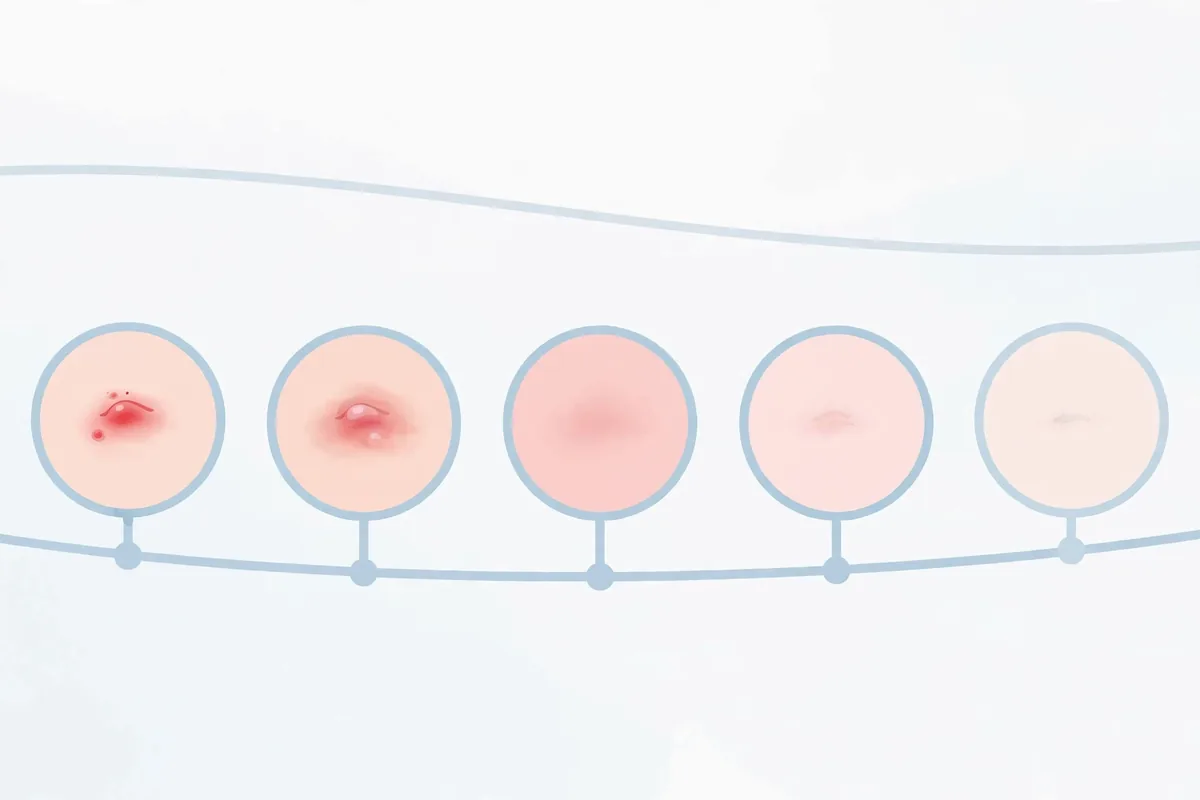
Stage placement is driven by lifetime bite count, not age itself. A child’s immune system is early in its education, typically sitting in stage II or III, where the delayed reaction is at its largest. An adult who has absorbed thousands of bites over decades has had the time to drift toward stage IV or V. Genetics modulates the pace, so two siblings can sit at different stages, but as a group children react more strongly than adults simply because their exposure history is shorter.
Travel produces the same reset in reverse. An adult comfortably desensitized at home can develop dramatic welts on a trip, because saliva chemistry differs between mosquito species and tolerance is partly species-specific: the traveler’s immune system is meeting new saliva proteins for the first time, effectively restarting the stage progression for those proteins. Even within one week at home, reactions can vary from bite to bite when several mosquito species are active in the area, since the immune system may tolerate one species’ proteins while still reacting to another’s.
For parents, the reassuring part is that strong childhood reactions are usually just the immune system doing its learning, and they tend to moderate over the years. The patterns that deserve a pediatrician’s attention are the severe ones: very large local reactions like skeeter syndrome, fever, or hives spreading beyond the bite site. Our guide to mosquito bite warning signs covers which patterns deserve a closer look.
What Changes Inside the Immune System
The shift from strong reactions to mild ones is not a matter of willpower or skin toughness; it is a measurable change in immune behavior. Several lines of research have mapped what happens.
In an early experimental study, 41 volunteers were exposed to bites from Aedes vexans mosquitoes, and their immediate and delayed skin reactions were tracked alongside blood markers. The results showed that both mosquito-specific IgE and IgG antibodies, along with lymphocyte proliferation responses, were involved in the reactions. Most interestingly, the researchers found an inverse correlation between the size of the skin reactions and the number of years the person had lived in Canada, a mosquito-heavy region, but not with the person’s age itself. In plain terms: it was years of exposure, not simply getting older, that predicted smaller reactions. The study’s conclusion stated directly that naturally acquired desensitization to mosquito bites occurs during long-term exposure.
The immune story has two arms. The immediate reaction, the wheal that appears within minutes, is driven largely by IgE antibodies and histamine release, the classic allergy pathway. The delayed reaction, the itchy papules peaking a day or two later, involves lymphocytes and a slower inflammatory cascade. Desensitization appears to involve a recalibration of both arms, with the immune system gradually dialing down its response to saliva proteins it has met many times before.
Genetics play a role too. A large genetic study of more than 84,000 people found wide variation in how strongly people react, and even the same person’s reactions changed over time. Inherited differences in immune regulation appear to influence how strongly someone responds and how readily their system desensitizes. This is one reason two siblings raised in the same house can react so differently to the same evening outdoors.
Why Tolerance Is Always Incomplete
Even for people who desensitize well, the tolerance has hard limits. Understanding them prevents the most dangerous misunderstandings of this topic.
It is species-specific. Tolerance built against your local mosquitoes does not fully protect you against unfamiliar species. Saliva proteins differ between mosquito species, and your immune system treats new proteins as new threats. A move, a long trip, or even a new invasive species arriving in your area can restart strong reactions.
It is highly individual. As the 30-year observational study showed, many people never progress past stage III despite decades of exposure. If you are someone who has always reacted strongly and still does at 40, your immune system may simply be wired to stay reactive. There is nothing wrong with you; it is normal variation.
It does not prevent disease. This is the critical boundary. The skin reaction is an immune response to saliva proteins. Viral infections like dengue, Zika, West Nile, and chikungunya are transmitted by the mosquito independently of how your skin reacts. A bite you barely feel can still transmit a virus. Tolerance to bites is not immunity to disease, and it must never change how seriously you take mosquito precautions in areas where these viruses circulate.
It can reverse. Long periods without exposure, such as years spent in a mosquito-free climate, can allow sensitivity to return. The immune system’s memory of saliva proteins fades, just as it does for other mild allergens.
What Does Not Build Immunity

Because the idea of bite tolerance is appealing, it attracts a fair amount of wishful thinking. Here is what the evidence does not support.
Deliberately seeking bites. There is no safe do-it-yourself desensitization protocol involving intentional mosquito bites. It would mean accepting more bites, more itch, and more exposure to mosquito-borne diseases in exchange for a tolerance that might develop on its own anyway. No health authority recommends this, and the disease risk makes it a genuinely bad trade.
Clinical allergy treatments. The prescription desensitization treatments used for some insect venom allergies are not an established treatment for ordinary mosquito bite reactions. Researchers have experimented with mosquito-saliva approaches, but there is no standard, proven treatment, and this article does not recommend pursuing one. Any allergy treatment is a decision between a patient and an allergist, based on a full clinical evaluation.
Supplements, detoxes, and folk remedies. No pill, tea, or topical product has been shown to accelerate immune desensitization to mosquito saliva. Some products claim to change how attractive you are to mosquitoes or how your body reacts, but the evidence for such claims is limited or absent. What reduces your suffering is reducing your bites, not attempting to rewire your immune system from the outside.
Scratching through it. Enduring bites without treating the itch does not build tolerance faster. Scratching increases inflammation, damages skin, and raises the risk of secondary infection. Managing symptoms sensibly while your immune system does its slow work is the better path. Our guide on reducing bite itching covers practical approaches, and our piece on why mosquito bites itch explains the sensation itself.
What Actually Helps Instead
Since you cannot rush desensitization, the practical strategy is simple: get bitten less, and manage the bites you do get.
Prevent bites. Use EPA-registered insect repellents according to the label, wear long sleeves and pants during peak mosquito hours, keep window screens repaired, and empty standing water around your home where mosquitoes breed. These steps protect everyone in the household regardless of their desensitization stage.
Treat bites sensibly. A cool compress, keeping the area clean, and resisting the urge to scratch remain the core of bite aftercare. Scratching is the main way a simple bite becomes an infected wound.
Watch for the unusual. Tolerance talk applies to ordinary bite reactions. Reactions that break the pattern, very large swelling, blistering, fever, hives in other areas, or swelling that keeps growing for days, deserve a clinician’s attention rather than a wait for desensitization to kick in.
When to See a Doctor for a Bug Bite
Ordinary mosquito bite reactions, even strong ones in children, usually resolve on their own. Seek care when the reaction breaks the expected pattern.
Call 911 or go to the emergency room if you notice:
- Trouble breathing, wheezing, or throat tightness
- Swelling of the lips, tongue, or face
- Dizziness, faintness, or feeling faint
- Widespread hives far from the bite site
These are signs of a severe allergic reaction, which is rare with mosquito bites but always an emergency.
See a clinician promptly if you notice:
- A bite area that develops pus, yellow crusting, or drainage
- Red streaks spreading outward from the bite
- Fever accompanying the swelling
- Pain that keeps intensifying after 24 to 48 hours
- Swelling that keeps growing after several days instead of improving
Mention to your doctor:
- If you or your child regularly develop very large local reactions, since an allergist can evaluate whether the pattern fits a mosquito saliva allergy and discuss management
- Any history of severe reactions to bites or stings, so it is on record
Sources and Further Reading
- Vander Does, Labib, and Yosipovitch (2022): “Update on mosquito bite reaction: itch and hypersensitivity, pathophysiology, prevention, and treatment,” Frontiers in Immunology (full text): https://www.frontiersin.org/journals/immunology/articles/10.3389/fimmu.2022.1024559/full
- The same review’s PubMed record (PMID 36211437): https://www.ncbi.nlm.nih.gov/pubmed/36211437
- 23andMe: The genetic link behind mosquito bite frequency, itchiness, and bite size: https://www.23andme.com/en-ca/topics/traits/mosquito-bite-frequency/
Frequently Asked Questions
Why do some people react more to mosquito bites than others?
The main factors are exposure history, genetics, and mosquito species. People with fewer lifetime bites, especially children, tend to react more strongly. Inherited differences in immune regulation also matter, which is why siblings can differ so much. And because saliva proteins vary between mosquito species, someone tolerant to local mosquitoes can react strongly to unfamiliar ones.
Will I stop reacting to mosquito bites if I get bitten enough?
Maybe, but not necessarily. Research describes a five-stage progression from strong reactions toward little or no reaction with cumulative lifetime exposure, but a long-term study found that six out of ten people never moved past the middle stages over 30 years. Many adults do react less than they did as children, but there is no guarantee and no timeline.
Does reacting less to bites mean I am protected from mosquito-borne diseases?
No. The skin reaction is an immune response to saliva proteins; viruses like dengue, Zika, and West Nile are transmitted independently of how your skin reacts. A bite you barely notice can still transmit infection. Reduced reactions never reduce the need for repellent and other precautions in areas where these viruses circulate.
Do children outgrow strong bite reactions?
Often, yes. Children’s strong reactions reflect limited lifetime exposure, and most gradually moderate as bites accumulate over the years. However, some people remain strong reactors into adulthood, which is normal variation. Unusually severe reactions, such as very large local swellings, fever, or hives beyond the bite site, are worth discussing with a pediatrician regardless of age trends.
Can moving to a new place restart my strong reactions?
It can. Tolerance is partly specific to the mosquito species you have been exposed to, and saliva proteins differ between species. Moving to a region with unfamiliar mosquitoes, or traveling to one, can produce strong reactions even in adults who barely reacted at home. Long periods without any exposure can also allow sensitivity to return.
Is there any way to speed up desensitization?
There is no established, safe way to accelerate the process. Deliberately seeking bites is not recommended because it increases disease exposure without a guaranteed payoff, and there is no standard clinical treatment for speeding up bite tolerance. The reliable approach is the slow one: live your life, get bitten less through prevention, and let your immune system adjust at its own pace.
Medically reviewed by Dr. Sarah Jones, MD.
This article is for informational purposes only and isn’t medical advice. If you’re worried about a bite or sting, talk to a healthcare professional.