You felt the bite, but you never saw the biter. Two of the most common invisible attackers in North America are black flies and no-see-ums — both tiny, both viciously itchy, and both routinely confused with each other. So black fly bites vs no-see-um bites: how do you tell them apart? The short answer is that the bite’s appearance, the time of day, and the landscape around you give each one away. Black flies strike in daytime near flowing water and leave a painful puncture wound; no-see-ums attack at dawn and dusk around still water and leave clusters of intensely itchy welts from a biter you can barely see.
This guide compares the two from the victim’s point of view: what each bite looks and feels like, where and when each insect hunts, what first aid helps, and which prevention actually works. By the end, you will know which clues point toward each biter — while understanding the limits of reading a bite from skin alone.
Quick ID: Two Tiny Biters, Different Worlds
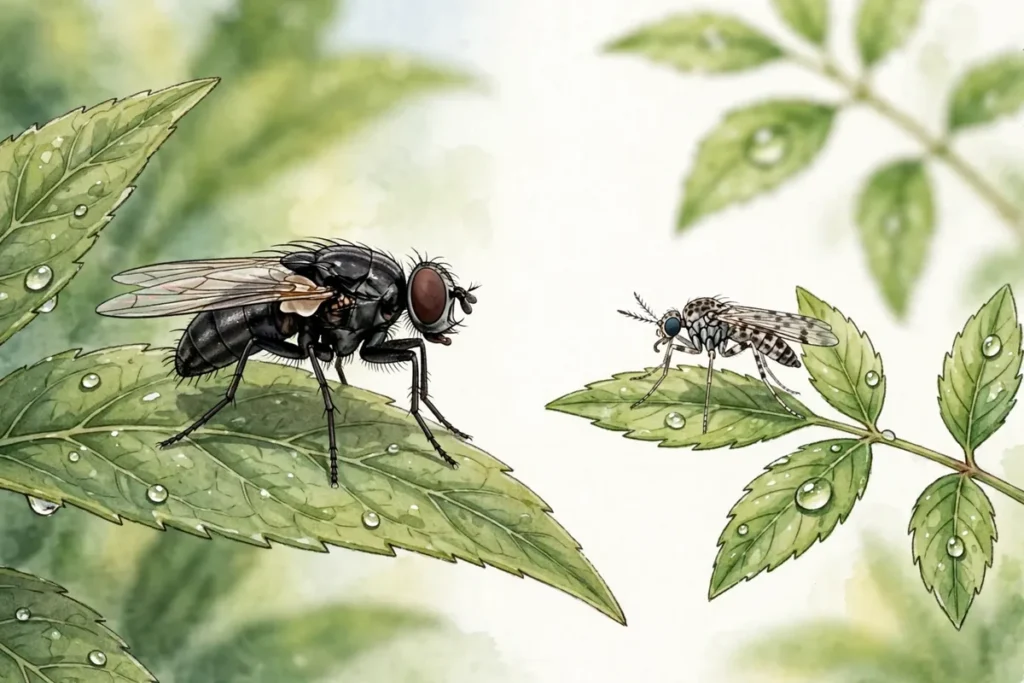
Black flies (family Simuliidae), also called buffalo gnats or turkey gnats, are small, robust, humpbacked flies — rarely more than about 1/8 inch long — that look like a flying comma. No-see-ums are biting midges (family Ceratopogonidae, mostly the genus Culicoides), and they are smaller still: just 1 to 3 millimeters, small enough to pass through ordinary window screens. If you could see the biter clearly and it looked like a tiny fly, it was probably a black fly. If you felt bites but genuinely could not find the insect, you were dealing with no-see-ums — the name is literal.
Only the females bite in both groups; they need a blood meal to develop their eggs. But they hunt in different worlds. Black flies breed exclusively in running water — their larvae develop in oxygenated, flowing streams, creeks, and rivers — so adults stay near moving water. No-see-um larvae develop in moist soil, mud, marshes, and the edges of ponds and coastal wetlands — still, damp environments. If you were hiking along a river at midday, suspect black flies. If you were on a beach or marsh at sunset, suspect no-see-ums. For a deeper look at the midge side of the family, our guide to biting midge bite treatment covers the same insects under their other common name.
One caution: bite appearance alone cannot reliably identify the species — different biters produce similar-looking marks, and individual reactions vary. The comparisons below work best combined with what you saw, where you were, and when the bite happened.
Black Fly Bites: What They Look and Feel Like
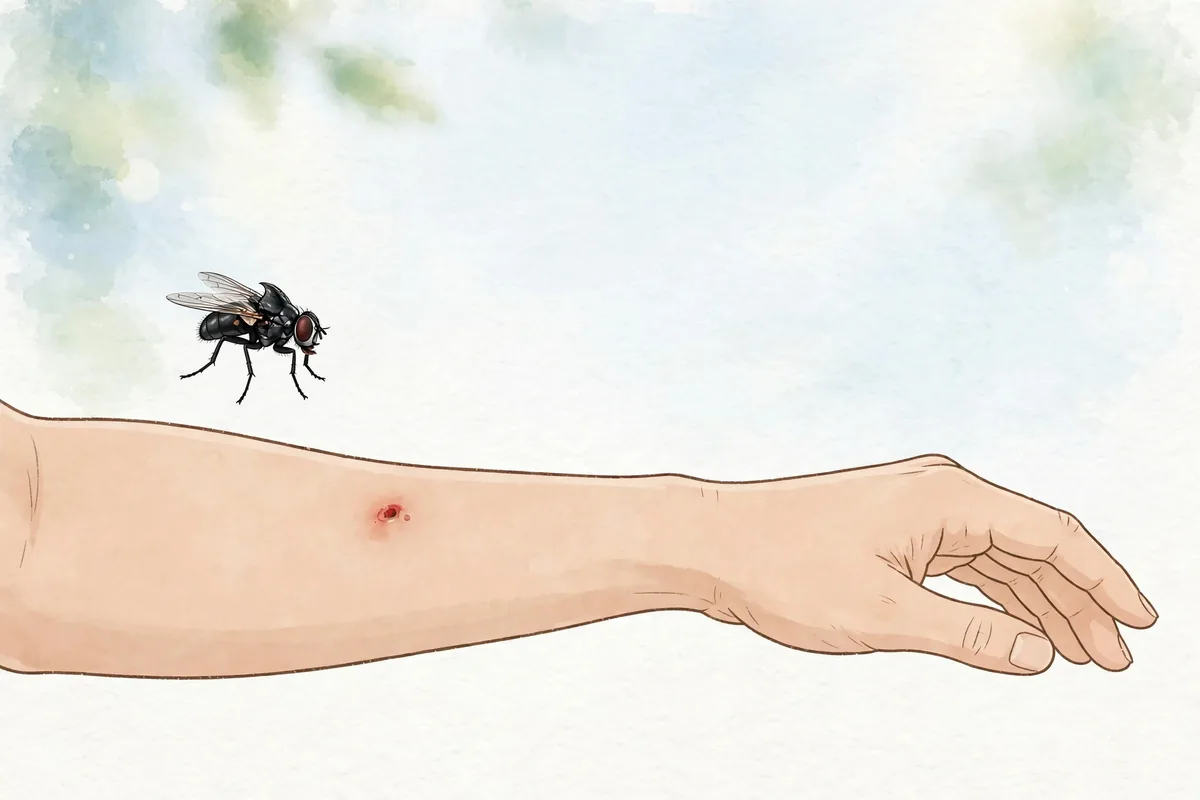
A black fly bite is an event. The female uses blade-like mouthparts to slice a small wound and feed on the pooling blood, and the cut itself is often felt immediately — a sharp pinch out of nowhere, usually around the head, neck, or ears, since black flies tend to swarm faces. The bite leaves a small central puncture wound that can swell dramatically: anything from slight redness to a hard, swollen bump the size of a golf ball in sensitive people.
Reactions are highly individual. Some people get a minor red spot; others develop intense local swelling, and with large numbers of bites a systemic reaction called “black fly fever” can appear — headache, nausea, fever, and swollen neck lymph nodes. Black flies also have an infuriating habit of crawling into ears, noses, and eyes, and they are attracted to dark colors and carbon dioxide. On the reassuring side, black flies are not known to transmit disease to humans in the United States — their menace is misery, not infection. (In parts of Africa and a small remaining focus in Latin America along the Brazil–Venezuela border, related species transmit onchocerciasis, or river blindness, but that does not occur in North America.)
Swelling typically peaks within a day or two and then fades over several days. The central puncture wound is the signature feature that distinguishes a black fly bite from most other insect bites.
No-See-Um Bites: The Itch You Can’t See Coming
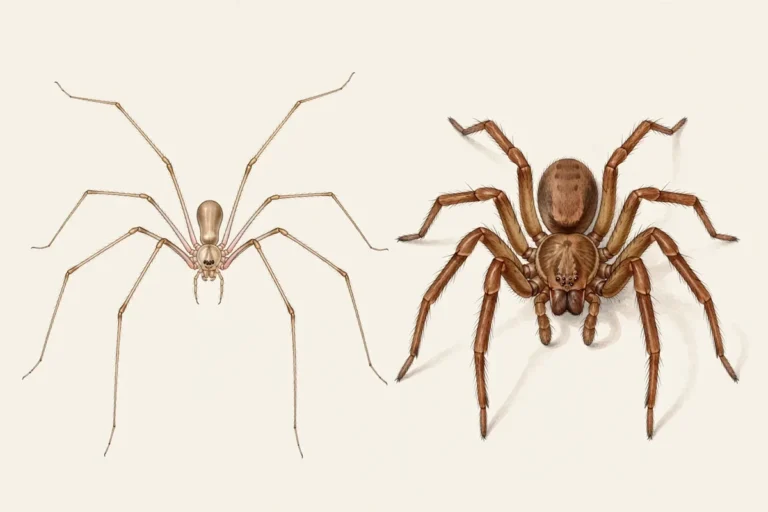
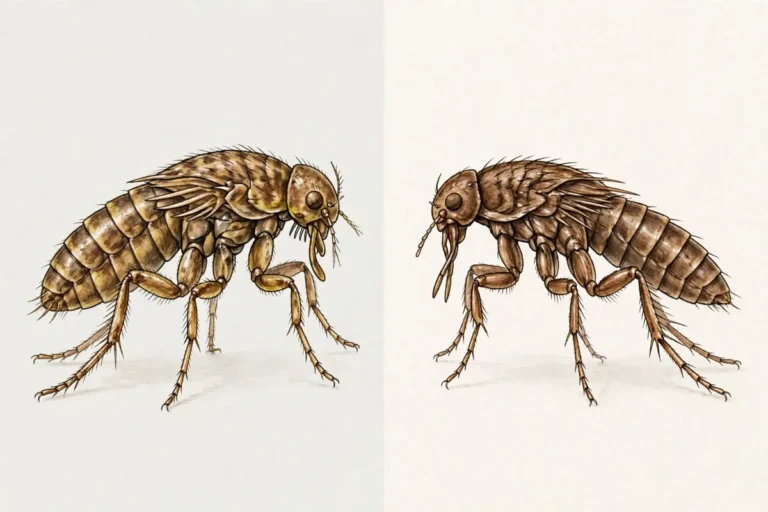
No-see-um bites are defined by frustration: clusters of small red welts, intensely and persistently itchy, often on the legs, ankles, arms, or anywhere skin was exposed at dusk — and no visible culprit. The welts are smaller than black fly bites and usually lack the dramatic central puncture wound. Because the insects are nearly invisible, many people first assume bed bugs, fleas, or an allergic rash.
The itch from no-see-um bites has a reputation for being disproportionate to the bite’s size — a burning, prickling itch that can last for days and tends to worsen at night. Scratching feels irresistible but makes everything worse: broken skin invites secondary infection, and the inflammation spreads. Multiple bites are the norm rather than the exception, because no-see-ums often feed in swarms at dusk, and you may collect dozens of welts in a single evening on the patio.
Like black flies, no-see-ums are not known to transmit disease to people in the United States. In other parts of the world, biting midges can transmit filarial worms that cause skin problems, but that is not a North American concern. Their threat is the same as the black fly’s: relentless itching and the infections that follow scratching. If you work outdoors in buggy country, our outdoor worker insect bite prevention guide covers the daily-defense routine in detail.
Habitat and Timing: Where and When Each Strikes
This is where the two diverge most cleanly, and it is your best diagnostic tool when the bite itself is ambiguous.
Black flies are daytime biters, most active in late morning through the afternoon, with peak season in late spring and early summer in the northern US and Canada — the Adirondacks, Maine, the Upper Midwest, and anywhere near clean running water. They are weak fliers, so they stay close to their breeding streams, and they are drawn to dark clothing and exhaled breath. Wind is your friend: even a light breeze grounds them.
No-see-ums are crepuscular — most active at dawn and dusk — and favor still, damp habitats: coastal marshes, salt marshes, mangrove edges, pond margins, and wet soil. They are infamous along the Gulf Coast, the Southeast, and the Caribbean, but they occur across North America wherever damp soil persists. They are also weak fliers and nearly invisible, which is why an evening on a screened porch can still end in bites: standard window screening does not stop them.
So the field rule: daytime + river or stream = black flies; dusk + marsh, beach, or backyard = no-see-ums. If you were bitten indoors at night with no visible insect, no-see-ums are the far likelier suspect.
First Aid for Both

The first-aid playbook is essentially the same for both bites, and speed matters — the sooner you calm the inflammatory response, the shorter the misery:
- Wash the area with mild soap and water. Do not scrub aggressively, especially around a black fly’s puncture wound.
- Apply a cold compress for about 10 minutes at a time, a few times a day — this is the single most effective step for swelling. Our cold compress guide for bites and stings has the technique dialed in.
- Use an over-the-counter anti-itch cream or oral antihistamine for itching, following the package directions. Creams with soothing ingredients can take the edge off the burn.
- Do not scratch. This is the hardest and most important instruction — scratching a no-see-um welt cluster or a black fly puncture turns a week of itching into a possible infection.
- Watch for infection signs over the next few days: expanding redness, warmth, increasing pain, or pus.
For a structured walkthrough that applies to any bite, keep our bite and sting first-aid checklist handy.
Prevention: What Actually Works
Generic “use bug spray” advice undersells how different these two insects are. Tailor your defense:
Against black flies: Wear light-colored, tightly woven clothing — dark colors attract them — and cover up, especially around the head and neck. A fine-mesh head net is the single best piece of gear for black fly country; it looks silly and works brilliantly. EPA-registered insect repellents containing DEET can help. Avoid infested areas during peak daytime hours, position yourself upwind, and use fans on patios — black flies are weak fliers and cannot fight moving air. Buttoned shirts have gaps they can slip through, so zippered or tight-sealed necklines are better.
Against no-see-ums: Dusk is the danger window, so schedule outdoor time around it. Fine-mesh screens (smaller than standard window screen) on windows and porches actually stop them; ordinary screens do not. Long sleeves and pants at dusk, EPA-registered repellents with DEET or picaridin on exposed skin, and fans all help. Eliminate the damp breeding habitat you control: fix drainage, clear leaf litter from low wet spots, and avoid lingering near marsh edges at sunset.
For both: Never assume one repellent application lasts all evening — reapply per the label, and remember that sweat and water shorten every product’s working time.
When to See a Doctor for a Bug Bite

Neither insect transmits disease in the US, but bites can still go wrong. Seek care if:
- You develop signs of anaphylaxis — trouble breathing, facial or throat swelling, widespread hives, dizziness — call 911 immediately. This is rare with flies but always an emergency.
- You experience black fly fever symptoms (fever, nausea, headache, swollen lymph nodes) that are severe or do not ease within a day or two.
- A bite shows infection signs: expanding redness, red streaks, warmth, increasing pain after 48 hours, or pus. Fly-bite infections can escalate fast — keep our bite and sting first-aid checklist handy and measure worsening bites against its emergency warning signs.
- Bites near the eyes or inside the ears cause significant swelling or vision changes.
- Symptoms have not improved after about two weeks.
Sources and Further Reading
- CDC DPDx – Onchocerciasis (geographic distribution of river blindness): https://www.cdc.gov/dpdx/onchocerciasis/index.html/
- CDC – About Onchocerciasis / Filarial Worms: http://www.cdc.gov/filarial-worms/about/onchocerciasis.html
- University of Florida IFAS – Black Flies, Simulium spp. (biology, running-water larvae, size): https://ask.ifas.ufl.edu/publication/IN157
- Montana State University Extension – Biting Midges/Culicoides (size, dawn/dusk feeding, moist-soil breeding): https://apps.msuextension.org/montguide/guide.html?sku=MT201205AG
Frequently Asked Questions
Why do no-see-um bites itch more at night?
Several things stack up: cortisol, the body’s natural anti-inflammatory, dips in the evening; there are fewer distractions than during the day; and warmth under bedding increases blood flow to the skin. The bites are not actually worse at night — your perception of the itch is. Keeping the room cool and the bites covered can help.
Can black flies bite through clothing?
They can crawl under loose clothing and bite at edges and gaps, and very thin fabrics do not stop them. Tightly woven, light-colored clothing is the best defense; they cannot bite through genuinely tight weaves. Tucking pants into socks and choosing zippered necklines closes the gaps they exploit.
Do no-see-ums bite indoors?
Yes — they are small enough to pass through standard window screens and will follow people inside at dusk. Fine-mesh screening, air conditioning, and fans are the effective indoor defenses. If you wake with clustered itchy welts and no visible insect, no-see-ums that slipped through screens are a prime suspect.
How long do the bites last?
Black fly bites typically peak in swelling within 24 to 48 hours and fade over several days to a week; the puncture mark can linger longer. No-see-um welts usually itch intensely for 2 to 3 days and fade within a week or two if left unscratched. Scratching either type can extend healing and add infection risk.
Are black flies and sand flies the same thing?
No, though the names get mixed up regionally. Black flies (Simuliidae) breed in running water and bite in daytime; sand flies in the US usually means biting midges/no-see-ums or, in travel contexts, phlebotomine flies of the tropics. The prevention differs, which is why the distinction matters.
Medically reviewed by Dr. Sarah Jones, MD.
This article is for informational purposes only and isn’t medical advice. If you’re worried about a bite or sting, talk to a healthcare professional.