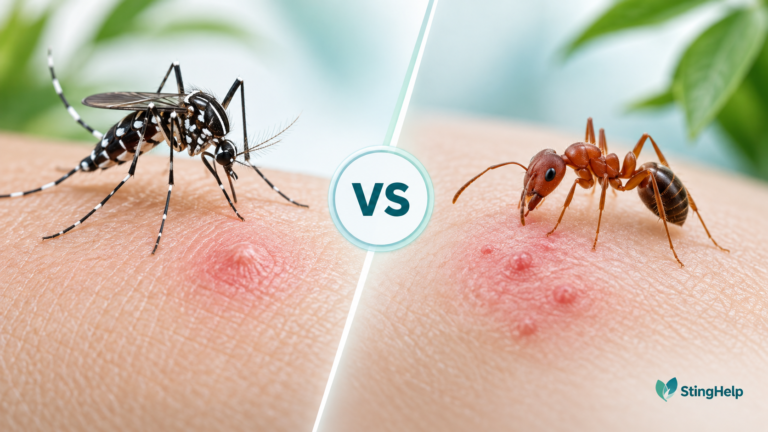
Direct answer: An Asian tiger mosquito bite and a predatory assassin bug bite usually differ most in how the exposure happens. Asian tiger mosquitoes are small, black-and-white mosquitoes that can bite quickly and repeatedly, often producing itchy bumps. Predatory assassin bugs are much larger true bugs that usually bite only when handled, trapped, or pressed against the skin, and their defensive bite can be immediately painful.
People searching for asian tiger mosquito bite vs assassin bug bite treatment differences may also worry about Chagas disease. That concern needs an important correction: ordinary predatory assassin bugs and kissing bugs are related members of the Reduviidae family, but they are not the same exposure. Kissing bugs are blood-feeding triatomine bugs associated with Trypanosoma cruzi, the parasite that causes Chagas disease. Most predatory assassin bugs hunt other insects and do not transmit Chagas disease.
This U.S.-focused guide compares pictures, bite timing, symptoms, first aid, disease context, warning signs, and prevention. It also explains how to avoid the common mistake of labeling every assassin bug as a kissing bug.
Asian tiger mosquito bite vs assassin bug bite: quick comparison
| Clue | Asian tiger mosquito bite | Predatory assassin bug bite |
|---|---|---|
| Typical culprit | Aedes albopictus, a small black-and-white mosquito. | A predatory true bug in the family Reduviidae, such as a wheel bug or other assassin bug. |
| Typical exposure | Quick blood-feeding bites outdoors; one mosquito may attempt to feed more than once. | Usually defensive after the bug is handled, trapped in clothing, or pressed against skin. |
| Pain at the moment | May be mild, prickly, or unnoticed until itching develops. | Often immediately sharp, burning, or distinctly painful. |
| Skin reaction | Itchy red bump, small wheal, or localized swelling. | Localized pain, redness, swelling, burning, and sometimes a larger inflammatory reaction. |
| Activity clue | Asian tiger mosquitoes commonly bite during the day and can also be active around dawn/dusk. | Predatory assassin bugs are encountered on vegetation, around lights, in gardens, or where insect prey is present. |
| Main medical context | Can transmit dengue, Zika, and chikungunya when infected; actual local risk varies. | Most predatory assassin bugs are not established human disease vectors; the main concern is a painful defensive bite. |
| Chagas disease? | No. | Ordinary predatory assassin bugs are not the Chagas vector. Kissing bugs (triatomines), a distinct blood-feeding subgroup, are the relevant vectors. |
What does an Asian tiger mosquito look like?
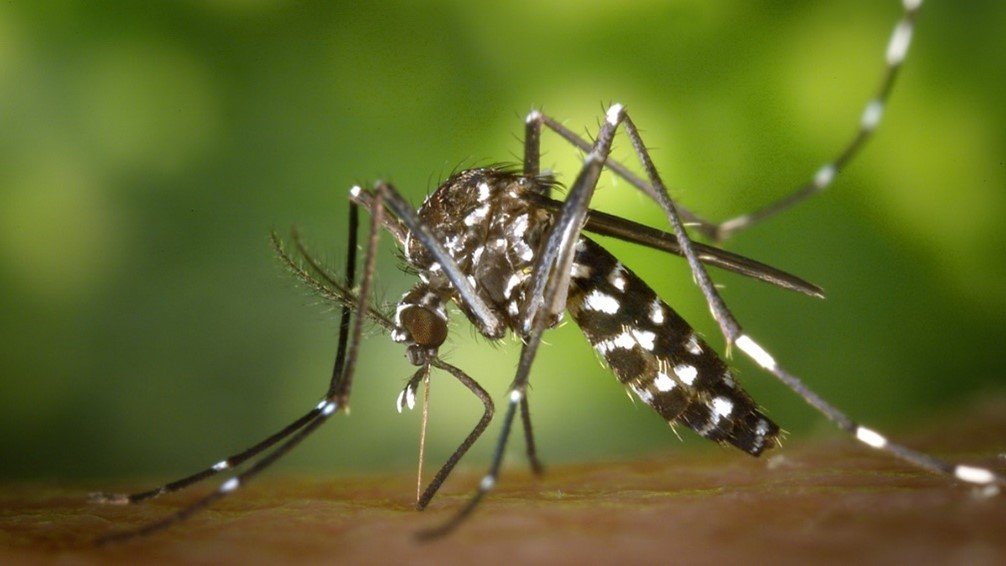
The Asian tiger mosquito is named for its contrasting black-and-white appearance. CDC describes Aedes albopictus as black with white bands on the legs and white markings on the body. It is smaller and more delicate than an assassin bug and has the familiar narrow mosquito body, long legs, wings, and a slender proboscis used for blood feeding.
CDC range information shows that Aedes albopictus can live in tropical, subtropical, and temperate climates and can tolerate cooler conditions than Aedes aegypti. Estimated range maps describe where the mosquito could survive and reproduce; they do not prove that infected mosquitoes are present in every shaded county.
Asian tiger mosquitoes feed on animals as well as people. That feeding behavior is one reason CDC notes that they are generally less efficient than Aedes aegypti at spreading viruses such as dengue, Zika, and chikungunya, although they are still capable vectors.
What does an Asian tiger mosquito bite feel like?
The bite may feel like a small prick, or it may not be noticed until an itchy bump develops. Some people react with only a small red spot, while others develop a larger itchy wheal or local swelling. Repeated scratching can make the reaction look more severe and can damage the skin.
Multiple itchy bumps can develop when several mosquitoes are present or when a mosquito makes repeated feeding attempts. Bite location is often on exposed skin such as the lower legs, ankles, arms, or other uncovered areas.
What is an assassin bug?
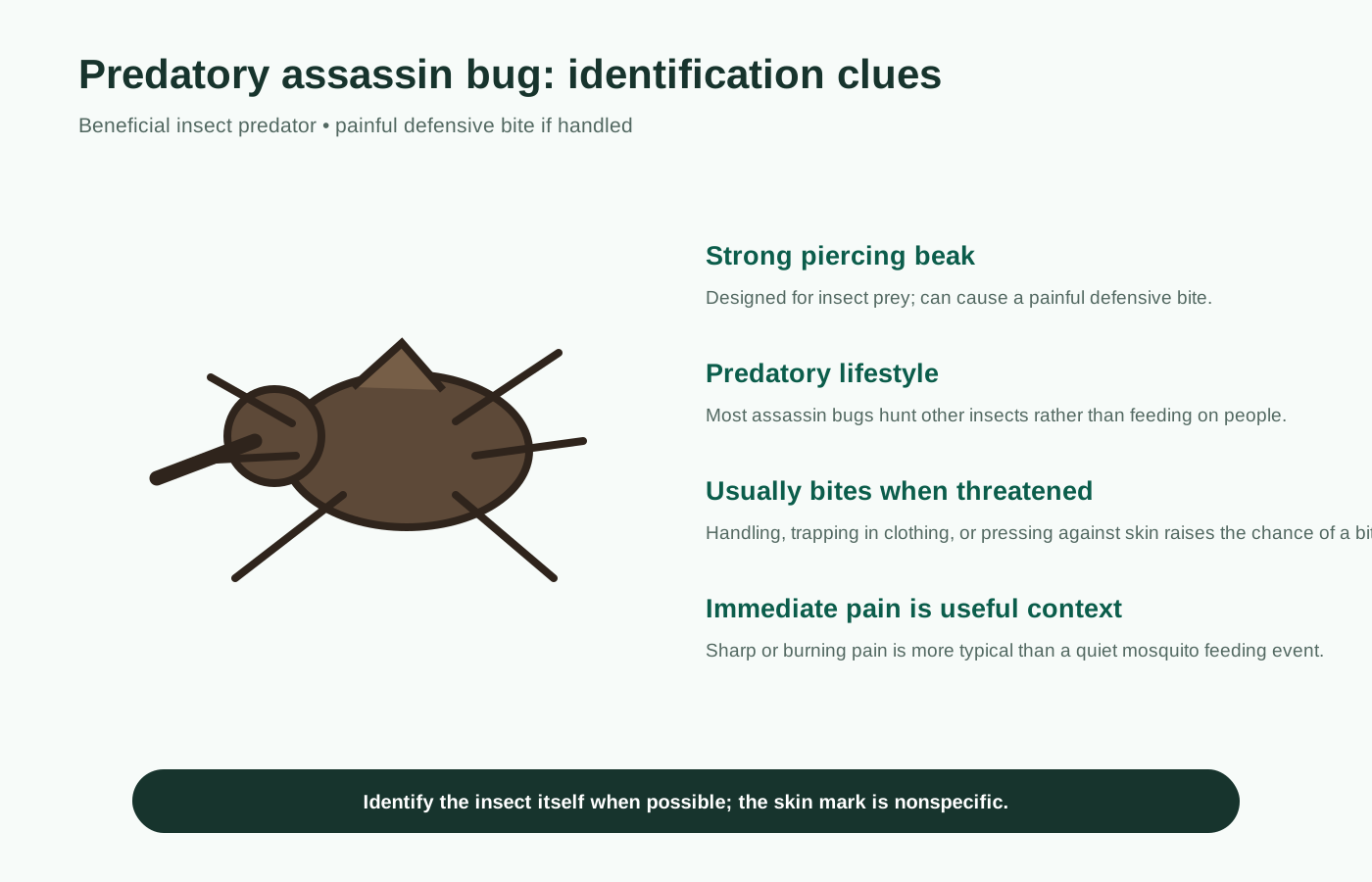
“Assassin bug” is a broad common name for predatory insects in the family Reduviidae. Many species are beneficial predators that feed on caterpillars, beetles, aphids, and other insects. They use a strong piercing-sucking beak to inject saliva into prey and consume liquefied tissues.
Assassin bugs are true bugs with six legs, folded wings in adults, a distinct head, and a strong beak or rostrum tucked beneath the body when not feeding. Depending on the species, they may be brown, gray, black, orange, or patterned. Wheel bugs are a familiar U.S. example and have a distinctive gear-like crest on the thorax.
University extension guidance emphasizes that predatory assassin bugs are generally beneficial and do not seek people as a food source. However, larger species can bite defensively if handled or trapped against the skin.
What does an assassin bug bite feel like?
A predatory assassin bug bite can be immediately painful because the insect uses strong mouthparts designed to pierce prey. People may describe sharp pain, burning, redness, swelling, or tenderness around the bite.
The reaction can look dramatic compared with the small size of the puncture. Local swelling or itching may persist for hours or days. Severe or progressive symptoms are less typical and should prompt medical evaluation rather than assuming every reaction is a routine assassin bug bite.
Critical distinction: assassin bugs are not automatically kissing bugs
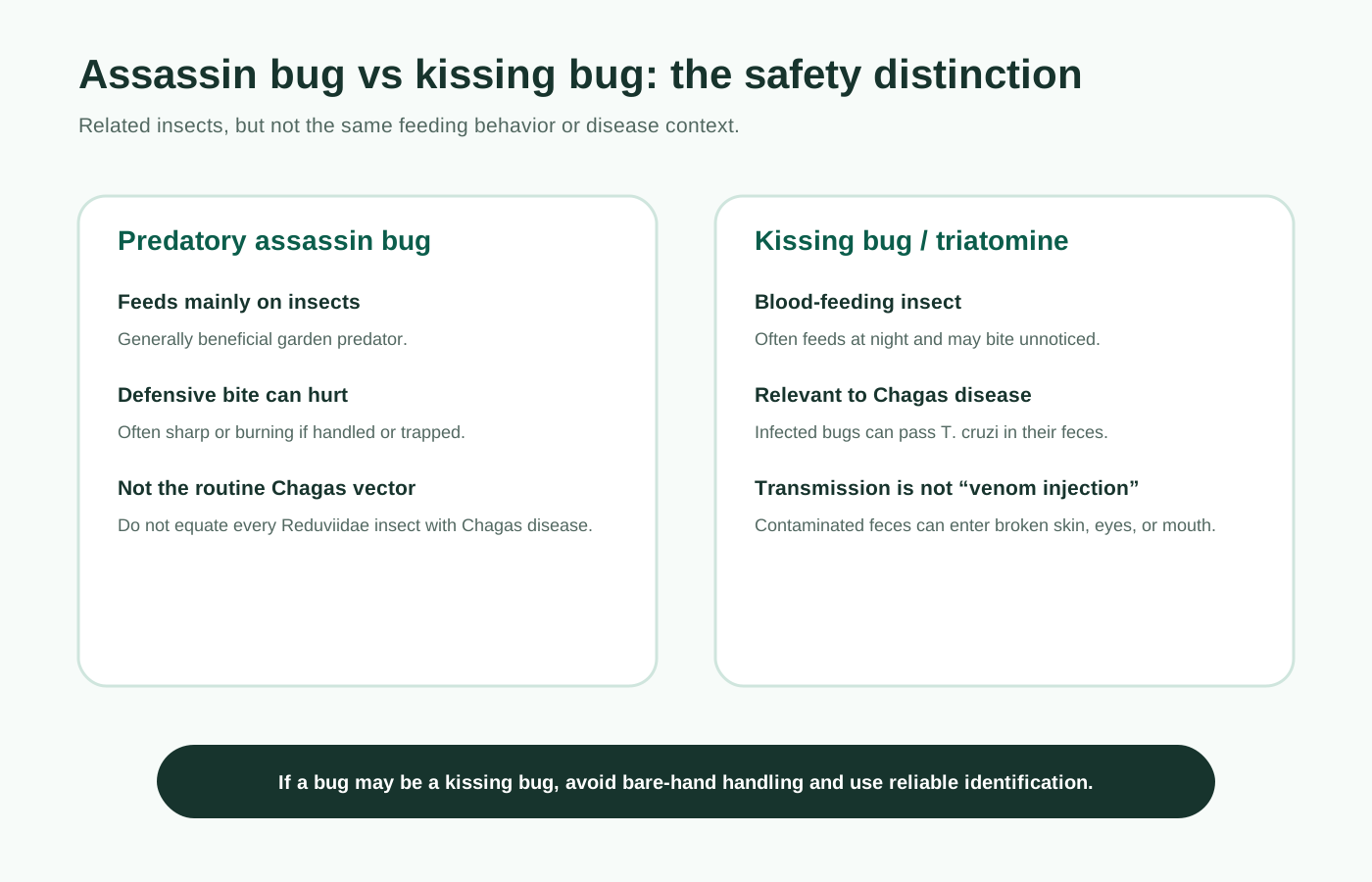
This is the most important safety distinction in the comparison. Kissing bugs are members of the triatomine subfamily within the same broader Reduviidae family, but their biology is different from that of ordinary predatory assassin bugs.
Kissing bugs feed on blood from mammals, including people, and are often active at night. Texas A&M notes that their bites are commonly painless while feeding. Predatory assassin bugs feed mainly on other insects and are more likely to bite a person only in self-defense, producing an immediately painful bite.
Texas A&M also emphasizes that only kissing bugs are known to transmit the parasite that causes Chagas disease. Other reduviids may look similar, and their strong mouthparts can cause painful bites, but finding a wheel bug or another predatory assassin bug does not mean a person was exposed to Chagas disease.
How Chagas disease is actually transmitted
CDC explains that Chagas disease is caused by Trypanosoma cruzi. In the vector-borne route, infected triatomine or kissing bugs can pass the parasite in their feces after feeding. Infection can occur when contaminated feces are rubbed or scratched into the bite wound, an open cut, the eyes, or the mouth.
The parasite is not simply injected into the skin by an ordinary assassin bug’s defensive bite. This is why “assassin bug bite equals Chagas disease” is an inaccurate shortcut.
If a suspected kissing bug is found, avoid handling it with bare hands. Photograph or contain it safely if local public-health or university identification resources are available. Identification of the actual insect is much more useful than trying to diagnose the species from the skin lesion.
Pictures: why the insects are easier to compare than the bite marks
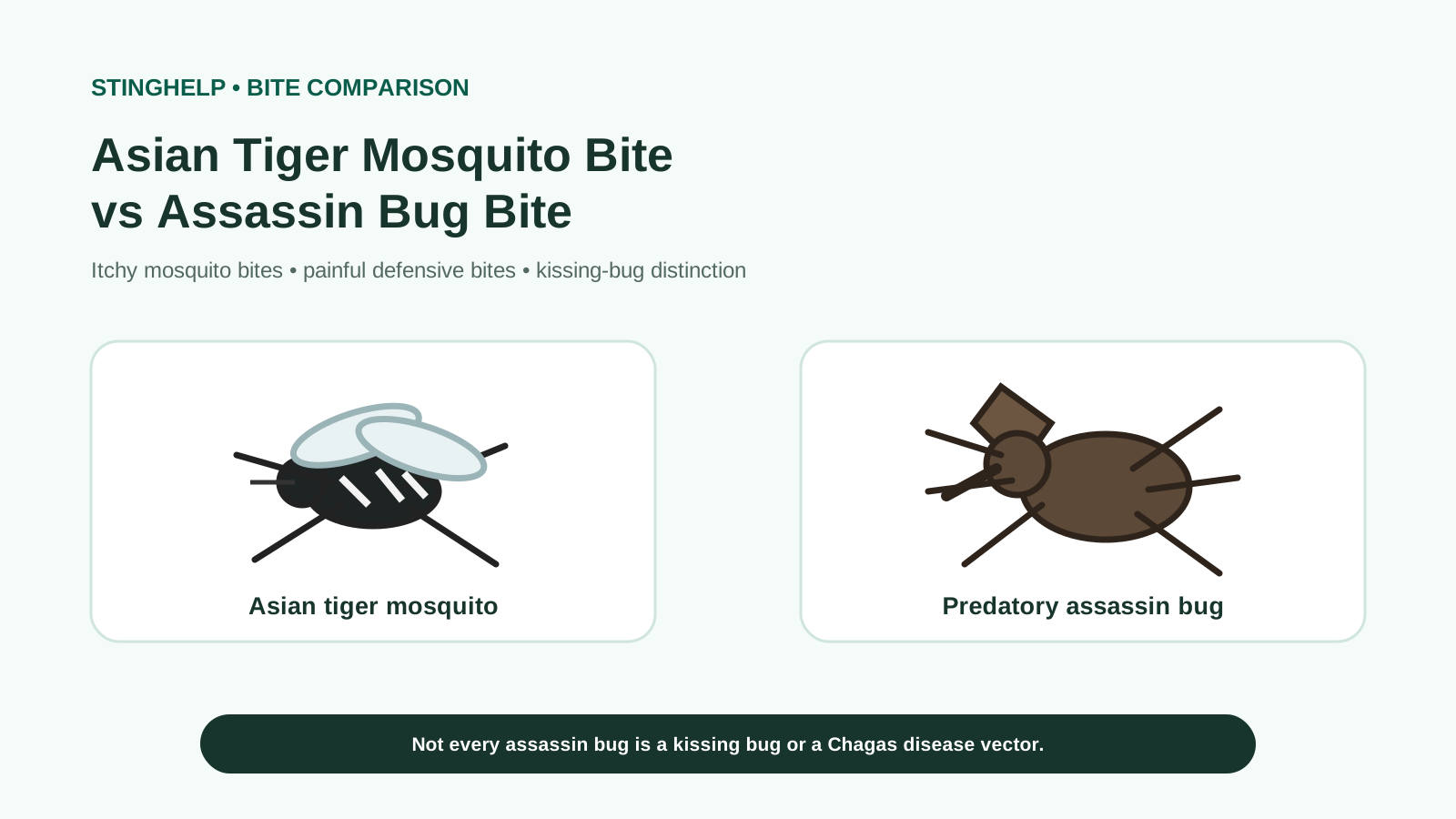
Asian tiger mosquitoes and assassin bugs are dramatically different in size and body shape. An Asian tiger mosquito is small, slender, winged, long-legged, and black-and-white. A predatory assassin bug is a larger true bug with a more robust body, six legs, and a strong piercing beak.
The skin reactions are less distinctive. Both exposures can produce redness, localized swelling, itching, tenderness, or a central puncture. Scratching and individual immune response can change the appearance further.
For asian tiger mosquito bite vs assassin bug bite pictures, prioritize photographs of the culprit. A clear mosquito photo can show the white leg bands and body markings. A clear assassin bug image can show the larger true-bug shape and rostrum. Skin photos alone rarely prove which insect was involved.
The biggest treatment difference: mild itch care vs a painful defensive bite
First aid for a typical Asian tiger mosquito bite
- Wash the skin gently with soap and water.
- Use a cool compress for bothersome swelling.
- Avoid scratching; broken skin can increase the chance of secondary infection.
- Use appropriate over-the-counter itch relief only when safe for the person and according to label directions.
- Monitor for unusual swelling, infection signs, fever, or systemic illness.
Most uncomplicated mosquito bites improve with basic local care. A large local reaction can be uncomfortable but is different from a mosquito-borne viral illness.
First aid for a predatory assassin bug bite
- Move away from or safely release the insect to prevent another defensive bite.
- Wash the area with soap and water.
- Apply a wrapped cold pack or cool compress for pain and swelling.
- Avoid squeezing, cutting, suction, or harsh chemicals.
- Monitor the site for worsening swelling, increasing pain, blistering, drainage, or infection.
- Seek medical advice if the reaction is severe, progressive, or associated with whole-body symptoms.
Do not handle an unidentified reduviid with bare hands simply to obtain a better photograph. A safe image from a distance is preferable.
Disease risk after an Asian tiger mosquito bite
CDC identifies Aedes albopictus as capable of spreading dengue, Zika, and chikungunya. Transmission requires an infected mosquito; the presence of Asian tiger mosquitoes in an area does not mean every bite carries disease.
For chikungunya, CDC states that both Aedes aegypti and Aedes albopictus can transmit the virus. Symptoms commonly include fever and joint pain, with possible headache, muscle pain, joint swelling, and rash.
Dengue and Zika risks also depend on local or travel-related transmission. If fever, severe headache, marked joint pain, rash, unusual bleeding, neurologic symptoms, or significant systemic illness develops after mosquito exposure—especially after travel to an area with active mosquito-borne disease—contact a healthcare professional and provide the travel and exposure history.
Does a predatory assassin bug transmit disease?
For most ordinary U.S. predatory assassin bugs, the practical concern is a painful defensive bite rather than a recognized human vector-borne disease. University extension sources describe these insects as predators of other insects and beneficial members of the ecosystem.
The Chagas disease concern belongs to triatomine or kissing bugs, not to every member of the assassin bug family. If the insect has the appearance or behavior of a kissing bug—especially a nocturnal blood-feeding bug found around sleeping areas, animal nests, wood piles, or kennels—seek reliable identification rather than assuming it is a harmless predator.
Original decision guide: which clues matter most?
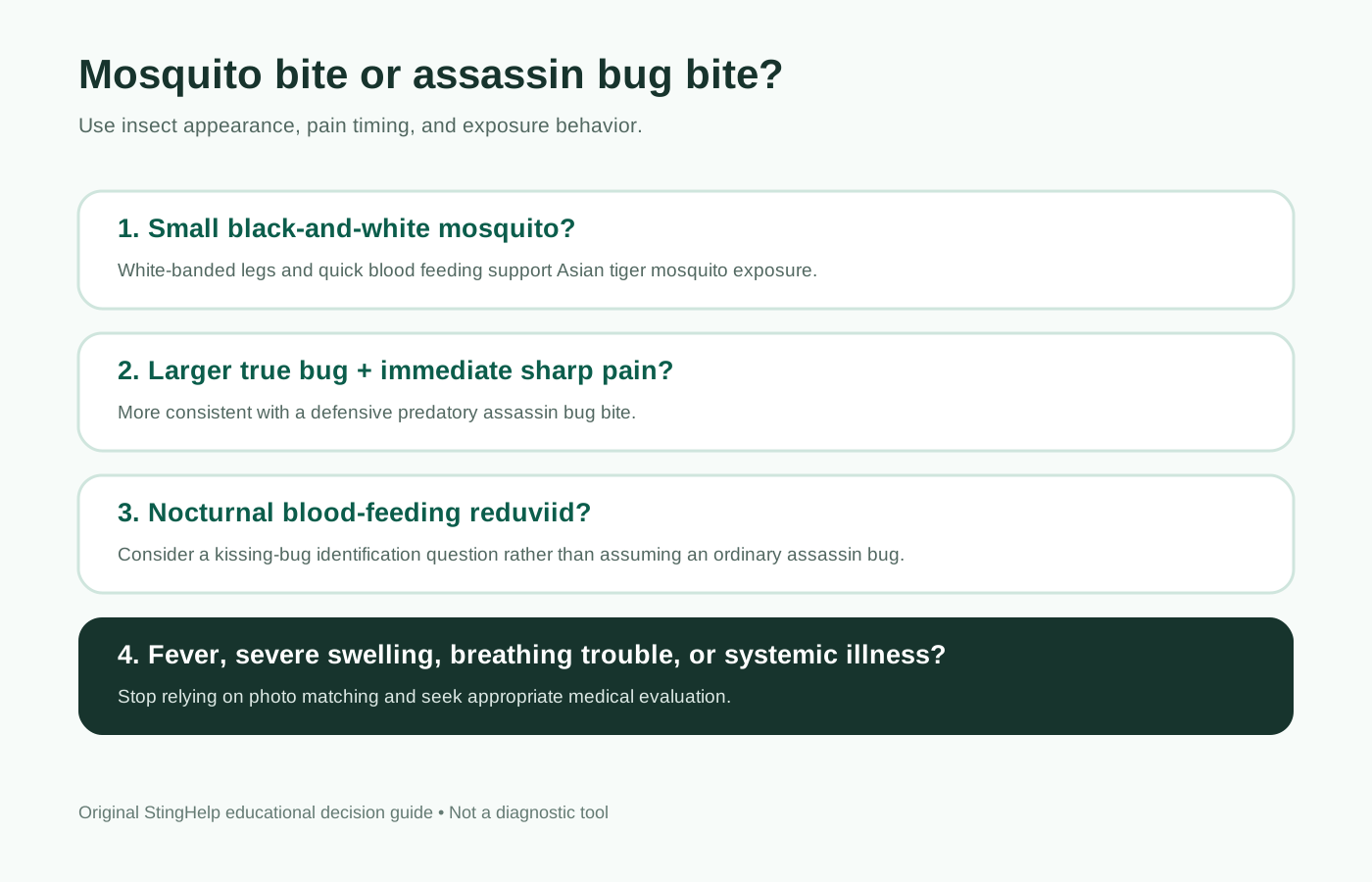
| Question | More consistent with Asian tiger mosquito | More consistent with predatory assassin bug |
|---|---|---|
| Was the insect small, slender, and black with white leg bands? | Strong Asian tiger mosquito clue. | No. |
| Were there several quick itchy bites on exposed skin? | Common mosquito pattern. | Less typical. |
| Was a larger true bug trapped against skin or handled? | No. | Strong defensive assassin-bug scenario. |
| Was the bite immediately sharp or burning? | Possible, but often mild. | Common with predatory assassin bugs. |
| Was the bug feeding painlessly at night like a blood-feeding reduviid? | No. | Raises a kissing-bug question rather than an ordinary predatory assassin-bug question. |
| Is the only evidence a red bump? | Insufficient. | Insufficient. |
When should you seek medical care?
Seek medical evaluation when symptoms are severe, unusual, progressive, or systemic. After mosquito exposure, fever, significant joint pain, rash, neurologic symptoms, unusual bleeding, or illness following travel to an outbreak area deserves attention.
After a suspected assassin bug bite, seek care for severe pain that does not improve, major swelling, progressive blistering or tissue injury, spreading redness, drainage, fever, or significant whole-body symptoms.
Call emergency services for trouble breathing, swelling of the tongue or throat, fainting, collapse, severe confusion, seizure, or another rapidly progressive life-threatening reaction after any arthropod exposure.
How to prevent Asian tiger mosquito bites
CDC recommends EPA-registered insect repellents, loose long-sleeved clothing and pants, intact window and door screens, and removal of standing water where Aedes mosquitoes lay eggs.
Check buckets, plant saucers, toys, tarps, gutters, birdbaths, discarded containers, and other items that can hold water. Asian tiger mosquitoes can use small water-filled containers around homes and yards.
Because Aedes mosquitoes can bite during daylight hours, prevention should not be limited to nighttime.
How to reduce assassin bug bites
Avoid handling assassin bugs with bare hands. Wear gloves when gardening, moving brush, handling firewood, or working around vegetation where predatory bugs and their prey may be present.
Shake out gloves, shoes, outdoor clothing, and stored materials before use. Seal obvious gaps around windows and doors if bugs repeatedly enter the home, and reduce unnecessary outdoor lighting that attracts insects near entrances.
If a bug may be a kissing bug rather than a predatory assassin bug, do not crush it with bare hands. Use a container, glove, or bag for safe collection if an identification program recommends specimen submission.
Frequently asked questions
Can assassin bugs transmit Chagas disease?
Most predatory assassin bugs do not transmit Chagas disease. The relevant vectors are triatomine or kissing bugs, a blood-feeding subgroup within the Reduviidae family.
Is Chagas disease injected through a kissing bug bite?
Not in the usual vector-borne route. CDC explains that infected kissing bugs can pass T. cruzi in their feces, and infection can occur when contaminated feces enter broken skin, the eyes, or the mouth.
Are Asian tiger mosquito bites dangerous?
Most bites cause only local itching and swelling. However, infected Asian tiger mosquitoes can transmit viruses including dengue, Zika, and chikungunya, so disease risk depends on location, travel, and active transmission.
Which bite hurts more immediately?
A predatory assassin bug bite is more likely to cause sudden sharp or burning pain. An Asian tiger mosquito bite may be mild at first and become more noticeable as itching develops.
How can I tell a kissing bug from another assassin bug?
Use the actual insect, not the skin lesion. Kissing bugs are blood feeders with characteristic body shape and edge markings, while many ordinary assassin bugs are insect predators. Reliable extension or public-health identification resources are preferable to guessing from a photo.
Should I capture an unidentified assassin bug?
Only if it can be done safely. Do not handle it with bare hands. A clear photograph may be enough for an identification service; if a specimen is requested, use a secure container or bag and follow local guidance.
Related StingHelp guides
- Mosquito Bites: Symptoms, Warning Signs & Prevention
- What Bit Me? Identification Guide
- First Aid for Bites and Stings
- Emergency & Warning Signs
- Bite and Sting Prevention
- Browse All StingHelp Guides
Authoritative references
- CDC — Potential Range of Aedes Mosquitoes
- CDC — Aedes albopictus / Asian Tiger Mosquito
- CDC — Chikungunya Causes and Spread
- CDC — How Chagas Disease Spreads
- Texas A&M — Kissing Bugs, Assassin Bugs and Chagas FAQ
Bottom line
The practical asian tiger mosquito bite vs assassin bug bite treatment differences begin with the exposure itself. Asian tiger mosquitoes produce quick blood-feeding bites that commonly become itchy; ordinary predatory assassin bugs usually bite defensively and can cause immediate sharp pain. Do not assume every assassin bug is a kissing bug or a Chagas disease vector. Use the actual insect, symptom progression, and reliable identification resources to guide the next step.
Educational information for a U.S.-focused audience. This article does not diagnose an insect species, mosquito-borne illness, Chagas disease, infection, allergy, or other condition from a photograph and does not replace professional medical care.