
Does a Hot Dryer Kill Ticks on Clothes?
You come home from a hike through tall grass, peel off your clothes, and wonder: did any ticks hitch a ride inside on fabric?…
A red, expanding circle spreads across the skin a few days after a hike through tall grass. Many people see that shape and immediately think of one thing: Lyme disease.…
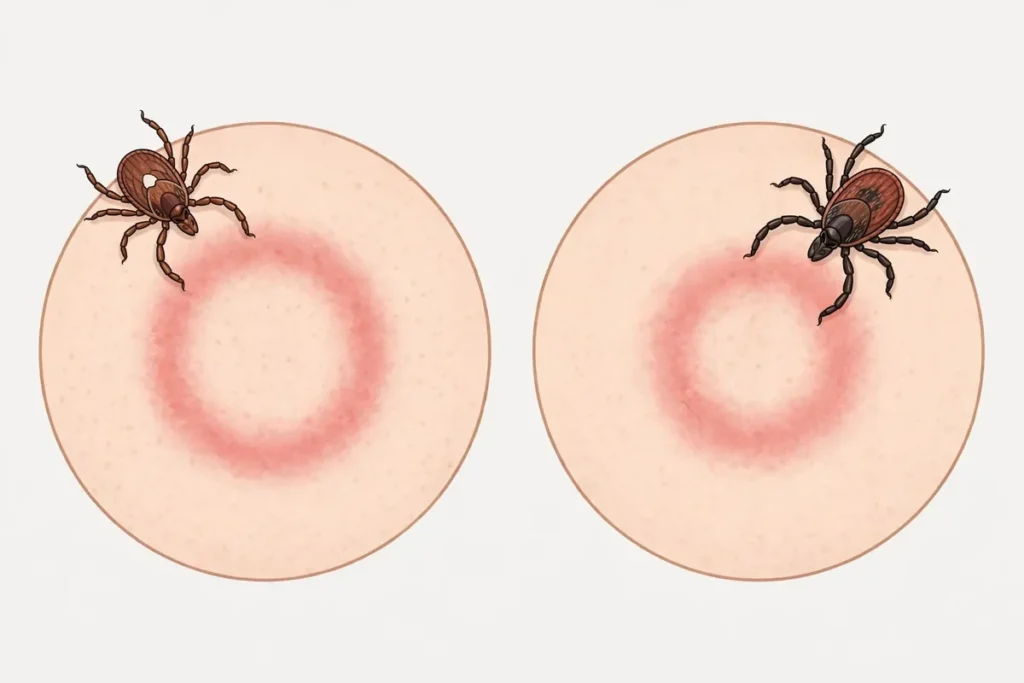
A red, expanding circle spreads across the skin a few days after a hike through tall grass. Many people see that shape and immediately think of one thing: Lyme disease. But there is a lesser-known condition that can produce an almost identical mark, and confusing the two can send a person down the wrong medical path. That condition is called STARI, short for southern tick-associated rash illness, and the STARI rash vs Lyme disease rash question is becoming more common every year.
This article walks through how the two rashes compare, which tick is behind each, why geography and testing matter, and what to do after any expanding tick-bite rash. Nothing here substitutes for a clinician’s evaluation; an expanding rash after a tick bite always deserves prompt medical attention. But understanding the differences helps patients ask better questions and avoid the twin errors of assuming a bullseye always means Lyme or assuming a negative Lyme test always means nothing happened.
STARI stands for southern tick-associated rash illness. It follows the bite of the lone star tick (Amblyomma americanum), an aggressive tick common across the Southeast and increasingly reported farther north. Days after the bite, an expanding red rash can appear that looks remarkably like the erythema migrans rash of Lyme disease, the classic bullseye, sometimes with fatigue, headache, muscle aches, or mild fever.
Here is what makes STARI tricky: the cause has never been confirmed. A bacterium called Borrelia lonestari has been found in lone star ticks and was once proposed as the culprit, but researchers have not established it as the definitive cause of the illness. What research has shown is that STARI is not caused by the Lyme disease bacterium, and the lone star tick is not considered a competent transmitter of Lyme disease. STARI also has not been linked to the arthritis, neurologic, or heart complications that untreated Lyme can cause, and it appears to be a milder illness that resolves without those chronic sequelae.
Because the condition is not nationally reportable and is often presumed to be Lyme, its true incidence is unknown. A 2026 research letter in the CDC journal Emerging Infectious Diseases described STARI cases as far north as Long Island, New York, noting that as lone star tick populations increased there, the proportion of bullseye lesions caused by Lyme disease actually decreased, likely because more of them were STARI.
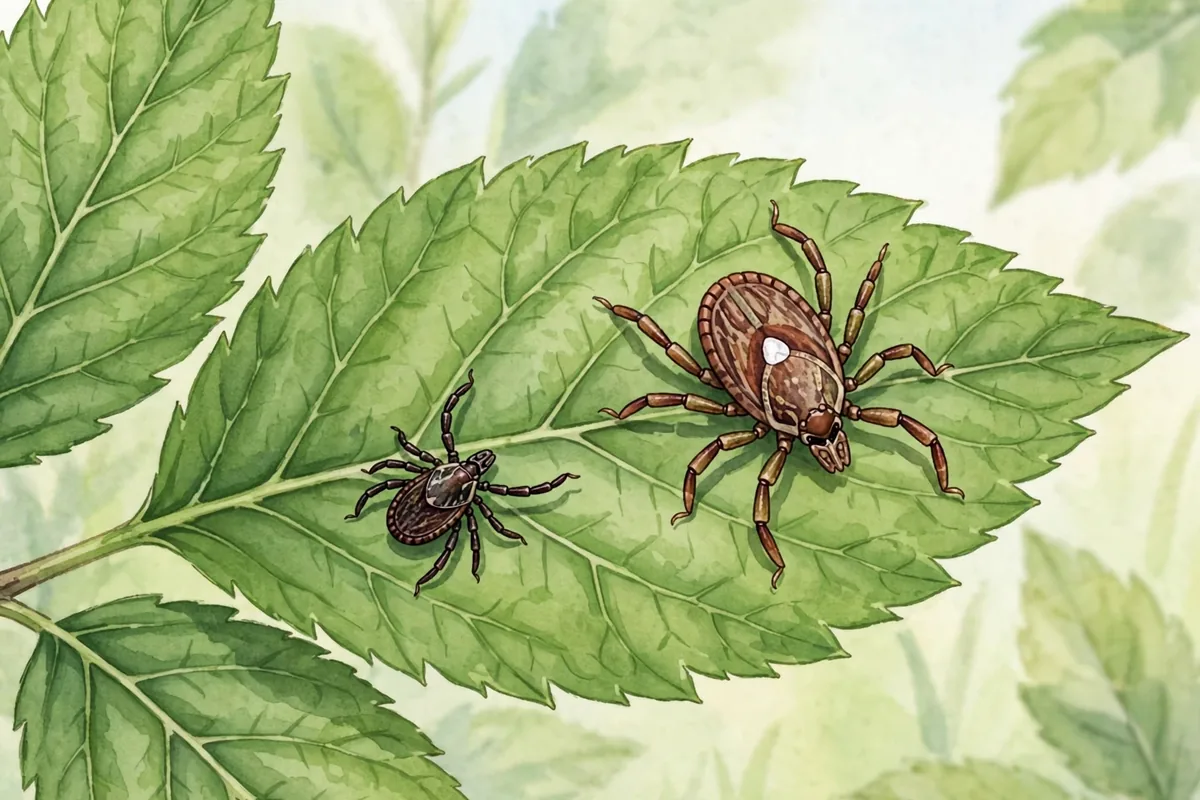
The lone star tick is an aggressive, fast-moving tick that will actively crawl toward a host rather than waiting passively. Adult females carry a distinctive single white dot on their back, which is where the name comes from; adult males have white streaks along the rear edge. All three active life stages, larva, nymph, and adult, can bite people, and the tiny nymphs (sometimes called “seed ticks”) are easy to miss.
This species is expanding its range northward, which is why STARI is now diagnosed in places like southern New England and Long Island. The same tick also transmits ehrlichiosis and is associated with alpha-gal syndrome, the red-meat allergy triggered by tick bites. Our guide to alpha-gal syndrome explains that related risk.
Lyme disease is transmitted by blacklegged ticks, often called deer ticks. These ticks are much smaller than lone star ticks, nymphs are about the size of a poppy seed, and they tend to wait on vegetation for a host to brush past rather than actively hunting. Adult females have a dark black shield on the back with a reddish-brown body behind it, but no white dot.
Knowing which tick bit you is the single most useful clue in the STARI rash vs Lyme disease rash comparison. If possible, save the tick in a small container or take a clear photo before removing it safely; identification by a professional can guide everything that follows. Our step-by-step guide to removing an attached tick safely shows how to do this without squeezing the tick’s body.
The two rashes can look similar, sometimes identical. The tick species, the geographic setting, and the bite circumstances therefore carry more diagnostic weight than the visual appearance alone. A bullseye in the Deep South after a confirmed lone star tick bite is statistically more likely to be STARI, while a bullseye in a New England county with heavy deer-tick activity leans toward Lyme. Travel history matters too: a rash that appears after a trip to a Lyme-endemic region changes the odds regardless of where the person lives now.
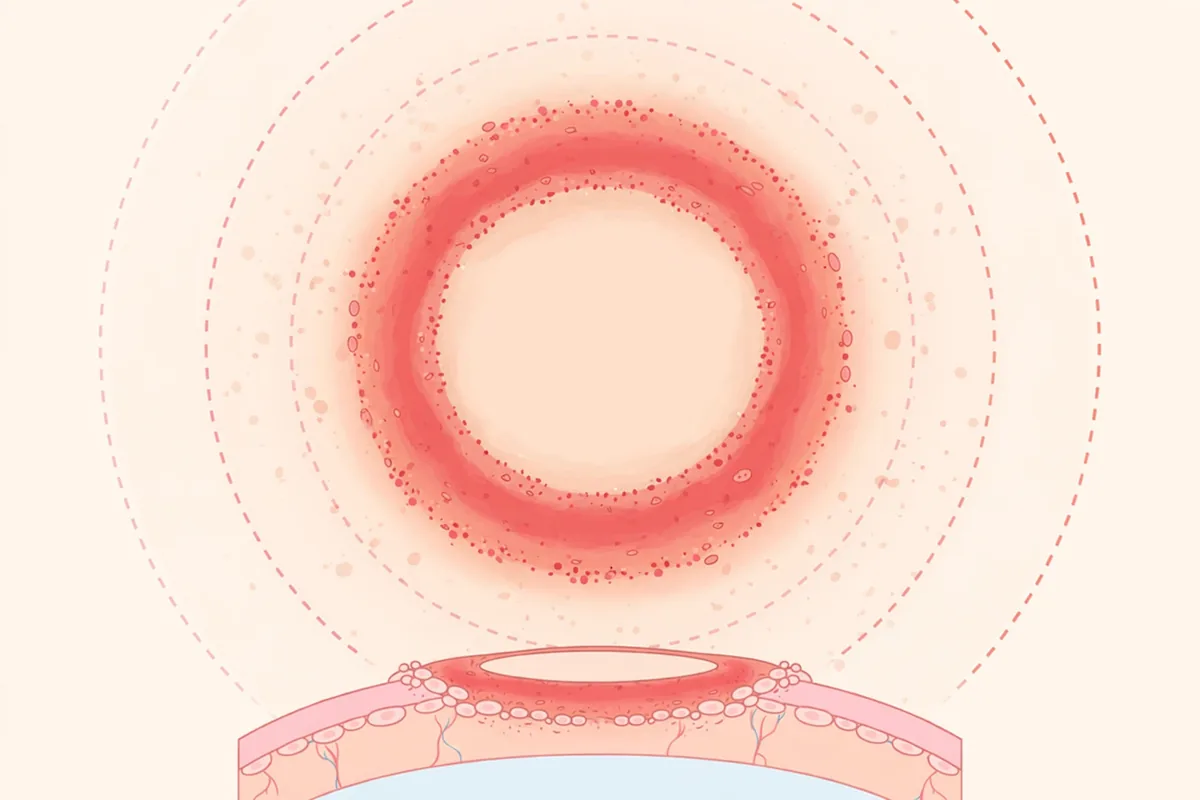
The STARI rash typically appears within days of the bite and expands over time, sometimes reaching several inches across. It may show central clearing, giving the familiar bullseye appearance, though not every STARI lesion does. Studies of patients with lone-star-tick-associated annular rashes have found a typical lesion measuring around 8 centimeters across a few days after onset, with mild constitutional symptoms common but fever uncommon. Multiple lesions are less common in STARI than in disseminated Lyme disease.
The classic Lyme erythema migrans rash also appears days after the bite (typically 3 to 30 days) and expands gradually, sometimes exceeding 30 centimeters. It is usually painless, though some people report mild itching or burning. Central clearing creates the bullseye, but many Lyme rashes are uniformly red or have irregular borders without any clearing at all. Lyme can produce multiple lesions when the infection disseminates through the bloodstream, a pattern reported less often with STARI.
Appearance alone cannot distinguish the two with confidence. Even experienced clinicians have noted that lone-star-tick-associated rashes are similar, if not identical, to erythema migrans. That is why the rash is only one piece of the puzzle. The tick species, geography, timing, symptoms, and laboratory results must be weighed together, and this is work for a clinician, not a visual self-diagnosis. Anyone comparing their own rash to photos online should understand that both conditions belong on the differential list for any expanding tick-bite rash.
STARI tends to be the milder of the two. People often report fatigue, headache, muscle aches, and sometimes mild fever alongside the rash. Research comparing STARI-like cases with Lyme patients found that the STARI group had fewer associated symptoms overall and a shorter interval between the tick bite and the rash appearing. The key distinguishing feature is what does not happen afterward: STARI has not been linked to the later complications of untreated Lyme.
Lyme disease can begin similarly, fatigue, headache, fever, muscle and joint aches, but its potential course is more serious. If untreated, Lyme can go on to cause joint pain and swelling (especially the knees), facial palsy, nerve pain or numbness, heart rhythm disturbances (Lyme carditis), and cognitive symptoms such as difficulty concentrating. Early treatment dramatically reduces these risks, which is one reason clinicians treat a convincing erythema migrans rash on sight, often without waiting for test results.
Timing can offer hints. STARI rashes tend to appear sooner after the bite than Lyme rashes, which more often show up one to four weeks later. But these are tendencies, not rules. The overlap in early symptoms is exactly why both conditions are managed with prompt evaluation rather than watchful waiting when an expanding rash is present.
This is where the STARI rash vs Lyme disease rash comparison has its most practical consequences.
Lyme disease can be diagnosed with antibody testing, though testing has poor sensitivity in the first days of illness, antibodies take weeks to develop. In practice, a textbook erythema migrans rash in an endemic area is enough for a clinician to diagnose Lyme clinically and start treatment without waiting for blood work. Later in the illness, standard two-tiered serologic testing supports the diagnosis.
Because STARI is not caused by the Lyme bacterium, Lyme antibody tests are negative in STARI. This creates a confusing scenario: a person develops a convincing bullseye rash, gets tested, and the result comes back negative. That negative result rules nothing out by itself, in early Lyme, tests are often negative too, and in STARI, they will always be negative. Only a clinician weighing the tick species, geography, and clinical picture can sort this out.
There is no single test that diagnoses STARI; it is a clinical diagnosis made by excluding Lyme and other causes in a patient with a lone-star-tick exposure and a compatible rash. Clinicians consider the tick’s identity, the region where the bite occurred, travel history, the rash’s evolution, and laboratory results together. This is also why saving the tick matters so much: a confirmed lone star tick at the rash site is the strongest evidence pointing toward STARI rather than Lyme.
Patients with STARI-like rashes are typically treated with a course of oral antibiotics, commonly doxycycline, as a precaution, partly because Lyme cannot always be excluded on the spot. The evidence on whether antibiotics change the course of STARI is limited, and the illness generally resolves without the late complications of Lyme. Treatment decisions, including whether antibiotics are appropriate and which one, belong entirely to the prescribing clinician; never start or stop antibiotics based on internet reading.
Lyme disease is treated with a standard course of oral antibiotics when caught early, and most people recover completely. Later-stage Lyme may require longer courses or, in some cases, intravenous antibiotics. Early treatment is the single biggest factor in a good outcome, which is why clinicians err on the side of treating a suspicious rash promptly.
The practical bottom line: STARI is considered a milder, self-limited illness with no known chronic sequelae, while untreated Lyme can cause serious late complications. Paradoxically, the milder condition is harder to confirm: there is no test to prove STARI, while Lyme is a well-characterized disease with established testing and treatment protocols. Either way, the action is the same: get evaluated promptly and follow the clinician’s plan.
| Feature | STARI Rash | Lyme Disease Rash (Erythema Migrans) |
|---|---|---|
| Tick species | Lone star tick (Amblyomma americanum) | Blacklegged/deer tick (Ixodes scapularis) |
| Cause | Unknown; not the Lyme bacterium | Borrelia burgdorferi |
| Rash appearance | Expanding annular redness, sometimes bullseye | Expanding annular redness, sometimes bullseye |
| Time to rash | Typically days after bite | Typically 3-30 days after bite |
| Systemic symptoms | Often mild (fatigue, headache, aches) | Can be more pronounced; fever common |
| Multiple lesions | Less common | Can occur with dissemination |
| Lyme serology | Negative | Negative early; positive later |
| Late complications | None known | Arthritis, neurologic, cardiac possible if untreated |
| Typical treatment approach | Clinician may prescribe oral antibiotics as precaution | Standard oral antibiotic course |
| Geographic pattern | Southeast expanding north (lone star tick range) | Northeast, upper Midwest, Mid-Atlantic (deer tick range) |
Range maps that were accurate ten years ago are increasingly outdated. The lone star tick has expanded across much of the eastern and central United States, and STARI is being recognized in areas far north of its original southern description, including Long Island and southern New England. This northward march is precisely why the NEJM correspondence highlighted in recent coverage warns that migrating lone star ticks are complicating Lyme diagnosis: the same bullseye now appears in regions where Lyme dominates the differential, making the tick-species question newly urgent for patients and clinicians alike.
For anyone spending time outdoors in the eastern US, the practical lessons are simple. Know what a lone star tick looks like, especially the female’s white dot. Know that a bullseye rash is not automatically Lyme. And know that tick prevention, repellents, permethrin-treated clothing, prompt tick checks, protects against both conditions at once. Our guide to tick bite warning signs covers what to watch for after any bite, and what Lyme disease can mean after a tick bite gives the broader picture of Lyme risk.

Any expanding red rash after a tick bite warrants prompt clinical evaluation, same day or the next day. Bring the details: when the bite happened, where you were, what the tick looked like (or the saved tick itself), and photos of the rash’s progression. Do not wait for test results to seek care; early Lyme is often diagnosed clinically.
Take dated photos of the rash as it evolves. Mark the outer edge lightly with a pen and note the date, so you can show the clinician how fast it is expanding. This simple record can be more useful than a verbal description of “it got bigger.”
After the initial visit, monitor your health for the next several weeks. Our aftercare guide on what to watch in the weeks after a tick bite walks through the symptoms worth tracking and when to call back. New joint pain, facial droop, severe headache with neck stiffness, or heart palpitations after a tick bite should never wait.
Can a lone star tick give you Lyme disease?
The lone star tick is not considered a competent transmitter of the Lyme disease bacterium. Research has consistently shown that lone-star-tick bites are associated with STARI rather than Lyme disease. However, lone star ticks can transmit other infections such as ehrlichiosis, so any bite from one still deserves attention and prompt evaluation if symptoms develop.
Will a Lyme test be positive if I have STARI?
No. Because STARI is not caused by Borrelia burgdorferi, Lyme antibody tests will be negative. Keep in mind that Lyme tests are also frequently negative in the first days of genuine Lyme disease, so a negative result early on does not rule out Lyme either. Only a clinician can interpret test results in the context of the tick species, geography, and clinical picture.
Is STARI contagious?
There is no evidence that STARI spreads from person to person. Like Lyme disease, it is associated with a tick bite, and ticks are the vector. You cannot catch it from someone with the rash, and standard hygiene around the rash site is sufficient.
Does STARI cause long-term problems like Lyme can?
Based on current evidence, no. STARI has not been linked to the arthritis, neurologic problems, or heart complications that untreated Lyme disease can cause. The illness appears to resolve without chronic sequelae. That said, because the cause remains unidentified, anyone with lingering symptoms after a STARI diagnosis should follow up with their clinician rather than assuming everything is fine.
I found a bullseye rash but never saw a tick. Could it still be STARI?
Yes, it could be either. Many tick bites go unnoticed, especially from nymphs, which are tiny. An expanding annular rash without a known tick bite should be evaluated the same way: promptly, with the clinician considering both STARI and Lyme based on your region, season, outdoor activities, and testing. The absence of a visible tick does not rule out either condition.
Medically reviewed by Dr. Sarah Jones, MD.
This article is for informational purposes only and isn’t medical advice. If you’re worried about a bite or sting, talk to a healthcare professional.
Dr. Jones oversees StingHelp’s clinical verification process. Every guide is systematically evaluated against active Centers for Disease Control and Prevention (CDC), Environmental Protection Agency (EPA), and American Academy of Allergy, Asthma & Immunology (AAAAI) medical consensus standards to ensure symptom distinctions and care recommendations are clinically sound.
Explore physician-reviewed first-aid procedures, identification clues, and symptom comparisons for other common outdoor bites and stings.
You come home from a hike through tall grass, peel off your clothes, and wonder: did any ticks hitch a ride inside on fabric?…

The post-hike ritual is all over social media: before you walk back inside, you grab the lint roller from the car and roll it…

The pitch is appealing: a natural white powder, made from fossilized algae, that kills ticks without synthetic chemicals. Garden blogs recommend it, pet forums…