The post-hike ritual is all over social media: before you walk back inside, you grab the lint roller from the car and roll it over your clothes, peeling away the day’s hitchhikers. Rangers recommend it, Lyme disease organizations include it in prevention tips, and pet owners swear by it. But a tool this simple raises a sharp question, and the answer has a boundary that matters: does lint roller remove ticks safely in every situation, or only in some?
Here is the direct answer: yes, a lint roller genuinely works for picking up crawling, unattached ticks from clothing and gear, and it is especially good at catching the tiny nymph-stage ticks that eyes miss. No, it must never be used to remove a tick that is attached to skin; attached ticks require fine-tipped tweezers and a steady pull, because rolling over an embedded tick can squeeze it, break off mouthparts, or agitate it. Think of the lint roller as a prevention tool for the outside of your clothes, not a removal tool for your skin. This article explains why it works, draws the do-and-don’t boundary precisely, gives you the full post-hike routine, and covers the tweezers protocol for the ticks the roller cannot touch.
Why It Works: Adhesive Versus a Wandering Tick
A tick that has not yet attached is essentially a tiny pedestrian. After questing from a blade of grass or a leaf onto your clothing, it wanders, sometimes for hours, looking for thin skin at the waistline, behind the knees, along the hairline, or in other warm, sheltered spots. During this wandering phase it is held to the fabric only by its claws and the grip of its legs. A sticky lint roller sheet defeats that grip easily: firm rolling pressure lifts the tick off the fabric and traps it in the adhesive, where it cannot wander further.
This is more useful than it sounds, because the ticks most worth catching are the hardest to see. Nymph-stage blacklegged ticks, the stage responsible for a large share of Lyme disease transmission, are roughly the size of a poppy seed. On patterned hiking pants or a dark jacket, a poppy-seed-sized nymph is nearly invisible, and it is exactly the tick most likely to be missed by a visual check. The lint roller does not need to see the tick; the adhesive catches whatever is crawling there. That is why the technique shows up in serious prevention guidance, not just lifestyle content: the Illinois Lyme Association’s prevention tips specifically advise running a masking-tape lint roller over clothes after coming inside, as part of a tape-and-dry routine.
The roller is also kind to gear. Backpacks, hats, gaiters, and the dog’s leash can all be rolled quickly, catching ticks before they migrate from gear to furniture to people. For pet owners, a quick roll over the dog’s coat after a walk can pick up wandering ticks before they settle in to feed, though it is no substitute for the pet’s regular tick preventive and a hands-on check.
None of this requires a special product. The old-fashioned adhesive-sheet lint roller, the kind with perforated tear-off sheets on a handheld wand, is the version prevention sources describe. Keep one in the car, one by the back door, and one in the hiking pack, and the habit becomes automatic.
The Do and Don’t Boundary
This is the section the viral videos skip, and it is the most important part of the article. The lint roller has a hard boundary, and crossing it turns a useful tool into a risky one.
| Situation | Lint roller? | Why |
|---|---|---|
| Crawling tick on clothing or gear | Yes | Adhesive lifts unattached ticks cleanly; ideal for nymphs eyes miss |
| Tick on exposed skin, not attached | Yes, gently | A wandering tick on skin lifts off the same way; then do a full check |
| Tick attached to skin | Never | Rolling can squeeze the tick, break mouthparts, or agitate it into salivating |
| Tick on a pet’s fur, not attached | Yes | Picks up wanderers before they attach |
| Tick attached to a pet | Never | Same risks as on humans; use tweezers or a tick tool |
| After rolling, disposal | Fold the sheet over | Traps ticks securely; then discard or save for ID |
The attached-tick rule deserves emphasis because the misuse is common. A tick that has begun feeding has its mouthparts cemented into the skin. Dragging a sticky roller across it does not pull it out cleanly; it tugs, compresses the tick’s body, and risks exactly the outcomes that proper removal is designed to avoid: mouthparts breaking off and remaining in the skin, or the tick being squeezed so that gut contents are forced into the bite wound. The CDC-aligned removal method is fine-tipped tweezers, grasped close to the skin, with a slow steady pull, and no twisting, burning, or chemical tricks. Our step-by-step removal guide at remove-attached-tick-safely walks through it.
A related don’t: do not assume a tick the roller picked up means you are clear. The roller is a sweep, not a guarantee. Follow it with the full routine below every time.
How to Do It Right: The Car-Door Sweep
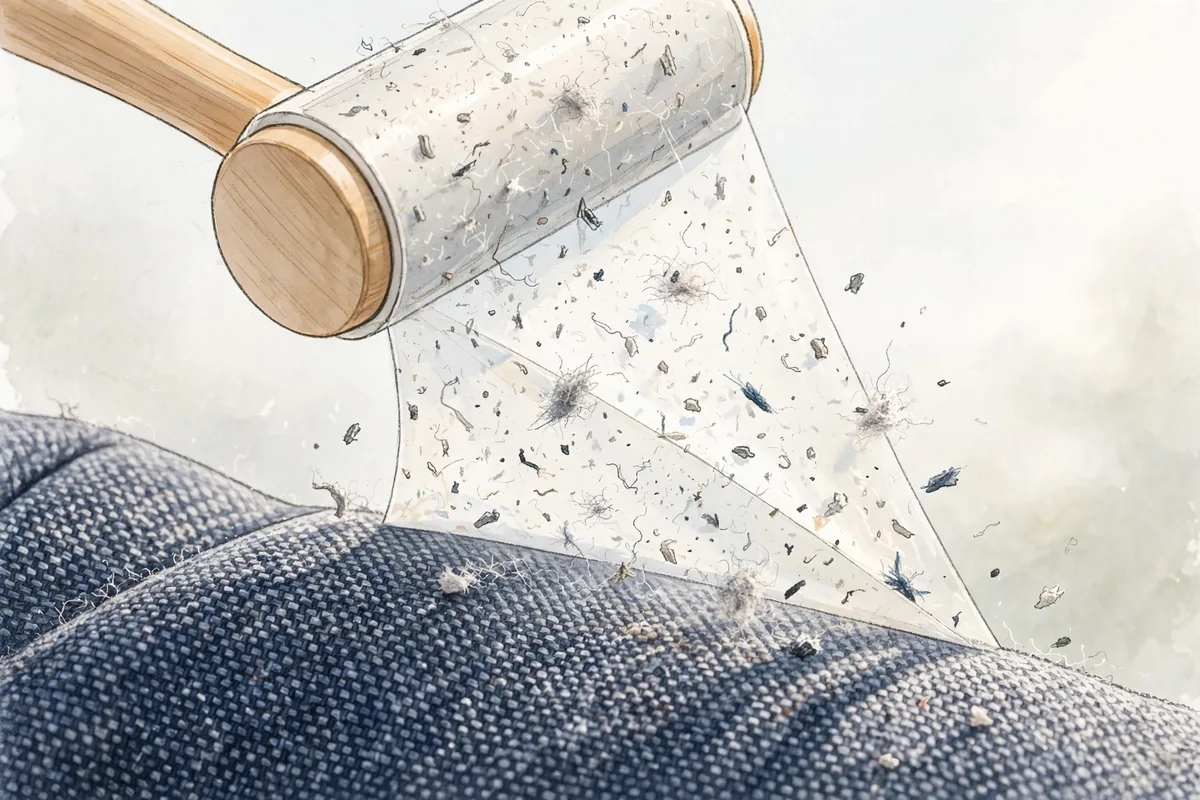
Make the lint roller the first step of your re-entry routine, done before you go inside. The goal is to intercept ticks while they are still on the outside of your clothes, before they migrate to skin or drop off onto furniture and carpets.
Roll with firm, overlapping strokes over your entire body, clothing and exposed skin alike. Work top to bottom: hat and hairline, neck and collar, shoulders and arms, torso front and back, waistband area, thighs front and back, behind the knees, socks and cuffs, and shoes. Pay extra attention to the zones ticks favor: around the socks, behind the knees, at the waistband, and along the hairline. Roll your gear too: backpack straps and body, hat, and anything that brushed against vegetation.
When the sheet is full of lint, or after you have completed one full pass, tear it off and start a fresh sheet for a second pass if you were in heavy tick habitat. Fold used sheets over on themselves so anything trapped stays trapped, and either discard them in an outdoor trash bin or save a sheet in a sealed bag if you want to show a tick to your clinician for identification. The fold-over trick doubles as secure disposal: a tick folded into adhesive is not going anywhere.
For families, make it a game for kids old enough to participate: everyone gets rolled at the car before getting in. For the dog, roll the coat against the lay of the fur in sections, then follow with a hands-on check, since a roller will miss a tick already tucked against the skin under thick fur.
The Full Post-Hike Tick Routine
The lint roller is step one of a sequence, and the sequence is what actually prevents bites. Lyme organizations and the CDC describe the same layered routine, and each layer catches what the previous one missed.
Step 1: Roll at the car
As described above, before entering the house or the car for the drive home.
Step 2: Dryer before the hamper
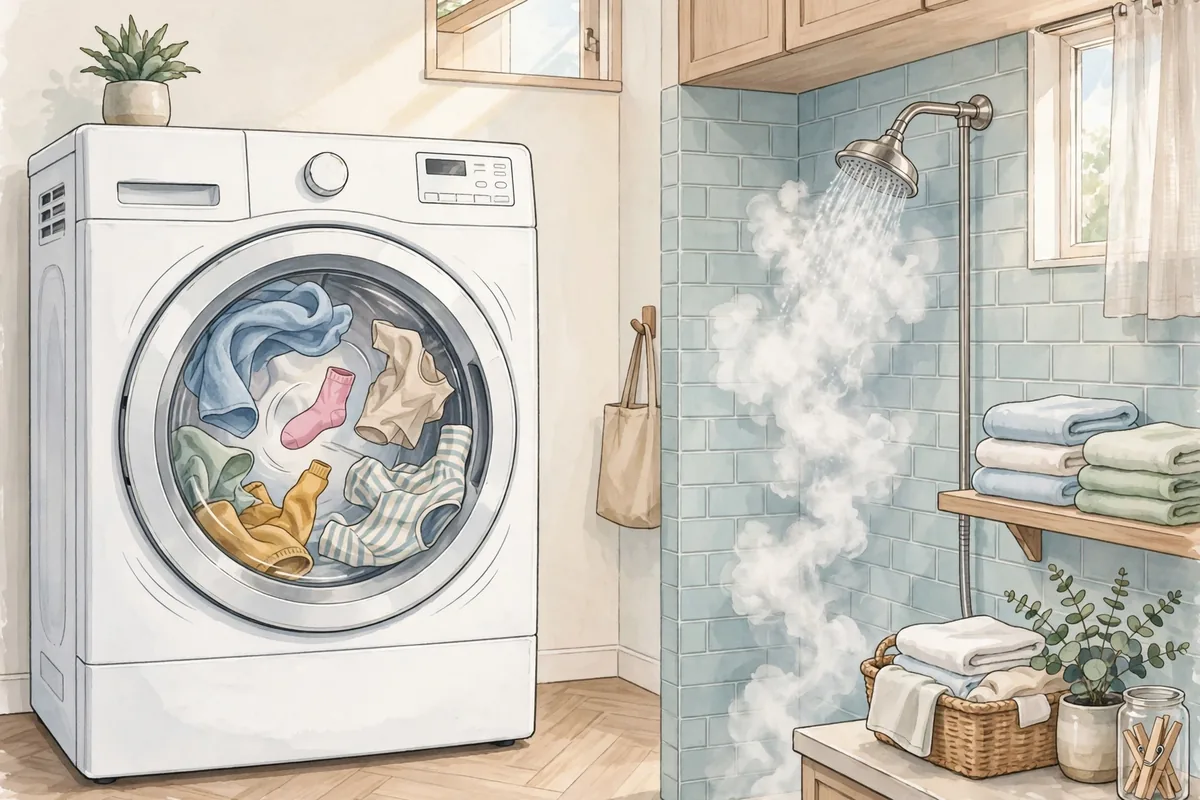
When you get home, put worn clothes directly into the dryer on high heat for 10 minutes. This is the Illinois Lyme Association’s “tape and dry” pairing, and it matters: ticks survive washing surprisingly well, but high dryer heat kills them. Wash in hot water if the clothes need laundering, since medium and cool temperatures will not reliably kill ticks, but the dryer is the killing step.
Step 3: Shower within two hours
The CDC advises showering within two hours of coming indoors, which washes off unattached ticks and measurably reduces Lyme disease risk. It also gives you the natural moment for the next step.
Step 4: Full-body tick check
After the shower, inspect every fold and crease: scalp and hairline, behind the ears, under the arms, inside the belly button, around the waist, between the legs, behind the knees, and between the toes. Use a mirror or a partner for hard-to-see areas. Remember the poppy-seed rule: you are looking for a tiny dark speck with legs, a “loose freckle” that was not there this morning. Check children head to toe; an adult should do this for young kids.
Step 5: Check gear and pets
Inspect backpacks, and check pets thoroughly, including ears, between toes, under the collar, and around the tail base. Pets on a veterinary tick preventive are still worth checking; no product is perfect.
Step 6: Handle any attached tick immediately
Tweezers protocol, described next. Note the date and the bite location on your body.
This routine sounds like a lot until it becomes habit; most of it folds into showering and changing clothes, and the dryer step runs itself.
For Attached Ticks: The Tweezers Protocol
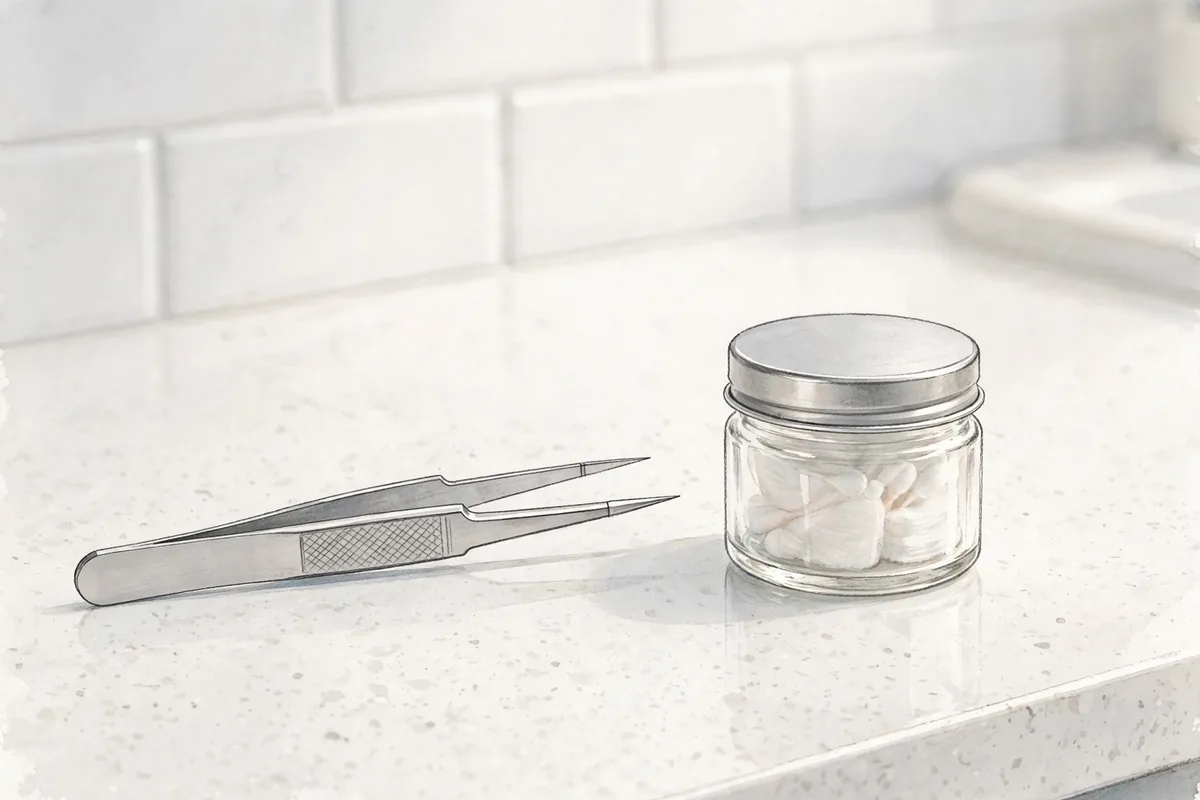
When the roller and the check turn up a tick that is actually attached, switch tools completely. Use fine-tipped tweezers, or a dedicated tick removal device, and grasp the tick as close to the skin’s surface as possible, right at the head or mouthparts. Pull straight out with slow, steady pressure. Do not twist, jerk, or squeeze the body. Do not burn it, and do not apply petroleum jelly, nail polish, alcohol, or essential oils to make it detach; these folk methods are ineffective and can cause the tick to salivate more into the wound. A previous StingHelp myth-busting piece covered why the vaseline approach fails, and the same reasoning applies to every suffocation trick.
After removal, clean the bite area and your hands with soap and water or rubbing alcohol. Save the tick in a sealed bag or jar labeled with the date; if symptoms develop later, the preserved tick helps with identification and risk assessment. Watch the bite site and your overall health over the next 30 days. Ticks generally need to be attached for 36 to 48 hours to transmit the Lyme bacterium, so a tick caught early is a much smaller risk, but other infections have different timelines, and any expanding rash, fever, fatigue, or joint pain after a bite deserves a call to your clinician. Our tick bite aftercare guide covers what the coming weeks should look like, and the Lyme disease overview explains the infection itself.
Prevention Beyond the Roller
The roller is a cleanup tool; the best tick strategy keeps ticks off you in the first place. Treat clothing and gear with 0.5 percent permethrin before the season; it remains effective through several washings and kills ticks on contact. Use an EPA-registered skin repellent containing DEET, picaridin, or oil of lemon eucalyptus according to the label. Wear light-colored long pants tucked into socks in tick habitat, which both blocks access and makes wandering ticks visible. Stay in the center of trails and avoid brushing through tall grass and leaf litter where ticks quest. Keep your yard’s tick habitat down with mowed lawns, raked leaves, and cleared brush at the lawn’s edge.
For a deeper dive into planning outings around tick risk, our outdoor bite prevention checklist puts the whole system on one page.
When to See a Doctor for a Bug Bite
The lint roller needs no medical follow-up, but tick bites sometimes do. Call your clinician if:
- You removed an attached tick and are unsure how long it was feeding, especially in a Lyme-endemic area; ask about the criteria for preventive treatment.
- A rash develops at the bite site, particularly an expanding circular rash, or you develop fever, fatigue, headache, muscle or joint aches in the weeks after a bite.
- The bite area becomes increasingly red, warm, swollen, or painful, or develops pus, which suggests secondary infection.
- You could not remove the whole tick, or mouthparts remain in the skin.
- Your child was bitten and you are uncertain about any of the above; pediatric guidance is worth getting early.
Bring the saved tick, the date of the bite, and notes on where on the body it was attached. If you develop chest pain, heart palpitations, severe headache, or facial droop after a tick bite, seek urgent care; these are uncommon but recognized complications.
Frequently Asked Questions
Does a lint roller remove ticks that are already attached?
No, and you should not try. A lint roller is for crawling, unattached ticks on clothing and gear. An attached tick must be removed with fine-tipped tweezers, grasped close to the skin and pulled straight out. Rolling over an embedded tick risks squeezing it or breaking off its mouthparts.
Will a lint roller catch tick nymphs?
Yes, and that is its best use. Nymph-stage ticks are about the size of a poppy seed and easy to miss on a visual check, but the adhesive catches them regardless of size. This matters because nymphs are responsible for a large share of Lyme disease transmission.
Should I crush the ticks the roller picks up?
Fold the used sheet over on itself to trap them securely, then discard it. If you want a tick identified, save it intact in a sealed bag instead; crushing destroys the features used for identification. Do not handle ticks with bare fingers when transferring them.
Is showering or the lint roller more important after a hike?
Both, in sequence. The roller intercepts ticks on clothing before they reach skin; the shower, within two hours of coming indoors, washes off unattached ticks on the body and is specifically associated with reduced Lyme risk. The dryer step for clothes completes the trio. No single step replaces the others.
Can I use a lint roller on my dog for ticks?
For crawling, unattached ticks on the coat, yes, as a supplement to your hands-on check. Roll against the lay of the fur in sections. For any attached tick, use tweezers or a tick tool, not the roller. Keep your dog on a veterinary tick preventive; the roller is an extra layer, not the plan.
Medically reviewed by Dr. Sarah Jones, MD.
This article is for informational purposes only and isn’t medical advice. If you’re worried about a bite or sting, talk to a healthcare professional.