
Does Cold Weather Kill Mosquitoes?
Every October, as the first frost silvers the lawn, the same hopeful question circulates: does cold weather kill mosquitoes? If you are still getting…
It is one of the oldest debates at any campsite: as the sun drops and the mosquitoes rise, someone gestures at the campfire and claims the smoke is keeping the…
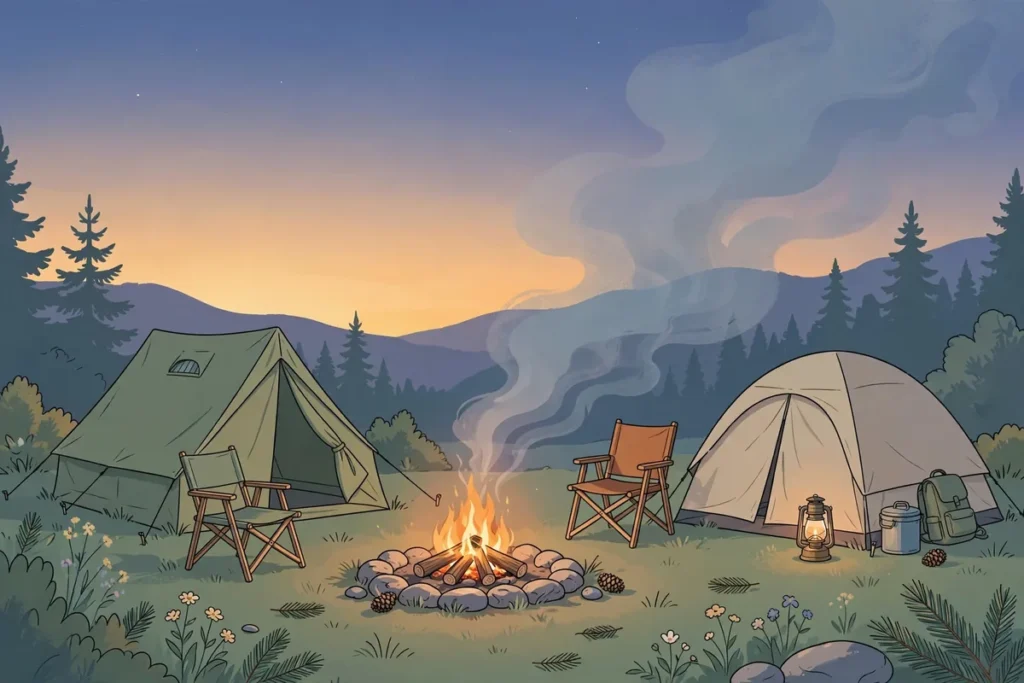
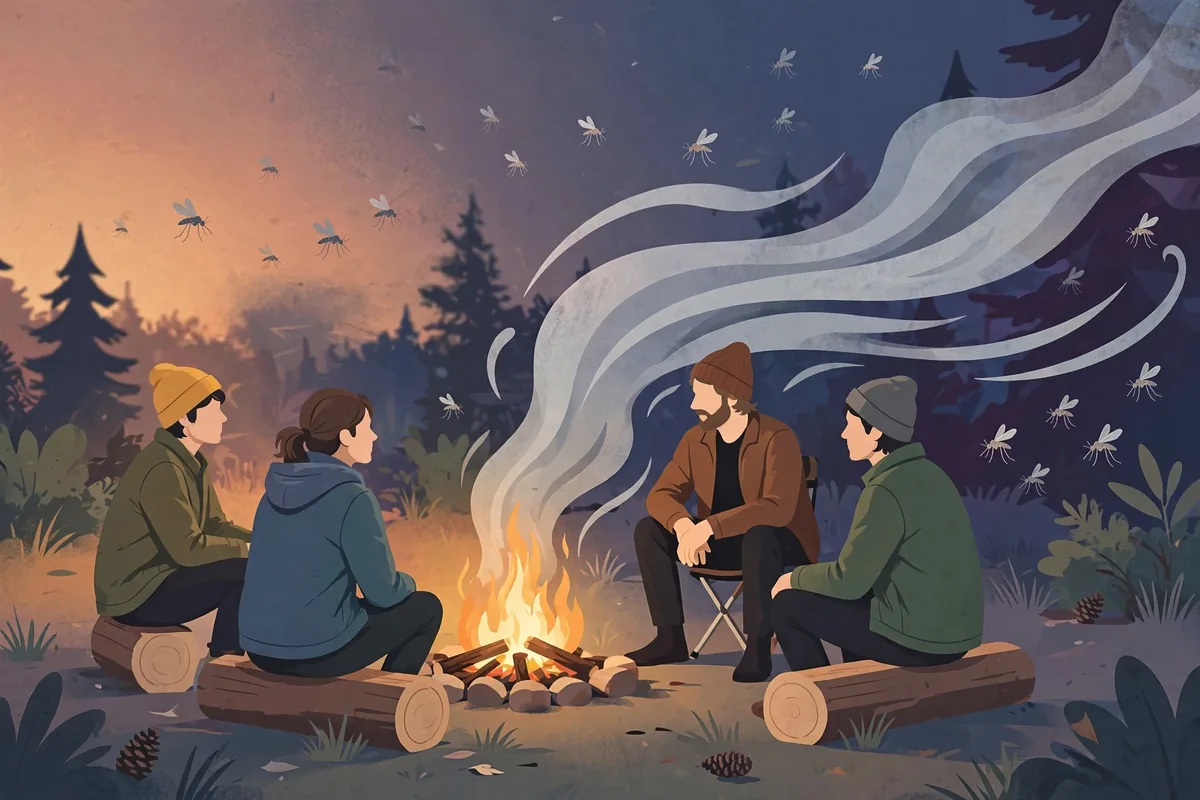
It is one of the oldest debates at any campsite: as the sun drops and the mosquitoes rise, someone gestures at the campfire and claims the smoke is keeping the bugs away. Everyone leans a little closer to the fire, half-convinced. So does campfire smoke repel mosquitoes, or is it just a comforting story we tell while getting bitten? The honest answer sits in the middle: smoke can disrupt mosquito host-seeking at close range, but a campfire is a weak and unreliable shield, and treating it as real protection leaves you exposed.
This article looks at what research actually shows about smoke and mosquitoes, why plain wood smoke from a campfire falls short, the special cases where smoke from certain plants performs better, and, most importantly, what genuinely keeps mosquitoes off you at camp. It also covers fire safety, because the pursuit of fewer bites should never start a wildfire. Smoke is atmosphere; repellent is protection. Do not confuse the two.
Smoke does interfere with mosquitoes. Burning plant material releases a complex mix of volatile compounds, and dense smoke can mask the carbon dioxide and skin odors mosquitoes use to find hosts, irritate their sensory organs, and physically discourage them from flying through it. Field research on smoke from specific traditional plant materials has measured substantial reductions in mosquito landings inside huts.
But a recreational campfire is not a controlled experiment. The smoke is intermittent, wind-dependent, and confined to a narrow plume, while the people it is supposed to protect sit, breathe, and emit carbon dioxide in every direction around it. Laboratory work has shown that smoke can reduce mosquito presence in a test area without eliminating it, and that mosquitoes exposed to smoke over time can become less responsive to its effects. The gap between “smoke bothers mosquitoes somewhat” and “this campfire protects our group” is where the myth lives. Public health reviewers who have examined the literature on smoke and mosquito feeding conclude there is currently no good evidence that smoke from ordinary domestic fuel use provides effective protection, and the evidence base is thin enough that even that finding comes with caveats.
The strongest evidence for smoke-based repellency comes from studies of specific ethnomedicinal plants burned in experimental huts. In one published field trial, smoke from selected plant materials achieved repellency indices above 90 percent against both Anopheles and Aedes mosquitoes collected at human bait over multiple treatment nights, a striking result. But note what was burned: particular plant species chosen for their volatile chemistry, in enclosed or semi-enclosed spaces, with the smoke concentrated where people slept. That is a world away from an open campfire ring with oak logs and a shifting breeze.
Not all smoke is equal. Plants rich in terpenoids and other volatile compounds, juniper, thyme, rosemary, and various traditional repellent species, produce smoke with genuine insect-active chemistry; some of these compounds are confirmed larvicides and repellents in their own right. Plain hardwood smoke is mostly a physical irritant with far weaker chemical activity against mosquitoes. Tossing a few aromatic herbs on the fire may add a pleasant smell and a marginal effect, but no field evidence supports the idea that it converts a campfire into reliable protection.
One underappreciated finding from laboratory work: mosquitoes exposed to smoke for extended periods become desensitized, responding less to its effects over time. Around a campfire that burns for hours, the local mosquito population may simply habituate, the first hour’s modest benefit fading as the evening wears on, exactly when mosquitoes are most active. Combined with wind dispersal, this makes smoke’s already partial effect a diminishing one.
Systematic reviewers of the smoke-and-mosquitoes literature have found the evidence base small and mixed, with the most careful reviews concluding there is no solid evidence that ordinary fuel smoke meaningfully reduces mosquito feeding. That is not the same as proving smoke does nothing, the hut trials with specific plants show real effects, but it places the burden of proof where it belongs: on anyone claiming a campfire keeps mosquitoes away.

Smoke only affects mosquitoes inside the smoke. Outdoors, wind carries the plume in one direction, leaving everyone upwind, and everyone outside the narrow smoke column, fully exposed. Even a light breeze that feels pleasant to campers is enough to fragment smoke coverage. Mosquitoes simply approach from the clear-air side, following the carbon dioxide trail every person around the fire is broadcasting.
A campfire does nothing about the fundamental problem: a group of warm, breathing, sweating humans is an irresistible beacon. Mosquitoes detect hosts primarily through carbon dioxide plumes and skin odors, with heat and visual cues playing supporting roles. Smoke may muddy these signals at very close range, but it cannot cancel them, and the moment anyone steps away from the fire to the tent, the cooler, or the treeline, they walk out of the smoke’s limited zone straight into waiting mosquitoes.
Mosquito activity typically peaks around dusk and continues through the night, a far longer window than any smoke effect lasts at useful strength. Campfires burn down, wind shifts, people move around camp, and the desensitization effect compounds the decline. Relying on the fire means your protection is weakest exactly when exposure is highest.
The most dangerous thing about the campfire myth is not the smoke; it is the behavior it encourages. Campers who believe the fire protects them skip repellent, wear shorts and t-shirts at dusk, and linger unprotected, arriving home with dozens of bites they might have avoided. Every mosquito bite is a small gamble, and in areas with West Nile virus or other mosquito-borne illnesses, the stakes are higher than an itch. Treat the fire as ambiance, and protect yourself as if it were not there.
| Approach | What it does | Reliability | Limitations |
|---|---|---|---|
| Campfire (plain wood smoke) | Mildly disrupts host-seeking at very close range | Low and inconsistent | Wind-dependent, narrow zone, habituation, no residual effect |
| Smoke from specific repellent plants | Measurable repellency in hut trials | Moderate in controlled settings | Needs the right species, concentration, and enclosure; not a campfire |
| EPA-registered repellents (DEET, picaridin, IR3535, oil of lemon eucalyptus) | Block host detection on treated skin for hours | High, the gold standard | Must be applied correctly and reapplied; follow label directions |
| Permethrin-treated clothing | Kills/repels mosquitoes on contact with fabric | High for covered areas | Does not protect exposed skin; needs retreatment after washes |
| Physical barriers (screens, nets, long sleeves) | Block access mechanically | Very high | Heat discomfort; must be intact and properly used |
| Citronella candles / coils | Weak local effect in still air | Low | Similar wind and range problems as campfire smoke |
The pattern is clear: methods that put protection on or around the person outperform methods that try to treat the air. For another folk remedy put to the test, see our look at whether catnip oil works as a mosquito repellent. Natural does not always mean effective. And if you are curious about another folk method, our look at whether burning coffee grounds repels mosquitoes reaches a similarly skeptical verdict.
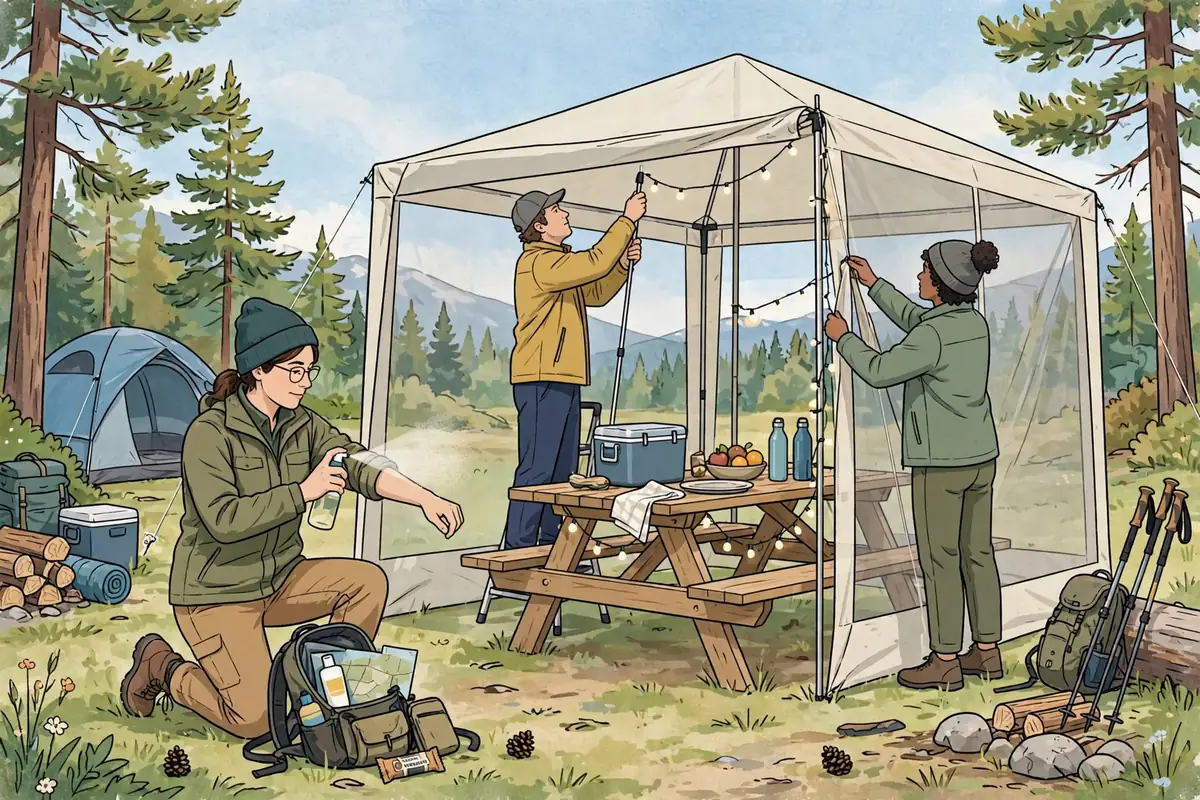
Apply an EPA-registered repellent to exposed skin before dusk and reapply per the label. DEET, picaridin, IR3535, and oil of lemon eucalyptus all have strong evidence behind them. Parents should apply repellent to children themselves, avoiding hands, eyes, and mouth, and should check age guidance on the label. This single step does more than every smoke method combined.
Treat pants, socks, and shirts with permethrin before the trip, it survives several washings and turns clothing into a mosquito-killing surface. At camp, wear long sleeves and pants at dusk, the highest-risk window. A screened dining canopy over the picnic table creates a genuinely bite-free zone for meals, and sleeping under an intact tent with zipped mesh beats any amount of smoke.
Mosquitoes breed in standing water, so tip over or empty any containers, tarps, and coolers collecting water around camp. Position sleeping areas away from marshy ground and dense vegetation where possible. A battery-powered fan at the picnic table is a surprisingly effective supplement, mosquitoes are weak fliers, and moving air disrupts their approach far more reliably than smoke does.
Plan hikes and active outings to avoid the dusk peak when possible, or at least go in fully protected. Dawn has a smaller secondary peak for some species. Midday, when heat and sun suppress most mosquito activity, is the safest window for exposed-skin activities like swimming.
Many campgrounds and entire regions impose burn bans during dry conditions, and October is prime fire season in much of the West. A burn ban means no campfire, period, regardless of how many mosquitoes are biting. Check current restrictions before every trip; they change with conditions. Violating a burn ban risks fines and, far worse, starting a wildfire.
Where fires are allowed, use established fire rings, keep fires small, never leave a fire unattended, keep water and a shovel within reach, and make sure the fire is dead out, cold to the touch, before sleeping or leaving. Do not burn trash, treated wood, or plastics; the fumes are toxic and the residues harm the site. And never toss repellent cans or aerosol containers into or near a fire.
There is a health irony worth noting: the same smoke some campers credit with protecting them is a respiratory irritant. Sitting directly in campfire smoke for hours irritates eyes, throat, and airways, a real cost for people with asthma or other respiratory conditions. Positioning yourself upwind of the fire is better for your lungs and, as it happens, no worse for mosquito protection, since the smoke was never protecting you anyway.
Will sitting close to the campfire keep mosquitoes off me?
Only marginally, and only while you stay inside the smoke plume. The effect is weak, wind-dependent, and fades as mosquitoes habituate over the evening. Anyone who steps away from the fire, to the tent, the cooler, the treeline, leaves the smoke zone entirely. Use repellent instead and treat the fire as atmosphere, not armor.
Does throwing herbs like rosemary or sage on the fire work better?
Aromatic plants contain volatile compounds with genuine insect activity, and their smoke may perform somewhat better than plain wood smoke. But there is no field evidence that tossing a few sprigs on a campfire creates reliable protection, the dose, concentration, and exposure are all far below what the successful hut trials used. Enjoy the smell; still apply repellent.
What about citronella candles or mosquito coils at the campsite?
They share the campfire’s fundamental problem: trying to treat the air in an open, windy space. Coils and candles show weak effects in still air at very close range, and essentially none once there is a breeze or distance. They are not substitutes for repellent on skin or permethrin on clothing.
Is campfire smoke dangerous to breathe all evening?
It is an irritant, not a poison at typical campfire exposures, but hours of direct smoke inhalation irritates eyes, nose, throat, and airways. People with asthma, COPD, or other respiratory conditions should be especially careful to stay upwind. The irony is hard to miss: the smoke delivers certain respiratory irritation in exchange for uncertain mosquito protection.
Do I still need repellent if we have a big roaring fire?
Yes, absolutely. A roaring fire produces more heat and light, which do not repel mosquitoes (they hunt primarily by smell), and its smoke still only covers a shifting plume. Apply repellent before dusk, wear long sleeves and pants during peak hours, and let the fire be what it is: warmth, light, and good company.
Medically reviewed by Dr. Sarah Jones, MD.
This article is for informational purposes only and isn’t medical advice. If you’re worried about a bite or sting, talk to a healthcare professional.
Dr. Jones oversees StingHelp’s clinical verification process. Every guide is systematically evaluated against active Centers for Disease Control and Prevention (CDC), Environmental Protection Agency (EPA), and American Academy of Allergy, Asthma & Immunology (AAAAI) medical consensus standards to ensure symptom distinctions and care recommendations are clinically sound.
Explore physician-reviewed first-aid procedures, identification clues, and symptom comparisons for other common outdoor bites and stings.

Every October, as the first frost silvers the lawn, the same hopeful question circulates: does cold weather kill mosquitoes? If you are still getting…

You are covered in itchy mosquito welts, and someone suggests an allergy pill. The question do antihistamines help mosquito bites comes up every summer…

Rub a dab of Vicks VapoRub on your wrists and ankles before heading outside, and mosquitoes will leave you alone. The advice appears on…