
A YouTube video titled “The $3 Mosquito Trick That Works as Well as DEET” has pulled in millions of views, and the comment sections underneath it are full of the same question asked a hundred different ways: is the trick real, or is it just another piece of internet folklore? The trick itself is disarmingly simple — a few drops of catnip oil dabbed on the skin — and the claim behind it sounds almost too good to be true: a common garden herb outperforming the most studied mosquito repellent on the planet by ten to one.
So does catnip oil mosquito repellent actually work? In a laboratory, yes — the core finding is real, and it comes from Iowa State University researchers, not a wellness blog. But “repels mosquitoes in a glass tube for ten minutes” and “keeps you bite-free all evening on the porch” are two very different promises, and viral videos tend to blur them together. This article closes that gap: what the study actually tested, what the famous “ten times better than DEET” number really means, how long protection realistically lasts on skin, and how to use catnip oil without irritating your skin.
You will also get an honest verdict against EPA-registered repellents, because a repellent you must reapply every two hours is a very different tool from one that lasts all day — and knowing which job each one fits is what actually keeps you bite-free.
The Iowa State Discovery: What the Study Actually Tested
In August 2001, Iowa State University entomologists Chris Peterson and Joel Coats presented findings at the 222nd national meeting of the American Chemical Society that surprised even them. They had been screening plant compounds for mosquito-repelling activity, and one candidate — nepetalactone, the essential oil in catnip (Nepeta cataria) that gives the plant its minty scent and sends domestic cats into euphoria — performed strikingly well.
Their test was a classic choice experiment. A glass tube was divided into two halves: one side treated with a 1% nepetalactone solution, the other left untreated. Twenty Aedes aegypti mosquitoes — the yellow fever mosquito — were released into the tube, and after ten minutes the researchers counted how many had settled on each side.
Only about 20% of the mosquitoes — roughly four out of twenty — remained on the treated side. When DEET was tested in the same setup, about 40 to 45% stayed put. In other words, far fewer mosquitoes tolerated the catnip compound than tolerated the synthetic gold standard. Even at a dilute 0.1% dose, nepetalactone stayed strongly repellent.
Reported by Scientific American, New Scientist, and ScienceDaily, the “ten times more effective than DEET” headline has circulated ever since.
Here is what the study did and did not establish. It measured spatial repellency — mosquitoes avoiding a treated zone — over ten minutes, in a glass tube, against one mosquito species, using the raw essential oil compound rather than a finished lotion, candle, or spray. It did not test how long protection lasts on human skin, how the oil behaves in heat and sweat, or whether any store-bought catnip product works at all. Those are exactly the questions the rest of this article takes on, because a famous lab result is only useful once you know its limits.
What “10 Times Better Than DEET” Really Means
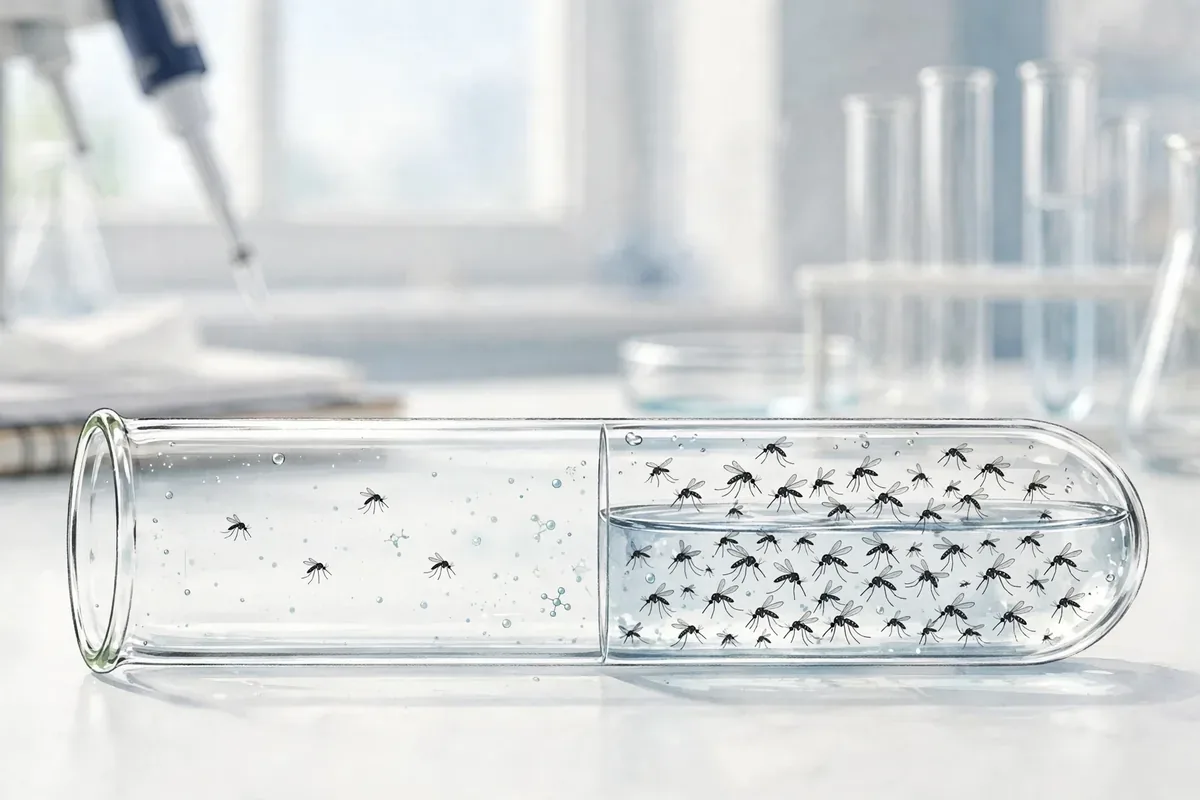
The “ten times” figure comes from comparing the two outcomes in that glass tube. With 1% nepetalactone, roughly 80% of the mosquitoes avoided the treated half; with DEET, only about 55 to 60% did. The researchers translated that gap into an estimate that the catnip compound was around ten times more effective as a repellent in that specific test.
That is a real result — but it is a narrow one. Here is what the number does not mean:
- It does not mean ten times longer protection. The study measured where mosquitoes settled over ten minutes. It said nothing about how many hours either substance protects skin.
- It does not mean ten times fewer bites on a real person. A glass tube has no wind, sweat, body heat, or movement, and the test used a single mosquito species.
- It does not mean commercial catnip products match the lab result. The experiment used the essential oil compound at known concentrations. A candle, diffuser blend, or lotion on a store shelf is a different formulation entirely, and evidence for those finished products is limited.
Social media flattens all of this into “catnip oil beats DEET, full stop.” The honest translation is narrower: in one lab metric, over ten minutes, against one mosquito species, the catnip compound drove away far more mosquitoes than DEET did.
How Long Catnip Oil Protection Actually Lasts
This is the section viral videos tend to skip, and it is the most useful one for anyone deciding what to buy.
Essential oils are volatile by nature — that strong scent you smell is the oil evaporating into the air, which is exactly the property that makes it repel mosquitoes and exactly the property that makes it fade fast. In real-world use, unformulated natural oils applied to skin typically wear off within roughly two to three hours, and heat, sweat, wind, and activity shorten that window further. Mosquitoes are most active around dusk and dawn, which is precisely when a fading layer of oil leaves you exposed.
Compare that with EPA-registered repellents. DEET and picaridin are formulated for slow, controlled release, and standard products routinely provide six to ten-plus hours of protection from a single application.
So the honest picture is this: catnip oil can deliver impressive short-term repellency, but it is a short-shift worker. A couple of drops might serve you well for a quick twenty-minute trip to take out the trash at dusk. For an all-day hike or an evening cookout that runs long, you would be reapplying constantly, and every missed reapplication is an open window for bites.
If you do use it, plan on reapplying every couple of hours — “natural” does not mean “set it and forget it.”
How to Use Catnip Oil Safely

Catnip oil is a plant product, not a synonym for harmless. Essential oils are concentrated, and concentrated plant oils can irritate skin — especially on the face, on broken skin, or with repeated undiluted use.
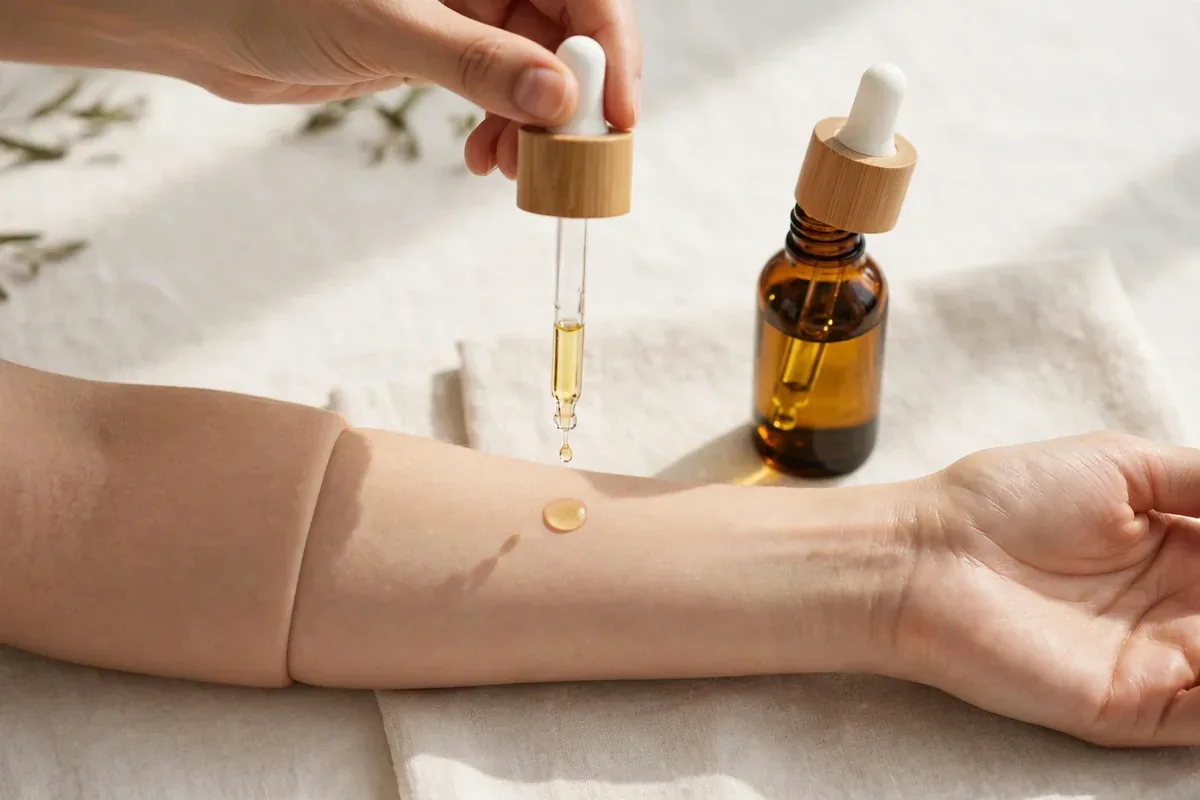
Skin use: dilute, then patch-test. Never apply undiluted essential oil over large areas of skin. Mix a few drops into a carrier oil such as coconut, jojoba, or sweet almond oil, and test a small amount on one spot first — the inside of your forearm is the standard test area. Wait a full day. If redness, itching, or a rash appears, do not use it. Keep the oil away from your eyes and mouth and off any cuts or broken skin, and wash your hands after applying.
Area use: manage your expectations. Diffusing catnip oil on a patio may create a small scented zone, but wind disperses it quickly and there is little evidence these setups protect a whole gathering. Treat them as a supplement to repellent worn on skin — never a substitute.
Around kids and pets. Keep essential oils out of reach of young children, and talk to your pediatrician before using any essential oil on a child’s skin. Here is the quirk unique to this particular oil: cats are strongly attracted to catnip. Using it on a patio or in a garden can draw neighborhood cats to investigate, and you should keep the oil away from pets’ food and water. Do not apply essential oils to pets.
If you are pregnant or nursing, check with your clinician before using essential oil repellents — our insect-repellent safety guide for pregnancy and kids explains how to weigh product safety in that situation. And one absolute rule: never ingest essential oils. Repellency is an outside-the-body job.
Catnip Oil vs EPA-Registered Repellents: An Honest Verdict
Time for the side-by-side. The EPA registers repellent active ingredients — DEET, picaridin, IR3535, and oil of lemon eucalyptus — only after reviewing standardized safety and efficacy data. Catnip essential oil is not an EPA-registered repellent active ingredient, and evidence for finished commercial catnip products is limited.
Repellency in the lab: Catnip oil wins this round, per the Iowa State work. It is a genuinely strong spatial repellent.
Duration on skin: Registered repellents win decisively — hours of steady protection versus catnip oil’s roughly two-to-three-hour window before reapplication.
Evidence base: DEET carries decades of human-use data and standardized testing; catnip oil has one famous lab study and a thin trail of follow-up on finished products. Say that plainly: the science is interesting but thin.
Best use case for catnip oil: Short, low-risk outings — a quick evening walk in a neighborhood with modest mosquito pressure — for people who prefer plant-based options and do not mind reapplying often. It can also sit alongside other measures rather than carrying the whole job.
When to reach for the registered products instead: Deep woods, travel, camping, anywhere mosquitoes are intense, and any situation where mosquito-borne illness is a real concern.
The verdict, without hype: catnip oil is a fascinating, genuinely repellent plant compound with a real lab pedigree — and a poor substitute for proven repellents when the stakes, or the evening, run long.
When to See a Doctor for a Bug Bite
- Call 911 for anaphylaxis signs: trouble breathing, wheezing, swelling of the lips, tongue, or throat, dizziness, fainting, or a rapid heartbeat. These can appear within minutes of a sting.
- Suspected infection: spreading redness or red streaks, increasing warmth or swelling after the first day or two, pus, or fever — possible cellulitis. Our guide to bite and sting warning signs walks through exactly what to watch for.
- Timeline violations: a bite that keeps worsening after 48 hours, or shows no improvement after several days of home care.
- Special cases: severe-looking bites on babies or young children, concerning symptoms from a bite during pregnancy, or bites in anyone with a weakened immune system — get professional guidance sooner rather than later.
Frequently Asked Questions
Can I just rub fresh catnip leaves on my skin?
Fresh leaves contain far less concentrated nepetalactone than distilled essential oil. Bruising the leaves releases some of the compound, but the dose is unreliable, the effect fades even faster, and raw plant material can irritate sensitive skin. The lab results apply to the oil — not to the garden.
Will catnip oil attract cats to my yard?
Very possibly. The same compound that repels mosquitoes is what makes cats rub, roll, and drool over catnip. If neighborhood cats digging in your garden beds would bother you, that is a genuine practical downside worth weighing before you diffuse it on the patio.
Is catnip oil safe around dogs?
It is not made for pets. Do not apply essential oils to animals, keep bottles and diffusers away from pet food and water, and ask your veterinarian if you are unsure about a specific exposure.
Why isn’t catnip oil sold everywhere as a DEET replacement?
Two honest reasons. First, it is not EPA-registered as a repellent, so it cannot carry the same standardized efficacy and safety claims. Second, its short protection window makes it a hard sell against products that last all day. The science is real; the product engineering has not caught up.
Can I mix catnip oil into my sunscreen?
Do not mix anything into sunscreen — altering its formula changes the protection you are counting on. Apply sunscreen first, let it set, and apply repellent separately afterward.
Medically reviewed by Dr. Sarah Jones, MD.
This article is for informational purposes only and isn’t medical advice. If you’re worried about a bite or sting, talk to a healthcare professional.