
Does Vicks VapoRub Repel Mosquitoes?
Rub a dab of Vicks VapoRub on your wrists and ankles before heading outside, and mosquitoes will leave you alone. The advice appears on…
You are covered in itchy mosquito welts, and someone suggests an allergy pill. The question do antihistamines help mosquito bites comes up every summer on pharmacy, parenting, and camping forums,…
You are covered in itchy mosquito welts, and someone suggests an allergy pill. The question do antihistamines help mosquito bites comes up every summer on pharmacy, parenting, and camping forums, and the short answer is yes, with qualifications that matter. Clinical trials show that oral second-generation antihistamines can meaningfully reduce mosquito-bite itch and swelling, especially when taken before exposure. But they are not magic, timing changes everything, and they do not replace repellent.
This article explains why bites itch in the first place, what the trials actually measured, how timing and choice of antihistamine change the outcome, where topical options fit, and when a bite reaction needs a clinician instead of a pill. One firm boundary: this article names medication classes but gives no dosing instructions. Which product and how much is a decision for you, your pharmacist, or your doctor, guided by the package label and your medical history.
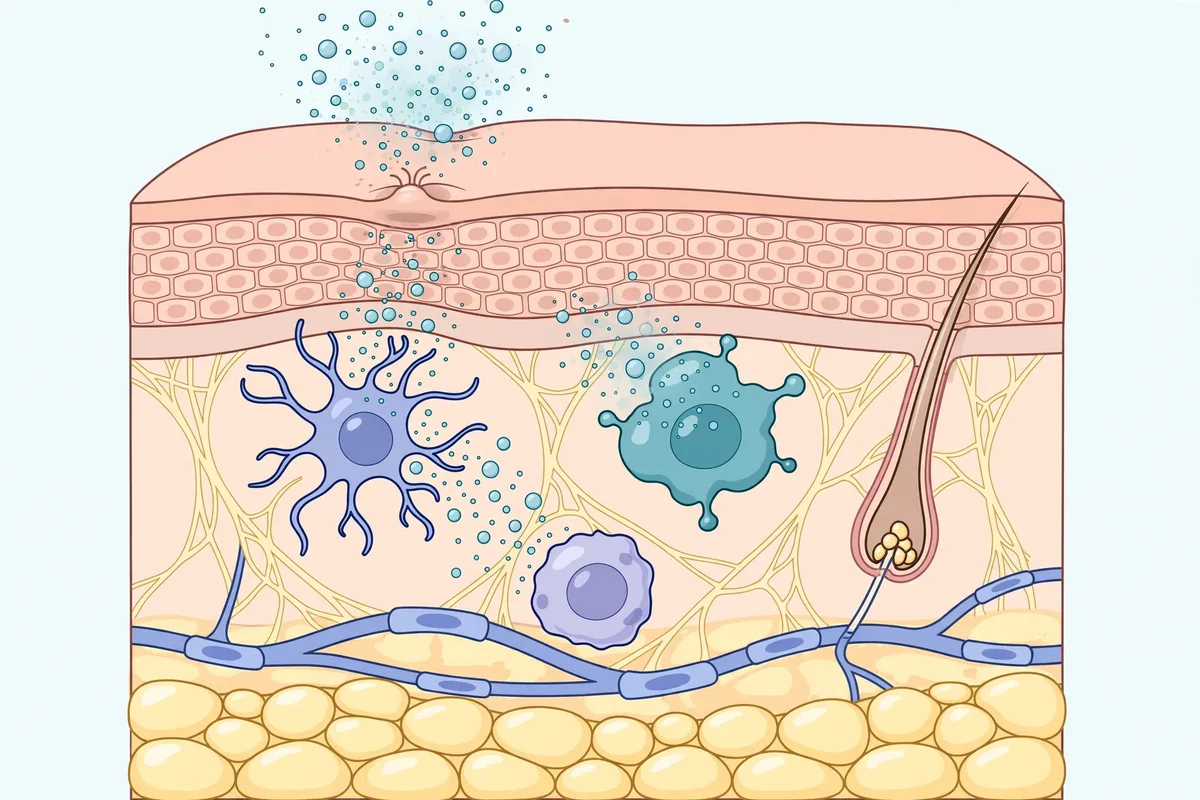
When a mosquito feeds, she injects saliva containing proteins that keep your blood flowing. Your immune system recognizes those proteins as foreign and dispatches mast cells, which release histamine and a cocktail of other inflammatory mediators, leukotrienes, prostaglandins, cytokines. Histamine dilates local blood vessels and stimulates nearby nerve endings. The result is the familiar package: redness, warmth, swelling, and itch.
The reaction unfolds in phases. The immediate wheal-and-flare, the pale bump with a red halo that appears within minutes, is largely histamine-driven. The delayed reaction, the redder, firmer, itchier papule that peaks hours later and can linger for days, involves the broader inflammatory cascade. This two-phase structure is the key to understanding what antihistamines can and cannot do: they block histamine receptors, so they blunt the histamine-driven part of the story, but they do not switch off the other mediators. That is why the scientific verdict is “helps meaningfully” rather than “eliminates.”
If you barely notice bites while your partner swells up dramatically, you are seeing sensitization in action. Repeated exposure over a lifetime builds immune memory to mosquito saliva proteins, and the strength of the response varies with genetics, age, and overall allergy tendency. People with strong reactions, large local swelling sometimes called skeeter syndrome, are the ones who benefit most from prophylactic antihistamines, according to the clinical literature. Children, whose immune systems are still calibrating, often react more vigorously than adults to the same bite.
This is not folk wisdom; antihistamines for mosquito bites have been tested in randomized, placebo-controlled trials, and the results are consistent enough to summarize honestly.
A trial published in the dermatology literature exposed adult volunteers to Aedes mosquitoes and tested cetirizine against placebo in a double-blind design. Cetirizine significantly reduced immediate whealing and itching measured at 15 and 60 minutes, supporting the view that the early bite reaction is histamine-mediated, but it had no significant effect on the delayed symptoms measured at 12 and 24 hours. That split result is the honest shape of the evidence: strong help early, fading help late.
A frequently cited comparison by Karppinen and colleagues tested cetirizine, ebastine, and loratadine against placebo and found reductions in wheal size of roughly 30 to 40 percent and reductions in itching of roughly 70 to 80 percent, with cetirizine easing itch the most, though it also caused the most sedation among the three. A pediatric trial of loratadine found wheal size reduced by about 45 percent and itching by about 78 percent compared with placebo. A 2022 review in Frontiers in Immunology summarizing this literature concluded that prophylaxis with second-generation antihistamines can reduce local skin reactions, and noted the effect is especially relevant for people with hypersensitivity reactions.
Reductions of 70 to 80 percent in itching sound dramatic, but remember what they measure: itch scores in controlled trials, mostly in the early phase, in volunteers deliberately exposed to mosquitoes. Real life adds the delayed phase, repeated bites, and scratching, all of which antihistamines address less well. The fair summary is that oral second-generation antihistamines are the best-studied pharmacologic option for bite itch, they work best on the early itch and swelling, and their effect is partial rather than total. They reduce the reaction; they do not prevent the bite or erase the bump.
The single biggest factor in whether an antihistamine helps your mosquito bites is when you take it relative to the bite. The trial literature draws a clear line between prophylactic use, taking it before exposure, and reactive use after the welts appear.
Before exposure works best. Antihistamines need time to occupy histamine receptors. Taken an hour or two before an evening outdoors, a second-generation antihistamine is in position when the histamine arrives, blunting the immediate wheal-and-flare from the start. The review literature specifically describes prophylactic daily dosing during periods of unavoidable exposure, think camping trips, outdoor weddings, or evenings in a buggy yard, as the best-supported strategy. If you know you react strongly and you know you will be outside, before beats after.
After the bite still helps, just less. Taking an antihistamine once you are already itchy can still take the edge off, particularly the itch, because histamine continues to be released in the early phase. But you have missed the window to blunt the initial cascade, and the delayed inflammatory phase is already underway. Do not expect the bump to vanish; expect the itch to become more tolerable.
Daily during bite season is a clinician conversation. Some strong reactors take a daily second-generation antihistamine through mosquito season. Whether that makes sense for you depends on your medical history, other medications, and how severe your reactions are, which is exactly the kind of decision a pharmacist or doctor should weigh in on, not a blog post.
The trials cluster around the second-generation oral antihistamines: cetirizine, loratadine, fexofenadine, levocetirizine, and desloratadine. These are the non-drowsy (or less-drowsy) generation, preferred over the older first-generation options like diphenhydramine for daytime use because they cause less sedation and cognitive dulling, though “non-drowsy” is a spectrum, not a promise. In the head-to-head trial, cetirizine relieved itch the most but also sedated the most; loratadine and fexofenadine tend to be the least sedating of the group.
First-generation antihistamines like diphenhydramine do block histamine and can help itch, but their sedation, short duration, and anticholinergic effects (dry mouth, urinary difficulty, next-day grogginess) make them a poorer choice for most bite situations, especially if you need to drive or work. They also carry stronger cautions for older adults. Again, product selection and dosing belong on the package label and in a conversation with your pharmacist, who can check interactions with your other medications, a step people routinely skip and should not.
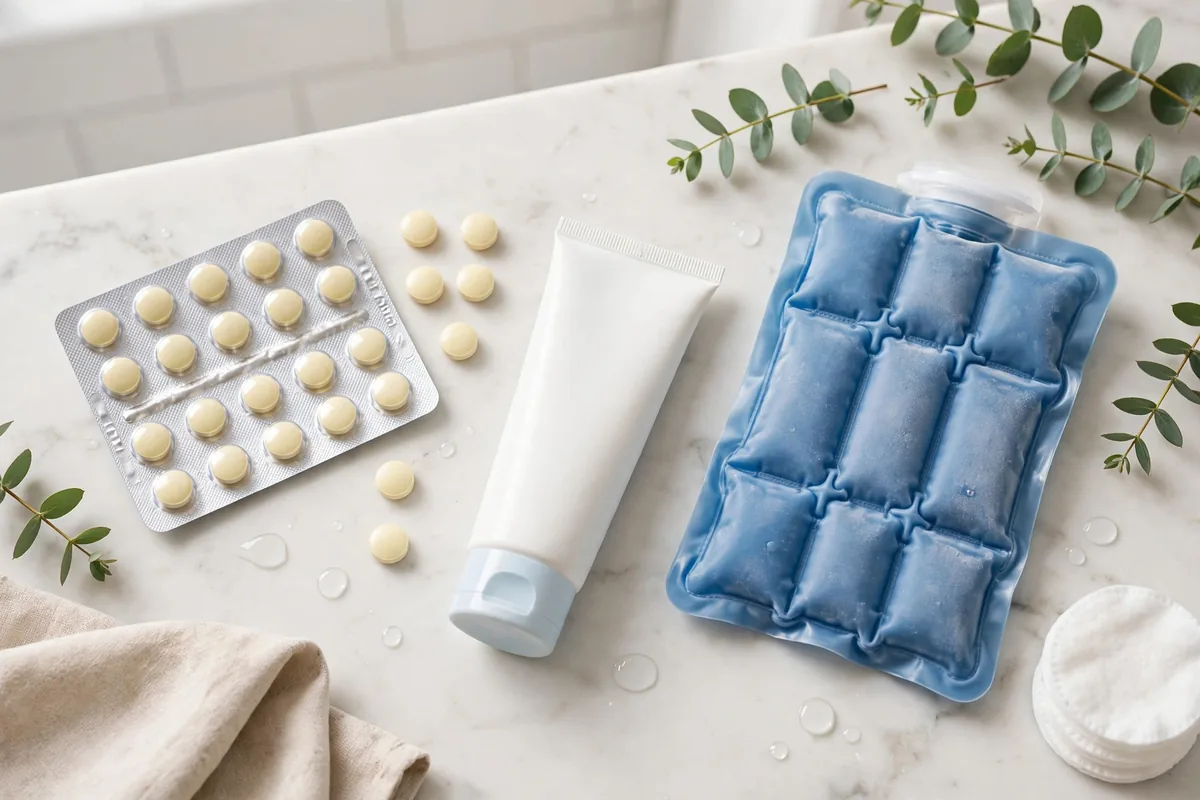
Creams and gels containing antihistamines exist, and they can provide local relief, but the evidence base is thinner than for oral tablets, and some people develop contact sensitivity to topical antihistamine ingredients with repeated use. The stronger topical evidence actually sits with other categories: cold compresses, calamine lotion, and low-strength hydrocortisone cream for the inflammatory component. For most people, the practical combination is an oral second-generation antihistamine for the histamine-driven itch plus a cold compress or soothing topical for the local swelling. Our docs on reducing bite itching walk through the non-drug options that pair well with this approach.
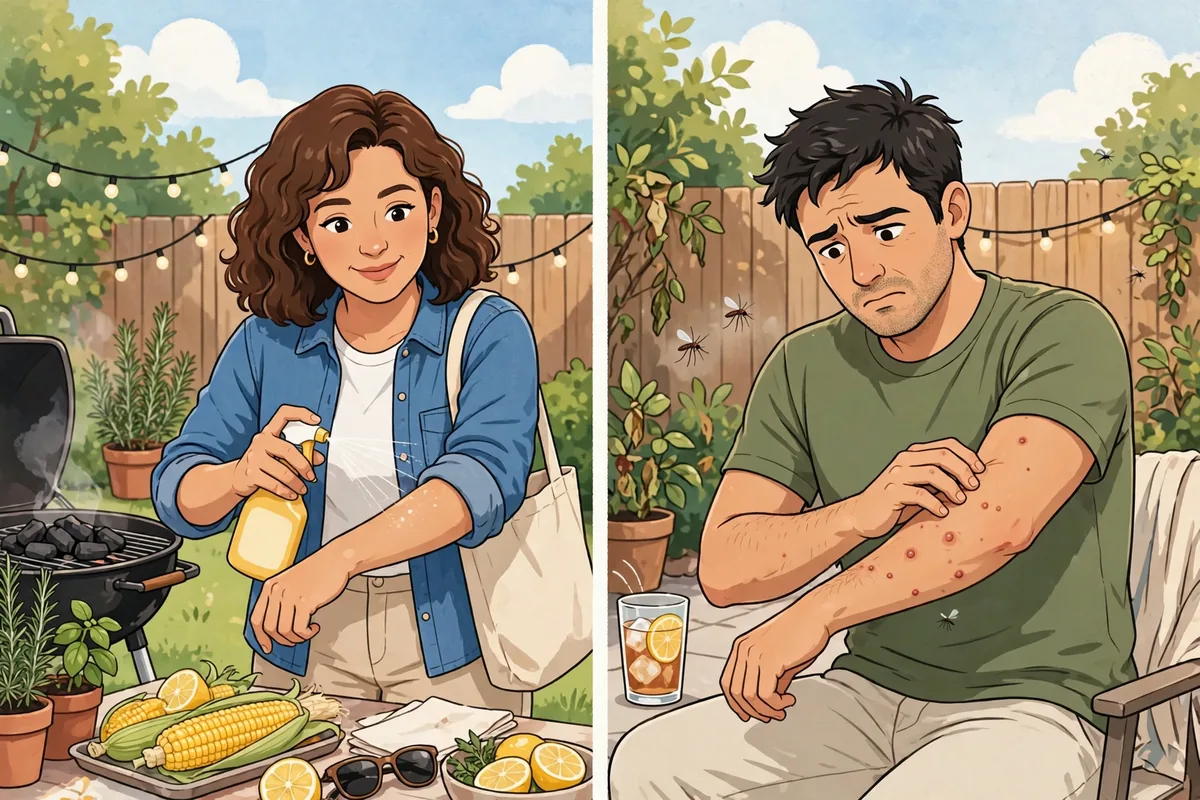
Honesty requires the other half of the verdict. Antihistamines do not prevent mosquito bites, mosquitoes do not check your medicine cabinet before landing. They do not block the non-histamine mediators, so some redness and swelling persist even with perfect timing. They do not speed healing of the bump itself. And they are not a substitute for prevention: repellent on exposed skin, long sleeves at dusk, and eliminating standing water do the work that no pill can do. For repellent options and prevention basics, our mosquito bites hub lays out what works.
There is also the sedation question. Even second-generation antihistamines cause drowsiness in a minority of users, and the effect is dose-related and individual. Do not assume you are unaffected until you know how a product affects you, particularly before driving. Alcohol amplifies the sedation. These cautions are on every package label for a reason.
Some people develop skeeter syndrome: large, hot, painful swelling, sometimes an entire forearm or a swollen-shut eye, after mosquito bites. Antihistamines are a reasonable part of the strategy for these strong reactors, and prophylactic use before known exposure is specifically supported in the literature for hypersensitivity. But large local reactions deserve a clinician’s evaluation to confirm the diagnosis and rule out cellulitis, which can look similar and needs completely different treatment. If a bite area keeps expanding after 48 hours, becomes increasingly painful and warm, or develops fever, that is no longer a “take an antihistamine” situation. Our skeeter syndrome warning signs guide details the red flags.
| Approach | What it targets | Evidence level | Best timing |
|---|---|---|---|
| Oral 2nd-gen antihistamine | Histamine-driven itch and early swelling | Randomized trials; 70–80% itch reduction early phase | 1–2 hours before exposure |
| Oral 1st-gen antihistamine | Same, with more sedation | Established but less favorable profile | After bites; nighttime use |
| Cold compress | Swelling, itch via vasoconstriction | Strong practical consensus | Immediately after bites |
| Calamine / menthol lotion | Surface itch, cooling sensation | Traditional; modest evidence | After bites, as needed |
| Low-strength hydrocortisone cream | Local inflammation | Good for inflammatory component | After bites, short-term |
| Topical antihistamine cream | Local histamine | Thinner evidence; sensitization risk | After bites |
| Scratching | Nothing, makes it worse | Worsens inflammation, risks infection | Never |
The table makes the strategy obvious: prevention first, prophylactic antihistamine before known exposure for strong reactors, and cold plus soothing topicals after the fact. No single row carries the whole plan.
Most mosquito bites resolve on their own. See a clinician promptly if you notice:
Seek emergency care for trouble breathing, swelling of the lips or tongue, dizziness, or fainting after a bite or sting, those are anaphylaxis signs. Our mosquito bite warning signs guide covers the full red-flag list, and the cold compress docs show the correct technique for the simplest effective remedy.
Should I take an antihistamine before going outside if mosquitoes love me?
For people with strong bite reactions, the trial literature supports prophylactic use, taking a second-generation antihistamine an hour or two before anticipated exposure reduces the immediate wheal and the itching. It is a reasonable strategy for camping trips, outdoor events, or buggy evenings. It does not replace repellent, and whether daily use through the season fits your situation is worth discussing with your pharmacist or doctor.
Which is better for mosquito bites: cetirizine or loratadine?
In the head-to-head trial, cetirizine reduced itching the most but also caused the most sedation; loratadine was effective with a lower sedation profile. Fexofenadine is another low-sedation option. The “best” choice depends on how strongly you react, how sensitive you are to drowsiness, and what else you take, a pharmacist can help you weigh those factors against the package information.
Can children take antihistamines for mosquito bites?
A pediatric trial found loratadine reduced bite wheal size and itching in children compared with placebo. But children’s dosing is weight- and age-dependent, and product labels carry specific age cutoffs, this is firmly pharmacist-or-pediatrician territory, not a decision to make from general information. Never give a child an adult dose or a product not labeled for their age.
Do antihistamines help with the swelling or just the itch?
Both, but the itch responds more. Trials measured roughly 30 to 40 percent reductions in wheal size alongside 70 to 80 percent reductions in itching. The swelling has a larger non-histamine inflammatory component, which is why a cold compress or anti-inflammatory topical pairs well with the pill, each covers what the other misses.
If antihistamines work, why do I still get bitten?
Because antihistamines treat your reaction, not the mosquito’s behavior. Nothing about the pill makes you less attractive or less accessible to a hungry female mosquito. Prevention, EPA-registered repellents, protective clothing, screens, and removing standing water, is the only thing that reduces bites themselves. Think of the antihistamine as damage control for the bites that get through, which, on a bad evening, is still very much worth having.
Medically reviewed by Dr. Sarah Jones, MD.
This article is for informational purposes only and isn’t medical advice. If you’re worried about a bite or sting, talk to a healthcare professional.
Dr. Jones oversees StingHelp’s clinical verification process. Every guide is systematically evaluated against active Centers for Disease Control and Prevention (CDC), Environmental Protection Agency (EPA), and American Academy of Allergy, Asthma & Immunology (AAAAI) medical consensus standards to ensure symptom distinctions and care recommendations are clinically sound.
Explore physician-reviewed first-aid procedures, identification clues, and symptom comparisons for other common outdoor bites and stings.
Rub a dab of Vicks VapoRub on your wrists and ankles before heading outside, and mosquitoes will leave you alone. The advice appears on…

Every summer the advice resurfaces on camping forums and garden blogs: leave bars of Irish Spring soap around your campsite or rub it on…
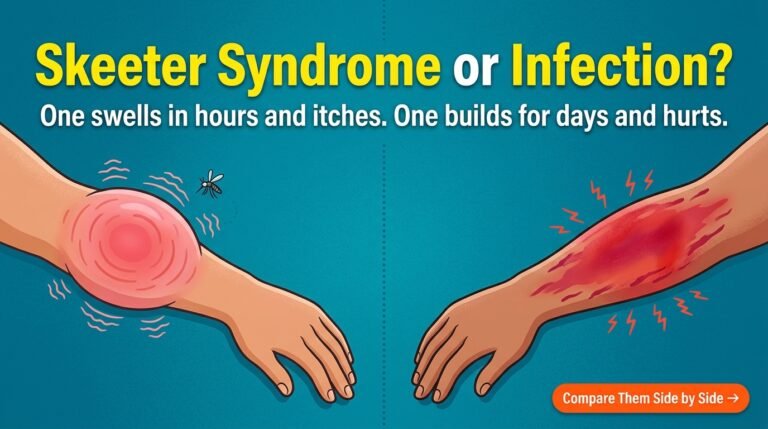
Skeeter Syndrome vs. Cellulitis: How to Tell a Big Mosquito Allergy From a Real Skin Infection The fast answer: Skeeter syndrome is an allergic…