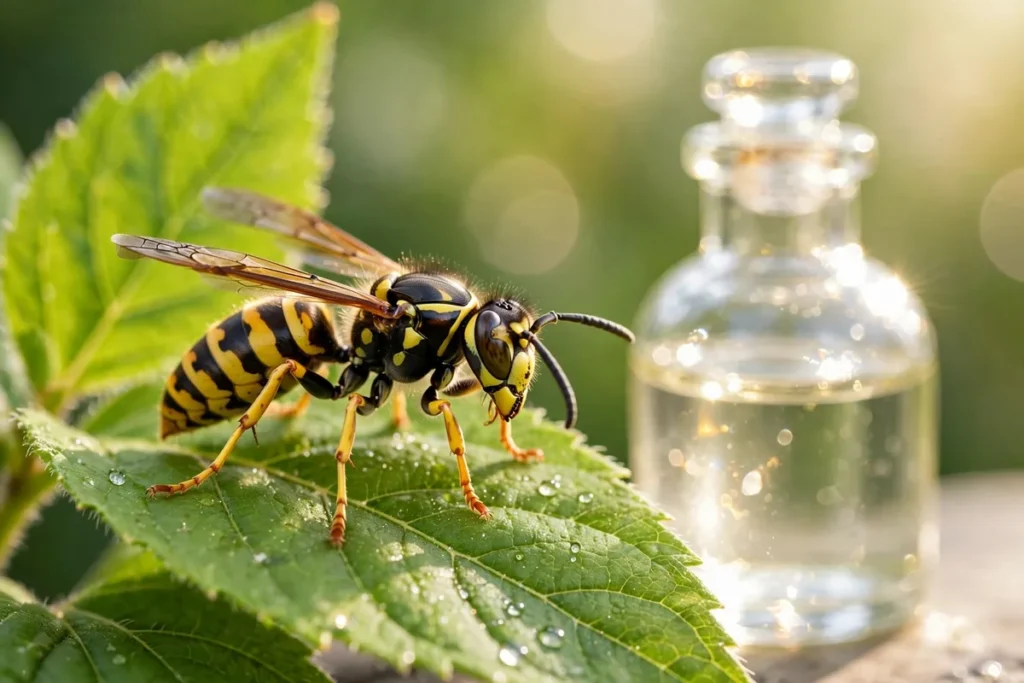
Quick answer: Vinegar is not a proven antidote for a wasp sting and should not be relied on to “neutralize” venom. For a mild sting, the priorities are to move away from the insect, wash the area, use a wrapped cold pack, monitor symptoms, and use appropriate over-the-counter symptom relief when safe for you. If breathing, throat swelling, fainting, or rapidly progressive symptoms occur, call 911 and use prescribed epinephrine immediately if available.
Does vinegar neutralize wasp venom?
The popular idea that a wasp sting should be treated with vinegar because the venom is supposedly “alkaline” is too simplistic. Wasp venom is a complex mixture of biologically active substances delivered into tissue. Applying a household acid to the surface of the skin does not demonstrate that the injected venom has been neutralized or that the inflammatory response has been stopped.
Current mainstream first-aid guidance from sources such as the NHS, MedlinePlus, the American Academy of Dermatology, and allergy specialists focuses on cleaning the sting site, cooling the area, symptom control, observation, and prompt treatment of allergic emergencies. Vinegar is not part of the standard evidence-based first-aid approach. Some NHS-affiliated guidance specifically advises avoiding traditional remedies such as vinegar because they are unlikely to help.
This matters because a home remedy can create false reassurance. A person may spend time applying vinegar while a severe reaction is developing. The safer rule is simple: treat the symptoms and the risk, not the idea that one household chemical can cancel another.
Why the acid-versus-alkaline explanation is misleading
Even when a chemical is acidic or alkaline in a laboratory, that does not mean an opposite household substance can safely neutralize it in living tissue. A sting is not a drop of liquid sitting on a countertop. Venom is injected below the skin, where it interacts with cells, nerves, immune pathways, and blood vessels. Pain, redness, swelling, and itching are driven by those biological responses.
That is why a visible change in the skin after vinegar is applied does not prove the venom was neutralized. Symptoms can improve naturally over minutes or hours, especially with rest and cooling. Anecdotal improvement also cannot tell us whether vinegar helped, did nothing, or irritated the skin.
What to do immediately after a wasp sting
- Move to a safer location. Leave the area calmly if wasps are still present. Additional stings increase the total venom exposure.
- Check the skin without digging. Wasps generally do not leave a stinger behind, unlike honeybees. If a stinger-like object is clearly present, remove it promptly without cutting into the skin.
- Wash with soap and water. Gentle cleaning helps protect broken skin from contamination.
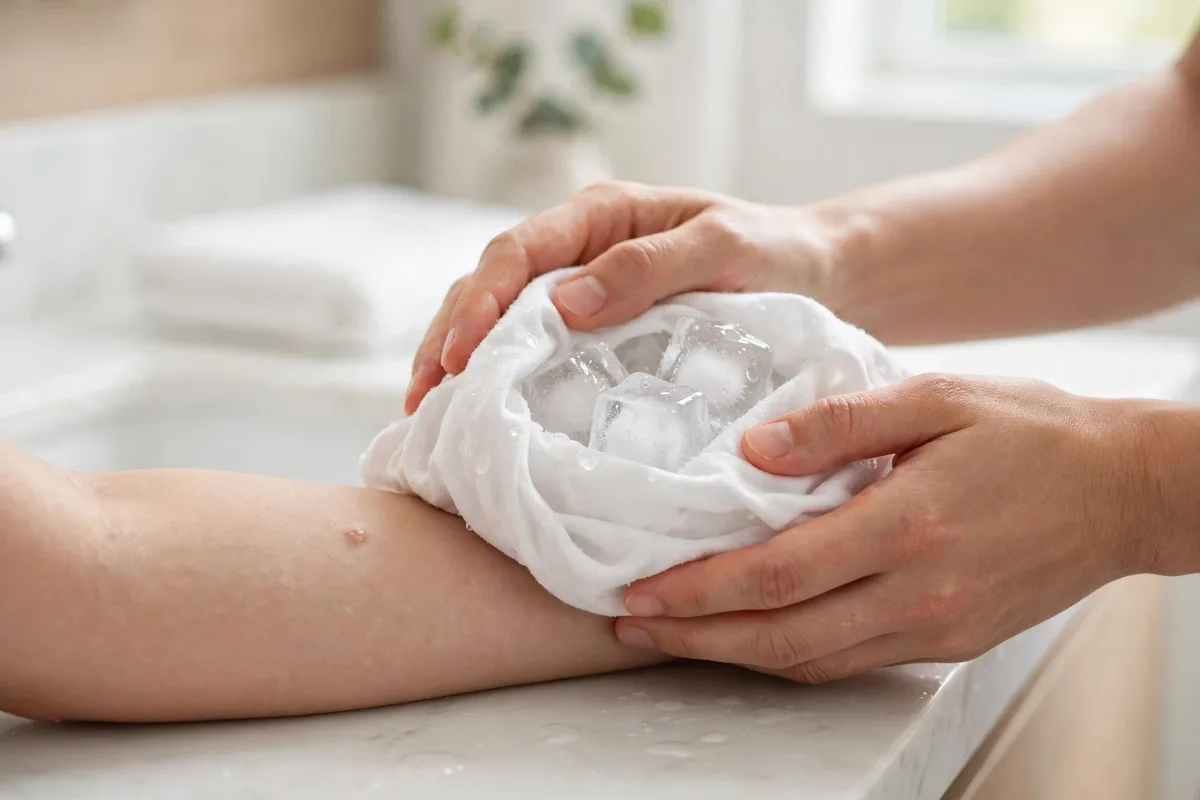
- Use a wrapped cold pack. Cooling can reduce pain and swelling. Place a cloth between the cold source and the skin and take breaks to avoid cold injury.
- Remove tight jewelry early. Rings, watches, or tight clothing can become uncomfortable if swelling increases.
- Monitor the whole person, not just the sting mark. A small local mark does not rule out an allergic reaction elsewhere in the body.
For evidence-based wasp sting care, see Wasp Sting First Aid. If the main concern is whether symptoms are becoming dangerous, review Bee Sting Warning Signs; many of the emergency allergy principles apply to other stinging insects as well.
What symptoms are common after a mild sting?
A typical local reaction can include immediate pain or burning, a small raised area, redness, warmth, itching, and swelling around the sting site. The reaction may enlarge for several hours before it begins to settle. A larger local reaction can involve a wider area of swelling and may take longer to improve.
Appearance alone cannot reliably tell you how much venom was delivered, whether the insect was definitely a wasp, or whether a serious reaction will occur. The pattern of symptoms over time is more useful than the exact color or size of the initial mark.
When a large local reaction is not the same as anaphylaxis
Some people develop substantial swelling around the sting without having a life-threatening allergic reaction. For example, a hand or forearm can become quite swollen after a sting. That can be uncomfortable and deserves monitoring, but it is different from symptoms involving breathing, blood pressure, the throat, or multiple body systems.
Even so, rapidly expanding swelling, severe pain, swelling near the eye, a sting inside the mouth, or symptoms that continue to worsen deserve medical advice. People with a history of severe reactions should follow the emergency plan provided by their clinician.
What does anaphylaxis look like?
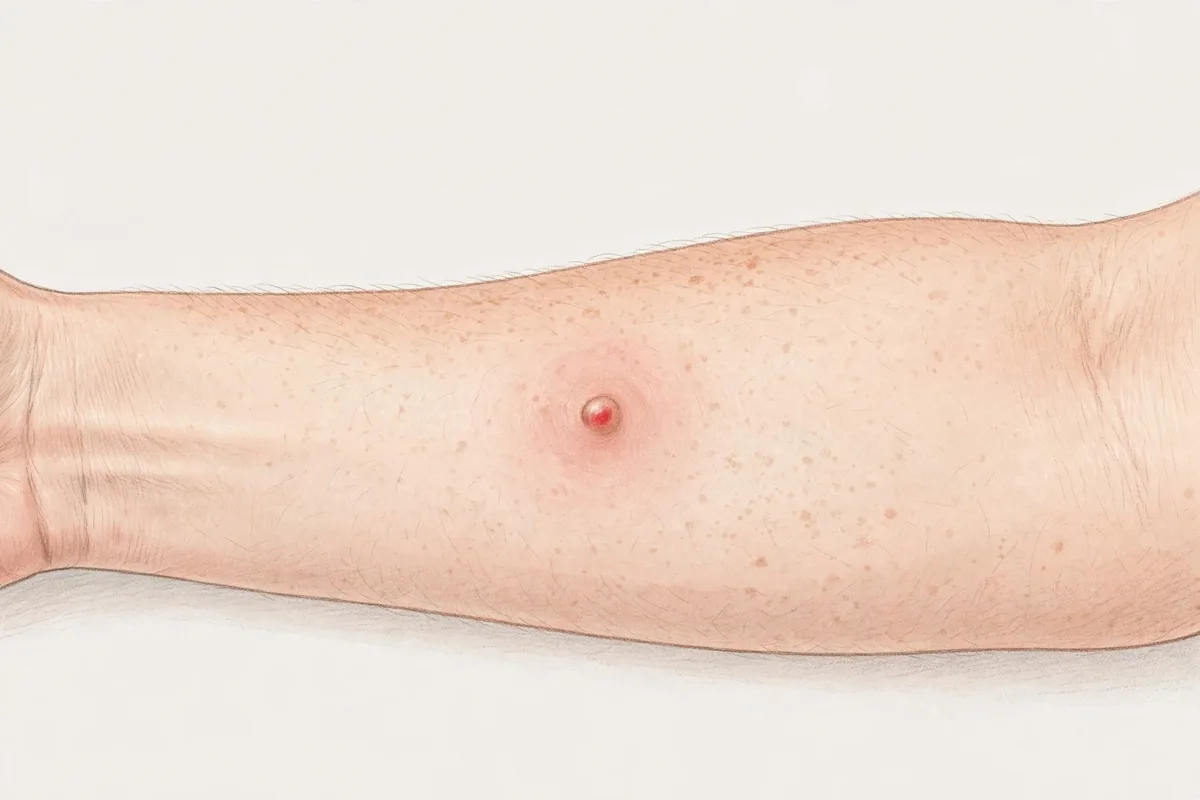
Anaphylaxis is a medical emergency. Warning signs can include difficulty breathing, wheezing, swelling of the lips, tongue, or throat, widespread hives with other symptoms, severe dizziness, fainting, vomiting or abdominal symptoms together with other allergic signs, or a sudden drop in blood pressure. Symptoms can progress quickly.
If an epinephrine auto-injector has been prescribed for insect-sting allergy, use it according to the person’s emergency plan and call 911. Do not delay epinephrine while waiting to see whether vinegar, an antihistamine, or a cold pack works. AAAAI guidance emphasizes that anaphylaxis requires immediate treatment and emergency evaluation.
Can an antihistamine replace epinephrine?
No. An oral antihistamine may help itching or hives in some mild reactions, but it does not treat the dangerous airway or circulatory effects of anaphylaxis. It should not delay epinephrine or emergency care when severe symptoms are present.
For mild symptoms, a pharmacist or clinician can help determine whether an antihistamine, topical hydrocortisone, or a nonprescription pain reliever is appropriate for you. Follow the product label and consider age, pregnancy, other medicines, allergies, and medical conditions.
Could vinegar irritate or burn the skin?
Yes. Vinegar is acidic, and prolonged or concentrated contact can irritate skin. Poison Control notes that vinegar can cause injury when used improperly and specifically warns against certain vinegar compresses on skin. A sting site may already be inflamed or scratched, which can make irritating products feel worse.
If vinegar has already been applied and the area burns, rinse gently with water and stop using it. Do not add baking soda or another chemical in an attempt to “balance” the vinegar. Avoid applying vinegar to the eye area, inside the mouth, or to significantly broken skin.
What if vinegar seemed to help before?
Personal experience can be real without proving a treatment works. A sting often begins to improve on its own. Cooling from a wet liquid, rest, elevation, or simply the passage of time may reduce discomfort. That makes it difficult to know whether vinegar itself had any effect.
For a low-risk symptom such as mild itching, it is usually better to use care methods supported by established guidance rather than repeat a remedy that may irritate the skin and has no proven venom-neutralizing benefit.
What about baking soda for bee stings?
The related claim that bee venom should be treated with baking soda comes from the same acid-versus-alkaline idea and should not be treated as a reliable clinical rule. The NHS specifically advises against bicarbonate of soda as a routine home remedy for insect bites and stings. Evidence-based first aid is more consistent across stinging insects: remove a retained stinger when present, wash the area, cool it, control symptoms, and watch for serious reactions.
Wasp sting versus bee sting: what is actually useful?
One practical difference is that honeybees can leave a barbed stinger in the skin, while wasps generally retain their stinger and may sting more than once. That distinction can guide what you do immediately after the event. It does not create a reliable rule that one sting should receive an acid and the other an alkali.
If you are unsure what stung you, concentrate on the exposure history, whether a stinger remains, the number of stings, where the sting occurred, and how symptoms are evolving. A skin photo alone often cannot identify the exact insect.
When should you call a doctor or urgent care?
Seek medical advice when pain or swelling is severe or worsening, the area becomes increasingly warm and tender, pus develops, fever occurs, symptoms do not begin to improve as expected, or the sting is near the eye. A sting in the mouth or throat deserves urgent assessment because swelling in a confined airway area can become dangerous.
Medical evaluation is also reasonable after many stings, especially in a child, an older adult, someone with heart or lung disease, or anyone who feels systemically unwell. Multiple stings can create a different risk profile from a single uncomplicated local reaction.
Signs of infection after scratching
A sting itself is inflammatory, so some redness and warmth can be normal. Infection is more concerning when the trend changes: increasing pain after initial improvement, expanding redness accompanied by worsening tenderness, drainage or pus, red streaking, fever, or feeling ill. Scratching can break the skin barrier and increase infection risk.
A clinician may need to examine the area because allergic inflammation, irritation, and infection can overlap in appearance. Do not assume every spreading red area is cellulitis, but do not ignore worsening systemic symptoms either.
What if the sting is on the face or near the eye?
Facial and eyelid tissue can swell dramatically, sometimes more than the amount of pain would suggest. Because the eye and airway are sensitive areas, seek prompt medical assessment for vision changes, severe eye pain, painful eye movement, swelling that interferes with opening the eye, tongue or throat swelling, or breathing difficulty.
Do not put vinegar, undiluted essential oils, or other household chemicals near the eye.
What if a child is stung?
For a mild local reaction, the basic steps are similar: move away from the insects, wash the skin, use a wrapped cold pack, and watch for worsening symptoms. Medication choices must be age- and weight-appropriate, so follow pediatric labeling and ask a pharmacist or pediatric clinician when uncertain.
Call emergency services for breathing difficulty, fainting, severe lethargy, tongue or throat swelling, or a rapidly progressive reaction. A child who has been stung many times should also be medically assessed.
What if the person is pregnant?
Pregnancy does not make every wasp sting an emergency, but medication choices and severe allergic symptoms deserve careful attention. Basic local care such as washing and a wrapped cold pack is generally the first step. For medicines, contact a pharmacist, obstetric clinician, or other healthcare professional rather than assuming every over-the-counter product is appropriate during pregnancy.
Anaphylaxis remains an emergency during pregnancy. Do not substitute a home remedy for prescribed epinephrine or emergency care.
How long should a mild sting take to improve?

Pain is often strongest soon after the sting and then eases. Redness, itching, and swelling can persist for several days. Large local reactions can last longer. What matters most is the direction of change. A sting that is gradually less painful, less swollen, and less itchy is more reassuring than one that becomes increasingly painful, hot, draining, or associated with fever.
If symptoms are not following a reassuring trend, seek medical advice rather than repeatedly applying stronger home remedies.
How to reduce the chance of another wasp sting
- Keep food and sweet drinks covered when eating outdoors.
- Check open cans and cups before drinking outside.
- Wear shoes outdoors, especially around lawns, patios, trash areas, and fallen fruit.
- Avoid swatting aggressively at a nearby wasp; move away calmly when possible.
- Have nests near frequently used areas assessed and removed by an appropriate professional.
- If you have a diagnosed venom allergy, keep prescribed epinephrine accessible and follow your allergist’s plan.
Frequently asked questions
Is apple cider vinegar better than white vinegar for wasp stings?
There is no established evidence that either one is an effective venom-neutralizing treatment. Choosing a different type of vinegar does not solve the basic problem that standard sting care does not depend on acid-base neutralization.
Should vinegar be diluted before putting it on a sting?
There is no evidence-based dilution ratio that can be recommended as a wasp-sting treatment. Because vinegar can irritate skin, it is safer to use established first-aid measures.
Can I soak a sting in vinegar for 20 minutes?
A fixed vinegar soaking schedule is not part of mainstream first-aid guidance for wasp stings. A wrapped cold pack, used with breaks, is a better-supported approach for local pain and swelling.
Can vinegar prevent an allergic reaction?
No. Vinegar cannot be relied on to prevent anaphylaxis. Severe reactions require emergency treatment.
What if I do not know whether it was a wasp or bee?
Check for a retained stinger, but do not focus so much on insect identification that you miss worsening symptoms. Clean and cool the area, and seek emergency care for severe allergy signs.
Can a wasp sting become infected?
Yes, especially if the skin is scratched or broken. Increasing pain, drainage, fever, or worsening redness after initial improvement deserves medical review.
Bottom line
Vinegar is not a proven antidote for a wasp sting. The safest approach is to use basic first aid, treat symptoms appropriately, and watch carefully for allergy, infection, and worsening swelling. For emergency symptoms, use prescribed epinephrine if available and call 911. A home remedy should never delay care.
Authoritative sources
- NHS: Insect bites and stings
- MedlinePlus: Wasp sting
- AAAAI: Stinging insect allergy
- American Academy of Dermatology: Bug bites and stings—when to seek care
- Poison Control: Vinegar safety
Educational information for U.S. readers. A skin mark or photograph cannot reliably identify every insect or diagnose allergy or infection. This article does not replace individualized medical advice.